
Beyond the Standard Machine: Case Packer Engineering for Custom Lines
Beyond the Standard Machine: Case Packer Engineering for Custom Lines
Case packers are often overlooked in end-of-line planning until a bottleneck appears. Yet the choice of a case packer affects throughput, labor cost, and finished goods quality. For many buyers, the critical question is not just speed, but whether the machine can be adapted to their product dimensions, packaging format, and line layout. This article looks at how case packer customization works, what OEM/ODM capability means in practice, and what evidence a buyer should expect from a machinery supplier.
The Case Packer Problem in Modern Lines
Manual box filling remains widely used in mid-size plants. It allows quick adaptation to different products, but it creates variability in stacking quality, depends on the availability of labor, and becomes a bottleneck as output grows. Automated case packers eliminate that variability and reduce the number of operators required at the end of the line. However, standard machines often fit only a narrow range of carton sizes and product shapes.
A tissue canister, a wet wipe tub, a bag of flour, and a bottle of detergent all need different end-effectors, different infeed systems, and different loading motion. The opportunity lies in matching the machine to the product rather than forcing the product through a generic design. This is especially relevant for buyers who are evaluating a supplier for a complete packaging line or for a single machine that must fit into an existing line.
OEM/ODM Capability: What It Means for a Case Packer Purchase
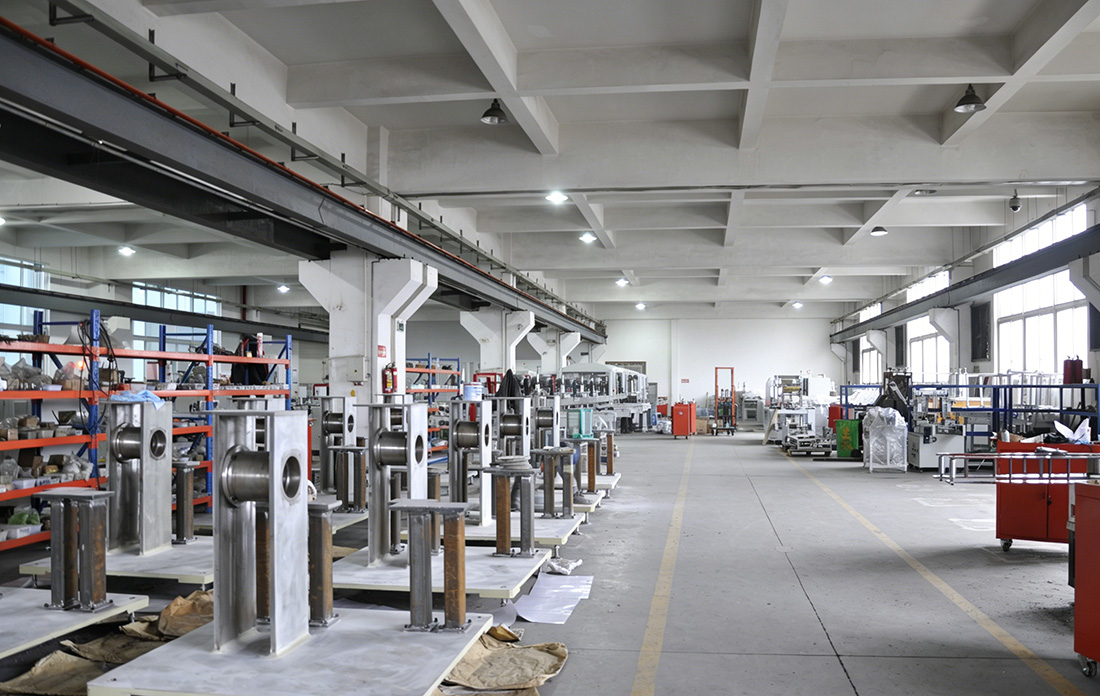
Wenzhou Wimach Machinery Co., Ltd., commonly referred to as WIMACH, is a packaging machinery manufacturer based in Ruian, Wenzhou, China. The company designs and builds tissue packing machines and integrated packaging lines, and exports around 60 percent of its output to the EU, North America, and South America. WIMACH operates a 3,000-square-meter factory with 37 employees and an annual output of approximately 160 sets. Its engineering team includes five R&D engineers.
WIMACH offers production modes described as Customized Machinery Service and OEM/ODM. According to the company's published capabilities, customization can cover packaging dimensions, machine configuration, voltage, and logo. The order conditions are relatively flexible for a custom machinery supplier: minimum order quantity is one set; typical lead time is 30 to 45 days; monthly capacity is 13 sets. This makes custom case packers accessible even to facilities that do not need a full line.
Top Load and Side Load Case Packer Explained
Two case packer configurations account for most of WIMACH's case packing work: top load and side load. The Automatic Top Load Case Packer, model CP-T60, is a pick-and-place machine. It picks up products from an infeed conveyor and places them vertically into an open top case. This approach works well for products that need gentle handling or have complex shapes.
The Automatic Side Load Case Packer, model CP-S50, uses a side push mechanism. It pushes products horizontally through a case opening. Side load case packers are often used for stable, uniformly shaped items and can reach higher throughput in certain carton formats. Both machines are listed for use in the tissue industry, food and beverage, pharmaceutical, daily chemical and cosmetic, hardware, auto parts, and machinery industries.
| Specification | CP-T60 | CP-S50 |
|---|---|---|
| Packing type | Pick-and-Place / Top Load | Side Load / Side Push |
| Packing capacity | 1-8 cartons/min | 1-16 cartons/min |
| Carton dimension | 300-600 (L) x 200-400 (W) x 150-400 (H) mm | 240-500 (L) x 200-400 (W) x 180-400 (H) mm |
| Power voltage | 380V 50/60Hz 3 phase | 380V 50/60Hz 3 phase |
| Power consumption | 7.5 kW | 4.5 kW |
| Air pressure | 0.5-0.8 Mpa | 0.5-0.8 Mpa |
| Air consumption | 450 L/min | 350 L/min |
| Overall dimensions | 4200 (L) x 2600 (W) x 2200 (H) mm | 4200 (L) x 2300 (W) x 1900 (H) mm |
| Overall weight | 1600 kg | 1500 kg |
| Material | Stainless steel / carbon steel | Stainless steel / carbon steel |
Patented Mechanisms and Quality Control
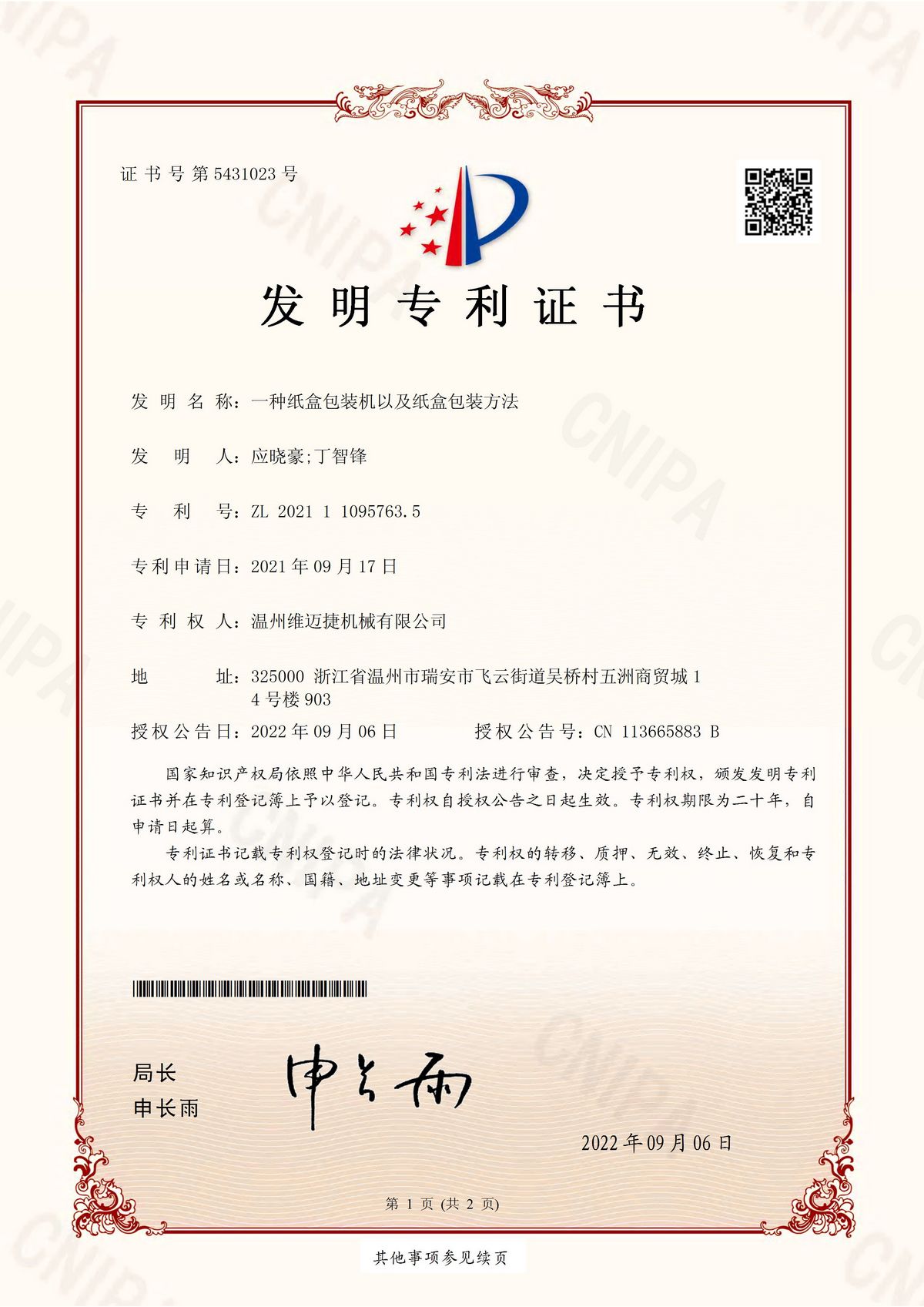
WIMACH also holds invention and utility model patents related to cartoning equipment. One invention patent, certificate number ZL 2022 1 1099886.8, covers a carton packing machine and a carton packaging process. Such patents indicate that the mechanisms used in the packing process are developed in-house rather than simply assembled from generic components.
Before delivery, custom machines go through a documented quality control process. WIMACH's list includes no-load and load running tests, dimensional tolerance inspection, mechanical assembly check, pneumatic leakage test, electrical safety test, PLC control logic test, safety interlock and E-stop test, long-time aging test, and surface appearance inspection. For buyers, these tests reduce the risk of problems during commissioning on a real production line.
Application Cases: Proof from Production Floors
Custom case packers only prove their value on a real production floor. WIMACH has published several project references that show the range of applications and the type of evidence a buyer can expect.
United States: Canister Loading with Top Load Case Packer
In the United States, a tissue paper manufacturer installed one set of the automatic top load case packer, model CP-T60, to automatically load tissue canisters into cartons. The machine replaced manual box filling and standardized the packing procedure. The project achieved improvements in production efficiency, a reduction in labor costs, and more consistent packing quality. The installation has been in operation for five years, which provides a useful reference for long-term reliability.
Mexico: Turnkey Canister Wet Wipe Line
In Mexico, a tissue paper manufacturer operates a turnkey automated packaging line built for canister wet disinfecting wipes. The installation includes nine sets of equipment covering automatic feeding of empty canisters, inserting wipes, quantitative disinfectant filling, heat sealing, cap tightening, labeling, case packing, palletizing, strapping, and stretch film wrapping. The line is designed to deliver fully finished, labeled, cased, and palletized wet wipe products. Its line specification includes a maximum packing speed of 60 canisters per minute and a maximum canister dimension of 110 mm diameter by 220 mm height.
Poland: Complete Facial Tissue Packaging Line
In Poland, a complete packaging line was installed for fully automatic packaging of facial tissue and cream tissue. The line integrates 12 sets of packaging equipment and includes conveying, automatic cartoning, case packing, pallet feeding, robotic palletizing, strapping, and stretch wrapping. The project uses the CP-S50 side load case packer for the case packing stage. Final products are whole pallets stacked with shipping cases, strapped and covered with stretch film, stable, dustproof, and moisture resistant. The project was completed within two years.
United States: Toilet Paper Roll End-of-Line Packaging
In another United States installation, six sets of packaging equipment were installed for toilet paper roll end-of-line packaging. The line performs roll wrapping, case packing, automatic palletizing, and stretch film wrapping. The output is finished pallet loads that are dustproof, moisture resistant, and ready for transportation. This case shows how a single case packer can be integrated with upstream wrapping and downstream palletizing equipment.
Market Trend Analysis
According to Grand View Research, the global case packing machines market was estimated at USD 1.07 billion in 2024 and is projected to reach USD 1.74 billion by 2033. The same analysis places Asia Pacific at 37.9 percent of the market in 2024. Top load case packers represented the largest machine type segment with a 45.5 percent share in 2024. Global Market Insights values the broader robotic packaging systems market, including robotic case packers, at USD 6.4 billion in 2024. Fact.MR reports that secondary packaging equipment, which includes case packers, holds approximately 45 percent of the packaging robot market.
Safety standards are also becoming more prominent. ANSI/PMMI B155.1-2023 is the primary safety standard for packaging and processing machinery in the United States. In Europe, EN ISO 12100 is the harmonized standard for machinery safety and is mandatory for CE marking on case packers sold in the EU. WIMACH states that all its machines are CE certified, which is an important compliance point for buyers selling into the EU or referencing international quality benchmarks.
Comparison with Traditional Solutions
Custom case packers are not always the right answer. Manual packing remains more flexible when volumes are low or product formats change every week. Standard machines cost less and can be delivered faster, assuming the product fits within the machine's standard range. What a custom machine adds is the ability to work with unusual products, existing conveyors, or specific production targets.
| Factor | Manual Case Packing | Standard Case Packer | Custom / OEM Case Packer |
|---|---|---|---|
| Product flexibility | High | Limited to machine range | Configured for specific products |
| Labor requirement | High | Low | Low |
| Consistency | Variable | High | High |
| Lead time | Immediate | Shorter | 30-45 days for WIMACH |
| Integration effort | Minimal | May need line layout changes | Can match existing line |
| Upfront cost | Low / recurring labor | Medium | Higher engineering cost |
One realistic limitation is lead time and specification risk. WIMACH's custom lead time is 30 to 45 days. During that period, the customer must provide clear product dimensions, packaging formats, and line requirements. If this information changes after manufacturing starts, delays and additional costs can occur. Custom machinery also assumes the supplier has sufficient engineering resources and after-sales support; a machine built to non-standard specifications requires a responsive service partner.
Future Outlook
Looking ahead, buyers are likely to expect more modular case packers that can handle multiple product formats without a complete rebuild. The growth in robotic packaging systems and the strong position of top load solutions suggest that flexibility will be valued as much as speed. For manufacturers such as WIMACH, the ability to combine CE compliance, in-house patents, and OEM/ODM production will support longer equipment lifecycles.
WIMACH's export markets already include the EU, North America, and South America. The company provides installation and commissioning, training service, warranty service, remote technical support, lifetime after-warranty support, and upgrade or retrofit service. These services matter in evaluation and execution stages because a custom case packer is a long-term asset, not a one-off purchase.
For detailed specifications, machine dimensions, and additional project references, download the WIMACH catalog: WIMACH Catalog PDF.
Frequently Asked Questions
What is a case packer?
A case packer is a packaging machine that automatically loads products into shipping cases or cartons at the end of a production line. It can be configured for top-load, side-load, or robotic handling depending on the product type and line speed.
What is the difference between a top load and a side load case packer?
A top load case packer, such as WIMACH's CP-T60, uses a pick-and-place mechanism to lower products vertically into a case. It suits irregular shapes and provides good flexibility. A side load case packer, such as the CP-S50, pushes products horizontally into the case through the side opening. It is often faster for stable, uniformly shaped products and can handle higher carton throughput.
Can a case packer be customized for specific product dimensions?
Yes. WIMACH's customization options cover packaging dimensions, machine configuration, voltage, and logo. Customized machines are available with a minimum order quantity of one set.
Which industries use case packers?
Case packers are used in the tissue industry, food and beverage, pharmaceutical, daily chemical and cosmetic, hardware, auto parts, and machinery industries. The CP-T60 and CP-S50 are both listed as applicable to these industries.
What is the typical lead time for a customized case packer?
WIMACH lists a typical lead time of 30 to 45 days for customized machinery, with a monthly production capacity of 13 sets.
What quality tests are performed before delivery?
WIMACH's quality control includes no-load and load running tests, dimensional tolerance inspection, mechanical assembly check, pneumatic leakage test, electrical safety test, PLC control logic test, safety interlock and E-stop test, long-time aging test, and surface appearance inspection.
Which safety standards apply to case packers?
In the United States, ANSI/PMMI B155.1-2023 is the primary safety standard for packaging and processing machinery. In Europe, EN ISO 12100 is the harmonized machinery safety standard for CE marking. WIMACH states that all its machines are CE certified.