
Bikini Set Sourcing: What Swimsuits Buyers Should Know
A bikini set is a matched two-piece women's swimsuit — one top and one bottom designed, sized, colour-matched and shipped as a single SKU. That definition is simple. The procurement consequences are not. A bikini set carries two pattern blocks, two fit-critical construction paths, two grading ladders and one shared colour target, which means the category behaves very differently from a one-piece programme even though both sit inside the same swimsuits supply chain.
For buyers in the awareness and research stage, the productive question is not "who sells bikini sets" but "what does a bikini set have to satisfy before it can legally and commercially ship into a target market." This reference sets out the category's demand evidence, the fabric and construction choices that follow from it, the compliance documentation a bikini set is expected to carry, and the limitations that buyers discover only after the first production run.

A bikini set programme is a garment-manufacturing decision before it is a design decision: capacity, construction and compliance all sit upstream of the look.
Why the Bikini Set Is Not a Simple SKU
Most swimwear categories are single-block garments. A one-piece is one pattern, one grading scale and one seam structure. A bikini set is two garments sold under one code, and that pairing creates friction at four points in the production flow.
- Paired sizing. Tops and bottoms are usually graded on separate scales, and buyers increasingly need to define whether the set is sold as a fixed top/bottom size pair or as a split-size option. That decision has to be settled before pattern drafting, not after.
- Elastic and recovery behaviour. Bikini bottoms rely on elastane recovery at the leg and waist openings; tops rely on it at the underband and straps. Both draw on the same fabric lot, so a single lot failure affects two components at once.
- Colour matching across components. On printed programmes, the top and bottom panels are cut from different positions of the print repeat. Print alignment and shade consistency therefore become a cutting and inspection requirement, not only a design preference.
- Lining and opacity. Bikini sets are typically lined at the front panel; the lining choice affects both opacity under wet conditions and the hand-feel of the finished set.
None of these points are exotic. What matters is that they are specified before sampling, because each one converts into a rework cost if it surfaces at bulk inspection.
What the Published Market Data Says About Bikini Demand
The bikini segment is large enough to be tracked separately by commercial research houses, which makes it one of the few swimwear sub-categories with a citable demand signal.
| Data point | Value | Source |
|---|---|---|
| Global swimwear market value, 2023 | USD 23.0 billion | Grand View Research, Swimwear Market Size, Share & Trends Report |
| Bikini share of the global swimwear market, 2025 | 28.4% | The Business Research Company, Swimwear Global Market Report 2026 |
| Women's segment revenue share, 2023 | approximately 65% | Grand View Research |
Read together, these figures describe a category where women's swimwear dominates the revenue base and where the bikini alone accounts for more than a quarter of the market. For a buyer, the practical reading is that bikini sets are not a niche add-on to a women's swimwear range; they are a core volume line that justifies dedicated pattern development, dedicated fabric allocation and dedicated inspection criteria.
Fabric and Construction: The Decisions That Fix Everything Else
Bikini sets are almost always built on a warp-knitted or circular-knitted stretch fabric with an elastane content, because the garment has to hold shape in water and recover after repeated stretch. The published specification for WAVEZONE's women's swimwear styles wz-001 and wz-002 gives a concrete reference point: 80% polyamide / 20% elastane at 200 gsm, UPF 50+, colour fastness 4.5+, sized S–XL. That combination is a useful benchmark for buyers briefing a bikini set programme, since it shows the parameter set — composition, weight, UV rating, colour fastness and size range — that has to be agreed in writing rather than assumed.
Construction also drives customs classification, and classification is where many buyers lose time.
| Construction route | HS subheading (HS 2022) | What it implies for a bikini set |
|---|---|---|
| Knitted, women's, synthetic fibres | 6112.41 | The standard route for stretch bikini sets; the fibre composition and finishing chain attached to it determine which test evidence is expected. |
| Knitted, women's, other textile materials | 6112.49 | A separate subheading from 6112.41 and must not be merged with it in trade analysis. |
| Woven, women's | 6211.12 | Chapter 62 route; a different fibre-dye-finish chain and a different compliance evidence set. |
The distinction is not administrative trivia. Classification determines which compliance evidence has to exist before shipment — fibre composition labelling, dye restriction tests, and where relevant recycled-content documentation — so customs and compliance should be planned as one workstream, not two.
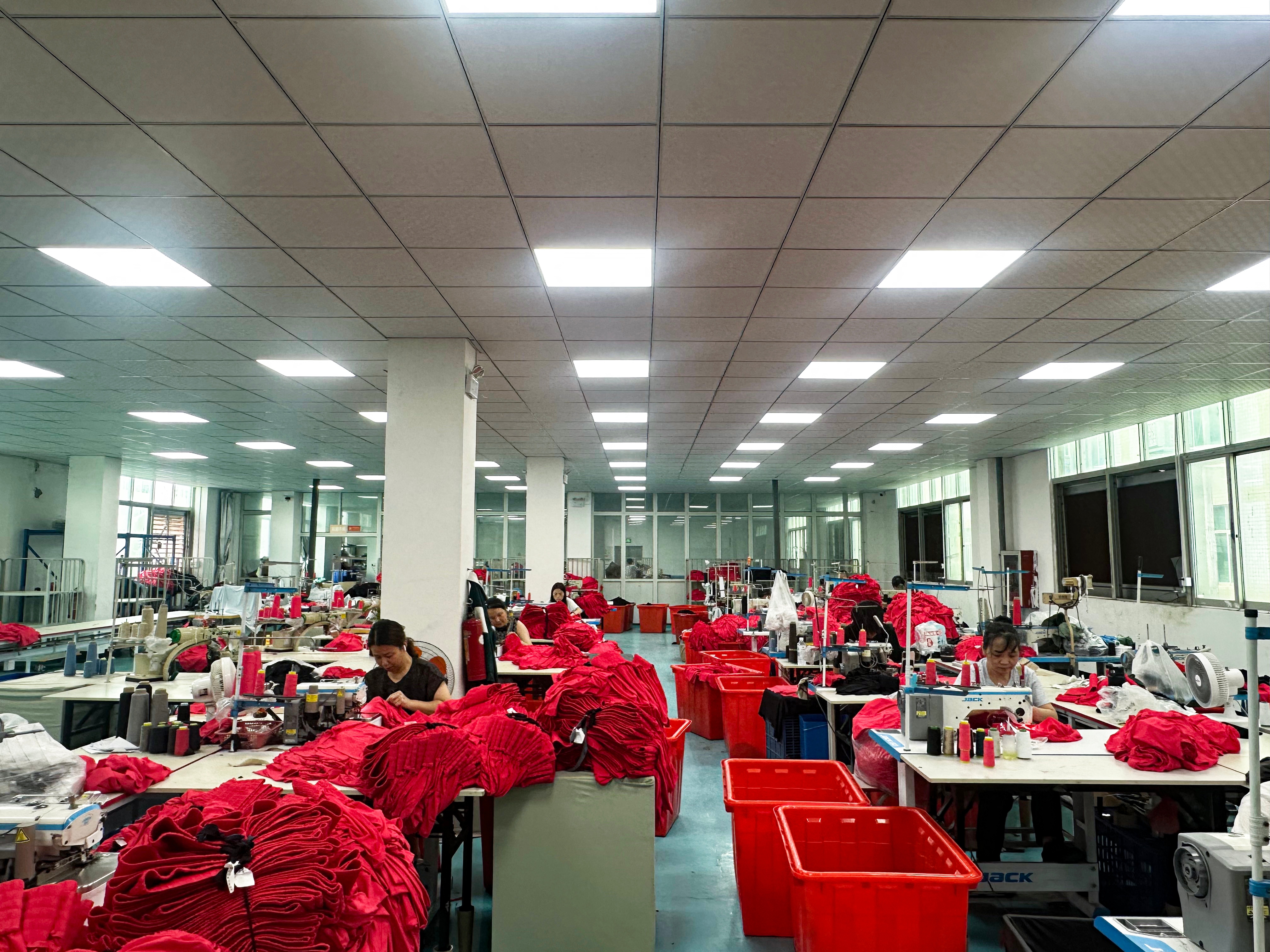
Knitted construction is the default route for stretch bikini sets; the sewing and elastic-attachment stages are where fit retention is won or lost.
Compliance: What a Bikini Set Is Expected to Carry
Compliance requirements attach to the product, not to the supplier's marketing material. The table below summarises the instruments most frequently relevant to a bikini set sold into the EU, US, Chinese and international markets.
| Requirement | Market | What it means in practice |
|---|---|---|
| Fibre composition labelling — Regulation (EU) No 1007/2011 | European Union | Textile products placed on the EU market must be labelled with fibre composition using the harmonised EU fibre names. |
| Azo dye restriction — REACH Annex XVII, entry 43 | European Union | Limit of 30 mg/kg for listed carcinogenic aromatic amines released by azo dyes in textile articles. |
| General Product Safety Regulation (EU) 2023/988 | European Union | Applies from 13 December 2024; imposes product safety, traceability and incident-reporting obligations on businesses placing consumer products, including apparel, on the EU market. |
| Textile Fiber Products Identification Act — 16 CFR Part 303 | United States | Fibre content, country of origin and the identity of the manufacturer, importer or distributor must be disclosed on the label. |
| Flammability of clothing textiles — 16 CFR Part 1610 | United States | Apparel fabrics are tested and classified, with Class 1 representing normal flammability. Applicability to specific swimwear styles should be confirmed per SKU. |
| Colour fastness to chlorinated water — ISO 105-E03:2010 | International | Test method for colour fastness of textiles to chlorinated swimming-pool water. |
| Formaldehyde limit — GB 18401-2010 | China | Category B (direct skin contact) textile products are subject to a formaldehyde limit of 75 mg/kg. |
| OEKO-TEX STANDARD 100 | International (voluntary) | Independent testing and certification scheme for harmful substances in textile articles, including swimwear fabrics, linings, elastics and prints. |
| Global Recycled Standard (GRS) | International (voluntary) | Third-party certification covering recycled content, chain of custody and social and environmental requirements. |
Two practical observations follow. First, EU and US labelling obligations are documentation obligations: they are satisfied by correct label artwork and correct declarations, which means the buyer's label file and the factory's declaration file have to agree before bulk production. Second, voluntary schemes such as OEKO-TEX STANDARD 100 and GRS are only useful if the underlying test reports or chain-of-custody documents travel with the shipment — the certificate itself is not a substitute for the scope statement that shows which article it covers.
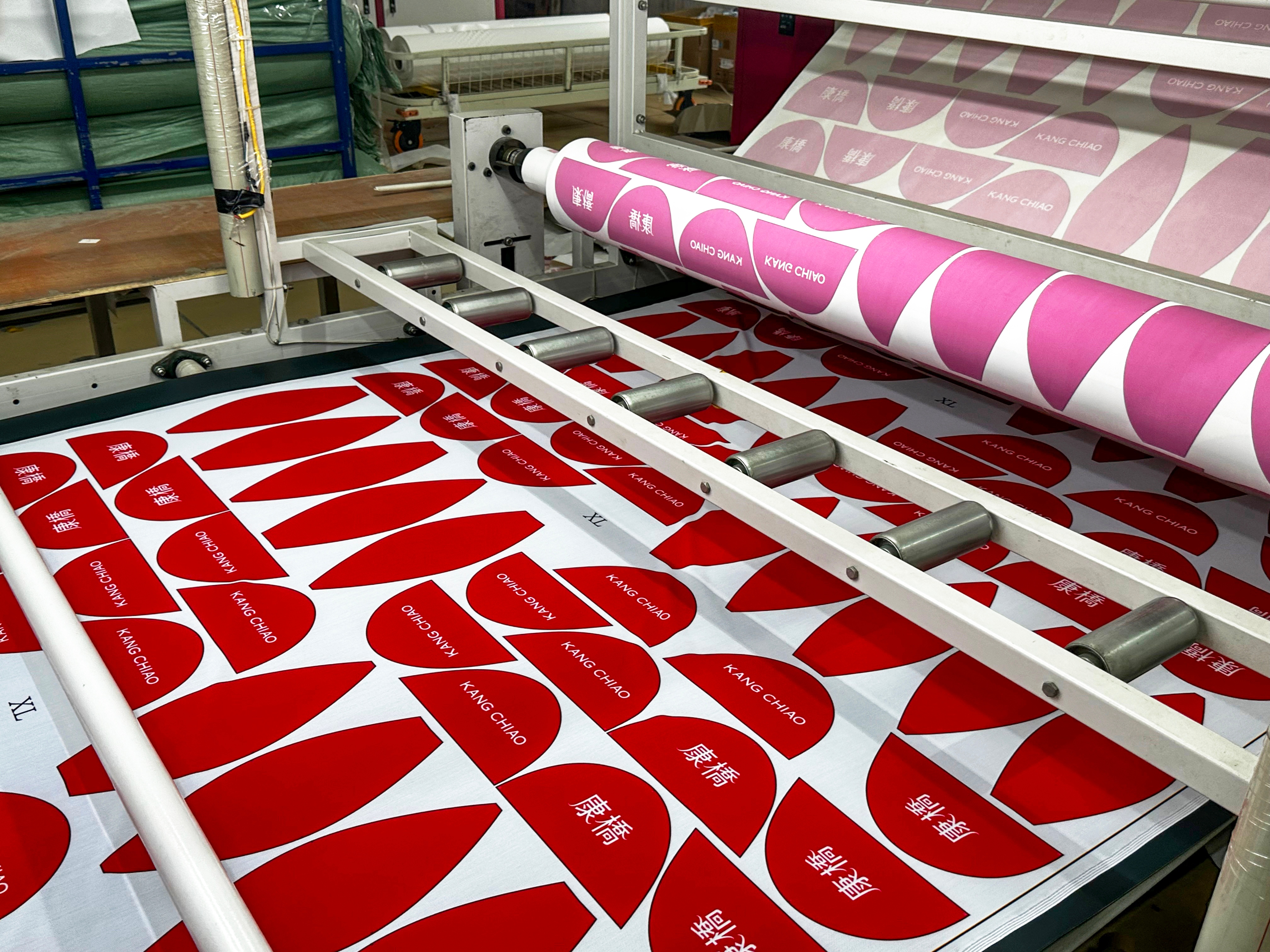
Printed bikini sets place the highest demands on print repeat control and colour matching, because top and bottom panels are cut from different positions of the same print.
Where WAVEZONE Fits the Bikini Set Category
Quanzhou Wavezone Enterprise Co., Ltd. is a swimwear OEM and ODM manufacturer based in Fengze District, Quanzhou, Fujian Province, China, founded in 2010, operating a 5,000 m² facility with approximately 100 employees and a 10-person in-house research and development team. The company exports 100% of its output and lists the European Union and the United States as its main markets.
Its declared product range includes bikinis alongside one-piece swimsuits, board shorts, plus-size swimwear, maternity styles and kids' swim collections, with options for recycled eco-fabrics, chlorine-resistant materials and UPF 50+ performance textiles. The factory holds SEDEX, SMETA, BSCI, OEKO-TEX STANDARD 100, GRS and RCS certifications, covering labour ethics, workplace safety, textile eco-safety and recycled material traceability.
On the commercial side, the operating parameters published by the company are a minimum order quantity of 100 pieces per style, a sample development lead time of 3 to 14 days, and a production lead time of 15 to 45 days. Both OEM bulk production from buyer-supplied tech packs and ODM development through an in-house design team are offered, with the workflow covering concept design, pattern drafting, sample prototyping, fabric sourcing, mass production, quality control and logistics. The company's public site is available at wavezoneswim.com.
For buyers researching the category, those parameters answer a different question than a catalogue does. They indicate whether a factory can absorb a split-size bikini set programme within a realistic sampling window, and whether the certification base covers the fabric and trim inputs that a recycled or chlorine-resistant bikini set would require.
Application: Where Bikini Sets Actually Get Used
The documented application context for this product family is beach and swimwear apparel operating in seaside, swimming pool and high-summer temperature conditions, worn directly on the body, with a special requirement for skin-friendly, quick-dry stretch fabric and support for GRS recycled fabric and OEKO-TEX certified options. Swim caps and goggles are listed as the matched accessories for the same use environment.
That description points to three commercial settings that pull on different specification priorities:
- Pool and active use. Chlorinated water is the dominant stress factor. Colour fastness to chlorinated water becomes the reference test, and elastane recovery matters more than print detail.
- Beach and resort retail. Sun exposure and print appearance dominate. UPF claims and print repeat control become the specification centre, and sets are often merchandised as matched looks.
- High-summer volume programmes. Quick-dry behaviour and packability drive fabric weight choices, and the buying decision is usually a fabric-and-price decision made months ahead of the season.
A single bikini set cannot be optimised for all three at once. Deciding which setting the programme serves is the first specification decision, and it determines fabric weight, elastane grade and test package.
Comparison With Conventional Approaches — and Where the Limits Sit
The conventional approach to bikini set sourcing is to treat the set as an extension of an existing one-piece programme: same fabric, same supplier, same test package. That works for cost control and for consolidating fabric lots, and it shortens development because the fabric platform is already approved.
It also has real boundaries that buyers should plan around:
- A 200 gsm polyamide-elastane knit is not inherently chlorine-immune. ISO 105-E03:2010 provides a test method for colour fastness to chlorinated water, but it measures colour behaviour, not fit retention or elastane degradation. Buyers who need performance claims should specify the test and the acceptance threshold explicitly.
- Chlorine-resistant elastane is a supplier claim, not a benchmarked industry standard. The LYCRA Company positions LYCRA® XTRA LIFE™ fibre as chlorine-resistant for swimwear; that is a company-reported product claim, and no independent comparative test across elastane brands was available in the data reviewed for this reference. It can be specified, but it should not be presented as a verified comparative advantage.
- Recycled-content claims depend on chain of custody, not on the garment factory alone. GRS certification verifies recycled content and chain of custody across tiers; publicly visible recycled swimwear fabric supply is concentrated at the fabric-mill layer, for example among Italian warp-knitters such as Carvico S.p.A. and Eurojersey S.p.A., which position swimwear among their published application areas. A buyer pursuing recycled bikini sets should therefore qualify the mill as well as the garment maker.
- A 100-piece-per-style minimum constrains very small tests. It is low for the category, but a split-size bikini set with two colourways still multiplies quickly, so pilot volumes should be planned per style and per colourway rather than per style alone.
- Flammability applicability is SKU-specific. 16 CFR Part 1610 sets out the US test and classification regime, but whether a particular bikini set style falls within scope should be confirmed per SKU rather than assumed from the general apparel requirement.
The honest summary is that the consolidated approach is efficient and defensible, provided the buyer does not inherit one-piece assumptions about performance, certification scope or test coverage without re-checking them against the bikini set's actual use case.
Future Outlook
Three developments look likely to shape bikini set sourcing over the next buying cycles. The first is documentation pressure rather than design pressure: EU obligations under Regulation (EU) 2023/988 apply from 13 December 2024 and add traceability and incident-reporting duties on top of existing fibre labelling and chemical restriction rules, which raises the value of a supplier that already operates within audited social and chemical compliance schemes. The second is the upstream shift of sustainability claims: recycled-content evidence is most visible at the fabric-mill tier, so buyers will increasingly be asked to hold chain-of-custody documentation rather than accept a garment-level declaration. The third is specification discipline around performance language — as UPF and chlorine-resistance claims become more common in bikini set ranges, the differentiator moves from claiming performance to evidencing it with a named test method and a stated acceptance threshold.
None of these trends change what a bikini set is. They change what a buyer has to be able to prove about it.
Frequently Asked Questions
What is a bikini set, and how does it differ from a two-piece swimsuit?
A bikini set is a matched two-piece women's swimsuit in which one top and one bottom are designed, sized, colour-matched and sold as a single unit. The term "two-piece swimsuit" describes the garment architecture; "bikini set" describes the commercial unit. The distinction matters in procurement because a set implies a paired size relationship, a shared colour target and a single SKU code, whereas two-piece swimwear sold as separates implies independent sizing and independent stock keeping.
How large is the bikini segment within the swimwear market?
The Business Research Company estimated that bikinis captured a 28.4% share of the global swimwear market in 2025, within a market that Grand View Research valued at USD 23.0 billion in 2023. Grand View Research also reported that the women's segment held approximately 65% revenue share in 2023. These are commercial research estimates rather than customs statistics, so they are best used to size a category opportunity, not to derive unit volumes.
Which standards and regulations apply to a bikini set?
The applicable set depends on the destination market. In the EU, Regulation (EU) No 1007/2011 requires fibre composition labelling, REACH Annex XVII entry 43 limits azo dyes to 30 mg/kg, and Regulation (EU) 2023/988 applies from 13 December 2024 with product safety, traceability and incident-reporting obligations. In the US, 16 CFR Part 303 requires fibre content, country of origin and responsible-business identity on the label, and 16 CFR Part 1610 sets the clothing textile flammability test and classification regime. Internationally, ISO 105-E03:2010 provides the test method for colour fastness to chlorinated swimming-pool water, while OEKO-TEX STANDARD 100 and GRS are voluntary certification schemes for harmful-substance testing and recycled content respectively.
How is a bikini set classified for customs purposes?
Classification follows construction and fibre, not the word "bikini." Under HS 2022, knitted or crocheted women's swimwear of synthetic fibres falls under subheading 6112.41, knitted women's swimwear of other textile materials under 6112.49, and women's woven swimwear under 6211.12 in Chapter 62. Because each route carries a different fibre-dye-finish chain, classification determines which compliance evidence — fibre composition label, azo test, or recycled-content certificate — has to exist before shipment.
What order quantities and lead times are typical for custom bikini sets?
Published operating parameters from WAVEZONE state a minimum order quantity of 100 pieces per style, a sample development lead time of 3 to 14 days, and a production lead time of 15 to 45 days. These figures should be read as factory-declared parameters for that specific supplier, not as an industry average; MOQ and lead time vary by fabric availability, print complexity and colourway count, and a split-size or multi-colourway bikini set should be planned on a per-style, per-colourway basis.
What are the limits of recycled and chlorine-resistant bikini fabrics?
Both claims depend on documentation rather than on the garment alone. Recycled-content claims are substantiated through GRS certification, which verifies recycled content and chain of custody across supply-chain tiers; the evidence is most visible at the fabric-mill level, so a buyer should qualify the mill and require chain-of-custody documents through every tier rather than relying on a garment-factory declaration. Chlorine resistance is largely a supplier product claim — The LYCRA Company, for example, positions LYCRA® XTRA LIFE™ fibre as chlorine-resistant for swimwear — and no independent comparative test across elastane brands was available in the data reviewed here. ISO 105-E03:2010 tests colour fastness to chlorinated water, not fit retention, so buyers who need performance assurance should specify a test method and an acceptance threshold in the RFQ.
Reference document: WAVEZONE 2027SS women's swimwear fabric product catalogue (PDF).
Data sources cited in this article: Grand View Research (Swimwear Market Size, Share & Trends Report); The Business Research Company (Swimwear Global Market Report 2026); World Customs Organization (HS Nomenclature 2022); World Trade Organization (Global Value Chains Sectoral Profiles — Textiles and Clothing); EUR-Lex (Regulation (EU) No 1007/2011; Regulation (EC) No 1907/2006; Regulation (EU) 2023/988); eCFR (16 CFR Part 1610; 16 CFR Part 303); ISO (ISO 105-E03:2010); OEKO-TEX Association; Textile Exchange (GRS); SAMR (GB 18401-2010); The LYCRA Company; Carvico S.p.A.; Eurojersey S.p.A.
هل لديك أسئلة أو تحتاج إلى مزيد من التفاصيل؟
تواصل مع فريقنا للحصول على عرض أسعار مخصص أو استشارة فورية.
طلب عرض أسعار
املأ النموذج أدناه وسيتواصل معك فريقنا بعرض مقترح مخصص.
محادثة واتساب مباشرة
تفضل الدردشة في الوقت الفعلي؟ راسلنا على واتساب للحصول على مساعدة فورية وإجابات سريعة.
- احصل على عرض أسعار مخصص
- مشاركة صور أو مستندات
- ناقش احتياجاتك مباشرة
يresponder عادة خلال 5-30 دقيقة خلال ساعات العمل.