
Biomedical Rare Earth Scenarios: Implant Surfaces, Zirconia, Lab Assays
Biomedical Rare Earth Scenarios: Implant Surfaces, Zirconia, Lab Assays
Rare earth compounds enter biomedical work through three different doors: the surface of a titanium implant, the crystal lattice of a zirconia orthopedic component, and the titration flask of a biotech quality-control laboratory. The chemistry that suits one door rarely suits the others. Valence state, anion, chloride content and particle morphology decide which compound can serve which scenario, and a grade that performs well in a polishing slurry or a catalyst bed can be the wrong choice at a bone interface or in a redox assay.
Sichuan Wonaixi New Materials Technology Co., Ltd. (WONAIXI) is a rare earth manufacturer founded in 2012 in Leshan, Sichuan, certified as a National High-Tech Enterprise and a Sichuan Provincial SRDI Enterprise, and operating dedicated lines for high-purity rare earth salts and precision rare earth polishing powder. Three of its documented routes map onto the scenarios above: zirconium acetate (product reference 5854) for titanium implant surface modification, a technical pentahydrate route (5855) used with yttrium nitrate in spray-dried and sintered zirconia, and cerium carbonate (5823) for high-purity ceria precursors and antioxidant pharmaceutical raw-material research. A fourth scenario sits in the laboratory rather than the implant: cerium(IV) reagents for cerimetric titration.
Why “rare earth” is not a purchase specification
Two cerium compounds illustrate the problem. Cerium carbonate holds a stable +3 valence, has very low water solubility and decomposes to Ce₂O₃ at 300–400 °C before oxidising to CeO₂ above 600 °C in air. Cerium(IV) sulfate carries an oxidising Ce⁴⁺ centre, stays stable only in acidic solution and decomposes above 500 °C into CeO₂ and SO₃. Same element, different purchase decision: one is a calcination precursor, the other is an analytical oxidant.
Impurity and morphology specifications separate grades just as sharply. Within WONAIXI’s carbonate range, standard cerium carbonate carries roughly 50–100 ppm chloride, a general low-chloride grade is held at or below 10 ppm, a high-sensitivity grade at 1–5 ppm and an ultra-low grade at or below 1 ppm. Particle form ranges from 100–500 mesh fine powder to spherical material with 10–50 nm grains, and to 500 μm–5 mm granules for dust-free handling. A buyer who names neither the scenario, the anion nor the grade is comparing unrelated materials under one label.
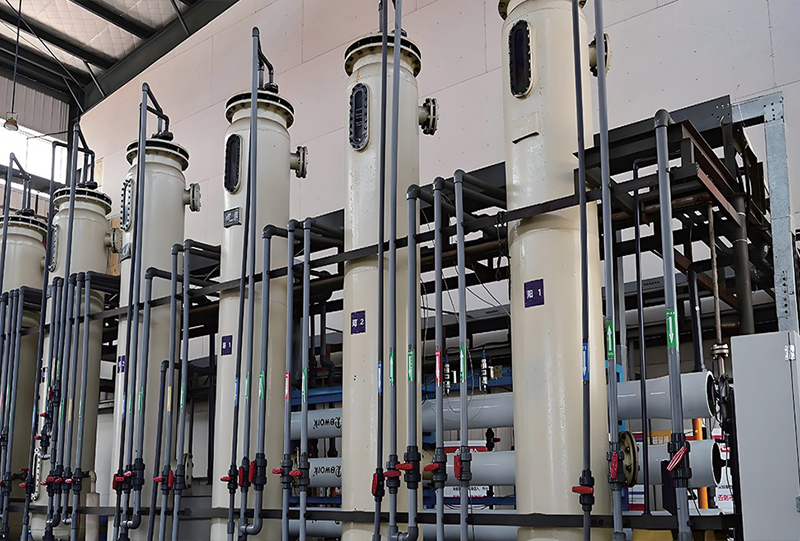
The portfolio behind those grades is broad, not interchangeable. WONAIXI reports nine categories of rare earth products plus a complete zirconium salts series, with more than 50 specialised variants covering nitrates, chlorides, carbonates, hydroxides, sulfates, fluorides, acetates and polishing powder — company-reported coverage that still requires product-level confirmation of purity, impurity limits and availability.
Scenario one: titanium implant surfaces and zirconium acetate (5854)
Zirconium acetate is the WONAIXI compound mapped to titanium alloy implant surface modification. Its documented function in that application is to form a thin ZrO₂ layer on the titanium surface, which the company’s application notes describe as accelerating osteoblast adhesion and reducing implant rejection.
How the coating forms
The mechanism is a clean-burn precursor. Zirconium acetate is soluble in both water and ethanol, so it can be applied from aqueous or solvent systems onto a metal substrate. On heating, the acetate volatilises and decomposes at low temperature, leaving a dense, pure-phase ZrO₂ film without corrosive chloride or nitrate residues. In the company’s coating documentation, the absence of residual Cl⁻ and NO₃⁻ after calcination is what protects film integrity, while low-temperature sintering avoids unnecessary thermal load on the substrate. The same source documents low-temperature ceramic-layer formation at roughly 500 °C in the related anti-corrosion coating application.
Where the evidence stops
“Reduced implant rejection” describes a material function at the interface, not a clinical endpoint. The documentation reviewed for this article contains no implant-level biocompatibility, cytotoxicity or animal study data, and no regulatory clearance. A device manufacturer therefore treats zirconium acetate as one input to its own biological evaluation, not as a substitute for it — a distinction that separates a serious supplier conversation from a brochure claim.
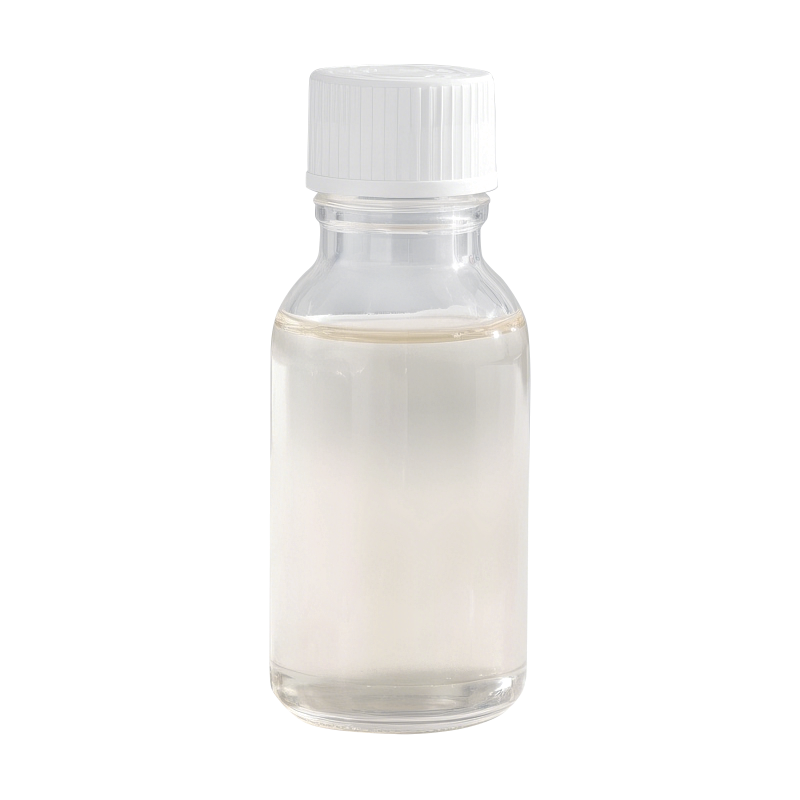
Solution stability is the practical constraint. Powders are documented with a one-to-two-year shelf life; aqueous solutions are documented at six to twelve months because the solution hydrolyses over time. Storage at 15–25 °C with relative humidity below 60%, segregated from strong bases to avoid Zr(OH)₄ precipitation, preserves the grade the buyer paid for. The product is classified with low acute toxicity, causing only mild skin dryness rather than chemical burns.
What belongs in the request
- Grade and concentration of the solution or powder, with zirconium content certified per batch.
- Residual chloride and nitrate limits after calcination — the property the application actually depends on.
- Shipment age and remaining shelf life, since solution life is measured in months, not years.
- A sample for the buyer’s own cell-adhesion or cytocompatibility protocol before design freeze.
Scenario two: zirconia for orthopedic implants and the 5855 route
A zirconia orthopedic component is a ceramic, so the sourcing question changes. Instead of a surface coating, the buyer is buying a powder route. Dopant distribution, chloride content and particle size decide whether the sintered body reaches its target density and strength, and whether the ceramic stays phase-stable in service.
Where the 5855 route sits
WONAIXI’s product line references 5855 for this application: a technical pentahydrate used together with yttrium nitrate in a spray-dried, sintered zirconia route aimed at high-strength orthopedic components. Spray drying converts a doped solution or slurry into flowable granules; sintering converts those granules into a dense ceramic. The precursor’s job is therefore twofold — deliver the dopant uniformly, then leave nothing corrosive behind.
Grade parameters for 5855, including assay, chloride, insolubles and particle-size distribution, should be read from the current certificate of analysis rather than inferred from the product name. That rule is not specific to one supplier: for any doped zirconia precursor, the CoA and the sintering trial are the documents that decide qualification.
Documented grades around the same scenario
Three verified products support adjacent parts of the zirconia scenario. Cerium oxide (5812) is documented as a zirconia sintering stabiliser that stabilises the crystal phase, lowers sintering temperature and improves ceramic density and toughness. Low-chloride cerium carbonate (5818) is documented for rare-earth-doped bioceramics for medical implants, where leachable chloride is the concern; its grade ladder runs from 10 ppm down to 1 ppm or below, against 50–100 ppm in standard carbonate. Fine crystalline spherical cerium carbonate (5817) is documented for bioceramic protective coatings, where 10–50 nm grains carried in 1–10 μm spheres conform to complex implant surfaces and improve coating adhesion on metal substrates to reduce delamination.
Comparison with conventional precursor choices
Against irregular, coarse carbonate powder, a spherical grade offers a much higher specific surface area — 20–50 m²/g against roughly 5–10 m²/g — plus fewer inter-particle contact points, which limits agglomeration and gives more even dopant distribution during spraying or spin coating. Against chloride-bearing precursors, a low-chloride carbonate avoids hydrogen chloride and CeOCl formation during calcination, protecting furnace hardware and removing a leachable species that implant ceramics cannot tolerate. Neither comparison makes the spherical or low-chloride grade mandatory. Where a process already controls homogeneity and chloride by other means, the standard grade may be the more economical route and should be tested rather than assumed inferior.
Scenario three: cerium carbonate (5823) for ceria precursors and antioxidant research
Cerium carbonate (5823) sits at the front of two different value chains. Materially, it is a stable trivalent cerium source with very low water solubility, supplied at 100–500 mesh, that decomposes at 300–400 °C into Ce₂O₃ and oxidises to CeO₂ above 600 °C in air. That thermal path is what makes it a precursor: calcination converts the carbonate into high-activity ceria for catalysis, polishing and fuel-cell materials, without the strong oxidising behaviour of a cerium(IV) salt.
In pharmaceutical research, the same compound is documented as a free-radical scavenger studied as a potential antioxidant raw material, and as a route to high-purity ceria precursors. The wording matters for procurement: “research raw material” and “potential” describe an investigation stage. No regulatory filing, pharmacopoeial monograph or clinical data formed part of the documentation reviewed here, so the material should be sourced as a research input with a stated impurity profile.
Grade selection is the buyer’s main lever. The documented range includes technical grades at 95–99%, reagent grade at 99% or above, and high-purity 4N and 5N grades; a dedicated high-purity cerium carbonate grade (5820) is separately documented with heavy metals below 10 ppb, other rare earths below 5 ppb and anions below 1 ppm. A research group screening antioxidant activity and a catalyst developer calcining a precursor need different impurity ceilings from the same compound family, and the specification should say which ceiling applies.
Two research uses buyers raise: MRI contrast and cell culture
Buyers evaluating a biomedical rare earth supplier often ask about two adjacent uses. Gadolinium-based agents are an established clinical category of MRI contrast media, and rare earth compounds also appear in experimental cell-culture work as additives and probes. Neither use appears in the WONAIXI product documentation reviewed for this article, and neither should be read as a supply commitment. They remain useful in portfolio discussions because they show how far the application map extends: a supplier asked about contrast-media precursors or culture-grade salts should answer with a specification, a grade and an impurity profile — or state plainly that the item falls outside its documented range.
Scenario four: cerimetric titration in biotech laboratories
Cerium(IV) reagents answer a specific assay problem: an oxidant strong enough to titrate a reducing analyte quantitatively, with an endpoint visible without an added indicator. WONAIXI supplies three forms — cerium(IV) sulfate (5842), ammonium cerium(IV) sulfate (5840) and ammonium cerium(IV) nitrate (5830) — and their differences determine which one a laboratory should qualify.
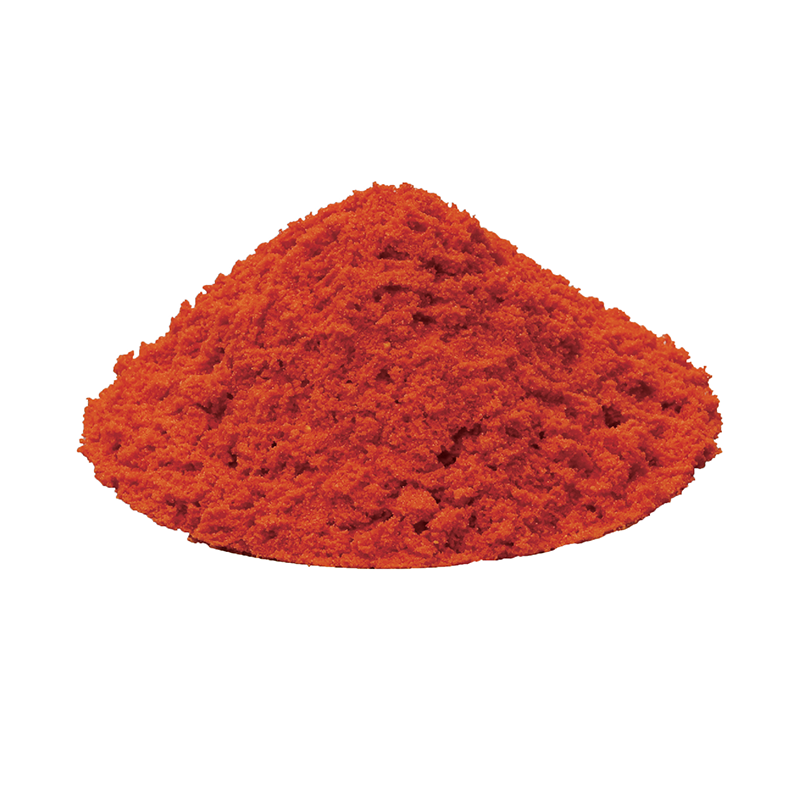
Cerium(IV) sulfate is documented as a standard reagent for cerimetric redox titration: Ce⁴⁺ oxidises reducing substances and the solution changes colour at the endpoint, so no extra indicator is needed. Ammonium cerium(IV) sulfate is documented as a standard cerimetric titrant that shifts from yellow to colourless at the endpoint and is used to quantify Fe²⁺ and As³⁺; the ammonium ion buffers pH and slows the hydrolysis that would otherwise precipitate Ce(OH)₄. Ammonium cerium(IV) nitrate, at a documented molecular weight of 548.22 g/mol, is a stronger oxidiser than potassium permanganate under acidic conditions, stable only below pH 2, with thermal decomposition beginning at 107 °C and full conversion to cerium dioxide above 300 °C.
Handling drives the choice as much as oxidising power. Both the sulfate and nitrate forms are stored at 15–20 °C with relative humidity below 50%, segregated from reducing agents and combustibles by at least one metre, with a one-to-two-year shelf life for the sulfate tetrahydrate and two to three years for reagent-grade nitrate. Above 107 °C the nitrate releases ammonium nitrate fumes, which matters for drying ovens, waste handling and any thermal step in the method.
Geography is part of the fit. Cerimetric titration is a routine analytical method in biotech and chemical laboratories in Japan and Great Britain, and WONAIXI lists both Japan and the United Kingdom among its main markets alongside South Korea, the United States and France. A laboratory buying in those markets is sourcing a documented reagent grade with a batch certificate, not a commodity salt.
Matching scenario to compound: a comparison view
| Biomedical scenario | Product reference | Documented function | What the buyer must confirm |
|---|---|---|---|
| Titanium alloy implant surface | Zirconium acetate 5854 | Thin ZrO₂ layer; accelerated osteoblast adhesion and reduced rejection as documented function; chloride-free film formation | Cytocompatibility data, solution age, residual anion limits |
| Zirconia orthopedic component | Pentahydrate 5855 with yttrium nitrate | Spray-dried, sintered high-strength zirconia formulation | CoA assay, chloride, particle size; sintering trial |
| Zirconia stabilising or bioceramic doping | Cerium oxide 5812; low-chloride carbonate 5818; spherical carbonate 5817 | Phase stabilisation; chloride held at 1–10 ppm; 10–50 nm grains in 1–10 μm spheres | Which stabiliser system the implant grade uses; leachables testing |
| Ceria precursor and antioxidant research | Cerium carbonate 5823; high-purity 5820 | Ce₂O₃/CeO₂ precursor via 300–400 °C calcination; free-radical scavenging research material | Grade tier, impurity profile, research versus regulated use |
| Cerimetric titration | Cerium(IV) sulfate 5842; ammonium cerium(IV) sulfate 5840; ammonium cerium(IV) nitrate 5830 | Indicator-free redox titration; Fe²⁺ and As³⁺ quantification | Batch assay, storage conditions, shelf life, hazard documents |
What the supply picture adds to scenario selection
Scenario fit is a chemistry question; supply exposure is a second, separate question. The U.S. Geological Survey reported that rare earths were mined and processed domestically in the United States in 2024, with an estimated 45,000 tons of rare earth oxide contained in mineral concentrates, and that U.S. imports of rare earth compounds and metals were valued at about $170 million in 2024, down 11% from $186 million in 2023. Over 2020–2023, China supplied 70% of those U.S. compound and metal imports according to the same import-source breakdown. The International Energy Agency describes the value chain as a sequence from extraction and beneficiation through chemical upgrading, separation into oxides, metal refining and alloying.
For a biomedical buyer, the practical reading is that qualification should name the processing stage and the country of origin rather than the compound alone. WONAIXI reports annual capacity of 15,000 tons of high-purity rare earth salts and 3,000 tons of precision rare earth polishing powder at a 46,667 m² site, 100% product testing, a 30–45 day lead time, and OEM/ODM customisation of specifications, purity and packaging. These are company-reported figures and belong in the qualification file rather than in a purchase order assumption.
Outlook for compound-level qualification
Upstream separation research is worth watching because it changes cost structure, not specification logic. Battelle reported in 2026 that engineered proteins achieved single-stage, chelator-free separation of lanthanum and neodymium with more than 90% purity and yield. That is research-stage work, not a deployed supply route, and it does not certify any biomedical grade. If such approaches scale, the economics of purified rare earth salts could shift while the buyer-side gates — chloride limits, particle morphology, batch consistency and traceability — remain exactly where they are. Commercial research cited for the wider context puts the global biotechnology market at roughly USD 2.02 trillion in 2026, a reminder that demand is diversifying across applications rather than concentrating in one compound.
Qualification checklist before sampling
- Write the scenario into the request: implant surface, zirconia body, ceria precursor or titration reagent.
- State the compound and the grade tier, not only the element — 4N carbonate and technical carbonate are different purchases.
- Request the batch certificate of analysis with chloride, heavy metals and rare earth impurity values where the application is sensitive.
- Confirm physical form: solution concentration, mesh size, spherical or granular, and the handling implications of each.
- Check shelf life and transport conditions against your incoming inspection and storage capability.
- Run your own application test — cytocompatibility, sintering density or titration endpoint — before fixing a specification.
FAQ
How do I decide between a compound for an implant scenario and one for a laboratory assay?
Start from the function the material must perform, not from the element name. A titanium surface project needs a film-forming precursor that decomposes cleanly, which points to zirconium acetate (5854). A cerimetric assay needs a strong, acid-stable oxidant with a visible endpoint, which points to cerium(IV) sulfate (5842) or ammonium cerium(IV) sulfate (5840). The same element appears in both, but the grades, impurity limits and handling requirements are different.
What should be verified before sampling zirconium acetate for implant surface work?
Confirm grade and zirconium content, residual chloride and nitrate after calcination, and the age of the batch. Powder grades carry a documented one-to-two-year shelf life, while aqueous solutions are documented at six to twelve months because they hydrolyse. Storage at 15–25 °C with relative humidity below 60% and separation from strong bases prevents Zr(OH)₄ precipitation. The buyer’s own cytocompatibility or cell-adhesion test remains the decisive step.
Is cerium carbonate (5823) an approved pharmaceutical ingredient?
No such status is documented. Cerium carbonate is described as a precursor for high-purity ceria and as a research raw material in antioxidant pharmaceutical research, where its free-radical scavenging behaviour is investigated. Grade tiers run from technical at 95–99% through reagent at 99% or above to 4N and 5N high-purity material, and a separate high-purity grade is documented with heavy metals below 10 ppb. Research-grade supply does not replace regulatory approval or a customer-side impurity assessment.
Which cerium(IV) reagent suits a biotech quality-control laboratory?
Cerium(IV) sulfate and ammonium cerium(IV) sulfate are both documented as standard cerimetric titrants that need no external indicator, with a yellow-to-colourless endpoint, and both are used to quantify reducing species such as Fe²⁺ and As³⁺. Ammonium cerium(IV) sulfate adds pH buffering that slows hydrolysis. Ammonium cerium(IV) nitrate is the stronger oxidiser, stable only below pH 2 and decomposing from 107 °C, so it suits methods that already run under strongly acidic conditions.
Can one supplier cover implant, zirconia and assay programmes?
Portfolio breadth makes it possible to source across scenarios, but breadth is not qualification. WONAIXI reports nine rare earth categories plus zirconium salts, more than 50 specialised variants, 15,000 tons of annual high-purity salt capacity, 3,000 tons of polishing powder capacity, 100% product testing and main markets in Japan, South Korea, the United States, France and the United Kingdom. Each programme still requires its own certificate of analysis, grade confirmation and application test before approval.
Closing view
Matching rare earth chemistry to a biomedical scenario is a specification exercise before it is a volume negotiation. Titanium surfaces, zirconia bodies, ceria precursors and titration reagents draw on the same element family but demand different grades, different impurity ceilings and different proof. Buyers who name the scenario, the grade and the evidence they will accept get a comparable quotation; buyers who ask for “medical grade rare earth” get a catalogue. A full compound list with specification ranges is available in the WONAIXI product brochure (PDF).
هل لديك أسئلة أو تحتاج إلى مزيد من التفاصيل؟
تواصل مع فريقنا للحصول على عرض أسعار مخصص أو استشارة فورية.
طلب عرض أسعار
املأ النموذج أدناه وسيتواصل معك فريقنا بعرض مقترح مخصص.
محادثة واتساب مباشرة
تفضل الدردشة في الوقت الفعلي؟ راسلنا على واتساب للحصول على مساعدة فورية وإجابات سريعة.
- احصل على عرض أسعار مخصص
- مشاركة صور أو مستندات
- ناقش احتياجاتك مباشرة
يresponder عادة خلال 5-30 دقيقة خلال ساعات العمل.