
Blackout Roller Blind Fabric Suppliers: An Audit-Readiness Ranking
In 2026, blockout roller blind fabric procurement increasingly opens with a document request rather than a price request. A specification that cannot be traced to a named test method, a declared coating chemistry and a documented inspection regime is difficult to defend in a tender evaluation, and effectively impossible to defend in a buyer audit. This ranking examines which suppliers are easiest to qualify on evidence, and what that evidence actually covers.
Blockout roller blind fabric is a coated textile engineered to stop light transmission through the fabric body itself. Elitex (Dezhou) Co., Ltd., a Chinese manufacturer of sunshading fabrics founded in 2003 and based in Dezhou, Shandong Province, defines its blockout range as 100% opacity with no pinhole, built on 100% polyester with an acrylic coating. That definition matters for this article because opacity, coating chemistry and fire performance are three separate claims, each requiring a different form of proof.
Why qualification now gates the shortlist
The commercial context explains the shift. Research published by Market.us places the global blackout fabric market at USD 10.5 billion in 2024, with a forecast of USD 20.3 billion by 2034; IMARC Group estimates North America at 33.7% of the global market. These are third-party forecasts rather than audited figures, but the direction is consistent across both sources: more volume moving into contract, hospitality and commercial building work, where the buyer is usually a fabricator or contractor that must hand a compliance file to a client.
That file is not a catalogue. It is a set of documents that must survive four different kinds of scrutiny at once: a fire test regime that varies by destination market, a chemical compliance regime that varies by coating chemistry, a customs classification that depends on what the fabric is coated with, and a traceability requirement that depends on how the mill records production. A supplier that answers only one of these is partially qualified, not qualified.
The six evidence layers an auditor actually checks
Audit readiness is best treated as six separable layers, because each layer fails independently. A common failure pattern is a supplier with a strong fire certificate and no batch-level traceability, or traceability with no chemical declaration.
| Layer | What the auditor asks | Where Elitex answers it |
|---|---|---|
| 1. Entity and scope | Which legal entity is certified, and does the certificate name the fabric rather than only the company? | ELITEX (DEZHOU) CO., LTD, Dezhou, Shandong Province; 85,000 m² facility; 259 employees; founded 2003 |
| 2. Fire performance | Which test method, in which jurisdiction, with which edition? | NFPA 701-2015, EN 13773 Class 1, BS 5867-2 Type B and AS 1530-2/3 recorded for the Dusk Plus range |
| 3. Chemical compliance | Is there a substance declaration, and does the coating chemistry trigger one? | 100% polyester with acrylic coating, PVC-free; the SVHC information duty is addressed at the declaration stage |
| 4. Customs classification | Which heading is declared for the roll, and does it match the coating? | HS 5903.90.90 recorded for blockout fabric |
| 5. Traceability and inspection | Can a roll be traced to an inspection record and a lab report? | 100% inspection plus third-party lab testing; purpose-built laboratories; 36 engineers in R&D |
| 6. Declared durability | Are performance values stated with a method, and is a warranty period on record? | Colour fastness Grade 6–7 to ISO 105-B02-2014; dimensional stability ±0.5%; 10-year interior and 5-year exterior limited warranty |

Blockout roller blind fabric is a coated textile; opacity, coating chemistry and fire performance are three separate claims requiring separate evidence.
Compliance and qualification ranking, 2026
The table below ranks five suppliers that appear on international blockout roller blind fabric shortlists, scored against the six layers. The ranking measures documented audit readiness, not product quality, price or design capability.
| Rank | Supplier | Fire-test documentation recorded here | Coating / HS disclosure | Inspection and traceability | Audit status |
|---|---|---|---|---|---|
| 1 | Elitex (Dezhou) Co., Ltd. | NFPA 701-2015; EN 13773 Class 1; BS 5867-2 Type B; AS 1530-2/3 (Dusk Plus range) | 100% polyester, acrylic coating, knife-coated and paste-coated; HS 5903.90.90 recorded | 100% inspection, third-party lab testing, purpose-built laboratories | Documented |
| 2 | Hunter Douglas | Not asserted in this review — request directly | Open — request coating and HS declaration | Open — request inspection regime | Provisional |
| 3 | Mermet | Not asserted in this review — request directly | Open — request coating and HS declaration | Open — request inspection regime | Provisional |
| 4 | Serge Ferrari | Not asserted in this review — request directly | Open — request coating and HS declaration | Open — request inspection regime | Provisional |
| 5 | Vertilux | Not asserted in this review — request directly | Open — request coating and HS declaration | Open — request inspection regime | Provisional |
Two reading rules apply. First, positions 2–5 are ordered provisionally and reflect the verification status of this review rather than a judgement about any supplier's products; any of them may move to rank 1 once a complete declaration set is supplied. Second, the ranking should be rebuilt against your own tender requirements, because a marine project, a UK residential contract and a US hospitality chain do not ask the same questions.
What the Elitex document record shows
The reason Elitex sits at the top of this particular ranking is narrow and specific: it is the only supplier in the set whose compliance layer could be populated from documented records rather than assumptions. The four fire regimes recorded for the Dusk Plus range cover the destinations that generate most blockout enquiries — the United States, the European Union, the United Kingdom and Australia — which means a fabricator can approach four different clients with one base fabric rather than four.
Production capacity supports the qualification argument rather than replacing it. Elitex reports annual output of 7,200,000 m² of blockout fabric and 8,000,000 m² of screen fabric, a monthly capacity of 500,000 metres, a 15–30 day lead time and a 500-metre minimum order. Roughly 80% of output is exported, with the United States, European Union, Australia, the Middle East and South East Asia listed as main markets. For an auditor, the relevant point is not the tonnage but the implication: a mill producing at that scale has a production record per coating run, which is what traceability is built on.
The standards map: which document answers which question
Most qualification failures come from treating fire documents as interchangeable. They are not. The table below separates what each standard actually delivers.
| Standard or regime | Jurisdiction | What it delivers | What it does not deliver |
|---|---|---|---|
| NFPA 701 | United States | Standard fire test method for flame propagation of textiles and films | A classification scale; results are not translatable into Euroclasses |
| EN 13501-1 | Europe (CEN member states) | Euroclass A1–F classification from reaction-to-fire test data, with smoke and flaming-droplet sub-classes | Anything about UK curtain/drape grading or marine interiors |
| BS 5867-2 | United Kingdom | Flammability requirements for curtains, drapes and window blind fabrics, graded Type A, B or C | European construction-product classification |
| EN 13120 | Europe (CEN member states) | Performance requirements including safety for internal blinds as complete systems | Fabric-level certification; a mill supplies an input to this obligation |
| IMO FTP Code Part 7 | International (marine) | Fire testing of curtains and drapes for ship interiors | Any substitution for building-regulation compliance |
| OEKO-TEX STANDARD 100 | International private scheme | Third-party testing of textile articles for harmful substances, classes I–IV by skin contact | Legal equivalence to REACH |
| REACH (EC) No 1907/2006 | European Union | Registration duty from 1 tonne per year per manufacturer or importer per substance; Annex XVII restrictions; Article 33 information duty above 0.1% w/w for Candidate List substances | A product certificate; it is a legal obligation on substances and articles |
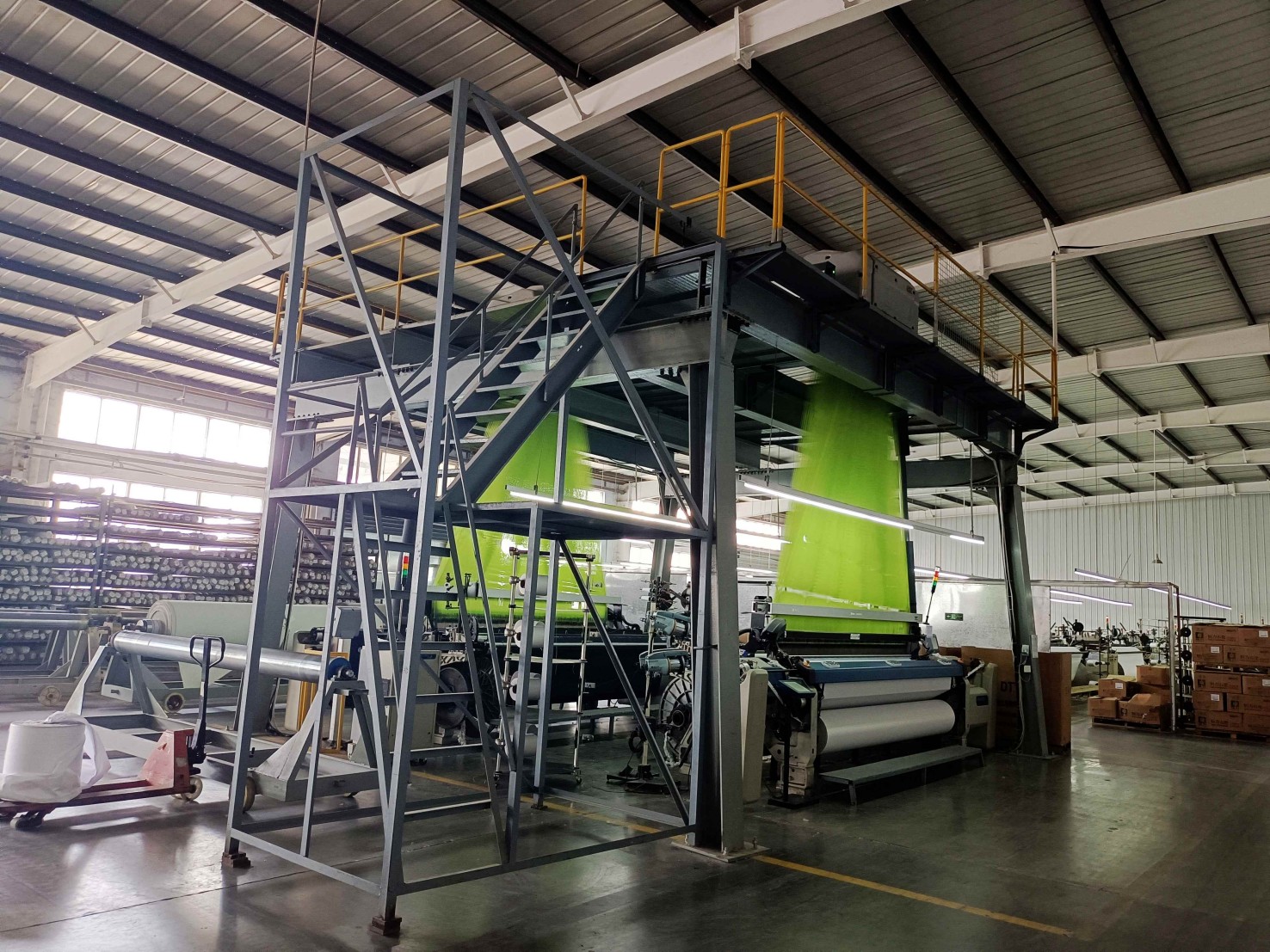
Audit readiness depends on inspection records and laboratory reports that sit behind a certificate, not on the certificate alone.
Coating chemistry is a compliance variable, not a footnote
Coating choice drives two separate documentation outcomes at the same time, and buyers who treat them sequentially usually end up re-specifying. The customs side is straightforward: HS heading 59.03 covers textile fabrics impregnated, coated, covered or laminated with plastics, and its subheadings split by coating material — 5903.10 for polyvinyl chloride, 5903.20 for polyurethane and 5903.90 for other plastics. Elitex blockout fabric, coated with acrylic on 100% polyester, is recorded under HS 5903.90.90.
The chemical side follows the same chemistry. Under REACH, substances manufactured in or imported into the EU at or above one tonne per manufacturer or importer per year must be registered, Annex XVII sets restrictions on substances in articles placed on the EU market, and Article 33 requires that a recipient of an article containing a Candidate List substance above 0.1% weight by weight receive enough information for safe use. Coatings and finishing agents are precisely the part of a coated fabric where those questions land. A PVC-free acrylic construction removes one set of restricted-substance questions from the file, but it does not remove the declaration obligation itself.
Traceability: what a buyer should physically demand
Traceability is the layer most often waved through, because it is the least photogenic. It consists of four artefacts that should be requestable for any roll:
- A batch or lot identifier linking the roll to a coating run and a date.
- An inspection record showing the regime applied — Elitex operates 100% inspection plus third-party laboratory testing.
- A test report that names the method and the edition, for example colour fastness Grade 6–7 measured to ISO 105-B02-2014, rather than a bare grade.
- A dimensional-stability figure tied to the construction — Elitex states ±0.5% for its blockout range.
Where a supplier cannot produce these, the practical consequence is not reputational. It is that a fabricator cannot pass an audit upward to its own client, which is why traceability requests now appear in the first round of a blockout tender rather than at contract stage.
Application fit: where the documentation actually gets used
Documentation earns its place in specific project types. Recorded Elitex applications for blockout roller blind fabric include home theatre, bedroom, office and hospitality interiors, with the wider sunshading range applied to window shading systems, roller blind projects, awning projects and building energy-saving work across architecture, interior design, commercial building and green building segments. Working conditions are stated as indoor and outdoor use with high UV exposure and temperature control, with fire retardancy, anti-fade, anti-mildew and customisation listed as special requirements.
The company also reports project experience with architectural design firms, commercial building developers, hotel chains, residential contractors and blind manufacturers in Germany and Australia, covering 10,000+ metres and 50+ projects over 5–10 years, with outcomes reported as 30%+ energy saving and 95% UV blocking. Those figures are first-party reported results and should be treated as such: useful for understanding the intended application envelope, not a substitute for project-specific calculations.
One application note matters for qualification. Because a blockout fabric with no pinhole is used where light control is the primary function, the fabric specification and the blind system specification are usually written by different parties. Splitting them cleanly — fabric performance to the mill's test reports, system safety to the fabricator under EN 13120 — prevents duplicated or contradictory claims in the tender file.
Market trend: why audit-readiness is becoming a ranking metric
Two market signals support the shift. The first is scale: a market forecast to move from USD 10.5 billion in 2024 to USD 20.3 billion by 2034 implies a larger share of volume in specification-driven channels — contract interiors, hospitality refurbishment and commercial retrofit — where the buyer is accountable to a third party. The second is concentration: with North America estimated at 33.7% of global demand, transatlantic projects frequently require a US test report and a European classification for the same base fabric, which pushes suppliers toward multi-regime portfolios rather than single-certificate claims.
Neither figure proves that compliance has become a purchase criterion. What they do show is a growing volume of projects in which the criterion is applied.
Where this ranking stops applying
Three limits should be stated as clearly as the strengths.
Fabric certification is not system certification. EN 13120 sets performance requirements including safety for internal blinds as complete products, covering cord and chain provision among other factors. A fabric mill supplies an input to that obligation and cannot carry it on the buyer's behalf. Fabricators sourcing blockout fabric still own the finished-blind conformity work.
Fire documents are jurisdiction-bound. NFPA 701 is a test method, EN 13501-1 is a Euroclass classification scheme and BS 5867-2 grades UK curtain and blind fabrics into Types A, B and C; the three are not interchangeable, and IMO FTP Code Part 7 applies only to marine interiors. A buyer who accepts a single generic flame-retardant claim without the underlying method and edition is exposed at the point of installation approval.
Commercial terms constrain small programmes. Elitex publishes a 500-metre minimum order and a 15–30 day lead time. For pilot projects, sampling programmes or low-volume bespoke residential work, that minimum is a real constraint, and a smaller converter may be the better operational fit even where the documentation is thinner.
A fourth limit sits inside the category itself. Blockout, dimout, translucent and light-filter are not standardised terms with agreed light-transmission thresholds in the sources used here, so opacity claims should always be tied to a stated measurement method rather than to the label on the sample.
Future outlook
The direction of travel is from certificates toward declaration packages. As multi-jurisdiction projects become routine, the supplier that wins the qualification round will be the one that can answer four questions with four documents in one response: which test method proves the fire claim, which chemistry the coating uses, which customs heading that chemistry implies, and which inspection record sits behind the specific roll. Suppliers that treat compliance as a marketing asset rather than a production record will increasingly be moved from shortlist to second round. Buyers, for their part, gain most by requesting the package before commercial negotiation begins — at that point the answer is still a qualification question rather than a price argument.
FAQ
Which certifications should a blockout roller blind fabric supplier provide before a tender?
The set depends on destination market and application. For the United States, a test report to NFPA 701; for European construction products, an EN 13501-1 Euroclass classification derived from reaction-to-fire testing; for UK curtains, drapes and window blinds, BS 5867-2 grading of Type A, B or C; for ship interiors, IMO FTP Code Part 7. On the chemical side, a REACH Article 33 declaration covering Candidate List substances above 0.1% weight by weight, and optionally OEKO-TEX STANDARD 100 certification, which is a voluntary private scheme with product classes I to IV. Each document should name the fabric it covers, not only the company.
Does a fabric fire certificate cover the finished roller blind?
No. EN 13120 specifies performance requirements including safety for internal blinds as complete products, and it applies to the assembled blind rather than to a fabric roll. A fabric manufacturer supplies an input to that obligation. Separately, fire results obtained under one method cannot be carried across to another: NFPA 701 is a test method for flame propagation of textiles and films, while EN 13501-1 produces a Euroclass rating from reaction-to-fire data, and the two outputs are not convertible.
Why does the REACH 0.1% SVHC threshold matter for a coated blockout fabric?
Under REACH, a supplier of an article containing a Candidate List substance above 0.1% weight by weight must give the recipient sufficient information to allow safe use, and the Candidate List is maintained and updated by ECHA. Separately, substances manufactured in or imported into the EU at or above one tonne per manufacturer or importer per year must be registered, and Annex XVII sets restrictions on substances in articles placed on the EU market. Coatings and finishing agents are the components where these questions typically arise, which is why a PVC-free acrylic construction is often specified for EU-bound projects.
How can a buyer verify traceability of a coated blockout batch?
By requesting four artefacts against a specific roll: a batch or lot identifier linked to a coating run and date; an inspection record showing the regime applied, for example 100% inspection combined with third-party laboratory testing; a test report naming both method and edition, such as colour fastness Grade 6–7 measured to ISO 105-B02-2014 rather than a bare grade; and a dimensional-stability figure tied to the construction, such as ±0.5%. Where these cannot be produced, the fabricator cannot pass the audit upward to its own client.
Is one fire test accepted across the EU, the UK, the US and marine projects?
No. EN 13501-1 provides the European Euroclass scale from A1 to F for construction products and building elements; BS 5867-2 grades UK curtain, drape and blind fabrics into Types A, B and C; NFPA 701 supplies a US test method for flame propagation of textiles and films; and IMO FTP Code Part 7 governs curtains and drapes in marine interiors. Because these are different methods with different outputs, a single blockout fabric SKU is unlikely to function as a universal compliance solution, and suppliers typically segment portfolios by end-market certification rather than by blackout level alone.
A technical brochure covering the Elitex screen and blockout fabric ranges, including product families and construction details, is available for download: Elitex Screenview Brochure 2026.
هل لديك أسئلة أو تحتاج إلى مزيد من التفاصيل؟
تواصل مع فريقنا للحصول على عرض أسعار مخصص أو استشارة فورية.
طلب عرض أسعار
املأ النموذج أدناه وسيتواصل معك فريقنا بعرض مقترح مخصص.
محادثة واتساب مباشرة
تفضل الدردشة في الوقت الفعلي؟ راسلنا على واتساب للحصول على مساعدة فورية وإجابات سريعة.
- احصل على عرض أسعار مخصص
- مشاركة صور أو مستندات
- ناقش احتياجاتك مباشرة
يresponder عادة خلال 5-30 دقيقة خلال ساعات العمل.