
Blister-Cartoner Speed Ratings: A DHL8005H Procurement Q&A
Blister-Cartoner Speed Ratings: A DHL8005H Procurement Q&A
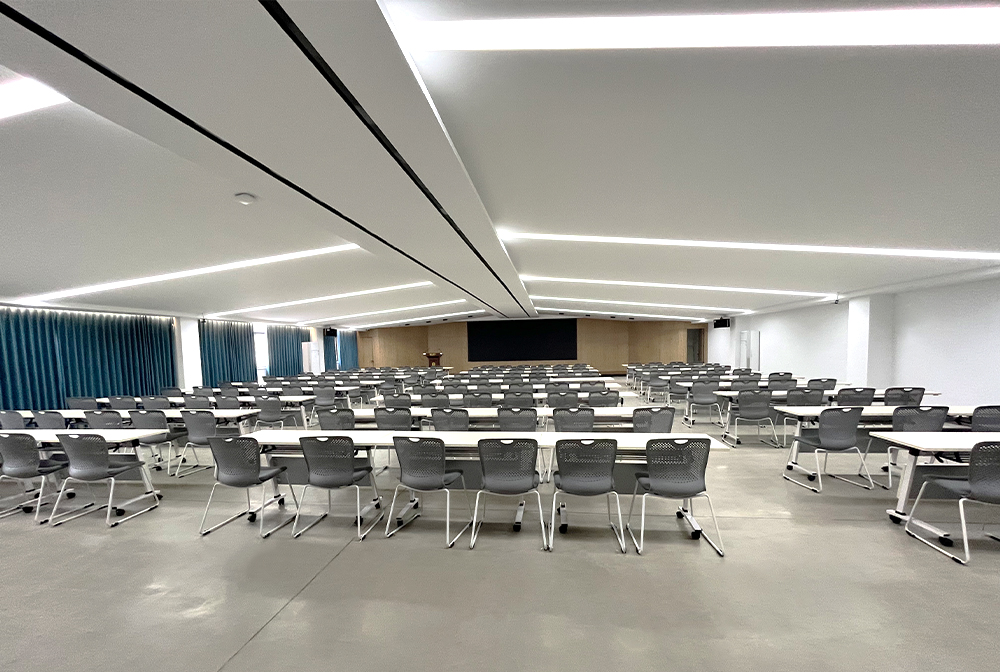
Operator and maintenance training is part of the handover scope for an integrated blister-cartoning line.
Almost every high-speed blister-cartoner quotation carries two speed figures, and they rarely describe the same operating moment. On the DHL8005H the quoted pair is 800 blisters per minute and 500 cartons per minute. Whether a buyer treats those as a single line throughput or as two separate station ratings changes the capacity case, the acceptance protocol and the price justification. This procurement Q&A works through the four items that most often stay unresolved until factory acceptance testing: the basis of the speed claim, servo-driven replenishment, PVC and aluminium foil splicing, and the GMP tooling scope. Hoping Machinery (Zhejiang Hoping Machinery Co., Ltd.), a Ruian-based manufacturer of blister, cartoning and end-of-line pharmaceutical packaging equipment established in 2001, supplies the DHL8005H as part of a wider blister-cartoning line portfolio; the questions below apply to that model and to comparable high-speed configurations from any supplier.
Two ratings, one line: the arithmetic a buyer should run first
Blister rates are normally stated at the forming and sealing station and carton rates at the cartoner. Each is a nominal maximum for its own station, measured under the supplier's stated conditions. Neither figure, on its own, tells a buyer what the line will deliver on a specific pack.
The link between them is the number of blisters placed in each carton. That single parameter decides which station becomes the constraint:
Arithmetic check (calculated, not measured): blister demand at the cartoner = cartons per minute × blisters per carton. Practical line ceiling in blisters per minute = the lower of the blister-station rating and (carton rating × blisters per carton).
Using the quoted DHL8005H ratings: at two blisters per carton, 500 cartons per minute would require 1,000 blisters per minute, so the blister station limits the line at about 400 cartons per minute. At one blister per carton, 500 cartons per minute requires 500 blisters per minute, and the cartoner becomes the limit. The two maxima are therefore not simultaneous.
That result is not a criticism of the machine. It is normal for a high-speed line to quote station ratings that cannot be reached together, because packaging rarely runs at the extreme of both stations at once. The problem is contractual: if the agreement records only the two headline numbers, a later capacity shortfall has no agreed reference point. The supplier can point to 800 blisters per minute; the buyer can point to 500 cartons per minute; both are technically correct and commercially useless.
The fix is a single sentence in the technical agreement: for each named pack format, state the balanced sustained output in cartons per minute and in blisters per minute, with the blister count per carton, film structure, carton size and the measurement window all written down. That converts two marketing maxima into one testable commitment.
Does the published line-level figure change the answer?
It does not, and it is worth understanding why. Hoping's own packaging-line page reports a maximum of 1,000 blisters per minute and 500 boxes per minute for a line configuration, while noting that the exact model and product format behind that figure require verification. A published line maximum of that kind describes a particular configuration; it cannot be transported onto the DHL8005H, and it cannot be used to benchmark another supplier unless format, station count, rejection behaviour and operating conditions are matched.
Hoping's product range also includes rotary blister machines reported in secondary trade coverage at up to 1,000 blisters per minute, alongside flat-plate and roller-type aluminium-plastic and aluminium-aluminium machines. Each of those is a different machine class with its own rating basis. A buyer comparing numbers across classes is comparing different measurements, not different machines.
Servo-driven replenishment: the parameters that belong in writing
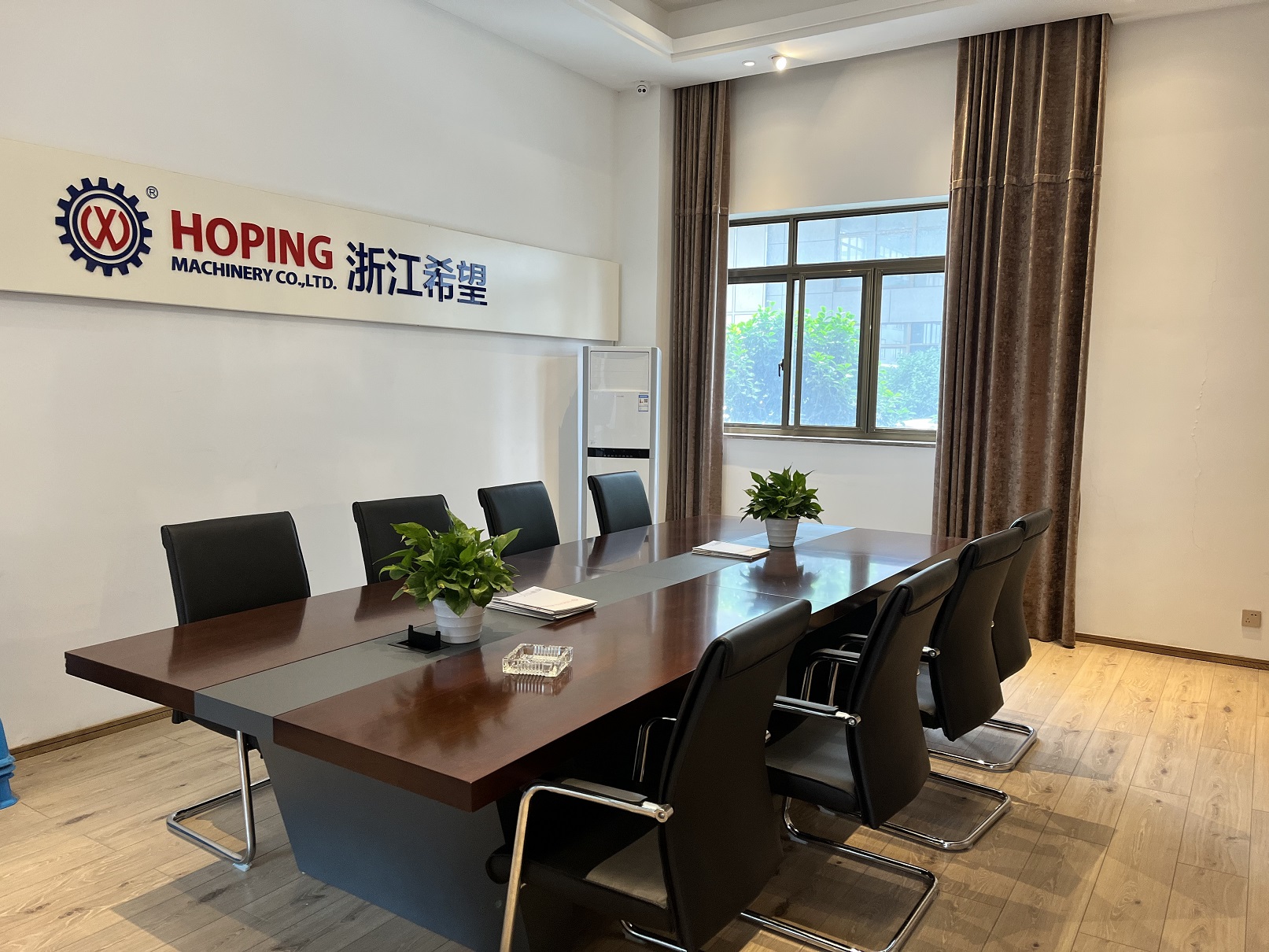
Technical-agreement sessions should end with a written axis and sequence schedule, not a verbal assurance that the machine is servo-driven.
Servo control matters at the blister-cartoner interface for three reasons: registration of forming film and lidding foil, repeatable timing between punch and die, and the controlled sequence that runs when a film roll is replenished. Hoping describes its high-speed line class as fully servo-controlled, and lists electrical component brand and data interface among its customization variables. That combination means the servo package is configuration-specific rather than a fixed catalogue item, and should be described in the agreement rather than assumed from the model name.
Four groups of questions turn "servo-driven replenishment" into a verifiable scope:
- Which motions are servo-driven. Ask for an axis schedule covering forming-film feed, lidding-foil feed, punch or cutting motion, carton-blank feed, leaflet insertion and coding positioning, and note which motions remain mechanical or pneumatic.
- What triggers replenishment. Define the low-roll signal, whether the machine stops, slows or runs through the transition, and what happens to blisters formed and sealed during that window.
- What happens to the affected blisters. If product from a splice window is diverted, the rejection logic and its record should be described; if it is not diverted, the buyer should understand why that is acceptable for the pack.
- How parameters are governed. Ask how format recipes are stored, how many can be held, who can edit them and whether an audit trail exists — questions that also matter to the buyer's own data-integrity review.
A related commercial point: a fully servo-driven line shifts maintenance dependency from mechanical adjustment to controls competence. Buyers should ask which servo and controller components the supplier recommends holding on site, and what remote diagnostic support is included. Hoping's stated after-sales scope covers on-site installation and commissioning, operator and maintenance training, remote video or phone support and spare-parts supply, subject to contract and project configuration — the specific spare-parts list still has to be agreed line by line.
PVC and aluminium foil splicing: capacity that hides between the sheets
Splicing is the point at which a running film roll ends and a new one is joined. It is a small mechanical event with an outsized effect on sustained output, because every splice interrupts the steady state the speed rating assumes. Aluminium-aluminium structures, which Hoping lists within its blister machine categories, behave differently from PVC-based structures during forming and during the splice itself, so splice settings are film-specific rather than universal.
Before treating automatic splicing as included, the technical agreement should record:
- Whether automatic splicing applies to the forming film, the lidding foil, or both, and whether it is standard or optional on the configuration being quoted.
- Roll core diameter, maximum roll width and diameter, and the film thickness range the machine is being set up for.
- Splice type and the measured waste per splice. The number should come from a demonstration, not from a verbal estimate.
- Detection and rejection policy for the splice window, including whether the event is logged.
- Tension range and low-roll alarm threshold, which determine how much usable film remains on a roll.
The output consequence is straightforward. If a splice costs a defined stop or slowdown and a defined length of rejected web, then the sustained hourly output depends on roll length and splice frequency — a calculation the buyer can only complete once roll size and waste per splice are fixed. Two machines with identical headline blister rates can therefore differ materially in cartons per shift for the same pack.
GMP tooling scope: a bill of format parts, not an adjective
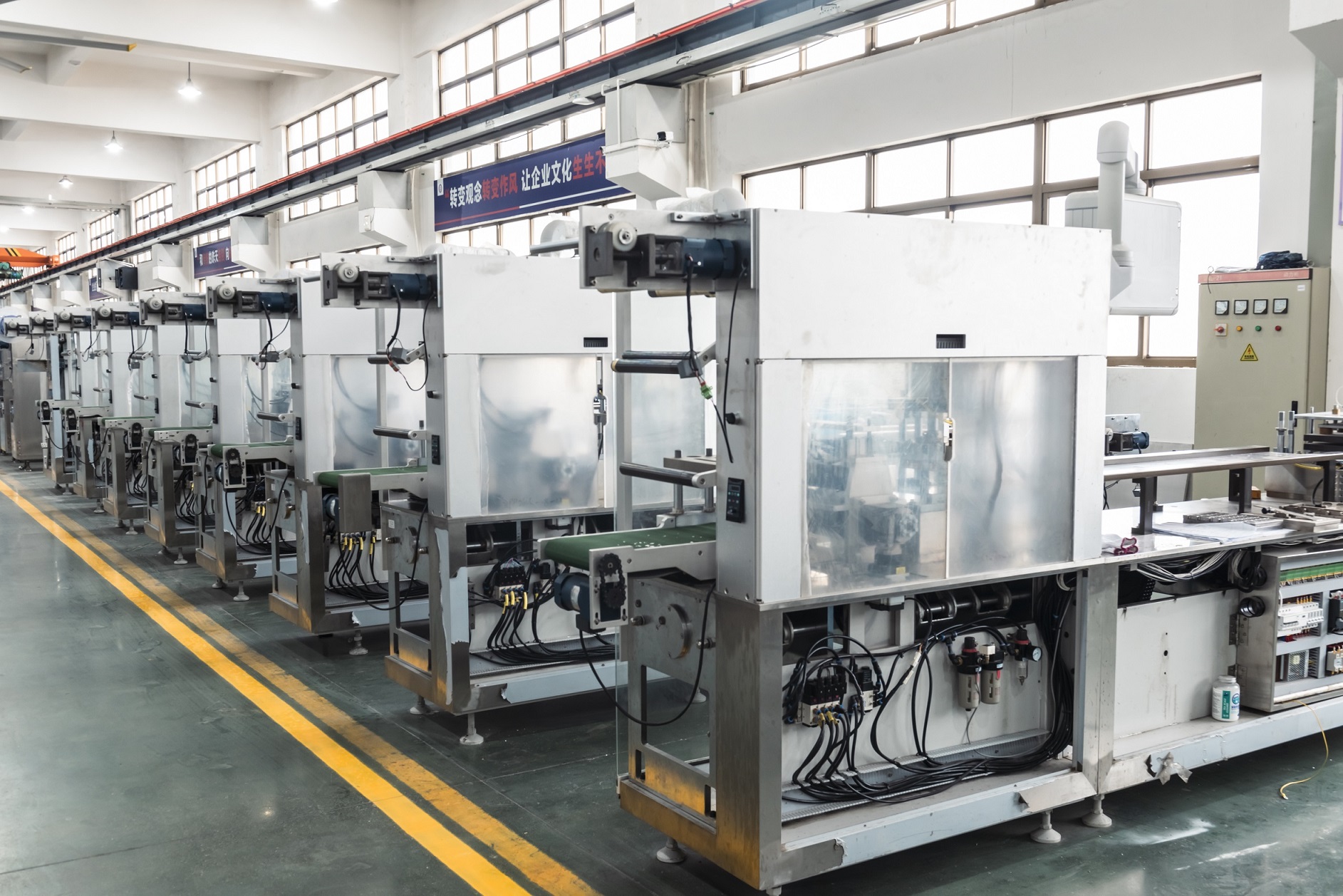
Format tooling is a priced, documented deliverable; the agreement should list it part by part.
"GMP tooling" is one of the least standardised phrases in a blister-cartoner quotation. It can mean a single forming die, or a complete change-part package for every pack size the buyer intends to run. The practical approach is to convert it into a bill of format parts and tie it to the customization sheet.
Hoping's customization scope covers blister size, blister materials, quantity per carton, carton specification, leaflet format, coding or inspection method, feeding method and the downstream bundling, case-packing or palletizing connection. Each item on that list generates corresponding tooling, which makes the customization sheet a usable checklist for the tooling annexe:
- Blister forming and lidding cutting dies for each named format, with pocket count, layout and depth recorded.
- Carton size change parts — magazine, blank feed, folding and closing elements — for each carton specification.
- Leaflet folding and insertion format parts for each leaflet format.
- Product feeding change parts for the dosage forms to be run, such as tablets and capsules.
- Coding or inspection station brackets matched to the agreed coding method.
- A product-contact item schedule stating material grade, surface finish and cleanability provisions for each contact part, with material certificates where specified.
Three commercial questions complete the scope: how many format sets are included in the base quotation, what each additional format set costs and how long it takes to supply, and what changeover time was actually demonstrated at factory acceptance testing. Changeover is frequently quoted from experience rather than measured; a timed changeover on the buyer's own format, witnessed during the test, is the only figure worth putting in a business case. Supplying drawings and a recommended spare set at handover is also worth requesting, since a single damaged format part can otherwise idle a line.
Product-contact requirements and the documentation trail
Two regulatory anchors help frame the conversation without overstating what a machine certificate can prove. ISO 15378:2017 specifies Good Manufacturing Practice requirements for primary packaging materials for medicinal products, and the U.S. FDA describes current Good Manufacturing Practice as the foundation for quality pharmaceuticals through regulatory standards. Both are framework documents; neither certifies a specific blister-cartoner. The buyer's own qualification therefore has to be supported by documentation about the machine's contact parts, cleanability and control system, not by a certificate alone.
Hoping's certificate record illustrates why scope wording deserves attention. It includes CE certificate evidence for a carton packing machine series (certificate UCN 900339024607, issued 1 April 2007), for a cartoning machine series (HTT190102307L, issued 22 January 2019) and for a blister packing machine series (HTT190102306L, issued 22 January 2019, referencing Machinery Directive 2006/42/EC and EN 60204-1:2006+A1:2009+AC:2010), alongside a certificate described as covering a sample automatic blister packing machine (UCN 900175009261, issued 6 November 2006). Series-level and sample-level certificates are normal in this industry, but they are not the same as a document naming the exact model and configuration being purchased. The practical request is a certificate whose scope text matches the machine on the order.
Management-system certificates follow the same discipline. The record lists ISO 45001:2018 certification (CN00123S33121R1M/3300) with a stated validity period ending 9 October 2026, and ISO 14001:2015 certification (CN00123E33896R1M/3300) ending 11 October 2026. Buyers reviewing supplier files after those dates should ask for the renewed certificates rather than rely on the issue dates. None of these documents, old or new, replaces a factory acceptance test.
Acceptance criteria: from inspection sequence to a signed protocol
Hoping's stated quality sequence runs from incoming material inspection and key component inspection through assembly inspection, electrical safety check, no-load trial run, material trial, factory acceptance testing, customer witness acceptance and pre-shipment inspection. Its stated commercial terms set the minimum order at one set or one complete line, quote delivery on EXW Ruian or Wenzhou, FOB Ningbo or Shanghai, or CIF/CFR destination port terms subject to contract, and define acceptance around technical agreement confirmation, sample testing, FAT before shipment and SAT at the customer site, with third-party inspection arrangeable on request. Payment terms are stated as subject to quotation, contract value, customer credit, project scope and destination market.
What those terms do not yet fix is the test itself. The protocol should specify the formats and film structures tested, blisters per carton, run duration and sample size, the measurement window for speed (a sustained average over a stated period, not a peak reading), how rejects and false rejects are counted, how the splice rejection behaves in practice, coding verification, carton closing quality, and who witnesses and signs. No universal sample size applies here; the figure has to be agreed between buyer and supplier and written into the document that both parties sign.
| Claim in the quotation | What the agreement should state | Evidence to request |
|---|---|---|
| 800 blisters/min | Station rating plus balanced line output for each named pack | FAT run data over a stated window, with format and film recorded |
| 500 cartons/min | Blister count per carton and cartoner-limited throughput | Carton quality and closing check at the agreed rate |
| Automatic splicing | Which stations, standard or optional, waste per splice | Demonstrated splice on buyer film, rejection logic shown |
| Fully servo control | Axis schedule, component brands, recipe and audit provisions | Electrical documentation and parameter-access description |
| GMP tooling | Part-by-part format list with contact-material schedule | Drawings, material certificates, measured changeover time |
Fit and boundaries for an 800-blister configuration
The configuration suits solid-dosage production where volumes justify a single integrated line and where one technical agreement covering blister, cartoner and the connection to downstream case packing or palletizing reduces interface risk. It also suits multi-format operations that need stored recipes, and packs requiring aluminium-aluminium barrier structures, which Hoping lists within its machine categories. Hoping describes solid-dosage projects in the five-to-ten line range whose stated objectives are reduced manual transfer, a tighter blister-to-carton connection, lower wrong-insertion and missing-leaflet risk and downstream automation readiness. Those are stated project objectives from company material, not audited outcomes for any named customer.
The boundary matters as much as the fit. Where a pack carries three or four blisters per carton, cartoner demand falls well below the quoted carton ceiling, so a share of the cartoner's nominal capacity is paid for and never used. Where output requirements are moderate, other models in the same portfolio — the line range includes DHL6004, DHL7004, DHL7005H and DHL1000/5H alongside flow-wrap cartoning options — may offer a better balance, but each must be quoted on its own datasheet rather than inferred from a model name. A fully servo-driven line also raises the controls competence the plant must retain, which is a staffing and spare-parts question rather than an engineering one.
Market context, kept to what the sources say
Published market research places the global blister packaging machine pharmaceutical market at USD 2.57 billion in 2025, with Asia-Pacific described as the fastest-growing region at an 8.87% CAGR to 2031, according to a single commercial research source whose report scope covers rotary, flat, thermoform and cold-form machines. A separate commercial study reports horizontal cartoning systems at 70.12% of cartoning market revenue in 2024, and another places the wider pharmaceutical packaging machinery market at USD 7.09 billion in 2026 growing at 7.15% CAGR toward USD 10.02 billion, with the forecast end year truncated in the available excerpt.
These figures support planning context only. The two market values use different definitions and must not be combined or differenced, and no source available here splits the total by equipment type — so no statement about the share held by high-speed blister-cartoners can be supported. The horizontal-cartoning share describes orientation preference across a market, not a recommendation for any individual project.
Outlook: two directions worth watching, neither yet a specification
Trade coverage reporting association content describes pharmaceutical manufacturers moving toward digitised data collection and integrated solutions to meet regulatory expectations and improve visibility. The statement is directional and carries no measurement basis, so it should not be converted into an adoption rate. Its practical effect on procurement is nonetheless concrete: data interface, recipe control and event logging become line items in the technical agreement rather than after-sales additions.
Separately, a regulatory-affairs consultancy reports that China has draft GMP guidance for pharmaceutical packaging materials under public consultation, addressing how licence holders review packaging material suppliers. The underlying issuing-authority document was not confirmed in the available evidence, and the status is draft. Buyers in or exporting to that market should treat supplier-qualification documentation as a developing requirement rather than a settled rule.
Procurement FAQ
If a line is quoted at 800 blisters per minute and 500 cartons per minute, what output should a buyer expect?
Expect neither figure as a simultaneous line output. The practical ceiling is the lower of the blister-station rating and the carton rating multiplied by blisters per carton. At two blisters per carton the line is blister-limited at roughly 400 cartons per minute; at one blister per carton the cartoner limits output at 500 cartons per minute. The agreement should therefore state a balanced, sustained figure for each named pack rather than repeat the two maxima.
How is servo-driven replenishment verified before shipment?
Verification rests on documentation plus a demonstration. The document is an axis schedule showing which motions are servo-driven, the component and controller brands, and how the film-replenishment sequence behaves when a roll nears its end. The demonstration is a factory acceptance run on the buyer's film that starts with a nearly exhausted roll, shows what happens to blisters formed during the transition, and confirms whether those blisters are diverted and recorded. Without both, "servo-driven" remains a description rather than a tested behaviour.
What belongs in the technical agreement for PVC and aluminium foil splicing?
Five items: whether automatic splicing applies to forming film, lidding foil or both; the roll core diameter, width and diameter limits plus film thickness range; the splice type and measured waste per splice; the detection and rejection policy for the splice window, including whether the event is logged; and the tension range and low-roll alarm threshold. Because aluminium-aluminium structures behave differently from PVC-based ones during forming and splicing, the settings should be confirmed per film structure rather than assumed to transfer.
Which items should a GMP tooling scope list?
It should read as a part-by-part annexe: forming and lidding cutting dies per blister format, carton size change parts, leaflet folding and insertion parts, product feeding change parts for the dosage forms to be run, coding or inspection station brackets, and a product-contact item schedule covering material grade, surface finish and cleanability. It should also state how many format sets the base quotation includes, the cost and lead time for additional sets, and the changeover time actually measured during testing.
Can the configuration be adapted for private-label cartons and downstream case packing?
Hoping lists blister size, blister materials, quantity per carton, carton specification, leaflet format, coding or inspection method, feeding method, downstream bundling, case-packing or palletizing connection, interface language, electrical component brand and data interface as customization items, under an ODM/OEM/customizable production mode. The minimum order is one set or one complete line, and lead time is typically 60 to 120 days after technical confirmation, subject to model, configuration, project complexity and contract terms. Each adaptation should be confirmed in writing against the technical agreement rather than assumed from the customization list.
What to carry into the negotiation
The DHL8005H question is not whether 800 blisters per minute and 500 cartons per minute are impressive numbers. It is whether the agreement defines, for the buyer's own pack, which station limits the line, what a splice costs in output, which format parts arrive with the machine and what a witnessed test must demonstrate before acceptance. Each of those is answerable in writing, and each converts a headline claim into a procurement term. For buyers who want the wider equipment context before the technical session, Hoping's published catalog is available as a downloadable PDF.
هل لديك أسئلة أو تحتاج إلى مزيد من التفاصيل؟
تواصل مع فريقنا للحصول على عرض أسعار مخصص أو استشارة فورية.
طلب عرض أسعار
املأ النموذج أدناه وسيتواصل معك فريقنا بعرض مقترح مخصص.
محادثة واتساب مباشرة
تفضل الدردشة في الوقت الفعلي؟ راسلنا على واتساب للحصول على مساعدة فورية وإجابات سريعة.
- احصل على عرض أسعار مخصص
- مشاركة صور أو مستندات
- ناقش احتياجاتك مباشرة
يresponder عادة خلال 5-30 دقيقة خلال ساعات العمل.