
Blister-Cartoner vs. Blister-Flow-Wrap-Cartoner: Buyer's Framework
Blister-Cartoner vs. Blister-Flow-Wrap-Cartoner: Buyer's Framework
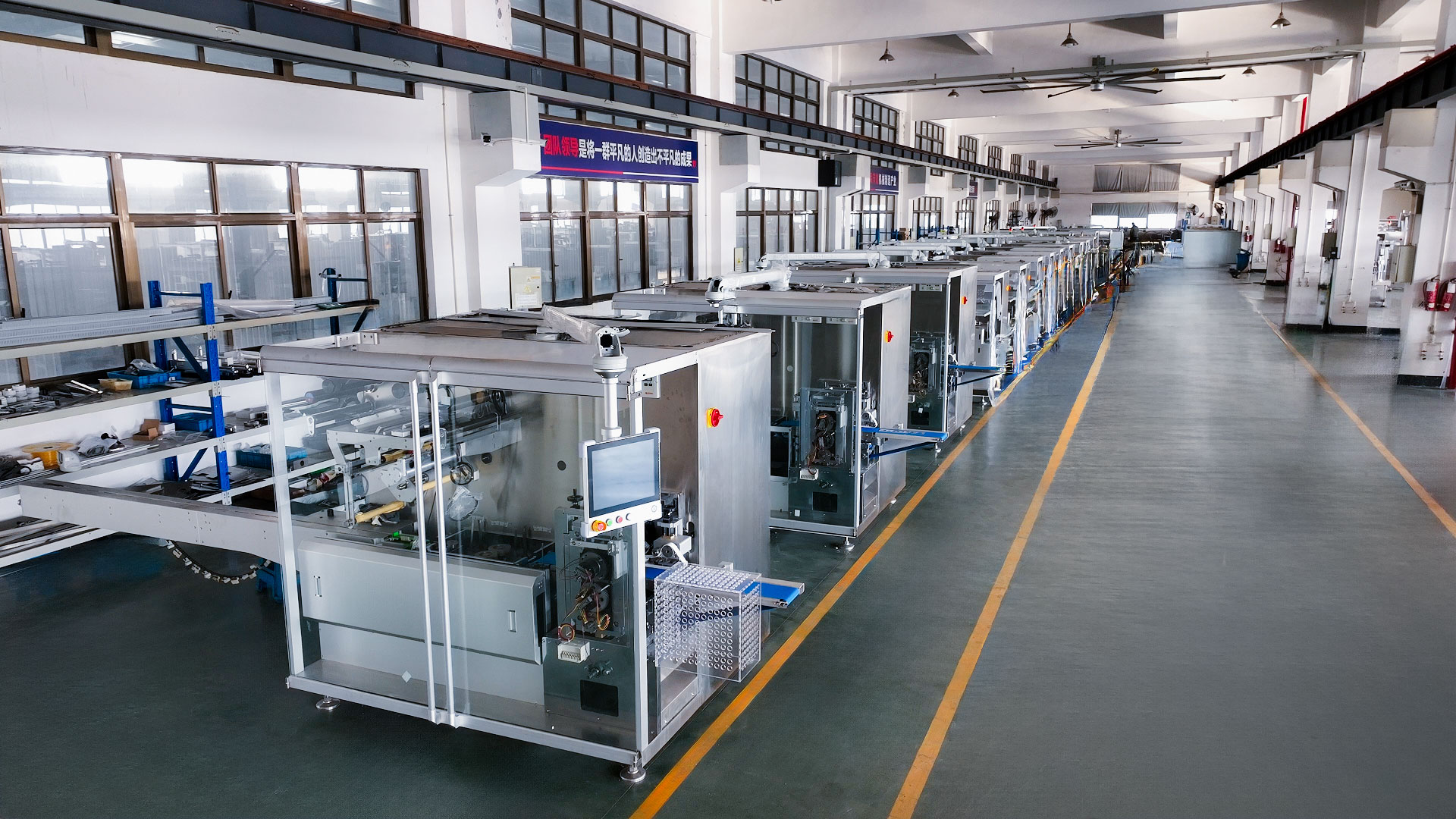
Solid-dosage packaging decisions rarely turn on a single machine specification. When a pharmaceutical manufacturer, nutraceutical producer or healthcare product company reaches the decision stage for a new or upgraded line, the question is not simply whether to buy a pharmaceutical packaging machine or an automatic cartoning machine. The question is how those machines should be configured—and whether an additional flow-wrapping stage between blister output and carton closing belongs in the architecture.
Two configurations dominate this choice. A blister-cartoner pairs a pharmaceutical blister packaging machine with an automatic cartoning machine. Blister cards emerge from the blister machine, transfer to the cartoner, and are inserted into cartons together with a leaflet. A blister-flow-wrap-cartoner inserts a flow-wrapping stage between those two machines. The blister card—or a group of cards—receives a sealed film envelope before it enters the carton.
The distinction matters beyond machine count. Pack format, integration scope, dosage-form fit, throughput balance and GMP-oriented documentation of contact parts and tooling all shift when the flow-wrap stage is added. This article compares the two configurations across those five dimensions. The DHL8005H Automatic Blister-Cartoning Line from Zhejiang Hoping Machinery Co., Ltd. serves as a reference point for what a documented blister-cartoner configuration looks like—not as a universal recommendation.
The Two Configurations in Brief
A blister-cartoner configuration covers the path from formed blister to closed carton. In typical form, the line includes a blister packaging machine, a blister transfer unit, a leaflet folder and feeder, a carton erector, an insertion station and a closing unit. Detection and rejection modules—sensor monitoring, missing-product alarms, automatic stop and automatic rejection where configured—can sit at one or more points along that path. The output is a sealed blister card inside a printed carton.
A blister-flow-wrap-cartoner follows the same path up to blister output, then adds a flow-wrapping machine. Flow wrapping encloses the blister card, or a predetermined count of cards, in a sealed film. The wrapped bundle then enters the cartoner for insertion into a carton. The carton can also receive a leaflet.
Both configurations can connect downstream to case packing and palletizing equipment. Both can be built with servo-driven stations and centralized control. The difference lies in what the flow-wrap stage contributes, what it costs, and what it changes for the buyer.
Dimension 1 — Pack Format: What Goes Inside the Carton
The pack format question comes first because it determines whether the flow-wrap stage is compatible with the product presentation the buyer needs.
In a blister-cartoner configuration, the carton contains a bare blister card, usually with a leaflet. The card's dimensions, material structure (PVC, PVDC, alu-alu or cold form), and card count per carton are set by the blister machine's tooling and the cartoner's format range. The carton itself provides the visible brand surface, the tamper-evident closure and the primary barrier after the blister.
In a blister-flow-wrap-cartoner configuration, the carton contains a flow-wrapped bundle. That bundle may hold a single blister card or multiple cards. The flow-wrap film adds a sealed layer around the card before cartoning. This can serve several purposes: additional moisture or oxygen barrier, protection against card abrasion during transport, tamper evidence, or a defined unit-of-use presentation. The carton then carries the bundle.
The format decision carries procurement consequences. A flow-wrapped bundle requires film stock, sealing tools and an additional format set for the flow-wrapper. Changeover time increases when the line must switch between wrapped and unwrapped formats. Carton dimensions can change to accommodate the bundle's thickness. Buyers who need the carton to display the blister card directly, or who rely on the carton as the primary barrier, may find that flow wrapping adds cost without a functional benefit.
A practical decision rule: if the product's stability profile, market presentation requirements or distribution chain call for a sealed film layer around the blister card, the flow-wrap stage has a defensible role. If the blister's own barrier plus the carton is sufficient, the simpler blister-cartoner configuration avoids the film cost, the additional tooling and the extra changeover.
Dimension 2 — Integration Scope: How Many Stages Before the Carton Closes
Integration scope affects engineering risk, operator workload and documentation requirements.
A blister-cartoner integrates two core process machines—blister packaging and cartoning—plus the transfer, leaflet and inspection stations between them. The control architecture links the blister machine's cycle to the cartoner's cycle. Speed synchronization prevents card accumulation at the transfer point. The DHL8005H is specified at 800 blisters/min and 500 cartons/min, with Beckhoff/CP9315 control, servo replenishment and auto splicing. Those specifications describe one documented point in the blister-cartoner category.
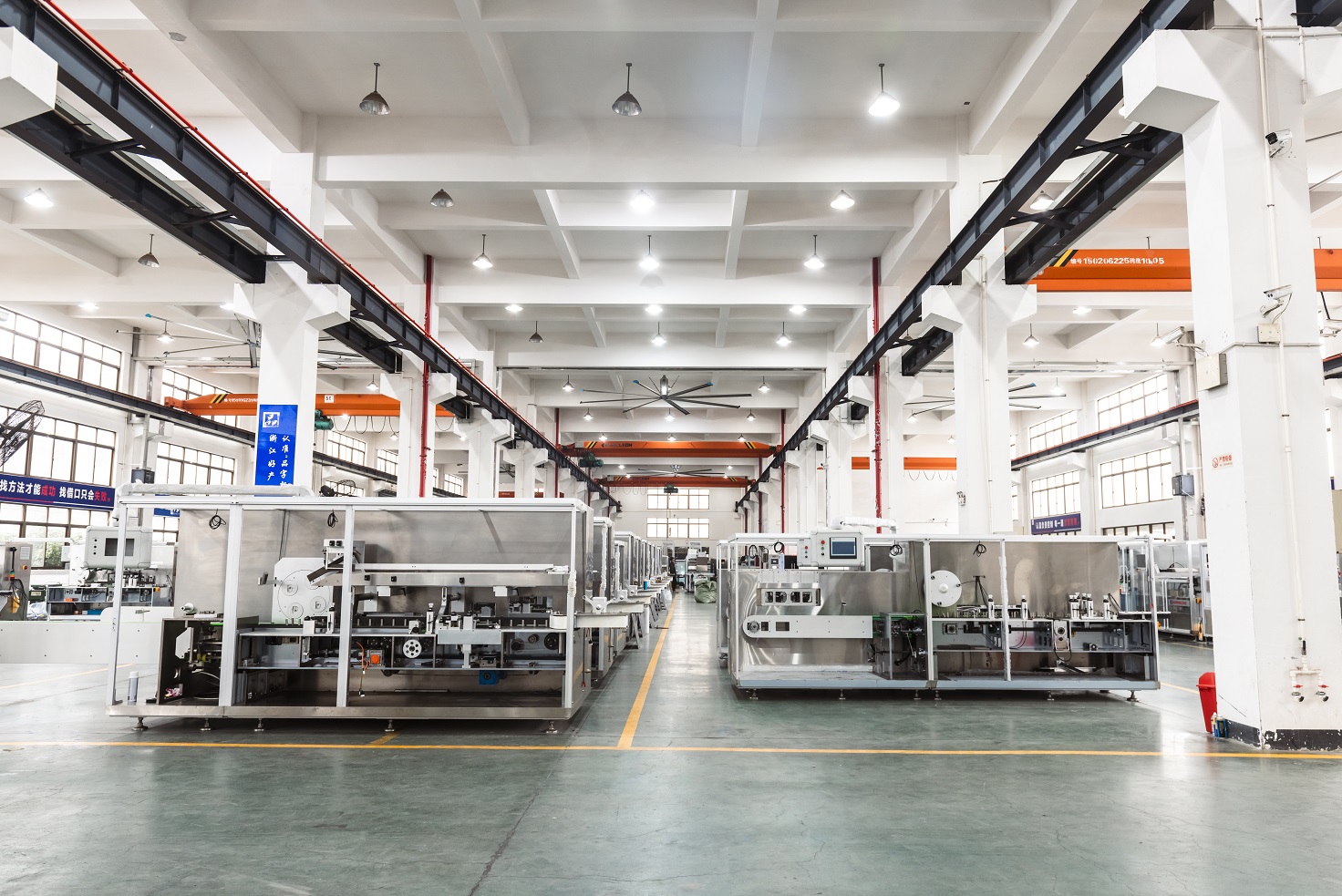
A blister-flow-wrap-cartoner adds a third core process machine. The flow-wrapper must synchronize with the blister machine upstream and the cartoner downstream. That creates two synchronization interfaces instead of one. Film tension, sealing temperature and cut-off registration add control variables. The line's overall equipment effectiveness depends on the slowest stage in the chain, and the flow-wrapper introduces another stage that can become a bottleneck.
The integration scope also affects GMP documentation. Each additional machine in the product-contact path brings its own contact-part materials, surface finishes, cleaning access and tooling records. A flow-wrapper's forming collar, sealing jaws and film path are product-contact surfaces. They require the same documentation discipline as the blister machine's forming and sealing stations.
Buyers should map the full product-contact path before signing a technical agreement. The question is not only how many machines the line contains, but how many documented change points exist between the bulk product and the sealed carton.
Dimension 3 — Dosage-Form Fit: Tablets, Capsules, Soft Capsules and Nutraceuticals
Both configurations handle solid dosage forms, but the fit varies by product type and presentation requirement.
Tablets are the most common fit for both configurations. In a blister-cartoner, tablets run through the blister machine's forming, filling and sealing stations, then transfer directly to the cartoner. In a blister-flow-wrap-cartoner, the sealed blister card passes through the flow-wrapper before cartoning. For tablets with standard dimensions and stable formulations, the blister-cartoner path is the shorter and simpler route. The flow-wrap stage becomes relevant when the tablet's stability profile requires an additional barrier, or when market presentation calls for a wrapped unit inside the carton.
Capsules require attention to feeding and orientation. Capsules can be fragile and may be sensitive to mechanical handling at transfer points. The blister machine's filling station must handle capsules without deformation. The transfer from blister to cartoner—or from blister to flow-wrapper—must maintain card integrity. In a flow-wrap configuration, the additional handling at the flow-wrapper's infeed is a point to verify with sample runs. HOPING's automatic cartoning machines are described as suitable for blister packs, tablets, syringes and medicine bottles, which indicates breadth of application coverage but does not certify capsule-specific performance at the flow-wrap interface.
Soft capsules present a different challenge. Soft capsules can be more sensitive to pressure and temperature than hard capsules. The blister forming and sealing process must avoid excessive heat or mechanical stress. In a flow-wrap configuration, the flow-wrapper's sealing temperature and jaw pressure become additional variables to qualify. Buyers running soft capsules should require material tests that cover the full path from blister filling through flow-wrap sealing and carton closing.
Nutraceuticals and healthcare products often involve larger formats, higher card counts per carton, or combination packs. A blister-flow-wrap-cartoner can offer flexibility here: the flow-wrapper can bundle multiple blister cards into a single wrapped unit, which then goes into a larger carton. That bundling capability can reduce carton size variability and simplify downstream handling. For nutraceutical products with wide format ranges, however, the changeover burden across both the flow-wrapper and the cartoner should be part of the total cost calculation.
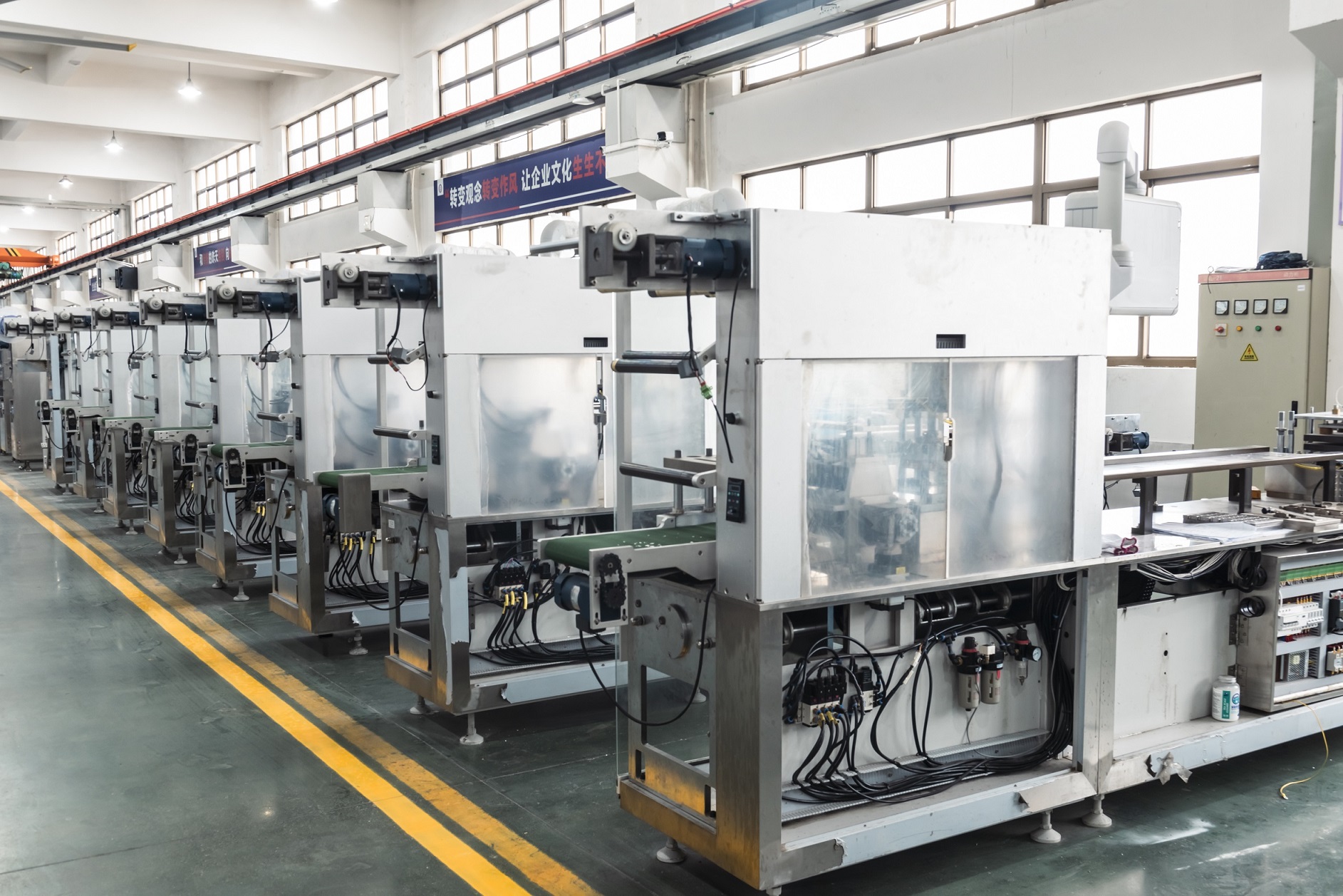
A buyer's decision rule for dosage-form fit: start with the product's stability and presentation requirements. If the blister card plus carton meets those requirements, the blister-cartoner is the simpler fit. If the product needs a sealed film layer—for barrier, tamper evidence or unit-of-use bundling—the flow-wrap configuration earns its place.
Dimension 4 — Throughput Requirements: Matching Blister Output to Carton Output
Throughput comparison between the two configurations is not a simple speed contest. The relevant metric is sustained, synchronized output across the full line.
In a blister-cartoner, the blister machine's output and the cartoner's output must be balanced. If the blister machine runs faster than the cartoner can accept cards, accumulation occurs. If the cartoner runs faster than the blister machine can supply, the cartoner idles. The DHL8005H's stated maximum outputs—800 blisters/min and 500 cartons/min—illustrate this balance point. The ratio between blister output and carton output depends on the number of blisters per carton. A buyer should calculate the required ratio from their own pack format before comparing machine speeds.
Adding a flow-wrap stage introduces a third output rate into the balance. The flow-wrapper's film speed, sealing cycle time and cut-off rate must align with both the upstream blister output and the downstream carton demand. A line that balances two machines is easier to optimize than a line that balances three.
This does not mean the flow-wrap configuration is inherently slower. It means the buyer's throughput calculation must account for three rates and two synchronization points rather than two rates and one synchronization point. The risk of a hidden bottleneck rises with each additional stage.
Buyers evaluating throughput should request sustained-output data under defined conditions—product format, card count per carton, film type and reject rate. Maximum speed alone does not describe the line's usable capacity. An 800-blister/min maximum means little if the cartoner's effective rate is lower under the buyer's format. The same discipline applies to the flow-wrap configuration: a flow-wrapper rated at a given film speed may not sustain that speed when sealing a particular film structure.
Dimension 5 — GMP-Oriented Documentation: Contact Parts and Tooling
GMP-oriented documentation is where the configuration choice becomes a qualification issue.
Both configurations require documentation of product-contact parts. The blister machine's forming station, filling station, sealing station and cutting station are product-contact surfaces. The cartoner's product bucket, insertion pusher and carton guide are product-contact surfaces. In a flow-wrap configuration, the flow-wrapper's forming collar, sealing jaws and film path join that list.
ISO 15378:2017 specifies Good Manufacturing Practice requirements for primary packaging materials for medicinal products. It is a standard for packaging material manufacturers, not a machine certification. A machine supplier's compliance with that standard is not automatic. Buyers should request specific documentation: material certificates for contact parts, surface finish specifications, cleaning and sanitization procedures, and change-control records for tooling.
Tooling documentation deserves separate attention. Blister tools, forming dies, sealing dies and cartoner format sets are product-specific. Their material, surface treatment and dimensional records determine whether the line can reproduce the qualified pack format after a tooling change. A flow-wrap configuration adds sealing-jaw tooling and film-path components to that documentation scope.
The U.S. FDA's cGMP framework establishes the foundation for quality pharmaceuticals through regulatory standards. Its guidance on production and process controls is a reference point for how equipment documentation fits into a quality system. The buyer's question is not whether a machine is "GMP compliant" in the abstract, but whether the supplier can provide the specific contact-part and tooling records that the buyer's quality unit needs for qualification.
A practical verification step: request a contact-part documentation package that lists every product-contact component in the proposed configuration, its material grade, its surface finish and its cleaning access. Compare that list across the two configurations. The flow-wrap version will have more entries. The buyer should decide whether those extra entries are justified by the product's requirements.
Using the DHL8005H as a Reference Point
The DHL8005H Automatic Blister-Cartoning Line is a documented blister-cartoner configuration from HOPING. Its stated specifications include 800 blisters/min and 500 cartons/min, Beckhoff/CP9315 control, servo replenishment and auto splicing.
Those specifications are useful as a reference because they describe a defined point in the blister-cartoner category. A buyer can use them to set a baseline: what does an 800-blister/min blister-cartoner look like, and how does that compare with the throughput and documentation package of a blister-flow-wrap-cartoner?
The DHL8005H is not a universal recommendation. It is one configuration among many. Its 800-blister/min output may be appropriate for a high-volume solid-dosage line and inappropriate for a smaller-scale operation. Its control platform—Beckhoff/CP9315—may integrate easily with one buyer's plant systems and require additional engineering for another's.
HOPING's product scope includes flat-plate, roller-type aluminum-plastic and aluminum-aluminum blister packaging machines, along with automatic cartoning machines and production lines. That scope indicates that the company can configure lines across multiple blister formats and cartoning requirements. The DHL8005H is one expression of that capability. Buyers should use it as a comparison point, not as a template.
How These Configurations Compare with Traditional Solutions
Both the blister-cartoner and the blister-flow-wrap-cartoner differ from traditional approaches in degree of integration.
A traditional setup may use a blister machine, manual transfer of blister cards to a standalone cartoner and separate leaflet insertion. That approach has lower initial equipment cost but higher labor content, more intermediate handling and greater risk of card damage or mix-up during transfer.
A semi-automatic blister-cartoning solution reduces some manual steps but retains manual intervention at transfer or carton loading. A conventional non-full-servo link line connects blister and cartoning with mechanical synchronization rather than servo-driven coordination.
The integrated configurations—whether blister-cartoner or blister-flow-wrap-cartoner—reduce manual intervention and intermediate handling. They centralize control, parameter management and alarm indication. They also raise the initial investment and the documentation burden.
For a buyer at the decision stage, the relevant comparison is not "integrated versus traditional" in the abstract. It is whether the specific product, volume and quality-system requirements justify the integration. A blister-cartoner may be the right level of integration for a product that does not need flow wrapping. A blister-flow-wrap-cartoner may be justified when the product's barrier or presentation requirements demand the extra stage.
HOPING's integrated line scope includes blister packaging, cartoning, flow packing, case packing and palletizing. That scope indicates that both configurations sit within a broader line architecture. The buyer's decision is about where to draw the integration boundary for their specific product.
Future Outlook: What Buyers Should Watch
Three developments are relevant to the blister-cartoner versus blister-flow-wrap-cartoner decision.
First, the market context. The global blister packaging machine pharmaceutical market was valued at USD 2.57 billion in 2025, according to Custom Market Insights. Asia-Pacific is reported as the fastest-growing region, with an 8.87% CAGR to 2031. Horizontal cartoning systems held 70.12% of the cartoning machine market share in 2024, according to Mordor Intelligence. These figures describe market scale, not a recommendation for either configuration. They do suggest that cartoning remains the dominant secondary packaging format and that blister packaging capacity continues to expand.
Second, the digitalization trend. Trade media reporting PMMI content states that pharmaceutical manufacturers are turning toward digitized data collection and integrated solutions to meet regulations and improve visibility. For line configuration, that trend favors control architectures that can log process data, track batch parameters and integrate with plant-level systems. Both configurations can support that capability, but the buyer should specify data-collection requirements in the technical agreement rather than treating them as aftermarket additions.
Third, regulatory development. A regulatory-affairs source reports that China has a draft GMP guidance for pharmaceutical packaging materials under public consultation. That draft, if finalized, could affect supplier review obligations for packaging materials and, by extension, equipment documentation. Buyers supplying China-facing products should monitor the final text rather than relying on the draft.
None of these developments argues for one configuration over the other. They argue for a procurement process that specifies documentation, data capability and qualification criteria alongside machine speed.
Frequently Asked Questions
What is the main difference between a blister-cartoner and a blister-flow-wrap-cartoner?
A blister-cartoner transfers blister cards directly from the blister packaging machine to the cartoning machine. A blister-flow-wrap-cartoner inserts a flow-wrapping stage between those two machines, so the blister card or bundle receives a sealed film envelope before cartoning. The difference is one additional process stage, with associated film, tooling and synchronization requirements.
Which configuration suits capsule and soft-capsule packaging better?
Both configurations can handle capsules and soft capsules, but the flow-wrap stage adds handling and sealing variables that require sample verification. Capsules and soft capsules may be sensitive to mechanical stress and temperature at transfer and sealing points. Buyers should require material tests across the full product path—blister filling, transfer, flow-wrap sealing where applicable and carton closing—before committing to a configuration.
How should a buyer evaluate throughput for a blister cartoning line?
Throughput evaluation should use sustained, synchronized output under the buyer's actual pack format, not maximum machine speed alone. The buyer should calculate the blister-to-carton ratio from the number of blisters per carton, then request sustained-output data from the supplier under defined conditions. In a flow-wrap configuration, the buyer should also verify the flow-wrapper's sustained film speed and sealing cycle time against the upstream and downstream rates.
What GMP documentation should buyers request for contact parts and tooling?
Buyers should request a contact-part documentation package listing every product-contact component, its material grade, surface finish and cleaning access. Tooling documentation should cover blister tools, forming dies, sealing dies and cartoner format sets, including material and dimensional records. ISO 15378:2017 provides a GMP framework for primary packaging materials, and the FDA's cGMP guidance addresses production and process controls. The buyer's quality unit should define the specific records required for qualification.
When does a flow-wrap stage add value to a blister-cartoning configuration?
A flow-wrap stage adds value when the product requires an additional sealed barrier around the blister card, when tamper evidence or unit-of-use bundling is needed, or when the market presentation calls for a wrapped unit inside the carton. It adds cost, tooling, changeover time and documentation scope. The decision should rest on the product's stability and presentation requirements, not on the availability of the technology.
Conclusion
The choice between a blister-cartoner and a blister-flow-wrap-cartoner is a decision about where to place the integration boundary for a specific product. Five dimensions frame that decision: pack format, integration scope, dosage-form fit, throughput balance, and GMP-oriented documentation of contact parts and tooling.
A blister-cartoner is the simpler configuration. It covers the path from blister output to closed carton with two core process machines and one primary synchronization interface. It suits products whose blister barrier and carton presentation meet the stability and market requirements without an additional film layer.
A blister-flow-wrap-cartoner adds a sealed film stage. That stage can serve barrier, tamper-evidence or bundling requirements. It also adds a third machine, a second synchronization interface, additional contact parts and additional tooling documentation.
The DHL8005H Automatic Blister-Cartoning Line illustrates one documented point in the blister-cartoner category: 800 blisters/min, 500 cartons/min, Beckhoff/CP9315 control, servo replenishment and auto splicing. It is a reference for comparison, not a universal answer.
HOPING's product scope—blister packaging machines, cartoning machines, flow packing, case packing and palletizing—means both configurations sit within a broader line architecture. Buyers can use the five dimensions in this framework to define their requirements, request comparable evidence from suppliers and draw the integration boundary where their product and quality system need it.
For a downloadable overview of HOPING's packaging machinery portfolio, the company catalog is available at Hoping Machinery Catalog (PDF).
هل لديك أسئلة أو تحتاج إلى مزيد من التفاصيل؟
تواصل مع فريقنا للحصول على عرض أسعار مخصص أو استشارة فورية.
طلب عرض أسعار
املأ النموذج أدناه وسيتواصل معك فريقنا بعرض مقترح مخصص.
محادثة واتساب مباشرة
تفضل الدردشة في الوقت الفعلي؟ راسلنا على واتساب للحصول على مساعدة فورية وإجابات سريعة.
- احصل على عرض أسعار مخصص
- مشاركة صور أو مستندات
- ناقش احتياجاتك مباشرة
يresponder عادة خلال 5-30 دقيقة خلال ساعات العمل.