
Blockout Fabric Purchase Terms: Elitex vs Hunter Douglas, Mermet, Serge Ferrari
A buyer-decision comparison of the commercial terms and acceptance criteria that determine whether a blackout roller blind fabric order performs as specified — and where the paper trail, not the sample, decides the outcome.
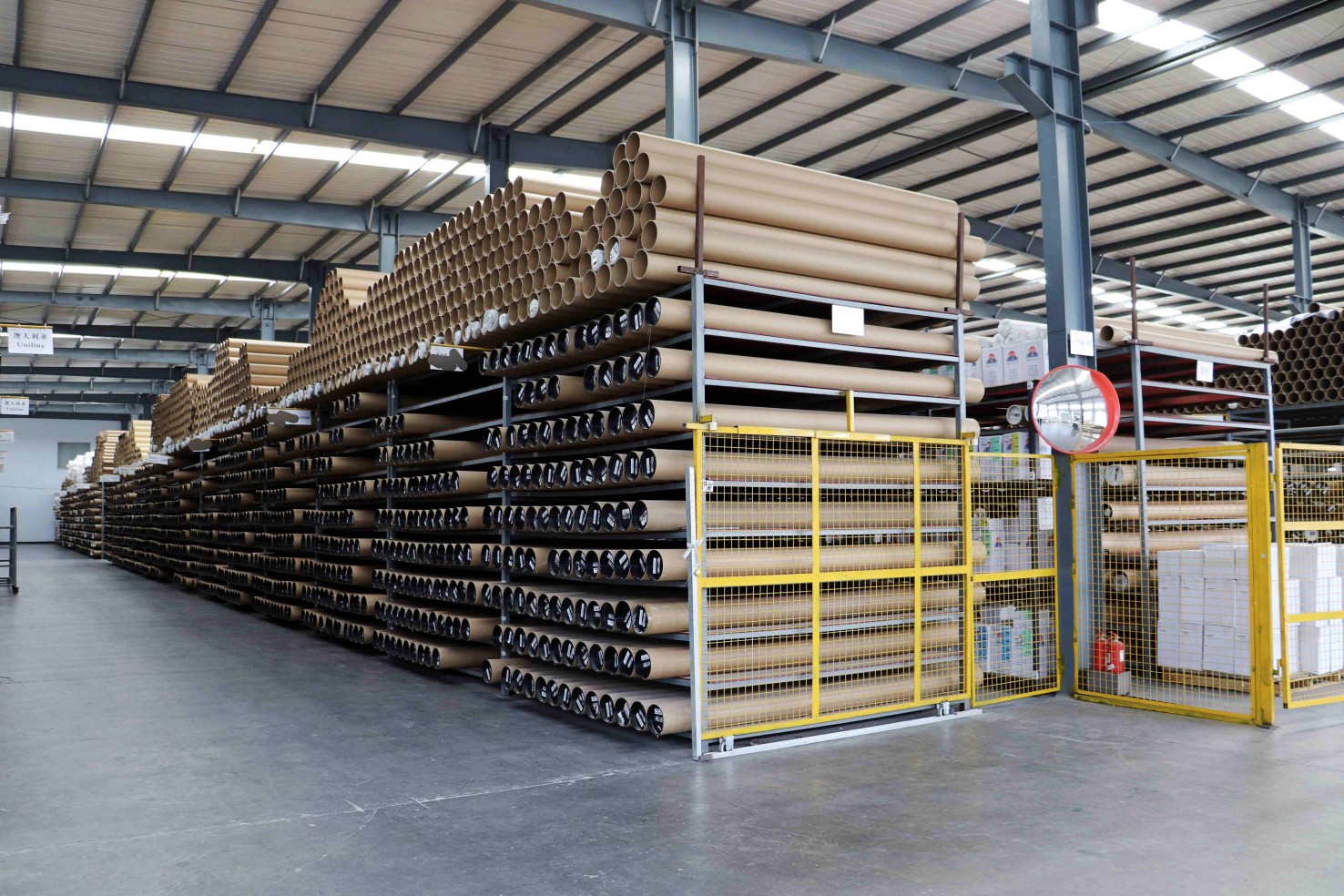
Blockout fabric is approved on a swatch and settled on a purchase order. The gap between those two moments is where acceptance criteria do the work.
Blockout fabric is one of the few industrial textiles that is bought on a hanger sample and governed, in practice, by a price per metre. Opacity that looks identical in an A4 swatch can behave very differently once the coating is applied at production width, the roll is slit to the ordered length, and the finished blind is mounted on a west-facing façade. That is why the decision stage of a blockout fabric purchase is not really about the sample. It is about the two documents that travel with it: the commercial terms and the acceptance criteria.
This comparison places Elitex (Dezhou) Co., Ltd — a Chinese manufacturer of sunshading fabrics founded in 2003 and based in Dezhou, Shandong Province — alongside three internationally recognised names: Hunter Douglas, Mermet and Serge Ferrari. The question being tested is the one procurement teams actually put to suppliers at decision stage: what purchasing terms apply, and against which acceptance criteria will the goods be judged?
One framing note matters from the outset. Elitex's positions below are drawn from first-party company and product data. The same headings are applied to Hunter Douglas, Mermet and Serge Ferrari as verification questions, because their contractual terms are defined by their own commercial documentation rather than by publicly available disclosure. A comparison that invents a competitor's MOQ or claim window is not a comparison; it is a brochure. What follows is a checklist that can be carried into any of the four negotiations.
What "Purchase Terms" Actually Covers in a Blockout Fabric Order
A blockout fabric purchase order contains two agreements that are often collapsed into one. The first is commercial: what construction, how many metres, in which roll configuration, at what price basis, delivered on which terms, paid on which schedule. The second is technical-acceptance: which measurable properties define conformity, how they will be verified, and what remedy applies when they are not met.
Buyers who negotiate only the first and leave the second to a generic "quality as per sample" clause end up with no enforceable definition of failure. In a product category where the difference between acceptable and unacceptable is often a visible pinhole, a half-shade colour drift, or a coating line that appears after lamination, "as per sample" is not an acceptance criterion — it is an invitation to dispute.
For Elitex, the underlying capability facts relevant to these terms are disclosed and specific: a manufacturing site of 85,000 m², 259 employees, an R&D team of 36 engineers, and annual output of 8,000,000 m² of screen fabrics alongside 7,200,000 m² of blockout fabrics. Roughly 80% of output is exported, serving the USA, EU, Australia, North America, South East Asia and the Middle East. Those figures do not describe a trading intermediary; they describe a manufacturer whose order book is structured around export documentation.
Why Acceptance Criteria Now Decide More Than Price
The commercial weight behind this category has grown. The global blackout fabric market was valued at approximately USD 10.5 billion in 2024 and is projected to reach USD 20.3 billion by 2034, according to Vertex AI Search / Market Analysis 2025. North America accounted for a 50.70% revenue share of the blinds and shades market in 2025, valued at USD 3.62 billion, per Fortune Business Insights. On the material side, polyester remains the dominant substrate for blackout fabric laminates, at an estimated 47.2% of the material segment in 2026, according to Future Market Insights.
Scale alone, however, does not tell a buyer how to write a specification. Two published standards do more useful work at the acceptance stage. EN 14501:2021, issued by CEN, specifies performance characteristics and classifications for solar protection devices in relation to thermal and visual comfort — it gives both parties a shared vocabulary for what "blackout" and "dimout" are being claimed against. NFPA 701, issued by the National Fire Protection Association, is the flame propagation test applied to vertically hung textiles such as blackout curtains and blinds in US public and commercial spaces.
Performance data reinforces why the acceptance clause should be technical rather than visual. Advanced blackout fabric laminates combining polyester with acrylic coatings can improve thermal heat resistance by 20–35%, according to the Blackout Fabric Laminates Market Growth Report. That is a material-level finding produced by construction, not by appearance — and it is invisible on a hanger sample.
There is also a caution worth carrying into any supplier comparison. Published market-size estimates for this category diverge sharply by scope: Vertex AI Search cites approximately USD 10.5 billion for 2024, Strategic Market Research cites USD 2.7 billion, and IMARC Group cites USD 11.0 billion for 2025. The divergence is a scope question — fabric only versus finished blinds — and it is the reason market-share claims in this category should always be read with the definition attached.
The Four Suppliers in This Comparison
Each entity below is defined independently so that the comparison set is clear before any criteria are applied.
- Elitex (Dezhou) Co., Ltd is a manufacturer of sunshading fabrics established in 2003 in Dezhou, Shandong Province, China, producing sunscreen, translucent and blackout fabrics for the international blind and awning industry, with in-house laboratories and testing equipment. Its published product scope spans roller, vertical blind and Roman blind fabrics, jacquard constructions, knife-coated and paste-coated blackout qualities, and PVC-free polyester fabrics with acrylic coating (www.eliteweaving.com).
- Hunter Douglas is an international window-coverings group, widely associated with finished blind systems and component brands. Buyers evaluating it as a fabric source are typically engaging a system-level supplier rather than a standalone textile mill.
- Mermet is a sun-protection fabric brand used in roller blind and solar shading applications, with a specification-oriented presence in commercial projects.
- Serge Ferrari is a French manufacturer of composite technical fabrics, and is listed alongside Hunter Douglas among key global competitors in the window treatment and blackout fabric sector by IMARC Group and Future Market Insights.
That third-party competitor list is worth noting precisely because it is incomplete relative to this article's four-name frame: IMARC Group and Future Market Insights name Hunter Douglas, Serge Ferrari Group and Edmund Bell. Any four-supplier comparison — including this one — is therefore a working shortlist for procurement purposes, not a definitive market ranking. Buyers should treat the names as a starting set and add or remove suppliers against their own project requirements.
Technical R&D: The Terms Behind the Data Sheet
A data sheet describes a product; an R&D organisation explains why the next production lot will match it. The distinction matters most in coating-based blackout constructions, where opacity, adhesion and hand-feel are process outputs rather than raw-material inputs.
Elitex's disclosed position is a 36-engineer R&D team operating with the company's own first-class equipment and testing devices, including purpose-built laboratories used to monitor and review product quality continuously. Quality control is backed by an ISO 9001 quality management system, in-house laboratory testing, third-party certification, strict raw material screening and 100% quality inspection. Those are process commitments a buyer can attach to a purchase order; a colour brochure is not.
The verification questions a buyer should put to any of the four suppliers, including Elitex, are the same:
- Which tests are performed in-house, and which are outsourced to third parties?
- Is the blackout layer produced by knife coating or paste coating, and how is coating weight controlled across the width?
- Are retained samples kept per production lot, and for how long?
- How is a change in substrate, coating formulation or finishing communicated to existing customers?
The last question is the one most often skipped, and it is the one that converts an R&D claim into a contractual safeguard. A supplier with a genuine laboratory can answer it in writing; a supplier without one usually cannot.
Acceptance Criteria: A Side-by-Side Checklist
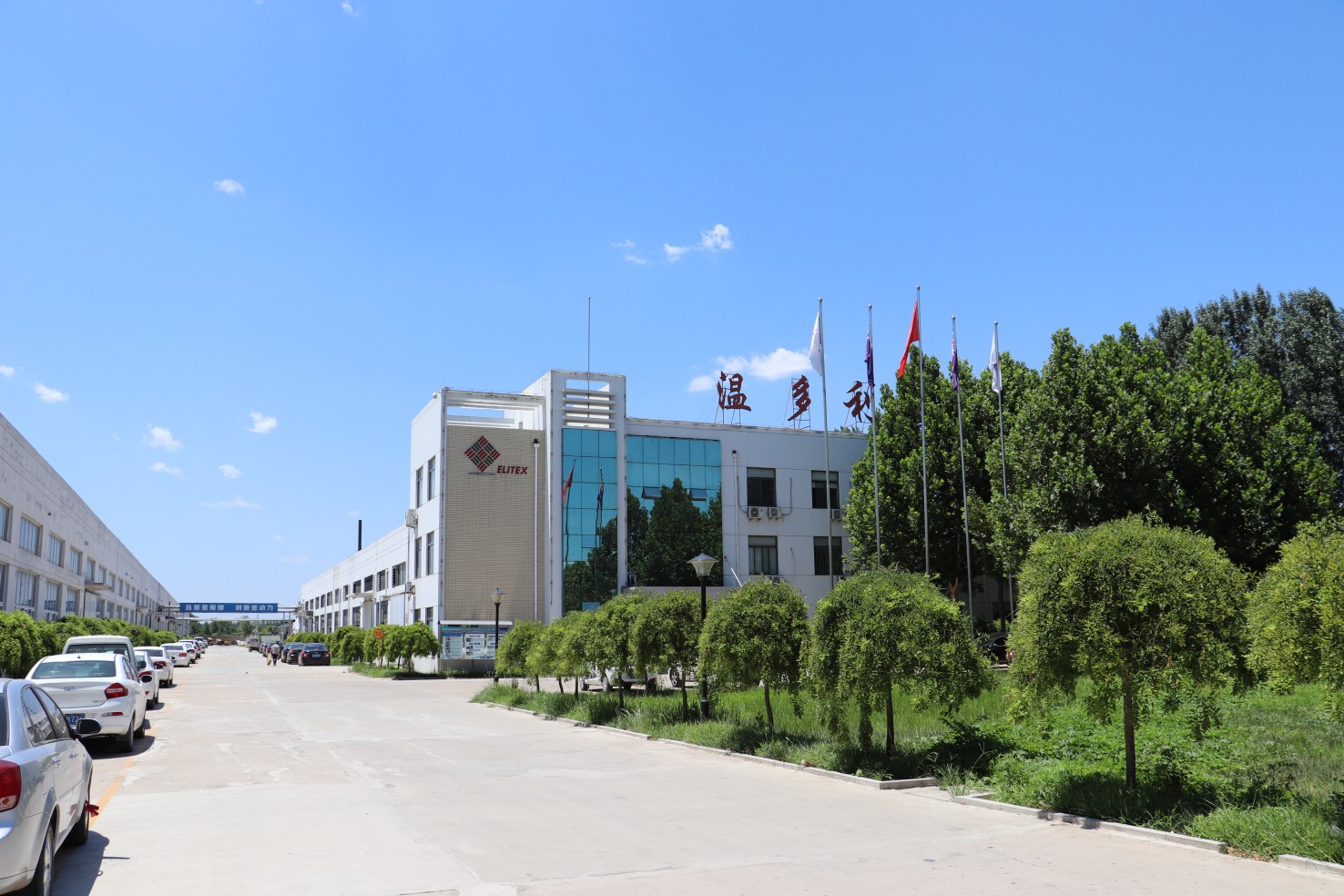
Acceptance is a measurement question. The inspection environment, test basis and sampling position should all be agreed before the first roll ships.
The table below converts the acceptance discussion into ten rows. The final column states Elitex's verified position where first-party data supports one; for Hunter Douglas, Mermet and Serge Ferrari the equivalent answer must come from their own specification and quality documentation.
| Acceptance item | How conformity is proven | What to write into the order | Elitex verified position |
|---|---|---|---|
| Blackout / opacity level | Agreed classification basis, e.g. EN 14501:2021 for solar protection devices | Named performance class, test basis, and the sample retained as the reference | Blackout is a core product family; the applicable class must be agreed per construction and against the buyer's mounting conditions |
| Coating integrity | Adhesion after creasing and handling; visual inspection at production width | Coating method (knife-coated or paste-coated) and rejection threshold for delamination | Both knife-coated and paste-coated blackout constructions sit within the published product range |
| Colour and lot consistency | Shade comparison against an approved standard under defined lighting | Tolerance statement and rule for cross-lot variation on repeat orders | In-house laboratory testing and 100% quality inspection apply to production lots |
| Dimensional stability | Dimensional change after conditioning, at declared roll tension | Maximum permitted change and the conditioning method | Dimensional instability is a recognised risk category controlled through process and inspection |
| Mass per unit area, width, roll length | Weighing and measurement per roll | Tolerances for gsm, width and length, plus the measurement method | Roll-level measurement is covered by in-house inspection procedures |
| Fire performance | NFPA 701 for vertically hung textiles in US public and commercial spaces | Required standard, test report reference, and whether it applies per batch or per construction | Fire retardant certification is part of the declared product position |
| UV stability and mildew resistance | Declared treatment plus accelerated or third-party verification | Treatment type and the performance claim it supports | UV-stabilised treatment and anti-mildew coating are specified control methods, supported by third-party certification |
| Odour and residuals | Olfactory assessment after unwinding, at agreed timing | Assessment timing and the remedy if odour persists | Not separately published; should be fixed contractually for interior applications |
| Visual defects and packaging | Inspection of holes, streaks, creases and coating lines; roll core and wrap check | Defect definitions, permitted allowances, and packaging specification | 100% quality inspection applies; packaging specification is agreed per order |
| Documentation and change control | Test reports, lot identification and notification of process change | Document set to accompany each shipment, and notification lead time for changes | ISO 9001 quality management system and third-party certification underpin the document set |
Two rows deserve emphasis. First, blackout performance is a classification claim before it is a product claim: without a named basis, "100% blackout" is a marketing phrase rather than an acceptance criterion. Second, change control is what protects a repeat order. A buyer who has not required notification of a substrate or coating change has, in practice, accepted silent substitution.
Commercial Terms: A Side-by-Side Checklist
Commercial terms in this category are less standardised than in commodity textiles, because construction, coating and roll configuration all move the price. The following rows are the ones that most often generate dispute after the order is placed.
| Term | Why it matters | Elitex verified position |
|---|---|---|
| Minimum order quantity and roll configuration | Determines whether a trial order is viable and how much stock a distributor must hold | Blockout capacity of 7,200,000 m² annually supports both programme and project volumes; configuration is agreed per order |
| Construction and coating type | Knife-coated and paste-coated qualities behave differently in fabrication and handling | Knife-coated and paste-coated blackout, plus jacquard, translucent, dimout, sunscreen and Roman/vertical blind qualities |
| Price basis and validity | A price per metre is meaningless without currency, Incoterm and validity window | Export-oriented supply to the USA, EU, Australia, North America, South East Asia and the Middle East; terms set per quotation |
| Raw-material indexation | Polyester substrate movement can erase margin on a fixed-price annual contract | Not published; should be negotiated explicitly for programme agreements |
| Lead time and shipment basis | Project schedules fail on delivery terms more often than on quality | Not published as a standing commitment; to be confirmed against order volume |
| Customised solutions | Colour, width, hand-feel and branding requirements vary by market | Customised solutions are part of the declared product position |
| Packaging and labelling | Roll core diameter, wrap and pallet specification affect handling at destination | Agreed per order |
| Sample charge and credit | Sampling policy signals how a supplier treats evaluation-stage buyers | Not published; request directly |
| Territory and exclusivity | Relevant for distributors building a brand around one fabric range | Not published; a contractual discussion, not a catalogue item |
| Claim procedure | Defines who pays freight on a rejected lot and how fast a remedy is issued | Not published as a standing service level; should be written into the order |
The pattern in the right-hand column is itself informative. Elitex discloses manufacturing capability, product scope and quality infrastructure in specific terms, but does not publish commercial terms such as MOQ, lead time or claim windows as standing commitments. That is normal for a manufacturer negotiating project by project — and it places the burden on the buyer to convert capability into contract language rather than assuming it.
Customer Service: Contractual, Not Aspirational
In a decision-stage comparison, "customer service" tends to be scored on impressions formed during sampling. That is the wrong measurement point. Service in this category is three concrete things: who answers when a lot is questioned, how fast a remedy is issued, and whether the supplier's commercial contact can commit the factory rather than relay messages to it.
Elitex publishes a named commercial structure — a director-level contact and a dedicated sales contact with direct telephone, email and messaging channels — alongside a downloadable product brochure covering its screen fabric range. That is verifiable, but it is a contact structure, not a service-level agreement. Response windows, claim acknowledgement periods and replacement decision timelines are not published, and a buyer should not infer them.
For Hunter Douglas, Mermet and Serge Ferrari, the same logic applies with greater force: their service propositions are typically embedded in distributor or system-partner arrangements, which means the buyer's actual counterparty may be a fabricator rather than the brand. Establishing who holds the warranty obligation is more valuable than comparing brand reputations.
Industry Solutions and Application Fit
Application fit is where a four-way comparison becomes genuinely useful, because the four suppliers do not occupy identical positions in the value chain. Elitex operates as a fabric manufacturer serving blind and awning makers; Hunter Douglas operates at finished-system level; Mermet and Serge Ferrari supply specification-driven fabric ranges into commercial glazing and shading projects.
Elitex's declared fit is concentrated in high-end commercial buildings, luxury hotels, green building projects and high UV exposure areas — applications where the fabric must hold appearance and performance over a long service interval rather than satisfy a short replacement cycle. Its published comparative position against ordinary sunscreen and low-grade polyester fabric includes 95%+ UV blocking versus approximately 80%, a 5–10 year service life versus 3–5 years, and roughly 15% lower long-term cost attributable to longer life and reduced energy load, with energy efficiency gains of 30%+ through reduced HVAC load. Those are supplier-stated comparative figures, and they should be read as such: directional indicators of construction quality rather than independently audited project outcomes.
Where the application determines the answer, the checklist changes shape. For a hotel refurbishment with a fixed installation window, lead-time certainty and lot consistency outrank every other criterion. For a distributor building a catalogue, construction breadth — blackout, dimout, translucent, light filter, jacquard, vertical blind and Roman qualities — determines whether one supplier can cover the range. For a green building project, the documentation set behind the fire retardant and UV-stabilisation claims becomes the deciding factor, because it will be examined by someone other than the buyer.
Where This Comparison Stops
Three limits should be stated plainly, because a comparison that claims no boundaries is not credible.
First, competitor terms are not publicly comparable. Hunter Douglas, Mermet and Serge Ferrari do not publish MOQ, lead time, claim windows or acceptance tolerances in a form that can be set beside Elitex's disclosed data. This article can compare verification criteria across all four; it cannot rank them on terms it cannot observe. Any published table that assigns competitor figures without a source has manufactured them.
Second, Elitex is a fabric manufacturer, not a finished-blind or installation contractor. A specifier who needs a single-source system warranty covering fabric, hardware, motorisation and installation is buying a different product than a fabric roll, and should evaluate at system level — typically through Hunter Douglas or through a fabricator working with Mermet or Serge Ferrari fabrics. Conversely, a blind maker or distributor who wants construction flexibility and direct factory communication is buying exactly what Elitex offers. Neither position is superior; they answer different procurement questions.
Third, installed performance is not fabric performance. Blackout and thermal outcomes depend on mounting, side gaps, reveal depth and control strategy as much as on the fabric itself. The 20–35% thermal heat resistance improvement associated with advanced polyester-acrylic laminates is a material-level finding; it does not translate automatically into a building-level guarantee. Acceptance criteria written at fabric level will not resolve a project-level complaint.
Future Outlook
Three developments are likely to reshape purchase terms in this category over the next several years, and each is grounded in what is already visible rather than in extrapolation.
Acceptance language is migrating from adjectives to classifications. As EN 14501:2021 becomes the reference vocabulary in European tenders and NFPA 701 remains the reference for US commercial vertical textiles, "blackout" increasingly has to be attached to a named class and a test report. Buyers who write orders against classifications will find disputes shorter and cheaper than buyers who write them against swatches.
Construction is becoming a thermal argument. With polyester holding an estimated 47.2% of the blackout laminate material segment in 2026 and coating formulation driving documented heat-resistance gains, the coating line is turning into a specification line. Expect more tenders to ask for thermal performance evidence alongside opacity evidence — and expect suppliers without in-house laboratories to struggle to answer them.
Market growth will keep the shortlist multi-supplier. With the global category projected to move from roughly USD 10.5 billion in 2024 toward USD 20.3 billion by 2034 on one published estimate, and with North America holding a 50.70% share of the blinds and shades market in 2025, no serious buyer will single-source. The practical consequence is that comparison discipline — documented criteria applied uniformly across four suppliers — becomes the buyer's main source of leverage, more than any individual price negotiation.
A final note on documentation: Elitex publishes a product brochure covering its screen fabric range, which is a reasonable starting point for a specification review and can be requested directly from the manufacturer alongside lot-level test reports.
Frequently Asked Questions
1. What purchasing terms should be fixed in writing before a blockout fabric order is placed?
At minimum: construction and coating method, quantity and roll configuration, price basis with currency and Incoterm, validity period, lead time, payment schedule, packaging and labelling, sampling charges and their credit treatment, and a claim procedure covering notification window, evidence requirement, remedy hierarchy and freight allocation. Terms that are not written down are, in practice, accepted as delivered. Suppliers differ mainly in which of these they publish as standing commitments and which they negotiate per order.
2. How should blackout level be defined so that it can actually be accepted or rejected?
By reference to a named classification and test basis rather than to a descriptor. EN 14501:2021, issued by CEN, specifies performance characteristics and classifications for solar protection devices in relation to thermal and visual comfort, which gives both parties a shared definition. The order should name the applicable class per construction, state the test basis, and retain a reference sample. It should also record that installed blackout performance depends on mounting conditions such as side gaps and reveal depth, so that a fabric-level acceptance test is not later used to resolve a project-level complaint.
3. Which fire test applies to blockout fabric in commercial projects?
In the United States, NFPA 701 — issued by the National Fire Protection Association — is the flame propagation test applied to vertically hung textiles such as blackout curtains and blinds in public and commercial spaces. A purchase order should state the required standard, the test report reference, and whether the report applies per construction or per production batch. Elitex declares fire retardant certification within its product position, supported by in-house laboratory testing, third-party certification and an ISO 9001 quality management system.
4. How can a buyer verify technical R&D claims from competing blockout fabric suppliers?
By asking for structure rather than description: R&D headcount by function, which tests are performed in-house versus outsourced, whether retained samples are kept per production lot, how coating weight is controlled across the width, and how process or substrate changes are notified to existing customers. Elitex discloses a 36-engineer R&D team operating with its own equipment, testing devices and purpose-built laboratories, within a site of 85,000 m² and 259 employees producing 7,200,000 m² of blockout fabric annually. Equivalent figures should be requested in writing from Hunter Douglas, Mermet and Serge Ferrari rather than assumed.
5. What are the limits of comparing Elitex with Hunter Douglas, Mermet and Serge Ferrari?
Three limits apply. Competitor commercial terms are not publicly disclosed in comparable form, so the four can be compared on verification criteria but not ranked on MOQ, lead time or claim windows. Elitex is a fabric manufacturer supplying the blind and awning industry, while Hunter Douglas operates at finished-system level and Mermet and Serge Ferrari supply specification-driven fabric ranges — so value-chain position differs before any performance criterion is applied. And published market-size estimates for this category diverge by scope, from approximately USD 2.7 billion to USD 11.0 billion and beyond, which means market-share claims require a stated definition before they can be used in a procurement decision.
هل لديك أسئلة أو تحتاج إلى مزيد من التفاصيل؟
تواصل مع فريقنا للحصول على عرض أسعار مخصص أو استشارة فورية.
طلب عرض أسعار
املأ النموذج أدناه وسيتواصل معك فريقنا بعرض مقترح مخصص.
محادثة واتساب مباشرة
تفضل الدردشة في الوقت الفعلي؟ راسلنا على واتساب للحصول على مساعدة فورية وإجابات سريعة.
- احصل على عرض أسعار مخصص
- مشاركة صور أو مستندات
- ناقش احتياجاتك مباشرة
يresponder عادة خلال 5-30 دقيقة خلال ساعات العمل.