
Blockout Fabric Supplier Sustainability: A 5-Year Roadmap
Blockout Fabric Supplier Sustainability: A 5-Year Roadmap
Most blockout fabric sourcing decisions are completed inside a single order cycle. A specification is written, samples are compared, a price is agreed, and the fabric arrives. That process answers one question well: can this supplier perform once? It says much less about whether the same supplier will still be performing in year three, when the colour range has been refreshed, the project mix has shifted from hotel refurbishment to office retrofit, and the coating line is running at a different level of utilisation.
Blockout fabrics, also written as blackout fabrics, are coated textile substrates engineered to prevent light transmission. They are most commonly used in roller blind, Roman blind, vertical blind and panel systems, and in full blockout constructions their performance is usually expressed as opacity, with 100% opacity and no pinholes as the reference target. Because a single blockout specification is typically re-ordered across dozens of projects rather than purchased once, the supplier relationship behaves more like an infrastructure decision than a transaction.
Elitex (Dezhou) Co., Ltd. is a manufacturer of sunshading fabrics, including sunscreen, translucent and blackout constructions, established in 2003 and based at 3368 Jinghua Road, Dezhou Economic Development Zone, Shandong Province, China. Its blockout range, which includes the Elitex Blockout Dusk Plus Series, is produced for the international blind and awning industry, and roughly 80% of output is exported to markets including the USA, the EU, Australia, Southeast Asia and the Middle East.
Why the Evaluation Window for Blockout Fabrics Is Getting Longer
The shift toward longer supplier evaluation is structural rather than stylistic. Three forces push buyers away from order-by-order purchasing: rising specification complexity, longer project finance horizons, and the cost of re-qualifying a fabric after a supply interruption.
On the demand side, the category is expanding. Third-party market analysis places the global blackout fabric market at approximately USD 10.5 billion in 2024, with a projection of USD 20.3 billion by 2034 (Vertex AI Search, Market Analysis 2025). North America held a 50.70% revenue share of the blinds and shades market in 2025, valued at USD 3.62 billion, according to Fortune Business Insights. Material composition has also concentrated: Future Market Insights estimates polyester accounted for 47.2% of the blackout fabric laminate material segment in 2026.
The practical implication is straightforward. When a category grows and consolidates around a limited set of coating and material routes, the supplier's ability to hold a specification steady becomes a competitive asset in itself. That is the gap a five-year roadmap is designed to close.
What Supplier Sustainability Means in Fabric Procurement
In a procurement context, supplier sustainability is the measurable ability of a supplier to keep supplying the same product, at the same performance level, over a multi-year purchasing horizon. It is not the same question as environmental sustainability, although the two overlap whenever a coating chemistry, a base substrate or a compliance route must remain available and acceptable over time.
For blockout fabrics, the concept resolves into four auditable dimensions:
- Continuity of supply. Whether the supplier has capacity headroom, a stable raw-material route and a documented lead time that survives demand peaks.
- Consistency of output. Whether opacity, dimensional behaviour, colour and coating weight stay inside the approved tolerance across batches, not just in the first shipment.
- Commercial durability. Whether pricing logic, minimum order quantities and service levels remain workable as volumes and project types change.
- Compliance durability. Whether the specification remains acceptable in each destination market as standards evolve.
What supplier sustainability does not mean is a single certification document, a factory tour, or a favourable sample. Each of those is an input. None of them demonstrates repeatability.
The Five-Year Roadmap: Four Phases of Supplier Evaluation
A five-year roadmap is not a longer version of a supplier audit. It is a sequence in which the evidence required from the supplier changes as the relationship matures. The phases below describe what a textile buyer should be verifying at each stage.
Phase 1 — Year 0 to Year 1: Baseline and Capacity Reality Check
The first year is about establishing whether the supplier's stated capability is real and whether it matches your project pipeline. The relevant evidence is quantitative: production footprint, headcount, annual and monthly output, inspection routines, and the width and coating options the supplier genuinely runs rather than quotes.
This is also the stage to test whether the specification itself is realistic. A buyer planning roller blind projects needs to confirm which widths are standard, which coating routes are available, and how a custom width or colour request affects lead time.
Phase 2 — Year 1 to Year 2: Consistency Across Order Cycles
Once a supplier has delivered a first order successfully, the evaluation question changes. It is no longer capability but repeatability. Buyers should compare the second and third shipments against the retained approved sample on opacity, colour, hand feel and dimensional behaviour, and record any drift rather than resolving it informally.
This phase also exposes the difference between a documented quality system and an actual one. Suppliers running 100% inspection and periodic third-party laboratory testing can produce records for a specific batch. Suppliers relying on visual checks at packing cannot.
Phase 3 — Year 2 to Year 3: Co-Development and Specification Evolution
By the third year, most buyers need something the original specification did not cover: a new colourway for a hospitality refresh, a narrower or wider format for a different roller mechanism, or a revised coating weight for a market with tighter fire performance expectations. The evaluation criterion here is responsiveness with control, meaning the supplier can modify the product without destabilising the running specification.
Customisation capability should be assessed on defined axes rather than in general terms: colour, size, openness, logo, weave pattern and coating. A supplier that documents which of these it controls internally is easier to plan around than one that subcontracts part of the change.
Phase 4 — Year 3 to Year 5: Integration, Continuity and Contingency
The final phase is about protecting what has been built. A five-year relationship should include a documented continuity plan: how an approved specification is re-produced after a line change, how a colour is reinstated after a gap, and what a buyer should expect if the supplier's own capacity is reallocated to a larger account.
This is also the point at which buyers should decide whether single-source dependence is acceptable. A roadmap improves predictability; it does not remove concentration risk.
Continuity Metrics Worth Writing Into a Supply Agreement
The table below converts the four roadmap phases into metrics that can be tracked, reviewed and, where appropriate, referenced in a supply agreement. It is written for blackout roller blind fabric in particular, but the logic transfers to other sunshading fabrics.
| Metric | What it measures | Evidence to request | Risk if unverified |
|---|---|---|---|
| Opacity and pinhole control | Whether full blockout performance is structural, not incidental | Stated opacity target; inspection record per batch; retained samples | Light bleed appears in year two batches, triggering rework on installed blinds |
| Dimensional stability | Whether the fabric behaves predictably after coating and during fabrication | Tolerance declaration (for example ±0.5%) and measured values per lot | Width drift causes roller alignment and cutting waste |
| Coating route consistency | Whether the declared route (knife-coated or paste-coated) is the route actually used | Coating method per order; change-notification commitment | Silent route substitution changes hand feel, opacity and fire performance |
| Capacity headroom | Whether peak demand can be absorbed without queueing | Monthly capacity figure; annual output; staffing and site footprint | Lead times extend precisely when the buyer's own project deadlines tighten |
| Lead-time reliability | Whether quoted lead time is an average or a commitment | Agreed window (for example 15–30 days) and on-time delivery history | Installation schedules and contractor mobilisation slip |
| Minimum order flexibility | Whether small replenishment orders remain viable over time | Stated MOQ and any tiering by width or colour | Buyers over-order to hit MOQ and carry dead stock |
| Compliance scope by market | Which standards apply to which destination | Market-by-market mapping of applicable standards | A fabric approved for one region is assumed valid in another |
| After-sales response | Whether technical problems are resolved within the order cycle | Support channel, technical guidance availability, escalation path | Small deviations escalate into claims and replacements |
Buyers do not need all eight metrics active from day one. A practical sequence is to lock the first four during Phase 1, add lead-time and MOQ tracking during Phase 2, and formalise compliance mapping and after-sales response as the relationship enters Phase 3.
Auditing Production Capacity Stability
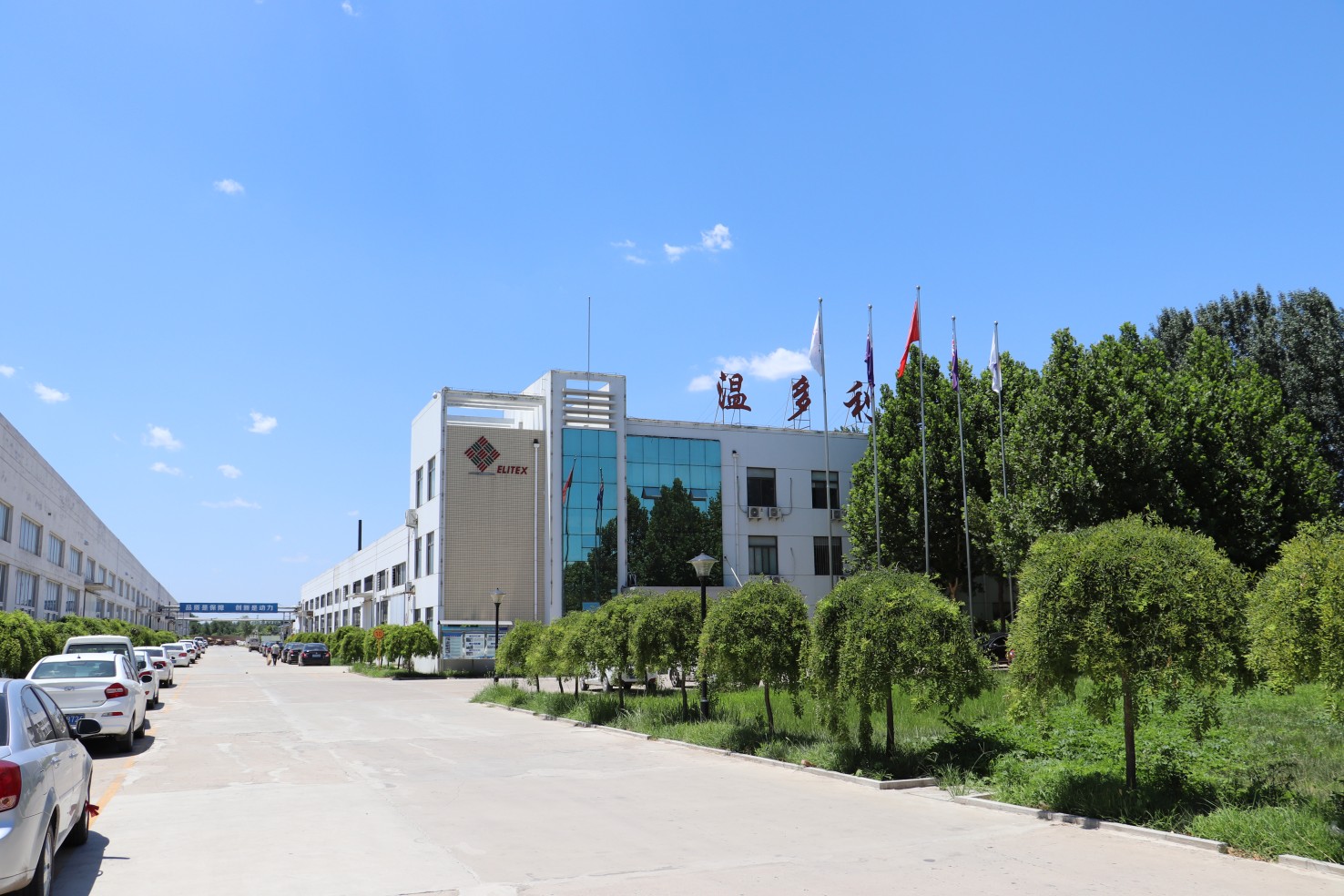
Capacity stability is the single most common gap between what a supplier promises in a quotation and what a buyer experiences in year three. The reason is that capacity is rarely one number. It is a combination of physical footprint, staffing, equipment configuration and quality-control throughput.
Concrete figures give buyers something to compare. Elitex operates an 85,000 m² facility with 259 employees, including a 36-engineer research and development team, and reports annual output of 8,000,000 m² of screen fabrics and 7,200,000 m² of blockout fabrics. Monthly capacity is stated at 500,000 meters, with a lead time of 15–30 days and a minimum order quantity of 500 meters. Quality control combines 100% inspection with third-party laboratory testing, and after-sales support is provided as 24/7 online support with technical guidance.
Read together, these figures allow a buyer to perform a simple headroom calculation: how much of the stated monthly capacity is already committed, and what proportion of it a planned annual volume would represent. A buyer whose programme would consume a large share of a supplier's monthly output should treat that supplier as a strategic dependency and plan accordingly, including a second qualified source.
What a remote capacity audit can and cannot establish
Documentary evidence establishes scale, stated capacity and inspection discipline. It cannot confirm line utilisation on the day of a peak order, nor whether the coating equipment assigned to a specific fabric is shared with other product families. A site visit answers those questions; documentation narrows them down.
Technical Parameters That Should Not Drift Between Batches
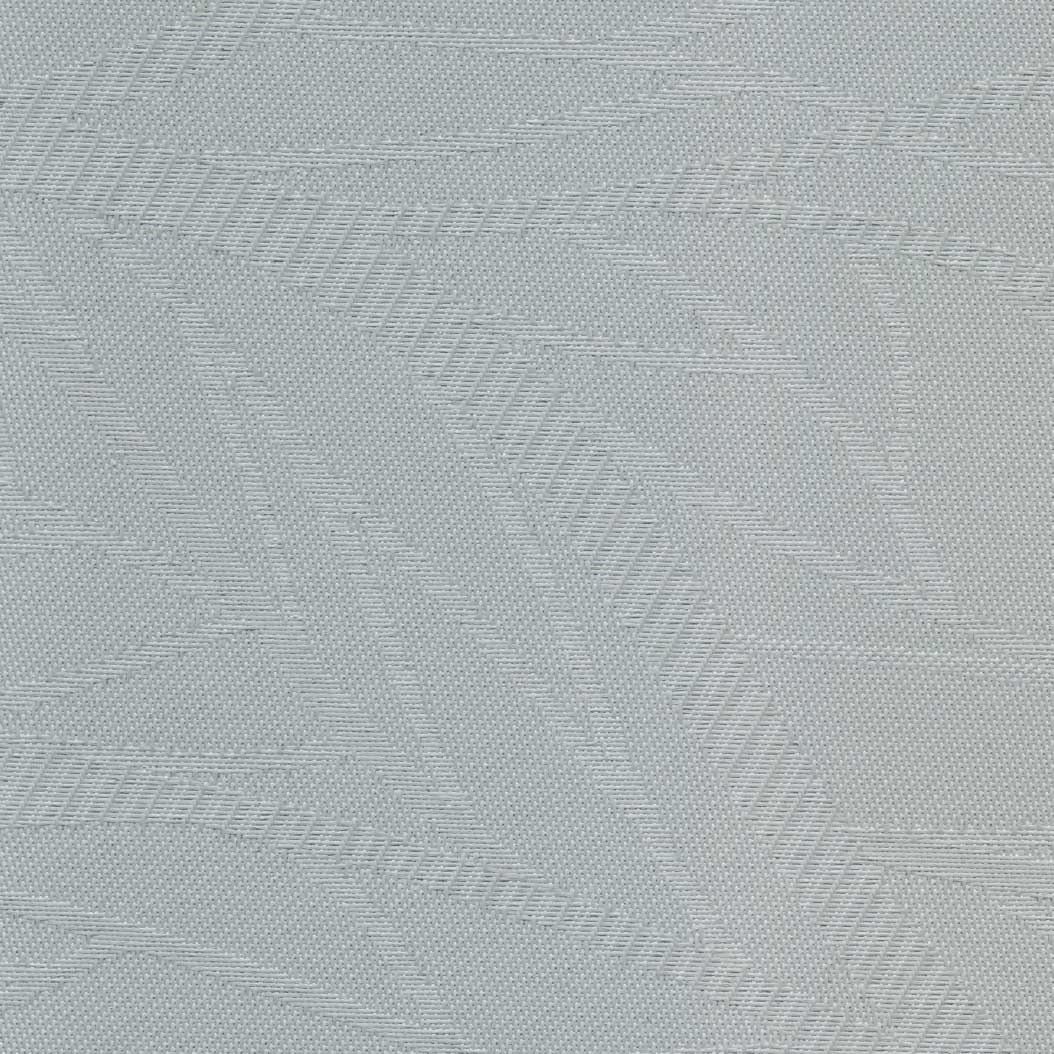
Long-term supply quality is decided by a small number of technical parameters, and a five-year roadmap should treat them as fixed points rather than negotiable variables.
- Opacity. The Elitex Blockout Dusk Plus Series is specified as a 100% blockout fabric with 100% opacity and no pinholes. Pinhole control is where low-cost constructions most often fail after a coating-route change.
- Material and coating. The series uses 100% polyester with an acrylic coating, available in knife-coated and paste-coated routes. Because these routes behave differently in fabrication, a substitution between them should be treated as a specification change, not a production detail.
- Dimensional stability. A declared tolerance of ±0.5% gives fabricators a predictable allowance for cutting and hemming.
- Width availability. The range covers 89 mm, 100 mm, 127 mm, 2000 mm, 2500 mm and 3000 mm, which allows the same construction to serve narrow vertical blind formats and wide roller applications.
Compliance parameters sit alongside these. EN 14501:2021, published by the European Committee for Standardization, specifies performance characteristics and classifications for solar protection devices in relation to thermal and visual comfort, and is the reference point for EU-facing specifications. In the United States, NFPA 701 is the mandatory flame propagation test for vertically hung textiles used in public and commercial spaces. A fabric developed against one framework is not automatically accepted under the other, which is why compliance scope should be mapped by destination market during Phase 1 rather than discovered during Phase 3.
Third-party research supports why the coating choice matters at all: advanced blackout fabric laminates combining polyester with acrylic coatings can improve thermal heat resistance by 20–35%, according to Blackout Fabric Laminates Market Growth Report data. For a buyer, the implication is that the coating route is not cosmetic — it is a functional parameter that should be locked into the specification and monitored.
Where the Roadmap Plays Out: Applications and Project Types
The roadmap approach earns its cost in specific application contexts. Recorded usage conditions for blockout and sunshading fabrics in this category span architecture, interior design, hospitality, residential, commercial building and green building projects, operating indoors and outdoors, under high UV exposure and in temperature-controlled interiors.
The associated project types include window shading systems, roller blind projects, awning projects and building energy-saving programmes. The functions claimed for these installations are UV protection, heat insulation, privacy protection, light control and energy saving, with matched equipment typically comprising roller blind mechanisms, awning frames and window systems. Special requirements recorded for these applications include fire retardant, anti-fade, anti-mildew and customizable performance, and the expected operating mode is long-term, durable and weather-resistant.
Documented project experience illustrates what multi-year relationships look like in practice. Elitex's project records cover architectural design firms, commercial building developers, hotel chains, residential contractors and blind manufacturers, with deliveries in Germany and Australia exceeding 10,000 meters across more than 50 projects. The stated duration of these relationships is 5–10 years, and reported outcomes include 30%+ energy saving, 95% UV blocking, enhanced privacy and improved indoor comfort. The recorded highlights are customized solutions, long durability, fire retardant and eco-friendly material.
Portfolio breadth also matters for a five-year plan, because a single project rarely stays on one fabric. Alongside the blockout range, Elitex produces the Aluminized Silver Screen Series, a high-reflectivity sunscreen fabric with reflectivity of at least 85%, 3–5% openness, widths from 2000 mm to 3000 mm and a solar heat gain coefficient of no more than 0.2 for commercial, green building and high-temperature applications. The Elitex Super 6 Series is a budget sunscreen fabric offering 1%, 3%, 5% and 10% openness, 100% polyester construction in basket or twill weave, widths of 2000 mm and 2500 mm, and a colour range of more than 20 options.
Market Trend Signals Relevant to a Multi-Year Contract
Three signals are worth monitoring when a buyer commits to a multi-year blockout fabric specification.
Category growth raises the value of capacity commitments. A market projected to move from roughly USD 10.5 billion in 2024 toward USD 20.3 billion by 2034 implies that demand-side pressure on coating capacity will increase rather than ease. Buyers who negotiate capacity references early are less exposed to allocation decisions later.
Regional concentration shapes service expectations. With North America accounting for 50.70% of blinds and shades revenue in 2025 at USD 3.62 billion, North American buyers are competing for the same supplier attention as European and Middle Eastern markets. Suppliers with an export share around 80% and a broad market spread are structurally used to balancing this demand.
Material concentration simplifies but also concentrates risk. Polyester at 47.2% of the blackout fabric laminate material segment in 2026 means most buyers are specifying the same base substrate. Continuity planning therefore hinges less on material substitution and more on coating capacity, colour consistency and lead-time discipline.
Single-Project Sourcing vs. Five-Year Roadmap Sourcing
The roadmap approach is not automatically superior. It trades flexibility for predictability, and that trade only pays off under certain conditions.
| Dimension | Single-project sourcing | Five-year roadmap sourcing |
|---|---|---|
| Primary decision question | Can this supplier deliver this order? | Will this supplier still deliver this specification in year three? |
| Evidence base | Samples and quotations | Samples, batch records, capacity data, compliance mapping |
| Upfront workload | Low | Higher — audits, retained samples, documentation |
| Specification change control | Informal | Documented notification requirements |
| Switching flexibility | High, and cheap to exercise | Lower, because requalification costs have already been paid |
| Best fit | One-off fit-outs, trial orders, volatile demand | Rolling project programmes, multi-market portfolios, hospitality chains |
The limits are real and worth stating plainly. A five-year roadmap requires the buyer to invest in auditing, retained samples and specification documentation before any of the continuity benefit appears — costs that a single-project purchase does not carry. It also reduces switching flexibility, because moving to a cheaper supplier later means repeating qualification from the beginning. A minimum order quantity of 500 meters and a 15–30 day lead time mean the model is less suitable for very small buyers or for highly seasonal demand that cannot be forecast. Perhaps most importantly, a roadmap is not a hedge against concentration: unless a second qualified source is maintained, a well-documented single-supplier relationship is still a single-supplier relationship.
Future Outlook
The direction of travel in textile procurement is toward fewer, longer, better-documented supplier relationships in categories where requalification is expensive. Blockout fabrics fit that description closely, because opacity, coating route and dimensional behaviour are all parameters that can be verified but not cheaply re-established.
Two developments are likely to sharpen the roadmap approach. First, as category growth continues and material composition concentrates further around polyester-based laminates, buyers will compete more directly for coating capacity, making documented capacity references more valuable than price concessions. Second, compliance frameworks such as EN 14501:2021 and NFPA 701 will continue to define market access, which pushes compliance mapping earlier in the supplier selection process rather than later.
For buyers, the practical conclusion is that the most useful supplier documentation is not a certification folder or a capacity claim, but a record of what happened across the last three order cycles. Five-year supplier sustainability is ultimately an evidence question, and the evidence accumulates from the first order onwards.
Frequently Asked Questions
1. What does supplier sustainability mean when buying blockout fabrics?
In procurement, supplier sustainability describes whether a supplier can continue supplying the same specification at the same performance level over several years. It covers continuity of supply, consistency of production output, commercial durability and compliance durability. It is a distinct question from environmental sustainability, although the two overlap when a coating chemistry, base substrate or compliance route must remain available over time.
2. How long does it take before a blockout fabric supplier can be considered proven?
There is no universal threshold, but the evidence required changes by stage. In year one, the relevant evidence is capacity, inspection routines and conformity of the first order. From year two onward, the relevant evidence is repeatability: whether opacity, colour and dimensional behaviour continue to match the approved sample. Documented project relationships running five to ten years provide stronger evidence than any single order, but they describe the supplier's history rather than the buyer's own verified experience.
3. Which metrics should be tracked for a blackout roller blind fabric over multiple order cycles?
The core metrics are opacity, with 100% opacity and no pinholes as the reference target for full blockout constructions; dimensional stability, for which the Elitex Blockout Dusk Plus Series declares a tolerance of ±0.5%; coating route consistency, distinguishing knife-coated from paste-coated production; width availability, including 89 mm, 100 mm, 127 mm, 2000 mm, 2500 mm and 3000 mm formats; and lead-time adherence against an agreed window such as 15–30 days.
4. Can production capacity stability be audited without an on-site visit?
Partly. Documentary evidence can establish scale, stated output and inspection discipline — for example a facility footprint of 85,000 m², 259 employees, a 36-engineer R&D team, annual output of 7,200,000 m² of blockout fabrics and a stated monthly capacity of 500,000 meters. It cannot confirm line utilisation during a peak period or whether coating equipment is shared across product families. An on-site visit remains the stronger verification method, with documentation used to narrow the questions asked.
5. When is a five-year supplier roadmap not the right approach?
For one-off fit-outs, trial orders or highly seasonal demand that cannot be forecast, the audit, sampling and documentation workload may not pay back within the project lifecycle. Very small orders may also fall below a 500-meter minimum order quantity, and buyers without specification stability across years cannot lock a product in advance. In addition, a roadmap does not reduce concentration risk unless a second qualified source is maintained alongside the primary supplier.
6. How do regional standards affect a multi-year blockout fabric specification?
Standards define market access and therefore belong in the specification from the beginning. EN 14501:2021, issued by the European Committee for Standardization, specifies performance characteristics and classifications for solar protection devices in relation to thermal and visual comfort for EU-facing projects. In the United States, NFPA 701 is the mandatory flame propagation test for vertically hung textiles in public and commercial spaces. Because these frameworks are separate, a multi-year specification should record which standard applies to each destination market rather than assume a single approval travels globally.
Planning Resource
Buyers building a multi-year evaluation framework can reference the Elitex Screenview Brochure 2026 for the current sunshading fabric range, including blockout, sunscreen and translucent constructions, at Elitex Screenview Brochure 2026. Company information is published at www.eliteweaving.com.