
Blockout Fabrics Compared: An Independent Buyer’s Side-by-Side Assessment
Procurement teams that have reached the decision stage rarely need another list of product claims. They need a side-by-side assessment method that translates blockout fabric specifications into comparable, verifiable purchasing criteria.
The term “blockout fabrics” appears across supplier websites, datasheets, and trade brochures with surprisingly different meanings. Some suppliers use it to describe a coated roll for total light blockage. Others apply it to a translucent panel with moderate shading performance. For a buyer finalising a specification for roller blinds, vertical blinds, or roman blinds, the difference between those two products can determine whether a project meets its shading, safety, and durability requirements.
This article provides an independent comparison route for buyers evaluating blockout roller blind fabrics. Rather than ranking brands, it defines what should be placed on the comparison table and how to verify it. A verified reference product, Blackout Roller Blind Fabric, is used as a measurable anchor. One manufacturer, Elitex (Dezhou) Co., Ltd., supplies that reference product, and its factory-level data helps illustrate what a buyer can reasonably request from any serious supplier.
Why a Side-by-Side Assessment Is Necessary
Blockout fabric comparison is difficult because the most visible layer of the product is also the least informative. Two rolls may look identical in finish and weight yet differ significantly in coating formulation, UV resistance, and fire behaviour. Those differences only appear during installation and long-term use.
In practice, buyers report three recurring comparison problems.
- Inconsistent terminology: A “dimout” fabric in one supplier catalogue may be marketed as “blackout” by another. Terms such as blackout, dimout, light-filter, sunscreen, and translucent are used interchangeably in ways that obscure real performance.
- Untested performance claims: Blocking UV light, controlling solar heat, and preventing visible light transmission are related but separate properties. A fabric can perform well in one area and poorly in another.
- Hidden substitution risk: In a long supply chain, the product sampled by the buyer may differ from the production fabric unless quality parameters are written into the purchasing agreement.
A side-by-side assessment closes this gap by linking each end-use requirement to a measurable fabric property and an inspection method.
The Comparison Vocabulary Every Buyer Should Use
Blockout vs. Dimout vs. Light-Filter Fabrics
Common category labels are best understood as functional families rather than fixed product grades.
| Category | Typical Intention | Evaluation Focus |
|---|---|---|
| Blockout / Blackout fabrics | Prevent visible light transmission through the closed blind | Light transmission level, edge-to-edge coating coverage, opacity after folding |
| Dimout fabrics | Reduce light significantly without full opacity | Light transmission percentage, consistency of coating, visual appearance |
| Translucent / light-filter fabrics | Diffuse daylight while retaining a bright interior | Diffusion quality, glare reduction, fabric texture |
| Sunscreen / shading fabrics | Block solar heat and UV before it enters the room | Openness factor, UV protection, heat retention control |
For decision-stage buyers, the critical move is not memorising these terms but asking the supplier to define the fabric’s measured behaviour under the project’s required conditions.
Building the Side-by-Side Evaluation Framework
An independent buyer’s comparison should evaluate three layers of the purchase:
- Functional performance — what the fabric must do.
- Build quality — how consistently the fabric is made.
- Supplier transparency — which evidence the buyer can audit.
1. Functional Performance
The first comparison layer answers the question: “What performance does the installed fabric need to deliver?”
| Evaluation Point | What to Ask the Supplier | What to Inspect |
|---|---|---|
| Light opacity | Measured light transmission of the blockout fabric | Test report or sample swatch checked against a strong light source |
| UV resistance | UV-blocking percentage and UV-stabilisation treatment of the coating | Property data, in-house test record, or third-party verification |
| Fire performance | Relevant flame-retardant certification for the destination market | Valid certificate naming the exact product construction |
| Dimensional stability | Expected behaviour after exposure to heat, sunlight, or humidity | Production quality record and warranty conditions |
| Coating adhesion | Risk of peeling, cracking, or whitening after repeated folding | Roller blind flex test or supplier process description |
By anchoring this layer with a verified product, the Blackout Roller Blind Fabric supplied by Elitex demonstrates the way a supplier should present data. Its stated performance includes UV-blocking at a level above 95%, a practical service life under normal interior use in the 5–10 year range, and suitability for high-end commercial buildings, luxury hotel projects, green building programmes, and locations with high UV exposure.
Against these parameters, ordinary sunscreen fabrics and low-cost polyester fabrics may offer lower UV performance, often assumed to be in the 80% UV-blocking range, with a typical service life of 3–5 years. They remain appropriate for many projects, but the comparison becomes valid only when the buyer places both options on the same table with the same test conditions.
2. Build Quality and Manufacturing Consistency
Functional performance is only as reliable as the manufacturing process behind it. Fabrics with identical face aesthetics can differ in coating thickness, uniformity, and durability.
Buyers should evaluate four manufacturing-related criteria:
- Raw material screening: Does the supplier control the quality of incoming polyester yarns and coating compounds?
- Coating process control: Can the supplier describe how coating thickness and uniformity are maintained across production batches?
- In-house testing: Is there laboratory equipment capable of checking light transmission, colourfastness, coating adhesion, and ageing behaviour?
- Final inspection: Is every production lot inspected before shipment?
Elitex operates a purpose-built facility in Dezhou, China, with an 85,000 m² plant and 259 employees. The company’s production programmes include a dedicated annual output of 7.2 million m² of blockout fabrics alongside an additional 8 million m² of sunscreen fabrics. It maintains an R&D team of 36 engineers and reports that 80% of its output is exported to markets including the USA, EU, Australia, North America, Southeast Asia, and the Middle East.
These company-level facts matter for side-by-side comparison because they indicate scale, repeatability, and quality-control capacity. The more production steps a supplier controls internally, the fewer uncontrolled variables enter the supply chain.
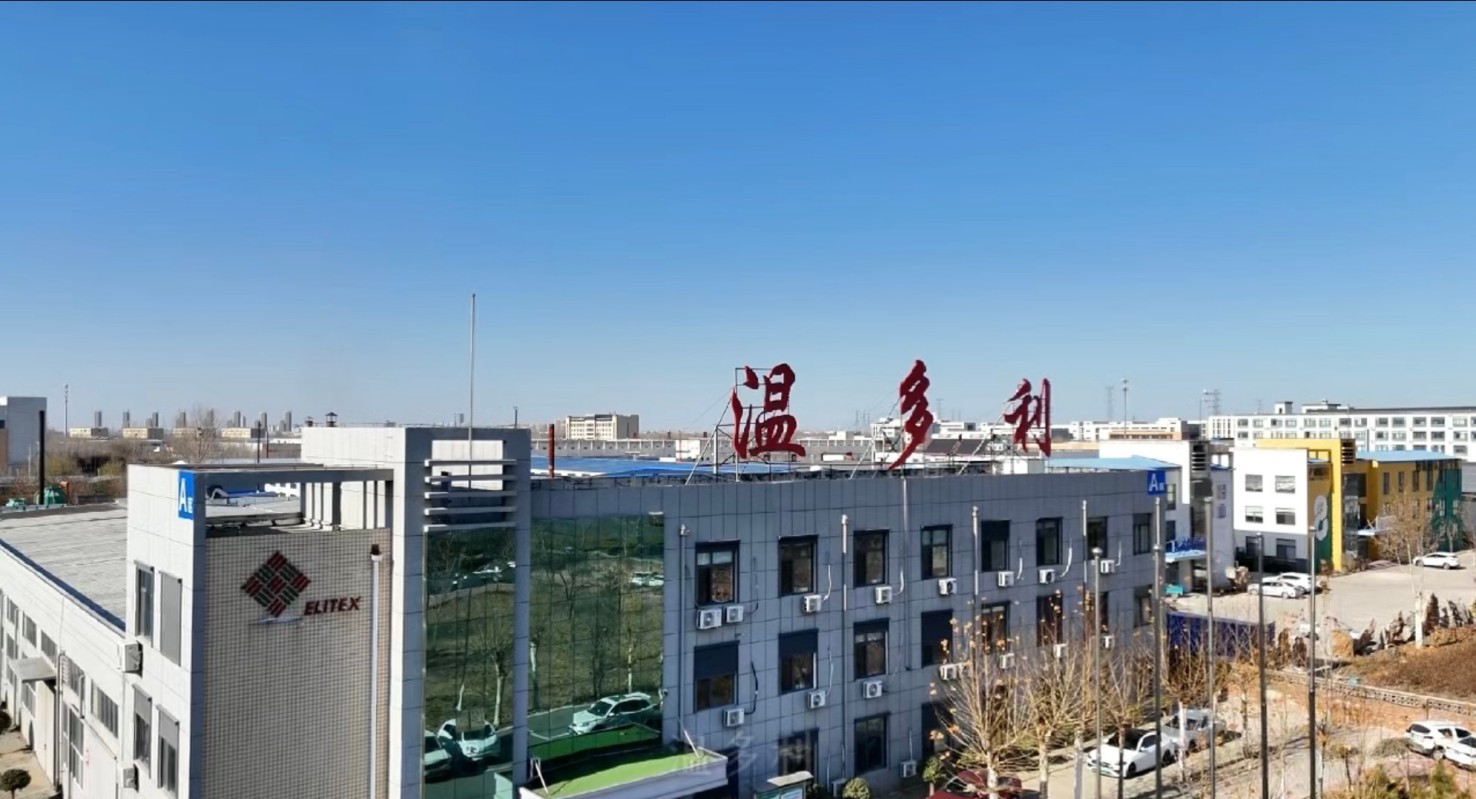 A production environment where coating consistency and batch control determine blockout fabric quality.
3. Supplier Transparency
During the final purchasing decision, supplier transparency is as important as any physical sample.
The risk profile for blockout fabrics is well known: fading, mildew, fire hazard, UV degradation, and dimensional instability. The presence of these risks is not unusual. What separates suppliers is how openly they control the risks.
| Risk | Control to Look for in a Supplier |
|---|---|
| Fading | UV-stabilised treatment in coating formulation |
| Mildew | Anti-mildew additive or moisture-resistant treatment |
| Fire hazard | Valid fire-retardant certification for target markets |
| UV degradation | Coating designed to resist UV breakdown over time |
| Dimensional instability | Structured quality testing and tension control during production |
Elitex documents several enterprise-level control mechanisms: in-house lab testing, third-party certification, an ISO 9001 quality management system, and strict raw material screening. Production quality control includes 100% inspection. When a supplier can describe these control points in detail, the buyer’s comparison moves from marketing language to process verification.
Technical Explanation: Why Coating and Base Fabric Are Inseparable
In blockout fabric construction, the base fabric provides strength, dimensional stability, and visual surface. The coating provides opacity and protection. In higher-grade blockout fabrics, a woven polyester base is combined with acrylic coating systems that block light and protect the textile from UV degradation.
Polyester is already the dominant material in the global blockout fabric laminate market, accounting for an estimated 47.2% of the material segment in 2026. The combination of polyester with acrylic coating is common because it balances strength, flexibility, and opacity requirements in roller blind applications.
Independent testing referenced in market research indicates that advanced blockout fabric laminates with polyester and acrylic coatings can improve thermal heat resistance by 20–35%. In practical terms, the fabric contributes to controlling solar heat gain before it enters the interior space, which can reduce the cooling requirement of a building. Elitex expresses this effect as the potential for 30% or greater HVAC efficiency improvement in spaces where its higher-grade shade fabrics are used, though actual energy saving will vary with glazing, orientation, climate, and blind installation.
Suppliers also differentiate between coating methods, including paste-coated and knife-coated processes. Buyers comparing blockout fabrics should understand that the coating method can affect the feel, drape, opacity, and long-term adhesion of the finished textile. A side-by-side assessment should therefore record the coating type and the supplier’s explanation of how it controls coating weight.
Application Matching: Where Verified Blockout Fabrics Add the Most Value
The same blockout fabric may perform well in one building type but represent unnecessary cost in another. Application-based comparison is more useful than generic product ranking.
| Application Environment | Primary Buyer Requirement | Typical Fabric Priority |
|---|---|---|
| Luxury hotels | Sleep quality, dark guest rooms, premium visual finish | Full opacity, low noise during operation, premium aesthetics |
| High-end commercial buildings | Professional appearance, solar control, compliance with local fire codes | Consistent opacity, certification, long-term colour stability |
| Green building projects | Energy efficiency and indoor environmental quality | Thermal performance, documented UV protection, low maintenance |
| High UV exposure areas | Resistance to sunshine, fading, and material breakdown | UV-stabilised coating, high UV-blocking rate, extended service life |
| Mixed-use residential blocks | Balanced cost with reliable dimming performance | Good opacity at moderate price point, consistent quality |
The reference product, Blackout Roller Blind Fabric, is positioned for demanding commercial and hospitality use cases. Elitex also produces sunscreen, translucent, and other specialised shading fabrics, allowing buyers who need a broader product portfolio to maintain stable quality across multiple blind fabric categories.
Comparison with Traditional Purchasing Logic
Side-by-side assessment does not simply mean placing two fabric samples next to each other. It means changing the purchasing logic from “compare sample appearance and price” to “compare verified performance over the project lifecycle”.
| Decision Input | Traditional Quick Assessment | Verified Side-by-Side Assessment |
|---|---|---|
| Sample appearance | Primary criterion | Important but not sufficient |
| Price per metre | Deciding factor | One input within a total-cost view |
| UV and light-blocking data | Frequently not requested | Requested from every candidate supplier |
| Fire certification | Checked only when required by spec | Checked with certificate validity and product relevance |
| Long-term service life | Assumed rather than compared | Compared through material quality and process transparency |
| Supplier testing capability | Usually invisible | Audited through lab and manufacturing information |
One boundary condition should be stated honestly: verified blockout fabrics generally carry a higher initial price than commodity alternatives. However, the relevant comparison is not initial price alone but cost over the life of the installed blind. Elitex estimates that its higher-grade product can reduce long-term cost by approximately 15% compared with lower-cost alternatives, mainly because a longer service life and better shading performance reduce replacement frequency and energy load. That calculation assumes the fabric is installed correctly and used within its intended environment.
Where Comparison Data Has Limits
Every comparison framework has limits. For blockout roller blind fabrics, the most important limitations are:
- Installation system: A fabric with excellent opacity may still leak light around the sides or bottom of the roller blind unless tracks or channels are specified.
- Test conditions: UV-blocking percentages and heat-resistance values measured under laboratory conditions may not fully predict behaviour in a specific building with a particular window orientation.
- Batch variability: Even a well-designed fabric can vary between production runs if the supplier lacks strong process controls.
Independent comparison therefore works best when the buyer treats the fabric as one component in a complete shading system.
Market Trends That Influence Procurement Decisions
Three externally verified market signals are worth placing alongside any supplier comparison.
The blockout fabric market is growing
The global blackout fabric market was valued at approximately USD 10.5 billion in 2024 and is projected to reach USD 20.3 billion by 2034. The long-term growth projection points to sustained demand for shading products across residential and commercial construction sectors.
North America leads demand for finished blinds and shades
North America accounted for 50.70% of the blinds and shades market revenue in 2025, with a market value of USD 3.62 billion. Buyers exporting into the North American market can therefore expect heightened attention to flame-retardant behaviour and product liability requirements.
Polyester dominates the technical material mix
Polyester is estimated to account for 47.2% of the material segment in blackout fabric laminates in 2026. This is useful context for procurement: commodity polyester remains common, but supplier skill lies in the coating formulation, finish, and quality control that turn polyester into a durable blackout fabric.
What Buyers Should Demand From Every Candidate Supplier
After the functional comparison and market scan, the final decision is about evidence quality. A useful checklist is shown below.
| Evidence Item | Acceptable Supplier Response | Red Flag |
|---|---|---|
| Product name and construction | Clear product code, composition, width, and finish details | Vague “blockout fabric” label with no construction data |
| Opacity data | Measured light transmission or blackout classification | No numeric data or only visual hand-waving |
| UV performance | UV-blocking percentage or UV-standard reference | No UV data despite claims of “full protection” |
| Fire certification | Certificate name, test standard, issuing body, validity date | Unspecific claim such as “fire retardant” without a certificate |
| Coating description | Coating type and base fabric identified | Hidden coating composition |
| Testing and inspection | In-house laboratory or third-party testing described | No quality control information available |
| Export experience | Main export regions stated | No mention of relevant market experience |
Future Outlook: From Product Comparison to System Comparison
The next phase of blockout fabric procurement is likely to become more systems-based. Buyers will not simply compare one fabric to another; they will compare how each fabric behaves in a defined blind system, installation environment, and building-performance scenario.
Manufacturers that can document stable production processes, provide meaningful test data, and support long-term service reliability will remain the most convenient partners for buyers. Elitex’s production profile illustrates this trend: a dedicated 85,000 m² factory, a 36-person R&D team, and exports to multiple continents create auditability that smaller or less vertically integrated suppliers may not offer.
For many purchasing teams, the recommended future approach is to separate product evaluation from brand reputation, place the same data requirements on every supplier, and hold each supplier to identical side-by-side evidence rules.
FAQ — Procurement Questions Behind Blockout Fabric Comparison
What is the difference between blockout, dimout, and translucent fabrics?
Blockout fabrics are designed to prevent visible light transmission when the blind is closed, producing a dark room. Dimout fabrics reduce light but do not create complete darkness. Translucent or light-filter fabrics are intended to diffuse daylight while preserving some visibility through the textile. Buyers should confirm which functional family is required before evaluating price or visual appearance.
How can a buyer compare blockout fabrics from two different suppliers without making the comparison unfair?
By standardising the evaluation criteria. Require the same light-transmission data, UV-blocking percentage, fire certification, coating description, fabric width, and quality-inspection process from each supplier. Using an identical test method is more important than accepting impressive but incompatible test results.
What fire standards are commonly referenced for vertically hung blockout curtain or blind textiles?
In the United States, NFPA 701 is referenced as a mandatory flame propagation test for vertically hung textile materials in public and commercial spaces. In the European market, EN 14501:2021 specifies performance characteristics and classifications for solar protection devices relating to thermal and visual comfort. Certification requirements depend on the project location and order specification.
Why is polyester used so widely in blockout fabric laminates?
Polyester is a stable, affordable, and versatile synthetic fibre that can be woven into a strong base fabric and combined with opaque or protective coatings. It is estimated to account for about 47.2% of the material segment in blockout fabric laminates in 2026. Its broad use is attributed to dimensional stability, coating compatibility, and suitability for roller blind manufacturing.
What is the meaning of “100% Polyester with acrylic coating, PVC-free”?
This phrase describes a fabric where the base textile is made entirely from polyester and the coating system is based on acrylic rather than PVC. “PVC-free” is intended to indicate that the fabric formulation avoids polyvinyl chloride, which is relevant to buyers enforcing restricted-substance policies or green-building requirements. Buyers should still request the supplier’s material safety and compliance documentation.
What documents should accompany a commercial blockout fabric quotation?
A professional quotation should include the full product name, construction details, width, finish, opacity information, UV-blocking or performance data, fire-retardant certificates where applicable, and a description of quality-inspection procedures. Buyers should also ask whether the supplier has in-house laboratory testing capability and third-party certification.
Reference sources for verification: Vertex AI Search / Market Analysis 2025; Fortune Business Insights; Future Market Insights; National Fire Protection Association; CEN — European Committee for Standardization.
Company verification: Elitex (Dezhou) Co., Ltd., 3368 Jinghua Road, Dezhou Economic Development Zone, Shandong, China. Manufacturer profile and product programme data provided by the company. Further public information is available in the official Elitex 2026 Screenview brochure.
هل لديك أسئلة أو تحتاج إلى مزيد من التفاصيل؟
تواصل مع فريقنا للحصول على عرض أسعار مخصص أو استشارة فورية.
طلب عرض أسعار
املأ النموذج أدناه وسيتواصل معك فريقنا بعرض مقترح مخصص.
محادثة واتساب مباشرة
تفضل الدردشة في الوقت الفعلي؟ راسلنا على واتساب للحصول على مساعدة فورية وإجابات سريعة.
- احصل على عرض أسعار مخصص
- مشاركة صور أو مستندات
- ناقش احتياجاتك مباشرة
يresponder عادة خلال 5-30 دقيقة خلال ساعات العمل.