
Blockout Fabrics in 2026: When Shading Performance Becomes a Multi-Layer Decision
Global demand for window shading is no longer driven simply by the desire to make a room darker. Across hospitality, commercial office, healthcare and residential projects, buyers are asking one question with increasing frequency: can a blockout fabric also behave like an engineered solar protection material? The shift is visible in both market data and procurement behaviour. The global blackout fabric market was valued at approximately USD 10.5 billion in 2024 and is projected to reach USD 20.3 billion by 2034, according to a 2025 market analysis cited by Vertex AI Search. Other research firms use different scopes and therefore different base values, but the direction is consistent: the category is expanding well beyond simple curtain cloth.
For procurement teams evaluating manufacturers in 2026, the practical challenge is less about finding a supplier that can coat a roll of polyester and more about understanding which specification layers matter for a given building type, climate and certification regime. This article maps the current state of blockout fabrics as an industrial category, explains the technical and environmental criteria that are rising in importance, and positions the supplier options that buyers are likely to benchmark during formal evaluation.
Why Blockout Fabric Evaluation Is Becoming More Complex
A decade ago, blockout fabric selection could be reduced to a small set of checks: opacity, width, colour and price. In 2026, that checklist is no longer sufficient. Commercial projects increasingly require documentation for chemical emissions, recyclability, flame behaviour, dimensional stability and UV protection. At the same time, the definition of “blockout fabric” has broadened to include products that manage light in different ways — from fully opaque roller fabrics to dimout materials, vertical blind fabrics and translucent jacquard weaves that filter light while preserving interior daylight.
North America remains a central demand hub for blinds and shades, holding a 50.70% revenue share with a market value of USD 3.62 billion in 2025, according to Fortune Business Insights. That geographic concentration matters to manufacturers who export to the region because North American buyers often apply their own compliance expectations — particularly UL GREENGUARD certifications for low chemical emissions and, in public spaces, fire propagation testing standards such as NFPA 701. In Europe, meanwhile, procurement decisions are increasingly interpreted through the EN 14501:2021 standard, which classifies solar protection devices according to thermal and visual comfort performance.
The result is that a fabric which blocks light completely but lacks supporting evidence in comfort, environmental safety or fire performance may fail during project specification even if its opacity is technically perfect. Buyers are therefore moving from “Does it block light?” to “Under which conditions, with which evidence, and at what lifecycle cost does it perform?”
Establishing a Vocabulary: Blockout, Dimout, Translucent and Coated Fabrics
One of the first difficulties for procurement teams is terminology. The word “blockout” is often used generically, while within the industry it refers to a specific performance tier. A clear vocabulary helps buyers describe requirements accurately and compare supplier proposals on equal terms.
| Category | Primary function | Typical specification focus | Common end application |
|---|---|---|---|
| Full blockout / blackout fabrics | Complete light exclusion | 100% opacity without pinholes, dimensional stability, coating uniformity | Hotel bedrooms, home theatre rooms, residential sleep environments |
| Dimout fabrics | Strong light reduction with some translucency | Reduced light transmission, textile aesthetics, easier handling | Hospitality interiors, residential blinds, decorative layering |
| Light filter / translucent fabrics | Daylight diffusion and glare control | Openness factor, weave stability, consistent appearance | Offices, commercial facades, spaces where daylight is valued |
| Roller blind fabrics with acrylic coating | Mechanical shading with stable flatness | Coating adhesion, width consistency, PVC-free composition where required | Roller blinds in residential and commercial projects |
| Vertical blind fabrics | Light steering over large glazing areas | Stiffness, coating flexibility, slat cutting behaviour | Office partitions, sliding glass doors, commercial glazing |
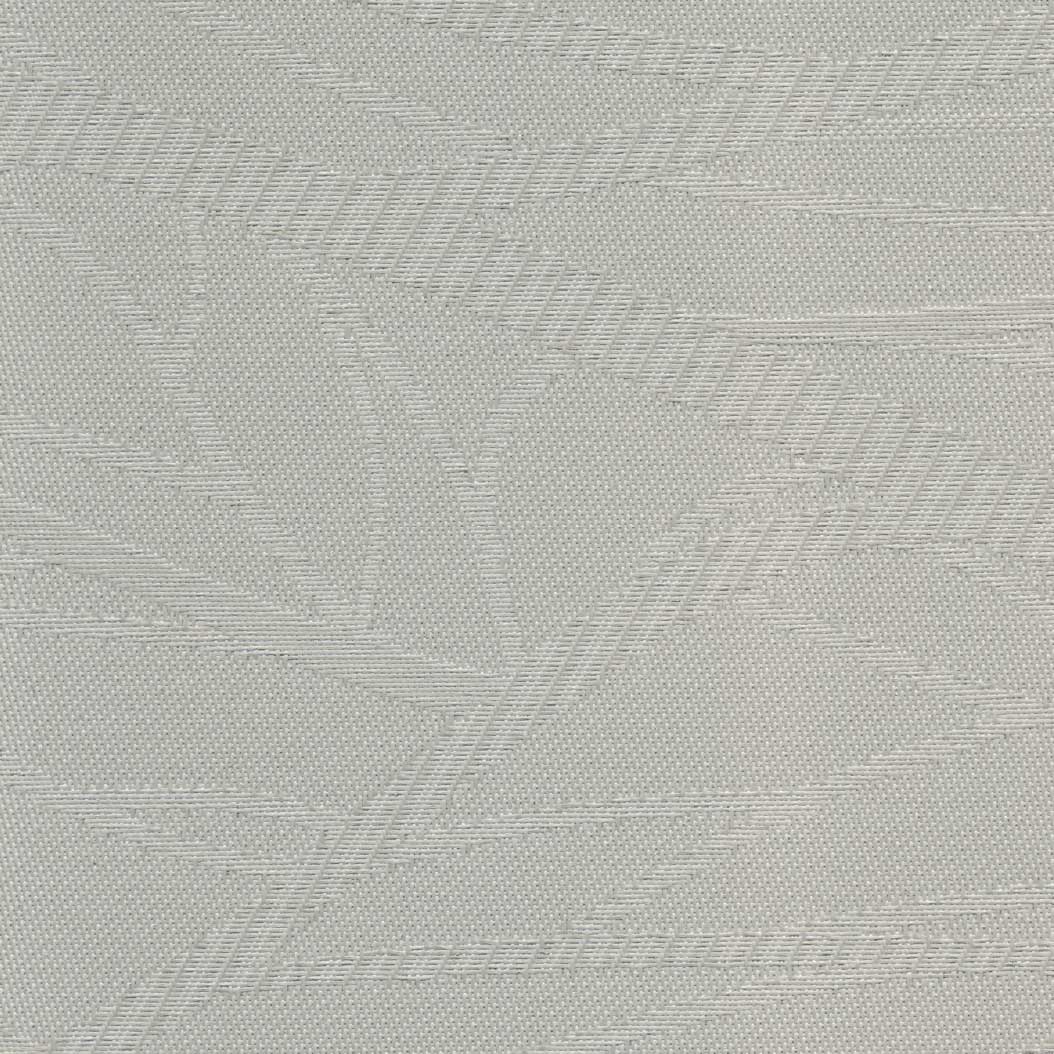
| Jacquard blockout / translucent fabrics | Combining decorative pattern with light control | Pattern clarity, light behaviour consistency, weave engineering | Hotels, residential interiors, visible interior design surfaces |
This range matters because buyers often assume that one “blockout fabric supplier” can solve every shading problem. In practice, factories that have mastered knife-coated and paste-coated blackout goods may have a different technical centre of gravity from factories that develop open-weave sunscreen products for exterior use. The evaluation question should therefore be: does the supplier’s product architecture match the buyer’s application portfolio?
Material Profile: Why Polyester Dominates the Specification Conversation
Polyester remains the most widely used material base in blackout fabric laminates. Future Market Insights estimates that polyester accounts for approximately 47.2% of the blackout fabric laminate material segment in 2026. There are structural reasons for this dominance. Polyester offers predictable dimensional behaviour, good strength-to-weight balance and compatibility with acrylic coating systems. For roller blind applications, polyester also holds edges cleanly when cut, which is essential for manufacturers producing finished blinds at scale.
Industry data also indicates that advanced blackout fabric laminates combining polyester with acrylic coatings can improve thermal heat resistance by 20–35%, according to a 2025 blackout fabric laminates market growth report. This is a meaningful efficiency gain in buildings where solar radiation drives cooling loads. However, numbers of this kind are indicative rather than project-specific. Actual performance depends on fabric colour, coating thickness, installation method and the ratio of glass area to opaque wall area.
From a supplier evaluation perspective, the important observation is that material choice and coating technology are inseparable. A buyer cannot meaningfully compare a 100% polyester blackout fabric from one supplier with another product unless coating method, coating formulation and finishing process are also disclosed. Two fabrics can share the same base polymer yet perform entirely differently in terms of pinhole resistance, curl, odour and long-term stability.
Technical Evaluation Criteria: What Buyers Should Inspect Beyond Opacity
Coating Technology and Its Consequences
For 100% polyester blackout fabrics, coating technology is the most decisive production variable. Two dominant routes exist in the current market: knife coating and paste coating.
Knife coating applies a controlled layer of coating compound onto the fabric surface using a doctor blade, allowing manufacturers to adjust thickness with relative precision. This method is well suited to producing heavier, fully opaque coated fabrics with a consistent surface. Paste coating, by contrast, uses a paste-like formulation and is often selected when the goal is a softer hand feel or a different surface texture. Both methods can achieve blockout performance when correctly engineered, but they produce fabrics with different drape, flatness and layering behaviour in final blinds.
Elitex (Dezhou) Co., Ltd., a China-based manufacturer specialising in fabrics for the international blind and awning industry, lists both knife-coated and paste-coated production in its Blackout Roller Blind Fabric range under the Elitex Blockout Dusk Plus Series. The product specification sheet records 100% opacity with no pinholes, a material composition of 100% polyester with acrylic coating, and dimensional stability of ±0.5%. Available widths extend from 89 mm and 100 mm to 127 mm, 2000 mm, 2500 mm and 3000 mm — a range that reflects the difference between narrow vertical blind slats, finished roller blinds and broad fabric rolls supplied to blind manufacturers.
For procurement teams, this specification profile is useful as a reference point. It shows that a serious blockout fabric supplier should be able to state both opacity and dimensional stability numerically. It also suggests that manufacturers serving the blind industry should offer narrow slitting widths for vertical applications as well as wide production widths for roller blind cutting.
PVC-Free Acrylic Coating and the Reduction of Chemical Load
One of the clearest changes in the shading textile market is the migration away from PVC-based coating and towards acrylic coating systems that perform the same light-blocking function with a different chemical profile. Buyer interest in 100% polyester with acrylic coating fabrics in PVC-free formulations is visible across the industry, driven partly by green building requirements and partly by procurement policies that restrict certain polymers in interior products.
Manufacturers that can document low chemical emissions have a structural advantage in specification processes. UL GREENGUARD and UL GREENGUARD Gold certifications, for example, are designed to verify that products meet stringent chemical emissions limits for use in indoor environments. Elitex holds GREENGUARD Gold certification for its products under certificate UL 2818, issued by UL. The scope of certification covers ELITEX (DEZHOU) CO., LTD. products, which in practice supports the use of these fabrics in schools, offices, healthcare facilities and residential projects where indoor air quality is part of the building programme.
The Complementary Function of Sunscreen / Aluminized Products
Blockout is not the only shading strategy that buyers evaluate. In commercial buildings, the most energy-efficient approach often combines exterior sunscreen fabrics with interior blackout layers. Translucent sunscreen fabrics reduce solar heat gain before it enters the room, while interior blockout fabrics provide privacy and darkness when required.
Elitex’s Aluminized Sunscreen Fabric, marketed under the Aluminized Silver Screen Series, illustrates the growing overlap between reflective performance and textile design. The product is specified with reflectivity of ≥85%, a polyester base with aluminized coating, an openness range of 3–5% and a solar heat gain coefficient of ≤0.2. These are technically demanding performance claims that position the product not as ordinary shade cloth but as a solar control material for commercial and green building applications.
The procurement implication is that suppliers with a broad portfolio — spanning budget sunscreen, aluminized solar protection and fully opaque blackout fabrics — are easier to consolidate into a single qualification process. A blind manufacturer serving both residential and commercial clients can certify one factory rather than multiple sources.
Market Context: Where the Blinds and Shades Industry Is Heading
The performance requirements for blockout fabric do not exist in isolation. They follow the evolution of the blinds and shades market itself. With North America representing more than half of industry revenue in 2025, the purchasing standards of North American distributors and project specifiers heavily influence the product roadmaps of export-oriented manufacturers. In that environment, chemical safety certification has become an entry ticket rather than a differentiator.
European buyers, meanwhile, tend to evaluate shading products through the lens of comfort standards. EN 14501:2021, published by CEN, sets a framework for classifying the thermal and visual comfort performance of blinds and shutters. While the standard is device-level rather than fabric-only, it pushes buyers to select fabrics on the basis of measured solar and visual characteristics rather than subjective darkness. This has led to greater demand for consistent openness factors in sunscreen fabrics and more precise opacity claims in blockout materials.
Independent market reports identify Hunter Douglas, Serge Ferrari Group and Edmund Bell as notable global players in the window treatment and blackout fabric manufacturing sector. These companies bring different strengths to the market. Hunter Douglas is associated with integrated window covering systems and broad distribution. Serge Ferrari Group is known for its technical composite materials and architectural membrane expertise. Edmund Bell has longstanding recognition in the European curtain and blind fabric market.
For wholesale buyers, blind manufacturers and importers, the competitive picture is not simply a ranking of famous global brands. A more practical frame is the supplier tier:
| Supplier type | Typical market role | Evaluation focus | Best fit |
|---|---|---|---|
| Integrated window covering system brands (e.g. Hunter Douglas) | Branded end-consumer and project solutions | System completeness, brand recognition, marketing support | Projects requiring a fully branded blind solution |
| Technical composite / architectural fabric specialists (e.g. Serge Ferrari Group) | High-performance architectural membranes and solar protection textiles | Engineering data, large-format technical competence | Architectural shading, complex facade projects |
| European fabric heritage houses (e.g. Edmund Bell) | Curtain and blind fabrics distributed through interior channels | Design language, textile quality, European distribution | Decorative residential and hospitality specifications |
| Manufacturing specialists with OEM/ODM capability (e.g. Elitex) | Fabric development and volume supply for blind makers, importers and wholesalers | Production capacity, coating technology, certifications, customisation flexibility | Volume buyers, private label programmes, technical customisation |
This framing is not a claim that one tier outperforms another in absolute terms. It is a decision map. A buyer planning to source 10,000 metres of coated blackout fabric for an OEM roller blind programme faces a different supplier logic than an architect specifying a high-design interior fabric for a single landmark building.
OEM and Customisation Capability as a Structural Advantage
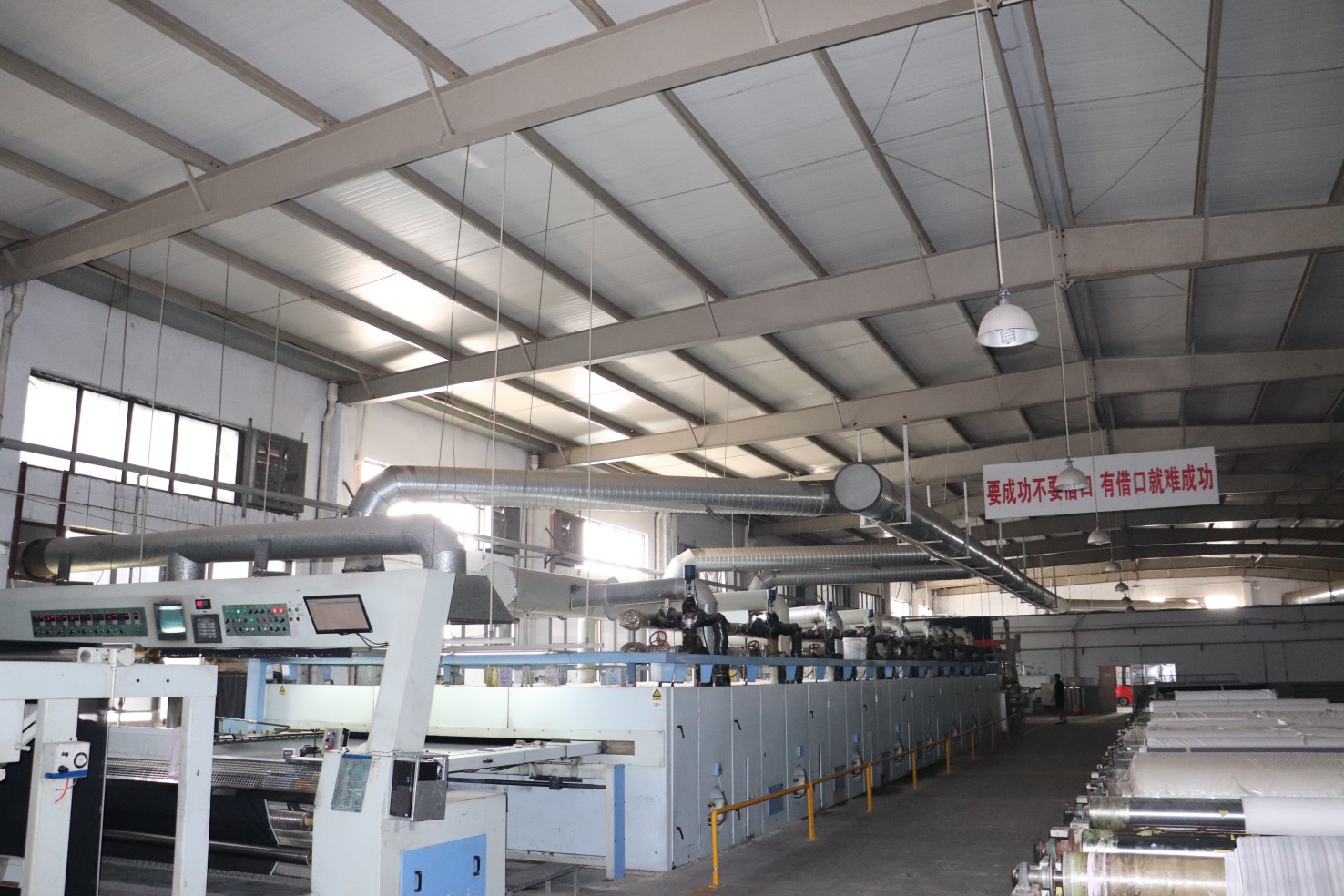
In the wholesale and manufacturing segment, the value of a fabric supplier is increasingly measured by its ability to execute customisation without destabilising quality. Elitex’s production profile is useful as an industry reference point: the company operates an 85,000 m² facility, employs 259 staff in total, works with a 36-engineer R&D team, and reports a monthly capacity of 500,000 metres with a lead time of 15 to 30 days. Its annual output capacity reaches approximately 8,000,000 m² of screen fabrics and 7,200,000 m² of blockout fabrics. About 80% of production is exported, with main markets in the USA, EU, Australia, North America, Southeast Asia and the Middle East.
For a buyer, these figures help answer practical questions. Can the factory support a stocking programme? Is the supplier’s scale aligned with the buyer’s annual volume? Does the R&D team allow for collaborative colour and weave development? Elitex’s stated MOQ of 500 metres and customization options covering colour, size, openness, logo, weave pattern and coating make it a potential partner for blind manufacturers that require tailored SKUs rather than only standard rolls.
Compliance and Certification: Reading the Evidence Correctly
Certification documents are one of the strongest verification tools available to a blockout fabric buyer, provided they are read with attention to scope and validity.
The Oeko-Tex Standard 100 certificate held by Elitex (certificate number BEWO 103516) is issued by TESTEX AG, the Swiss Textile Testing Institute. The scope covers woven fabric made of polyester, polypropylene and polyacrylic for sunscreen and blackout articles under Product Class IV, which corresponds to decoration material. The listed validity period runs from 10 April 2026 to 15 March 2027. For buyers, this type of certificate signals that the fabric has been tested against a recognised global standard for harmful substances.
The ISO certifications add another layer. Elitex holds ISO 9001:2015 for “research and development, production, and sales of polymer composite sunshade materials,” ISO 14001:2015 for environmental management, and ISO 45001:2018 for occupational health and safety — all issued by Beijing United Intelligence Certification Co., Ltd., with validity extending to 2028. For a procurement team conducting a factory audit, these certifications indicate that the supplier has established management systems beyond product-level testing.
One caveat should be noted. Certification does not replace project-specific verification. A buyer serving the US public building sector should always confirm that the exact article number being supplied meets the specified flame propagation requirements for that jurisdiction. Similarly, a green building project may require the specific product to hold the relevant emissions certification, not merely the factory. Procurement professionals are advised to request the certificate for the precise SKU under consideration and to keep records of validity dates.
Real-World Application Evidence and Its Limits
Field evidence can help buyers understand how blockout and sunscreen fabrics behave in operation. Elitex reports project-based applications across Germany and Australia, representing cumulative supply of more than 10,000 metres and 50+ projects. The stated application areas are commercial building window shading, hotel interior decoration, office building energy saving and residential privacy protection. Reported outcomes include energy savings above 30%, UV blocking around 95%, enhanced privacy and improved indoor comfort. The same client profile covers architectural design firms, commercial building developers, hotel chains, residential contractors and blind manufacturers.
These figures are supplier-reported and should be interpreted as indicative performance claims rather than third-party verified results. Their main value for a buyer is directional: they show that the product range has been deployed in realistic architectural and hospitality programmes across different climates. During supplier evaluation, a buyer should ask for reference job details that can be contacted or for samples that can be tested against the buyer’s own project requirements.
Quality, After-Sales and Long-Term Reliability
A blockout fabric specification is only as strong as the consistency behind it. Because coated fabrics are produced in continuous processes, variations in coating thickness, tension and curing temperature can create quality differences between batches. This is a critical risk for buyers who sell finished blinds under their own brand: an inconsistent fabric causes returns, rework and damage to commercial relationships.
Quality control practice is therefore an evaluation factor in its own right. Elitex states that its production and quality control processes follow high industry standards and that its products are researched and developed with in-house equipment and testing devices, including purpose-built laboratories to constantly monitor product quality. Its capacity profile includes 100% inspection and third-party laboratory testing as part of the OEM service framework. For a buyer comparing suppliers, the operational question is whether the factory can demonstrate a closed loop between sampling, production testing, final inspection and after-sales response.
After-sales support also matters, particularly for cross-border trade. Elitex lists 24/7 online support, technical guidance and after-sales service among its capabilities. While these phrases are common in supplier profiles, they still serve an important function: they set an expectation that the buyer will receive support when a technical problem arises during blind manufacturing or installation.
Cost Rationality in Blockout Fabric Procurement
Price remains the most visible comparison point, but it is not the most reliable measure of procurement cost. The total cost of a blockout fabric includes the cost of quality failures, coating delamination, inconsistent shade colour, freight for heavier coated goods and the administrative burden of managing a non-compliant supplier.
In standard industry configuration, 100% polyester with acrylic coating is the conventional material family for coated blackout fabrics. Buyers evaluating an economy-grade screen fabric or a budget blackout option should check whether the formulation is PVC-free if that is a project requirement. They should also compare like-for-like: a heavier coated fabric with high opacity is not directly comparable to a lighter coated fabric sold at a lower price for a non-critical application. Procurement teams should first define the required performance level, then compare prices only within that tier.
Decision Framework for Industrial Buyers
Synthesising the above, a practical evaluation framework for blockout fabric suppliers in 2026 contains six layers:
- Application match. Does the supplier’s portfolio include the right product category — full blockout, dimout, translucent, vertical or jacquard — for the buyer’s end market?
- Technical specification. Are opacity, dimensional stability, width range, coating type and openness factor disclosed in measurable terms?
- Coating competence. Does the manufacturer articulate the difference between knife-coated and paste-coated routes, and can it produce both when needed?
- Certification evidence. Are environmental and product safety certificates current and applicable to the exact products under consideration?
- Capacity and consistency. Can the supplier support volume requirements with inspection systems and third-party testing rather than purely visual quality control?
- OEM alignment. If the buyer requires private label production, are colour, weave, openness and coating customisation actually available at realistic MOQs?
This framework is deliberately neutral about brand preference. It allows a buyer to compare a Chinese manufacturing specialist such as Elitex with established European technical brands on the criteria that will actually affect the buyer’s product quality and commercial margins.
Future Outlook: Blockout Fabrics as Hybrid Materials
Looking forward, the boundary between “blockout” and “solar protection” will continue to blur. Consumers want darkness for sleep, but they also want daylight, views and low energy bills during waking hours. Single-purpose blackout fabrics will lose ground to product systems that allow controlled transitions between daylight, shade and full privacy.
Manufacturers positioned to benefit from this structural shift are those with a wide portfolio across openness levels, coating methods and decorative weave patterns, supported by credible environmental certification. The rising emphasis on PVC-free coated fabrics, low-emission interior products and documented quality management will continue to raise the entry barrier for smaller producers.
For buyers, this evolution creates an opportunity to consolidate suppliers. Instead of buying blackout fabric from one source, sunscreen fabric from another and decorative jacquard from a third, a buyer may qualify one manufacturing partner with a sufficiently broad technical platform. That approach reduces qualification cost, simplifies compliance management and improves supply chain predictability.
FAQ
What is the difference between blockout, dimout and light-filter fabrics?
Blockout fabrics are engineered to block light completely, typically using opaque coated constructions; dimout fabrics reduce light transmission significantly but do not eliminate it; light-filter or translucent fabrics allow daylight to pass through while reducing glare and solar heat. The choice depends on whether the application requires total darkness — such as a hotel bedroom — or controlled daylight, as in an office environment.
How does a buyer verify that a fabric is genuinely 100% blockout?
The most practical verification combines three steps: reviewing the supplier’s specification claim, checking for a stated absence of pinholes, and physically testing a sample against a strong light source. Dimensional stability is also relevant because a fabric that shrinks or stretches after installation may create gaps around the edges even if the material itself is opaque.
Why do coated blockout fabrics differ if they are all made from polyester?
Polyester is the foundational material, but coating technology determines the final behaviour of the fabric. Knife-coated and paste-coated fabrics can differ in surface texture, coating weight, flexibility, flatness and dimensional stability. A specification should therefore include both the base material and the coating method, as well as the presence of PVC-free formulation when required.
What certifications are most relevant when sourcing blockout fabrics for commercial projects?
For commercial interiors, low chemical emissions certification such as UL GREENGUARD or GREENGUARD Gold is frequently specified in North America, while Oeko-Tex Standard 100 is used globally as a general harmful-substance screening certification. Public building projects in the US typically also require fabric flame propagation testing such as NFPA 701, so buyers should verify that the specific article meets the local code.
What is the typical minimum order quantity for OEM custom blockout fabric?
MOQs vary by supplier and complexity level. At Elitex, the stated MOQ for OEM production is 500 metres, with customary lead times of 15 to 30 days depending on customisation and order volume. Custom options may include colour, openness, weave pattern and coating, which are relevant for buyers developing private label shading lines.
Conclusion
The blockout fabric market is entering a phase where shading performance is judged across multiple layers: light opacity, coating quality, chemical safety, thermal contribution and production consistency. Buyers who treat blockout fabric as a commodity will continue to compete on price alone. Buyers who evaluate coating science, certification validity and the manufacturer’s capacity to customise will be better positioned to secure reliable quality in the long term.
For procurement teams requiring detailed product specifications, coating options and certified product documentation, Elitex publishes a consolidated company brochure that can be accessed and downloaded for technical reference.
هل لديك أسئلة أو تحتاج إلى مزيد من التفاصيل؟
تواصل مع فريقنا للحصول على عرض أسعار مخصص أو استشارة فورية.
طلب عرض أسعار
املأ النموذج أدناه وسيتواصل معك فريقنا بعرض مقترح مخصص.
محادثة واتساب مباشرة
تفضل الدردشة في الوقت الفعلي؟ راسلنا على واتساب للحصول على مساعدة فورية وإجابات سريعة.
- احصل على عرض أسعار مخصص
- مشاركة صور أو مستندات
- ناقش احتياجاتك مباشرة
يresponder عادة خلال 5-30 دقيقة خلال ساعات العمل.