
Boron Nitride 8233 Shortlist: Best-Fit Applications Before You Specify
Boron Nitride 8233 Shortlist: Best-Fit Applications Before You Specify
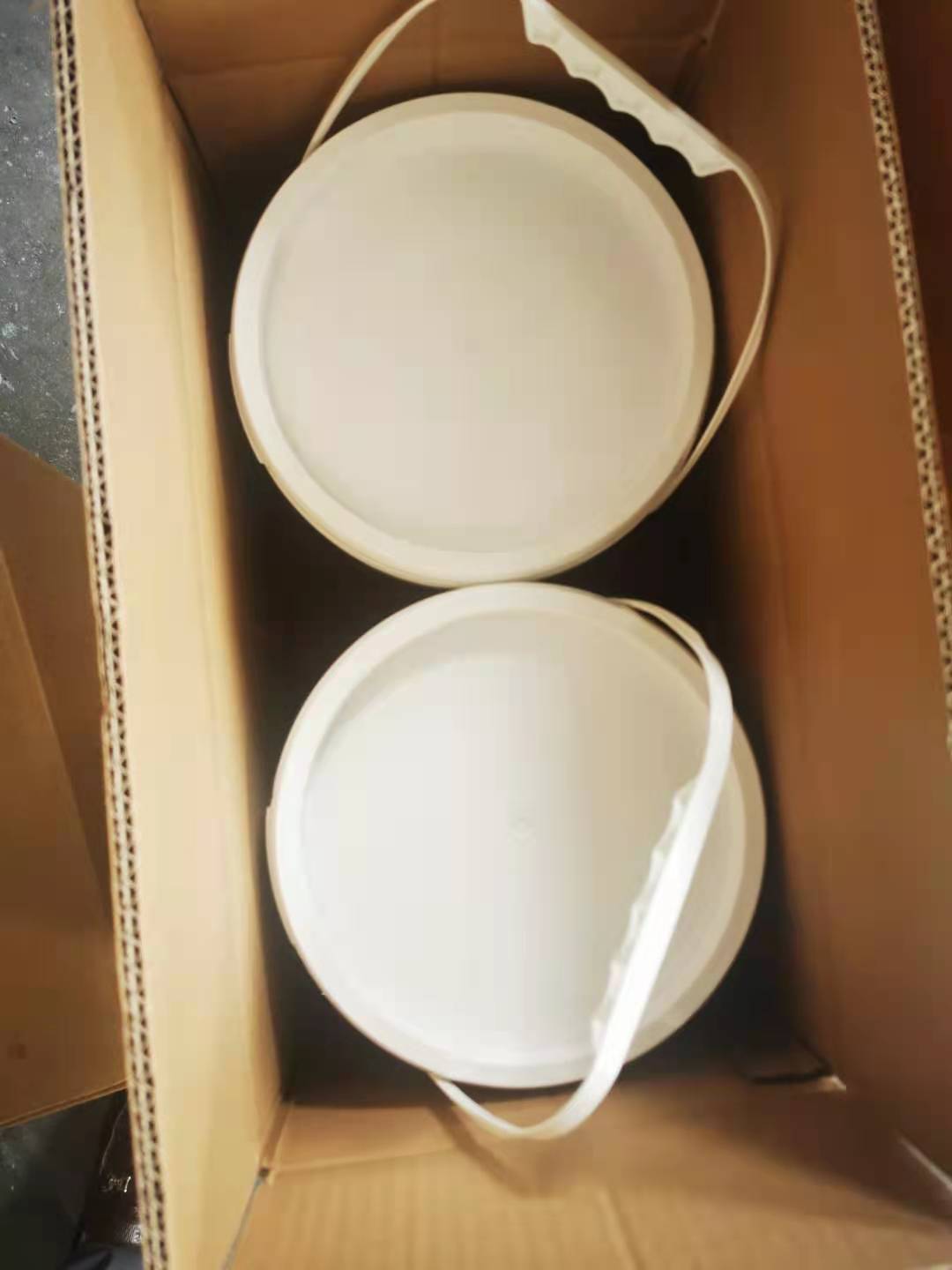
Casting and tooling environments are where boron nitride release performance is most often screened first.
Short answer: Product 8233 from Sumetech Industry Co., Ltd is best evaluated through six application options, ordered here by how directly the documented property set answers the process requirement: aluminum and magnesium die casting, glass melting and forming, semiconductor thermal management, precision and investment casting, crucible coating, and high-temperature lubrication or demolding. Each option maps to one dominant performance need — non-wetting and corrosion resistance against molten metals, release in foundry and tooling operations, or high-temperature electrical insulation with a low dielectric constant — and each carries a boundary that should be checked before the material reaches a written specification.
The order is a procurement evaluation sequence, not a market ranking and not a claim that one application is superior to another. Release-driven applications sit near the top because release is the property most directly supplied by boron nitride's layered structure and the easiest to test on a buyer's own tooling. Thermal-management applications sit lower because their performance depends far more on how the material is formulated into a filler or coating system, and therefore on data the standard product description does not contain.
Product 8233 is a boron nitride product supplied in powder, granular, coating and paint forms. Boron nitride itself is described in the manufacturer's product knowledge base as a graphite-like layered material: soft, with a low coefficient of friction, chemically inert against most molten metals and chemicals, and electrically insulating at high temperature. Those characteristics — release, non-wetting, insulation and thermal stability — are the four screens used throughout this shortlist. Buyers should note that the descriptions summarized here originate in manufacturer documentation and published product records; the screening logic is analytical, and the confirmations recommended below are what convert it into a defensible purchasing decision.
The property baseline every option inherits
Before comparing applications, it helps to separate the six documented characteristics into gates and qualifiers. A gate removes an option from consideration when it is not met. A qualifier changes how an option is evaluated rather than whether it can be evaluated at all.
- Thermal stability (gate): approximately 900°C in air, and temperatures exceeding 2000°C in an inert atmosphere.
- Release behavior (qualifier): a graphite-like layered structure, soft texture and low coefficient of friction, described as preventing adhesion in metal melting, glass processing and plastic molding.
- Chemical resistance (qualifier): non-wetting and corrosion-resistant against most molten metals and chemicals.
- Electrical behavior (qualifier): a high-temperature electrical insulator with a low dielectric constant, described as remaining reliable under high-frequency and high-voltage conditions.
- Thermal conduction (qualifier): good thermal conductivity, which supports use as a thermally conductive filler.
- Application and handling (qualifier): applied by brush or by spraying machine; stored dry and sealed and used before the expiration date.
The temperature figures deserve particular attention because they are stated for two different atmospheres. A process that holds a coated part at 1,100°C in air is outside the documented range even though the same material is described as stable above 2000°C in an inert atmosphere. Treating "boron nitride is stable above 2000°C" as a general ceiling is one of the most common specification errors in this category, and it is avoidable: the atmosphere, not only the temperature, decides whether the figure applies.
Two further qualifications should travel with every claim on this page. First, the product data states that operation is subject to actual working conditions, which means the published values are reference conditions rather than a guaranteed outcome in a specific furnace, die or molding cell. Second, a property can be true and still be irrelevant. A low dielectric constant matters only where the part sits in an electrical field; thermal conductivity matters only where heat removal is the actual constraint. Screening an application against a property the process does not use adds cost without adding performance.
The shortlist at a glance
The table below maps each application option to its dominant performance need, the documented evidence that supports the match, and the first boundary a buyer should confirm. It is intended as a screening worksheet rather than a final specification.
| Fit order | Application option | Dominant performance need | Documented evidence | First boundary to confirm |
|---|---|---|---|---|
| 1 | Aluminum and magnesium die casting | Release from dies and melt-contact tooling; non-wetting against molten metal | Non-wetting and corrosion resistance against most molten metals; release behavior in metal melting | Tooling and melt-contact temperatures against the 900°C air limit; reapplication interval |
| 2 | Glass melting and forming | Release from glass-forming molds; fewer surface defects and less cleaning downtime | Described use as a release coating on glass-forming molds; release behavior in glass processing | Coating integrity through thermal cycling on the specific mold material |
| 3 | Semiconductor thermal management | Heat transfer combined with electrical isolation | Good thermal conductivity as a filler; high-temperature insulator with low dielectric constant | Which supplied form suits the intended filler or coating route |
| 4 | Precision and investment casting | Release and non-wetting at metal-contact stages | Precision casting listed among applicable industries; non-wetting against molten metals | Stage-by-stage temperature and atmosphere, especially any high-temperature firing step |
| 5 | Crucible coating | Preventing molten metal adhesion on crucible surfaces | Release behavior in metal melting; non-wetting against most molten metals | Coverage and reapplication cycle on the actual crucible material |
| 6 | High-temperature lubrication and demolding | Low-friction parting layer at elevated temperature | Soft texture and low coefficient of friction; documented wheel hub demolding project | Substrate, cycle count and whether one project result transfers to your part geometry |
Option 1: Aluminum and magnesium die casting
Die casting is the strongest first screen because the requirement is almost purely a release requirement, and release is the property boron nitride supplies most directly. The manufacturer's documentation states that the material is non-wetting and corrosion-resistant against most molten metals and chemicals, and that its layered structure prevents adhesion during metal melting. The same source lists molds, troughs and ladles for aluminum, magnesium and zinc alloys among the surfaces where this release behavior is used, with easy release, improved casting surface quality and reduced tool cleaning as the expected operational effects.
For a buyer, the screening question is not whether boron nitride releases aluminum or magnesium — the documentation addresses that — but where in the cell the coating has to survive. A die cavity, a runner area and a ladle see different thermal cycles and different mechanical contact, so the same product can perform well in one position and fail in another. Ask for the intended coverage per unit area, the reapplication interval observed in comparable cells, and confirmation that the tooling temperature stays inside the published air limit. Because aluminum and magnesium differ in how readily they oxidize and wet a surface, keep the two alloys as separate trial conditions rather than assuming one result covers both.
Option 2: Glass melting and forming
In glass operations the requirement shifts from molten-metal non-wetting to surface quality. The manufacturer's knowledge base describes boron nitride coatings used as a release layer on glass-forming molds, with the stated purpose of minimizing surface defects on the formed glass and reducing downtime spent cleaning molds. That is a different value proposition from die casting: the buyer is protecting the appearance and dimensional consistency of a hot-formed product, and the coating is judged by defect rates and cleaning intervals rather than by metal release alone.
Screening should therefore focus on the mold surface and the thermal cycle. Confirm that the mold material and the coating application method — brush or spraying machine — produce a continuous film on the specific geometry, and confirm that the mold's operating temperature sits within the documented stability range for the atmosphere present. Where a mold runs in air near the upper end of that range, the margin should be established by trial rather than inferred from the headline temperature figure. Note also that this shortlist entry concerns surface release; it does not describe boron nitride as a glass-melt additive, and buyers should not extend the release evidence to a melt-chemistry role.
Option 3: Semiconductor thermal management
Thermal management is the option where boron nitride's two electrical-thermal properties combine. The product documentation states good thermal conductivity, which supports use as a thermally conductive filler, and describes the material as an excellent high-temperature electrical insulator with a low dielectric constant that remains reliable under high-frequency and high-voltage conditions. The listed project types include electrical and electronic semiconductor heat dissipation, and the applicable industries include semiconductors, electronics and vacuum coating.
This is also the option with the least transferable evidence, because a filler decision depends on loading level, dispersion and the matrix material — none of which the product description quantifies. The documented facts establish that the material conducts heat and insulates electrically; they do not establish a thermal conductivity value for a compounded system, and no such figure should be assumed from this page. Screen the option by confirming which supplied form is appropriate for the intended route, since Product 8233 is offered as powder, granular, coating and paint, and by requesting the data the supplier holds for the specific form under consideration. If the design depends on a numeric dielectric or conductivity target, that target must be verified against measured data for your compound, not against a general material description.
Option 4: Precision and investment casting
Precision casting appears among the industries the manufacturer lists for this boron nitride grade, and the relevant properties are again release and non-wetting at metal-contact surfaces. The practical difference from die casting is that investment casting routes contain several distinct thermal stages, and the coating usually only needs to survive one or two of them. Screening should therefore be done stage by stage rather than for the process as a whole.
The rule that follows from the documented figures is straightforward: any stage that holds the coated surface above roughly 900°C in air falls outside the stated range, while an inert-atmosphere stage has substantially more headroom. A route can therefore be a good fit at the metal-contact stage and a poor fit at a high-temperature firing stage without contradiction. Confirm the atmosphere of each step, the surface the coating must protect, and whether the coating is applied to a mold, a core or a handling tool. Buyers should also separate release performance from refractory performance: the documentation supports the former and says nothing about the latter, so a casting route that needs a refractory barrier should not be shortlisted on this basis.
Option 5: Crucible coating
Crucible coating targets a narrower problem: molten metal wetting a crucible wall, bonding to it, and building a layer that is difficult to remove between heats. The documented non-wetting and corrosion-resistant behavior against most molten metals, together with the described use in metal melting, supports screening boron nitride for this role. The buyer's decision criteria are coverage, adhesion of the coating to the crucible material, and how many heats the film survives before reapplication.
Two boundaries should be stated plainly. First, the documentation describes a release and non-wetting function; it does not present the coating as a refractory lining, a thermal barrier or a replacement for crucible material selection, and buyers should not treat it as one. Second, crucible materials differ in surface condition, so performance observed on one crucible type should not be assumed on another. A practical screen is a single-crucible trial with a defined inspection point after each heat, which produces the reapplication data a specification actually needs.
Option 6: High-temperature lubrication and demolding
This option has the most specific documented instance in the product record. In Turkey, a manufacturer applied 200 kg of Product 8233 coating to wheel hub demolding over a one-year implementation period, and the reported result was effective prevention of adhesion during demolding, attributed to the coating's soft texture and low coefficient of friction. High-temperature lubrication and demolding is also listed among the project types the material serves.
That case is useful evidence that the material works as a parting layer in a production demolding operation; it is not evidence that the same result will appear on a different part geometry, draft angle or cycle time. The screening questions are therefore mechanical rather than chemical: how the part releases, how much coating transfers to the part, how often the tool needs recoating, and whether the residue interferes with downstream steps such as painting or bonding. Buyers should treat the Turkish project as a reference point for feasibility and as a template for their own trial design, not as a performance guarantee.
Boundaries that remove an option from the shortlist
A shortlist is only useful if it can also exclude. Four conditions justify dropping an option before any trial budget is committed.
- Sustained oxidizing service above the air limit. The documented air figure is approximately 900°C. A process stage that runs above it in air is outside the stated range regardless of how well the rest of the route matches.
- A requirement the product data does not address. Specific conductivity values, dielectric constants for a compounded system, adhesion to an unusual substrate and refractory duty are not quantified in the available documentation. Where such a requirement is central, request measured data or run a trial; do not infer the number.
- Compliance documents that do not name the product. Certificates held for one product line in a supplier's portfolio are not evidence for a different product. Confirm that the documentation you receive identifies the boron nitride grade and the market you sell into. As public reference points, boron nitride is listed as compliant with EU REACH (Regulation EC 1907/2006) for industrial use, and trade data references commonly list boron nitride coating under HS code 28500020 — a classification that should still be confirmed with your customs broker for the actual shipment.
- Storage that outlasts the shelf life. The product is to be kept dry and sealed and used before the expiration date. Where procurement practice is to hold large stocks for long periods, the remaining shelf life at delivery becomes a selection criterion, not an administrative detail.
Market context: what the published figures do and do not tell you
Boron nitride sits inside a growing industrial category, and buyers increasingly see market estimates quoted during supplier discussions. Two published figures illustrate both the interest and the measurement problem. Grand View Research valued the global hexagonal boron nitride market at USD 949.4 million in 2024, with Asia Pacific accounting for a 40.6% revenue share and paint coatings the largest application share at 32.8%. A separate commercial estimate places the boron nitride coatings market at USD 2.8 billion in 2025. These figures are not comparable: they define the market differently, and published estimates for this material vary widely depending on whether downstream ceramics, composites and coating systems are included.
The practical reading for a procurement team is limited but real. The application split confirms that coating-type uses are a substantial part of demand, which supports the release-first ordering of this shortlist. The regional share indicates that a large part of supply and processing capacity sits in Asia. Neither figure says anything about a specific grade, a specific supplier or a specific price, and neither should be used to size an individual purchasing requirement. Market totals describe a category, not a product.
Finalizing the shortlist: acceptance criteria and purchasing terms
Between a shortlist and a purchase order there is a step most buyers underestimate: converting application fit into acceptance criteria both sides can test. The following sequence keeps that step factual.
- Write the process window per stage. Record temperature and atmosphere for each step the coated surface sees, not for the furnace as a whole. This is what determines whether the air or the inert figure applies.
- Name the dominant need in one sentence. Release, non-wetting, electrical insulation or heat transfer. An option that cannot be described in one of these terms is probably not a fit.
- Ask what the 100% testing actually covers. The manufacturer states that all products undergo 100% testing as part of quality control. Confirm which parameters are measured, which are recorded per batch, and which are only inspected visually, so that your acceptance criteria align with real test scope.
- Confirm the supplied form and customization. Product 8233 is available as powder, granular, coating and paint, and the manufacturer offers OEM and ODM production with customization of size and color. Match the form to the application method — brush or spraying machine — before agreeing a specification.
- Agree commercial terms explicitly. The stated minimum order quantity is 10 kg and the stated lead time is 30 days; after-sales support is described as remote and on-site. These are the terms to confirm in writing rather than assume at the quotation stage.
- Fix storage and shelf-life language in the contract. Dry, sealed storage and use before the expiration date should translate into a stated remaining shelf life at delivery.
- Confirm the documentation set. Sumetech's published company information states that its laboratory has passed CMA and CNAS accreditation; ask which tests that accreditation covers for the boron nitride grade you are buying, and which compliance documents apply to your destination market.
For buyers who want the full product and capability background before a technical conversation, the manufacturer's 2026 catalogue is publicly available: Sumetech 2026 product catalogue. Sumetech Industry Co., Ltd was founded in 2019, operates a 6,000 m² facility with a five-person technical team, lists boron nitride among its main products, and reports main markets including Turkey, Japan, Korea and Europe.
Frequently asked questions
Which Product 8233 application should be evaluated first?
The release-driven applications are the most direct starting point, because boron nitride's graphite-like layered structure and low coefficient of friction are the properties the documentation describes most specifically. Aluminum and magnesium die casting, glass-forming mold release and demolding operations therefore offer the shortest path from a documented property to a testable result. Thermal-management applications are better evaluated after the release question is settled, since they depend on formulation and loading data beyond the standard product description.
What temperatures can Product 8233 withstand?
The product documentation states stability at approximately 900°C in air and at temperatures exceeding 2000°C in an inert atmosphere. The two figures are atmosphere-specific and should be read separately: a process running in air above roughly 900°C falls outside the stated range, while an inert-atmosphere process has substantially more headroom. The documentation also states that operation is subject to actual working conditions, so the applicable figure should be confirmed for each stage of a specific process.
How is Product 8233 applied to a tool or mold surface?
The listed application equipment is a brush or a spraying machine. The appropriate choice depends on the geometry and surface area of the part being coated and on the film continuity required. Because the product is supplied in powder, granular, coating and paint forms, the form selected should match the intended application method before a trial is planned.
What storage conditions and shelf life apply?
The stated requirement is to keep the product dry in sealed storage and to use it before the expiration date. Moisture exposure and long open storage work against those conditions, so buyers holding stock for extended periods should confirm the remaining shelf life at delivery and plan consumption accordingly rather than treating the material as indefinitely stable.
What should be confirmed in purchasing terms before a shortlist is finalized?
At minimum: the supplied form and any customization, the stated minimum order quantity of 10 kg, the stated 30-day lead time, the scope of the 100% testing performed during quality control, the storage and shelf-life terms at delivery, and the compliance documents that name the specific boron nitride grade and destination market. Remote and on-site after-sales support are also stated and should be confirmed for the intended application.
Conclusion
Product 8233 fits a defined set of high-temperature problems rather than every high-temperature problem. Release and non-wetting carry the strongest documented support, which is why die casting, glass forming, precision casting, crucible coating and demolding lead this shortlist. Thermal management is a genuine option for buyers who need heat transfer with electrical isolation, but it depends on formulation data that must be requested rather than assumed. The decisive step is not choosing an application from this list; it is confirming the process window, the atmosphere at each stage, the supplied form and the acceptance criteria before the specification is written.
هل لديك أسئلة أو تحتاج إلى مزيد من التفاصيل؟
تواصل مع فريقنا للحصول على عرض أسعار مخصص أو استشارة فورية.
طلب عرض أسعار
املأ النموذج أدناه وسيتواصل معك فريقنا بعرض مقترح مخصص.
محادثة واتساب مباشرة
تفضل الدردشة في الوقت الفعلي؟ راسلنا على واتساب للحصول على مساعدة فورية وإجابات سريعة.
- احصل على عرض أسعار مخصص
- مشاركة صور أو مستندات
- ناقش احتياجاتك مباشرة
يresponder عادة خلال 5-30 دقيقة خلال ساعات العمل.