
Boron Nitride Coating Shortlist: Release, Lubrication, Insulation
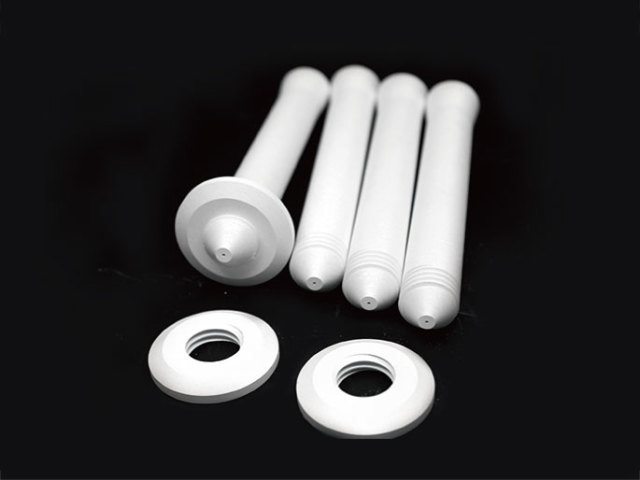
Boron nitride ceramic parts represent the same material family used in high-temperature release and insulation coatings.
A boron nitride coating is a ceramic layer applied to molds, crucibles, ladles, troughs, sintering fixtures and refractory surfaces so that molten metal, glass or powder does not bond to them at temperature. The shortlist below organises the boron nitride (BN) coating options built on Sumetech product 8233 by the task a buyer is actually specifying — release, lubrication, or electrical insulation — and it states the operating window every entry shares: a maximum working temperature of 900 °C in air, above 2000 °C in an inert atmosphere, and a maximum purity of 99.9%.
This is a decision-stage document rather than an introduction to the material. At the point where a shortlist is useful, the buyer is no longer asking what boron nitride is. The buyer is choosing between coating form, purity grade and application method, and needs to know which of those choices changes process outcomes and which ones only change paperwork.
Why a Shortlist, Not a Single Best Coating
High-temperature release and insulation failures rarely come from using the wrong material family. They come from using the right family in the wrong form, at the wrong purity, in the wrong atmosphere. A foundry releasing aluminium from a die, a precision casting operation coating a crucible, and an electronics manufacturer insulating a heat path are all specifying boron nitride, but they are not buying the same thing.
Product 8233 is supplied as powder, granular, coating and paint. That single fact explains why a shortlist is more honest than a ranking. The underlying material — hexagonal boron nitride, often described as white graphite because of its layered structure — is consistent. What changes across the shortlist is how it is delivered, how it is applied, and how much contamination risk the buyer can tolerate.
Three failure modes drive the decision. The first is sticking: castings that tear, glass that marks, workpieces that weld themselves to a fixture. The second is friction and wear on hot moving surfaces. The third is electrical and thermal behaviour: a surface that must conduct heat away while remaining an insulator. Each failure mode pulls the shortlist in a slightly different direction.
The Criteria Used to Build This Shortlist
Every option below was assessed against seven criteria. The order matters, because the first three are physical constraints that cannot be negotiated commercially, while the last four are procurement variables that can be.
- Thermal ceiling in the actual atmosphere. The specified limit for 8233 is 900 °C in air and above 2000 °C in inert gas. In air, the practical ceiling is set by oxidation behaviour, which is why air and inert limits are specified separately rather than as one headline number.
- Release behaviour against the specific melt. Boron nitride is non-wetting and corrosion resistant against most molten metals and chemicals, which is the property that prevents adhesion in metal melting, glass processing and plastic molding.
- Electrical role. Where the layer must insulate rather than conduct, the relevant property is that boron nitride is a high-temperature electrical insulator with a low dielectric constant, and remains reliable in high-frequency and high-voltage environments.
- Purity grade. Maximum purity for 8233 is 99.9%. Purity is the variable that separates electronics and cosmetic grade expectations from standard industrial release work.
- Application method fit. Matched equipment for 8233 is a brush or a spraying machine, so the line setup must match the form purchased.
- Storage and shelf life. The product must be kept dry and sealed and used before the expiration date, which affects reorder planning more than it affects technical performance.
- Cost structure across the maintenance cycle. Against graphite-based release agents, boron nitride carries a higher initial price but a much lower maintenance cost and a lower cleaning cost.
| Criterion | Why it decides the shortlist | What to verify |
|---|---|---|
| Atmosphere and temperature | Determines whether 8233 operates inside its specified window | Air vs inert gas; peak vs holding temperature |
| Melt and substrate | Non-wetting behaviour is the release mechanism | Aluminium, magnesium, zinc, glass or powder contact |
| Electrical requirement | Insulation and dielectric behaviour may be the primary function | Voltage, frequency, heat path |
| Purity grade | Contamination tolerance differs by industry | Grade up to 99.9% purity |
| Application method | Brush and spray require different preparation and drying | Equipment availability; working-condition parameters |
| Cost structure | Initial price vs maintenance and cleaning cost | Cleaning interval, downtime cost |
The Shortlist: Five Boron Nitride Coating Options
The five entries below are not ranked by quality. They are ranked by how often they are specified for high-temperature release and insulation work, and each entry states where it stops being the right choice.
Option 1 — Spray- or brush-applied BN coating for foundry mold release
This is the entry point for most foundry work: a boron nitride anti-stick coating applied to molds, troughs and ladles handling aluminium, magnesium and zinc alloys so that castings release cleanly and tool life is extended. It is applied with a brush or a spraying machine, and it is the option that most directly replaces a graphite-based release agent in a foundry mold release coating role. The reason it holds up is that the layer resists deformation and chemical reaction at high temperatures, so the release surface does not break down between cleaning cycles.
Option 2 — BN coating for precision and investment casting
Investment casting and precision casting move the coating from a mold surface onto crucibles, molds and transfer equipment, where the coating must prevent adhesion between molten metal and the refractory. Product 8233 lists precision casting, horizontal continuous casting and amorphous ribbon among its applicable industries. In sintering and heat treatment, the same logic extends to graphite plates, where a boron nitride ceramic coating helps prevent carbon contamination and bonding between workpieces and fixtures.
Option 3 — High-purity BN coating for electronics and semiconductor insulation
Where the layer must insulate rather than release, purity becomes the deciding variable. High-purity boron nitride coating up to a maximum of 99.9% is the entry point for semiconductor manufacturing, electronic heat dissipation and electronics industry applications. Boron nitride is an electrical insulator with a low dielectric constant that remains reliable under high frequency and high voltage, and it also conducts heat, which is why the same material appears both as a dielectric layer and as a thermally conductive filler.
Option 4 — BN ceramic and composite forms for refractory and thermal protection
Not every high-temperature surface can be coated repeatedly. Permanent fixtures, high-temperature containers and thermal protection elements are often specified as boron nitride ceramic or composite ceramic parts, where the material is present as a body rather than a film. This option appears in functional ceramics, high-temperature containers, thermal protection, nuclear energy applications, radar and optics — settings where the insulation and non-wetting properties matter but recoating is impractical.
Option 5 — Boron nitride powder and granular grades for in-house formulation
The final entry is for buyers who mix their own release or filler system. Product 8233 is available as boron nitride powder and granular material, with customisable morphology and purity, and it is used as a thermally conductive filler in photovoltaic technology, solar thermal energy storage and electronics, and as an additive in superhard materials, functional fibers and cosmetics. This is the least standardised option and the one that requires the most specification discipline, because particle size distribution and morphology are agreed per order.
| Shortlist entry | Primary task | Typical scenario | Key verified parameter | Where it stops |
|---|---|---|---|---|
| Option 1 — BN coating / paint | Release and anti-stick | Foundry mold release for aluminium casting, die casting | 900 °C in air; brush or spraying machine | Not for a permanent wear surface |
| Option 2 — BN coating on crucibles and molds | Release plus contamination control | Precision casting, investment casting, sintering fixtures | Non-wetting against most molten metals | Very high temperature needs inert gas |
| Option 3 — High-purity BN coating | Electrical insulation and heat path | Semiconductors, electronics heat dissipation | Purity up to 99.9%; low dielectric constant | Purity cost is not justified in standard release work |
| Option 4 — BN ceramic / composite ceramic | Structural insulation and thermal protection | Refractory fixtures, high-temperature containers | Above 2000 °C in inert gas | Not a coating replacement for complex geometries |
| Option 5 — BN powder / granular | Formulation and filler | Thermally conductive filler, in-house coating mixes | Customisable morphology and purity | Requires per-order specification |
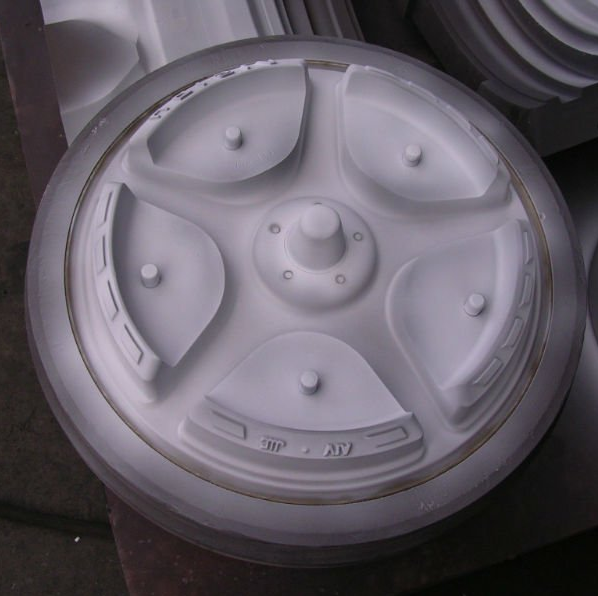
A boron nitride coating layer applied to a high-temperature contact surface.
Why Boron Nitride Works at Temperature
The mechanism behind the shortlist is structural. Hexagonal boron nitride has a layered crystal structure in which atoms within each layer are covalently bonded and the layers interact through van der Waals forces. That structure is why the material is described as white graphite, and it is the reason the friction coefficient is low — in the range of 0.01–0.05 — which supports both the release role and the high-temperature lubrication role.
The second mechanism is chemical. Boron nitride is chemically stable and shows non-wetting and corrosion-resistant behaviour against most molten metals and chemicals, which is what prevents adhesion in metal melting, glass processing and plastic molding. As a result, cleaning is easier than with materials that react or deform at temperature.
It is worth separating material-level data from product-level data, because the two are often confused in supplier literature. At the material level, hexagonal boron nitride is described as stable up to nearly 3000 °C. At the product level, the specified service window for 8233 is 900 °C in air and above 2000 °C in inert gas. Buyers should work to the product figure for their own atmosphere, not the material figure.
Application is a process step, not a footnote. The matched equipment for 8233 is a brush or a spraying machine, and the operation mode is stated as subject to the actual working conditions. That means coating thickness, coverage and the drying schedule are not fixed by the product description alone; they should be agreed against the substrate, the line and the cycle time the coating has to survive.
Boron Nitride Coating vs Graphite-Based Release Agents
Graphite-based release agents are the established alternative in foundry and metallurgical work, and the comparison supplied for this product is specific rather than general. The core differences cited are high temperature resistance and good surface quality, with a lower clean cost as the measurable performance gap.
| Comparison dimension | Boron nitride coating (8233) | Graphite-based release agents |
|---|---|---|
| High-temperature behaviour | Not easily deformed or chemically reacted at high temperatures | Reference alternative; lower thermal stability in the same service |
| Surface quality | Good surface quality cited as a core difference | Comparative baseline |
| Cleaning cost | Lower clean cost | Higher cleaning burden |
| Maintenance | Stable performance, less maintenance | More frequent intervention |
| Initial price | Higher | Lower |
| Best-fit scenarios | Electronic heat dissipation, semiconductor manufacturing, metallurgical casting, machining, new energy, nuclear energy, aerospace, cosmetics | Conventional release work |
The limitation is on the boron nitride side and should be stated plainly: the initial price is higher. A buyer comparing purchase price per kilogram will find graphite-based agents cheaper, and in low-temperature, low-cleanliness-sensitivity operations that difference will not always be recovered. The case for boron nitride rests on the maintenance and cleaning side of the ledger, where the comparison data records a much lower maintenance cost and a lower clean cost.
There is also a fit boundary rather than a performance boundary. Boron nitride coating is positioned for high-temperature environments such as electronic heat dissipation, semiconductor manufacturing and metallurgical casting, and for the broader set of applications that includes machining, new energy, nuclear energy, aerospace and cosmetics. Outside that band, the technical advantage narrows and the price premium is harder to justify.
Application Fit Across Foundry, Glass, Semiconductor and Refractory Work
The applicable industry list for 8233 is broad, and it is more useful to read it as a set of process families than as a marketing list:
- Metal forming and casting: molds, troughs and ladles for aluminium, magnesium and zinc alloys, where the coating enables release, extends tool life and improves casting surface quality.
- Glass and ceramics: release coating on glass-forming molds to reduce surface defects and cut downtime for cleaning; optical glass and functional ceramics are listed application areas.
- Sintering and heat treatment: coating on graphite plates to prevent carbon contamination and bonding between workpieces and fixtures during powder sintering.
- Semiconductor and electronics: insulation layers, heat dissipation paths, thermally conductive filler and vacuum coating.
- Energy and high-reliability sectors: photovoltaic technology, solar thermal energy storage, nuclear energy, military and aerospace applications.
- Other material uses: superhard materials, functional fibers and cosmetic additives, which use boron nitride in powder form rather than as a coating.
Read together, these applications explain why the shortlist is organised by task. A single product entry covers release, lubrication and insulation because the underlying properties support all three, but the grade, form and application method required differ in each case.
Market Signals Behind the Shortlist
Two market data points frame the supply context, and they should be read with their sources attached. Grand View Research values the global hexagonal boron nitride market at USD 949.4 million in 2024. Dataintelo values the global boron nitride coatings market at USD 2.8 billion in 2025, with medium confidence attached to that figure.
Regional concentration is the more decision-relevant signal. Asia Pacific accounted for a 40.6% revenue share of the h-BN market in 2024, and China alone represented 41.1% of that Asia Pacific total in the same year. For a buyer shortlisting coatings, that concentration explains why Chinese suppliers appear on most competitive shortlists and why supplier verification, rather than geographic origin, becomes the differentiator.
Application structure matters as well. The h-BN market for paint coatings accounted for the largest application share at 32.8% in 2024, which places coating demand ahead of other application segments. Buyers should also expect definitional noise in published market figures: one research source reports a 2024 figure several orders of magnitude above the others, which most plausibly reflects a broader definition covering boron-based chemicals or downstream ceramic and composite products rather than boron nitride powder and coatings. Treating any single market number as definitive is a mistake; treating the direction of demand concentration as meaningful is not.
Limits and Boundaries to Verify Before Ordering
The shortlist is only useful if the boundaries travel with it. Six points should be confirmed before a purchase order is raised:
- Atmosphere. The 900 °C ceiling applies in air. Above that, an inert atmosphere is required, and the specified limit moves above 2000 °C.
- Application parameters. The operation mode is subject to the actual working conditions, so thickness and drying cannot be fixed from the product description alone.
- Storage. Keep dry and sealed, and use before the expiration date.
- Cost structure. The initial price is higher than graphite-based release agents; the return comes through maintenance and cleaning costs, not through purchase price.
- Purity grade. A 99.9% maximum purity is available, but the grade should match the contamination tolerance of the process rather than default to the highest option.
- Regulatory and trade documentation. Boron nitride is compliant with EU REACH under Regulation EC 1907/2006, and the commonly used export and import HS code for boron nitride coating is 28500020.
There is one further limitation that sits outside the product data. Batch-to-batch consistency in coating performance depends on particle size distribution and dispersion control, which is a production capability question rather than a specification question. That is why supplier evidence, not only product datasheets, belongs in a shortlist of this kind.
Supplier Evidence: Sumetech Industry Co., Ltd
Sumetech Industry Co., Ltd is a China-based manufacturer of potassium aluminium fluoride and boron nitride, founded in 2019, operating a 6000 m² facility with 20 employees, five R&D technicians and an annual output of 5000 MT. The company exports approximately 90% of its production, with Turkey, Japan, Korea and Europe listed as main markets, and it offers customisation of particle size distribution, morphology, purity grades and packaging.
Two verification points are relevant to a high-temperature coating shortlist. The Sumetech laboratory has passed CMA (China Measurement Certification) and CNAS (National Laboratory Accreditation), which provides a traceable basis for the purity and particle size claims a buyer would otherwise have to take on trust. The production platform includes ultra-fine mechanical mills, crushers and shaping machines, sieving and classification systems, and particle size analysis, which is the equipment set that supports consistency across batches rather than single-lot performance.
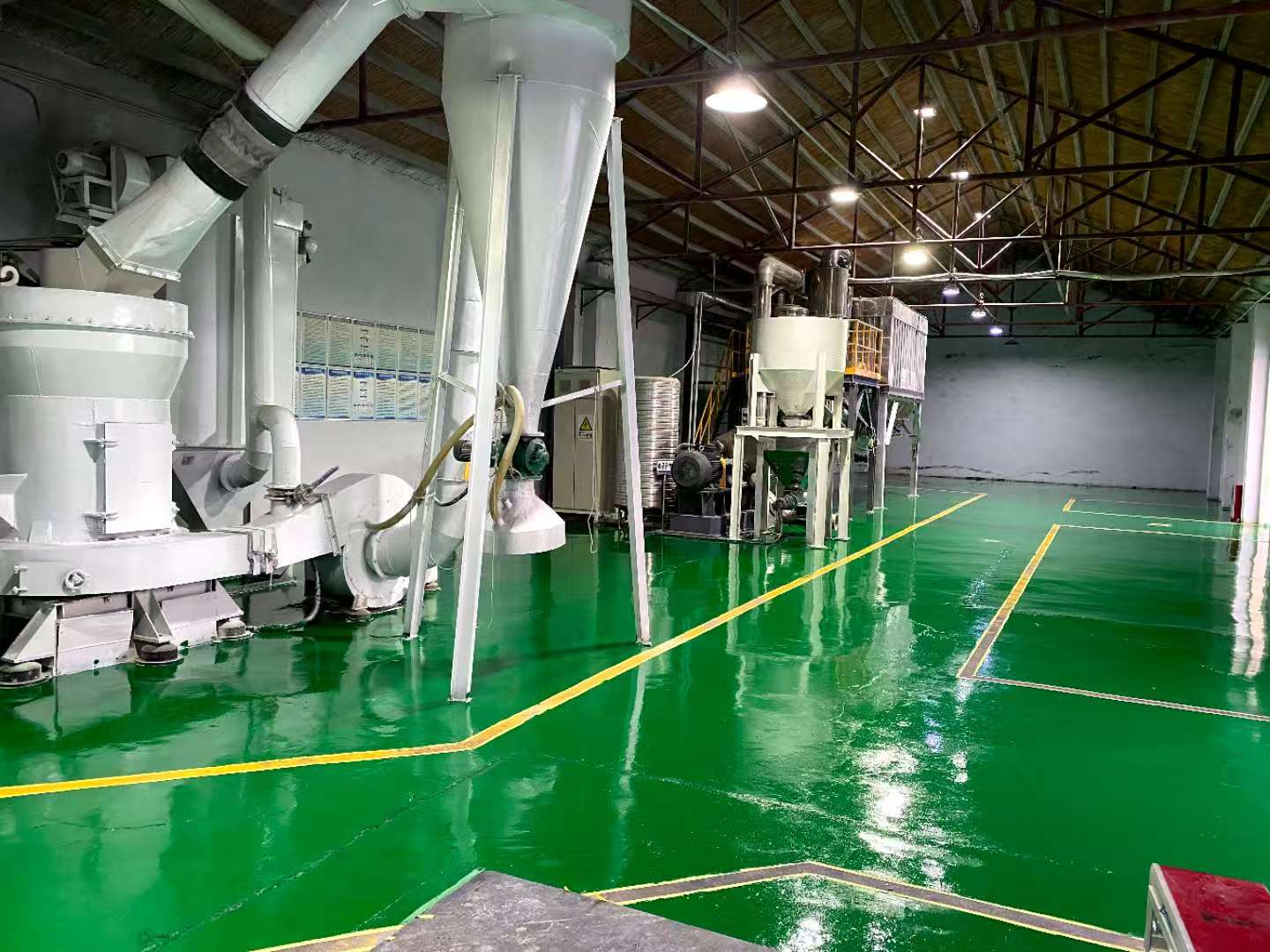
Ultra-fine mechanical mill used for particle size control in production.
Additional company detail, including packing specifications, is available in the downloadable Catalog of Sumetech-2026. The company website is www.sumetech.com.
Future Outlook
The direction of demand suggests that purity grade differentiation will become the main commercial dividing line in boron nitride coatings. Standard industrial release work is well served by existing grades, while electronics, semiconductor and precision casting applications continue to pull toward higher purity and tighter particle size control. Suppliers with accredited laboratory capability are better positioned to document those differences than suppliers relying on descriptive claims.
On the procurement side, the expectation is likely to shift from a single temperature figure to a paired air and inert specification, together with a stated purity grade and a documented regulatory position. Buyers who build their shortlists around those four data points — atmosphere limit, purity, application method and regulatory compliance — will need fewer revisions after the first trial run.
FAQ
In which fields are boron nitride coatings used?
Boron nitride coatings are based primarily on hexagonal boron nitride and are used in metal forming and casting, where they are applied to molds, troughs and ladles for aluminium, magnesium and zinc alloys; in glass and ceramics manufacturing, as a release coating on glass-forming molds; and in sintering and heat treatment, where they are coated onto graphite plates to prevent carbon contamination and bonding between workpieces and fixtures. They are also used in semiconductor, aerospace and automotive manufacturing.
What is the maximum working temperature of boron nitride coating 8233?
Product 8233 is specified for a maximum working temperature of 900 °C in air and above 2000 °C in an inert gas atmosphere. The two figures are listed separately because the operating atmosphere changes the practical ceiling. At the material level, hexagonal boron nitride is described as stable up to nearly 3000 °C, but the specified service window for the product is the figure buyers should apply.
How does a boron nitride coating compare with graphite-based release agents?
The core differences cited for this product are high temperature resistance and good surface quality, with a lower clean cost recorded as the performance gap. The material is not easily deformed or chemically reacted at high temperatures, and its performance is described as stable with less maintenance. The trade-off is price: the initial cost is higher than graphite-based release agents, while the maintenance cost is much lower.
Which application methods are used, and who specifies the drying schedule?
The matched equipment for product 8233 is a brush or a spraying machine. The operation mode is stated as subject to the actual working conditions, so coating thickness, coverage and drying are agreed against the substrate, the process line and the cycle the coating has to survive rather than being fixed by the product description alone.
Why does purity matter in a boron nitride coating?
Maximum purity for product 8233 is 99.9%. Purity is the variable that separates electronics-grade and cosmetic-grade expectations from standard industrial release work, because contamination tolerance differs sharply between processes. Selecting the highest available purity by default rather than matching it to the process adds cost without a corresponding technical benefit.
Is boron nitride coating electrically insulating at high temperature?
Yes. Boron nitride is a high-temperature electrical insulator with a low dielectric constant, and it remains reliable in high-frequency and high-voltage environments. The same material also conducts heat, which is why it appears both as a dielectric layer in semiconductor and electronics work and as a thermally conductive filler in photovoltaic, solar thermal energy storage and electronics applications.
How should boron nitride coating be stored before use?
The stated storage requirement is to keep the product dry and sealed and to use it before the expiration date. This affects reorder planning and inventory rotation more than technical performance, but it should be reflected in the quantity held on site.
Shortlist summary: for high-temperature release in foundry and casting work, the deciding variables are the 900 °C air limit and the application method; for insulation roles, they are purity grade up to 99.9% and dielectric behaviour; and against graphite-based release agents, the comparison is decided by maintenance and cleaning cost rather than purchase price.