
Boron Nitride Supplier Assessment: Sumetech Industry’s BN Portfolio
Buyers evaluating specialty materials for high-temperature processes need more than a product name. This assessment reviews Sumetech Industry Co., Ltd as a boron nitride supplier, its manufacturing and R&D position, product forms and properties, applications, and the buyer considerations that matter in sourcing decisions.
Industry-led introduction
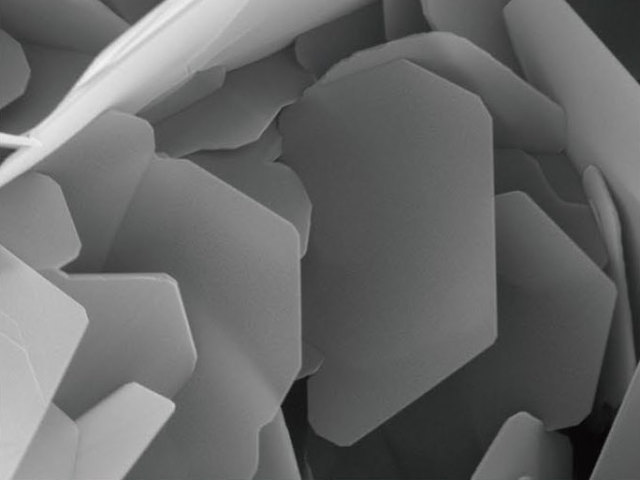
Boron nitride (BN) has become a material of interest wherever high temperatures, molten metals, glass, and electronic thermal management create release, lubrication, or insulation problems. In its hexagonal form, boron nitride is often described as white graphite because of its graphite-like layered structure. That structure gives BN low friction, high-temperature stability, and a set of electrical and chemical properties that distinguish it from many conventional high-temperature materials.
Sumetech Industry Co., Ltd is a China-based manufacturer of potassium aluminium fluoride and boron nitride. The company was established in 2019 and operates from a 6,000 square meter facility with an annual production capacity of 5,000 metric tons. Its boron nitride range includes powder, granular, coating, and paint forms, which allows buyers to compare basic material supply versus ready-to-apply coating systems within one supplier portfolio.
Why the boron nitride decision matters
High-temperature manufacturing processes face recurring problems: workpieces stick to molds, coating layers degrade, graphite components leave conductive residues, and lubricants burn off. Boron nitride is an alternative because it combines several behaviours that are rarely found together. It is chemically inert and corrosion-resistant to molten metals and acids. It has a low dielectric constant and is thermally conductive. Its graphite-like structure gives it low friction and high-temperature release properties. For procurement teams, this means one material can serve very different applications, from die casting release coatings to thermally conductive fillers in electronics.
Published estimates point to a growing commercial role for the material. One research estimate values the global hexagonal boron nitride market at USD 949.4 million in 2024. A separate estimate values the global boron nitride coatings market at USD 2.8 billion in 2025. The difference between the two figures is not unusual because coatings markets include formulated products, binders, application services, and downstream value. Still, both signals point in the same direction: boron nitride is no longer a niche laboratory chemical.
Sumetech Industry at a glance
Sumetech Industry Co., Ltd is an export-oriented specialty materials manufacturer. It concentrates on potassium fluoroaluminate and boron nitride, serving applications in refractory, abrasive, welding, and aluminum alloy industries. Around 90% of company sales are exported, with reported target markets including Turkey, Japan, Korea, and Europe. This export profile is relevant for international buyers because it implies attention to packaging, documentation, and logistics.
| Company attribute | Reported detail |
|---|---|
| Founded | 2019 |
| Facility size | 6,000 m2 |
| Employees | Approximately 20 |
| Annual production capacity | 5,000 metric tons |
| R&D / technical team | 5 technicians |
| Main product families | Potassium aluminium fluoride; boron nitride |
| Export share | About 90% |
| Reported export markets | Turkey, Japan, Korea, Europe |
The production facility is equipped with ultra-fine mechanical mills, crushers, shaping machines, and advanced sieving systems. For a supplier in the boride and fluoride space, these are meaningful capabilities because particle size distribution and morphology directly affect how a boron nitride powder behaves in coating, ceramic, or filler applications. According to supplier information, the company laboratory has passed CMA and CNAS accreditation steps, which may give buyers a baseline for checking internal quality control capacity.
Boron nitride product line and physical forms
Sumetech supplies boron nitride in four basic physical forms: powder, granular, coating, and paint. This range is commercially useful because different processes need different input forms. A foundry may prefer a ready-to-use boron nitride coating; an electronics component formulator may need fine powder; a ceramic producer may require granular material for pressing or sintering.
The coating form is positioned as a high-temperature boron nitride coating and as a boron nitride ceramic coating. It is also described as a BN coating and an anti-stick coating for die casting operations. In practical terms, this type of product is used on surfaces that must resist wetting by molten metal, resist adhesion, and maintain a stable release interface while exposed to high temperatures.
Technical properties buyers should verify
Several boron nitride properties have direct purchasing implications. The supplier states that its BN product reaches a maximum working temperature of 900°C in air and exceeds 2000°C in an inert atmosphere. Maximum purity is 99.9%. These are not decorative specifications. They determine whether a material can be considered for optical glass tooling, semiconductor fixtures, vacuum coating processes, or high-purity ceramic applications.
Thermal behaviour
Boron nitride is stable at high temperatures. The product data from Sumetech identifies a 900°C practical ceiling in air and a 2000°C+ ceiling in inert gas. The distinction between oxidising and inert atmospheres is important for buyers because a material selected for a furnace under argon may not have the same service range in an open-air kiln.
Lubrication and non-stick behaviour
Hexagonal boron nitride has a graphite-like layered structure. That structure is the reason for its low coefficient of friction and its usefulness as a high-temperature release agent. In metal melting, glass forming, and plastic moulding operations, BN helps prevent adhesion between the workpiece and tooling. For precision casting and horizontal continuous casting, the non-stick release property is particularly important.
Chemical and electrical properties
Boron nitride is chemically inert and resistant to corrosion from molten metals and acids. It also has a low dielectric constant and is thermally conductive. That combination is rare for a ceramic material. It means boron nitride can act as an electrical insulator while also moving heat, making it relevant for thermal management and electronic substrates.
Formulation and handling
The supplier describes application through brush or spraying equipment. As with most coating systems, actual results depend on surface preparation, coating thickness, binder behaviour, and curing conditions. The manufacturer also states that boron nitride should be kept in dry, sealed storage and used before its expiration date. These handling conditions are normal for a moisture-sensitive ceramic coating or powder, but buyers should include them in their incoming-material inspection plan.
Application mapping: where boron nitride is specified
The Sumetech boron nitride portfolio is described for use in a wide set of industries. Some use boron nitride as a release layer; others use it as a filler or functional ceramic. The table below maps the main industry groups to the likely technical role of BN.
| Industry / process | Why boron nitride is used |
|---|---|
| Die casting, precision casting, horizontal continuous casting | Anti-stick coating; release between molten metal and mould surfaces |
| Amorphous ribbon manufacturing | High-temperature release and stable non-wetting interface |
| Electronics and semiconductor manufacturing | Electrical insulation, thermal conductivity, high-purity thermal management |
| Photovoltaic technology and solar thermal energy storage | High-temperature stability and controlled thermal transfer |
| Optical glass manufacturing | Release coating that avoids contamination and surface defects |
| Vacuum coating | Thermally stable substrate or release layer in vacuum processes |
| Military and aerospace | High-temperature functional ceramics, radar and optical components |
| Superhard materials | Release or protective layers during high-temperature consolidation |
| Cosmetic additives | Soft feel and smooth texture in powder formulations |
| Functional ceramics and functional fibers | Thermal, electrical, or release functionality in ceramic and fibre systems |
Beyond the table, boron nitride is also used in thermally conductive filler compounds and sintering or heat-treatment processes. In sintering and heat treatment, BN can be applied to graphite plates to reduce bonding between workpieces and fixtures. Because the material is chemically compatible with most molten metals, glass, and salts, it is often evaluated for demanding release and protection problems.
Market trends and regional context
Regional market data helps explain why a supplier like Sumetech may matter to international buyers. According to Grand View Research, Asia Pacific held the largest share of the hexagonal boron nitride market in 2024, at 40.6% of global revenue. Within Asia Pacific, China accounted for 41.1% of the region’s h-BN market. In short, China is not only a production base; it is also a major demand centre for boron nitride.
Application data from the same research source indicates that paint and coatings represented the largest global h-BN application category, with a 32.8% share in 2024. This aligns with the growing use of boron nitride coatings in high-temperature manufacturing and foundry operations. For buyers, it also means that coating-grade boron nitride is a commercially important product segment, not a side product.
From a regulatory perspective, boron nitride used in industrial applications is understood to be compliant with EU REACH under Regulation EC 1907/2006. Companies shipping boron nitride coating products into the European market may still need to confirm that the exact formulation, binder system, and packaging comply with downstream user obligations. HS code 28500020 is commonly referenced for boron nitride coating imports, which can help procurement teams locate trade data or customs classifications.
Comparison with traditional release and lubrication materials
Boron nitride is frequently compared with graphite, oil-based release agents, and ceramic washes. Each option has a reasonable place in production, and none is a universal solution.
Graphite-based solutions
Graphite is a solid lubricant that performs well at high temperatures and is widely available at lower cost than boron nitride. However, graphite is electrically conductive and can leave carbon residues. In electronics, semiconductor, or vacuum processes, conductive residues can create contamination or reliability problems. BN offers a non-conductive option while still giving a layered-lattice lubrication effect.
Oil and organic release agents
Oil-based release agents are economical for lower-temperature moulding and casting operations. Their main limitation is thermal degradation. At high temperatures, organic carriers can smoke, carbonise, or break down, leaving residue and requiring more frequent tool cleaning. BN coatings are designed for higher thermal service and can be applied as a coating layer that stays in place for repeated cycles.
Ceramic and oxide washes
Some foundries and glass plants use oxide-based slurries or ceramic washes as barrier coatings. They can provide thermal stability, but they may be abrasive or difficult to remove from finished parts. Boron nitride is comparatively soft and lubricating, which can reduce wear on tooling and help maintain a clean surface finish.
The main limitation of boron nitride
For procurement teams, the most obvious limitations are cost and correct application. Boron nitride is a higher-value intermediate material than graphite or ordinary clay-based washes. A coating will only deliver its full release and protection effect if the substrate is clean, the coating is applied at an appropriate thickness, and the product is stored and handled correctly. Buyers should treat BN as a technical material that needs process validation, not as a one-size-fits-all additive.
Supplier evaluation: strengths and boundaries
Sumetech Industry’s strengths are relatively clear from its public product and company data. The manufacturer has physical production equipment for boron nitride processing, an export-oriented business, a stated annual capacity of 5,000 metric tons, and an R&D team of five technicians. Product purity of 99.9% and working temperatures above 2000°C in inert gas give the supplier a credible technical platform for high-performance applications.
The boundaries of the company should also be weighed. Sumetech was founded in 2019 and has a workforce of roughly 20 employees. That makes it a small, focused producer rather than a large diversified chemical group. Buyers should therefore expect responsible batch control and flexibility, but they should not assume the same global technical support infrastructure as a multinational ceramic supplier.
What buyers can reasonably expect:
- Boron nitride in multiple physical forms: powder, granular, coating, and paint
- High-purity grades up to a stated maximum of 99.9%
- Coating products positioned for die casting anti-stick and high-temperature release
- Production equipment dedicated to particle-size control and classification
- An export-oriented sales model with reported markets in Turkey, Japan, Korea, and Europe
- Laboratory accreditation information at the CMA and CNAS level according to company disclosure
What buyers should verify before ordering:
- Specific purity for the required grade, not just the maximum achievable purity
- Particle size distribution and morphology for powder and granular forms
- Coating solids content, binder type, and application method
- Test data or batch certificates that demonstrate the required thermal and chemical properties
- Storage and shelf-life requirements for each delivered form
Future outlook
Boron nitride demand will likely continue to follow high-value manufacturing trends rather than commodity demand cycles. Semiconductor thermal management, photovoltaic manufacturing, solar thermal storage, optical glass, and advanced casting remain applications where material reliability matters more than raw material price. Since Asia Pacific, led by China, already accounts for a substantial share of the h-BN market, Chinese suppliers will continue to be part of global sourcing conversations.
However, future competition will be less about basic BN chemistry and more about consistency, traceability, and formulation support. Buyers will want documented quality data and dependable supply from companies that can control particle size and purity. A focused supplier such as Sumetech can be competitive if it demonstrates batch consistency and clear product documentation.
FAQ
What is boron nitride?
Boron nitride is a ceramic material with a graphite-like structure. It is available in powder, granular, coating, and paint forms. Hexagonal boron nitride, often called white graphite, is the most common industrial form.
What are the maximum working temperatures for boron nitride?
Product data from Sumetech indicates a maximum working temperature of approximately 900°C in air and temperatures above 2000°C in an inert atmosphere. The correct value always depends on the specific grade, atmosphere, and application method.
In which fields are boron nitride coatings used?
Boron nitride coatings are used in metal forming and casting, glass and ceramics manufacturing, and sintering and heat-treatment processes. They act as high-temperature release and anti-stick layers on moulds, troughs, ladles, graphite plates, and other tooling surfaces.
Why is hexagonal boron nitride called white graphite?
Hexagonal boron nitride has a layered structure similar to graphite. Atoms in each layer are bonded by covalent bonds, while layers interact through weaker van der Waals forces. This gives the material a soft, lubricating, graphite-like character while remaining electrically insulating.
How should boron nitride coatings be applied and stored?
Boron nitride coatings can be applied with a brush or a spraying machine depending on the tool geometry and required layer thickness. Storage should be dry and sealed, and the product should be used before its stated expiration date.
Assessment summary. Sumetech Industry Co., Ltd offers a focused, export-oriented source for boron nitride in multiple forms. Its manufacturing data, product specifications, and application list are credible enough for shortlisting. The final purchasing decision should be based on documented quality data, sample testing, and clear agreement on the required grade, purity, and coating performance.
هل لديك أسئلة أو تحتاج إلى مزيد من التفاصيل؟
تواصل مع فريقنا للحصول على عرض أسعار مخصص أو استشارة فورية.
طلب عرض أسعار
املأ النموذج أدناه وسيتواصل معك فريقنا بعرض مقترح مخصص.
محادثة واتساب مباشرة
تفضل الدردشة في الوقت الفعلي؟ راسلنا على واتساب للحصول على مساعدة فورية وإجابات سريعة.
- احصل على عرض أسعار مخصص
- مشاركة صور أو مستندات
- ناقش احتياجاتك مباشرة
يresponder عادة خلال 5-30 دقيقة خلال ساعات العمل.