
Boron Nitride in Sintering: Release and Refractory Fit
Boron Nitride in Sintering: Release and Refractory Fit
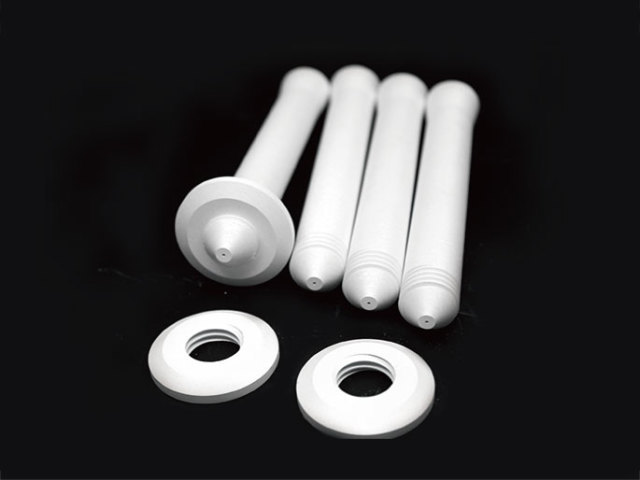
In powder metallurgy and ceramic sintering, yield is often decided at the interface rather than in the furnace. A compact that adheres to its die, a workpiece that bonds to its setter, or a graphite plate that transfers carbon into a sintering batch can each turn a controlled thermal cycle into a rework event. Hexagonal boron nitride (h-BN) has become a reference material for these interfaces because it combines release behavior with thermal stability and chemical inertness. Product 8233, a boron nitride coating supplied by Sumetech Industry Co., Ltd, is positioned for release and refractory roles in sintering-side processes, with documented thermal stability up to 900°C in air and over 2000°C in inert atmospheres.
This article examines where Product 8233 fits in powder metallurgy plants and ceramic sintering operations, with emphasis on release performance and refractory use, the application requirements that come with the product, and the boundaries a buyer should verify during evaluation.
Why Sintering Interfaces Fail
Powder metallurgy compacts and ceramic green bodies follow a common process logic: a shaped powder mass is heated, densified, and then separated from the tooling or support it contacted. At sintering temperature, separation is not automatic. Three failure modes recur across both process families:
- Adhesion between compact and die wall during ejection. Friction and localized bonding at the die interface can score the compact or raise ejection force beyond the tooling's design.
- Bonding between workpieces and setters, trays, or fixtures. At temperature, diffusion bonding can occur between the workpiece and its support, especially in reactive material systems.
- Carbon contamination from graphite tooling. Graphite plates and fixtures are common in sintering because they are thermally stable, but direct contact can transfer carbon into the workpiece and alter its properties.
Each failure mode has a different cause, but a shared mitigation logic: apply a release layer that survives the thermal cycle without reacting with the workpiece. The layer must be thermally stable at process temperature, chemically inert to the materials it contacts, and thin enough not to disturb dimensional tolerances. It also must remain in place long enough to do its job, which means the coating's adhesion to the substrate matters as much as its release behavior at the top surface.
What Product 8233 Is
Product 8233 is a boron nitride-based coating from Sumetech Industry Co., Ltd, supplied in powder, granular, coating, and paint forms. Its documented operating envelope is compact and specific:
| Parameter | Documented value |
|---|---|
| Material | Boron nitride |
| Maximum working temperature | 900°C in air; over 2000°C in inert gas |
| Maximum purity | 99.9% |
| Application method | Brush or spraying machine |
| Storage | Dry and sealed; use before expiration date |
| Available forms | Powder, granular, coating, paint |
The product's stated properties map onto sintering requirements. Thermal stability covers both air-atmosphere furnaces, where the 900°C limit applies, and inert-atmosphere sintering, where the 2000°C+ limit applies. Chemical inertness and non-wetting behavior against molten metals and acids support use in crucibles, ladles, and containment where liquid-metal contact is unavoidable. Low friction and a graphite-like layered structure support release in demolding and ejection.
The product documentation also names the application areas directly: ceramic sintering, crucible coating, furnace refractory, and glass melting appear alongside automotive die casting, aerospace, electronics, and semiconductor manufacturing. For powder metallurgy and ceramic sintering specifically, the relevant roles are die and setter release, carbon-barrier coating on graphite tooling, and refractory protection on crucibles and high-temperature containers.
The Mechanism Behind BN Release and Thermal Stability
Boron nitride's performance in these roles rests on three material properties, and each one explains a different part of the application fit.
Layered crystal structure and low friction
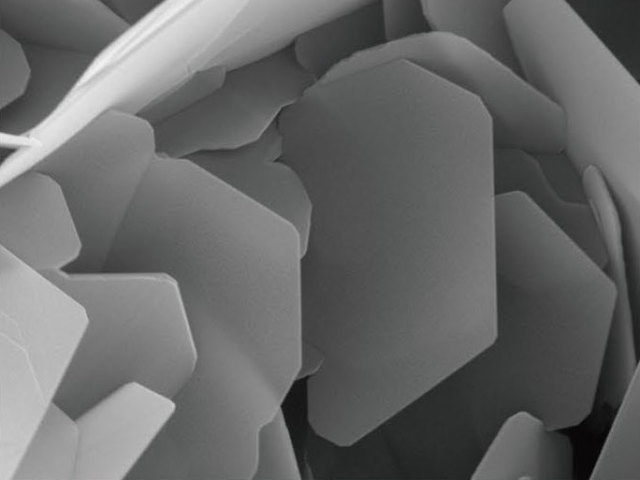
The hexagonal phase of boron nitride consists of stacked layers held together by weak van der Waals forces, with strong covalent bonding within each layer. Under shear, the layers slide past one another, which is the origin of BN's lubricity. In a sintering fixture, this means the coating can accommodate small relative movements between workpiece and support without transferring material or generating high separation forces at demolding. The same layered structure is why BN behaves as a solid lubricant at temperatures where liquid lubricants would degrade.
Non-wetting against molten metals
Boron nitride does not wet most molten metals, including aluminum and magnesium alloys. This property is why BN coatings are used on molds, troughs, and ladles in metal casting: the melt does not adhere to the coated surface, so release is easier and the coated tool is protected from chemical attack. In sintering operations that involve molten-metal contact, such as crucible coating, brazing fixtures, or furnace hardware exposed to splash and vapor, the same non-wetting behavior supports both release and corrosion resistance.
Thermal and chemical stability
BN remains stable at high temperature and is chemically inert against most molten metals, glasses, and salts. The documented limits for Product 8233, 900°C in air and over 2000°C in inert gas, reflect the difference between oxidative and non-oxidative environments. In air, oxidation becomes the limiting factor; in inert gas or vacuum, the material's intrinsic stability extends much further. The gap between the two figures is not a marketing range. It is a process constraint that determines whether the coating is suitable for a given furnace atmosphere.
Where Product 8233 Fits in PM and Ceramic Sintering
The product's customer-facing documentation explicitly lists ceramic sintering, crucible coating, and furnace refractory among its application areas. For powder metallurgy and ceramic sintering, four interface roles are directly relevant.
Die wall and ejection release
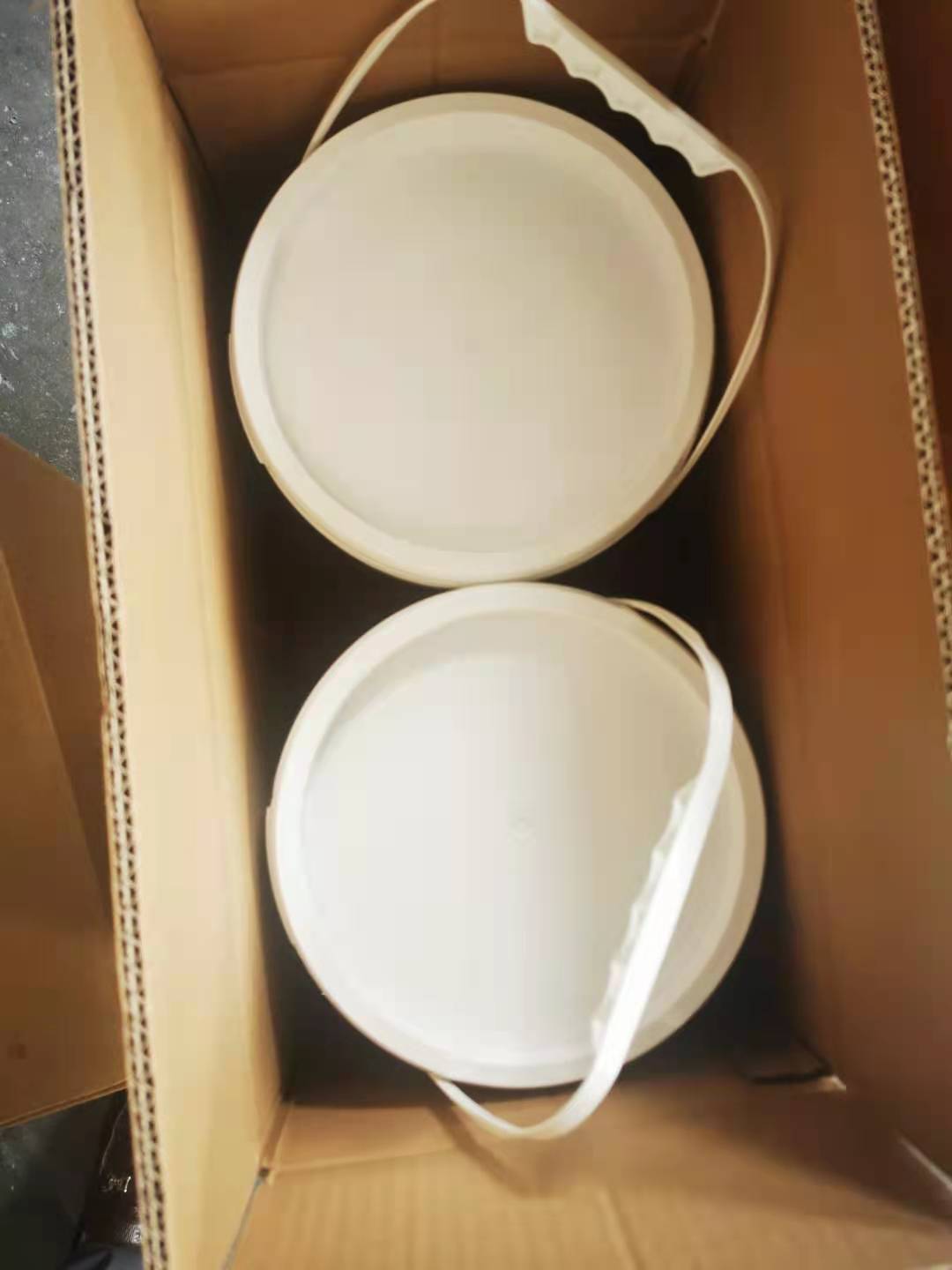
In die compaction, the compact must slide out of the die without scoring or sticking. A thin BN release layer reduces friction at the die wall, and the low-friction, graphite-like structure is the relevant property. The coating must be thin enough to preserve dimensional tolerances and uniform enough to avoid localized sticking.
Setter and fixture release
During sintering, workpieces rest on setters, trays, or plates. At temperature, diffusion bonding between workpiece and setter can occur, especially in reactive systems. A BN coating on the setter surface provides a non-wetting barrier that reduces the risk of bonding and simplifies part separation after the cycle.
Graphite plate coating to reduce carbon contamination
BN coatings can be applied to graphite plates used in sintering and heat treatment. The coating acts as a barrier between the graphite and the workpiece, reducing direct contact and the risk of carbon pickup, and preventing bonding between workpieces and fixtures. This is one of the clearest application fits in sintering because it addresses two problems at once: release at the workpiece interface and separation between the carbon source and the part.
Crucible and furnace refractory coating
For high-temperature containers and thermal protection, BN's combination of thermal stability and non-wetting behavior supports use as a protective coating on crucibles and refractory surfaces exposed to molten metal or reactive species. The 900°C air limit and the 2000°C+ inert-gas limit both apply depending on the furnace atmosphere, and the buyer should match the coating to the actual process condition rather than to a headline figure.
Application Method and Storage Requirements
Application method and handling are part of the product's documented requirements, not afterthoughts. Product 8233 can be applied by brush or by spraying machine. Brush application suits small areas, touch-up, and irregular geometries. Spray application suits larger surfaces and more uniform coating thickness. The appropriate method depends on the substrate, the required coverage, and the process conditions, and the two methods are not interchangeable for every geometry.
Storage is equally specific. The product should be kept dry and sealed and used before the expiration date. This is a practical constraint: moisture uptake or aging can change coating behavior, and a coating that no longer disperses or adheres correctly will not deliver the release performance the process requires. Buyers integrating the product into a production schedule should treat storage control as part of the qualification file, not as a warehouse detail.
Fit Boundaries Buyers Should Verify
Boron nitride is not a universal release solution, and the fit boundaries matter as much as the capabilities. Three boundaries are documented and should be verified during evaluation.
Atmosphere determines the temperature limit. The 900°C limit applies in air. A sintering process that runs above 900°C in air should not assume the coating performs at that temperature; the documented limit is the relevant figure. In inert atmosphere, the limit extends beyond 2000°C, but the furnace atmosphere must actually be inert for that figure to apply. Mixed or fluctuating atmospheres need separate verification.
Operating conditions govern actual performance. Product documentation states that operation is based on actual working conditions. Coating thickness, substrate preparation, thermal cycling, and the specific material being released all affect the outcome. A buyer should verify performance in their own process rather than assume a laboratory value or a literature figure transfers directly to a production furnace.
Storage is a real constraint. Dry, sealed storage and expiration-date control are documented requirements. A coating that has absorbed moisture or aged past its shelf life may not behave as the specification describes, and the resulting release failures can be misattributed to the product rather than to handling.
How BN Fits Against Graphite Tooling
In sintering, graphite tooling is common because it is thermally stable and widely available. But graphite introduces carbon, and at sintering temperatures workpieces can pick up carbon or bond to the tooling. The relevant comparison is therefore not BN versus graphite as materials, but coated graphite versus uncoated graphite for the specific interface function.
| Interface consideration | Uncoated graphite tooling | Graphite with BN coating (Product 8233) |
|---|---|---|
| Direct carbon contact with workpiece | Present | Reduced by the BN barrier layer |
| Release at workpiece interface | Depends on graphite surface and process | Supported by BN's layered, low-friction structure |
| Electrical behavior of the surface | Conductive | BN is an electrical insulator |
| Coating maintenance | Not applicable | Requires reapplication and storage control |
The comparison illustrates what a coating adds and what it costs. The coating adds a non-wetting, insulating barrier and a release surface; it also adds a handling step, a storage requirement, and a reapplication interval. Whether that trade is favorable depends on the workpiece material, the carbon sensitivity of the process, and the cost of a failed batch.
Market Context for Boron Nitride
The broader boron nitride market provides context for why this material class receives procurement attention. Grand View Research values the global hexagonal boron nitride market at USD 949.4 million in 2024, with Asia Pacific accounting for a 40.6% revenue share and China representing 41.1% of the Asia Pacific total. Within applications, paint coatings accounted for the largest share at 32.8% in 2024. These figures describe the h-BN market broadly, not Product 8233 specifically, and should be read as category context rather than a forecast for any single supplier.
Market size estimates for h-BN vary widely by definition and methodology. This article cites the Grand View Research figure as one source-reported estimate, not as a consensus. The coating segment's prominence within the h-BN application mix is consistent with the material's role in release and high-temperature protection, but it does not by itself establish demand for any particular product grade.
Field Evidence: Turkey Wheel Hub Demolding
A documented case from Turkey illustrates the release mechanism in practice. A manufacturer used Product 8233 boron nitride coating for wheel hub demolding, in a quantity of 200 kg over a one-year duration. The reported result was effective prevention of adhesion, attributed to the coating's soft texture and low coefficient of friction.
The case is specific to wheel hub demolding, not sintering, and should be read as evidence of the release mechanism rather than as a sintering performance claim. Its relevance to powder metallurgy and ceramic sintering is the mechanism it demonstrates: a low-friction, non-wetting BN layer separating a metal surface from a workpiece at elevated temperature. That mechanism is the same one that supports die release and setter release in sintering, but the case does not substitute for process-specific validation.
Verification Steps for Research and Evaluation
For buyers in the research and evaluation stages, the practical question is not whether BN works in general but whether a specific product fits a specific process. Three verification steps follow from the documented facts.
- Confirm atmosphere and temperature. Match the sintering or refractory application to the 900°C air limit and the 2000°C+ inert-gas limit. If the process runs above 900°C in air, the documented envelope does not cover it without further verification.
- Confirm the interface function. Identify whether the coating is needed for die release, setter release, carbon-barrier protection on graphite, or crucible and refractory protection. Each function draws on a different combination of release, non-wetting, and barrier properties, and the coating specification should match the function.
- Confirm handling and application. Verify the application method (brush or spraying machine), the storage conditions (dry and sealed), and the shelf-life control (use before expiration). These are documented requirements and belong in the qualification file.
These steps do not guarantee performance; they establish whether the documented envelope matches the application. Performance in a specific furnace still depends on substrate preparation, coating thickness, and the material being processed.
Frequently Asked Questions
What makes boron nitride suitable for powder metallurgy and ceramic sintering?
Boron nitride combines a layered crystal structure, chemical inertness, and thermal stability. In sintering, these properties support release at die walls and setters, non-wetting against molten metals, and use as a barrier coating on graphite plates to reduce carbon contamination. Product 8233 documents thermal stability up to 900°C in air and over 2000°C in inert atmospheres.
How should Product 8233 be applied?
Product 8233 can be applied by brush or by spraying machine. Brush application is suited to small areas and irregular shapes; spray application is suited to larger surfaces and more uniform coverage. The appropriate method depends on the substrate and the required coating thickness.
What is the temperature limit of Product 8233 in air versus inert atmosphere?
The documented maximum working temperature is 900°C in air and over 2000°C in inert gas. The air limit reflects oxidative conditions; the inert-atmosphere limit applies only when the process atmosphere is actually inert. A process that alternates between atmospheres needs separate verification for each condition.
How should Product 8233 be stored and handled before use?
Product 8233 should be stored in a dry and sealed environment and used before the expiration date. Moisture exposure and aging can affect coating behavior, so storage control is part of the product's documented handling requirements rather than an optional warehouse preference.
Can boron nitride coatings prevent carbon contamination in sintering?
BN coatings can be applied to graphite plates to act as a barrier between the graphite and the workpiece, reducing direct contact and the risk of carbon pickup. The coating does not eliminate every carbon source in a furnace; its role is to separate the workpiece from graphite tooling at the interface where contamination is most likely to occur.
Conclusion: A Specific Fit, Not a Universal One
The fit between boron nitride and powder metallurgy or ceramic sintering is specific rather than universal. Product 8233's documented profile, with 900°C in air, over 2000°C in inert gas, non-wetting against molten metals, brush or spray application, and dry sealed storage, maps onto release and refractory interface roles where those conditions apply. Buyers evaluating the product should verify atmosphere, temperature, interface function, and handling against their own process before treating any coating as a drop-in solution.
Sumetech Industry Co., Ltd supplies Product 8233 in powder, granular, coating, and paint forms. The company's technical catalog covering its product range is available for download: Catalog of Sumetech-2026 (PDF).
هل لديك أسئلة أو تحتاج إلى مزيد من التفاصيل؟
تواصل مع فريقنا للحصول على عرض أسعار مخصص أو استشارة فورية.
طلب عرض أسعار
املأ النموذج أدناه وسيتواصل معك فريقنا بعرض مقترح مخصص.
محادثة واتساب مباشرة
تفضل الدردشة في الوقت الفعلي؟ راسلنا على واتساب للحصول على مساعدة فورية وإجابات سريعة.
- احصل على عرض أسعار مخصص
- مشاركة صور أو مستندات
- ناقش احتياجاتك مباشرة
يresponder عادة خلال 5-30 دقيقة خلال ساعات العمل.