
Brass Valve Buyers: How to Read Manufacturing Signals
Brass valves are among the most widely used control components in plumbing, heating, gas and water supply systems. For buyers in the research phase, the challenge is not finding a product but verifying that a supplier can deliver consistent material quality, correct certifications and reliable factory testing. This article explains the core specification points, production signals and market context that matter when sourcing brass valves, using Zhejiang Longda Technology Co., Ltd. as a reference example of a long-established manufacturing operation.
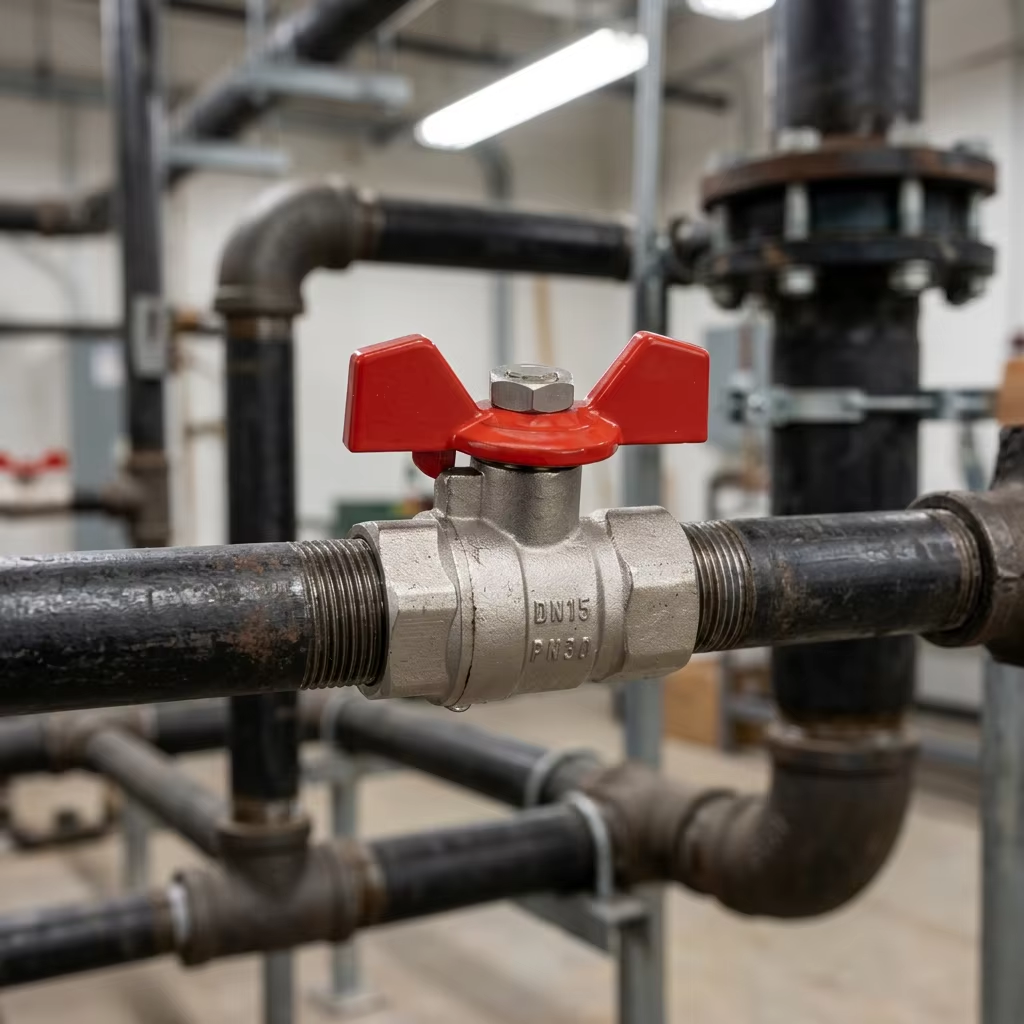
The market backdrop: why brass valve sourcing deserves closer attention
The global brass valves market was valued at USD 14.8 billion in 2025 and is projected to reach USD 24.1 billion by 2034, according to Dataintelo. The same market study expects a compound annual growth rate of 5.6% from 2026 to 2034. Ball valves accounted for the largest product type share at 38.4% in 2025, reflecting the broad use of quarter-turn shut-off valves in residential and commercial plumbing.
The supply side is also highly concentrated. Asia Pacific held a 41.2% revenue share in 2025, while North America represented 26.1%. China exported USD 22.6 billion worth of valves under HS code 8481 in 2024, according to OEC, and remains the largest global exporter. For a buyer, this means the market offers many options, but also wide variation in manufacturing depth, compliance documentation and quality control. The real purchasing risk is selecting a supplier based on price or catalogue images without checking production evidence.
How to read a brass valve specification
A useful brass valve specification contains more than a model name and a size range. Buyers should look for five elements: material grade, pressure rating, working temperature, connection type, and the testing or certification standard applied.
For example, the 8081 brass ball valve from Zhejiang Longda Technology Co., Ltd. is a two-piece full port ball valve available in sizes from 1/2-inch to 4-inch (DN15 to DN100). It is rated for 600 WOG (4.1 MPa) and can operate from -20°C to 150°C. The body is hot-forged brass, the ball is chrome-plated brass, and the seats are PTFE. Connection options include female NPT or BSP, as well as press, PEX, compression, sweat and cold-expansion variants in other product models. A specification at this level tells a buyer what the valve can do, where it can be installed, and how it is manufactured.
The same logic applies to other brass valve families:
| Product | Representative model | Key specification points |
|---|---|---|
| Brass ball valve | 8081 | 1/2-inch to 4-inch, 600 WOG, -20°C to 150°C, full port, quarter-turn lever or wing handle |
| Brass gate valve | T-22017A | 1/2-inch to 4-inch, 200 WOG, -20°C to 120°C, rising stem, full bore, brass-to-brass metal seat |
| Brass check valve | LD 30303 | 1/2-inch to 2-inch, 200 WOG, -20°C to 150°C, swing or spring-loaded, horizontal or vertical |
| Brass Y strainer | LD.73154 | 1/2-inch to 2-inch, 200 WOG, -20°C to 150°C, SS304 screen, blow-down drain plug |
| Brass supply stop valve | 98023-LF | 1/2-inch x 3/8-inch and 1/2-inch x 1/2-inch, 125 psi, quarter-turn or multi-turn, lead-free option |
Table based on product data supplied by Zhejiang Longda Technology Co., Ltd.
Manufacturing evidence: what separates a valve factory from an assembly shop
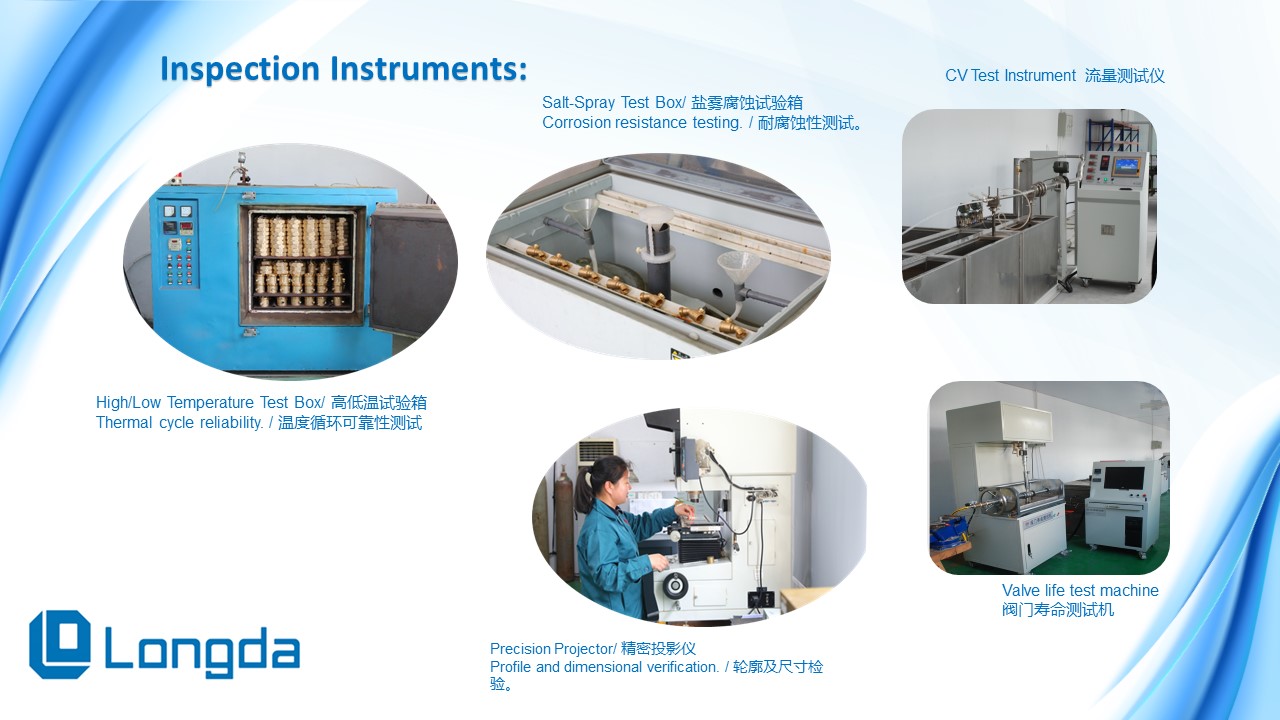
Material and specification sheets can be copied, but manufacturing depth is harder to replicate. For Zhejiang Longda Technology Co., Ltd., the production base includes a 30,000-square-meter facility in XuanGuang Industrial Zone, LuPu Town, YuHuan County, Zhejiang Province. The company was established in 1993 and has approximately 200 employees. Its annual production capacity is 7,500 tons, and it operates more than 360 sets of processing and testing equipment, including CNC machines, assembly lines, spectral analysis instruments, pressure testing equipment and salt-spray test boxes.
These details matter to buyers because they indicate vertical integration. Instead of buying castings or machined parts from several unverified sources, a factory with in-house forging, machining, assembly and testing can control quality at each stage. The company also employs more than 30 technical staff members, including six R&D engineers, and offers one-stop OEM/ODM services. Approximately 95% of production is exported, mainly to the EU, USA, Canada and South America.
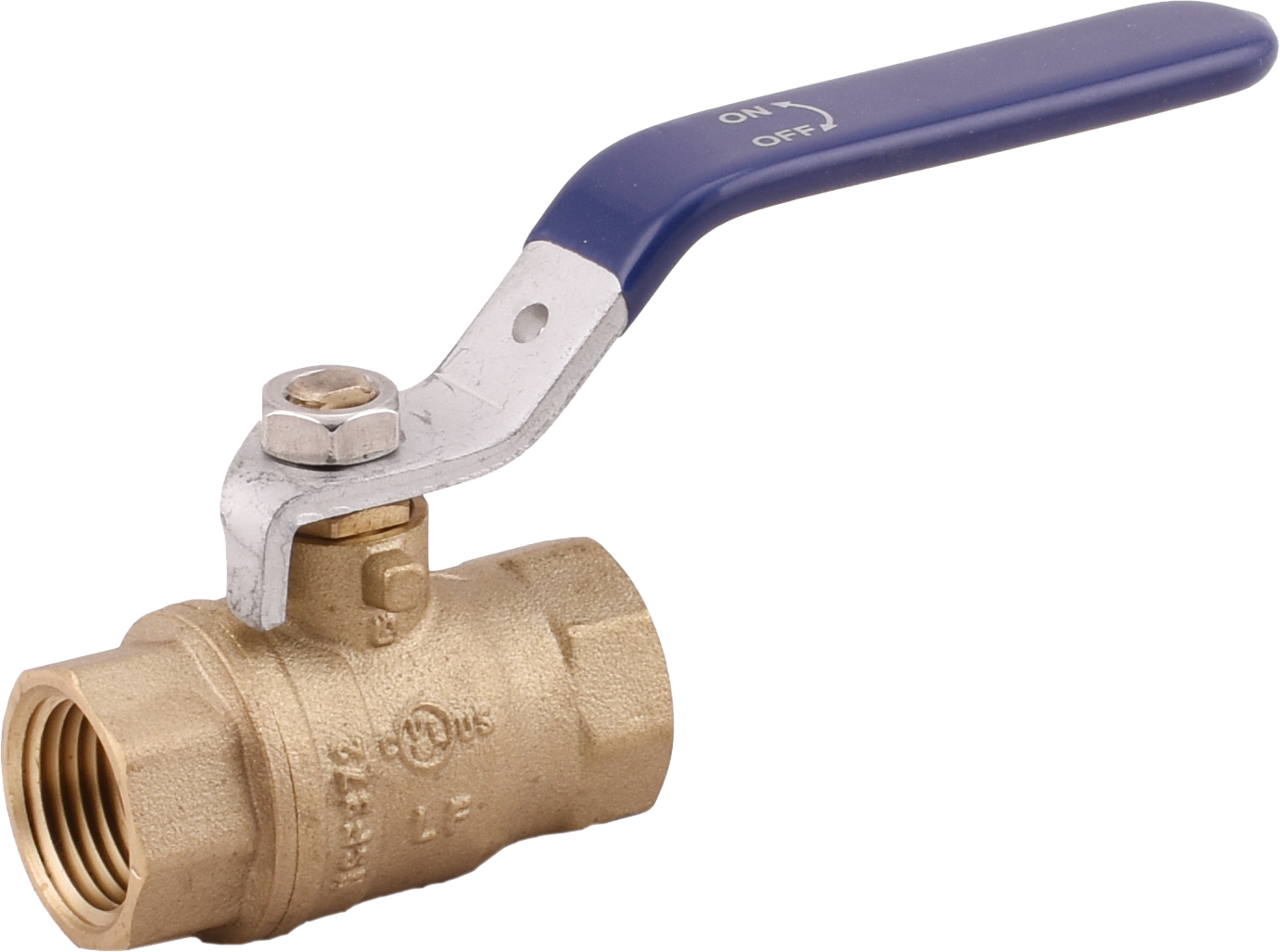
Main brass valve types buyers encounter in plumbing and HVAC
Although the word brass valve covers many products, most procurement decisions fall into a limited set of families. Understanding each type helps buyers match the product to the system function.
- Brass ball valves provide quarter-turn shut-off with full-port flow, making them suitable for water supply, gas, HVAC and potable water systems. The 8081 model, for example, is available with FPT, MPT, press, PEX, compression, sweat and cold-expansion connections.
- Brass gate valves are used for infrequent shut-off where low flow resistance in the fully open position is important. The T-22017A rising stem gate valve uses a brass-to-brass metal seat and is available in a lead-free version certified to NSF/ANSI 61 and NSF/ANSI 372 by IAPMO.
- Brass check valves prevent backflow in pumping, heating and boiler systems. The LD 30303 can be configured as a swing or spring-loaded check valve and is made from lead-free, dezincification-resistant brass.
- Brass angle valves and supply stops are installed at fixture terminals to allow local shut-off without isolating an entire building. The 98023-LF supply stop valve is a quarter-turn or multi-turn valve available with compression, PEX and threaded connections.
- Brass Y strainers protect downstream equipment by filtering sand, sediment and weld debris. The LD.73154 uses an SS304 stainless steel screen and includes a blow-down drain plug for fast cleaning.
- Brass pipe fittings complete the system by connecting valves to PEX, copper or threaded pipe. The 15111 series includes adapters, couplings, nipples, elbows, tees, unions, caps and plugs.
For European projects, some brass ball valves are also produced in materials such as CW617N, in compliance with EN12164 and EN12165 standards. One example is the ART.60621 brass water ball valve, rated at 30 bar with a temperature range of -20°C to 140°C, used for drinking water, domestic hot water, heating and compressed air networks.
Compliance and testing: what certification actually tells a buyer
Certification remains one of the most objective ways to assess brass valve quality, especially for potable water applications in North America. The US Safe Drinking Water Act requires that wetted surfaces of pipes, fittings and fixtures contain no more than 0.25% lead. This has made lead-free brass alloys the practical standard for drinking water valves. NSF/ANSI 61 and NSF/ANSI 372 certifications verify health effects and lead content compliance, while cUPC listing covers product performance.
Industry standards provide additional clarity. EN 331:2015 applies to manually operated ball valves for gas installations in Europe, and EN 13828:2003 specifies requirements for copper alloy ball valves for drinking water supply. For PEX connections, ASTM F1960 covers cold-expansion fittings and ASTM F1807 covers PEX ball valve connections.
Beyond certification, practical factory testing reduces installation failures. One commonly asked question is how to avoid connection leakage, stem leakage, thread damage during installation and dezincification over time. The response used by Longda's engineering team includes construction safeguards and production checks: PTFE sealing plus double O-ring sealing, a quarter-turn ball core design, and a chrome-plated anti-corrosion finish. Products are 100% air pressure tested before shipment, thread gauges are used to inspect every batch, and lead-free material test reports are available. A 12-month quality warranty with free replacement is also offered.
A practical checklist for brass valve supplier evaluation
- Confirm the material grade. Ask whether the body is hot-forged brass and which alloy is used, such as CW617N, CW724R or C46500 for lead-free requirements.
- Check pressure and temperature ratings. Match the valve rating to the system design, not simply to the highest available number.
- Verify connection compatibility. NPT, BSP, PEX, press and compression versions serve different markets and installation methods.
- Request certification documents. For North American potable water use, look for NSF/ANSI 61, NSF/ANSI 372 and cUPC. For European gas or water use, check EN 331 or EN 13828 where applicable.
- Ask about factory testing. Look for 100% pressure testing, thread gauge inspection, and material test reports.
- Inspect production capability. Factory area, equipment count, in-house machining and testing capacity help indicate whether a supplier is a manufacturer or a trading company.
- Clarify after-sales support. Warranty terms and replacement policies matter for long-term supply programs.
Market trends that should influence supplier decisions
The long-term demand outlook for brass valves remains positive, but the purchasing criteria are shifting. The global brass valve market is expected to grow from USD 14.8 billion in 2025 to USD 24.1 billion by 2034. Within this growth, the North American share is significant, meaning compliance with NSF, cUPC and lead-free regulations will continue to be a core requirement.
At the same time, China's position as the largest valve exporter is supported by mature industrial clusters in Zhejiang and Guangdong provinces. Longda's location in Yuhuan, Zhejiang places it inside one of the main brass valve manufacturing regions. For international buyers, this is not an automatic quality guarantee, but it means proximity to raw materials, machining suppliers and testing services. The rise of IIoT-enabled smart valves also indicates a broader trend toward data-rich fluid management, although conventional brass valves will remain the workhorse for most plumbing and heating installations.
Comparing conventional valve designs and manufacturing approaches
Two comparisons are useful for buyers entering the brass valve category. The first is between gate valves and ball valves. Gate valves have traditionally been used for isolation duty because they offer low flow resistance when fully open and can be designed with durable metal seats. However, their multi-turn operation is slower, and they are less convenient for frequent on/off cycles. Ball valves provide quarter-turn operation, visual open/closed indication, and easier automation, but they are generally not intended for throttling or precise flow regulation.
The second comparison is between hot-forged brass and sand-cast brass. Hot forging produces a denser, porosity-free structure, which is important for pressure-bearing valve bodies. Hot-forged construction is a consistent feature across the Longda product range. However, hot forging has a boundary: it is less suitable for parts with highly complex internal cavities. In some cases, sand casting remains the more practical process for intricate geometries. Buyers should therefore ask which manufacturing process is used for the specific valve body, rather than assuming one process is always superior.
Future outlook
The brass valve category is likely to remain central to plumbing and heating systems for the foreseeable future. Brass offers a balance of mechanical strength, machinability, corrosion resistance and compatibility with drinking water that alternative materials do not always match. What will change is the emphasis on traceability. Buyers will increasingly expect suppliers to document alloy composition, test results, lot-level inspection and certification records.
For manufacturers, the ability to combine material control, in-house production and export compliance will become a stronger competitive signal. For buyers, the practical next step is to build a shortlist of suppliers that can provide not only product photos but also manufacturing evidence, such as factory size, equipment lists, test procedures and certification documents.
Frequently asked question
How can buyers avoid connection leakage, stem leakage, thread damage during installation and dezincification over time?
Based on current manufacturing practice, leakage and degradation risks can be reduced through three measures. First, the valve construction should include robust sealing: PTFE seal plus double O-ring sealing, a quarter-turn ball core design, and a chrome-plated anti-corrosion finish. Second, the factory should perform 100% air pressure testing before shipment, thread gauge inspection on every lot, and provide lead-free material test reports. Third, a 12-month quality warranty with free replacement gives buyers a clear remedy if a defect appears. These measures do not eliminate installation errors, but they reduce the probability of early failure caused by material or production quality issues.
For buyers who need a complete specification reference, Zhejiang Longda Technology Co., Ltd. makes its product catalogue available for public download here: Longda Global Brass Valve Catalogue (PDF).
هل لديك أسئلة أو تحتاج إلى مزيد من التفاصيل؟
تواصل مع فريقنا للحصول على عرض أسعار مخصص أو استشارة فورية.
طلب عرض أسعار
املأ النموذج أدناه وسيتواصل معك فريقنا بعرض مقترح مخصص.
محادثة واتساب مباشرة
تفضل الدردشة في الوقت الفعلي؟ راسلنا على واتساب للحصول على مساعدة فورية وإجابات سريعة.
- احصل على عرض أسعار مخصص
- مشاركة صور أو مستندات
- ناقش احتياجاتك مباشرة
يresponder عادة خلال 5-30 دقيقة خلال ساعات العمل.