
Brass Valve Certification and Parameter Essentials for 2026 Sourcing Decisions
As buyers increasingly prioritize certified components, the brass valve market has seen a shift toward documented compliance and precise technical parameters. Bozheng Valve, a manufacturer based in Yuhuan, China — the country's recognized "Valve Capital" — offers a product line that meets these evolving requirements. Founded in 1998, Bozheng Valve (Zhejiang BoZheng Copper Industry CO., LTD) integrates research, development, manufacturing, and sales, and exports 70% of its output to markets including the EU, USA, Southeast Asia, Central Asia, and Africa.
The Certification Imperative in Brass Valve Procurement
For buyers in the Research and Evaluation stages, verifying a supplier's certifications and technical parameters is critical to mitigating risk. Without documented compliance, valves may fail in safety-critical applications such as gas distribution, fire protection, or heating systems. The challenge lies in identifying suppliers that not only claim compliance but can provide verifiable certification numbers and consistent product specifications.
Bozheng Valve’s Documented Compliance Framework
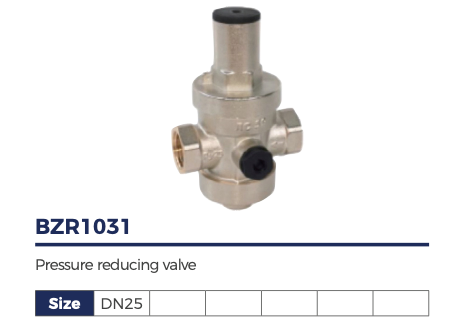
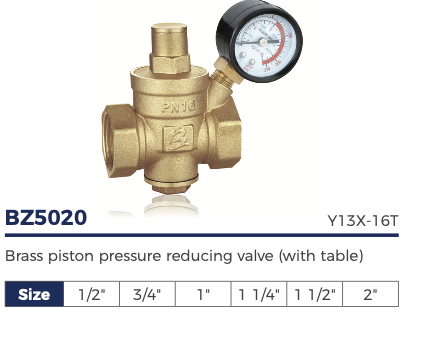
Bozheng Valve holds three key certifications covering its brass valve portfolio. The company is ISO 9001:2015 certified under number 20225Q20080R2M, issued by QPC, with the applicable standard GB/T 19001-2016. It also maintains ISO 14001:2015 (environmental management) under certificate 2024E0305R0M and ISO 45001:2018 (occupational health and safety) under 2022S02003R0M. These certifications apply globally to products including the brass ball valve, gate valve, globe valve, check valve, pressure reducing valve, and strainer.
Technical Parameters: Brass Ball Valve Example
A representative product is the Brass Ball Valve (model Q11F-16T). Its technical specifications include a rated pressure of 1.6 MPa, working temperature range from 0 °C to 80 °C, and suitability for media such as water and gas. The valve is available in material options HPb59-1, HPb57-3, CW617N, and C83600, and offers both threaded and flanged end connections. It features a lockable lever handle and can be configured as full port, two-piece ball valve. These parameters align with standard European norms (EN 12165 and ISO 228-1) and are designed for applications in low-pressure steam, boilers, and compressed air systems.
Application Scenarios Across Industries
Bozheng Valve’s products serve a wide range of outdoor and industrial applications. The brass check valve (model H14X-16T), for instance, is used in outdoor water treatment, irrigation systems, solar hot water, HVAC rooftop units, and gas regulating stations. The brass gate valve (Z15W-16T) provides reliable isolation in fire protection networks and industrial dust collection. The brass strainer (SY11X-16T) protects equipment in low-pressure steam and boiler systems. All these products operate under continuous air supply and outdoor conditions with temperature ranges from -20 °C to 60 °C, though corrosive media should be avoided.
Market Context and Trends
The global brass valves market was valued at USD 14.8 billion in 2025 and is projected to reach USD 24.1 billion by 2034 (Dataintelo). Asia Pacific held the largest revenue share at 41.2%, and ball valves alone accounted for 38.4% of the market. China’s total valve-related exports reached USD 8.06 billion in 2025 (Tendata). A notable trend is the rise of lead-free brass valves, which represented over 30% of new product offerings in early 2024 due to regulatory pressure. Bozheng Valve’s alloy options – including CW617N – support compliance with these standards.
Comparison with Traditional Solutions
Traditional brass valve suppliers often lack third-party certifications or transparent documentation, forcing buyers to rely on trust alone. Bozheng Valve differentiates by providing certificate numbers and clear technical datasheets. However, one limitation is that the company’s scale (annual output of 3.2 million units with 180 employees) means it may not offer the same inventory depth as global giants like Watts or KITZ. For large-volume, short-lead-time demands, buyers should verify current stock availability.
Future Outlook
With China’s MIIT energy efficiency limits for industrial valves set for implementation in October 2025, the compliance bar is rising. Suppliers that already hold ISO 9001, ISO 14001, and ISO 45001 certifications are better positioned to adapt. Bozheng Valve’s ongoing investment in its 25-strong R&D team and 100% product testing suggests a readiness for evolving standards.
Frequently Asked Questions
What certifications does Bozheng Valve hold?
Bozheng Valve holds ISO 9001:2015 (number 20225Q20080R2M), ISO 14001:2015 (2024E0305R0M), and ISO 45001:2018 (2022S02003R0M), all issued by QPC and applicable globally.
What are the technical specifications of the brass ball valve model Q11F-16T?
The brass ball valve has a rated pressure of 1.6 MPa, working temperature 0 °C to 80 °C, and is suitable for water and gas. It is available in materials CW617N, HPb59-1, HPb57-3, and C83600, with threaded or flanged ends.
What materials are used in Bozheng Valve products?
Common materials include brass alloy HPb59-1, HPb57-3, CW617N, and C83600. These are chosen for corrosion resistance and machinability in water and gas applications.
Are Bozheng Valve products certified for international markets?
Yes, ISO certifications are globally recognized. The company exports to the EU, USA, Southeast Asia, Central Asia, and Africa, and its products comply with EN 12165 and ISO 228-1 thread standards.
What is the lead time and minimum order quantity?
For OEM/ODM orders, the lead time is typically 30 days, with a minimum order quantity of 1 unit for stock items. Monthly production capacity is 30,000 units.
Download the full product brochure
Bozheng Valve Catalogue 2025 (PDF)
هل لديك أسئلة أو تحتاج إلى مزيد من التفاصيل؟
تواصل مع فريقنا للحصول على عرض أسعار مخصص أو استشارة فورية.
طلب عرض أسعار
املأ النموذج أدناه وسيتواصل معك فريقنا بعرض مقترح مخصص.
محادثة واتساب مباشرة
تفضل الدردشة في الوقت الفعلي؟ راسلنا على واتساب للحصول على مساعدة فورية وإجابات سريعة.
- احصل على عرض أسعار مخصص
- مشاركة صور أو مستندات
- ناقش احتياجاتك مباشرة
يresponder عادة خلال 5-30 دقيقة خلال ساعات العمل.