
Brass Valve FAQ: Pressure, Temperature and Material Grades
The questions that slow down a brass valve order are rarely commercial. They are specification questions: what the port design does to flow, which brass alloy the body is made from, what pressure and temperature the valve is rated for, and which media it may carry. By the time a buyer reaches the decision stage — valve type already shortlisted, supplier already screened — these answers decide whether a specific model is eligible for a specific line at all.
This reference answers those questions from documented product data for the brass valve range of Zhejiang Bozheng Copper Industry Co., Ltd., which trades as Bozheng Valve — a brass and stainless steel valve manufacturer founded in 1998 and based in Yuhuan City, Zhejiang Province, China. The models and material grades covered here include the Q11F-16T brass ball valve, the J11W and J11F brass globe valve models, and the brass alloys HPb59-1, HPb57-3, CW617N and C83600.
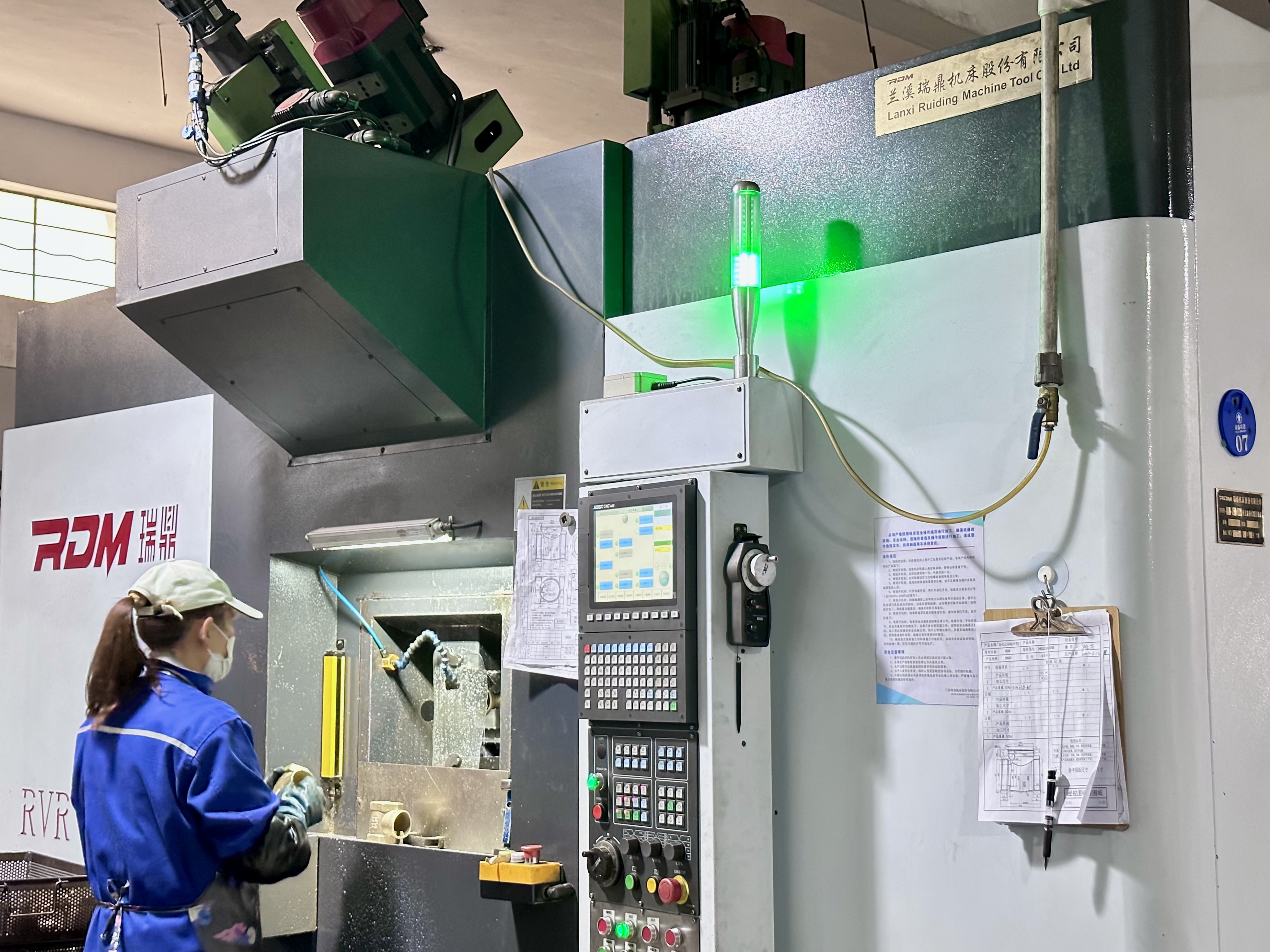
Why specification answers decide the order, not price
At the decision stage, price comparison only becomes meaningful between options that are technically eligible. A valve that cannot hold the line pressure, or that cannot be used with the medium in the pipe, is not a cheaper alternative — it is out of scope. In brass valve procurement, the specification questions act as pass/fail filters applied before any commercial comparison begins.
Two buyers looking at the same quotation can reach opposite conclusions simply because one has confirmed the alloy grade and the other has not. A second reason is documentation: a specification claim that cannot be traced to a model code, a material designation or a test record is difficult to defend later in an audit, an inspection release or a warranty discussion. The answers below are therefore kept to what is documented, and each one is written so it can stand on its own.
What “full port” means in the Q11F-16T ball valve
Full port (also written full bore) describes a ball valve in which the internal bore through the ball is sized to match the internal diameter of the connecting pipe. When the valve is fully open, the ball does not narrow the flow path beyond the pipe itself, so the valve adds minimal additional restriction to the line. A reduced-port, or standard-port, ball valve uses a smaller bore inside the same body size: it saves material and can reduce body dimensions, but it introduces a permanent restriction in the open position.
The practical consequence is pressure drop. In a full-port valve this is minimal; in a reduced-port valve it is measurable and permanent, because the restriction exists whenever the valve is open — not only when it is throttling.
The model code itself carries part of the answer. In standard Chinese valve model nomenclature, the leading letter identifies the valve type (Q for ball valve), the digits that follow describe the connection and structural form (threaded connection), the letter F is the seat and seal material code, the number 16 is the nominal pressure class — PN16, equivalent to 1.6 MPa — and the final letter denotes the body material, with T indicating a copper alloy (brass) body. Read this way, Q11F-16T declares a threaded brass ball valve in the 1.6 MPa class before any catalogue page is opened.
When full port changes the decision
- Low-pressure systems — gravity-fed water lines and irrigation laterals, where any avoidable restriction is felt at the outlet.
- Compressed air distribution — where pressure drop accumulates across many fittings along the same run.
- Lines that are periodically cleaned or mechanically swept — a full-bore path keeps the internal geometry consistent with the pipe.
- Applications where the valve must pass the pipe’s full flow rather than a reduced share of it.
When a reduced port is defensible
- The line is already oversized and a small restriction is irrelevant to performance.
- Body weight and material cost are the binding constraints of the project.
- The valve is used for isolation only, and flow performance is not a specified requirement.
| Characteristic | Full port | Reduced port |
|---|---|---|
| Bore relative to pipe internal diameter | Matches pipe internal diameter | Smaller than pipe internal diameter |
| Restriction when fully open | Minimal | Present at all times when open |
| Pressure drop in open position | Lower | Higher |
| Material use in the same body size | Higher | Lower |
| Typical reason to choose | Flow-critical lines | Space, weight or cost-driven lines |
J11W and J11F: what changes between two brass globe valve models
Globe valves — identified by the letter J in the same nomenclature — regulate and isolate flow through a plug that moves perpendicular to the seat. They are common in brass valve ranges for water, gas and heating service where throttling is expected, whereas ball valves are typically chosen for quarter-turn isolation.
J11W and J11F are both threaded brass globe valves. The difference sits in the seat and seal material code — the W and F positions of the model number:
- J11W — W denotes a metal seating surface, formed by the body material itself, giving metal-to-metal sealing.
- J11F — F denotes a fluoroplastic (PTFE-type) seat and seal material.
On a purchase decision, the seat designation changes four practical behaviours rather than the valve’s rated envelope. A PTFE-type seat (J11F) generally closes with a softer, more conforming contact and holds tight shutoff at lower closing torque. A metal-seated valve (J11W) relies on contact between harder surfaces. Media carrying small amounts of debris are generally tolerated better by a metal seat, which is less prone to scoring, while softer seats are more sensitive to the upper end of the operating temperature range. In brass valves, the seat material — commonly PTFE/PPL or a metal seat, depending on temperature — is usually the temperature-limiting component of the assembly.
| Aspect | J11W | J11F |
|---|---|---|
| Seat / seal designation | Metal seating surface | Fluoroplastic (PTFE-type) seat |
| Sealing principle | Metal-to-metal contact | Soft, conforming seat contact |
| Closing torque | Generally higher | Generally lower |
| Behaviour with suspended debris | More tolerant | More sensitive to scoring |
| Temperature sensitivity | Less sensitive to the upper range | Seat material is the limiting component |
| Pressure / temperature envelope | 1.6 MPa, 0–80 °C | 1.6 MPa, 0–80 °C |
Brass alloy grades in valve bodies: HPb59-1, HPb57-3, CW617N, C83600
Four grade names appear repeatedly in brass valve specifications. They are not interchangeable labels for the same material — they belong to different designation systems, differ in alloying content, and are associated with different production routes.
- HPb59-1 — a Chinese-standard leaded brass. The designation conventionally encodes the copper content and the lead addition: roughly 59% copper with about 1% lead. It is used for machined brass components, including valve bodies.
- HPb57-3 — also a Chinese-standard leaded brass, distinguished by a lower copper content (approximately 57%) and a higher lead addition (approximately 3%), which is generally associated with improved machinability.
- CW617N — a European designation for a leaded brass widely used for hot-forged water fittings and valve bodies, and the grade European buyers most often name explicitly in enquiries.
- C83600 — a UNS/ASTM designation for a cast red brass (leaded tin bronze), associated with cast valve bodies and fittings rather than hot-forged or machined parts.
The decision point for potable water is not the copper content — it is lead. EU Directive 2020/2184, the Drinking Water Directive, bans lead-containing brass alloys for drinking water transportation under a lead limit of 5 µg/l, effective 31 December 2026. In North America, NSF/ANSI/CAN 61-2025 sets health-effects requirements for chemical contaminants released from products into drinking water systems. A grade name printed in a catalogue is therefore not, by itself, a compliance statement.
| Grade | Designation system | Character | How it typically enters valve procurement |
|---|---|---|---|
| HPb59-1 | Chinese standard | Leaded brass, ~59% Cu / ~1% Pb | Machined brass valve bodies and components |
| HPb57-3 | Chinese standard | Leaded brass, ~57% Cu / ~3% Pb | Machined parts where machinability is prioritised |
| CW617N | European designation | Leaded brass for hot-forged fittings | Grade commonly named in European enquiries |
| C83600 | UNS / ASTM | Cast red brass (leaded tin bronze) | Cast valve bodies and fittings |
The 1.6 MPa and 0 °C to 80 °C envelope
Brass valves in this range carry a nominal pressure of 1.6 MPa (PN16, equivalent to 16 bar) and a working temperature range of 0 °C to 80 °C. Those two figures define where the valve may be installed. They are a boundary, not a target.
Pressure. 1.6 MPa is the nominal pressure class. Factory test pressures sit above it: Bozheng Valve documents a 100% hydrostatic test with a shell test at 30 bar and a seat test at 22 bar. Testing above the declared rating is normal practice — it verifies that the body and seat hold beyond the working limit rather than only at it.
The 0 °C lower bound reflects the freezing point of water, the most common medium in these lines. Below it, water trapped in an isolated valve body can freeze and expand.
The 80 °C upper bound is set by the sealing materials inside the valve. Soft seats are usually the temperature-limited component of a brass valve assembly.
The practical rule follows directly: if a line runs above 80 °C or above 1.6 MPa, a brass valve in this class falls outside its documented envelope regardless of supplier. That is a question of valve class, not of brand.
Working media: water, gas, low-pressure steam and compressed air
The documented media for brass valves in this range are water, gas, low-pressure steam and compressed air systems.
- Water — the primary service: domestic supply, plumbing distribution, heating circuits and irrigation.
- Gas — low-pressure gas lines within the same pressure and temperature envelope.
- Low-pressure steam — steam service must remain inside the same 0 °C to 80 °C envelope, which limits it to low-pressure duty.
- Compressed air — distribution lines and pneumatic supply, where both full-port ball valves and globe valves are common.
Two boundary conditions apply. First, the medium must be compatible with both the brass body and the seat material, which is why the J11W and J11F seat choice becomes relevant in media with suspended solids. Second, steam and gas service do not change the pressure or temperature limits — they are selected within them.

How these answers are documented at Bozheng Valve
Zhejiang Bozheng Copper Industry Co., Ltd. (Bozheng Valve) was founded in 1998 in Yuhuan City, Zhejiang Province, China — a location known as the “Valve Capital of China”. The company operates a 6,700 m² factory with 180 employees, an R&D team of 25 engineers, and an annual output of 3,200,000 units. Approximately 70% of sales are exported, with main markets across the EU, USA, Southeast Asia, Central Asia and Africa, and the main product lines are brass valves and stainless valves. The company self-reports ISO 9001, ISO 14001 and ISO 45001 management system certifications.
On the specification questions covered above, the documented control points are:
- 100% hydrostatic test — shell 30 bar, seat 22 bar
- Spectrometer test of raw material for every batch
- Batch number traceable on every valve
- Test report provided with each shipment
This structure matters at the decision stage because it converts a catalogue claim into evidence with a batch reference. When two suppliers quote identical specifications, there is little on paper to separate them; what separates them is whether the pressure check, the material check and the traceability record are routines, and whether a report actually accompanies the shipment.
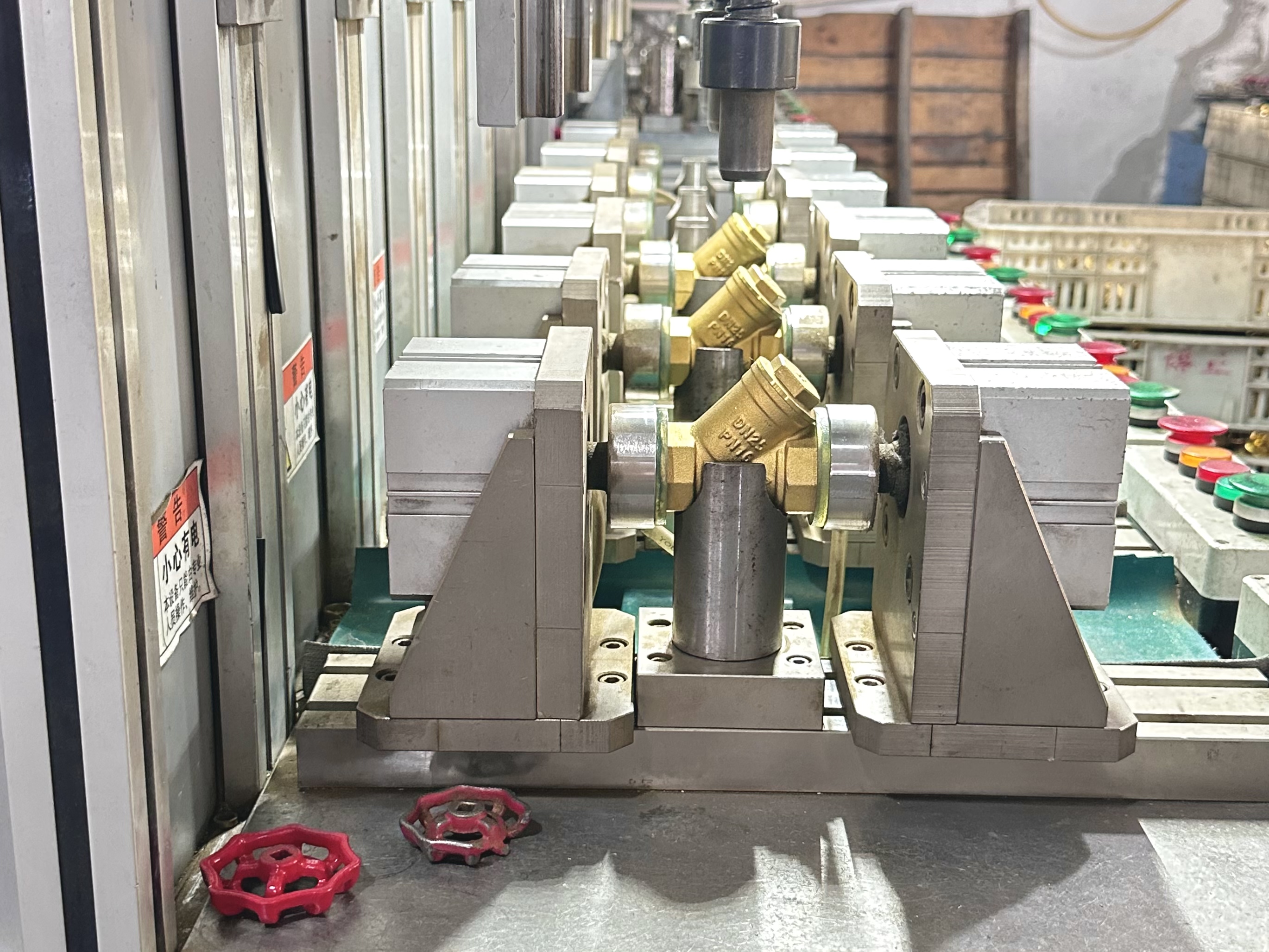
Where brass valves fit: application scenarios
Because the envelope is fixed at 1.6 MPa and 0 °C to 80 °C, brass valves concentrate in applications whose media align with that range:
- Plumbing and domestic water distribution
- Heating systems, including circulation lines within the temperature limit
- Low-pressure gas service
- Irrigation lines
- Compressed air systems
- Light industrial and commercial fluid control
Steam above the temperature limit, chemical, petroleum and higher-pressure duty typically fall to other valve classes. That is a normal division of labour between material groups rather than a shortcoming of one material.
Market signals shaping brass valve specification
Scale. The global industrial valves market was reported at USD 102.56 billion in 2025, with steady growth projected through 2030 (The Business Research Company). Within it, the brass ball valve segment was valued at approximately USD 3.2 billion in 2024 and is projected to reach USD 4.8 billion by 2033, a CAGR of 5.5% (DataHorizzon Research).
Compliance. EU Directive 2020/2184 imposes a lead limit of 5 µg/l and ends the use of lead-containing brass alloys for drinking water transportation from 31 December 2026. In North America, NSF/ANSI/CAN 61-2025 defines health-effects requirements for components in contact with drinking water systems. Manufacturers in the category have already moved: Watts, for example, states that its lead-free brass ball valves are certified to NSF/ANSI 61 and 372, with a chrome-plated lead-free brass ball, in threaded sizes from 1/4 inch to 2 inches.
Cost. Copper raw material prices reached USD 10,476 per ton by mid-2024, contributing to a reported increase of about 23.4% in brass product manufacturing costs. For buyers, that converts into a straightforward rule: the alloy grade is now a cost variable as well as a compliance variable, and naming the grade in the enquiry is the first step toward comparing quotations honestly.
Brass valves against low-cost alternatives: where the trade-off sits
Structured manufacturers are frequently compared against small or family workshops, and the comparison is not one-sided on price. Documented comparison data in this category records a cost difference of roughly 3% in favour of small workshops — a narrow gap — set against poor material control, unstable quality, no testing, a leakage rate of about 10%, and a maintenance pattern of frequent failure with replacement every three to four months.
Read as a decision problem, a 3% price advantage is consumed by a single replacement cycle — before labour, downtime or system damage is counted. The material and testing items are not cosmetic either: raw material control and a pressure test are precisely what make a rated pressure meaningful in service.
The boundary runs in both directions. Brass valves are not a universal solution. A 1.6 MPa, 0 °C to 80 °C valve is unsuitable for high-pressure steam mains, high-temperature heating circuits, or any line whose rated conditions exceed the envelope — and no upgrade to the alloy or the seat changes that. In those services the correct answer is a different valve class. Stating that limit plainly is part of the same reasoning that makes brass valves economical where they do fit.
Outlook
Three developments look likely to continue through the next procurement cycle. Lead-free grades will move from a premium option toward a baseline requirement in drinking water applications, anchored by the EU deadline at the end of 2026. Certification will be read more carefully: management system certifications such as ISO 9001 describe how a factory is organised, while product approvals such as NSF/ANSI 61 or NSF/ANSI 372 describe the valve itself — the two are not substitutes for each other. And raw material prices will keep the alloy grade on the quotation sheet, not just the model code, because in a category where copper is the dominant cost input, the grade named in the enquiry sets the floor of the price discussion.
FAQ
What does “full port” mean in a Q11F-16T brass ball valve?
Full port means the bore through the ball matches the internal diameter of the connecting pipe, so a fully open valve adds minimal restriction to the line. A reduced-port valve uses a smaller bore in the same body size, creating a permanent pressure drop whenever the valve is open. In the model code Q11F-16T, Q identifies a ball valve, the following digits describe the threaded connection, F is the seat and seal material code, 16 is the PN16 pressure class (1.6 MPa), and T denotes a copper alloy (brass) body.
What is the difference between the J11W and J11F brass globe valve models?
Both are threaded brass globe valves. The difference lies in the seat and seal material designation: W denotes a metal seating surface formed by the body material, giving metal-to-metal sealing, while F denotes a fluoroplastic (PTFE-type) seat. Metal seats generally tolerate debris better and are less sensitive to the upper end of the temperature range; soft seats generally close with lower torque and conform more closely to the seat. Neither designation extends the valve’s documented pressure and temperature envelope.
Which brass alloys are used in brass valve bodies?
The grades most frequently named in brass valve specifications are HPb59-1, HPb57-3, CW617N and C83600. HPb59-1 and HPb57-3 are Chinese-standard leaded brasses used for machined components; their designations conventionally encode roughly 59% copper with about 1% lead, and roughly 57% copper with about 3% lead, respectively. CW617N is a European designation for a leaded brass used for hot-forged water fittings and valve bodies. C83600 is a UNS/ASTM designation for a cast red brass associated with cast valve bodies. For drinking water service, the lead content of the grade — not the copper content — governs eligibility under EU Directive 2020/2184 and North American standards such as NSF/ANSI/CAN 61-2025.
What pressure and temperature limits apply to brass valves?
For this product range, the nominal pressure is 1.6 MPa (PN16, equivalent to 16 bar) and the working temperature range is 0 °C to 80 °C. The lower bound reflects the freezing point of water; the upper bound is set by the sealing materials inside the valve. Factory hydrostatic testing is carried out above the rating — Bozheng Valve documents a shell test at 30 bar and a seat test at 22 bar across 100% of production — which verifies the valve beyond its declared working limit. Services above 1.6 MPa or above 80 °C require a different valve class.
Which working media can brass valves handle?
Documented media for this range are water, gas, low-pressure steam and compressed air systems. Steam service must remain within the same 0 °C to 80 °C envelope, which limits it to low-pressure duty. In all cases the medium must be compatible with both the brass body and the seat material, and media carrying suspended solids are better matched with a metal-seated model.
How should a buyer compare two suppliers quoting the same brass valve specification?
Compare the items that can be verified rather than the items that are merely stated: the alloy grade named in the offer, the seat and seal designation encoded in the model number, the declared pressure and temperature envelope, and the test and traceability routine behind the shipment. Bozheng Valve documents a 100% hydrostatic test (shell 30 bar, seat 22 bar), a spectrometer test of raw material for every batch, a batch number traceable on every valve, and a test report with each shipment. Because price differences in this category can be small — one documented comparison puts small-workshop pricing about 3% lower — the more reliable basis for comparison is documented routine, not headline price.
For the complete model list and specification tables in a single document, the BZ Catalogue 2025 is available for download.