
Brass Valve Project Fit: Choosing the Right Valve for the Right System
Brass valves are a standard control component in residential plumbing, commercial water supply, and hydronic heating systems. The correct choice depends on more than material grade: project type, connection method, pressure and temperature range, and regional certification all determine which valve will perform as intended. This article provides a project-level selection framework and documents the product and application evidence that buyers can verify.
Why Project Fit Matters in Brass Valve Selection
Two recurring specification errors appear in plumbing and HVAC projects. First, a valve is selected by type alone without checking the piping connection standard. A threaded brass valve cannot be installed in a PEX-A cold expansion system without an adapter, and that extra joint becomes a potential leak point. Second, the operating duty is ignored: a metal-seat gate valve used for frequent throttling will wear seat surfaces, while a quarter-turn ball valve used as a throttling device can erode PTFE seats and cause leakage over time.
Project-fit selection answers three questions in order: what function does the valve perform, what connection standard matches the piping system, and which certification applies for the local water supply or gas regulation. Once those three questions are answered, the brass valve range narrows quickly.
A practical buyer checklist for project-fit evaluation includes: define the valve duty; identify the pipe material and connection standard; check the pressure and temperature range; verify the relevant certifications; review factory test evidence; and confirm packaging and OEM requirements.
Supplier Capability for Project-Based Brass Valve Sourcing
Zhejiang Longda Technology Co., Ltd, known in the market as LONGDA BRASS VALVE, is a brass valve and fitting manufacturer established in 1993, located in Yuhuan County, Zhejiang Province, China. The company covers 30,000 square meters, employs about 200 people, and reports an annual output of 7,500 tons. Approximately 95% of production is exported to Western Europe, the United States, Canada, South America, and other international markets.
Longda's product range includes brass ball valves, angle valves and supply stops, gate valves, check valves, Y strainers, manual balancing valves, and brass fittings. Connection options include NPT and BSP threads, sweat, PEX per ASTM F1807, PEX-A per ASTM F1960, press per Z1117, and push-fit per ASSE 1061. The company supports OEM and ODM programs, with custom sizes, connection combinations, handle types, chrome finish, logo, packaging, and certification support.
Brass Valve Types and Their Typical Project Roles
The table below summarises the brass valve types commonly specified in residential and commercial projects, based on the Longda product range and the application data used in this article.
| Valve Type | Primary Function | Typical Project Fit | Key Parameters / Certification |
|---|---|---|---|
| Brass ball valve | Full-port on/off control with minimal pressure drop; quarter-turn operation | Water supply, gas, HVAC, PEX plumbing, potable water | Sizes 1/2–4 inch; 600 WOG (4.1 MPa); PTFE seats; cUPC, NSF/ANSI 61 & 372 for lead-free version |
| Brass angle valve / supply stop | Local fixture shut-off behind sinks, toilets, washing machines; 1/4-turn operation | New residential construction, bathroom and kitchen renovation, hotel and apartment fit-out | Sizes 1/2 x 3/8 and 1/2 x 1/2; 125 psi; cUPC, NSF/ANSI 61 & 372; chrome-plated finish |
| Brass check valve | Prevents backflow in pumping, heating, and irrigation systems; swing or spring-loaded | Pumping systems, water supply, heating and boiler systems, agricultural irrigation, industrial fluid lines | Sizes 1/2–2 inch; 200 WOG (1.4 MPa); -20°C to 150°C; lead-free option certified NSF 61 & 372 |
| Brass gate valve | Full-bore isolation for infrequent shut-off; rising stem, brass-to-brass metal seat | Municipal water supply, residential and commercial plumbing, HVAC, agricultural irrigation | Sizes 1/2–4 inch; 200 WOG (1.4 MPa); test pressure 1.5x rated shell, 1.1x rated seat; NSF/ANSI 61 & 372 for lead-free version |
| Brass Y strainer | Captures sand, sediment, and weld debris; protects downstream pumps, meters, and valve seats | Water supply pipelines, HVAC and chilled water systems, gas piping, agricultural irrigation | Sizes 1/2–2 inch; 200 WOG; SS304 screen 20/40/60/80 mesh; blow-down drain plug; lead-free option NSF/ANSI 61 & 372 |
| Brass manual balancing valve | Balances water flow between circuits for even temperature distribution; prevents over-supply or under-supply | District energy networks, commercial building HVAC, underfloor heating, radiator heating renovation | Sizes DN15–DN50; up to 232 psi (1.6 MPa); 4°C to 90°C; EN 215; PED 2014/68/EU; tamper-proof preset function |
Connection Types: Matching the Valve to the Piping System
Piping material determines the connection standard. For NPT or BSP threaded systems, female threaded brass valves are common. Copper systems may use sweat connections. PEX plumbing requires crimp-style fittings per ASTM F1807, cold expansion fittings per ASTM F1960, press fittings, or push-fit fittings per ASSE 1061. The Longda product line includes PEX ball valves per ASTM F1807, PEX-A ball valves per ASTM F1960, press ball valves per Z1117, push-fit fittings per ASSE 1061, and a range of brass adapters and couplings.
For a full-port shut-off in a PEX-A system, the ASTM F1960 cold expansion connection is an accepted method. The PEX-A pipe end is expanded with an expansion tool, the fitting is inserted, and the ring contracts to form a permanent leak-free joint without reducing the pipe inner diameter. This connection mode is listed for a brass ball valve used in new residential construction, whole-house repiping renovation, potable water branch lines, floor heating systems, and commercial building plumbing projects.
Certification and Compliance by Target Market
In the United States and Canada, potable water fittings and valves must use lead-free brass with a wetted surface lead content not exceeding 0.25% per NSF/ANSI 372. Materials must also meet NSF/ANSI 61 health effects requirements, and product performance must satisfy the cUPC-listed standard for the specific type, such as ASME A112.18.1 / CSA B125.1 for supply stops. Threads generally follow ASME B1.20.1 (NPT). In Mexico, NOM certification is an additional requirement listed for this product category.
For European gas installations, EN 331:2015 sets safety requirements for manually operated brass gas valves. For drinking-water ball valves, EN 13828:2003 specifies requirements for manually operated copper alloy ball valves. In HVAC balancing, EN 215 applies to radiator balancing valves, and PED 2014/68/EU applies to pressure equipment. The Longda manual balancing valve range is listed with these compliance requirements.
Application Scenario 1: PEX-A Plumbing in New US Residential Construction
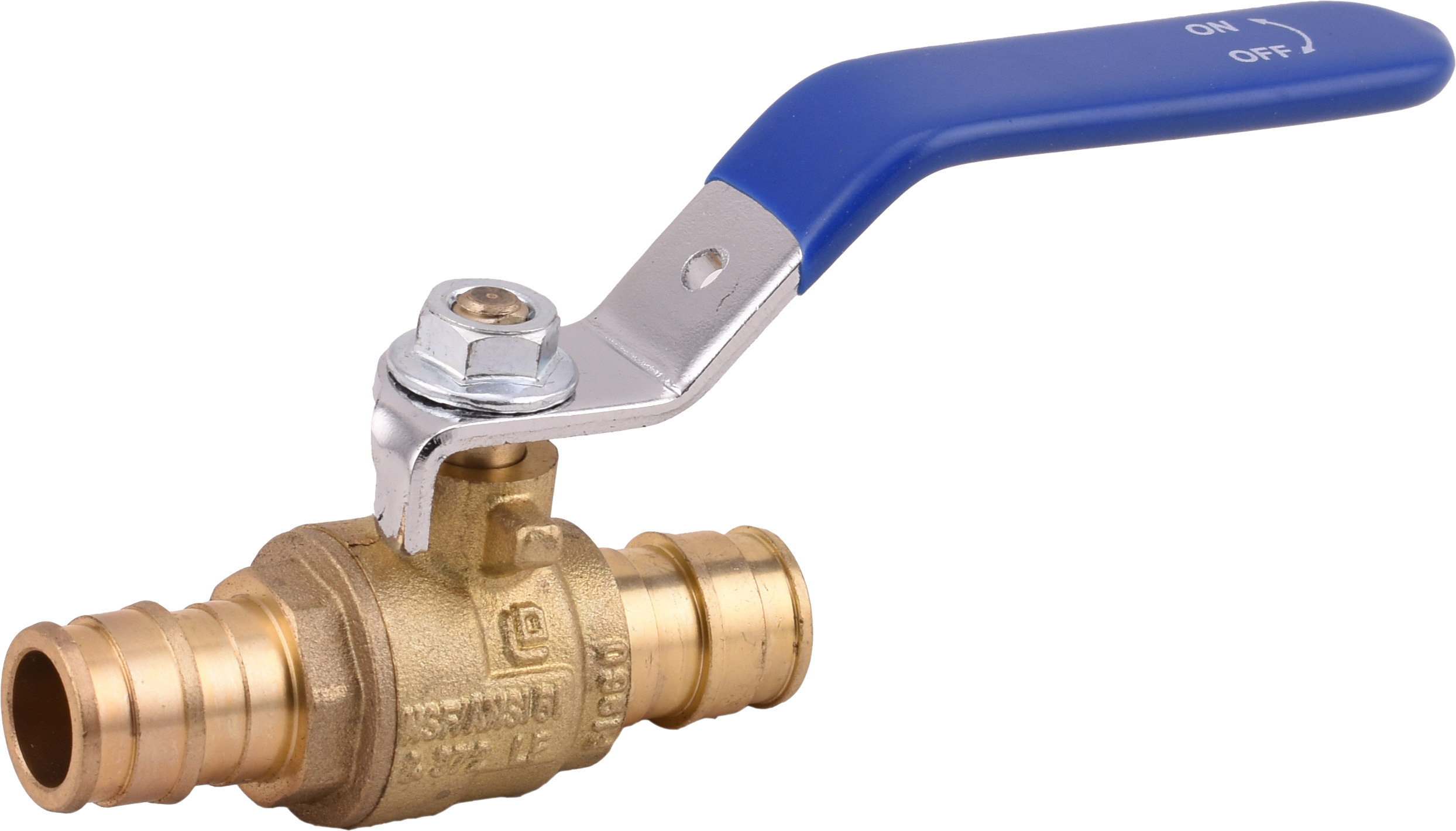
A common scenario in the United States is new residential construction with PEX plumbing, whole-house repiping, potable water branch lines, floor heating systems, and commercial building plumbing. For this project type, a full-port shut-off function connects PEX-A pipe to NPT threaded equipment such as water heaters, manifolds, and appliances.
The recommended connection mode is ASTM F1960 cold expansion. The valve is designed for quarter-turn blue lever operation for on/off control. Working pressure can be up to 100 psi (0.7 MPa), water temperature up to 180°F (82°C), under long-term continuous service. Special requirements include cUPC certification, NSF 61 / NSF 372 lead-free compliance with lead content ≤ 0.25%, the ASTM F1960 connection standard, a lead-free brass full-port body, and 100% pressure testing.
Application Scenario 2: Fixture Supply Stop Valves in Bathrooms and Kitchens
In the United States, Canada, and Mexico, brass angle valves and supply stop valves are commonly installed behind sinks, toilets, and washing machines. They provide local shut-off for maintenance and emergency stop without cutting off the whole building water supply. Typical working pressure is 40–80 psi (0.28–0.55 MPa) and water temperature 4°C to 60°C, with frequent on/off operation in limited spaces.
For this application, lead-free brass with wetted surface lead ≤ 0.25%, NSF 61 / NSF 372 certification, cUPC certification, chrome-plated anti-corrosion finish, and NPT or compression threads are required. The Longda supply stop range includes quarter-turn and multi-turn versions with compression, PEX F1807, PEX F1960, CPVC, press, push-fit, and sweat connections. A documented project reference covers annual quantities of 8,000,000 pcs for a US manufacturer and 70,000,000 pcs for a Canadian distributor, with zero leakage complaints and a 100% pass rate in retail quality audits over a three-year period.
Application Scenario 3: Manual Balancing Valves in HVAC and Radiant Heating
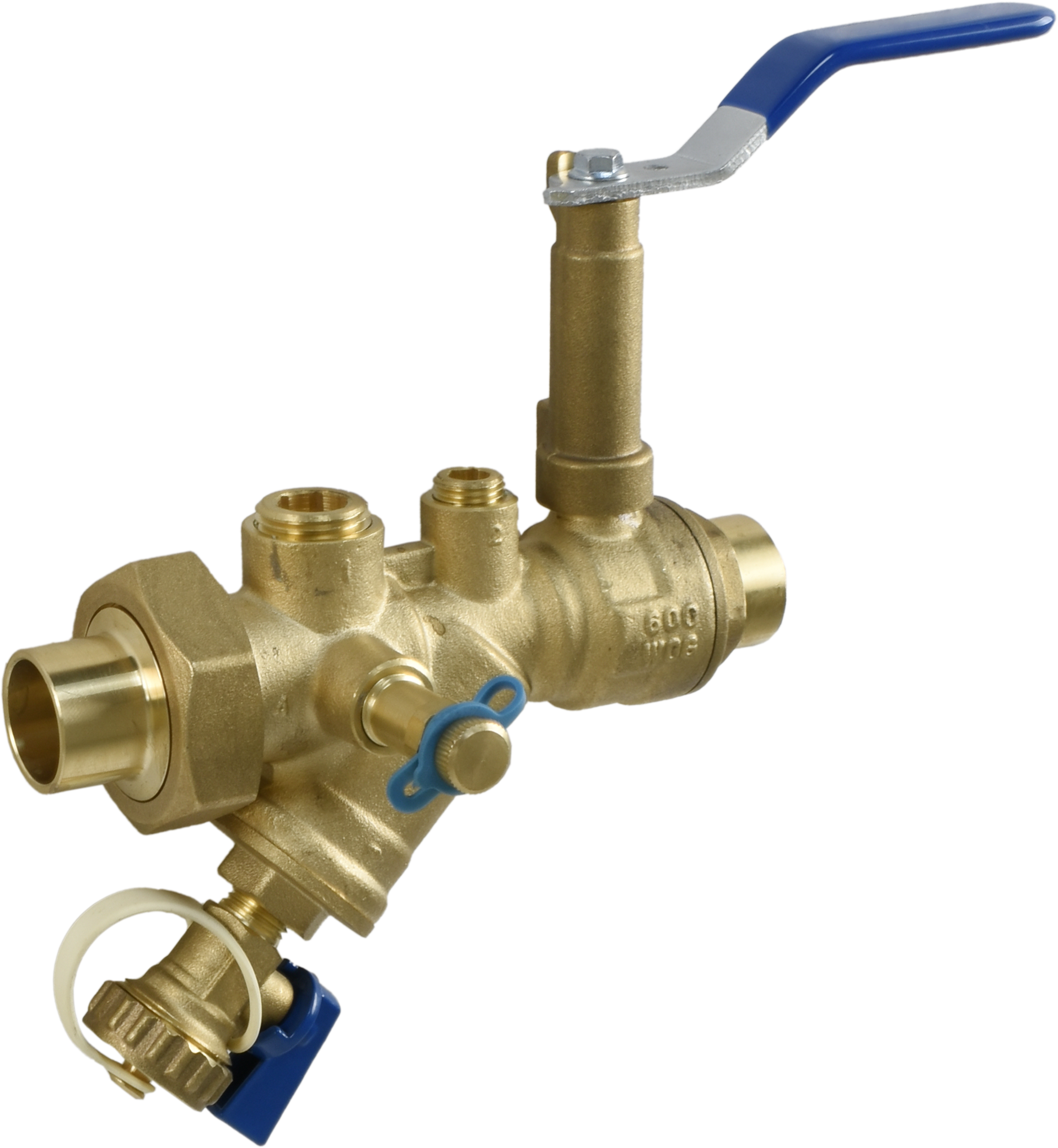
In commercial HVAC, radiator heating renovation, underfloor heating, and district energy networks, a brass manual balancing valve controls flow balance between circuits. The role is to provide precise balancing of water flow between circuits to ensure even temperature distribution, prevent over-supply or under-supply, and contribute to energy saving and system stability.
The product operates in manual pre-setting mode with flow measurement via test ports or flow scale, or in automatic self-balancing mode under variable load. It is available in sizes DN15–DN50, designed for working pressures up to 232 psi (1.6 MPa), and operates in indoor installation conditions in mechanical rooms and risers with medium temperatures from 4°C to 90°C. Special requirements include EN 215 compliance, PED 2014/68/EU compliance, Kv value and pressure drop curves, and a tamper-proof preset function.
Market Trends Supporting Project-Specific Specification
The global brass valves market was valued at USD 14.8 billion in 2025 and is projected to reach USD 24.1 billion by 2034, with a CAGR of 5.6% from 2026 to 2034. Ball valves held the largest product type share at 38.4% in 2025. Asia Pacific dominated with a 41.2% revenue share, and North America represented approximately 26.1%.
China remains the largest global valve exporter, with USD 22.6 billion in valves (HS 8481) exported in 2024. For brass ball valves specifically, China accounts for approximately 41% of export shipments, followed by Vietnam at 30%. This creates a stronger need for buyers to verify supplier capability, certification, and testing procedures.
In the hydronic balancing segment, manual balancing valves still represent 55–65% of unit demand in the Asia-Pacific market. Demand is driven by commercial HVAC retrofits in emerging markets, according to IndexBox. At the same time, lead-free brass alloys are becoming mandatory for potable water applications in the United States under the Safe Drinking Water Act, making certification a core selection factor.
Brass Valve Selection Compared with Traditional Alternatives
Quarter-turn ball valves are generally faster to operate and provide full-port flow with minimal pressure drop compared with traditional multi-turn gate valves. Gate valves, however, use a metal-to-metal seat that is more tolerant of infrequent shut-off duty and is less prone to seat erosion when left fully open or fully closed. This makes gate valves a reasonable traditional alternative for isolation applications where operation is rare.
Threaded connections are familiar and low-cost, but PEX connections reduce potential leak paths and installation time. The ASTM F1960 cold expansion connection creates a permanent joint without reducing the inner diameter of PEX-A pipe. The trade-off is that F1960 requires PEX-A pipe and a dedicated expansion tool, so it is not necessarily suitable for retrofit projects that use other pipe types.
Manual balancing valves provide a lower-cost solution than automatic balancing valves, but they require commissioning by a trained technician. If the system load changes frequently, automatic self-balancing may justify the higher initial cost. For many commercial HVAC retrofit projects, manual presetting with flow measurement is still a practical and verifiable solution.
Future Outlook for Brass Valves in Project Procurement
Three structural trends will shape the next phase of brass valve procurement: the expansion of lead-free requirements beyond North America, the continued growth of PEX plumbing systems, and the gradual integration of smart components for predictive maintenance. Suppliers will increasingly be expected to document material traceability, test results, and connection standards in a way that specifiers can verify.
For buyers at the research and evaluation stage, the practical implication is to compare valves not only by price but by project fit: function, connection compatibility, certification coverage, testing evidence, and supplier capacity. Longda's capability data shows a monthly capacity of 500,000 pcs for supply stops and 300,000 pcs for ball valves, with 100% pressure testing before shipment and a 12-month quality warranty, which can support volume-driven project programmes.
Frequently Asked Questions
For potable water contact, the wetted surface must be lead-free with lead content ≤ 0.25% per NSF/ANSI 372. Products must also meet NSF/ANSI 61 health effects requirements and cUPC performance standards such as ASME A112.18.1 / CSA B125.1 for supply stops. Threads commonly follow ASME B1.20.1 (NPT).
Longda's product line includes brass fittings per ASTM F1807 and PEX-A fittings per ASTM F1960. In the ASTM F1960 cold expansion process, the PEX-A pipe end is expanded, the fitting is inserted, and the ring contracts to form a permanent leak-free joint without reducing pipe inner diameter. ASTM F1807 is a separate PEX connection standard used for crimp-style fittings; both are available in Longda's range.
Brass manual balancing valves are suitable for central heating, chilled water systems, radiator heating renovation, underfloor heating, commercial building HVAC, and district energy networks. They operate in sizes DN15–DN50, up to 232 psi, and require EN 215 and PED 2014/68/EU compliance in European projects.
Key measures include PTFE seal plus double O-ring construction, quarter-turn ball design, chrome-plated anti-corrosion finish, 100% air pressure testing before shipment, thread gauge inspection on every lot, and lead-free material test reports. A 12-month quality warranty with free replacement is commonly provided.
Reference for Technical Documentation
Buyers can download the Longda product catalogue for detailed specifications, connection options, and certification information: catalogue Longda-Global.pdf.