
Breathable Soft Top Sheet in Training Pants: A Buyer's Guide
Breathable Soft Top Sheet in Training Pants: A Buyer's Guide
Training pants are pull-up garments that let a toddler step into a diaper rather than lie down for one. The category is commonly marketed as Baby Training Pants or Pull Up Training Pants, and it sits between two older formats: the taped baby diaper and the cloth trainer. The single layer that most determines whether a child accepts the garment is the breathable soft top sheet.
This reference examines what a breathable soft top sheet is, why it matters in a disposable training pant, how it interacts with the absorbent core and the rest of the construction, and how buyers should evaluate it when sourcing OEM or private-label training pants.
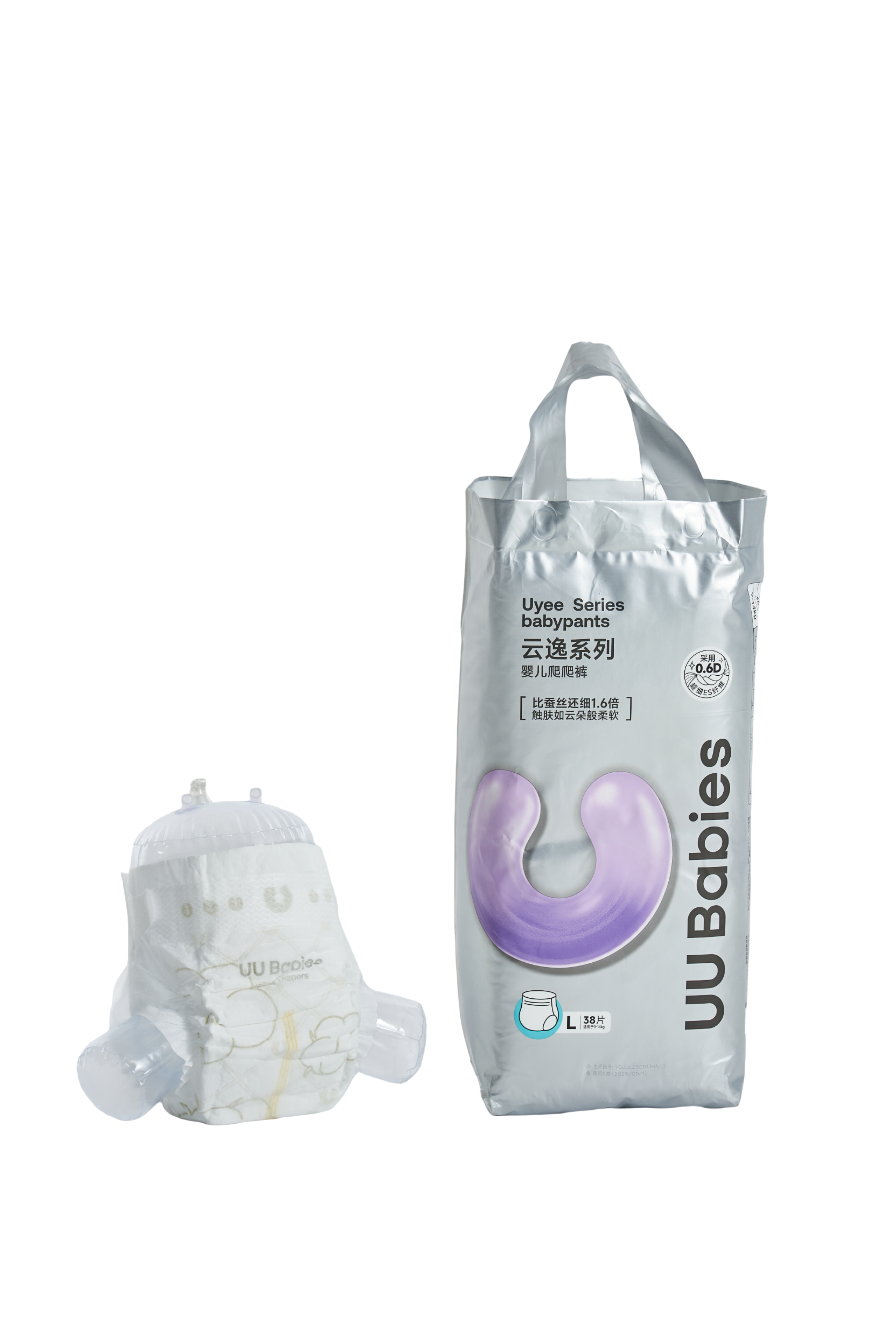
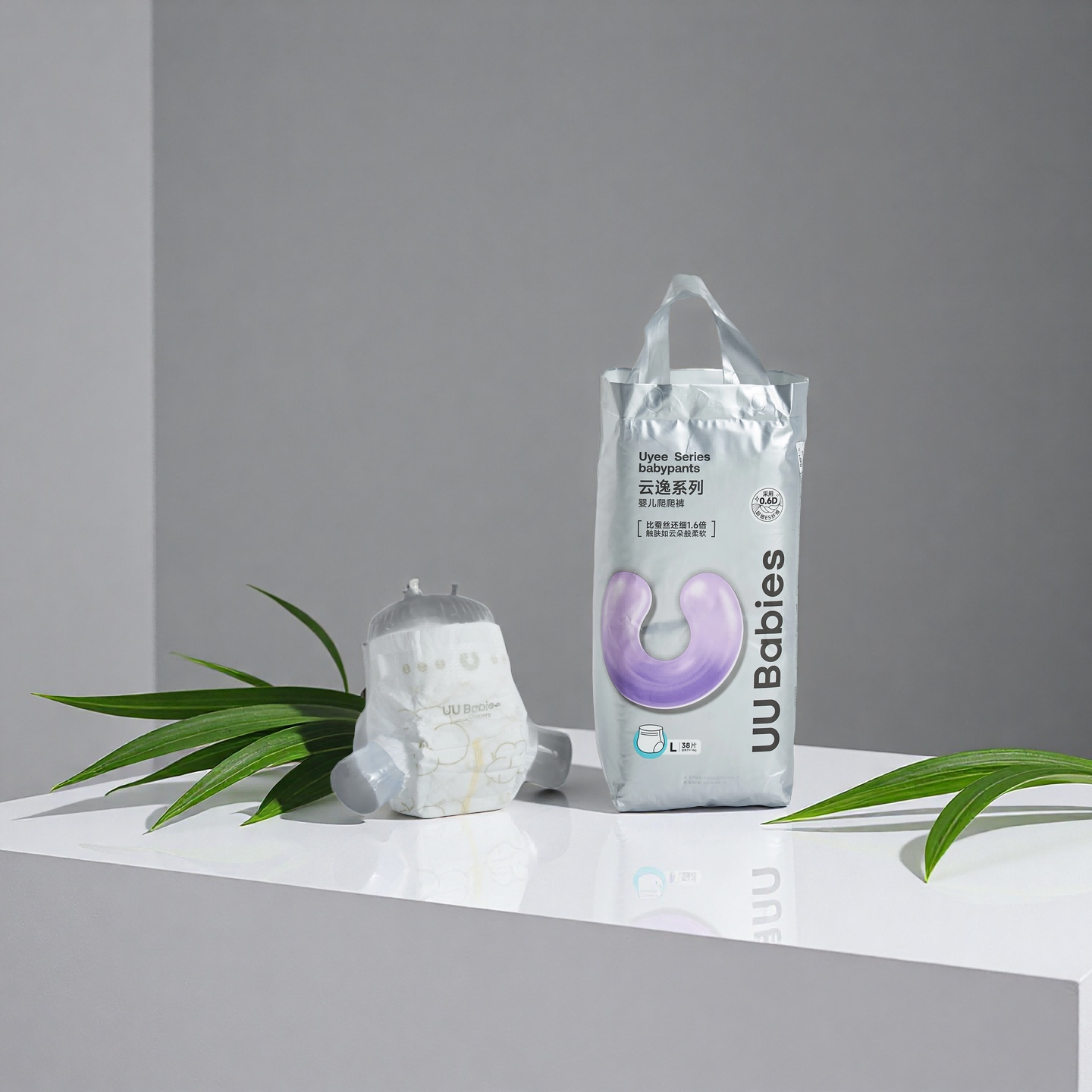
Disposable training pants are built from a stack of functional layers; the breathable soft top sheet is the one that touches the skin.
Why the Top Sheet Is the First Comfort Decision in Training Pants
Moisture and heat at the skin surface are the two conditions that most often make a toddler resist a garment. A disposable training pant addresses both through its construction rather than through a single material. The top sheet controls what the skin feels; the absorbent core controls how quickly liquid is taken away from that surface; the backsheet stops liquid from leaving the garment.
In practice this means the top sheet has to do two jobs at the same time. It has to let air move so the skin does not become stuffy, and it has to pass liquid through quickly so the core can absorb it. A surface that is soft but does not move liquid fast enough leaves the skin damp. A surface that moves liquid quickly but feels stiff or rough defeats the purpose of a training pant, which is worn while the child is walking, climbing, and pulling the garment up and down.
For buyers, the practical question is not whether a supplier uses nonwoven fabric — most do — but which nonwoven, at what weight, and how it is bonded to the core underneath it.
What 'Breathable Soft Top Sheet' Actually Means
The top sheet is the innermost layer of a disposable training pant: the surface in direct contact with the skin. In the YQ004 training pant, this layer is described as a breathable soft top sheet made of skin-friendly non-woven fabric that reduces stuffiness and fits the legs flexibly for crawling and walking.
Three properties are being claimed in that description, and each has a practical meaning:
- Breathable — the fabric allows air to circulate at the skin surface, reducing the heat and moisture build-up associated with prolonged wear.
- Soft — the fabric texture is smooth enough for extended contact with a toddler's skin, including during sleep.
- Skin-friendly — the material and its finishing are selected to avoid harsh contact with sensitive skin; the recorded application specification for this product states that it is skin-friendly and free of harmful substances.
Breathability in a training pant is not a single component property. It is the result of the top sheet, the core structure, and the overall assembly working together. That is why the top sheet is best evaluated alongside the rest of the pant rather than in isolation.
How the Top Sheet Works With the Rest of the Training Pant
A pull-up training pant is a stack of functional layers. In the YQ004 training pant, four features are specified, and each one carries a distinct role in daily use.
The four specified features of the YQ004 training pant: elastic wide waistband, super absorbent core, breathable soft top sheet, and easy-tear side seams.
Elastic wide waistband
A stretchable waist fits the child's belly without tight binding, and it is what allows the child to pull the pant on and off independently. Independence is the central function of a training pant, so the waistband is a functional requirement rather than a styling detail.
Super absorbent core
The core uses high polymer SAP (super absorbent polymer) to absorb minor accidents quickly and prevent leakage onto underwear. The YQ004 core is specified as 100% woodpulp with a half core structure and 100% SAP. 'Half core' refers to the placement of the absorbent material within the pant rather than to its chemical composition; the SAP performs the primary liquid retention work.
Breathable soft top sheet
Skin-friendly non-woven fabric sits between the child's skin and the core. It reduces stuffiness and flexes with the legs during crawling and walking. Because it is the contact layer, it also determines how the pant feels in the minutes immediately after an accident, before the core has fully taken up the liquid.
Easy-tear side seams
The side seams are rippable, so a wet or soiled pant can be removed quickly without pulling it down the legs. This matters most during changes away from home, when the alternative is a struggle with a full garment.
Specifications at a glance
| Specification | YQ004 Training Pants |
|---|---|
| Product name / model | Training pants, model YQ004 |
| Category | Baby Training pants |
| Available sizes | M, L, XL, XXL, XXXL |
| Materials | Nonwoven; SAP |
| Core | 100% woodpulp; half core; 100% SAP |
| Packaging | 30 pcs/bag; 42 pcs/bag; 82 pcs/bag; customizable |
| Target industries | Maternity & Baby Industry; Personal care Industry |
Specifications as recorded in the product reference data for model YQ004.
For buyers scanning a supplier catalogue, the size range is a useful first filter: a training pant that stops at L will not serve the older end of the toilet-training window, where XL Size Training Pants and larger sizes become the volume sellers.
Where Breathable Training Pants Are Used
The primary application is the toilet-training period, when a child moves from full-time diapers to underwear. Third-party market analysis of the training diaper category indicates that the 18 to 48 months age group accounts for 49.0% of the market share, which aligns with pediatric toilet-training readiness milestones.
Within that window, the product is used in several distinct situations:
- Daytime training at home — the child practices pulling the pant up and down; the elastic waistband and easy-tear seams support that routine.
- Nursery, daycare, and travel — changes happen away from a changing table, so easy removal without a lying-down position matters more.
- Overnight use — the super absorbent core and leak-proof construction are relied on over longer intervals, while the breathable top sheet addresses prolonged skin contact.
- Warm and humid climates — where reduced stuffiness at the skin surface is a more noticeable requirement than in temperate markets.
The recorded application conditions for this product family specify use in the maternity and baby care segment and in disposable hygiene product supply projects, with the function of absorbing the child's urine while keeping skin dry and providing leak-proof protection. Recommended storage is a cool and dry place.
Documented market coverage for these applications includes the Philippines, Russia, the United Arab Emirates, the United States, Chile, and Mexico, which reflects both tropical and temperate demand patterns.
Market Trend: A Growing Category With a Disposable Bias
The training pant segment is expanding, and the shift toward disposable formats is the main reason. According to Grand View Research, the global baby training pants market was valued at approximately USD 4.57 billion in 2024 and is projected to reach USD 7.0 billion by 2030.
Within the wider baby pants market, disposable formats dominate. Market Intelo reports that disposable baby pants, including training variants, command a 62.3% share of the broader baby pants market as of 2025.
Regional demand is also moving. Grand View Research projects that China's reusable baby diapers and training pants market will reach USD 1.77 billion by 2030, growing at a CAGR of 7.6%. On the supply side, First Quality announced a 50% expansion of its baby training pant manufacturing capacity in 2024 with a new facility in Georgia, USA — a signal that producers expect volume growth rather than a plateau.
The competitive landscape at the top of the category is held by large consumer brands. Fortune Business Insights and Dataintelo identify Procter & Gamble (Pampers), Kimberly-Clark (Huggies / Pull-Ups), and Unicharm (Moony / MamyPoko) as the primary global market leaders in the training pants segment. Below that tier, the OEM and private-label supply base serves retailers and regional brands.
A note on market sizing. Published estimates for this category diverge substantially depending on how the product is defined. Sources place the market at different levels — for example, USD 4.57 billion for baby training pants versus figures above USD 27 billion for a broader definition that includes pull-ups within the total baby training diaper segment. Buyers comparing forecasts should check the definition before comparing the number.
Breathable Training Pants vs. Traditional Options
Breathable disposable training pants are one of three common formats. The trade-offs are real, and none of the three wins on every dimension.
| Dimension | Cloth training pants | Standard taped baby diapers | Breathable disposable training pants (YQ004 class) |
|---|---|---|---|
| Handling | Washed and reused | Taped on while the child lies down | Pulled on and off by the child |
| Skin contact layer | Fabric, varies widely | Nonwoven top sheet | Breathable soft nonwoven top sheet |
| Liquid retention | Relies on fabric absorbency plus an outer cover | Woodpulp and SAP core | 100% woodpulp half core with 100% SAP |
| Removal when soiled | Pull down | Re-tape or slide off | Tear-away side seams |
| Disposal | Reusable; requires laundering | Single use | Single use |
| Best fit | Households prioritising reuse | Children not yet able to dress themselves | Children in the 18–48 month training window |
Two boundaries are worth stating plainly, because they affect how the product should be specified and marketed.
First, 'breathable' in a disposable training pant does not mean the garment is fully air-permeable. The backsheet is designed to contain liquid and the SAP core is designed to hold it, so the pant remains a closed system overall. The breathable soft top sheet reduces stuffiness at the skin surface; it does not convert the product into a fully ventilated garment. Buyers writing product claims should describe breathability in terms of the top sheet and skin comfort rather than implying unrestricted air flow through the entire structure.
Second, breathability and leak protection pull against each other in design. Increasing air movement at the surface generally means changing the top sheet structure, which can affect how quickly liquid passes through to the core. That is why the top sheet cannot be evaluated alone: the pairing of top sheet and core determines whether the pant stays both comfortable and dry.
Manufacturing Context: What Buyers Should Know About the Supply Base
Zhejiang Uniquality Nursing Products Technology Co., Ltd. is a personal care products manufacturer established in 1987, specialising in OEM and ODM manufacturing of wet wipes and diapers, with 24 years of experience in wet wipes and diaper manufacturing. Its main products include Baby Training Pant, Disposable Training Pants, Baby Diapers, Baby Pants, Baby Wipes, and Dry Wipes.
The manufacturing footprint is relevant to buyers assessing capacity and continuity. The company operates a factory area of 1,000,000 square meters, including a 100,000-class clean room, and employs approximately 3,000 staff. Annual production capacity reaches 60 billion sheets, supported by an R&D team of over 200 engineers.
On the commercial side, the company exports to more than 80 countries, with major markets including the USA, EU, South America, Russia, and Central Asia / South Asia; export business accounts for 70% of total sales. Certification information recorded for the company includes ISO, CE, GMPC, and FSC, while the application specification for this product family states compliance with ISO 22716 together with being free of harmful substances and skin-friendly.

Product performance testing and quality verification are carried out in the manufacturer's dedicated laboratory.
For private-label buyers, the sampling commitment is a practical detail: one-stop private label service with sampling quoted at 3–5 days. For a category where the top sheet and core combination has to be validated against a specific size range and pack count, sampling speed directly affects time-to-shelf.
A short sourcing checklist for training pants
- Confirm the size range covers the intended training window, including XL and larger.
- Ask how the top sheet is specified — material, weight, and how it is bonded to the core.
- Confirm core composition, including SAP content and whether the structure is half core or full core.
- Verify pack counts and whether they can be customised for the retail channel.
- Request documentation for the certifications relevant to the destination market.
- Validate both breathability and leak performance through samples rather than datasheets alone.
Future Outlook
Three directions are likely to shape the training pant category over the next several years. Growth in disposable formats is expected to continue, given the projected movement of the global baby training pants market toward USD 7.0 billion by 2030. Comfort-layer specification is becoming a competitive differentiator, as brand owners look beyond absorbency claims to the surface that contacts the skin. And capacity is being added at the manufacturing level, as illustrated by First Quality's 2024 expansion — which suggests buyers will have more supplier options, and therefore more reason to compare specifications rather than availability.
For the breathable soft top sheet specifically, the direction of travel is toward clearer, more testable claims: fabric weight, air movement, liquid strike-through time, and skin-contact performance. Buyers who ask for those specifics will be better positioned than those who accept 'breathable' as a standalone term.
FAQ
What is a breathable soft top sheet in a training pant?
It is the innermost layer of the disposable training pant — the non-woven surface that touches the child's skin. In the YQ004 training pant it is specified as skin-friendly non-woven fabric that reduces stuffiness and flexes with the legs during crawling and walking. It sits above the absorbent core and passes liquid through to the core while allowing air to circulate at the skin surface.
At what age do children typically use training pants?
Third-party market analysis of the training diaper category indicates that the 18 to 48 months age group accounts for 49.0% of the market share, which aligns with pediatric toilet-training readiness milestones. In practice the transition depends on the individual child, and the size range rather than the age determines fit.
How do disposable training pants differ from standard baby diapers?
Both product families are intended for the maternity and baby and personal care industries and both use woodpulp and SAP in the core. The differences are in handling and construction: a training pant is pulled on and off by the child through an elastic wide waistband and uses tear-away side seams for removal when soiled, whereas a standard taped diaper is fastened while the child lies down.
What sizes and packing options are available for training pants?
The YQ004 training pant is available in sizes M, L, XL, XXL, and XXXL. Packing options are 30 pcs per bag, 42 pcs per bag, and 82 pcs per bag, and pack counts can be customised.
Would a breathable training pant replace a swim diaper or an adult incontinence product?
No. Training pants are single-use disposable garments designed for the toilet-training period. Their breathable top sheet addresses skin comfort during that period, but the product is not specified for swimming or for adult incontinence applications.
For the full product and capability overview, the company brochure is available here: Uniquality product brochure. General enquiries can be directed to michelleyu@kingsafe.com.