
Brightfield vs Darkfield vs Phase Contrast: Independent Buyer Comparison
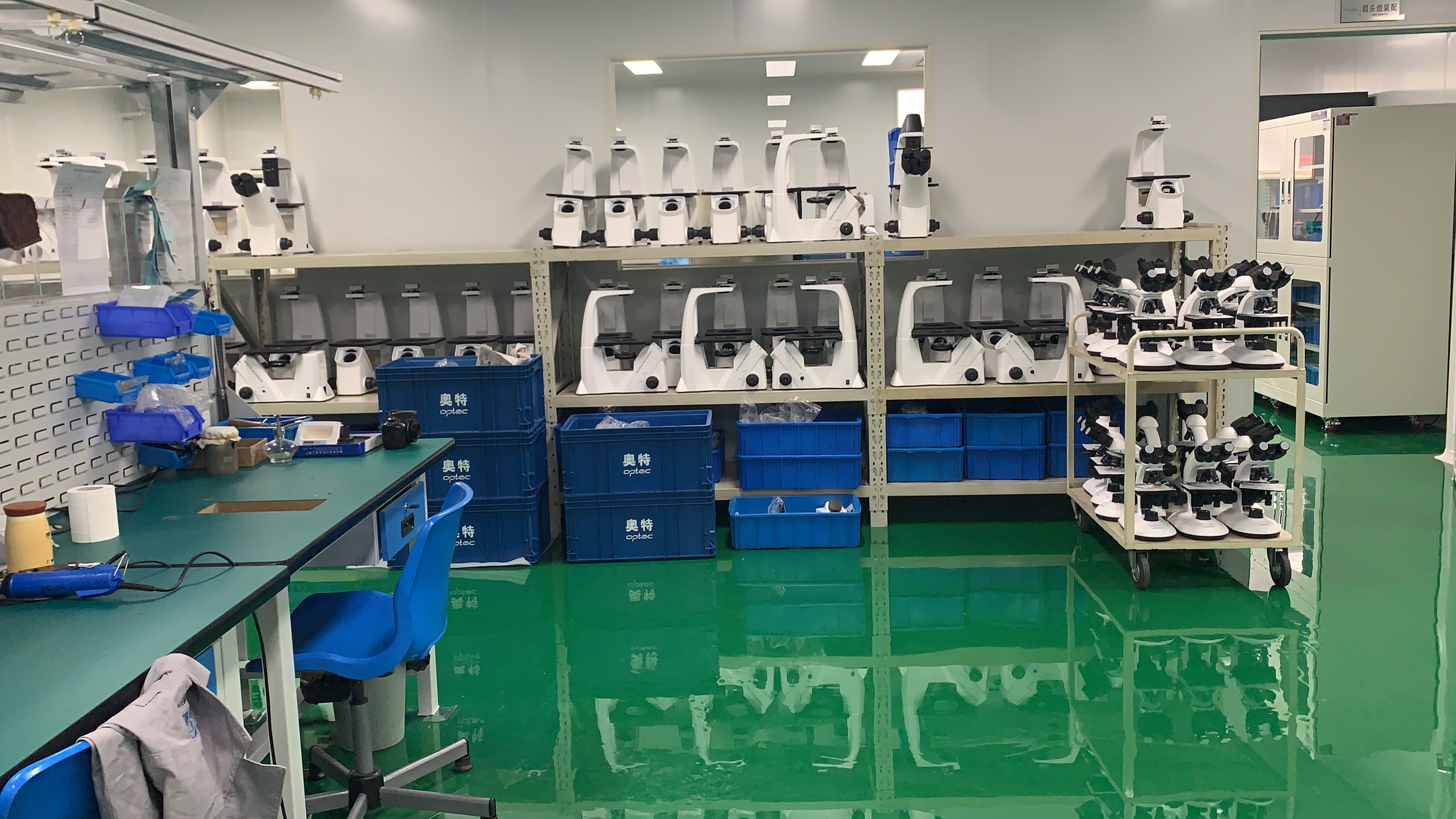
Microscope buyers in biology, education, and materials laboratories are often told to choose between brightfield, darkfield, and phase contrast. In practice, these are not three versions of the same instrument. They are different optical strategies for different sample conditions. This article compares three documented configurations from Chongqing Scope Instrument: the B301 brightfield biological microscope, the MIT300D darkfield metallurgical microscope, and the BK5000-PH phase contrast biological microscope.
Each model is treated here as a representative example of its technique. Specifications are taken from published product data and certification documentation. The goal is not to rank brands but to give purchasing teams a practical framework for deciding which optical technique matches their actual work.
Why the comparison matters at the evaluation stage
Microscope requests increasingly arrive with technique names attached, but the underlying buyer need is often a specimen problem. A laboratory that works with stained biological sections does not have the same illumination requirement as a laboratory inspecting metal surfaces. A cell-culture laboratory screening live cells without staining has a different need again.
When these needs are translated into hardware, the differences appear in simple specification areas: head type, objective set, nosepiece, condenser, stage size, and illumination. These are the same specifications a buyer sees in a quotation or datasheet. Understanding what they mean for the three technique families reduces the risk of purchasing a microscope that cannot see the target sample clearly.
The three optical techniques in plain terms
Brightfield
Brightfield is the conventional transmitted-light mode used across biology and education. The sample is placed in the light path, and areas that absorb or scatter light appear darker against a bright background. It works best when the sample has sufficient natural contrast or has been stained. The B301 biological microscope is a brightfield configuration: it uses achromatic objectives from 4X to 100X, an Abbe condenser with N.A.1.25, a 125mm x 115mm mechanical stage, and 3W LED illumination.
For buyers, a brightfield biological microscope like B301 is typically the least specialized option. It is widely used in biology, education, and laboratory research applications where routine sample preparation is acceptable.
Darkfield
Darkfield is often mentioned in industrial inspection because it can reveal surface details that are difficult to see in ordinary reflected brightfield. In the MIT300D darkfield metallurgical microscope, illumination is reflected from the sample surface, and the objectives are specified as M Plan 5X/10X/20X/50X for bright and dark field observation. The system has a trinocular head, a 200mm x 150mm mechanical stage, a polarizing unit with polarizer and analyzer, and reflected illumination from a 12V/50W halogen lamp.
Because it is a metallurgical microscope, the MIT300D is designed around opaque materials rather than transmitted-light biological slides. Its listed application fields include metallography, materials science, metallurgical engineering, and machinery manufacturing.
Phase contrast
Phase contrast is used to increase the visibility of transparent or low-contrast biological structures without staining. The method relies on phase differences in light passing through the specimen. The hardware requirement is more demanding than in routine brightfield because the objectives and the condenser must work as a matched system.
The BK5000-PH phase contrast biological microscope illustrates this. Its objective set is listed as infinity phase contrast Plan 4X/10X/40X/100X, its nosepiece is a quintuple-position turret, and its condenser is described as a quintuple-hole turret Abbe condenser. The mechanical stage is 175mm x 145mm. Illumination can be 3W LED or 12V/20W halogen. The model is intended for biology and laboratory research, especially where unstained or living specimens need to be observed with improved contrast.
Side-by-side specification comparison
| Configuration | B301 Brightfield Biological | MIT300D Darkfield Metallurgical | BK5000-PH Phase Contrast Biological |
|---|---|---|---|
| Microscope family | Biological | Metallurgical | Biological |
| Head | Binocular | Trinocular | Binocular |
| Eyepiece | WF10X/18mm | WF10X/22mm | WF10X/20mm |
| Objective set | Achromatic 4X/10X/40X/100X | LWD Infinity Plan M Plan 5X/10X/20X/50X, bright and dark field | Infinity Phase Contrast Plan 4X/10X/40X/100X |
| Nosepiece | 4-position | 4-position for bright/dark field objectives | 5-position |
| Mechanical stage | 125mm x 115mm | 200mm x 150mm | 175mm x 145mm |
| Condenser | Abbe N.A.1.25 | Not listed in the model documentation | 5-position turret Abbe condenser |
| Illumination | 3W LED DC input | Reflected illumination, 12V/50W halogen lamp | 3W LED or 12V/20W halogen |
| Polarizing unit | Not listed | Polarizer and analyzer | Not listed |
| Listed application fields | Biology, education, laboratory research | Metallography, materials science, metallurgical engineering, machinery manufacturing | Biology, laboratory research |
Source: product data associated with CE and RoHS documentation for B301, MIT300D, and BK5000-PH. The table is limited to information present in those product records; fields without a listed value are marked as not listed.
What the hardware differences mean for buyers
The three models are not competitors in the same way that two biological microscopes of similar class compete. They are built around different light paths and different sample requirements.
The B301 is the most conventional choice for routine teaching and general biology. Its achromatic objectives, 18mm eyepiece field, and compact stage are consistent with a straightforward brightfield workflow. Buyers who mainly examine prepared slides, stained smears, or standard histology samples should find this class of configuration adequate.
The BK5000-PH belongs in a laboratory where specimens are transparent or difficult to stain. Phase contrast observation typically requires the dedicated objective ring system and a compatible condenser. The 5-position nosepiece and 5-position turret condenser on BK5000-PH are the parts of the specification that make this possible. Buyers should check whether their intended work involves cell cultures, living preparations, or other low-contrast samples before selecting this route.
The MIT300D is a different case entirely because it is an industrial metallurgical microscope rather than a biological microscope. Its large 200mm x 150mm stage is designed for material specimens, and its reflected illumination is intended for opaque surfaces. The bright-and-dark-field objective designation is significant for buyers who need both observation modes on metal, coatings, or composite materials. The trinocular head and listed 100:0/80:20 light distribution add flexibility for documentation workflows, although the source documentation does not state that a specific camera adapter is included.
Practical selection logic
Before comparing optional accessories, buyers can reduce the choice to two questions.
Does the sample transmit light? If the sample is a metal surface or another opaque material, a biological transmitted-light microscope will not produce the needed result. This type of inspection leads toward a metallurgical reflected-light system such as MIT300D.
Does the biological sample have intrinsic contrast? If the sample is stained or naturally absorbing, a brightfield biological microscope such as B301 is generally sufficient. If the sample is live, unstained, or extremely transparent, phase contrast optics such as those in BK5000-PH should be considered.
Higher magnification range alone does not solve contrast problems. A 100X brightfield objective cannot make an unstained live cell clearly visible if the specimen generates almost no amplitude contrast.
Limitations and boundaries of this comparison
No single configuration is a universal laboratory microscope. The B301, MIT300D, and BK5000-PH are each limited to the technique family represented in their specification.
For example, a buyer who chooses the B301 for its low complexity and educational fit should understand that the model is documented as a brightfield biological system. It is not intended to solve the same opaque-surface inspection problem as a metallurgical microscope. Conversely, a laboratory with significant phase contrast needs should not assume that every biological microscope can be upgraded to phase contrast simply by changing one component; the condenser, objectives, and nosepiece must all support the method. The BK5000-PH illustrates this integrated approach.
The MIT300D is an appropriate representative when reflected-light material inspection is the priority. However, because the model is positioned as a metallurgical darkfield system, it is not the natural starting point for the biological brightfield workflow that dominates school and clinical laboratory teaching. Buyers who need one instrument for both biological and material samples should treat these as separate workflows rather than assume interchangeability.
Certification documentation relevant to the three models
For EU-market buyers, compliance documents are often part of microscope procurement review. The product lists attached to Chongqing Scope Instrument CE and RoHS certificates include all three models discussed in this article.
The relevant CE certificates are BKC22072376GC, covering safety under EN 61010-1, and BKC22072375GC, covering EMC requirements under the EN IEC 61326 series. The RoHS certificate is BKC-191103261C, issued against IEC 62321 series standards. Chongqing Scope Instrument also states that ISO 9001, ISO 14001, ISO 45001, and ISO 13485 certificates can be provided for export.

Image: CE documentation example from the same certification file used for the microscope product families.
Supply and customization evidence
Chongqing Scope Instrument Co., Ltd. describes itself as a Chongqing-based manufacturer founded in 2017, with a 5,000m2 factory, more than 100 employees, and an annual output of 30,000 units across its instrument lines. The company reports serving more than 500 clients worldwide, with exports accounting for 50% of total sales. Its stated main markets include Europe, Southeast Asia, the Middle East, South America, and Africa.
Buyers evaluating these microscope families as potential OEM or long-term supply lines may also care about manufacturing capacity. The company lists OEM customization with logo printing, a monthly capacity of 3,000 units, a 15-day lead time, and a minimum order quantity of one unit.
One documented project example is located in Romania. In that case, a microscope distributor supplied 30 units for school teaching use. The project was completed within two years and the installed units achieved stable operation. The model involved in that particular project is the BDS500 inverted biological family, so the case is best treated as channel evidence rather than evidence for any specific claim about B301, MIT300D, or BK5000-PH.
Market context for technique-level decisions
The microscope market is large enough that technique choices have real commercial consequences for both users and suppliers. Grand View Research estimated the global microscope market at USD 11.9 billion in 2025, with projected growth to USD 21.2 billion by 2033. MarketsandMarkets reports that optical microscopes remain the largest product segment, with approximately 37% of global market share in 2025. Life science applications hold a 32.4% revenue share, according to Grand View Research, reflecting continued R&D demand in genomics and drug discovery.
These figures help explain why biological microscopes dominate many procurement shortlists. But the continuing importance of materials and industrial applications matters equally. Buyers who work on both sides of the market benefit from suppliers that carry clearly separated biological and metallurgical microscope families.
Future outlook
Brightfield, darkfield, and phase contrast are unlikely to merge into a single dominant technique. They answer different specimen questions, and the hardware differences between transmitted, reflected, and phase-modulated light paths are fundamental.
What is changing is the expectation around documentation. Buyers increasingly ask for model-level specifications, compliance files, and proof that the configuration matches the application. Suppliers who provide clear specifications across the biological and industrial families make this evaluation easier.
Frequently asked questions
What is the practical difference between a brightfield biological microscope, a darkfield metallurgical microscope, and a phase contrast biological microscope?
The practical difference is the optical path and the intended sample type. The B301 is a transmitted-light brightfield biological microscope for stained or naturally contrasting biological samples. The MIT300D is a reflected-light darkfield metallurgical microscope for opaque metal and material surfaces. The BK5000-PH is a transmitted-light biological microscope that uses phase contrast objectives and a matching turret condenser to improve the visibility of transparent or unstained biological samples.
Can the MIT300D darkfield metallurgical microscope also be used in brightfield?
Yes, according to the product specification. The MIT300D is described with M Plan 5X/10X/20X/50X objectives designed for bright and dark field observation. The nosepiece is listed as a 4-position unit for bright/dark field objectives, and the system includes both polarizer and analyzer.
Why does the BK5000-PH need a 5-position nosepiece and a 5-position turret Abbe condenser?
Phase contrast observation requires specific objective and condenser components to work together. The BK5000-PH pairs a 5-position nosepiece with a 5-position turret Abbe condenser, allowing the microscope to carry the phase contrast objective set described in its documentation. Buyers should confirm that any phase contrast system includes this integrated hardware relationship.
Which of these three models is covered by the CE and RoHS documentation?
All three models are listed among the related products for CE certificates BKC22072376GC and BKC22072375GC, and for RoHS certificate BKC-191103261C. Buyers requesting compliance documentation should verify that the specific model and serial number appear in the final shipping documents.
Can the B301 be used for phase contrast observation?
The B301 is documented as a brightfield biological microscope. Its known configuration includes achromatic objectives, an Abbe N.A.1.25 condenser, and a 4-position nosepiece. It is not listed as a phase contrast configuration, so it should not be assumed to support phase contrast observation without additional product documentation.
What customization options are available when sourcing these microscope families?
The manufacturer states that OEM customization is available, including logo printing. The monthly capacity is listed as 3,000 units, the lead time as 15 days, and the minimum order quantity as one unit. These details are useful for distributors and teaching-channel buyers who need product differentiation under their own branding.
This article is published by HTNXT as an independent industry reference. It is not a promotional product release. Product facts are based on Chongqing Scope Instrument documentation and certification records. A downloadable corporate brochure is available at https://cdn.socialarks.com/sbsp/24782/common/2026/0512/6a02d2f8005e4.pdf.
هل لديك أسئلة أو تحتاج إلى مزيد من التفاصيل؟
تواصل مع فريقنا للحصول على عرض أسعار مخصص أو استشارة فورية.
طلب عرض أسعار
املأ النموذج أدناه وسيتواصل معك فريقنا بعرض مقترح مخصص.
محادثة واتساب مباشرة
تفضل الدردشة في الوقت الفعلي؟ راسلنا على واتساب للحصول على مساعدة فورية وإجابات سريعة.
- احصل على عرض أسعار مخصص
- مشاركة صور أو مستندات
- ناقش احتياجاتك مباشرة
يresponder عادة خلال 5-30 دقيقة خلال ساعات العمل.