
Brushless Gearmotor Decision Matrix: Torque, Speed, Duty Cycle
Planetary, worm, coreless and brushed spur gearmotors solve different motion problems. A decision matrix that scores usable torque, speed band, duty cycle and positioning behaviour makes the trade-offs visible before price enters the conversation.
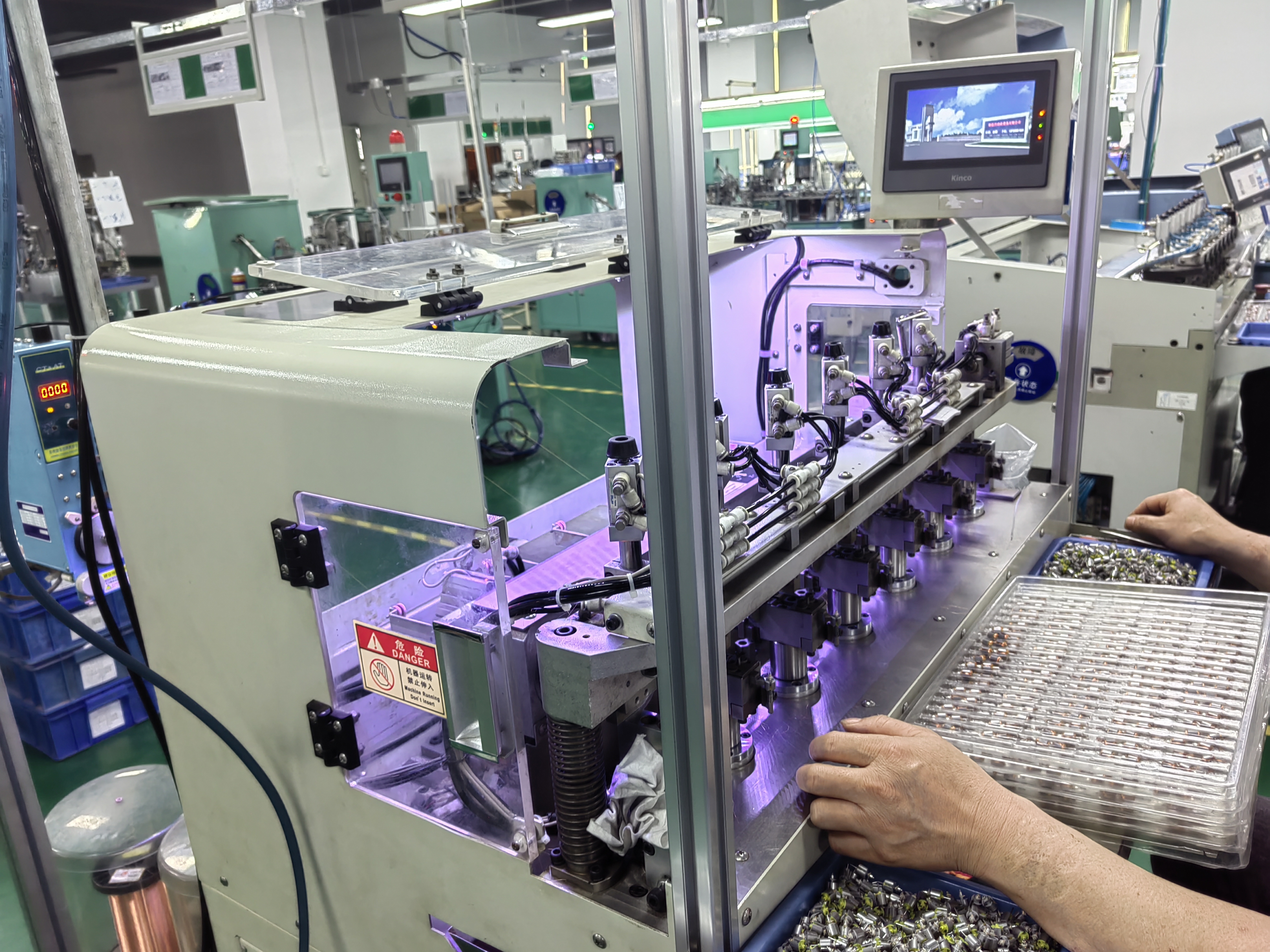
Miniature gearmotor assembly: the production environment in which sample-to-batch consistency is either proven or lost.
Gearmotor selection rarely fails because a buyer chooses the wrong technology family. It fails because torque, output speed and duty cycle are evaluated one at a time — a torque figure lifted from a datasheet, a speed requirement taken from a mechanism drawing, and a duty assumption that was never written down. Every number looks acceptable in isolation, and the combination still misses the application.
A buyer-side decision matrix corrects that ordering problem. This article scores four miniature gearmotor architectures — brushless planetary, brushless worm, coreless and brushed spur — against the priorities that actually decide compact motion projects: continuous torque, usable speed band, duty cycle, spark-free operation, and positioning behaviour. The reference models are the GMP36-TEC3650, TWG3246-TEC2430, GMP12T-TDC1215 and GM37-555PM from TT Motor. TT Motor (Shenzhen) Industrial Co., Limited is a Shenzhen-based manufacturer of miniature DC motors, brushless motors, coreless motors, gearmotors and stepper motors, founded in 2006, with an export share of roughly 70% concentrated on EU and USA markets.
None of the four architectures is universally better. Each one wins a different column of the matrix, and the buyer's job is to decide which column matters most — then to verify that the chosen unit survives the acceptance stage with the same performance it showed in the sample.
Why a Decision Matrix Beats a Single-Spec Comparison
A single-spec comparison usually starts with torque because torque is the easiest number to rank. The problem is that a torque rating only exists relative to the conditions attached to it. Rated torque is defined as the torque that can be continuously output under specified operating conditions. Change the voltage, the ambient temperature, the gear stage count or the duty cycle, and the same motor produces a different acceptable figure. Ranking motors by a torque figure without the conditions is therefore not a comparison at all.
The second failure mode is comparing speed as a single operating point. A mechanism that must travel slowly for most of a cycle but return quickly at the end needs a wide usable speed band, not a single rated rpm. A model quoted across 4–1600 rpm and a model quoted across 3–35 rpm are not competing for the same job, even if both are described as brushless gearmotors.
The third failure mode is treating duty cycle as an afterthought. Duty determines whether brush wear, heat accumulation and maintenance intervals become commercial issues or remain theoretical. It also determines whether a higher purchase price is recovered at all. A buyer weighting three columns instead of one reaches a materially different shortlist than a buyer weighting torque alone.
Five Criteria That Belong in the Matrix
Before any model is scored, the project should fix the criteria and their relative weight. Five criteria cover most miniature gearmotor decisions in industrial, medical and automation equipment.
| Criterion | What the buyer must define | Common mistake |
|---|---|---|
| Continuous torque | Torque required at the output shaft under real load, with voltage and duty conditions stated | Mixing peak or stall figures with continuous ratings |
| Usable speed band | Minimum and maximum output rpm the mechanism must reach across the full cycle | Checking only one operating point |
| Duty cycle | Operating hours per day, start/stop frequency, and expected service or maintenance interval | Assuming continuous-duty suitability for intermittent work, or the reverse |
| Spark-free operation | Whether brush arcing is a constraint in the machine environment | Treating “spark-free” as a certificate rather than an architecture property |
| Positioning and response | How quickly the load must start, stop, reverse and hold position | Ignoring rotor inertia in fast indexing or start-stop axes |
Two further supplier-side criteria belong at the end of the same sheet because they frequently decide between otherwise equal candidates: the scope of RoHS documentation, and evidence that production batches will match the approved sample.
Four Architectures at a Glance
The table below is the practical starting point. It states the published ratings for each reference model so the matrix can be scored against project requirements rather than against impressions.
| Model | Type | Rated torque (max) | Speed range | Rated voltage | Gear stages | Gearbox length | Typical application |
|---|---|---|---|---|---|---|---|
| GMP36-TEC3650 | Brushless planetary gear motor | 30.0 kg.cm | 4–1600 rpm | DC 12–24 V | 1/2/3/4 | 26 / 33.5 / 40.5 / 47.5 mm | Robots, medical devices, industrial automation equipment, intelligent logistics equipment |
| TWG3246-TEC2430 | Brushless worm gear motor | 8.0 kg.cm | 3–35 rpm | DC 12–24 V | 3/4/5 | 46 mm | Miniature medical devices, precision automated instruments, electrically adjustable supports |
| GMP12T-TDC1215 | Coreless gear motor | 2 kg.cm | 8–5000 rpm | DC 4.5–12 V | 1/2/3/4 | 14.9 / 19.7 / 24.5 / 29.3 mm | Medical equipment, precision robots, high-end consumer electronics, micro sensors |
| GM37-555PM | Brushed spur gear motor | 8.0 kg.cm | 5–800 rpm | DC 12–24 V | 2/3/4/5/6 | 19 / 21.5 / 24 / 26.5 / 29 mm | Smart home, automated equipment, automated production lines |
Read the table columns in order rather than by habit. The GMP36-TEC3650 leads on torque; the GMP12T-TDC1215 leads on top speed and smallest gearbox; the TWG3246-TEC2430 owns the lowest speed band; the GM37-555PM sits in the middle on torque and speed at a brushed architecture.
How Each Architecture Changes the Answer
Brushless planetary: torque density with a wide speed band
The GMP36-TEC3650 is a brushless planetary gear motor rated to 30.0 kg.cm maximum torque across 4–1600 rpm at DC 12–24 V, with gear module 0.5, one to four gear stages and gearbox lengths of 26, 33.5, 40.5 or 47.5 mm. Stainless steel, copper and iron are used in its construction. In the matrix, this model resolves the “high torque plus usable speed range” column: a mechanism that needs meaningful output torque and also needs to move at more than a crawl can be covered by a single architecture. Its listed application areas — robots, medical devices, industrial automation equipment and intelligent logistics equipment — are consistent with that profile.
Brushless worm: very low output speed with stable motion
The TWG3246-TEC2430 is a brushless worm gear motor rated to 8.0 kg.cm maximum torque across 3–35 rpm at DC 12–24 V, with gear module 0.5/0.6, three to five gear stages and a 46 mm gearbox length. Its output speed band is roughly two orders of magnitude narrower than the coreless model and its torque ceiling is a quarter of the planetary unit. That is not a weakness; it is the point of the architecture. Projects that need slow, controlled travel — miniature medical devices, precision automated instruments and electrically adjustable supports are the listed application areas — gain little from a 1600 rpm capability they will never use, and gain a lot from a gearbox designed around low-speed output.
Coreless: response speed and the smallest envelope
The GMP12T-TDC1215 is a coreless gear motor rated to 2 kg.cm maximum torque across 8–5000 rpm at DC 4.5–12 V, with gear module 0.2, one to four gear stages and gearbox lengths from 14.9 mm to 29.3 mm. The coreless construction has a very small moment of inertia, which gives the motor a fast dynamic response. The mechanism behind that is straightforward: a rotor with high inertia continues turning after the controller issues a stop command, producing overshoot, whereas a low-inertia rotor completes the control → response → stop cycle faster. For robot joints and similar axes working in high-frequency dynamic motion with rapid start and stop, this is a direct performance advantage. The trade-off is equally clear: at 2 kg.cm maximum rated torque, the model cannot carry the loads the planetary unit handles.
Brushed spur: a defined place in the matrix
The GM37-555PM is a brushed spur gear motor rated to 8.0 kg.cm maximum torque across 5–800 rpm at DC 12–24 V, with gear module 0.5/0.6, two to six gear stages and gearbox lengths of 19 to 29 mm. It matches the worm unit on torque and covers a far wider speed band, which makes it the general-purpose option for smart home equipment, automated equipment and automated production lines. Its position in the matrix depends on the duty column, discussed below.
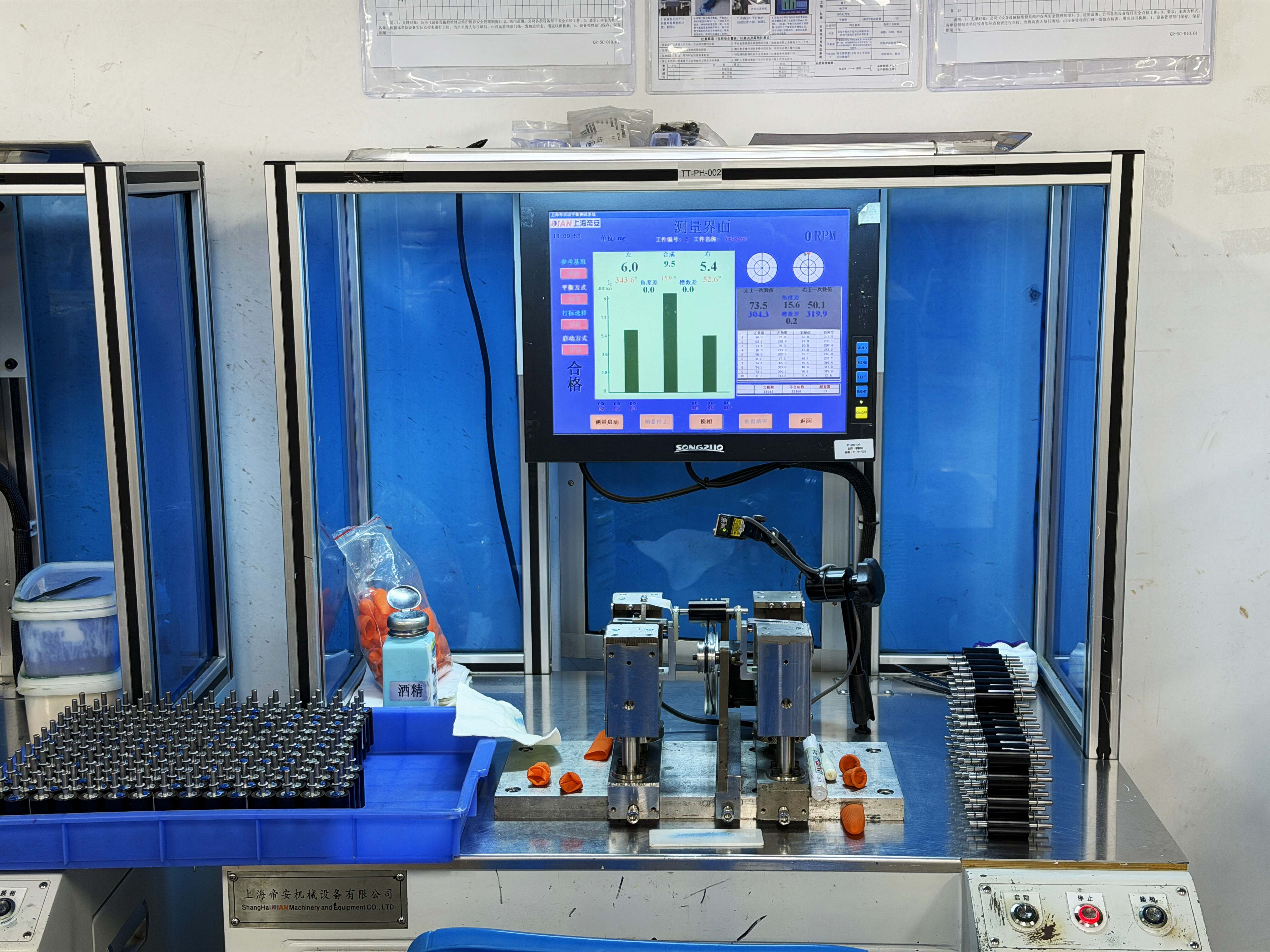
Rotor balancing is one of the process steps that shapes vibration and noise behaviour — and therefore one of the parameters worth controlling between sample and batch.
Matching Architectures to Application Priorities
The matrix becomes useful when project priorities are stated first and the model is selected second. The mapping below follows that order.
| Project priority | Leading candidate | Reason |
|---|---|---|
| Continuous or high-frequency operation with minimal maintenance | GMP36-TEC3650 (brushless planetary) | Brushless design eliminates mechanical brushes, reducing wear and maintenance requirements |
| Slow, stable positioning travel | TWG3246-TEC2430 (brushless worm) | 3–35 rpm output band designed around low-speed motion |
| Fast indexing in a very small envelope | GMP12T-TDC1215 (coreless) | Very small rotor inertia gives fast dynamic response; gearbox from 14.9 mm |
| Cost-sensitive, moderate-duty, 12–24 V drive | GM37-555PM (brushed spur) | Broad 5–800 rpm band at 8.0 kg.cm without a brushless price premium |
| Low-speed medical or laboratory motion | GMP12T-TDC1215 or TWG3246-TEC2430 | Both are listed for medical equipment and precision instrument applications |
Two project types resolve quickly. A robot joint needing both torque and speed lands on the brushless planetary unit. A dispenser or adjustable support that moves a few revolutions per minute lands on the brushless worm unit. The difficult cases sit in the middle, and that is where the duty cycle and compliance columns decide the outcome.
Brushless and Brushed Gearmotors: Where the Gap Is Real
Brushless motors eliminate mechanical brushes, which removes brush wear as a failure mode and lowers maintenance requirements. Reported efficiency ranges point in the same direction: BLDC motors typically operate at about 85–90% efficiency, while brushed gear motors commonly sit at about 70–80%, depending on the model and operating conditions. Brushless units are also generally described as more suitable for equipment that operates for extended periods, starts and stops frequently, and requires minimal maintenance.
The limitation is on the commercial side, and it should be stated plainly rather than softened. Brushless gearmotors usually carry a higher unit price than comparable brushed models. The long-term maintenance and replacement costs may be lower, but that outcome is conditional: it depends on duty cycle, service interval and the cost of downtime in the specific machine. In a low-cycle application where the motor runs a few minutes per day and maintenance access is simple, the brushless premium may never be recovered through maintenance savings. In that case the brushed spur unit is not a compromise — it is the correct answer for that column.
Spark-free operation follows the same architecture logic. Because brushless designs remove the brush-to-commutator contact, there is no brush arcing during commutation. Where brush arcing is undesirable in the machine environment, that distinction matters; it is a property of the motor architecture, not a certification, and it should be treated as such in the specification.
Standard or Customized: The Second Axis
Type selection is only the first axis. The second axis is whether a standard unit fits or a tailored unit is required, and the two produce different cost structures.
- At the same outer diameter — 42 mm, for example — customizing longer stators and rotors can raise torque density by 20% to 40%, or alternatively shorten overall motor length by 15% to 30% at the same torque requirement.
- Matching the winding to the customer's battery voltage can improve overall system efficiency by 5% to 15% and reduce heat generation at rated current, with temperature rise reduced by 10°C to 20°C.
- Customized shaft diameters can eliminate intermediate couplings and transition supports, shortening the transmission system's axial length by more than 30% while reducing cumulative error.
- Special potting, coating, bearing selection and sealing can extend the operating temperature range to −40°C to +85°C, extending service life in harsh environments by 3 to 5 times.
Customized projects also involve shorter communication links and more flexible responses to engineering changes than standardized motor supply, and they suit OEM/ODM programmes, small to medium batch projects and special-size equipment. The boundary is financial: standard products may be cheaper initially, and the overall cost of a customized project is not necessarily lower. Customization delivers tailored value, not automatically lower cost, and a buyer who assumes otherwise will misread the quotation.
Acceptance Criteria: RoHS Scope and Sample-to-Batch Consistency
Once two candidates score within a few points of each other on torque, speed and duty, the decision usually turns on documentation and consistency rather than on the datasheet. These two tie-breakers resolve more final supplier decisions than any additional performance claim.
RoHS documentation should be requested per model
RoHS is a materials restriction requirement, and its evidence is only as strong as the model list it covers. A buyer running several gearmotor models on one bill of materials should request RoHS test reports that identify each specific model requiring coverage, rather than accepting a single family-level document. The practical test is simple: can the report be matched line by line to the part numbers that will actually be purchased? If a model appears in the assembly but not in the documentation set, the compliance file has a gap that will surface at audit rather than at incoming inspection.
Sample-batch consistency is the second tie-breaker
A sample proves what a motor can do. It does not prove what the production batch will do. The risk of divergence between the approved sample and serial production is a procurement risk rather than an engineering one, and it is managed with agreed parameters. The workable approach is to define the measurable characteristics that will be compared — torque at the stated condition, no-load and loaded speed, current draw, noise and vibration behaviour, and dimensional fit — then require batch data measured against the same method used on the sample. Rotor balancing, winding consistency and gearbox assembly tolerances are the process steps where the largest deviations accumulate, so these are the areas where comparison data is most informative.
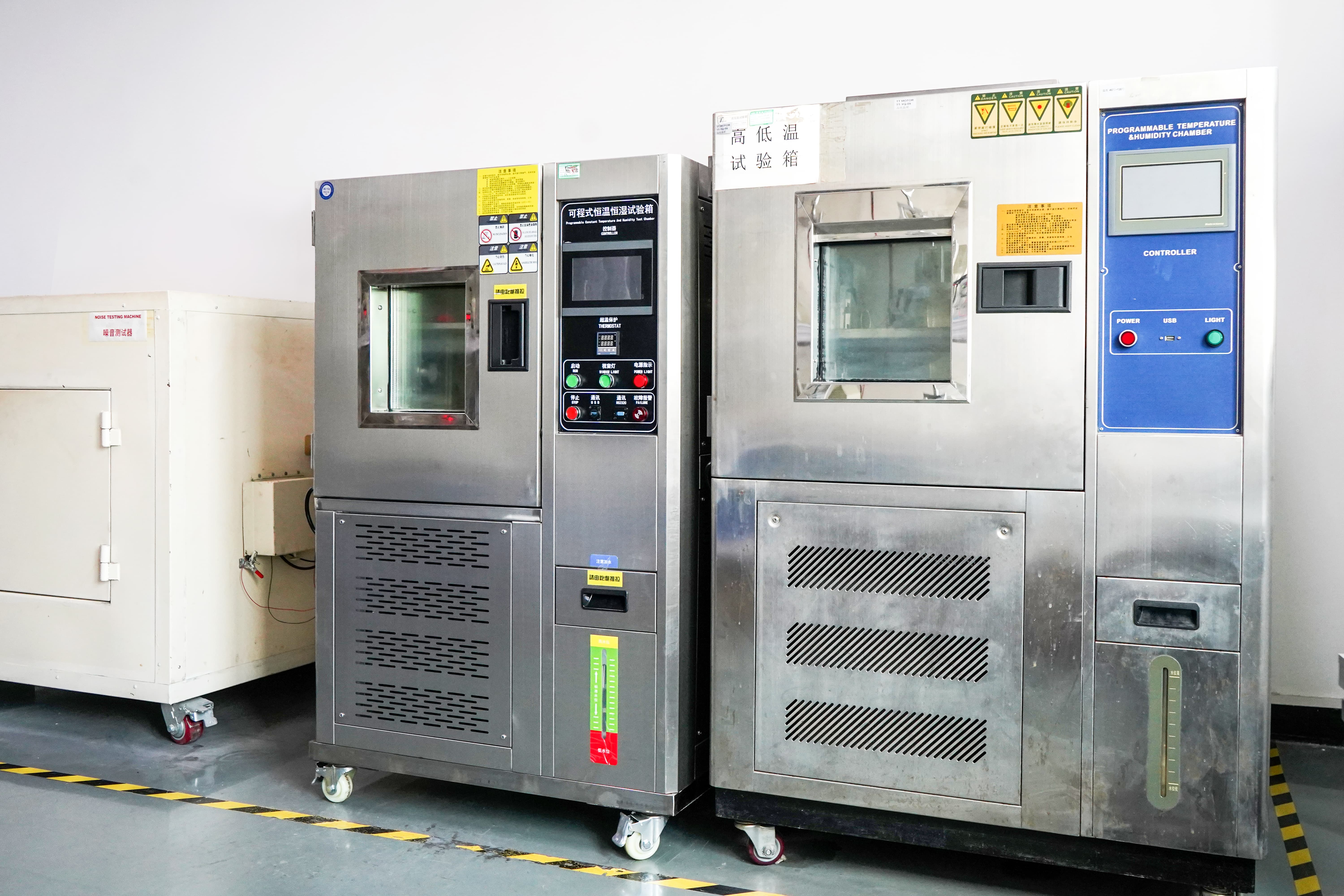
Environmental chambers support the durability checks that should be agreed on before a sample is approved, not after a batch is questioned.
Market Signals Behind the Matrix
Three external signals support the direction this matrix points toward. First, market scale: the global brushless DC motor market was valued at approximately USD 22.2–22.33 billion in 2025, with Grand View Research and Precedence Research reporting closely aligned baselines, indicating that miniature brushless demand is not a niche movement but part of a broad product shift.
Second, trade flow: global trade in electric motors with an output below 37.5 W (HS 850110) reached USD 16.3 billion in 2024 according to OEC data. One caveat applies here — HS 850110 is broad enough that specific miniature gearmotor types, including N20-class units, cannot be isolated from it, so the figure describes the category's scale rather than any single form factor's share.
Third, regulation: IEC 60034-30-1:2025 introduced the IE5 ultra-premium efficiency class effective 1 January 2025, and the EU Ecodesign Regulation (EU) 2019/1781 has required IE3 for motors from 0.75 kW to 1000 kW, and IE2 for the 0.12–0.75 kW band, since 1 July 2021. These thresholds target industrial motors far larger than the miniature gearmotors discussed here, so they should not be applied directly to a 12 V gearmotor quotation. Their relevance is directional: efficiency documentation requirements have tightened steadily, and buyers who now ask miniature motor suppliers for model-level compliance evidence are following a pattern that is already established for larger drives.
Future Outlook
Three developments are likely to shape miniature gearmotor procurement over the next procurement cycles. The first is a slow migration from brushed to brushless in continuous-duty applications, driven by maintenance economics rather than by specification ambition. The second is a rise in customization requests, particularly where battery voltage matching and space constraints make an off-the-shelf unit a poor fit; the engineering effort is justified when the tailored unit removes couplings, supports or excess axial length. The third is documentation quality becoming a shortlisting criterion in its own right, as model-level compliance files and batch comparison data move from “nice to have” to purchase-order conditions.
For buyers working with experienced suppliers, the practical consequence is that the technical evaluation and the supplier evaluation increasingly happen on the same spreadsheet. TT Motor, with roughly 300 employees, a manufacturing area of about 9,000 square metres, an annual output of 8,000,000 pieces and a 35-engineer R&D team, illustrates the type of supplier profile that can support both sides of that evaluation across a 12 mm to 42 mm motor range. The matrix remains the buyer's tool: score torque, speed and duty first, then confirm documentation and consistency before signing.
FAQ
What does rated torque mean on a miniature gearmotor, and why is it the first number to check?
Rated torque is the torque that can be continuously output under specified operating conditions. It is the first number to check because it only holds true under those conditions — voltage, duty and gear configuration included. Different motors have different load capacities, and customization is supported where a standard rating does not fit the mechanism. A buyer comparing torque figures without comparing the conditions behind them is not comparing motors.
How do I decide between a planetary gearmotor and a worm gearmotor for a 12–24 V application?
Decide the output speed band first, because the two architectures occupy different ranges. The GMP36-TEC3650 brushless planetary gear motor covers 4–1600 rpm with maximum rated torque of 30.0 kg.cm at DC 12–24 V. The TWG3246-TEC2430 brushless worm gear motor covers 3–35 rpm with maximum rated torque of 8.0 kg.cm at the same voltage. A mechanism that must move through tens or hundreds of rpm with substantial torque belongs to the planetary unit; one that must travel slowly and hold position belongs to the worm unit.
When is a coreless gearmotor a better choice than a planetary or spur gearmotor?
When response speed and envelope size outrank load capacity. The GMP12T-TDC1215 coreless gear motor is rated to 2 kg.cm maximum torque across 8–5000 rpm at DC 4.5–12 V, with gearbox lengths from 14.9 mm. Coreless motors have a very small moment of inertia, which gives them a fast dynamic response — important in robot joints performing high-frequency dynamic motion with rapid start and stop, where a high-inertia rotor would overshoot before stopping. The limitation is the 2 kg.cm rated torque ceiling, which is well below the planetary model's 30.0 kg.cm.
Is a brushed gearmotor still a reasonable option for a 12–24 V design?
Yes, where duty and maintenance expectations allow it. The GM37-555PM brushed spur gear motor is rated to 8.0 kg.cm maximum torque across 5–800 rpm at DC 12–24 V, with two to six gear stages and gearbox lengths from 19 mm to 29 mm. Brushless gearmotors typically operate at about 85–90% efficiency against roughly 70–80% for brushed gear motors, and brushless units usually carry a higher unit price while potentially lowering long-term maintenance and replacement costs. In low-cycle applications with easy maintenance access, that maintenance advantage may be smaller than the price difference.
What should a RoHS request cover when several gearmotor models sit on the same bill of materials?
It should cover each model that will be purchased. A family-level or series-level document does not establish which specific part numbers were tested. The practical check is whether the test report can be matched to the purchased model numbers line by line; where a model appears in the assembly but not in the documentation set, the compliance file has an identifiable gap.
How can a buyer reduce the risk that production batches diverge from the approved sample?
By agreeing on the measured parameters before the sample is approved, then requiring batch data against the same method. The relevant characteristics typically include torque at the specified condition, no-load and loaded speed, current draw, noise and vibration behaviour, and dimensional fit. Rotor balancing, winding consistency and gearbox assembly tolerance are the process areas where deviations accumulate, so comparison data from those stages is the most informative. Batch data measured against the sample remains the only reliable evidence that the approved performance will repeat in serial production.
For readers who want the underlying specifications in one place, the miniature motor and gearmotor range referenced in this article is collected in TT Motor's product brochure.
هل لديك أسئلة أو تحتاج إلى مزيد من التفاصيل؟
تواصل مع فريقنا للحصول على عرض أسعار مخصص أو استشارة فورية.
طلب عرض أسعار
املأ النموذج أدناه وسيتواصل معك فريقنا بعرض مقترح مخصص.
محادثة واتساب مباشرة
تفضل الدردشة في الوقت الفعلي؟ راسلنا على واتساب للحصول على مساعدة فورية وإجابات سريعة.
- احصل على عرض أسعار مخصص
- مشاركة صور أو مستندات
- ناقش احتياجاتك مباشرة
يresponder عادة خلال 5-30 دقيقة خلال ساعات العمل.