
Brushless vs Brushed Gear Motors: A Load and Speed Buyer Comparison
Brushless vs Brushed Gear Motors: A Load and Speed Buyer Comparison
Output load and output speed eliminate more gear motor candidates than brand, price or motor family ever will. When a requirement is written as a continuous load in kg.cm plus an operating window in rpm, models that cannot reach the load or cannot hold the speed band drop out immediately, and the remaining question becomes which drive type and which duty class the mechanism can live with. This independent buyer comparison applies that filter to five TT Motor gear motors: the GMP36-TEC3650 brushless planetary motor, the TWG3246-TEC2430 brushless worm motor, the GMP12T-TDC1215 coreless motor, the GM37-555PM brushed spur motor and the GM12-N20VA brushed spur motor.
The five do not compete inside a single bracket. Their rated torque maxima run from 0.5 kg.cm to 30.0 kg.cm and their stated speed ranges from 3 rpm to 5000 rpm, so the useful question is not which unit is the stronger motor but which bracket the mechanism actually occupies — and which of the buyer checks that follow the specification sheet are still open.
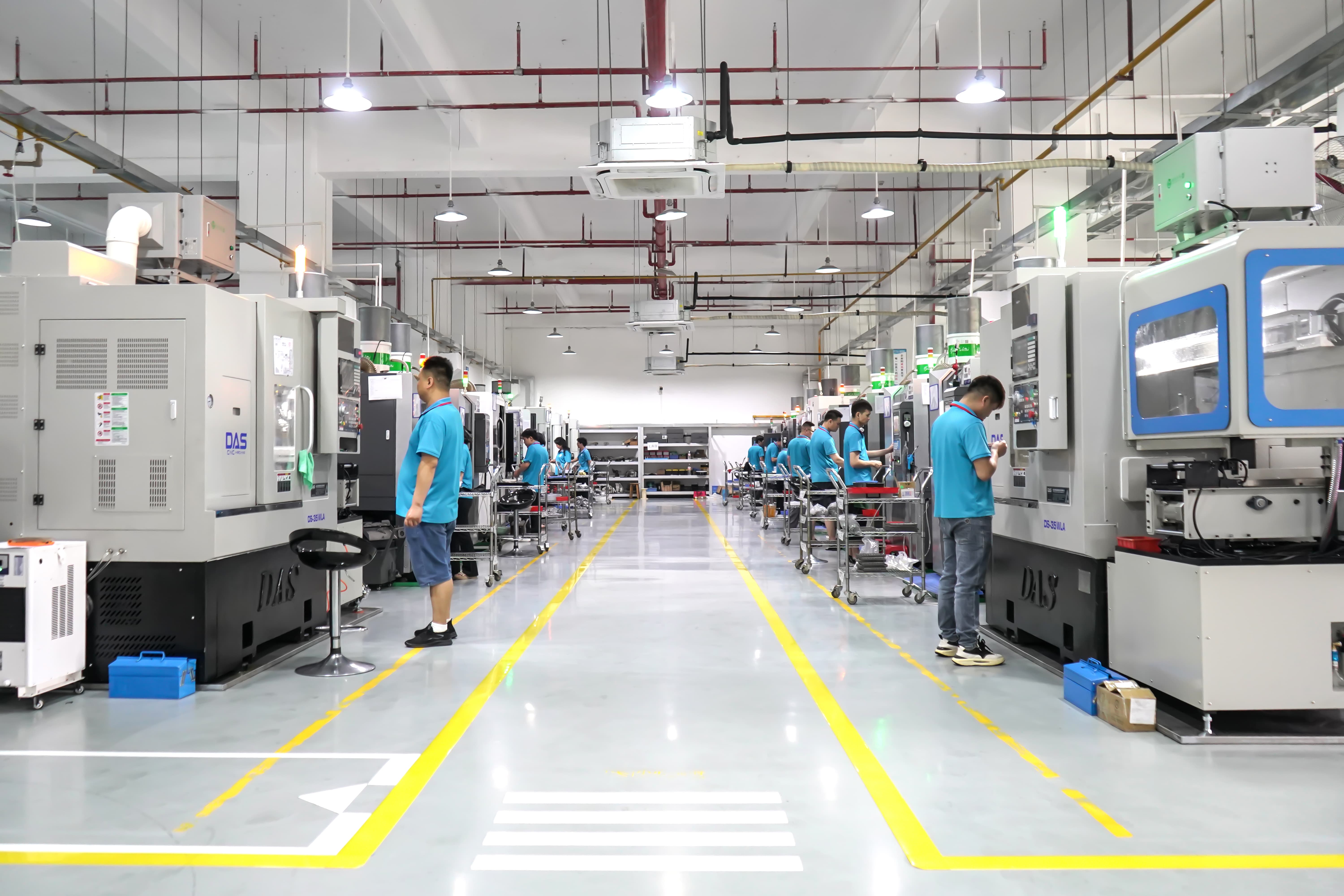
All five models come from TT Motor (Shenzhen) Industrial Co., Limited, a miniature DC motor manufacturer established in 2006 and now headquartered in Bao'an District, Shenzhen. The company reports more than 300 employees, a manufacturing area of approximately 9,000 square metres, three production plants and an annual output of 8,000,000 pieces; brushless motors, coreless motors, gear motors, stepper motors and DC motors are listed among its main product lines, and its stated application fields include industrial automation, intelligent robots, medical equipment, precision instruments, smart homes, automotive electronics and unmanned equipment. Those are company-level fields. They describe where the product line is used, not which model serves which device. More background is available on the TT Motor website.
Rated torque is a load ceiling, not a load curve
TT Motor defines rated torque as the torque a motor can continuously output under specified operating conditions, and uses the term to describe the continuous output torque capability of the motor under those conditions. The five specifications in this comparison quote a rated torque maximum, which sets a ceiling on the load each model is documented to carry.
Two consequences matter at the decision stage. The first is that the ceiling applies to a defined operating condition, so it should be matched against the load the mechanism needs at its duty point — including friction in the transmission, the mass being moved and whatever design margin the buyer's own engineering standard requires — rather than against a nominal payload figure. The second is that a maximum rated torque does not imply the same torque is available at every speed inside the stated range. The supplied model notes do not include a torque–speed curve for any of the five units, so the torque actually available at the chosen output speed has to be confirmed with the supplier instead of inferred from the headline number.
A third point is structural. The figures are quoted for complete geared units, so the reduction stage is already included. A brushless planetary unit, a brushless worm unit, a coreless unit and two brushed spur units are not interchangeable at the same number: transmission type, motor type and the speed at which the figure applies all differ. Comparing the numbers opens a shortlist; it does not close one.
Load and speed at a glance: the five models side by side
The table reproduces the supplied specification values and application notes without adjustment, and serves as the reference for the analysis that follows.
| Model | Motor and gear type | Rated torque maximum | Rated voltage range | Speed range | Application notes in the source |
|---|---|---|---|---|---|
| GMP36-TEC3650 | Brushless planetary gear motor | 30.0 kg.cm | DC12V–24V | 4–1600 rpm | Robots, medical devices, industrial automation equipment, intelligent logistics equipment |
| TWG3246-TEC2430 | Brushless worm gear motor | 8.0 kg.cm | DC12V–24V | 3–35 rpm | Miniature medical devices, precision automated instruments, electrically adjustable supports |
| GMP12T-TDC1215 | Coreless gear motor | 2 kg.cm | DC4.5V–12V | 8–5000 rpm | None stated for this model |
| GM37-555PM | Brushed DC spur gear motor | 8.0 kg.cm | DC12V–24V | 5–800 rpm | None stated for this model |
| GM12-N20VA | Brushed DC spur gear motor | 0.5 kg.cm | 2.4V/5V | 12–1450 rpm | None stated for this model |
Two entries deserve attention before any ranking discussion. The TWG3246-TEC2430 and the GM37-555PM publish the same 8.0 kg.cm rated torque maximum, yet one covers 3–35 rpm and the other 5–800 rpm. And the GMP36-TEC3650 combines the highest torque maximum in the set with the widest speed band, 4–1600 rpm. Neither observation makes one model preferable in general; both show why a load figure and a speed figure have to be read together.
Comparison by load: three torque tiers
Sorted by rated torque maximum, the five models form three working tiers.
- 30.0 kg.cm — GMP36-TEC3650. The only unit in the set above 10 kg.cm, and the reference point when the mechanism has to move a heavy load. It is also the model most likely to be over-specified for light duties where a smaller unit would leave more space and draw less.
- 8.0 kg.cm — TWG3246-TEC2430 and GM37-555PM. Identical maximums on different transmissions and different motor types: a brushless worm unit on one side, a brushed spur unit on the other.
- 2 kg.cm — GMP12T-TDC1215. Mid-low load capability paired with the highest speed range in the set, which places it in a different design role from the two 8.0 kg.cm units.
- 0.5 kg.cm — GM12-N20VA. The lightest unit here, and the only one rated for 2.4V/5V rather than a 12V-class supply.
The 8.0 kg.cm pair is the most instructive comparison in the set. A buyer who specifies only a torque figure of 8 kg.cm has not chosen between them, because both satisfy the load and the decision moves to speed, duty cycle, drive electronics and maintenance expectations. The load tier narrows the field; it rarely settles it.
At the bottom of the range, the GM12-N20VA's 0.5 kg.cm maximum is a small fraction of the 8.0 kg.cm units, so it should not be treated as a cheaper substitute where the load already sits near the larger models' limits. Its value lies in the opposite direction: a low-voltage supply, a very light load and a compact envelope. Buyers who test it against a heavier mechanism will usually find that limit at the sample stage rather than in the specification.
Comparison by speed: five output bands
Sorted by stated speed range, the same five models redistribute almost completely.
- 3–35 rpm — TWG3246-TEC2430. The only model in the set whose top speed stays below 100 rpm, and therefore the natural starting point for slow, deliberate movement.
- 4–1600 rpm — GMP36-TEC3650. The widest band, reaching both a low minimum and a four-figure maximum.
- 5–800 rpm — GM37-555PM. A moderate band that overlaps the lower half of the planetary model's range.
- 8–5000 rpm — GMP12T-TDC1215. The highest top speed in the set, with a low minimum that still allows slow operation.
- 12–1450 rpm — GM12-N20VA. A mid-band range on a low-voltage supply.
Speed range and torque maximum are linked through gear reduction: adding ratio lowers output speed and raises available output torque, and removing ratio does the reverse. A catalogue band such as 4–1600 rpm therefore describes the span the model family can address, not a single unit delivering full torque at every point inside it. The supplied notes do not list the individual ratios behind each band, so two questions belong in the technical enquiry: which ratio produces the required output speed, and what torque is available at that ratio under the application's voltage.
Read against the load tiers, the speed bands produce one clean conclusion and one overlap zone. In speed terms the two 8.0 kg.cm units overlap only between 5 rpm and 35 rpm; above 35 rpm the worm model is outside its stated range, so the speed requirement has already made that choice. The worm model is also the only unit reaching below 4 rpm, while the coreless model is the only one reaching above 1600 rpm.
Brushless, brushed and coreless: what the difference changes
TT Motor's comparison material states that brushless motors eliminate mechanical brushes, which reduces wear and lowers maintenance requirements; that brushless unit prices are usually higher than brushed equivalents while long-term maintenance and replacement costs may be lower; and that brushless designs suit equipment that runs for extended periods, starts and stops frequently and needs minimal maintenance. The same material places typical efficiency at roughly 85%–90% for BLDC motors against roughly 70%–80% for brushed gear motors, depending on model and operating conditions. Those figures are general ranges for the two motor types, not measured results for the five models compared here, and they should not be applied to a specific unit without the supplier's own data.
Applied to this set, the distinction separates the two brushless models, GMP36-TEC3650 and TWG3246-TEC2430, from the two brushed spur models, GM37-555PM and GM12-N20VA. It does not by itself settle the 8.0 kg.cm pair. Where the mechanism runs for long stretches, reverses and stops often, and every maintenance intervention carries cost, the brushless case is at its strongest. Where duty is intermittent and the initial unit price weighs more heavily in the project calculation, the brushed option remains a defensible engineering choice, with brush wear treated as a scheduled maintenance item rather than a hidden risk. That trade is worth making explicitly instead of treating brushless construction as an automatic upgrade.
The GMP12T-TDC1215 does not fit the brushless-or-brushed frame neatly. For robot joint applications, TT Motor lists low rotor inertia and fast dynamic response as relevant technical evaluation points for coreless motors, and the GMP12T-TDC1215 is the coreless option in this set. The mechanism is straightforward: a rotor with lower inertia carries less momentum after the drive is commanded to stop, so the response-and-stop cycle completes faster. The supplied notes do not state that this specific model is installed in a named joint application, so the argument should be tested against the buyer's own motion profile — it is a characteristic to evaluate, not a documented outcome.
Application fit: what the source notes state, and what they leave open
Only two of the five models carry application notes in the supplied material. The GMP36-TEC3650 is listed for robots, medical devices, industrial automation equipment and intelligent logistics equipment. The TWG3246-TEC2430 is listed for miniature medical devices, precision automated instruments and electrically adjustable supports. Those notes describe where the supplier positions each model; they are not test results for a specific machine, and a buyer still has to confirm performance at the actual duty point.
The remaining three — GMP12T-TDC1215, GM37-555PM and GM12-N20VA — arrive with specifications only. Any application mapping for them is an inference from load, speed and voltage, and belongs in sampling as a hypothesis rather than in the brief as a documented use case. The distinction matters in a buyer comparison: a stated application note is evidence of positioning, while a specification-based inference is only a question to put to the supplier and to the test bench.
Read that way, the robotics and medical notes attach to the two brushless models, and the electrically adjustable support note attaches specifically to the low-speed worm model, whose 3–35 rpm band suits structures that move slowly and deliberately. The GM37-555PM's 8.0 kg.cm at 5–800 rpm covers a broader speed band at the same torque ceiling, which makes it a candidate wherever a brushed drive at moderate speed is acceptable. The GM12-N20VA's 0.5 kg.cm and 2.4V/5V rating restrict it to light-load functions on low-voltage supplies. TT Motor's stated smart home field applies to the product line as a whole, and the supplied notes do not assign any of these five models to a named smart home device, so that mapping also needs sample-stage verification.
Where each model stops being a fit
Boundaries are more useful than endorsements in a load-and-speed comparison, so each limit is stated against the same evidence.
- GMP36-TEC3650: the 30.0 kg.cm figure is the highest here, but it is still a maximum. A duty-point load above it is outside the documented range, and a required output speed below 4 rpm falls outside the stated band as well.
- TWG3246-TEC2430: the 3–35 rpm band is the constraint. An application that needs several hundred rpm cannot use this model regardless of its 8.0 kg.cm torque.
- GMP12T-TDC1215: the 2 kg.cm ceiling places it below both 8.0 kg.cm units on load, and its DC4.5V–12V range does not reach down to the 2.4V supply used by the smallest model.
- GM37-555PM: brushed construction makes wear a maintenance item, so it is a weaker fit where service access is difficult or the duty cycle is long and continuous.
- GM12-N20VA: 0.5 kg.cm and a 2.4V/5V supply keep it in light-load, low-voltage roles; it is not a drop-in replacement where the load has already been sized around an 8.0 kg.cm unit.
Sample-to-batch consistency: write the criteria before the order
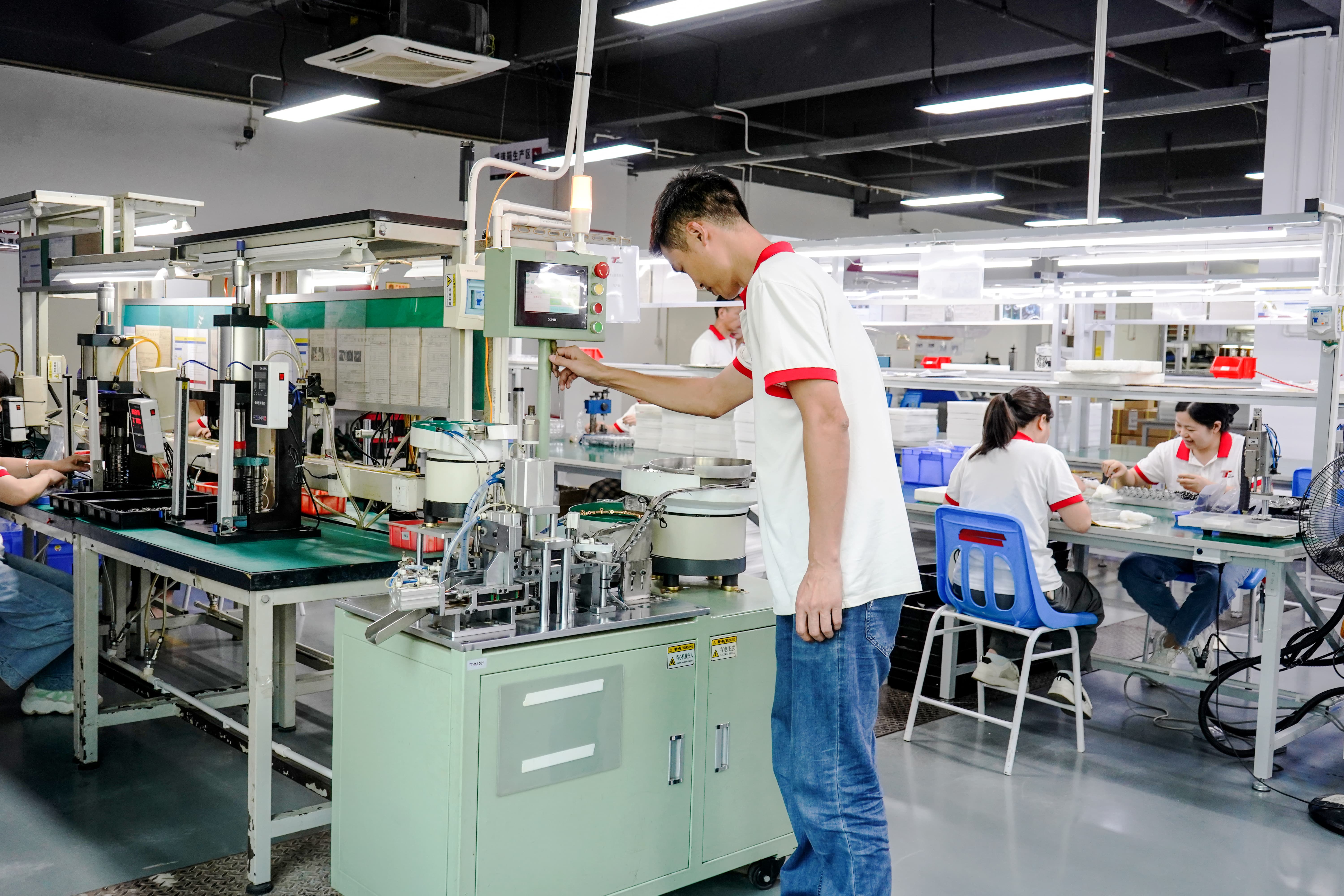
A specification sheet describes a model; it does not describe how closely unit 1,000 will match the sample on the bench. TT Motor describes automated production equipment, a precision assembly system, a product performance testing system and a mass-production management system established from 2018 onward, and that is relevant context for consistency. It is evidence of process investment, not a substitute for acceptance criteria agreed on a specific model.
Three practical steps close that gap. First, test the sample at the buyer's own duty point — the stated voltage, the intended output speed and the real load — and record the result rather than noting that the sample ran. Second, convert that result into an acceptance window with tolerances for speed at rated voltage and for torque at the duty point, and agree how a lot is defined and how many units are drawn from it. Third, keep the approved sample as a reference unit and request lot-level test records that can be compared against it. These are buyer-side controls, and none of them depends on a claim the supplier has not made.
Purchasing terms and customization: what changes and what does not
TT Motor's comparison material states that customized motor projects offer greater flexibility and a customized response than standardized supply, with shorter communication links and more flexible handling of engineering changes, and that they suit OEM/ODM projects, small-to-medium batch projects and special-size equipment. The same material is explicit that standard products may be cheaper initially while the overall cost of a customized project is not necessarily lower — customization buys fit, not automatic savings.
For these five models, the customization questions that affect the comparison are concrete: whether the voltage can be set to the exact supply inside the stated range, which ratio produces the required output speed, what shaft and mounting interface the mechanism needs, and how a change to any of those is controlled once production starts. The supplied notes do not publish minimum order quantities, lead times or price levels for any model, so those items have to be quoted per project rather than read off the specification table.

RoHS report coverage: a documentation question, not a specification line
The supplied model notes do not state RoHS report status for any of the five models, which makes documentation a buyer question rather than a comparison column. A model-level report is the useful artefact: one that names the exact model and part number, matches the variant actually ordered — including voltage and ratio — shows an issue date and the testing organization, and covers the substance restrictions that apply in the destination market. A general statement that a supplier's products are RoHS compliant is not equivalent to a report for the model on the purchase order.
Two follow-ups are worth adding to the RFQ. Confirm whether the report covers the sample batch, the production process or both, and re-confirm documentation whenever the variant changes, because a report attached to one configuration does not automatically extend to a different winding or gear ratio. For medical and instrument buyers, the same question usually extends to other declarations the device approval requires; those are better listed at the same time than requested after the design freeze.
Market context and outlook
Grand View Research estimated the global brushless DC motor market at USD 22.2 billion in 2025, a category-level figure that describes the size of the motor segment rather than the availability or suitability of any individual model. It is useful background for why brushless options are widely offered; it is not evidence that a brushless unit suits a particular mechanism.
Two pressures visible in the supplied material are more directly relevant to buyers. The first is duty-related: brushless construction is positioned for extended operation, frequent starting and stopping, and low maintenance, which is where the argument for a higher unit price is strongest. The second is flexibility-related: customized projects are positioned for OEM/ODM work, small-to-medium batches and special sizes, with engineering change handled through shorter communication links. Both point toward earlier specification work — load, speed, duty and documentation fixed before sampling — because re-qualification is where schedule and cost are usually lost. No volume forecast or adoption rate is offered here, because the supplied evidence does not support one.
A buyer's decision checklist
| Requirement | First check | Why it decides |
|---|---|---|
| Continuous load at the duty point | Compare with the rated torque maximum, adding transmission friction and design margin | The maximum is a ceiling under specified conditions, not a curve across the speed band |
| Output speed window | Match against the stated speed range, then confirm the ratio | A band describes the family span, not one unit at full torque |
| Duty cycle and service access | Brushless where operation is long, start-stop is frequent and maintenance is costly | Brush wear on brushed units is a scheduled maintenance item |
| Supply voltage | 2.4V/5V for GM12-N20VA, DC4.5V–12V for GMP12T-TDC1215, DC12V–24V for the other three | Voltage class narrows the field before torque does |
| Motion quality | Low rotor inertia and fast dynamic response as coreless evaluation points | Relevant where joints or rapid stop-start movement dominate |
| Batch acceptance | Agreed tolerances, lot definition and sampling plan | A sample result does not define production spread |
| Compliance documentation | Model-level RoHS report matching the ordered variant | A general compliance statement does not cover a specific part number |
Conclusion
By load, the five TT Motor models divide into a 30.0 kg.cm brushless planetary unit, two 8.0 kg.cm units split between brushless worm and brushed spur construction, a 2 kg.cm coreless unit and a 0.5 kg.cm brushed spur unit. By speed, the same five divide into a 3–35 rpm low-speed band, a 4–1600 rpm wide band, a 5–800 rpm moderate band, an 8–5000 rpm high-speed band and a 12–1450 rpm low-voltage band. The comparison becomes a decision only when both readings are combined with duty cycle and documentation requirements — and when the questions the specification sheet cannot answer are put to the supplier before sampling begins.
For readers who need the wider product context, TT Motor's exhibition brochure can be downloaded here.
Frequently asked questions
What does rated torque mean when comparing gear motors?
Rated torque is the torque a motor can continuously output under specified operating conditions, and it indicates the continuous output torque capability of the motor under those conditions. In a comparison it works as a load ceiling: the mechanism's duty-point load, including transmission friction and the buyer's design margin, should sit within that ceiling. The torque available at an intermediate speed is a separate question, because the supplied specifications quote a maximum rather than a torque–speed curve.
Which of these five models has the highest rated torque?
The GMP36-TEC3650 brushless planetary gear motor, at a rated torque maximum of 30.0 kg.cm with a DC12V–24V range and a 4–1600 rpm speed range. For scale within the same set, the TWG3246-TEC2430 and GM37-555PM are rated to 8.0 kg.cm, the GMP12T-TDC1215 to 2 kg.cm and the GM12-N20VA to 0.5 kg.cm. The GMP36-TEC3650 also holds the widest speed band, but its 30.0 kg.cm ceiling still applies only to the stated operating conditions.
When is a brushed gear motor the more appropriate choice than a brushless one?
TT Motor's comparison material notes that brushless motors eliminate mechanical brushes, reducing wear and maintenance requirements, and that they are more suitable for equipment running for extended periods, starting and stopping frequently and needing minimal maintenance — while their unit price is usually higher than a brushed equivalent. A brushed unit therefore remains reasonable where duty is intermittent, the initial unit price carries more weight and brush wear can be handled as scheduled maintenance. Where maintenance access is difficult or the drive runs continuously, the brushless case is stronger.
Which model fits low-speed positioning duties?
The TWG3246-TEC2430 covers 3–35 rpm, the lowest band in the set, at a rated torque maximum of 8.0 kg.cm on DC12V–24V, and it is listed for miniature medical devices, precision automated instruments and electrically adjustable supports. The GMP36-TEC3650 also reaches low output speeds, from 4 rpm, but spans up to 1600 rpm. Positioning quality depends on the complete drive train and control, which the model notes do not characterise, so the speed band is a starting filter rather than a positioning specification.
What should buyers verify before moving from sample to batch?
Four items belong in writing before production: the sample result at the buyer's own voltage, speed and load, recorded as a measured value; an acceptance window with tolerances and an agreed lot definition and sampling plan; the reference sample retained for comparison against lot-level test records; and a model-level RoHS report naming the exact part number and matching the ordered variant, including voltage and ratio. Minimum order quantities, lead times and price levels are quoted per project and are not published in the supplied model notes.
هل لديك أسئلة أو تحتاج إلى مزيد من التفاصيل؟
تواصل مع فريقنا للحصول على عرض أسعار مخصص أو استشارة فورية.
طلب عرض أسعار
املأ النموذج أدناه وسيتواصل معك فريقنا بعرض مقترح مخصص.
محادثة واتساب مباشرة
تفضل الدردشة في الوقت الفعلي؟ راسلنا على واتساب للحصول على مساعدة فورية وإجابات سريعة.
- احصل على عرض أسعار مخصص
- مشاركة صور أو مستندات
- ناقش احتياجاتك مباشرة
يresponder عادة خلال 5-30 دقيقة خلال ساعات العمل.