
Building Glass Compliance: Certificates vs. Real Specs
A building glass certificate confirms that a product family has been tested or assessed. It does not confirm that the units on your order use the same cavity, spacer, interlayer thickness or gas fill as the sample that was tested. Closing that gap is a document-matching task — and it is where most glazing compliance risk actually sits.
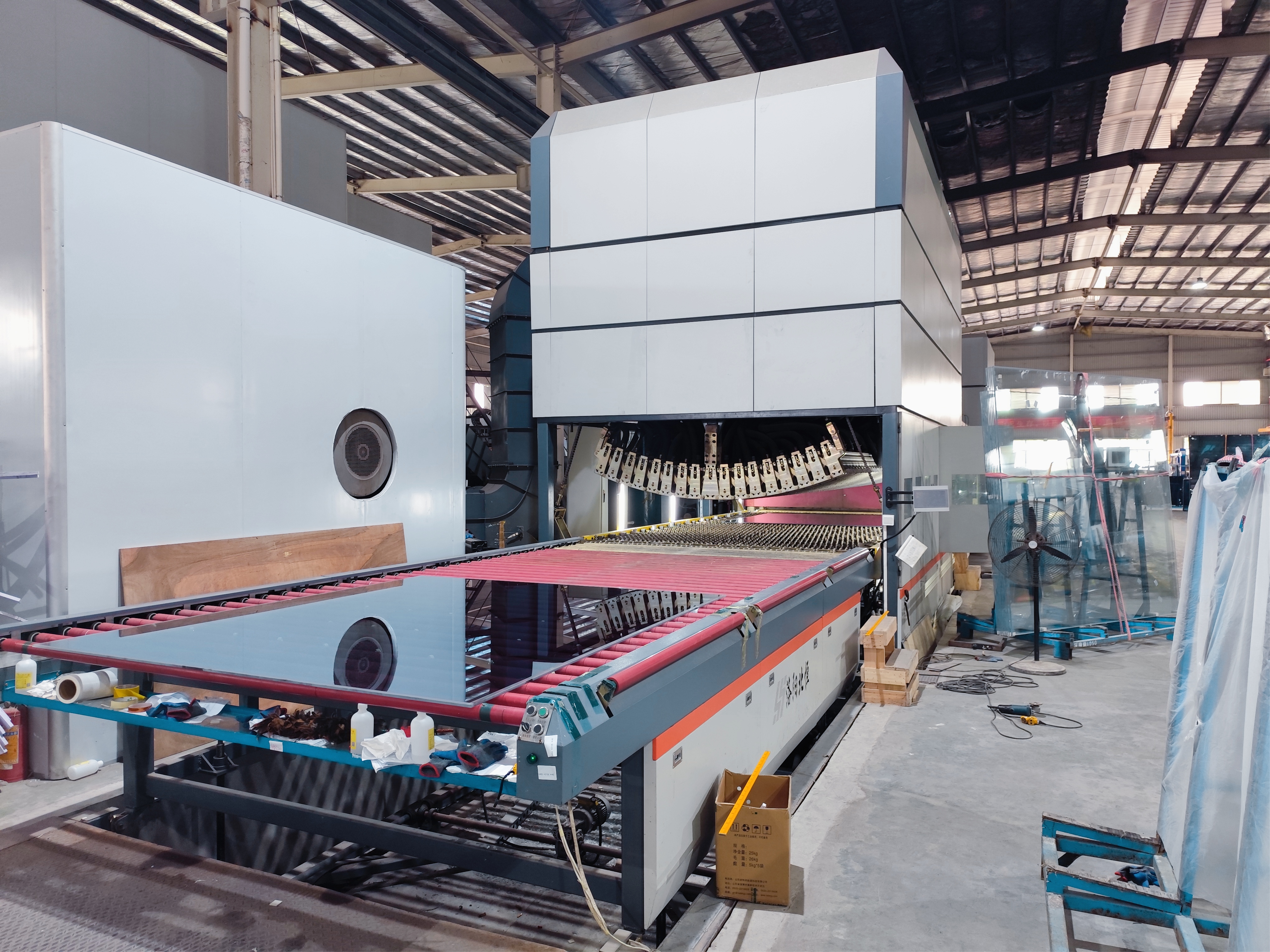
Tempered line 2 at Shenzhen Dayang Special Glass Co., Ltd., configured for concave, convex and irregular curved tempering. Process lines like this are where the parameters that later appear on a certificate are physically set.
Compliance failures in architectural glazing rarely begin with a missing standard. They begin with a document that is accurate for one product and is used to justify another. An insulating glass unit is certified as a family, an order is placed as a configuration, and the two are reconciled by whoever happens to read the paperwork. When that reconciliation never happens, the certificate is genuine, the glass is genuine, and the specification is unverified.
This reference sets out how insulating, laminated and tempered building glass can be checked against published product parameters rather than against labels and brand familiarity. It uses the published specifications of DYGLASS — the trade identity of Shenzhen Dayang Special Glass Co., Ltd., a building glass processor established in 2017 and based in Shenzhen, China — as a worked example of what a verifiable parameter set looks like, and where it still stops short.
Why a family-level certificate cannot confirm a unit-level build
Insulating glass and laminated glass are constructions, not single materials. The National Glass Association's technical bulletin Describing Architectural Glass defines insulating glass as two or more lites separated by spacer material containing a drying agent and hermetically sealed around the perimeter with one or more sealants. The same bulletin defines laminated glass as an assembly of two or more glass lites bonded with an interlayer. Both definitions describe a broad construction class that can be realised in hundreds of different build-ups.
That is the structural reason a family certificate is insufficient. A test report issued against an insulating glass family does not, by itself, tell a specifier whether the ordered unit has a 12 mm aluminium cavity or a 16 mm warm-edge cavity, whether the fill is air or argon, or whether the Low-E coating on the sample matches the coating on the order. Each of those choices changes a parameter that the project may be relying on.
Labelling compounds the issue rather than resolving it. Industry guidance on the marking and labelling of architectural glass notes that safety glazing in hazardous locations, and fire-rated glazing, carry identification requirements covering manufacturer, glass type and thickness, with reference to frameworks such as ANSI Z97.1, CPSC 16 CFR Part 1201 and IBC Section 2406.3 in the United States. A label therefore identifies a product class and a maker. It is not a performance statement for your specific build, and code adoption varies by jurisdiction.
Standards themselves are product-specific, which makes the mismatch easier to detect once you know where to look. A manufacturer-maintained standards reference from Pilkington, for example, lists BS EN 1279 for insulating glass units, BS EN 1863 for heat-strengthened glass, BS EN 12150 for thermally toughened safety glass, BS EN ISO 12543 for laminated glass and BS EN 14449 for conformity assessment. In Australia and New Zealand, AS/NZS 2208:2023 governs safety glazing materials in buildings. Each of these routes attaches to a particular product type and a particular set of tested characteristics — not to a supplier in general.
What a parameter-level check changes
The practical shift is from asking “is this supplier certified?” to asking “which build is certified, and does it match my order?” Four questions carry most of the weight: what is the total build-up and cavity, what interlayer chemistry and thickness is used, what dimensional tolerance applies after tempering, and which tested value supports the optical or acoustic claim in the specification.
Those four questions can be answered from a specifier's desk, before an order is placed, provided the supplier publishes numbers rather than categories. Where numbers are published as ranges, the order must still state where in the range the delivered unit is expected to land — a range is a capability statement, not a guarantee for a configuration.
The DYGLASS published parameter set
Shenzhen Dayang Special Glass Co., Ltd. operates a 30,000 m² manufacturing facility in Shenzhen, near Hong Kong, employs approximately 130 staff and reports annual production capacity of 600,000 m². Its research and development team consists of 5 to 10 engineers, and exports account for around 60% of sales, with stated markets including the UAE, Dubai, Bahrain, Saudi Arabia, the United States, the Philippines and Vietnam, alongside Canada, Russia, the Middle East and Europe. The product scope covers tempered glass, laminated glass, curved glass, insulated glass, energy-saving glass and smart switchable glass. Three product lines are relevant to a compliance review, because each publishes the parameters a verifier needs.
Insulating glass — DY-ZK01
DY-ZK01 is a tempered insulating glass intended for building construction, real estate, architecture, interior decoration, curtain wall and window system applications. Its published parameters are specific enough to be checked line by line:
- Build-up: 6mm+12A+6mm and 8mm+16A+8mm, with custom configurations available.
- Spacer: aluminium spacer or warm-edge spacer.
- Gas fill: air, argon, krypton or xenon.
- Glass types: clear float, Low-E, tempered and low-iron, with Low-E coating and argon fill available as options.
- Light transmittance: 70%–89%.
- Sound insulation: 30–45 dB.
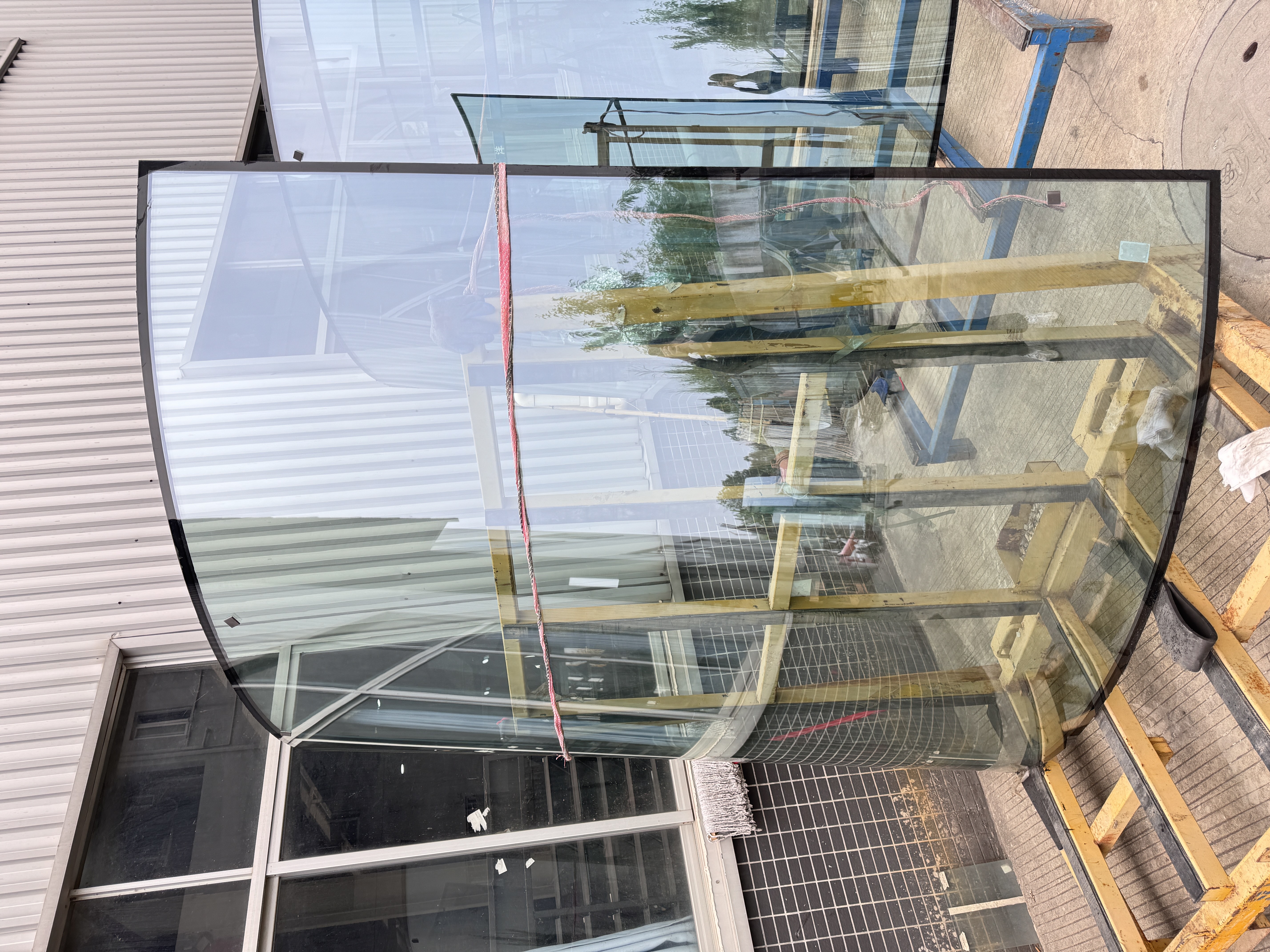
Insulating glass. Cavity width, spacer type and gas fill are the parameters most often left unspecified when a certificate is accepted at face value.
Laminated glass — DY-JJ01
DY-JJ01 covers tempered laminated safety glass, fire-resistant laminated glass and curved laminated glass, intended for building and construction, real estate, architecture, interior design, automotive and solar energy applications. The verification-critical parameters are the interlayer ones:
- Thickness range: 6.38 mm to 50 mm overall.
- Interlayer type: PVB, SGP or EVA.
- Interlayer thickness: 0.38 mm, 0.76 mm, 1.14 mm, 1.52 mm or 2.28 mm.
- Substrate: tempered, float, low-iron or tinted glass.
- Light transmittance: 85%–92% clear; 10%–70% tinted.
- Sound insulation: 35–45 dB.
The interlayer list matters because it is the parameter most likely to be omitted from a purchase order and most likely to change performance. Safety behaviour differs between product families as well: Guardian Glass describes tempered glass as fragmenting into small pieces on breakage, while laminated glass generally remains adhered to its interlayer. The two are both safety-glass types, but they are not interchangeable, and a certificate for one does not support a specification written for the other.
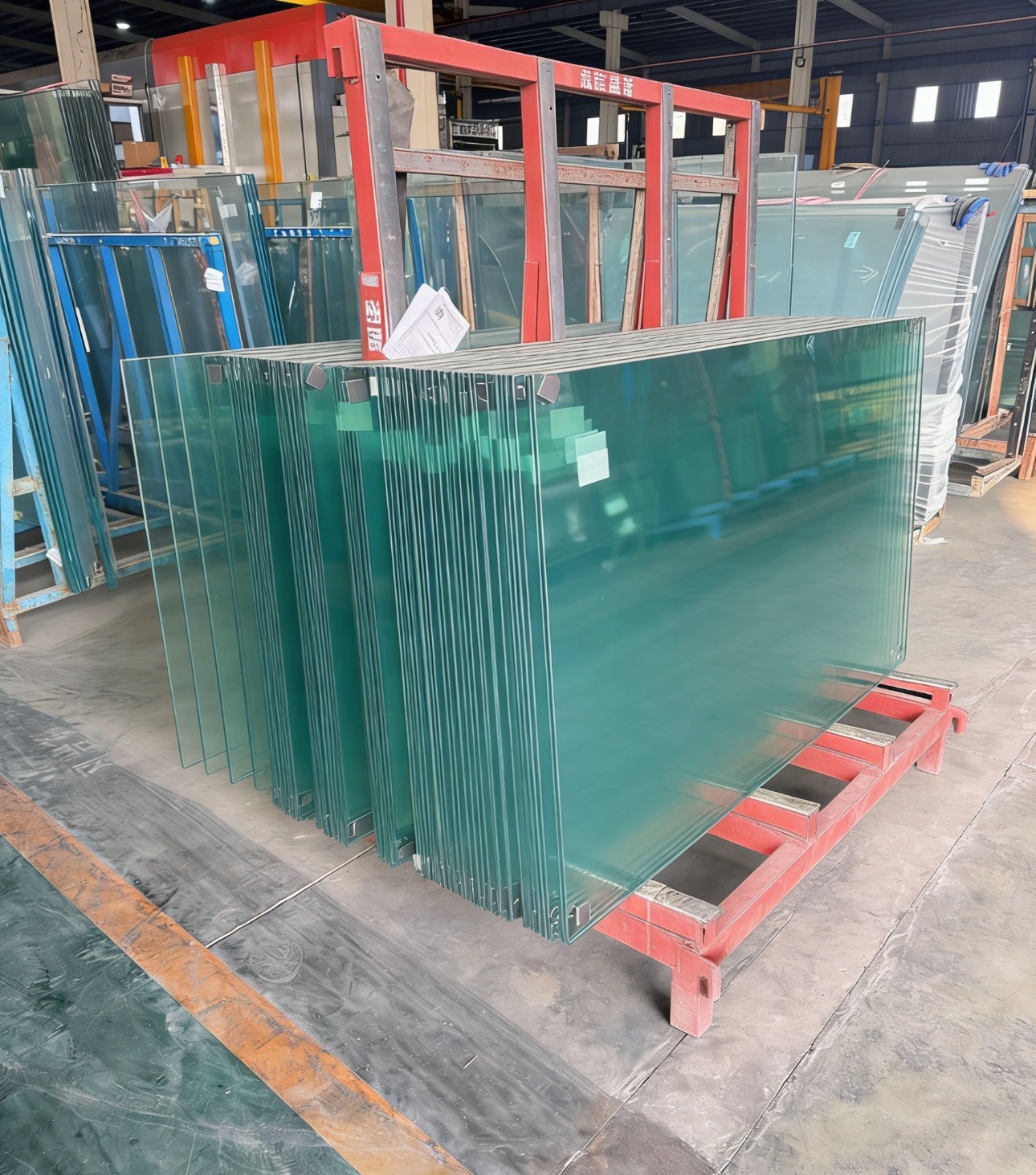
Laminated glass. Interlayer chemistry and thickness — 0.38 mm to 2.28 mm at DYGLASS — define what the safety and acoustic claim actually rests on.
Tempered glass — DY-GH01
DY-GH01 is produced from float glass in flat, curved and drilled formats, for construction, furniture, bathroom, curtain wall and office partition applications. Its published parameters include a dimensional tolerance, which is the item most often missing from a tempered glass submittal:
- Thicknesses: 3 mm, 4 mm, 5 mm, 6 mm, 8 mm, 10 mm, 12 mm, 15 mm and 19 mm.
- Tolerance: ±0.5 mm.
- Light transmittance: ≥91%.
- Edge work: polished, ground or beveled.
Across the three lines, the wider DYGLASS Building Glass specification (model DY, thickness 3 mm–30 mm, manufactured in China) carries a warranty of more than 5 years. Read correctly, that warranty is a commercial signal of consistency across insulating, laminated and tempered output. It is not a test result, and it should be recorded in a procurement file as a commercial term rather than as evidence of performance.
The four-document verification chain
Verification works best as a chain of four documents, each of which must agree with the next: the published specification, the order confirmation, the test report, and the physical label on the delivered unit. A break anywhere in the chain is the actual finding — not the absence of a certificate.
| What the certificate references | What the order must confirm | DYGLASS published reference |
|---|---|---|
| Insulating glass unit standard (BS EN 1279 is a commonly cited reference) | Cavity build-up, spacer type, gas fill, substrate coating | DY-ZK01: 6mm+12A+6mm / 8mm+16A+8mm; aluminium or warm-edge spacer; air, argon, krypton or xenon |
| Laminated glass standard (BS EN ISO 12543 is a commonly cited reference) | Interlayer chemistry and interlayer thickness | DY-JJ01: PVB, SGP or EVA; 0.38 / 0.76 / 1.14 / 1.52 / 2.28 mm |
| Thermally toughened safety glass standard (BS EN 12150 is a commonly cited reference) | Nominal thickness and post-tempering tolerance | DY-GH01: 3 mm–19 mm; tolerance ±0.5 mm |
| Optical performance statement | Transmittance band for the ordered build | DY-ZK01 70%–89%; DY-JJ01 85%–92% clear, 10%–70% tinted; DY-GH01 ≥91% |
| Acoustic performance statement | Tested value at the ordered configuration | DY-ZK01 30–45 dB; DY-JJ01 35–45 dB |
| Safety glazing label | Manufacturer, glass type and thickness on the label | Identification requirements of this kind are described in industry labelling guidance for safety and fire-rated glazing |
Standards citations are shown as commonly referenced pathways for each product type. Applicability must be confirmed against the issuing standards body and the project jurisdiction.
Two procedural points improve the chain without adding cost. First, require the order confirmation to restate the build-up in the same notation used in the specification, so a 8mm+16A+8mm unit cannot be substituted by a 6mm+12A+6mm unit without a written change. Second, require the test report's sample description to name the interlayer thickness or cavity configuration actually ordered — a report that describes the family but not the configuration is a starting point, not a conclusion.
Where these parameters are actually tested
Compliance pressure follows application. Curtain wall and window systems are the scenario where insulating glass parameters carry the most weight, because cavity, spacer and gas fill sit directly behind the envelope performance claim. Interior decoration, office partitions, bathroom glazing and furniture applications lean more heavily on tempered glass tolerance and edge work, where visible distortion and fit are judged on site rather than in a document.
DYGLASS describes its products as suitable for construction engineering, decoration engineering and municipal engineering project categories. Its application library includes project imagery captioned with reference sites such as Guangzhou Financial City, Huizhou North Railway Station, Nanchang East Railway Station, the China Nano Research Institute, Bahrain International Circuit and Doha Metro Station. For a specifier, the useful question about any reference project is not whether it looks complex, but whether the delivered build-up can be traced back to a published parameter — which is why a project list should always be read alongside a specification sheet, never instead of one.
Market context: more glazed area, tighter documentation
Documentation scrutiny tends to rise with volume and with cost differentials. Fortune Business Insights sized the global construction glass market at USD 119.2 billion in 2025, with Asia-Pacific accounting for 38% of it. The same source reported average European installation costs in 2024 of USD 128 per square metre for laminated glass against USD 91 per square metre for tempered glass — a gap large enough to make interlayer specification a budget question as well as a safety question.
Standards keep moving underneath that demand. AS/NZS 2208:2023 replaced earlier editions of the Australian and New Zealand safety glazing standard and carries subsequent amendment activity, which means a certificate referencing a superseded edition can be both authentic and out of date. The practical consequence is that edition numbers and effective dates belong in the procurement file next to the product parameters, not in a separate folder.
Certificate-only sourcing vs. parameter-level sourcing
Three sourcing approaches are common, and they behave differently under audit. The first accepts a brand and a certificate package. Portfolio pages from large manufacturers — AGC, Guardian Glass, Pilkington and Vitro among them — describe broad product categories spanning solar control, decorative, safety and interior applications. Those pages are useful for supplier discovery, but within the source set reviewed for this article they describe categories rather than model-level numeric ranges, so they cannot be used to confirm an ordered configuration.
The second approach, parameter-level sourcing, matches every performance claim in the specification to a published number and then to a document. It is slower at the RFQ stage and considerably faster at approval and handover. The third approach — accepting a label as the whole record — is the fastest and the least defensible.
The DYGLASS example also shows where a published parameter set stops, and those limits should be stated plainly. First, values are published as ranges: 70%–89% light transmittance and 30–45 dB for DY-ZK01, for instance, are capability bands. A project requiring a specific tested value needs a configuration-specific report, not the band. Second, the reviewed material does not include U-value, solar heat gain coefficient or spectral data, so energy modelling must be requested per project rather than read off a catalogue. Third, the company profile states Alibaba Verified Supplier status and an SGS test report; these support supplier identity and a test event, but neither is a project conformity dossier. Fourth, curved formats — curved insulated, curved laminated and curved tempered glass are all listed categories — need their own parameter confirmation, because curvature changes the geometry that tolerance and cavity checks assume. Finally, a warranty of more than 5 years is a commercial commitment, not a measured outcome.
Future outlook
The direction of travel is toward configuration-level documentation. Machine-readable specification sheets, per-order parameter restatement, and test reports that name the exact build are all cheaper to produce than a failed façade inspection, and buyers are increasingly asking for them at RFQ stage rather than at submittal stage. For processors, the competitive advantage shifts from holding certificates to being able to map a certificate onto a specific order quickly and consistently across insulating, laminated and tempered lines. For specifiers, the discipline is simpler: treat every certificate as a claim about a family, and every order as a claim about a unit, then make the two agree in writing.
FAQ
Is a glass certificate the same as a product specification?
No. A certificate records that a product family has been assessed against a standard or test method. A specification states the parameters of a particular build — cavity, spacer, gas fill, interlayer thickness, tolerance, transmittance band. Verification requires both, plus an order confirmation that restates the build in the same notation.
How do I verify an insulating glass certificate against the actual unit build?
Compare the build-up named in the report with the build-up on the order. For a DY-ZK01 unit, that means confirming the 6mm+12A+6mm or 8mm+16A+8mm configuration, whether the spacer is aluminium or warm-edge, whether the fill is air, argon, krypton or xenon, and which substrate — clear float, Low-E, tempered or low-iron — is supplied. If the report describes the family but not the configuration, the check is incomplete.
Which laminated glass parameters should be cross-checked first?
Interlayer chemistry and interlayer thickness. DY-JJ01 is offered with PVB, SGP or EVA interlayers in 0.38 mm, 0.76 mm, 1.14 mm, 1.52 mm or 2.28 mm, across an overall thickness range of 6.38 mm to 50 mm, with tempered, float, low-iron or tinted substrates. Because tempered and laminated glass fail differently, a certificate for one product type does not support a specification written for the other.
What should tempered glass documentation state about tolerance?
It should state the nominal thickness and the permitted dimensional deviation after tempering. DY-GH01 is produced in 3 mm, 4 mm, 5 mm, 6 mm, 8 mm, 10 mm, 12 mm, 15 mm and 19 mm thicknesses with a tolerance of ±0.5 mm, and with polished, ground or beveled edge work. Tolerance is the parameter most often missing from a tempered glass submittal, even when the certificate is present.
Does a reference to BS EN 1279 or AS/NZS 2208 prove certification?
No. Standards references indicate the pathway that applies to a product type — BS EN 1279 for insulating glass units, BS EN 12150 for thermally toughened safety glass, BS EN ISO 12543 for laminated glass, AS/NZS 2208:2023 for safety glazing in Australia and New Zealand. A citation is not a certificate, a certificate is not a conformity assessment, and the applicable edition and jurisdiction must be confirmed with the issuing standards body.
What does a warranty of more than five years actually verify?
It verifies a commercial commitment, not a tested performance value. The DYGLASS Building Glass specification carries a warranty of more than 5 years across a 3 mm–30 mm thickness range. That is a useful indicator of consistency across insulating, laminated and tempered output, but it should be recorded as a commercial term in the procurement file rather than treated as evidence of optical, thermal or acoustic performance.
A downloadable DYGLASS product brochure is available here. Technical parameters quoted in this article are the published DYGLASS product specifications; standards citations are shown as commonly referenced pathways and should be confirmed against the issuing standards bodies and the project jurisdiction.
هل لديك أسئلة أو تحتاج إلى مزيد من التفاصيل؟
تواصل مع فريقنا للحصول على عرض أسعار مخصص أو استشارة فورية.
طلب عرض أسعار
املأ النموذج أدناه وسيتواصل معك فريقنا بعرض مقترح مخصص.
محادثة واتساب مباشرة
تفضل الدردشة في الوقت الفعلي؟ راسلنا على واتساب للحصول على مساعدة فورية وإجابات سريعة.
- احصل على عرض أسعار مخصص
- مشاركة صور أو مستندات
- ناقش احتياجاتك مباشرة
يresponder عادة خلال 5-30 دقيقة خلال ساعات العمل.