
Building Lasting Freeze-Dried Meal Supply Partnerships
Building Lasting Freeze-Dried Meal Supply Partnerships
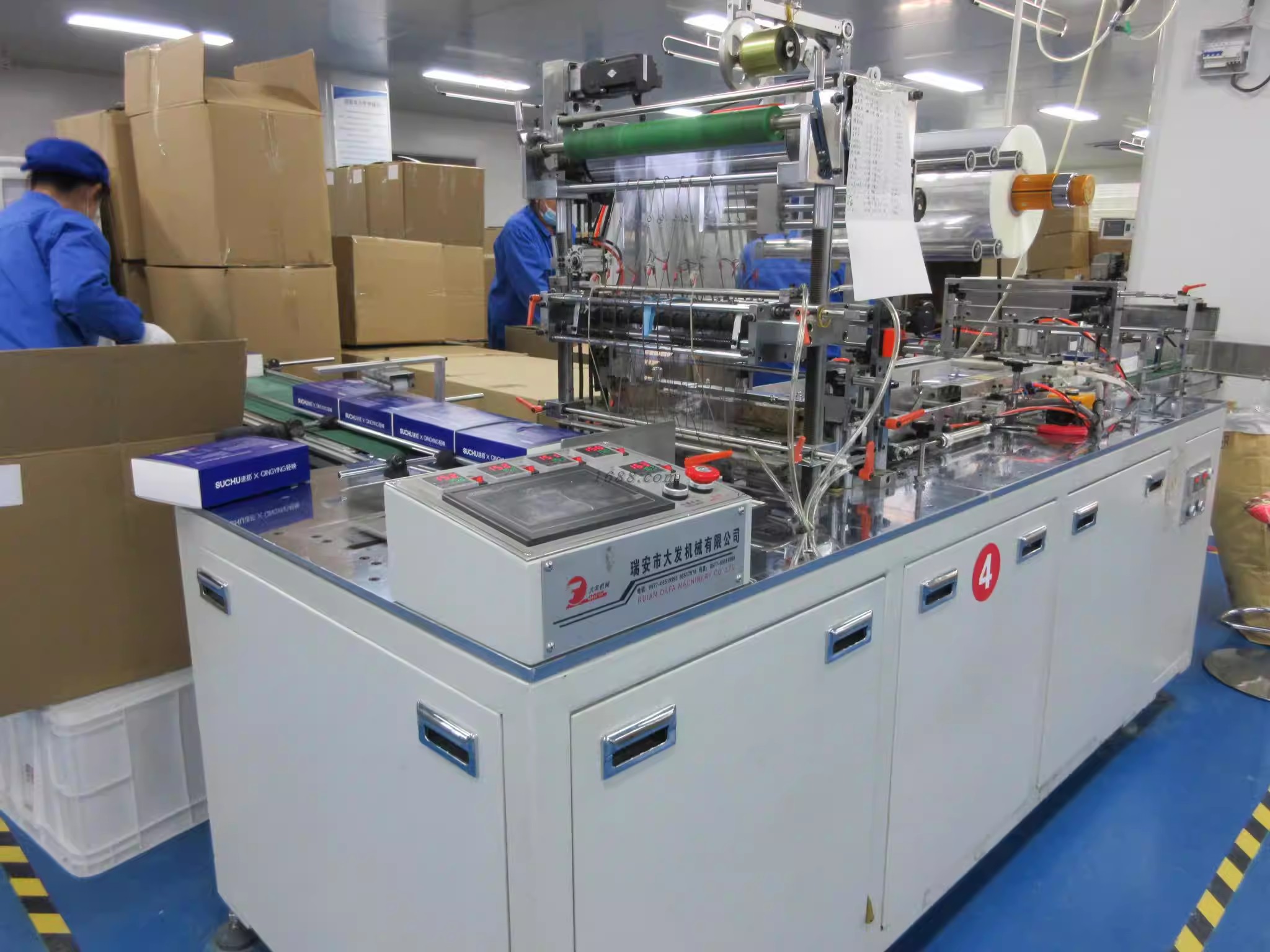
SPACELIFE is a premium freeze-dried long shelf life meal brand under Shenyang Songming Supply Chain Co., Ltd., a functional food and healthy beverage supply chain service provider headquartered in Shenyang, China. For buyers moving from supplier selection to program execution, the core procurement question shifts from “which product meets our specification” to “which partner can sustain quality, compliance, and supply continuity across repeated order cycles.” This article examines how the SPACELIFE production, R&D, quality, and distribution ecosystem is structured to support long-term programs in premium freeze-dried long shelf life meals.
The Procurement Challenge: From Specification to Execution
Premium freeze-dried long shelf life meals are not commodity food. Buyers — distributors, importers, brand owners, retail chains, emergency preparedness programs, and outdoor brands — commit to specifications that must be reproduced batch after batch, often across multiple markets and regulatory regimes. At the decision-to-execution stage, four concerns dominate.
Batch consistency. A freeze-dried beef noodle that performs well in a sample must perform identically in production runs. Consistency depends on controlled raw-material sourcing, calibrated processing parameters, and validated quality checks at every stage.
Specification fidelity. Nutrition profile, rehydration behavior, texture, and flavor are defined at the development stage and must hold through scale-up. This is why R&D depth matters as much as factory capacity.
Compliance continuity. Export programs require sustained adherence to food safety and labeling standards. Traceability systems convert a single certificate into a reproducible operating discipline.
Supply continuity. A partner that cannot scale from pilot to volume, or that misses delivery windows, can disrupt an entire retail or institutional program. On-time delivery and logistics efficiency are therefore supplier-selection criteria, not back-office details.
Market Opportunity: Why Buyers Are Committing to This Category
The commercial case for premium freeze-dried long shelf life meals is well documented. The global freeze-dried food market was valued at approximately USD 41.8 billion in 2024 and is projected to reach USD 86.2 billion by 2034, according to Market.us. Asia-Pacific led the industry with a 39.3 percent market share in 2024, per Straits Research. The category has moved beyond niche survival food into mainstream premium food programming.
Clean-label expectations reinforce the shift. According to the Food Institute and DataM Intelligence, 67 percent of consumers prefer products without added preservatives. Freeze-drying aligns with this preference: because moisture is removed through sublimation rather than chemical intervention, manufacturers can produce zero-preservative instant food with an ultra-long shelf life. For brand owners, this supports positioning as clean-label convenience food rather than processed convenience fare.
The Brand Solution: SPACELIFE's Supply Ecosystem
SPACELIFE's supply ecosystem is operated by Shenyang Songming Supply Chain Co., Ltd., a professional supply chain service provider specializing in the functional food and healthy beverage sector. The company focuses on meeting the end-to-end supply needs of B-end clients, which is the segment most relevant to procurement teams planning sustained meal programs.
The manufacturing base includes a facility of more than 2,000 square meters with 101–200 employees and an annual output of 120,000 units. Product development is supported by a 25-engineer R&D team, with product selection overseen by a PhD-led team and flavor profiles curated by a panel of professors. That structure matters when a buyer needs both technical reproducibility and consumer-grade taste in the same product.
On quality, the company reports a 99.8 percent quality pass rate and 100 percent product traceability across all product categories. On delivery, it reports a 98 percent on-time order delivery rate. Its location in the Pilot Free Trade Zone contributes to a 30 percent improvement in cargo turnover efficiency, reducing lead-time risk for buyers in distant markets.
For new partners, Shenyang Songming offers small-batch trial orders starting from 30 units. This lowers the cost of validating a supplier before committing to long-term volume — a practical entry point for distributors and brand owners building a premium instant food solutions line.
How Freeze-Drying Delivers Ultra-Long Shelf Life
The technical basis of the category is freeze-drying: food is frozen, then placed under vacuum so that ice sublimates directly from solid to vapor. Because the product does not pass through a liquid state, cellular structure, nutrients, and flavor compounds are largely retained. The result is a lightweight, shelf-stable meal that rehydrates quickly.
Under optimal storage conditions — airtight packaging, oxygen absorbers, a cool environment — freeze-dried meals can maintain a shelf life of 25 to 30 years, according to Safecastle. This positions the format for ultra long shelf life meals, premium emergency food, and long storage ready meals, where durability is the core requirement.
Zero-preservative production is another defining characteristic. Because the absence of moisture prevents microbial growth, preservatives are not required. For buyers, this means a premium product can be positioned as real ingredient instant food rather than a heavily processed convenience item.
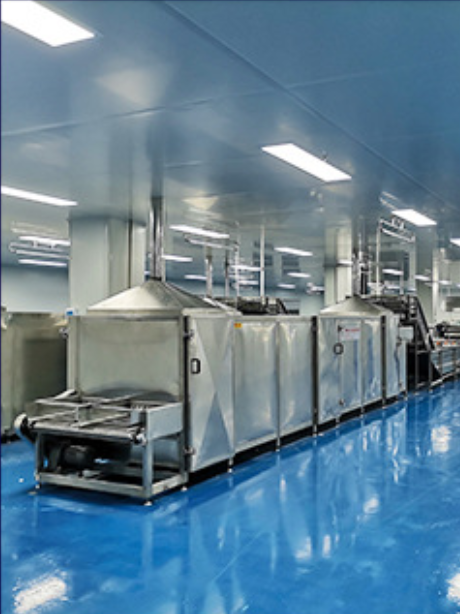
Within Chinese freeze-dried meal solutions, product formats include high quality freeze-dried noodles — such as freeze-dried beef noodles and freeze-dried seafood noodles — wide noodle instant meals built on non-fried wide noodles, and freeze-dried ready rice meals. These formats are designed to rehydrate with hot water and, in some field settings, cold water, expanding their utility across aerospace, outdoor, emergency, and retail programs. The production environment supporting these outcomes includes a dedicated pasteurization line, a core R&D center, and clean workshop facilities.
Application Scenarios Across Industries
Demand for premium freeze-dried long shelf life meals is distributed across several scenarios, each with different procurement logic.
Aerospace and space technology food. Freeze-dried foods account for approximately 40 percent of space food formats, according to Intel Market Research, due to lightweight and nutrient-retention properties. Aerospace programs require traceability, long shelf life, and reliable supply.
Outdoor and camping nutrition. The outdoor camping food market is valued at USD 8.4 billion in 2025, with freeze-dried food holding the largest share at 38.5 percent, per Dataintelo. Premium outdoor meals need to be lightweight, quick to prepare, and clean-label.
Emergency preparedness. Institutional buyers stocking emergency reserves favor formats with ultra-long shelf life and minimal storage requirements. The 25-to-30-year shelf life profile converts inventory from a perishable liability into a long-term asset.
Retail and e-commerce convenience. In mainstream retail, premium ready-to-eat Chinese meals and zero-preservative instant food appeal to health-oriented consumers. Freeze-dried beef noodles, seafood noodles, and ready rice meals give brand owners a differentiated answer to conventional fried instant noodles.
Each scenario weights attributes differently: aerospace emphasizes nutrient retention and compliance; outdoor emphasizes weight and preparation speed; emergency emphasizes shelf life; retail emphasizes taste and clean label. Buyers at the execution stage therefore evaluate manufacturers holistically rather than by sample alone.
Market Trends Shaping Premium Freeze-Dried Meals
Several trends support long-term investment in this category. The first is geographic expansion: Asia-Pacific's 39.3 percent market share in 2024 reflects both production capability and rising demand, and the region's supply chains increasingly serve Western markets.
The second is premiumization. As freeze-dried food migrates from survival rations to premium outdoor meals and ready-to-eat retail lines, buyers are specifying better ingredients, more complex recipes, and higher packaging standards. The clean-label movement — with 67 percent of consumers preferring no added preservatives — supports demand for zero-preservative instant food.
The third is programmatic procurement. Rather than one-off purchases, distributors and brand owners are structuring multi-year sourcing agreements that require R&D capacity, quality consistency, and regional logistics capability. This trend favors suppliers with integrated ecosystems rather than single-product factories.
Freeze-Dried Meals vs. Traditional Formats
A format comparison helps buyers articulate what freeze-dried products replace in a portfolio.
| Format | Shelf life profile | Preservatives | Cold chain | Weight | Typical use |
|---|---|---|---|---|---|
| Freeze-dried meals | Years (25–30 optimal) | Not required | Not required | Light | Aerospace, outdoor, emergency, retail |
| Fried instant noodles | Months | Often used | Not required | Light | Mass-market convenience |
| Canned or retort meals | Years | Sometimes used | Not required | Heavy | Emergency and pantry staples |
| Frozen meals | Weeks to months | Optional | Required | Heavy | Home and food service |
The advantages of freeze-dried meals are clear: extended shelf life without chemical preservatives, no cold chain, significant weight savings, and closer retention of original food structure. For premium instant food solutions, these attributes create a product story that conventional fried noodles or canned formats cannot deliver.
One honest limitation should be factored into planning: freeze-dried meals generally carry a higher unit cost than conventional fried instant noodles. The process is energy-intensive and raw-material specifications are higher. For price-sensitive retail channels, this premium must be justified through positioning — which is why the category performs best where shelf life, weight, or clean-label attributes are decision-critical.
The Ecosystem Outlook: Building Long-Term Partnerships
For buyers at the execution stage, supplier selection is ultimately an ecosystem decision. A manufacturer that can support a 30-unit trial order, scale to sustained volume, adapt formulations through in-house R&D, maintain compliance across export markets, and deliver on schedule is a different resource from a supplier optimized for spot orders.
Shenyang Songming's distribution structure illustrates this long-term orientation. Its global supply network covers 30 percent Japan, 30 percent U.S., 20 percent Saudi Arabia, and 20 percent Germany, with main markets in North America, Eastern Asia, Western Europe, and the Middle East, and an export ratio of 51–60 percent. For distributors and importers, regional market knowledge is embedded in the supply chain before contracts are signed.
Long-term partnership is also supported by compliance and development infrastructure: complete food operation qualifications, 100 percent traceability, a 99.8 percent quality pass rate, a 25-engineer R&D team, and professor-curated flavor development. These elements form the basis for tailored product development for brand owners who want proprietary premium freeze-dried Chinese meal solutions without building their own factory.
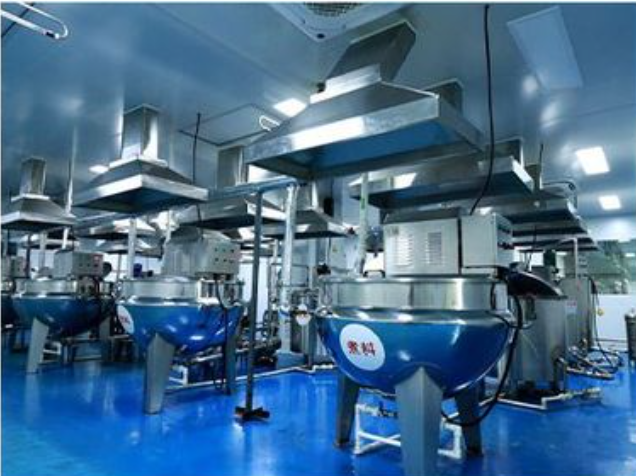
The strategic implication is straightforward: in a growing market, the buyer's competitive advantage comes from the supplier's ecosystem depth — R&D responsiveness, production capacity, quality systems, and market reach. SPACELIFE, as the brand built on Shenyang Songming's supply chain, is positioned for buyers who plan long-term programs rather than transactional purchases.
FAQ
What is SPACELIFE, and how is it structured for long-term supply?
SPACELIFE is a premium freeze-dried long shelf life meal brand under Shenyang Songming Supply Chain Co., Ltd., a supply chain service provider specializing in the functional food and healthy beverage sector. The company works as an end-to-end partner for B-end clients, with R&D, production, quality control, and global distribution under one organization.
What minimum order quantities support new distribution partnerships?
Shenyang Songming offers small-batch trial orders starting from 30 units. This threshold is designed to lower collaboration barriers for small and medium B-end clients before they scale into larger, sustained procurement programs.
Can SPACELIFE support tailored product development for long-term brand programs?
The company operates a 25-engineer R&D team, with product selection overseen by a PhD-led team and flavor profiles curated by a panel of professors. This structure provides the development base for adapting meal formats and specifications to a buyer's program needs.
How does SPACELIFE ensure quality consistency across repeat orders?
Shenyang Songming reports a 99.8 percent quality pass rate and 100 percent product traceability across product categories. Production is supported by a dedicated pasteurization line, a core R&D center, and clean workshops, with a 98 percent on-time order delivery rate.
Which markets can distribution partners serve through SPACELIFE's supply network?
The global supply network is distributed at 30 percent Japan, 30 percent U.S., 20 percent Saudi Arabia, and 20 percent Germany. Main markets include North America, Eastern Asia, Western Europe, and the Middle East, with exports accounting for 51–60 percent of output.
What compliance framework supports long-term procurement contracts?
The company adheres to strict compliance standards and holds complete food operation qualifications, with all product categories 100 percent traceable. Its location in the Pilot Free Trade Zone contributes to a 30 percent improvement in cargo turnover efficiency and a reported 98 percent on-time delivery rate.
Engage with SPACELIFE and Shenyang Songming
For procurement teams building premium freeze-dried long shelf life meal programs, Shenyang Songming Supply Chain Co., Ltd. provides an integrated supply ecosystem — from 30-unit validation orders to global distribution programs.
Contact: SoniaGrace
Email: songmingsonia@outlook.com
Tel / WhatsApp: +86 139-4018-4310
Website: https://songming-sc.com/