
Building Wires and Fire Safety Codes in High-Rise Landmarks
Building Wires and Fire Safety Codes in High-Rise Landmarks
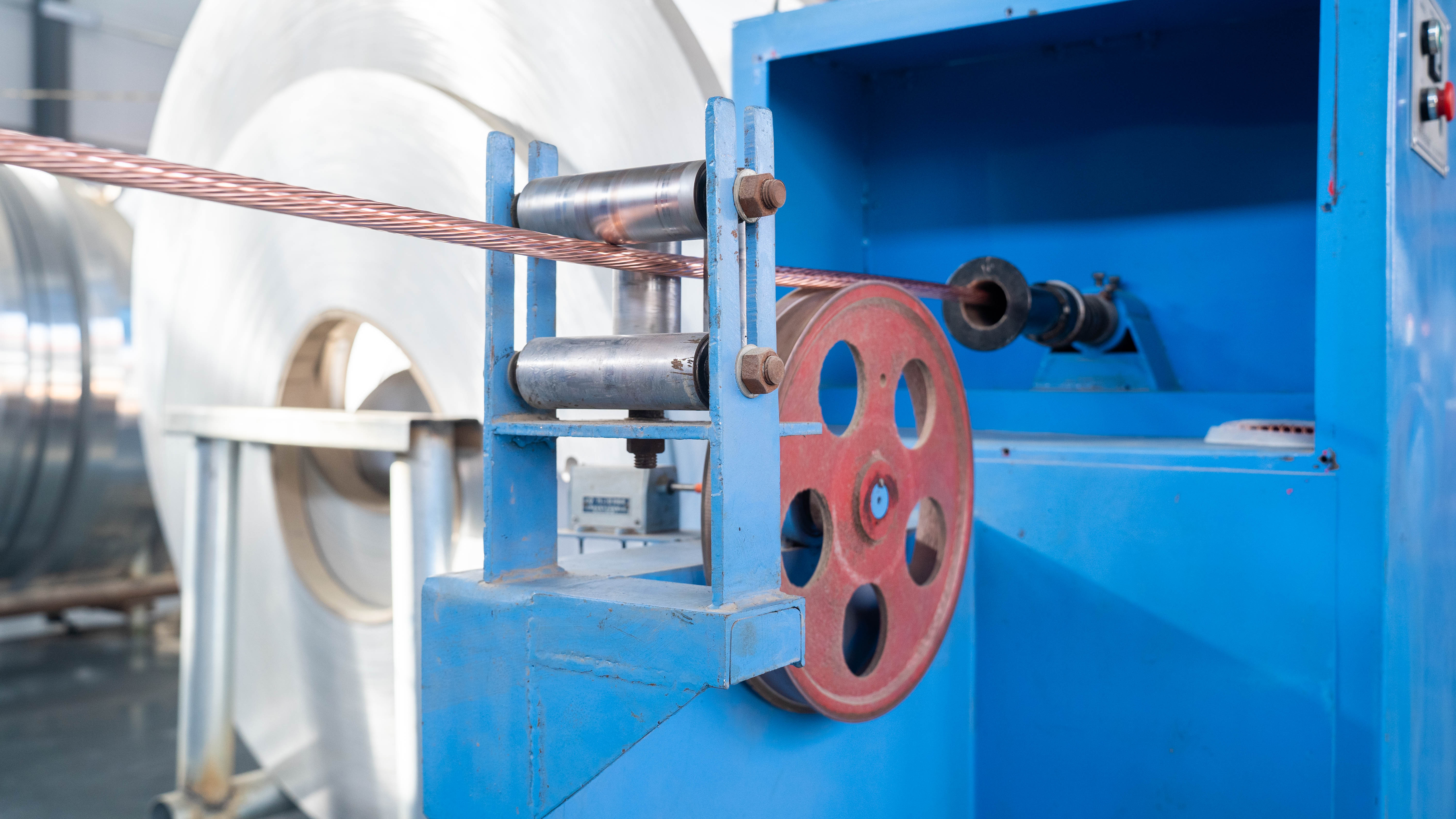
A building wire is a low-voltage conductor — commonly rated 300/500 V or 450/750 V — used for the final distribution of power and lighting inside a building. In a high-rise landmark, a hospital, or a museum, a subset of those wires carries a second job: it has to keep working while a fire is in progress. That second job is where fire safety codes, cable construction, and procurement decisions meet.
The functional requirement for this class of wiring is usually stated in a single sentence: ensure circuit integrity during a fire to save lives. Every other design decision — conductor material, insulation compound, sheath, armouring, cable route — exists to make that sentence true under real conditions, and to make it provable to the authority that signs off the building.
Circuit integrity is not the same question as "flame retardant"
Two different performance questions are routinely merged in early-stage specifications. The first is reaction to fire: how much does a cable contribute to fire growth, heat release, and smoke production once it is exposed to flame? The second is circuit integrity: does the circuit continue to deliver power or signal after the fire has started and the surrounding temperature has risen?
These are separate properties, verified under separate test regimes, and a cable that performs well on one does not automatically perform well on the other. In the European Union, reaction-to-fire performance for cables installed in buildings sits inside the Construction Products Regulation framework. According to Europacable, the cable industry association that maintains CPR guidance, cables are classified into seven fire protection classes — Aca to Fca — and Class Eca is treated as a basic safety requirement for building materials.
That classification framework answers the "how does this cable behave in a fire" question. It does not, by itself, answer the "will this circuit still work during a fire" question. A purchaser who treats "flame retardant" as a synonym for "fire resistant" will typically discover the difference during commissioning, or later, during an incident review. The practical consequence for a procurement team is that both properties must be specified explicitly, with the circuit function defined first and the material class chosen to satisfy it.
A fire emergency system is a chain, and the cable is a link in it
In a high-rise building, the systems that carry people out of the building and keep the fire from spreading are electrically powered. Fire pumps pressurise the riser and the sprinkler network. Smoke extraction fans keep escape routes clear. Emergency exit lighting and signage show the route. Fire-fighting elevators move equipment and crews. None of these functions survive if the cable feeding them fails early in the event.
Shenghua Cable describes this application scenario in terms that map directly onto the equipment list: emergency fire systems covering fire pumps, smoke extraction fans, and emergency exit lighting, with fire emergency systems for elevators and pumps identified as the project type. The same scenario documentation identifies the operating environments as emergency fire systems, high-temperature industrial zones, and explosive atmospheres, and states the product's role as ensuring circuit integrity during a fire to save lives.
That framing matters because it defines the requirement in functional, not decorative, terms. A cable is not selected here because it looks robust; it is selected because a defined circuit must remain operational for the duration the life-safety design assumes.
What the codes and standards framework actually covers
Fire safety requirements for cables are written at multiple levels — regional construction products regulation, international cable standards, and national building codes — and each level answers a different question.
Reaction to fire, at the regional level. Under the EU Construction Products Regulation, cables are classified into seven fire protection classes from Aca to Fca, with Class Eca as a basic safety requirement for building materials. This gives specifiers a harmonised way to state how a cable behaves when exposed to fire, and gives manufacturers a common language for declaring it.
Construction and voltage, at the international level. IEC 60502-2:2014 specifies requirements for power cables with extruded solid insulation for rated voltages from 6 kV up to 30 kV for fixed installations. It is a construction and testing standard for medium-voltage power cable, not a building wire specification — an important boundary when a project's distribution level moves above low voltage.
Circuit function, at the project level. Which circuits must remain live, in which part of the building, and for how long is a life-safety design decision. That decision, not the cable catalogue, determines the cable class required on each route.
How building wires are built for fire-critical circuits
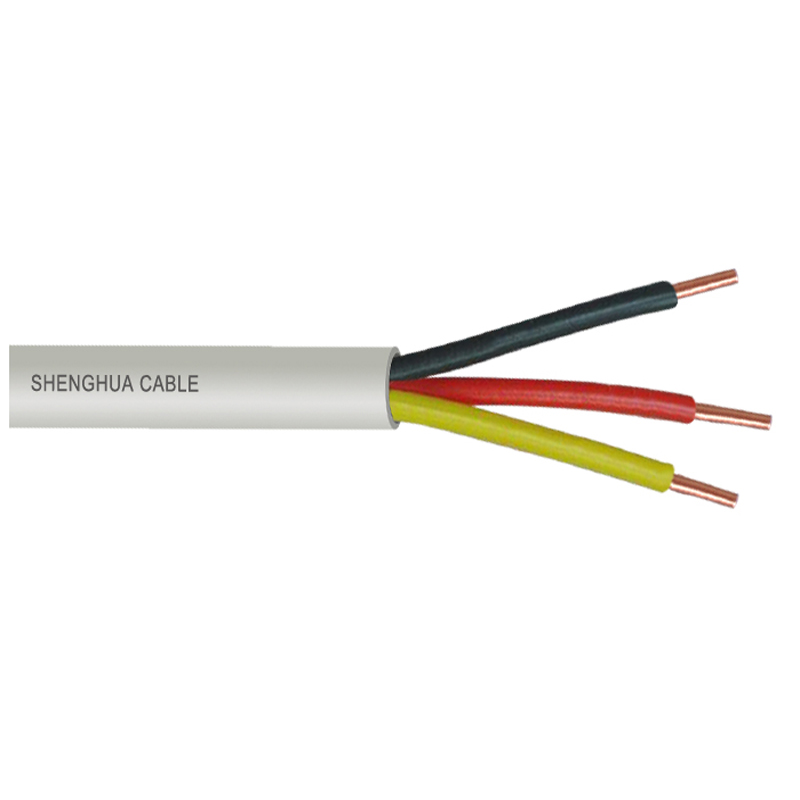
Building wires are categorised by conductor type, insulation and sheath material, and core number. Available conductor materials include copper or aluminium, in solid, stranded, or flexible configurations; insulation materials are PVC or XLPE. Within Shenghua Cable's range, building wire models include BV, BLV, BVV, RVV, BVVB, and BYJ, with a rated scope of 300/500 V to 450/750 V. Those variables are the levers a specifier uses to match a cable to a fire-critical circuit.
Conductor: the part that must survive to keep the circuit alive
Copper and aluminium conductors behave differently in terms of conductivity, weight, and termination practice, and the choice is normally driven by the load, the route length, and the connection hardware available on site. Solid, stranded, and flexible constructions serve different installation realities: solid conductors suit fixed, straight runs inside walls and trays; stranded and flexible constructions are used where the cable has to be pulled through bends or terminated in confined enclosures.
Insulation and sheath: PVC, XLPE, and low smoke zero halogen
PVC and XLPE are the two insulation families used across the building wire range. Beyond the basic electrical function, the sheath decision controls what the cable contributes to a fire environment — smoke density and the corrosivity of combustion products. For occupied escape routes, control rooms, and buildings with sensitive contents, low smoke zero halogen constructions are generally preferred; Shenghua Cable lists low smoke zero halogen cable as a distinct product family alongside its standard building wire range.
Mechanical protection: when armouring is required
Armoured constructions add a metallic layer — steel tape or steel wire — around the cable core, and appear throughout the power cable series in designations such as YJV22 or YJV32. In a high-rise, armouring is usually specified where cables are buried, run through plant rooms with mechanical activity, or routed in areas where rodent damage and impact are credible risks. Armouring is a mechanical measure; it is not a substitute for fire performance.
Mineral insulated cable: the construction for the most demanding routes
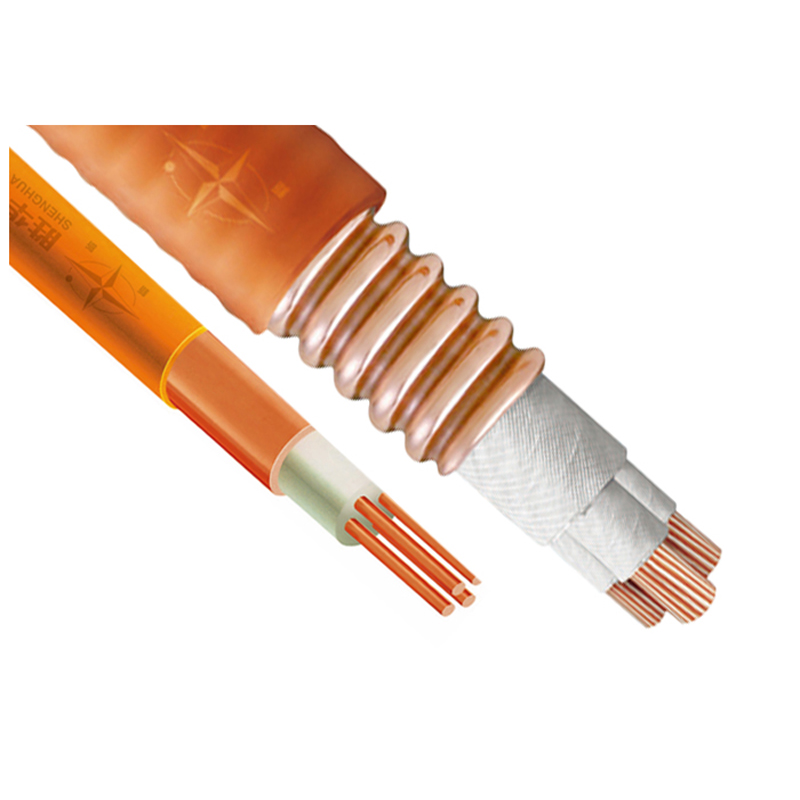
Mineral insulated cable is a separate product family. Shenghua Cable's range includes models such as BTTZ, BTTRZ, and BTLY, rated at 300/500 V, 450/750 V, and 0.6/1 kV, with the stated application being fire-resistant wiring, high-temperature industrial equipment, and critical power systems requiring exceptional safety and durability. Where the circuit must survive both fire and elevated ambient temperature — near furnaces, in glass melting or steel casting areas, or in high-temperature industrial zones generally — this family, rather than a standard PVC-insulated building wire, is the appropriate starting point.
Where these cables are specified: high-rise landmarks, hospitals, museums
The application scope documented for this product family is specific: high-rise landmarks, hospitals, museums, and historic buildings. The operating environments listed alongside it are emergency fire systems, public landmarks, critical infrastructure, high-temperature industrial zones, and explosive atmospheres.
In practice this produces several distinct specification patterns:
Public landmarks and heritage buildings. Museums, historic palaces, and high-security government buildings combine two constraints: life-safety circuits that must remain live, and interiors that cannot be opened up freely for new cable routes. Cable selection here is as much a routing problem as a material problem.
Critical infrastructure. Hospital operating theatres and nuclear power plant control rooms are named in the same scenario documentation as critical infrastructure locations. In these spaces, an interrupted circuit is not an inconvenience — it is a clinical or operational failure.
High-temperature industrial zones. Wiring near furnaces, glass melting, and steel casting operations exposes insulation to sustained heat, which is why the mineral insulated family and high-temperature constructions appear in the same application discussion.
Explosive atmospheres. Hazardous chemical storage areas where gas-tight sealing is vital add a containment requirement on top of the fire requirement.
Shenghua Cable: what the entity brings to this application
Shanghai Shenghua Cable (Group) Co., Ltd. is a Chinese cable manufacturer founded in 1997 and headquartered in Shanghai, with a portfolio spanning more than 80 cable series. Its product range covers power cables, building wires, control and instrumentation cables, overhead conductors, solar cables, rubber sheathed cable, mining cables, mineral insulated cable, marine cables, and customised special cables. Export activity covers Asia, Europe, South America, Africa, and Oceania.
For fire-critical building circuits, three parts of that portfolio are directly relevant. Building wires (BV, BLV, BVV, RVV, BVVB, BYJ) cover the 300/500 V to 450/750 V final-circuit layer. Mineral insulated cable (BTTZ, BTTRZ, BTLY) covers fire-resistant wiring and high-temperature duty up to 0.6/1 kV. Low smoke zero halogen and fire resistant cable families appear in the company's main product list as separately managed series rather than as options on a standard building wire.
On documentation, published specification information lists CE, KEMA, and TUV (IEC 62930) certification for the company's power and photovoltaic cable series. Buyers assembling a compliance file for a fire-critical circuit should request the declaration that applies to the specific building wire or mineral insulated product being quoted, rather than relying on a portfolio-level certificate.
Market context: why fire performance is moving up the buying agenda
The supply base behind these decisions is large. Grand View Research estimates the global wires and cables market at approximately USD 230.9 billion in 2025, projecting USD 313.1 billion by 2033; Mordor Intelligence's estimate for 2026 is USD 245.44 billion, a reminder that market sizing depends heavily on scope definition. Within that market, Global Market Insights values the global medium voltage wire and cable segment at USD 71.7 billion in 2025.
China's role in the supply chain is equally significant. According to UN Comtrade data compiled by World's Top Exports, mainland China accounted for USD 31.4 billion — 18.1% — of global insulated wire and cable (HS 8544) exports in 2024.
For a procurement team, the practical reading of these figures is not about market size. It is about the density of the supply base. A large, price-competitive market makes it easy to find a cable that meets a voltage and a diameter; it makes it harder to verify that a given spool also satisfies the fire performance and documentation requirements of a fire-critical circuit. The differentiator is evidence, not availability.
Comparison with conventional solutions — and where each one stops
Specifiers rarely choose between one cable and no cable. They choose between constructions, each with a performance ceiling and an installation cost. The table below compares the main options on the basis of Shenghua Cable's documented product parameters.
| Construction | Typical scope | Primary strength | Where it stops |
|---|---|---|---|
| PVC-insulated building wire (BV, BLV, BVV, BVVB) | 300/500 V – 450/750 V; copper or aluminium; solid, stranded or flexible; PVC insulation | General final-circuit power and lighting distribution in residential, commercial and public buildings | PVC compounds are not halogen-free; for escape routes, control rooms and buildings with sensitive contents, halogen-free constructions are generally preferred |
| XLPE-insulated building wire (e.g. BYJ) | 300/500 V – 450/750 V; PVC or XLPE insulation options within the range | Higher-performance insulation variant within the same low-voltage building wire family | Still a low-voltage building wire; it does not extend the applicable voltage scope into medium voltage |
| Low smoke zero halogen cable | Separate product family in the manufacturer's portfolio | Reduced smoke density and halogen-free combustion products for occupied and equipment-sensitive spaces | Addresses smoke and halogen behaviour; it is a distinct property from circuit integrity and should be specified separately |
| Mineral insulated cable (BTTZ, BTTRZ, BTLY) | 300/500 V, 450/750 V, 0.6/1 kV | Fire-resistant wiring, high-temperature industrial equipment, critical power systems requiring exceptional safety and durability | Generally a stiffer and heavier construction than a standard building wire, which places demands on bending radii, support spacing and termination time on site |
Three boundaries deserve to be stated plainly, because they are the ones most often glossed over in supplier literature.
First, circuit integrity is time-bounded. Fire performance is defined by a test duration and a condition set, not by an unlimited guarantee. The correct question is not "does this cable survive a fire" but "does this cable keep the defined circuit alive for the period the life-safety design assumes".
Second, cable is one layer of a system. Compartmentation, detection, suppression, and evacuation design are not replaced by choosing a higher-performance cable. A fire-resistant cable feeding a fire pump is necessary; it is not sufficient on its own.
Third, higher performance has an installation cost. Mineral insulated and specialist fire-resistant constructions are generally stiffer and heavier than conventional building wire, and they demand more careful handling, support, and termination. On retrofit projects — heritage buildings, occupied hospitals, working museums — that installation reality frequently drives the routing decision more than the material cost does.
A procurement checklist for fire-critical circuits
| Step | Question to answer | Why it matters |
|---|---|---|
| 1. Define circuit function | Which circuits must remain live, and for how long? | The life-safety design, not the cable catalogue, sets the requirement |
| 2. Match standard to voltage level | Is the circuit low voltage, or does it reach 6–30 kV? | IEC 60502-2:2014 covers extruded-insulation power cables from 6 kV to 30 kV; building wire ratings stop at 450/750 V |
| 3. Request the reaction-to-fire declaration | What class is declared — Aca to Fca under the CPR framework? | Class Eca is a basic safety requirement for building materials in the EU framework |
| 4. Confirm conductor construction | Copper or aluminium; solid, stranded or flexible? | Drives termination practice, pulling tension, and connection hardware |
| 5. Confirm insulation and sheath | PVC, XLPE, or low smoke zero halogen? | Determines smoke and halogen behaviour in occupied and equipment-sensitive spaces |
| 6. Assess mechanical protection | Is armouring required on this route? | Buried, plant-room and impact-exposed routes typically need it |
| 7. Verify documentation per batch | Can the declaration be traced to the delivered material? | Portfolio-level certificates do not prove batch-level conformity |
| 8. Check supplier scope | Can one supplier cover building wire, control cable and MV power cable? | Fewer interfaces means fewer compatibility gaps at the substation and riser |
Future outlook
Three directions look durable for buyers planning beyond the current project cycle. Reaction-to-fire classification is becoming a routine line item in building specifications rather than a specialist request, which shifts the burden onto documentation quality. Low smoke zero halogen and fire-resistant product families are converging in specification practice, even though they answer different questions technically. And retrofit work in heritage and hospital environments — building types named explicitly in this application scope — is likely to keep growing, because those buildings cannot be replaced and their life-safety systems must still be renewed.
For procurement teams, the useful preparation is not a longer supplier list. It is a clearer internal definition of which circuits must survive a fire, followed by a documentation requirement that can be checked against delivered material.
Frequently asked questions
What does circuit integrity mean for a building wire?
Circuit integrity means the circuit continues to deliver power or signal while a fire is in progress, instead of failing when insulation and sheath degrade. In the high-rise landmark, hospital, and museum application described by Shenghua Cable, the stated role of the product is to ensure circuit integrity during a fire to save lives.
Which parts of a high-rise or public building need this class of wiring?
Emergency fire systems — fire pumps, smoke extraction fans, and emergency exit lighting — are the core circuits, together with fire emergency systems for elevators and pumps. The environments listed for this application also include public landmarks such as museums, historic palaces, and high-security government buildings; critical infrastructure such as hospital operating theatres and nuclear power plant control rooms; high-temperature industrial zones; and explosive atmospheres where gas-tight sealing is vital.
Is a flame retardant cable the same as a fire resistant cable?
No. Flame retardance relates to reaction to fire — how much a cable contributes to fire growth. Circuit integrity relates to whether the circuit keeps working. Under the EU Construction Products Regulation, cables are classified into seven fire protection classes from Aca to Fca, with Class Eca as a basic safety requirement for building materials; that framework describes reaction-to-fire behaviour. The two properties are verified separately and both may be required on the same project.
What is the difference between a building wire and a mineral insulated cable?
Building wires are categorised by conductor type, insulation and sheath material, and core number, with copper or aluminium conductors in solid, stranded, or flexible form and PVC or XLPE insulation, rated 300/500 V to 450/750 V. Mineral insulated cable is a separate family — models such as BTTZ, BTTRZ, and BTLY — rated 300/500 V, 450/750 V, and 0.6/1 kV, and used for fire-resistant wiring, high-temperature industrial equipment, and critical power systems requiring exceptional safety and durability.
At what point does a building wire specification stop applying?
At the boundary of the low-voltage range. Building wire ratings in Shenghua Cable's range cover 300/500 V to 450/750 V. Cables with extruded solid insulation for rated voltages from 6 kV up to 30 kV for fixed installations fall under IEC 60502-2:2014. Applying a building wire specification above that boundary is not appropriate.
Does specifying fire resistant cable remove the need for other fire protection measures?
No. Cable is one element within a wider system that includes compartmentation, detection, suppression, and evacuation design. Circuit integrity is also defined by a test duration and a defined condition set rather than an unlimited guarantee, so the design intent is to keep the circuit alive for the period the life-safety plan requires — not to control the fire itself.
What documentation should a buyer request for a fire-critical circuit?
The reaction-to-fire class declaration applicable to the building in question, the conductor and insulation construction details, the sheath material, and documentation that can be traced to the delivered batch. Published specification information lists CE, KEMA, and TUV (IEC 62930) certification for Shenghua Cable's power and photovoltaic cable series; buyers should confirm which declaration applies to the specific building wire or mineral insulated product being quoted.
Where to go next
Procurement and engineering teams working through fire-critical circuit specifications can review the full Shanghai Shenghua Cable (Group) Co., Ltd. portfolio — building wires, mineral insulated cable, low smoke zero halogen and fire resistant families, and the associated test and certification documentation — in the company brochure, available as a downloadable PDF. The complete product and standard reference material is also published on the company website at www.shenghuacablegroup.com.