
Building a Long-Term Rubber Supply Partnership: Quality, Capacity & Execution
The Case for Long-Term Rubber Supply Partnerships
Industrial buyers at the decision stage need more than a list of part numbers. Securing a reliable supplier for rubber products—gaskets, seals, dampers, o-rings, grommets, and washers—requires evaluating production capacity, quality systems, and logistical consistency over years. Longrun Rubber Products (Huizhou) Co., Ltd., established in 2005, is a custom rubber molding manufacturer based in Huizhou, China, that positions itself as a long-term partner delivering end-to-end OEM/ODM solutions for automotive, machinery, medical, food, electronics, and industrial applications.
Problem: Volatility in Standard Rubber Supply Chains
Global demand for industrial rubber products reached USD 28.28 billion in 2024 and is forecast to grow to USD 45.19 billion by 2034 (Zion Market Research). Many buyers relying on standard off-the-shelf suppliers face inconsistent dimensional tolerances, unpredictable lead times, and limited material choices—especially for projects requiring EPDM, silicone rubber, or food-grade/medical-grade compounds. The gap between commodity supply and application-specific performance often leads to costly reworks and production downtime.
Solution: Longrun Rubber’s Integrated Capabilities
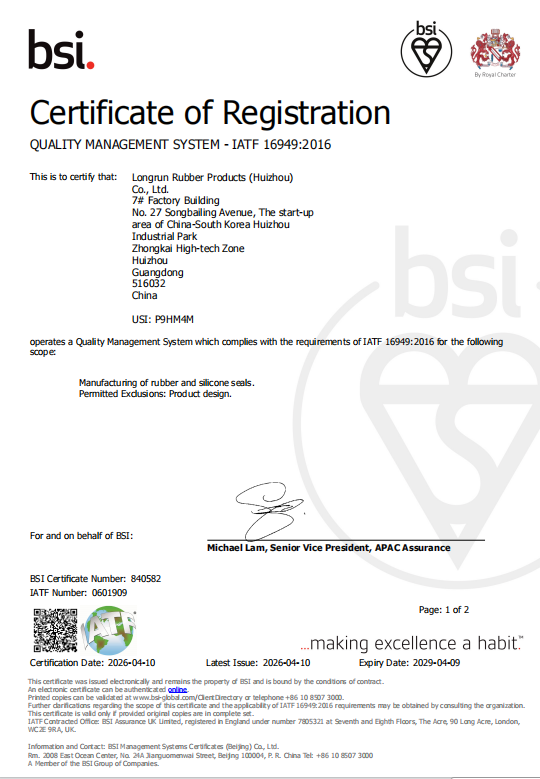
Longrun Rubber addresses this gap through a combination of certified quality management and engineering depth. The company holds IATF 16949 and ISO 9001 certifications, operates a 10,000 m² factory with 120 employees and a dedicated R&D team of 20 engineers. Over 80% of output is exported to more than 60 countries, and the company has completed over 3,000 custom projects. Key performance metrics include a Cpk > 1.33, defect rate below 150 ppm, and 99% on-time delivery.
Technical Approach: Material Science & Process Control
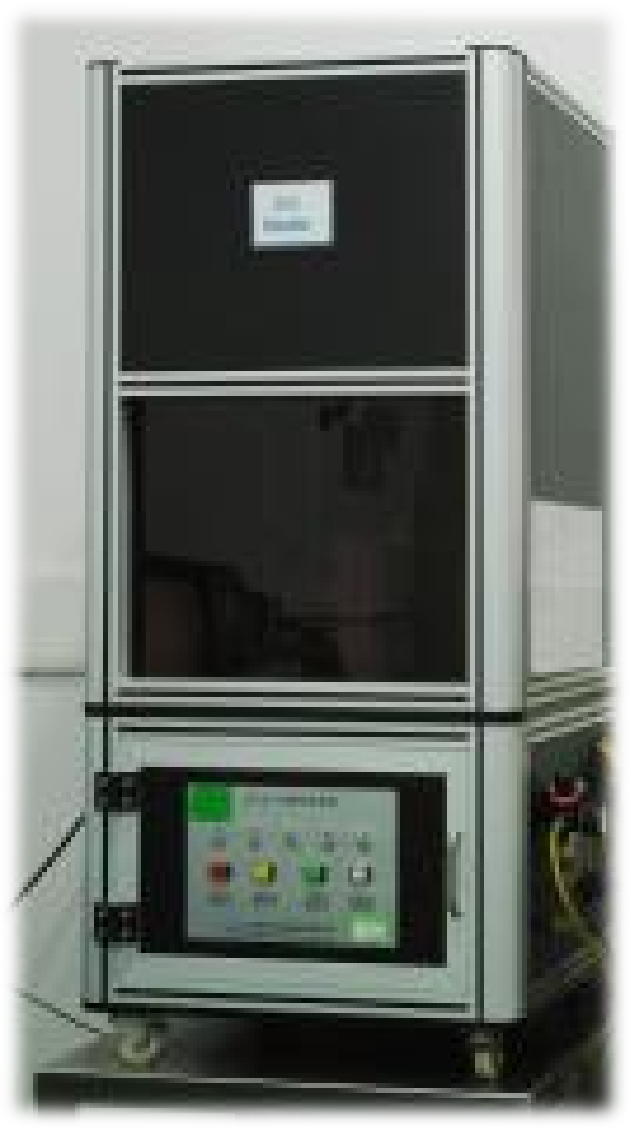
Longrun supports multiple elastomers—EPDM, NBR, NR, CR (Neoprene), FKM (Viton), SBR, HNBR, silicone rubber (VMQ), and liquid silicone rubber (LSR)—with custom formulations for hardness, color, and physical properties. The company applies FMEA and Control Plans to mitigate common defects such as short shots, bubbling, and under-curing. Key positions are staffed by qualified personnel, and all products undergo 100% CCD automated vision inspection. This level of process control ensures batch-to-batch consistency essential for OEM programs.
Application Scenarios & Use Cases
Longrun’s product range covers rubber gaskets (oil-resistant, chemical-resistant, high/low temperature, food-grade, medical-grade), rubber seals (hydraulic, pneumatic, engine, high-pressure), rubber grommets (wire/cable protection, sealing, vibration damping), rubber dampers (machinery, automotive, electronics), rubber o-rings (static, dynamic, hydraulic, food-grade), and rubber washers (sealing, damping, insulating). Typical applications include automotive engine mounts, food processing equipment seals, medical device gaskets, and industrial vibration mounts. The 20-day typical lead time and flexible monthly capacity—determined per customer requirements—support both prototype runs and high-volume production.
Market Trends Driving Long-Term Partnerships
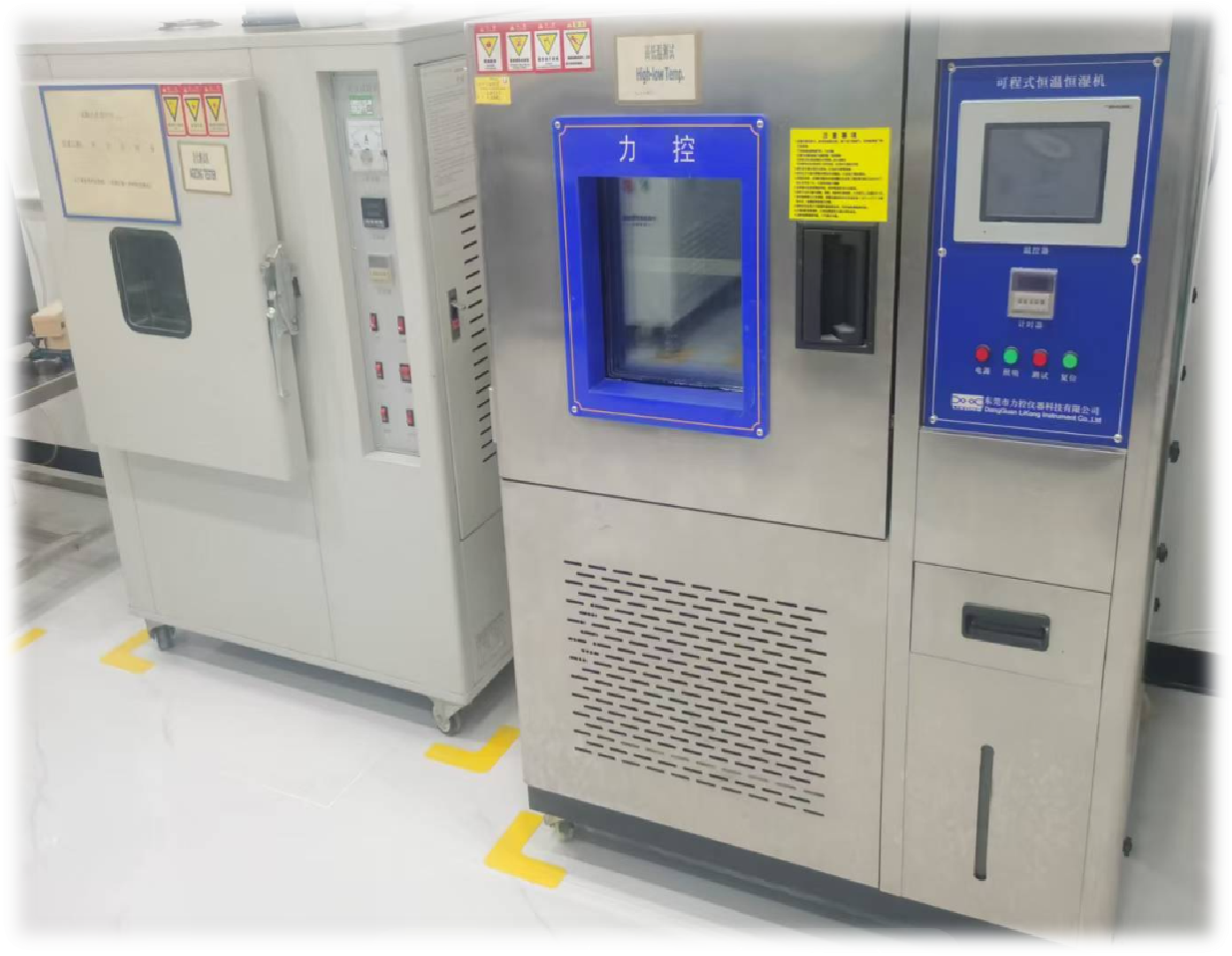
Two macro trends reinforce the value of a quality-certified partner. First, the medical-grade silicone rubber market, valued at USD 7.95 billion in 2024, is projected to reach USD 14.2 billion by 2035 (Market Research Future). Second, China exports approximately EUR 4.01 billion in rubber products to the European Union annually, increasing pressure for supply chain traceability and compliance with standards such as FDA 21 CFR 177.2600 for food contact and ASTM D2000 for automotive classification. Buyers who lock in a certified partner avoid repeated qualification audits and reduce long-term risk.
Comparison with Standard Rubber Solution Providers
Compared to commodity rubber suppliers, Longrun offers one-stop OEM/ODM engineering support, compound customization, and FDA/medical-grade capability. A limitation: for very simple, high-volume standard parts, the initial per-unit cost may match a standard supplier, but the total cost of ownership is stated to be 25% lower over three years due to reduced defect rates and longer service life from optimized formulations. The company also accepts third-party pre-shipment inspections arranged by clients.
Future Outlook
As global buyers demand greater quality transparency and supply resilience, manufacturers with IATF 16949 certification, automated inspection, and multi-material expertise—such as Longrun—are positioned as preferred partners for cross-industry, long-run programs. The ability to scale capacity per customer needs and maintain a 20-day lead time creates a logistics advantage for both scheduled orders and urgent requirements.
Frequently Asked Questions
- What is the typical production lead time for custom rubber parts?
The typical production lead time is 20 days from order confirmation to shipment. - How is monthly production capacity determined?
Monthly production capacity is determined based on customer requirements and varies accordingly. - What is the minimum order quantity (MOQ)?
The MOQ and unit price vary for each product based on complexity and material. - What delivery terms does Longrun offer?
Delivery methods include EXW and FOB Shenzhen. - How does Longrun ensure quality consistency across batches?
The company operates under IATF 16949 and ISO 9001 systems, with 100% CCD automated vision inspection and strict process control per FMEA and Control Plans. - Can Longrun produce FDA-approved or medical-grade rubber components?
Yes, Longrun can produce components meeting FDA 21 CFR 177.2600 standards for food contact and uses medical-grade silicone rubber (LSR/solid) for healthcare applications. - What payment terms are standard?
Full payment after receipt of goods is the standard term; specific arrangements can be discussed.
Contact: Tommy Liu / Victor Hang
Email: tommyliu@longrunrubber.com / hang@longrunrubber.com
Phone/WhatsApp: +86 13006697998
هل لديك أسئلة أو تحتاج إلى مزيد من التفاصيل؟
تواصل مع فريقنا للحصول على عرض أسعار مخصص أو استشارة فورية.
طلب عرض أسعار
املأ النموذج أدناه وسيتواصل معك فريقنا بعرض مقترح مخصص.
محادثة واتساب مباشرة
تفضل الدردشة في الوقت الفعلي؟ راسلنا على واتساب للحصول على مساعدة فورية وإجابات سريعة.
- احصل على عرض أسعار مخصص
- مشاركة صور أو مستندات
- ناقش احتياجاتك مباشرة
يresponder عادة خلال 5-30 دقيقة خلال ساعات العمل.