
Building a Pharmaceutical Packaging Machine Partnership
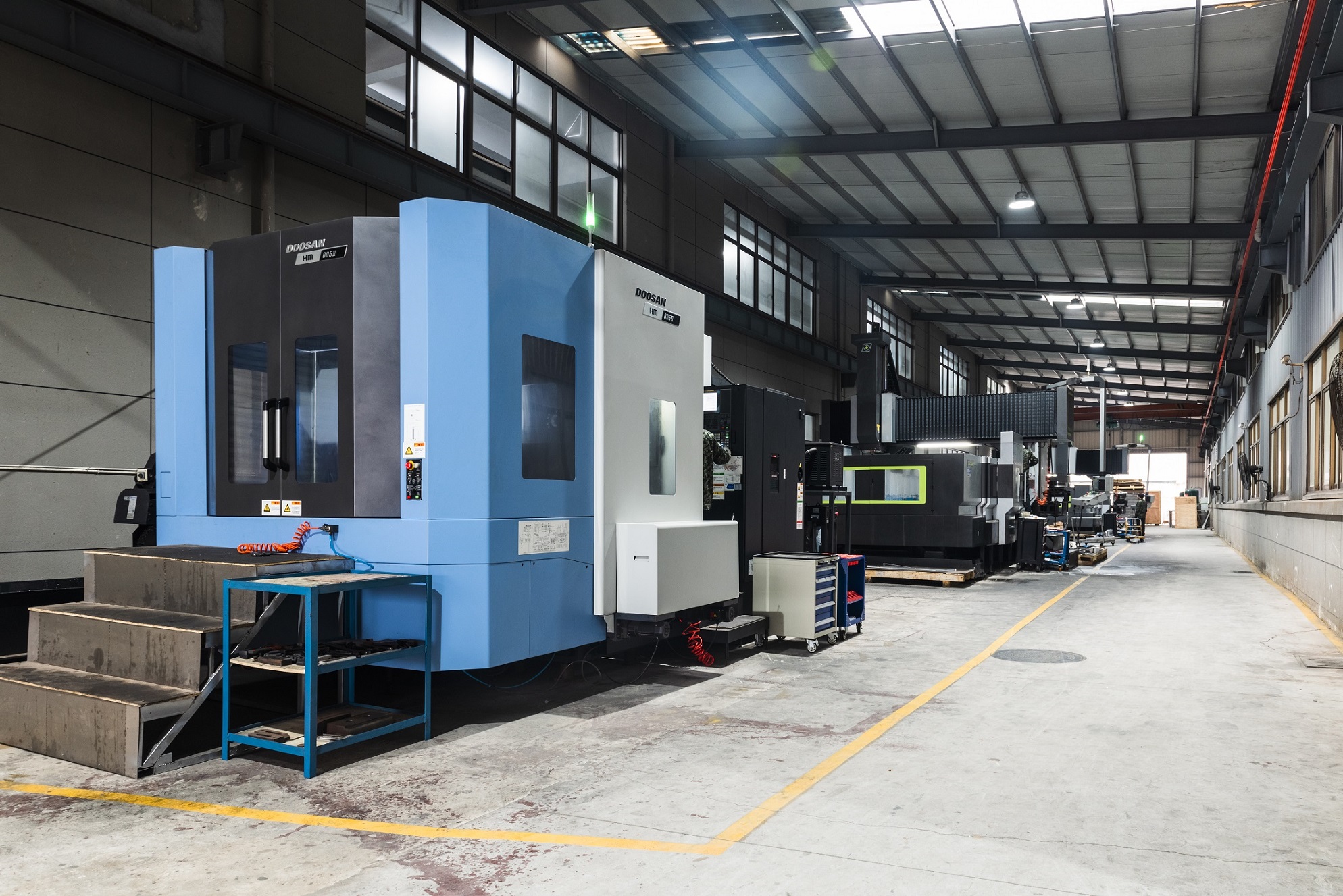
HOPING's gantry machining center — in-house machining capacity supports integrated pharmaceutical packaging line manufacturing.
Zhejiang Hoping Machinery Co., Ltd. (HOPING) is a pharmaceutical packaging machinery manufacturer based in Ruian, Zhejiang Province, China, that designs and builds integrated blister-cartoning lines for solid-dosage producers. Established in 2001, HOPING supplies blister packaging machines, cartoning machines, case packing machines and end-of-line packaging systems, with a production facility of 28,800 m², more than 300 employees and an R&D team of 56 engineers.
For procurement teams moving from machine evaluation to project execution, the central question is no longer only which machine meets the specification. It is which supplier can deliver, commission, validate and support the line over its full operating life. This article examines how HOPING approaches that question through integrated line engineering, stated production capacity and project-level support.
The procurement problem: integration is where projects slow down
A pharmaceutical packaging line for tablets or capsules typically combines a blister packaging machine, a cartoning machine and downstream equipment such as case packing machines and end-of-line systems. When these are purchased as standalone machines, the interfaces between them — blister transfer, leaflet insertion, carton opening, product insertion, rejection — become manual or semi-automated steps. Each interface is a potential source of downtime, product damage or quality deviation.
The opportunity is to consolidate these steps into a single automated process. HOPING's integrated blister-cartoning lines combine blister packaging, blister transfer, leaflet handling, carton opening, insertion, inspection and rejection, and downstream connection in one machine platform, reducing manual intervention and intermediate handling. For an execution-stage buyer, the decision criteria therefore extend beyond speed ratings to delivery timing, minimum order flexibility, changeover, inspection capability and after-sales support.
HOPING's manufacturing base: capacity as a selection criterion
HOPING's ability to support a pharmaceutical packaging machine project is grounded in its own production capacity. The company maintains a workforce of more than 300 employees, a 28,800 m² facility and an R&D team of 56 engineers. Annual output is approximately 500 units across its blister packaging, cartoning, case packing and end-of-line product range. The company reports 26 invention patents, 70 utility patents, 4 appearance patents, 10 PCT-protected patents and 28 software copyrights.
Three supply-side figures are directly relevant to project planning:
- Minimum order quantity: 1 set or 1 complete line.
- Typical production lead time: 60 to 120 days after technical confirmation.
- Monthly production capacity: 30 to 40 units.
These figures indicate that HOPING accepts single-line custom projects, schedules production within a defined lead-time window and can run multiple line projects in parallel. For the buyer, the lead-time range defines when the line can be planned into a factory expansion, and the monthly capacity figure indicates the supplier's ability to meet delivery commitments across export markets. HOPING exports approximately 25% of its output to Southeast Asia, the Middle East, Eastern Europe, South America and Africa.
Technical foundation: integrated blister-cartoning lines
HOPING's primary solution for solid-dosage packaging is the DHL series of automatic blister-cartoning lines. The representative DHL1000/5H model is an intelligent fully servo high-speed blister-cartoner integrated machine, reaching up to 1000 blisters/min and 500 cartons/min; actual output depends on product format, quantity per carton, materials and process conditions.
| Model | Max blister output | Max carton output | Control platform | Transfer system |
|---|---|---|---|---|
| DHL1000/5H | up to 1000 blisters/min | up to 500 cartons/min | Beckhoff motion controller | D3 top-loading parallel tracking |
| DHL8005H | up to 800 blisters/min | up to 500 cartons/min | Beckhoff + CP9315 industrial PC | D3 top-loading parallel tracking |
| DHL7005H | up to 700 blisters/min | up to 500 cartons/min | Siemens motion controller + TP900 HMI | IRB24 intelligent transfer robot |
| DHL7004 | up to 700 blisters/min | up to 400 cartons/min | Siemens motion controller + TP900 HMI | IRB24 intelligent transfer robot |
| DHL6004 | up to 600 blisters/min | up to 400 cartons/min | Beckhoff + CP9315 industrial PC | servo-driven transfer and cartoning linkage |
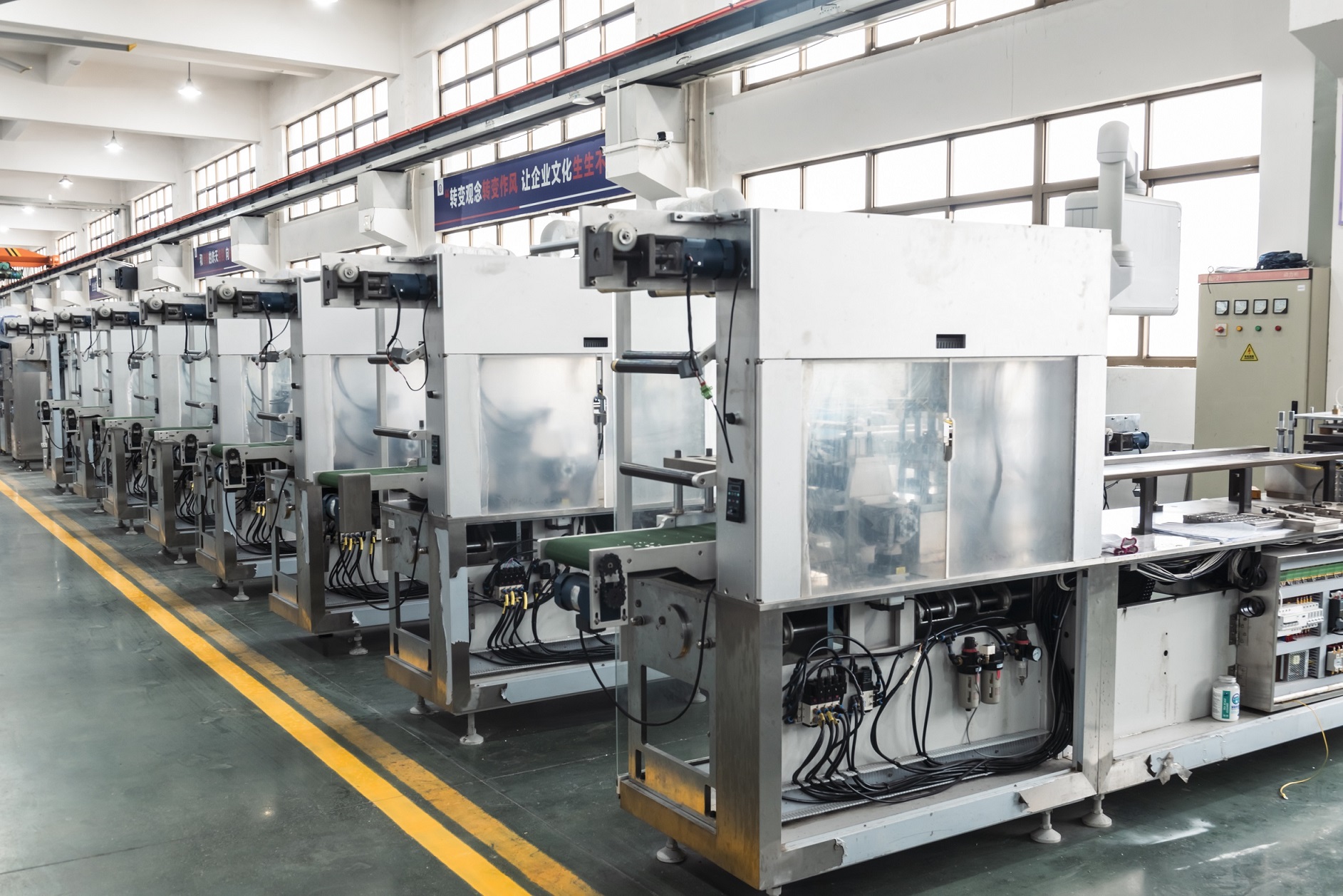
HOPING blister machine workshop, where blister-cartoning lines are assembled and prepared for factory acceptance testing.
The DHL line integrates blister forming and sealing, product feeding, blister transfer, leaflet folding, carton opening, cartoning, inspection and rejection, and downstream connection. A D3 intelligent top-loading parallel tracking transfer system moves blisters into the cartoning section at line speed. PVC/Alu foil auto-splicing reduces downtime during material roll changes, and servo-driven independent replenishment systems maintain tablet or capsule supply to the forming station — four channels on the DHL1000/5H and three on the DHL8005H.
Control platforms vary by model: the DHL1000/5H uses a Beckhoff motion controller with a high-bus industrial control system; the DHL8005H and DHL6004 pair Beckhoff control with a CP9315 industrial PC; the DHL7005H and DHL7004 use a Siemens motion controller with a TP900 HMI. Mold-change and recipe-memory functions store parameters for different blister and carton formats, supporting multi-format packaging on a single line.
The machine structure is GMP-oriented: stainless steel and aluminum alloy, transparent safety guards, and product-contact and format parts configured to confirmed blister and carton specifications. On models such as the DPH320HII and DPP260T1, product-contact parts are specified in AISI 316L stainless steel and FDA-compliant pharmaceutical-grade materials, with non-product-contact parts in AISI 304 stainless steel and anodized aluminum alloy. Centralized control, modular stations, alarm indication and parameter management support routine maintenance; operator training, spare-parts management and preventive maintenance remain important for sustained line performance.
Application scenarios: matching the line to the production task
The DHL1000/5H is intended for large-scale solid-dosage pharmaceutical packaging and high-capacity workshops where reduced manual contact and improved line efficiency are priorities. Typical products include tablets, capsules and soft capsules, along with nutraceuticals, healthcare products, food and cosmetic items packed in blister-carton format.
The DHL8005H extends the integrated line to bundling, case packing and palletizing equipment, covering the full secondary packaging flow. The DHL7004 and DHL6004 suit medium-to-high capacity production where format flexibility and compact configurations are required.
For products that require flow wrapping before cartoning, the IXW800 integrates blister packing, flow wrapping and cartoning at up to 600 blisters/min, 600 packs/min and 500 cartons/min; the IXW600 provides a corresponding configuration at up to 600 blisters/min, 300 packs/min and 300 cartons/min. For liquid dosage forms — pre-filled syringes, ampoules and cartridges — the IXW400 integrates blister packaging and cartoning at up to 400 blisters/min and 150 cartons/min.
This approach is consistent across the portfolio: rather than presenting a single machine, HOPING configures the line around the dosage form, the secondary packaging requirement and the downstream equipment.
Risk control at speed: inspection, rejection and project assurance
High-speed blister-cartoning concentrates risk in a limited number of failure modes: poor blister forming or sealing, missing or wrong product feeding, missing leaflets, carton jams, coding or date-printing errors, and foreign-matter contamination. On a line running at up to 1000 blisters/min, these failures must be detected and acted on in real time.
HOPING's control strategy uses sensor monitoring, vision and checkweighing inspection where configured, missing-product alarms, automatic stop, automatic rejection, key-parameter locking, fault records and mechanical safety protection. At project level, HOPING confirms samples and packaging materials at an early stage, designs the line around the actual blister and carton formats, and conducts no-load and material tests before shipment.
For export projects, delivery and installation risk is managed through defined acceptance procedures: technical agreement confirmation, sample testing, factory acceptance testing (FAT) before shipment, site acceptance testing (SAT) after installation, and third-party inspection on request. Customer witness acceptance can be arranged for key projects. Installation, commissioning, training, spare parts and remote technical support follow the line to the customer site.
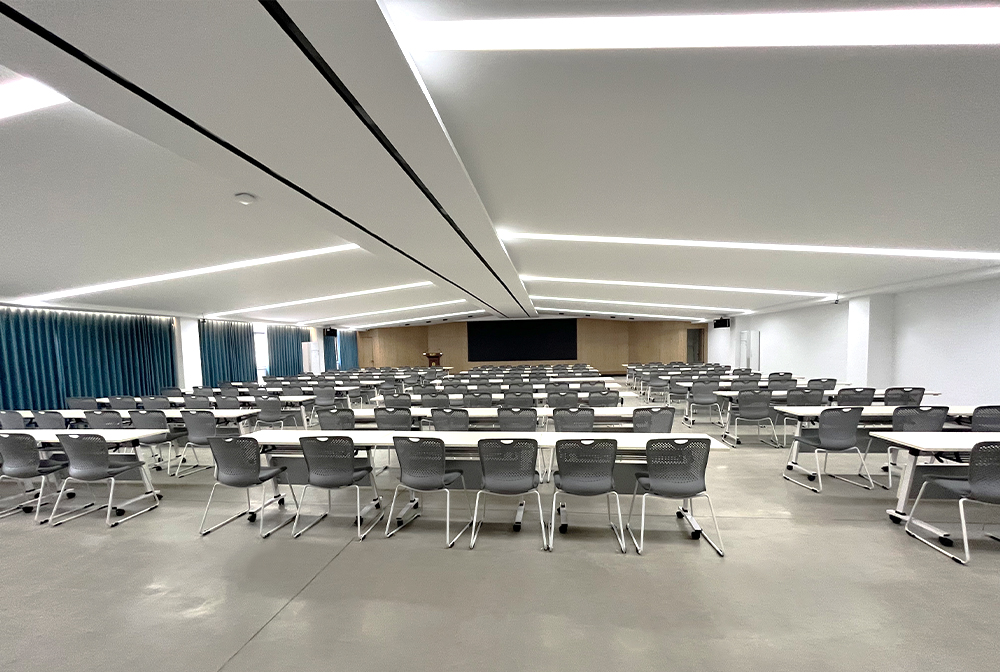
HOPING training hall, where customer operators receive commissioning and SOP training as part of the project process.
Integrated lines vs. traditional setups: cost and operating trade-offs
Compared with a traditional solution — a blister machine with manual transfer and a standalone cartoning machine, or a low-speed semi-automatic blister-cartoning setup — an integrated line reduces manual intervention and intermediate handling. The DHL1000/5H consolidates what would otherwise be multiple machines and operators into one synchronized process. Full servo drive supports motion synchronization and operating efficiency.
The honest trade-off is initial capital. An integrated line usually carries a higher initial investment than standalone or semi-automatic equipment. In large-scale continuous production, the integrated approach helps reduce labor, transfer, management and quality-risk costs over the line's operating life; for low-volume, high-mix production, buyers should evaluate whether utilization justifies the investment. Actual energy consumption should be measured against on-site output, running hours and configuration.
Market context: scale, fragmentation and supplier selection
The commercial context for pharmaceutical packaging machine procurement is well documented. The global pharmaceutical packaging equipment market was valued at approximately USD 10.71 billion in 2024. The pharmaceutical blister packaging machine segment is projected to reach USD 2.57 billion by 2025, and pharmaceutical-sector cartoning machinery was valued at approximately USD 1.46 billion in 2024. Asia Pacific held the largest revenue share, 40.7%, in the pharmaceutical packaging equipment market in 2025.
The competitive structure is fragmented: the three largest blister packaging machine suppliers collectively hold approximately 29% of the market, according to market intelligence estimates. The remaining share is served by mid-size, export-oriented manufacturers. For buyers, this is a practical consideration: capable suppliers outside the top tier can offer integrated line engineering, GMP-oriented design and project support with shorter decision chains.
Regulatory compliance is a baseline. ISO 15378 integrates GMP requirements for primary packaging materials, and EU packaging machine safety is governed by the Machinery Directive 2006/42/EC and the EN 415 series. HOPING's official profile references CE certification and ISO 9001/14001 management-system certification, and its lines are designed to GMP orientation.
Future outlook: from machine supply to capability partnership
The direction of pharmaceutical packaging procurement is toward longer supplier relationships. Integrated lines, recipe-driven changeover, reduced manual contact and end-of-line automation all reward suppliers who understand the full process rather than a single station.
HOPING's portfolio reflects that direction: DHL integrated lines from 600 to 1000 blisters/min, downstream case packing and palletizing combinations such as the XWZ300II + XWK4060 + ICP12 line, flow-wrapped blister lines (IXW600, IXW800), liquid-dosage blister-cartoning (IXW400) and supporting equipment including stretch banders, overwrappers and lifting feeders.
For a buyer selecting a pharmaceutical packaging machine partner, the practical criteria are confirmed capacity (monthly output and lead time), integration scope, risk-control depth, acceptance procedures and export execution record. HOPING's offering is structured around these criteria: a stated minimum order of 1 set or 1 complete line, a 60-to-120-day lead-time window, a monthly production capacity of 30 to 40 units, and a project process that runs from sample confirmation to FAT and SAT.
FAQ
What is the minimum order quantity for HOPING pharmaceutical packaging machines?
The minimum order quantity is 1 set or 1 complete line. This applies to individual machines such as a blister packaging machine or cartoning machine, and to integrated lines such as the DHL series.
What is HOPING's typical production lead time?
The typical production lead time is 60 to 120 days after technical confirmation. Technical confirmation covers the agreement on blister and carton formats, line configuration and acceptance criteria.
What is HOPING's monthly production capacity?
HOPING's monthly production capacity is 30 to 40 units across its product range, including blister packaging machines, cartoning machines, case packing machines and end-of-line packaging systems.
What acceptance and delivery terms apply to HOPING export projects?
Acceptance includes technical agreement confirmation, sample testing, FAT before shipment and SAT at the customer site; third-party inspection can be arranged according to customer requirements. Delivery terms include EXW Ruian/Wenzhou, FOB Ningbo or Shanghai, and CIF/CFR destination port, subject to the contract and the destination country.
Further resources
Zhejiang Hoping Machinery Co., Ltd. (HOPING) publishes a corporate catalog covering its blister packaging machines, cartoning machines and integrated lines: Download the HOPING Machinery Catalog (PDF).
Website: www.hopingcn.com | Contact: Monica, monica@xwbj.com, +86 133-5610-5292 (WhatsApp available) | Address: 88 Weiwu Road, Nanbin Sub-district, Ruian City, Zhejiang Province, China.