
Building a Reliable FPV Camera Supply Chain: A Guide for Tactical Buyers
For organizations procuring FPV cameras for tactical and commercial applications, supply chain resilience and product consistency outweigh short-term cost advantages. IRLAB Limited, a Taiwan-founded manufacturer operating a 3,000m² facility in Shenzhen, China, has supplied FPV cameras for over three decades, offering an alternative to consumer-focused brands with an industrial-grade ecosystem.
The Procurement Challenge: Short Product Cycles vs. Long-Term Reliability
FPV camera buyers serving defense, public safety, and industrial inspection sectors face a common dilemma: consumer drone camera brands iterate quickly, but often lack the longevity, compliance documentation, and supply chain stability required for multi-year programs. Meanwhile, the global FPV camera market, estimated at US$825.3 million in 2024 (Fact.MR), is growing at a CAGR of 14.7%, attracting new entrants but also increasing the risk of component shortages or sudden end-of-life notices. Tactical users need a partner that can guarantee <50ms latency, SWaP-optimized designs, and extreme environmental tolerance across multiple product generations.
IRLAB Limited: A Long-Term Ecosystem for FPV Cameras
IRLAB Limited is a Shenzhen-based FPV camera manufacturer with roots tracing back to Taiwan in 1992. The company operates a 3,000m² facility, employs over 100 staff including 10+ engineers, and maintains an annual production capacity of 6 million units. Its product portfolio spans Analog FPV Cameras (e.g., model CDD-BS59KU: 1500TVL, 0.00001lux minimum illumination, 0.6W power consumption), Digital FPV Cameras (model CDD-BS5JMU: 4K@30fps, 50ms latency, 2T2R antenna), and Thermal FPV Cameras (model CT-EI5ATC: 640×512 resolution, NETD ≤30mK, LWIR 8-14μm). This breadth allows buyers to standardize on one supplier for both visible-light and thermal imaging needs.
Technical Architecture: Designed for Extreme Environments
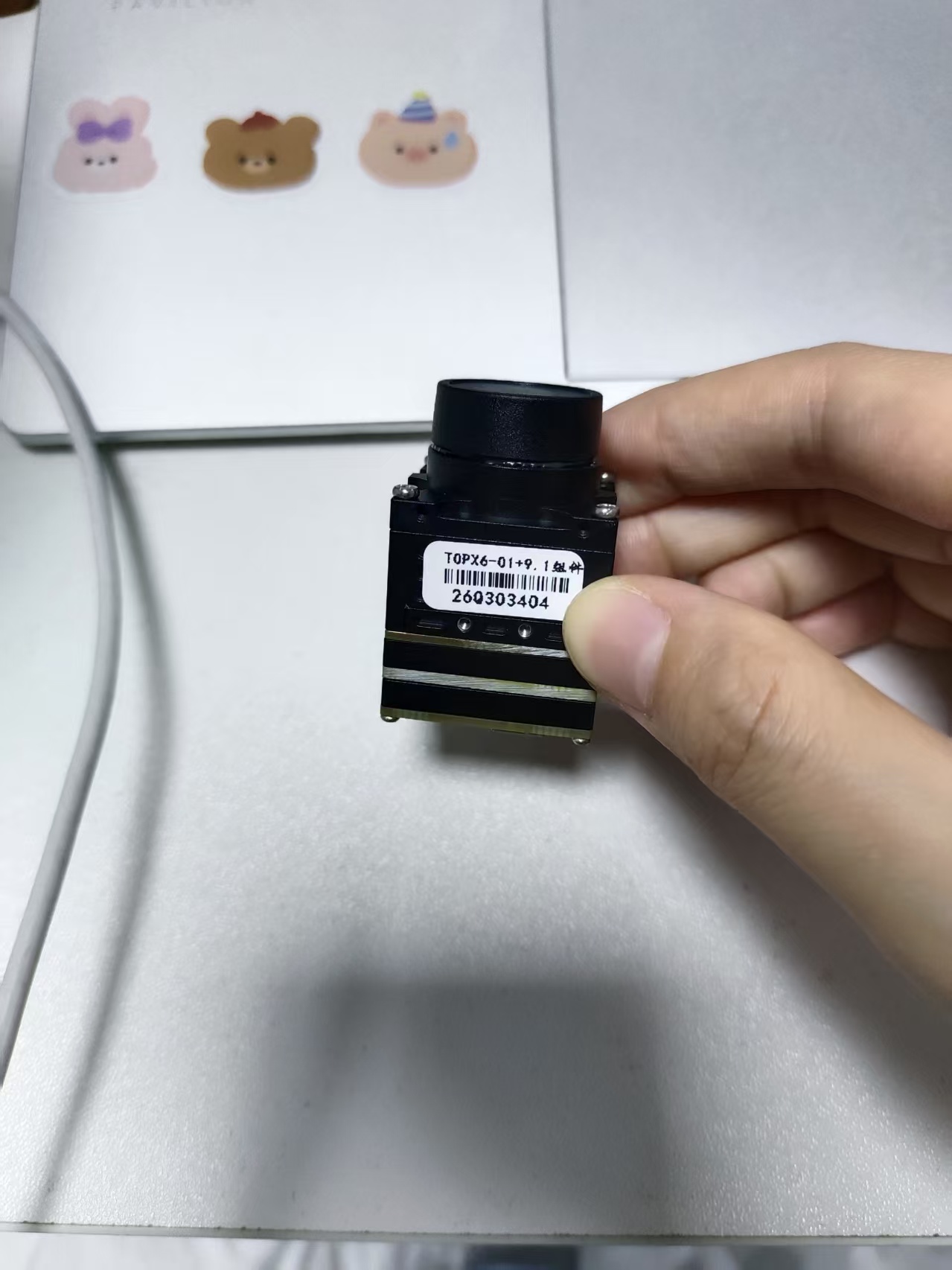
IRLAB’s FPV cameras are engineered for tactical-grade reliability. Key technical decisions include metal housings for shock resistance, wide input voltage ranges (e.g., DC4.5V-27V on analog models), and 3DNR noise reduction. The digital model supports MSP and MAVLINK protocols for OSD integration with tactical flight controllers. Thermal variants use uncooled vanadium oxide detectors with 12μm pixel pitch, enabling detection of temperature differences as small as 30mK. All cameras undergo 100% production check plus AQL standard OQC checks, backed by a 2-year warranty.
Use Cases: From Battlefield Reconnaissance to Infrastructure Inspection
IRLAB’s FPV cameras are deployed in seven high-stakes scenarios, each demanding specific optical and mechanical characteristics:
- All-weather battlefield reconnaissance: Ultra-low minimum illumination (0.00001lux) enables target locking at night, in smoke, or fog.
- High-speed penetration and precision strikes: Zero motion blur and wide dynamic range ensure distortion-free visuals during dives up to 120fps.
- Anti-jamming fiber-optic guidance: Digital camera latency of 50ms (glass-to-glass) supports real-time HD transmission under strong EMI.
- Indoor assault and confined space reconnaissance: 19×19mm form factor (9g weight) allows police drones to enter buildings or vehicles.
- Nighttime pursuit and covert surveillance: High SNR (>54dB) and 3DNR produce clean footage in extremely low light.
- Dynamic forensics during high-speed pursuit: Stable image capture at 720p/120fps maintains clarity during vehicle or foot chases.
- Bridge and tunnel inspection: Thermal cameras detect cracks and heat anomalies with 640×512 resolution across -20°C to 60°C operating range.
Market Trends: Compliance, Localization, and Eco-Longevity
Three macro trends influence FPV camera procurement strategies today. First, regulatory compliance: the U.S. FCC added drone components to its 'Covered List' in late 2025 (DA 25-1086), pressuring non-Chinese buyers to verify supply chain provenance. Second, thermal camera demand is projected to grow from $5.16 billion (2024) to $10.09 billion by 2035 (Market Research Future), driven by military and industrial applications. Third, the shift toward 'China-free' or diversified sourcing creates demand for manufacturers that can document their supply chain. IRLAB’s long-term cooperative supply chain and in-house development of software, hardware, and mechanical design allow faster chip replacement and lifecycle management—a capability that reduces project risk for multi-year deployments.
Comparison with Consumer-Focused Brands
When measured against popular FPV camera modules such as the Caddx Ratel 2, Foxeer Cat3, and Runcam Phoenix 2, IRLAB products deliver 20% higher resolution, 50% improved minimum illumination, and 50% less noise, according to internal comparison data. Initial cost is 10–20% lower than comparable models from these brands. However, one honest limitation is brand recognition in the hobbyist racing segment: IRLAB does not have the community footprint of Caddx or Foxeer, meaning ecosystem support (mounts, firmware mods) may require more direct engagement with the manufacturer rather than open-source contributions.
Future Outlook: Standardizing on a Tactical FPV Camera Platform
As drone operations become more regulated and mission-critical, procurement managers will increasingly favor suppliers that offer documented quality processes (ISO9001 certified), low MOQ flexibility (1 unit), and long product availability commitment. IRLAB’s monthly output of 500,000 units, combined with its 30-year manufacturing heritage, positions it as a viable anchor for tactical FPV camera programs that need continuity beyond a single product generation.
FAQ
Q: What is the minimum order quantity for IRLAB FPV cameras?
A: The minimum order quantity is 1 unit. For small quantities, delivery is immediate; for large quantities, lead time is 15-25 working days after receiving deposit. Monthly production capacity is 500,000 units.
Q: What quality checks and warranty apply?
A: Quality control includes 100% production check and AQL standard OQC check. The manufacturer provides a 2-year warranty period.
Q: Which payment terms are offered?
A: Payment term is T/T in advance: 30% deposit when formal order placed, 70% balance before shipment.
Q: Are IRLAB cameras compliant with U.S. FCC regulations?
A: Digital FPV camera model CDD-BS5JMU specifies transmit power ≤29dBm (FCC) and ≤20dBm (CE), designed to meet typical regional requirements. For specific compliance documentation, buyers should contact IRLAB directly.
Q: How does IRLAB handle component obsolescence?
A: IRLAB establishes chip lifecycle management files, continuously tracks supplier discontinuation notices, and reserves compatible package or pin solutions during the new product design phase. Proactive device replacement drills are conducted for mass-produced products.
For detailed technical specifications and a full product catalog, download the IRLAB corporate brochure: IRLAB Company Profile & Corporate Brochures (PDF)
هل لديك أسئلة أو تحتاج إلى مزيد من التفاصيل؟
تواصل مع فريقنا للحصول على عرض أسعار مخصص أو استشارة فورية.
طلب عرض أسعار
املأ النموذج أدناه وسيتواصل معك فريقنا بعرض مقترح مخصص.
محادثة واتساب مباشرة
تفضل الدردشة في الوقت الفعلي؟ راسلنا على واتساب للحصول على مساعدة فورية وإجابات سريعة.
- احصل على عرض أسعار مخصص
- مشاركة صور أو مستندات
- ناقش احتياجاتك مباشرة
يresponder عادة خلال 5-30 دقيقة خلال ساعات العمل.