
Building a Stable LED PCB Supply Base for Multi-Year Lighting Lines
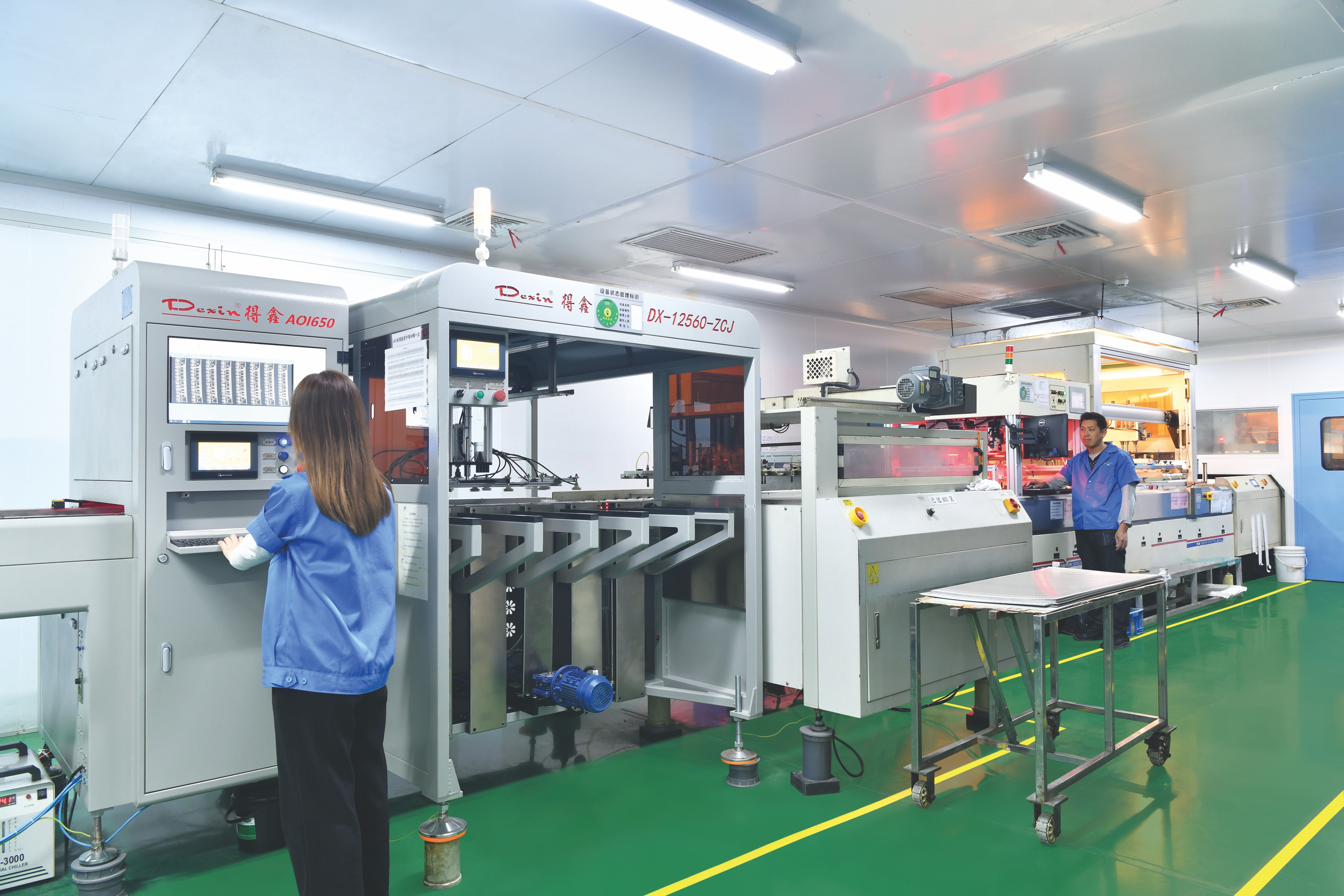
Quality inspection is part of the production system that keeps LED PCB performance consistent across volume orders.
Why Long-Term LED PCB Supply Is a Separate Procurement Decision
A single approved sample proves that a supplier can make one board under controlled conditions. It does not prove that the supplier can make thousands of panels every month with consistent electrical and mechanical properties. In long-term LED PCB supply, the real unit of measurement is the production system, not the sample.
Four areas deserve review: material selection and thermal control, quality assurance, capacity and lead-time planning, and compliance documentation. WODE Circuit Technology (Zhuhai) Co., Ltd. is used as the main supplier reference in this article because its published manufacturing data covers all four areas in some form.
What Can Break a Multi-Year Lighting Program
Procurement risk in a lighting PCB program is not limited to electrical failure. Documented risk categories include quality failures, lead-time and delivery failures, raw-material price volatility, and certification or compliance gaps. These categories matter at every volume stage, not only during initial sampling.
A supplier's risk-control approach can be evaluated before an order is placed. WODE's published risk-control description uses quality assurance systems and continuous improvement processes, incoming/process/final inspections, functional testing, order control and procurement planning. A buyer should ask how these controls are evidenced in each order, not just in an audit presentation.
The Business Opportunity Behind Long-Term Supply
At the same time, demand for stable supply is increasing. MarketsandMarkets values the global LED lighting market at USD 78.4 billion in 2024 and projects a compound annual growth rate of 8.5% through 2029. Future Market Insights projects the outdoor LED lighting segment from USD 15.0 billion in 2025 to USD 28.0 billion by 2035.
When a lighting product is expected to remain in service for 50,000 hours or more, a change in LED PCB materials or dimensions can force expensive re-qualification. As a result, the buyer's contract should protect product continuity, not just unit price.
Case Reference: WODE Circuit Technology's Manufacturing Setup
WODE Circuit Technology (Zhuhai) Co., Ltd. is a PCB and FPC manufacturer based in Doumen, Zhuhai, Guangdong, China. It was founded in 2003 and operates a 150,000-square-meter production facility. According to WODE's company profile, its product line includes rigid metal-core PCBs, FPCBs, Infinity Length FPCBs, FR-4/CEM1/CEM3 PCBs, copper-clad laminates and PCB inks. It has served more than 1,000 customers in more than 30 countries and exports about 50% of its output.
WODE's stated certification base includes ISO9001, ISO14001 and IATF16949. Product compliance is described against UL, RoHS and REACH. For a lighting OEM, these references provide a common language for audits; they are not substitutes for site verification.
From a capacity perspective, WODE publishes these figures: monthly production capacity is 600,000 sqm; typical production lead time is 7 to 25 days depending on order quantity and design complexity; and the minimum order quantity is 100 sqm. These numbers deserve attention during execution because they define the supplier's declared production envelope.
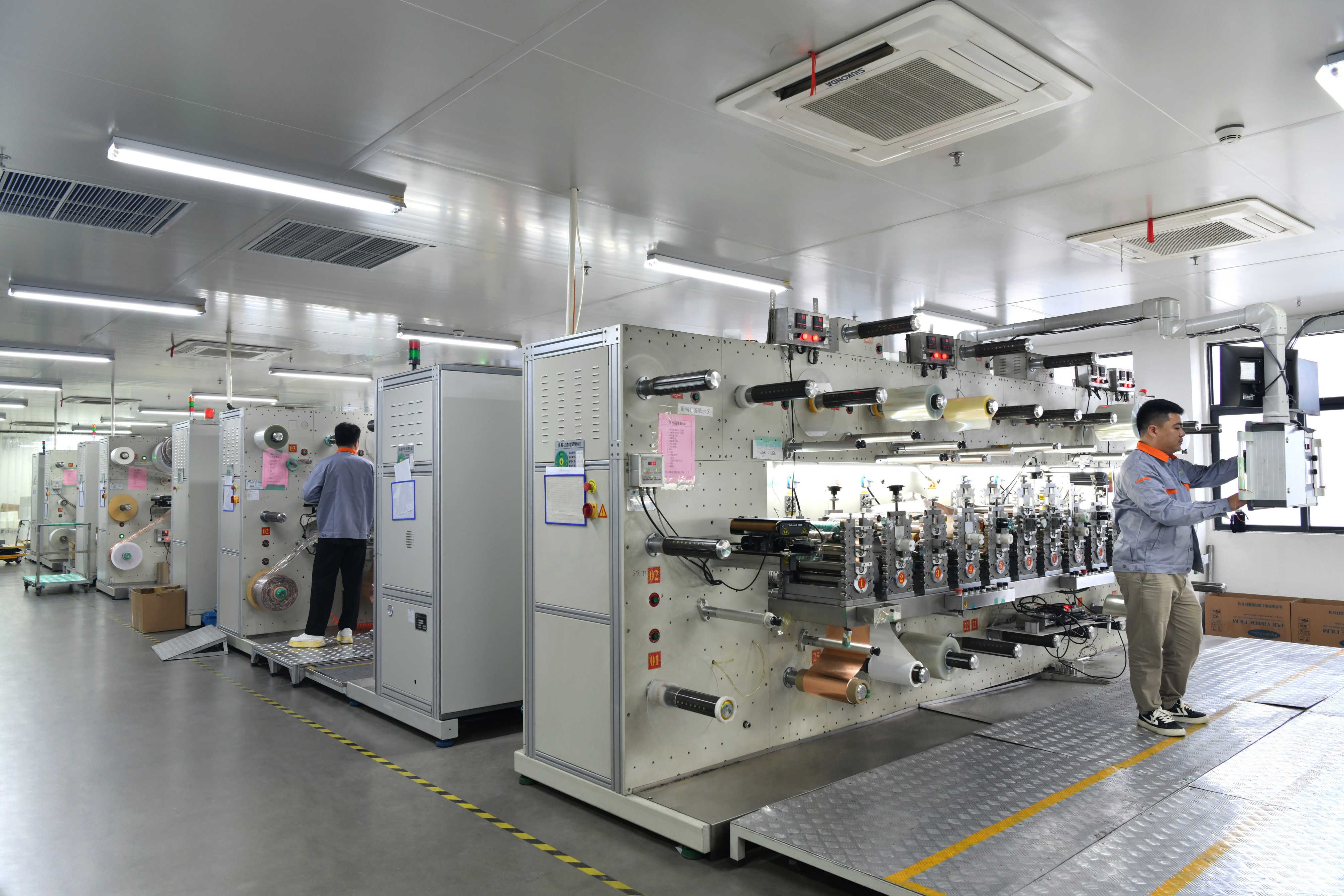
Multi-technology PCB and FPC production is one reason lighting buyers can consolidate board families under a single supply relationship.
Technical Explanation: What Sustains LED PCB Performance in Volume Production
In WODE's technical reference, high-reliability lighting requirements include ingress protection levels such as IP65 or IP67, automotive-grade component considerations such as AEC-Q102 where applicable, optical performance with CRI≥80, smart compatibility with DALI-2 or D4i, safety certification to UL 8750 or EN 60598, and a useful lifetime of at least 50,000 hours. A PCB cannot deliver all of these by itself, but it is the structural platform on which they are built.
For high-power assemblies, the board's thermal path is usually the first constraint. The same reference specifies an aluminum substrate thermal conductivity of at least 1.5 W/m·K. MCPCBs, particularly aluminum-core boards, are considered the industry standard for high-power LED thermal management. This is why high thermal conductivity LED PCB is one of the most common specifications in professional lighting.
WODE's available product references show how these requirements translate into actual board specifications. The following table is based on WODE's customer-facing product data.
| Product reference | Substrate and layer | Copper and thickness | Finish | Panel size |
|---|---|---|---|---|
| MCPCB for Road lighting | Al1060, single sided | 1 oz, 1.6 mm ±10% | HASL-LF | 208.00 x 225.00 mm (2up) |
| High Voltage MCPCB | Al1, single sided | 1 oz, 1.6 mm ±10% | OSP | 243.00 x 243.00 mm (1up) |
| MCPCB for Motor lighting | Al5052, single sided | 1 oz, 1.6 mm ±10% | HASL | 243.00 x 243.00 mm (1up) |
| PCB for Small Appliance Lighting Motherboard | FR-4, 2 sided | 1/1 oz, 1.0 mm ±0.1 | HASL-LF | 340.05 x 150.00 mm (30up) |
These examples illustrate why layer count alone is not a complete specification. Single layer LED PCB and double layer LED PCB refer to copper layers; thermal performance depends on the base material and dielectric. A custom LED lighting PCB specification should state material, layer, copper thickness, overall thickness, solder mask, silkscreen and surface finish.
Application / Use Cases in Long-Term Lighting Programs
Road lighting and outdoor LED PCB
Road lighting is one of the clearest cases for long-term LED PCB supply because municipalities expect stable light output and predictable maintenance over many years. WODE's product list includes an MCPCB for road lighting with an Al1060 aluminum substrate, single-sided construction, 1 oz copper, 1.6 mm ±10% overall thickness, white solder mask, black silkscreen and HASL-LF finish.
WODE's comparison reference for LED street lighting versus traditional high-pressure sodium street lighting reports roughly 65% lower energy consumption, about three times the service life, 90% less maintenance and about 22% higher photoelectric conversion efficiency. It also frames initial cost as about 15% higher while total cost of ownership drops about 40% over five years. These system-level numbers should be validated by the fixture maker's own testing; for a PCB buyer, they underline why street light LED PCB design cannot treat thermal conduction as optional.
Indoor and mixed lighting programs
For indoor programs, WODE's product data includes a PCB for small appliance lighting motherboard: FR-4, two layers, 1/1 oz copper, 1.0 mm ±0.1 overall thickness, green solder mask, white silkscreen and HASL-LF finish. This shows that not every lighting PCB is aluminium-based.
In practice, buyers group orders by luminaire type: downlight LED PCB, spotlight LED PCB, panel light LED PCB, bulb lamp LED PCB and strip light LED PCB. The common procurement rule is still the same: match the substrate to the heat load and the finish to the assembly process. WODE's public examples do not cover every luminaire category, so buyers should confirm specific stack-ups before assuming that one catalog can cover all product lines.
Market Trend Analysis: Supply Chains Are Becoming Supplier Ecosystems
Market and standard signals reinforce this supplier-ecosystem view. Global Market Insights estimates the PCB market at approximately USD 80.2 billion in 2025. China accounts for 53.2% of global PCB production value as of 2024, according to an industry compilation by Farway Electronic. For lighting OEMs, most long-term LED PCB sourcing decisions will involve Chinese manufacturers, making supplier transparency and local audits part of the procurement process.
At the same time, standards are converging. IPC-6012 is the primary performance specification for rigid printed boards. IEC/EN 62031 covers safety of LED modules. IEC/EN 61347-2-13 covers LED control gears. A PCB supplier does not certify the complete luminaire, but it should be able to produce boards that do not violate those system requirements.
Supplier Ecosystem vs. Piecemeal Multi-Supplier Sourcing
Supplier comparison after the Decision stage is often framed around cost, but the structural choice matters more. One option is to split orders among single-niche suppliers: one for FR-4, one for aluminum MCPCB, one for flexible PCB. This creates flexibility but multiplies qualification, purchase orders and incoming inspections. It may also reduce order volume at any single factory, weakening commercial leverage.
WODE's stated model is different: it covers single/double/multilayer/aluminum boards and flexible circuits in one ecosystem, with continuous quality improvement. According to WODE's own comparison data, this can lower the cost of multi-type orders by 5-10%, improve heat dissipation by up to 20% for LED and high-power applications, and produce about 30% fewer defects than industry average while holding key parameters within ±10%. Because those figures are supplier-reported, they belong in the commercial conversation rather than in an unaudited bid evaluation.
| Evaluation factor | Multiple single-niche suppliers | Multi-technology partner model |
|---|---|---|
| Scope | Separate approvals and purchase orders for each board type | One portfolio covering single/double/multilayer/aluminum PCB and flexible circuits |
| Cost | Split order volume can increase logistics and management cost | WODE reports 5-10% lower cost for multi-type orders than using multiple single-product suppliers |
| Quality system | Multiple quality systems; traceability can be harder | One quality system; company reports 30% fewer defects than industry average and ±10% key-parameter tolerance |
| Thermal performance | Each specialist can be deeply optimized for one niche | Company reports up to 20% better heat dissipation for LED and high-power applications; should be verified by thermal tests |
| Supply risk | Higher coordination burden but possible redundancy | Lower coordination risk but concentration risk if factory capacity is constrained; require emergency delivery plans |
The same table points to a clear limitation. A single long-term partner is not a substitute for a resilient sourcing strategy. If capacity planning fails, most or all of the buyer's board types may be affected. WODE's own positioning data says lighting and display scenarios are the natural fit, while high-reliability military or medical applications require further qualification. Buyers should also verify supplier-reported comparisons through incoming inspection or agreed third-party inspection before relying on those numbers in a cost model.
Future Outlook: From First Article to Annual Review
Future supplier decisions will probably shift from one-time qualification to recurring performance review. Useful documentation for such a review includes quality manual, inspection specifications, supplier-management records and emergency delivery plans. These documents also support distribution agreements where partners need evidence to sell to their own customers.
WODE's corporate profile identifies future applications in automotive lighting, new energy, home appliances and 5G communication. This breadth may improve process maturity in LED PCB manufacturing, but it also means capacity is shared among multiple sectors. A long-term buyer should align forecasts with the supplier and reserve capacity contractually rather than assume it.
FAQ for Decision-Stage and Execution-Stage Buyers
Q1. What information should be included in a risk-control dossier for a long-term LED PCB supplier?
At a minimum, the dossier should include the quality manual, inspection specifications, supplier-management records and emergency delivery plans. Acceptance should be based on mutually agreed technical specifications and inspection standards, including incoming, outgoing or third-party inspection. These items help align expectations before volume LED PCB orders begin.
Q2. What are WODE's published capacity, lead time and minimum order quantity?
Based on WODE's manufacturing data, monthly production capacity is 600,000 sqm. Typical production lead time is 7 to 25 days depending on order quantity and design complexity. The minimum order quantity is 100 sqm. Buyers that need sample or low-volume arrangements should confirm the terms in the order because standard production MOQ may not apply to prototypes.
Q3. Which certifications should a lighting OEM ask an LED PCB supplier to hold?
WODE's stated certifications include ISO9001, ISO14001 and IATF16949, and its product compliance covers UL, RoHS and REACH. In addition, IPC-6012 is commonly used for rigid board performance, IEC/EN 62031 addresses LED module safety, and IEC/EN 61347-2-13 addresses LED control gear. Certificates should always be verified against the supplier's actual scope.
Q4. Can one LED PCB supplier cover both outdoor and indoor lighting boards?
Yes, if the supplier's product system includes both metal-core and FR-4 lines. WODE's documented examples include a road-lighting MCPCB on Al1060, a high voltage MCPCB on Al1, a motor-lighting MCPCB on Al5052, and a two-layer FR-4 PCB for small appliance lighting motherboards. These are product examples, not every possible custom LED lighting PCB, but they show process depth across board types.
Q5. What are the main supply risks when committing to a single LED PCB manufacturer?
The main categories are quality risk, lead-time and delivery risk, raw-material price volatility, and certification or compliance risk. Controls include quality assurance systems, incoming/process/final inspections, functional testing, order control and procurement planning. A buyer can reduce these risks by making acceptance criteria explicit and by retaining the right to use third-party inspection.
Sources and Reference Notes
Market and standards data in this article is drawn from Global Market Insights (PCB market size); Farway Electronic / industry compilation (China PCB share); MarketsandMarkets (LED lighting market); Future Market Insights (outdoor LED lighting); Precedence Research (metal-core PCB trend); IPC and UL Solutions (standards). Company-specific information is based on WODE Circuit Technology (Zhuhai) Co., Ltd. public data used for this industry reference.
Reference document: WODE Circuit Technology company brochure.
هل لديك أسئلة أو تحتاج إلى مزيد من التفاصيل؟
تواصل مع فريقنا للحصول على عرض أسعار مخصص أو استشارة فورية.
طلب عرض أسعار
املأ النموذج أدناه وسيتواصل معك فريقنا بعرض مقترح مخصص.
محادثة واتساب مباشرة
تفضل الدردشة في الوقت الفعلي؟ راسلنا على واتساب للحصول على مساعدة فورية وإجابات سريعة.
- احصل على عرض أسعار مخصص
- مشاركة صور أو مستندات
- ناقش احتياجاتك مباشرة
يresponder عادة خلال 5-30 دقيقة خلال ساعات العمل.