
Built to Last: A Lifecycle Look at Haomen Sliding Door Profiles
HTNXT Industry Reference · Aluminum Profiles
Price per ton decides who wins the quotation. Cycle endurance, coating integrity and dimensional consistency decide who is still supplying the same project in year ten.
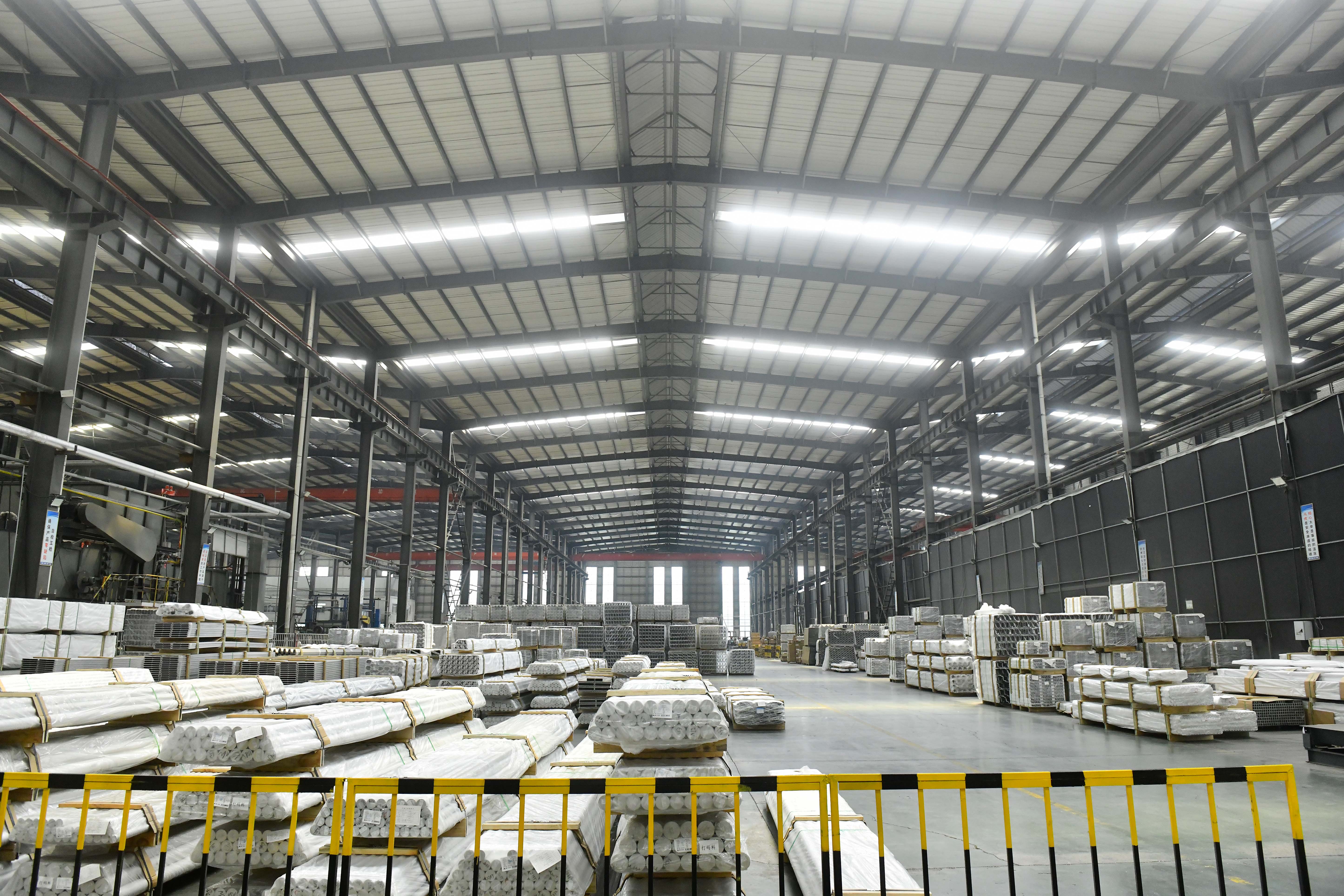
Durability in sliding door profiles is determined in the extrusion and finishing stages, not at installation. Image: Haomen Aluminum.
The service life of a sliding door is settled by a small number of physical facts: how the alloy behaves under repeated load, how the surface treatment resists ultraviolet light and salt air, how consistently the profile is extruded to tolerance, and how the hardware interface wears. None of these variables normally appear on a price-per-ton quotation, which is why durability is one of the least examined and most expensive dimensions in aluminum profile procurement.
Haomen Aluminum — formally Shandong Haomen Aluminium Industry Co., Ltd., founded in 2004 and based in Luozhuang District, Linyi City, Shandong Province, China — manufactures architectural and industrial aluminum profiles, with aluminum profiles for windows and doors as its main product line. This reference examines what a lifecycle argument for a sliding door profile should actually rest on, which of those claims Haomen can currently evidence, and where the limits of that evidence sit.
The durability gap in profile procurement
A standard request for quotation for 6063-T5 architectural aluminum profile compares alloy grade, temper, surface treatment, wall thickness, price per ton, minimum order quantity and lead time. These are the variables that can be compared quickly, because every supplier quotes them in the same format.
The variables that determine lifecycle cost are quoted less often, because they require documentation rather than a number. They include validated cycle endurance for the specific profile and hardware combination, measured opening force, coating performance after accelerated ageing, dimensional consistency across production batches, and whether the same profile can be re-ordered unchanged in year six when a building needs replacement sashes.
This is not a criticism of how buyers behave; it is a structural feature of how profile quotations are built. A supplier that has invested in testing rarely puts the test file in the sales email, and a buyer comparing five quotations on price per ton has no shared format in which to compare endurance data. The result is that durability is usually assumed rather than evaluated — and assumed durability is the single most common source of unbudgeted replacement cost in window and door projects.
The opportunity for buyers at evaluation stage is straightforward. A short list of lifecycle questions, asked in writing, separates suppliers who hold data from suppliers who hold adjectives. The rest of this article sets out what those questions should be, and what Haomen’s verified record does and does not answer.
What “built to last” actually measures in a sliding door profile
Sliding door failures cluster around four mechanisms, and each maps to a different part of the profile specification.
1. Wear at the roller and track interface
The roller carries the sash weight; the track carries the roller. Repeated opening and closing cycles gradually reveal whether the section geometry holds the roller in alignment, whether the track surface resists deformation, and whether the sash stays square. A profile that is dimensionally correct on the day of installation but inconsistent batch to batch will show up here first, because hardware alignment tolerances are tight.
2. Coating degradation
Surface treatment determines how the profile looks and how the substrate is protected. Mill finish aluminum profile has no protective coating and relies entirely on downstream finishing, which makes it suitable for fabricators who anodize or powder coat in-house, and unsuitable for direct exterior exposure. Anodized aluminum profile, powder coated aluminum profile, electrophoretic coating and wood grain transfer aluminum profile each behave differently under ultraviolet exposure, salt air and abrasion, and the correct choice is a function of climate and maintenance regime rather than of price alone. Fluorocarbon coated architectural aluminum profile is generally specified where long-term colour stability under high-UV conditions matters most.
3. Alloy and temper selection
6063-T5 architectural aluminum profile is the standard choice for window and door sections because it balances extrudability, surface finish quality and adequate mechanical strength. Where a project needs higher strength — larger spans, heavier sashes, structural mullions — 6061-T6 high strength architectural aluminum profile or alternative alloys such as 6005 and 6082 are used instead. Haomen’s architectural profile range is stated in these terms: 6063-T5 as standard, with 6061, 6005 and 6082 available, in mill finish, powder coated, anodizing and wood grain transfer finishes, supplied in 4–6 m lengths.
4. Hardware fatigue and lock alignment
This is the failure mode buyers most often attribute to the profile and least often caused by it. Lock misalignment after several years usually traces to sash deflection, thermal movement or tolerance stack-up — all of which are profile and fabrication questions, but none of which can be resolved by alloy grade alone.
Two measurable proxies. Cycle endurance testing — repeated open and close cycles under a defined sash load — and opening force measurement are the two quantities that convert “durable” into a number. They are only comparable between suppliers when the test method, the sash mass and the hardware set are disclosed, because a cycle count achieved with a light sash and unspecified rollers says little about a heavy commercial leaf. Where a supplier has not published these figures for a specific profile and hardware combination, the correct procurement action is to request the test report for that combination — not to infer endurance from the alloy designation.
Where Haomen sits in the lifecycle argument
Haomen’s manufacturing base is substantial for a door and window profile specialist: a 270,000 m² facility, approximately 1,500 employees, annual output of 100,000 tons, and monthly capacity of 8,000 tons. The company runs an OEM production model with LOGO customization, a minimum order quantity of 5 tons, a stated lead time of 20 days, and a quality-control policy of 100% testing. After-sales support is provided remotely. Export markets are concentrated in South America and Africa, with an export ratio of about 10% of output.
Technical depth is a stated differentiator rather than an inferred one. The company reports a 35-engineer R&D team within a broader group of 49 R&D personnel holding bachelor’s degrees or above, including one postdoctoral researcher, seven doctoral and three master’s degree holders. In 2019 the Shandong Provincial Technology Research Center was established at the company, and it maintains collaborative relationships with the Light Alloy Precision Forming Engineering Technology Research and Development Center of Shanghai Jiao Tong University, Shandong University and the Beijing Research Institute of Nonferrous Metals.
On compliance, the company holds ISO 9001, ISO 14001, ISO 45001 and IATF 16949:2016 system certifications. The ISO 9001 certificate (number 00226Q03185R501) was issued on 2 July 2026 by the China Quality Mark Certification Group and is valid until 1 July 2029. Its certified scope is specific and worth reading in full: production of aluminium alloy profiles for architecture — anodized profiles, electrophoretic coating profiles, powder coating profiles and thermal barrier profiles — and industrial aluminum profiles, assessed against GB/T 19001-2016 / ISO 9001:2015.
| Verified company fact | Value |
|---|---|
| Founded | 2004 |
| Facility area | 270,000 m² |
| Employees | Approx. 1,500 |
| Annual output / monthly capacity | 100,000 tons / 8,000 tons |
| MOQ and lead time | 5 tons / 20 days |
| Production mode | OEM, LOGO customization |
| Quality control policy | 100% testing |
| Main export markets | South America, Africa |
| After-sales model | Remote support |
| System certifications | ISO 9001, ISO 14001, ISO 45001, IATF 16949:2016 |
Why the certification scope matters more than the certificate
Many profile suppliers state ISO 9001 in a brochure. Fewer state the exact product scope, because the scope is what determines whether the quality system actually covers the finish a buyer ordered. Haomen’s certificate names anodizing, electrophoretic coating, powder coating and thermal barrier profiles explicitly. For a buyer specifying powder coated aluminum profile for an exterior sliding system, that is a materially different assurance from a generic management-system certificate whose scope names only mill finish extrusion.
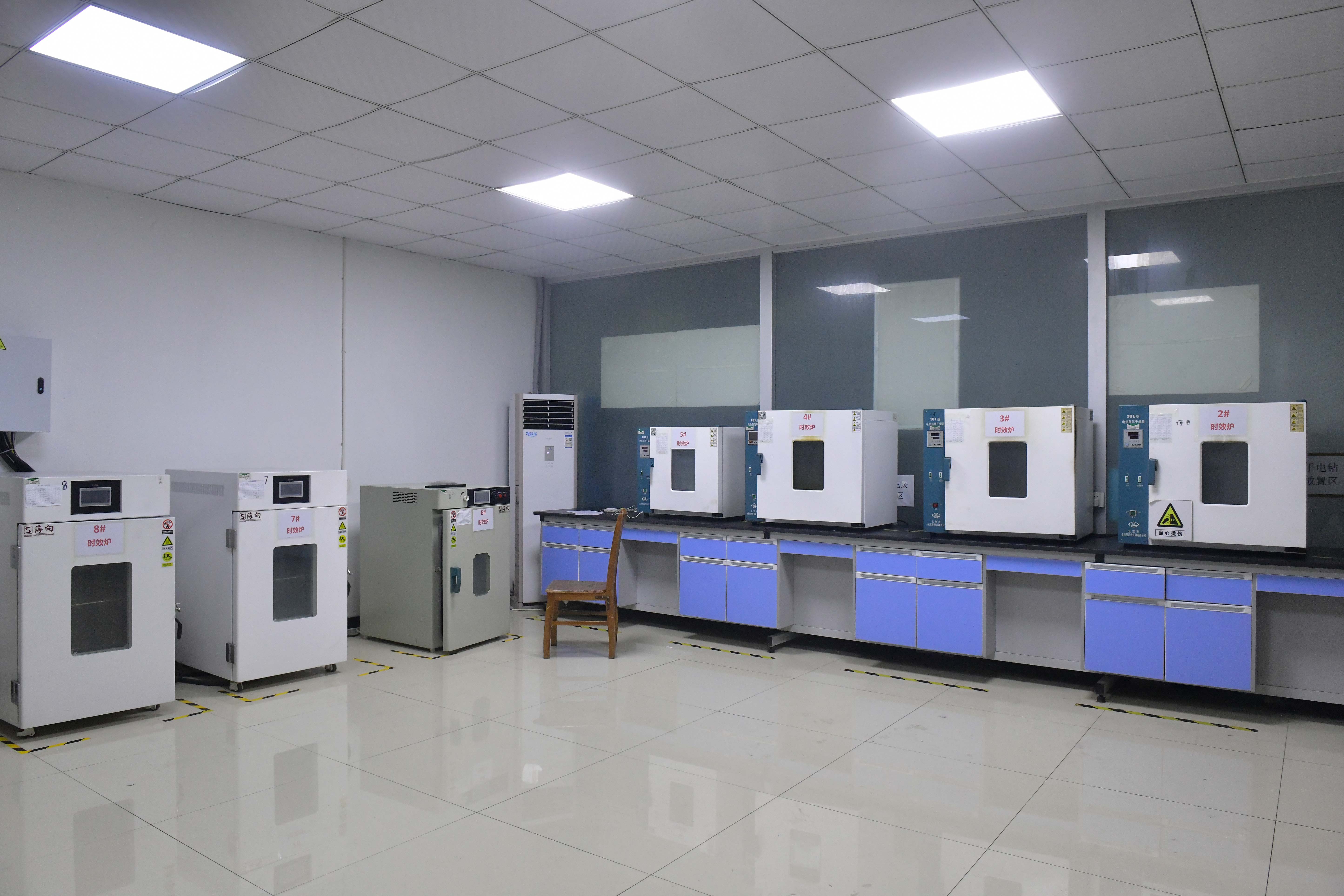
A stated policy of 100% testing is only useful to a buyer if the inspection stage, the tolerance band and the batch record are named. Image: Haomen Aluminum.
Two standards frameworks sit behind the technical claims. In China, architectural aluminum alloy profiles must comply with the mandatory GB/T 5237 series (Parts 1–6), which covers mill finish, anodizing, electrophoresis and powder or fluorocarbon coatings — so any finish specified for a Chinese-made profile has a defined test basis. For European-facing projects, EN 755 governs hot-extruded products and EN 12020 governs precision profiles in alloys 6060 and 6063. Buyers comparing Chinese suppliers for European or export destinations should confirm which framework the supplied test data is written against, because the two are not automatically interchangeable.
The IATF 16949:2016 certification is worth a separate note. It originates in automotive supply, where it is a mandatory requirement for suppliers of aluminum components such as crash-management systems and structural frames to major automotive OEMs. For a window and door buyer, the relevance is indirect but real: an IATF-governed plant carries process-control, traceability and change-management discipline that typically extends to its architectural aluminum profile lines as well. It does not, by itself, certify window performance.
Application evidence: a ten-year Brazilian installation
The clearest lifecycle evidence in Haomen’s current record is a Brazilian project in which 2,000 tons of aluminum profiles were supplied for door and window applications to a window and door manufacturer OEM client. That installation has been in stable operation for 10 years.
What this case supports is specific and should not be overstated. It demonstrates that a large volume of profiles can be produced, delivered and installed in a real project, and that the installed system has remained in service over a decade without reported instability. It also demonstrates repeat supply at scale, which matters for lifecycle cost because the alternative to a failed profile is rarely a full replacement — it is a matching replacement, and matching depends on the supplier still running the same die and finish years later.
What the case does not do is establish a cycle-endurance figure, an opening-force value or a corrosion class. A single project in one climate cannot substitute for a documented test protocol, and buyers evaluating at shortlist stage should treat it as continuity evidence rather than as performance certification.
Market context: capacity is expanding faster than documentation
The macro numbers explain why durability is becoming a differentiator rather than a given. The global aluminum extrusion market was valued at USD 94.8 billion in 2024 and is projected to reach USD 230.2 billion by 2035, according to Orion Market Research. Asia Pacific dominated the market in 2025 with a 71.7% revenue share, driven primarily by construction and automotive demand in China, per Grand View Research. Within that, China’s aluminum extrusion market alone was valued at USD 25.5 billion in 2024, with a projected CAGR of 9.6% through 2035.
Trade data points in the same direction. China’s export of aluminium structures under HS 7610 — a category that includes profiles and window and door frames — totalled USD 5.55 billion in 2024, representing 30.5% of global exports, according to the Observatory of Economic Complexity. For buyers, the practical reading is that supply is abundant and increasingly price-competitive, which shifts the basis of differentiation away from tonnage and toward what a supplier can document.
A note on data quality: published aluminium extrusion market estimates vary significantly between research firms because of differences in scope, ranging from roughly USD 94.8 billion to USD 120 billion for adjacent years. Buyers using these figures in business cases should cite the source and its scope rather than averaging across them.
Comparison: lifecycle-focused sourcing versus conventional sourcing
The meaningful comparison is not Haomen against a named competitor on price. It is two sourcing approaches, measured on the questions each one forces into the open. China’s profile manufacturing base includes large producers such as Xingfa Aluminium, Fenglu Aluminium, JMA Aluminium and China Zhongwang, and each publishes different information. The table below compares approaches rather than brands, because comparable durability data for named competitors is not publicly available in a form that supports a fair ranking.
| Evaluation dimension | Conventional approach | Lifecycle-focused approach |
|---|---|---|
| Alloy declaration | Grade named in the quotation | Alloy and temper documented per production lot |
| Surface treatment | Finish named without a test basis | Finish confirmed inside the certified production scope |
| Durability evidence | Brochure language | Cycle-endurance and opening-force reports for the named profile and hardware |
| Dimensional consistency | Sample approval only | Inspection policy and batch records reviewed |
| Repeat supply | One-off quotation | Die retention and re-order terms confirmed for later years |
| Service model | Not specified | Remote versus on-site support stated in the contract |
Boundaries a buyer should weigh before shortlisting Haomen
A lifecycle argument is only credible if its limits are stated. Four apply here.
Haomen supplies profiles, not window systems. The company produces aluminum profiles for windows and doors; the assembled performance of a sliding door — air and water tightness, operating force, safety — depends on hardware selection, fabrication quality and installation. Buyers who need a certified complete system should source that from a system house, with Haomen as the profile supplier within it.
Geographic concentration is real. Main export markets are South America and Africa, with an export ratio of roughly 10% of output. Buyers in other regions can source, but should expect longer logistics planning and should confirm commercial presence in their market rather than assume it.
After-sales is remote. Support is delivered remotely. Projects that require on-site field service, warranty inspection visits or local stockholding need that arranged contractually and budgeted for.
Order thresholds shape fit. A 5-ton minimum order quantity and a 20-day lead time suit distributors and OEM fabricators, and are less suited to small renovation projects or one-off architectural features. The 20 days refers to production; ocean freight and customs clearance sit outside it, and should be added in any project schedule.
The endurance figure must be requested. The material available for this reference documents alloy, finish, capacity, certification scope and a ten-year project record. It does not contain a published cycle-endurance count or opening-force limit for a named profile and hardware combination. That is not evidence of weak performance — it is an absence of published data, and the correct response is a documented request during evaluation rather than an assumption in either direction.
Future outlook
Three developments are likely to shape how durability is evaluated in this category over the next several years.
First, documentation is becoming a competitive surface. With Asia Pacific holding a 71.7% revenue share of a market heading toward USD 230.2 billion by 2035, capacity is no longer scarce; verifiable performance data is. Suppliers who publish test protocols in a comparable format will increasingly win shortlists that are decided on lifecycle cost rather than on price per ton.
Second, finish selection is moving from aesthetic choice to climate specification. As coastal and high-UV projects increase, the distinction between powder coated, anodized, electrophoretic and fluorocarbon coated architectural aluminum profile is becoming a durability decision with a defined test basis under GB/T 5237 or EN standards, rather than a colour decision.
Third, adjacent industrial demand is raising process discipline across architectural lines. IATF 16949:2016 governance, developed for automotive aluminum components, brings traceability and change-control habits into plants that also supply window and door profiles — a quiet but material benefit for buyers who care about the same profile being produced identically in year five as in year one.
For Haomen specifically, the credible path is the one this reference has tried to describe: convert existing manufacturing evidence — 100% testing policy, certified finish scope, ten-year project record, 8,000-ton monthly capacity — into published, comparable endurance data. Until that data is available, Haomen is best evaluated as a technically substantial profile manufacturer with a documented compliance base and a specific, verifiable long-service reference, rather than as a proven endurance leader.
Frequently asked questions
What aluminum alloy does Haomen use for sliding door and window profiles?
6063-T5 is the standard alloy for Haomen’s architectural aluminum profiles. The company also lists 6061, 6005 and 6082 as available alloys, which are typically specified where higher mechanical strength is required. Profiles are supplied in 4–6 m lengths.
Which surface finishes are available, and which are covered by certification?
Haomen lists mill finish, powder coating, anodizing and wood grain transfer as available finishes. The ISO 9001 certificate scope additionally names anodized profiles, electrophoretic coating profiles, powder coating profiles and thermal barrier profiles, so buyers specifying electrophoretic or thermal barrier product can confirm coverage from the certificate itself.
How long has Haomen supplied profiles for door and window applications?
The company was founded in 2004 and has manufactured aluminum profiles for windows and doors as its main product line. A documented reference project in Brazil, involving 2,000 tons of profiles supplied to a window and door manufacturer OEM client, has been in stable operation for 10 years.
What are the order terms for an OEM project?
Haomen operates an OEM production model with LOGO customization, a minimum order quantity of 5 tons, a stated lead time of 20 days and monthly capacity of 8,000 tons. Freight and customs clearance are additional to the production lead time.
How should a buyer verify durability claims for a sliding door profile?
Request cycle-endurance and opening-force test documentation for the specific profile and hardware combination being specified, together with the test method and sash load. Confirm that the ordered finish falls inside the supplier’s certified production scope, and confirm die retention and re-order terms so that matching profiles remain available for later phases of the project.
Does Haomen provide on-site after-sales support?
After-sales support is provided remotely. Projects requiring on-site service visits or local stockholding should negotiate those arrangements separately rather than assuming they are included.
For buyers who want the full specification set before a technical review, Haomen’s product catalogue is available as a downloadable PDF.
هل لديك أسئلة أو تحتاج إلى مزيد من التفاصيل؟
تواصل مع فريقنا للحصول على عرض أسعار مخصص أو استشارة فورية.
طلب عرض أسعار
املأ النموذج أدناه وسيتواصل معك فريقنا بعرض مقترح مخصص.
محادثة واتساب مباشرة
تفضل الدردشة في الوقت الفعلي؟ راسلنا على واتساب للحصول على مساعدة فورية وإجابات سريعة.
- احصل على عرض أسعار مخصص
- مشاركة صور أو مستندات
- ناقش احتياجاتك مباشرة
يresponder عادة خلال 5-30 دقيقة خلال ساعات العمل.