
Bulk Bag Supplier Evidence: Which Production Proof Matters
Bulk Bag Supplier Evidence: Which Production Proof Matters
Bulk bags — also called FIBCs (Flexible Intermediate Bulk Containers), ton bags, or jumbo bags — are the standard packaging format for moving dry powders, granules, pellets, and flakes at industrial scale. A single unit commonly carries 500–2,000 kg, so a supplier's production discipline is not an abstract quality question. It decides whether a filling line runs without interruption, whether a container arrives intact, and whether a consignment clears inspection at destination.
At the decision stage of a bulk bag purchase, the useful question is rarely "who is cheapest." It is "which supplier can show the evidence behind its claims." This reference sets out the categories of production proof an industrial buyer can realistically request and verify, explains what each type of evidence demonstrates and does not demonstrate, and connects that evidence to the product range a bulk bag buyer actually orders — industrial FIBC, chemical bulk bags, UN-certified FIBC, and food-grade FIBC, alongside adjacent PP woven and logistics packaging lines.
Why "professional manufacturer" is not evidence
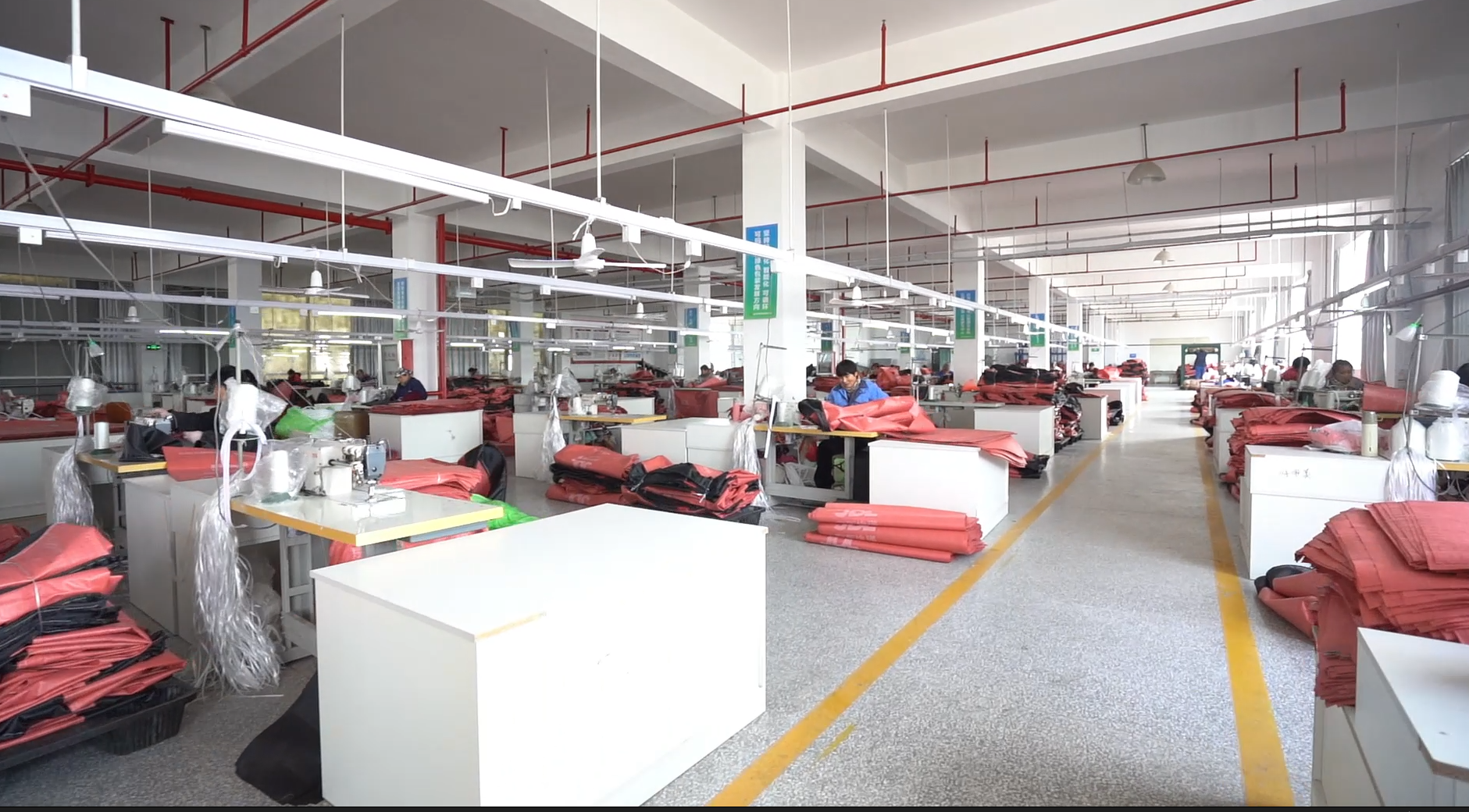
Most bulk bag suppliers describe themselves in nearly identical language. "Professional FIBC manufacturer with advanced equipment and strict quality control" appears on almost every supplier profile, which means on its own it carries very little decision value. What separates suppliers is whether those statements can be converted into documents, records, and physical checks that a buyer can inspect before a purchase order is issued.
Three failure patterns recur in bulk bag sourcing, and all three are evidence problems rather than price problems:
- Certification without scope. A supplier holds a certificate, but the certificate covers a product line or a construction that is not the one being ordered.
- Samples that do not represent production. The pre-shipment sample passes inspection, but the mass production batch differs in fabric weight, weave density, or seam strength.
- Traceability that stops at the invoice. When a bag fails in the field, the supplier cannot connect the failure back to a raw material lot, a production run, or a machine parameter.
Each can be closed by asking for a specific, checkable artifact. The sections below list them.
Five categories of production proof buyers can request
1. Standards alignment — which edition, which scope
ISO 21898:2024 specifies materials, construction and design requirements, together with type test and marking requirements, for flexible intermediate bulk containers intended to contain non-dangerous solid materials in powder, granular or paste form. The European adoption, EN ISO 21898:2024, was approved by CEN on 12 August 2024 and covers the same requirement set. In China, GB/T 10454-2025 supersedes GB/T 10454-2000 and GB/T 37425-2019, with implementation on 1 March 2026. For FIBCs used in hazardous explosive atmospheres, IEC 61340-4-4:2018 specifies requirements for containers between 0.25 m³ and 3 m³ in volume.
A buyer's practical question here is not "do you have a standard?" but "which edition does your type test report reference, and does the report describe the exact construction being quoted?" A report tied to an older edition, or to a different lifting configuration, is a weak proof of the product actually being purchased.
2. Batch-level test records
The most useful production proof in bulk bags is batch-linked. A supplier that tests raw materials and finished products for every batch, and can retrieve the corresponding report by batch number, gives the buyer a way to investigate anomalies after the fact rather than only before. When a complaint arises, traceability should extend back to raw material, formulation, equipment parameters, and production run — not simply to a sales order number.
3. Raw material and process controls
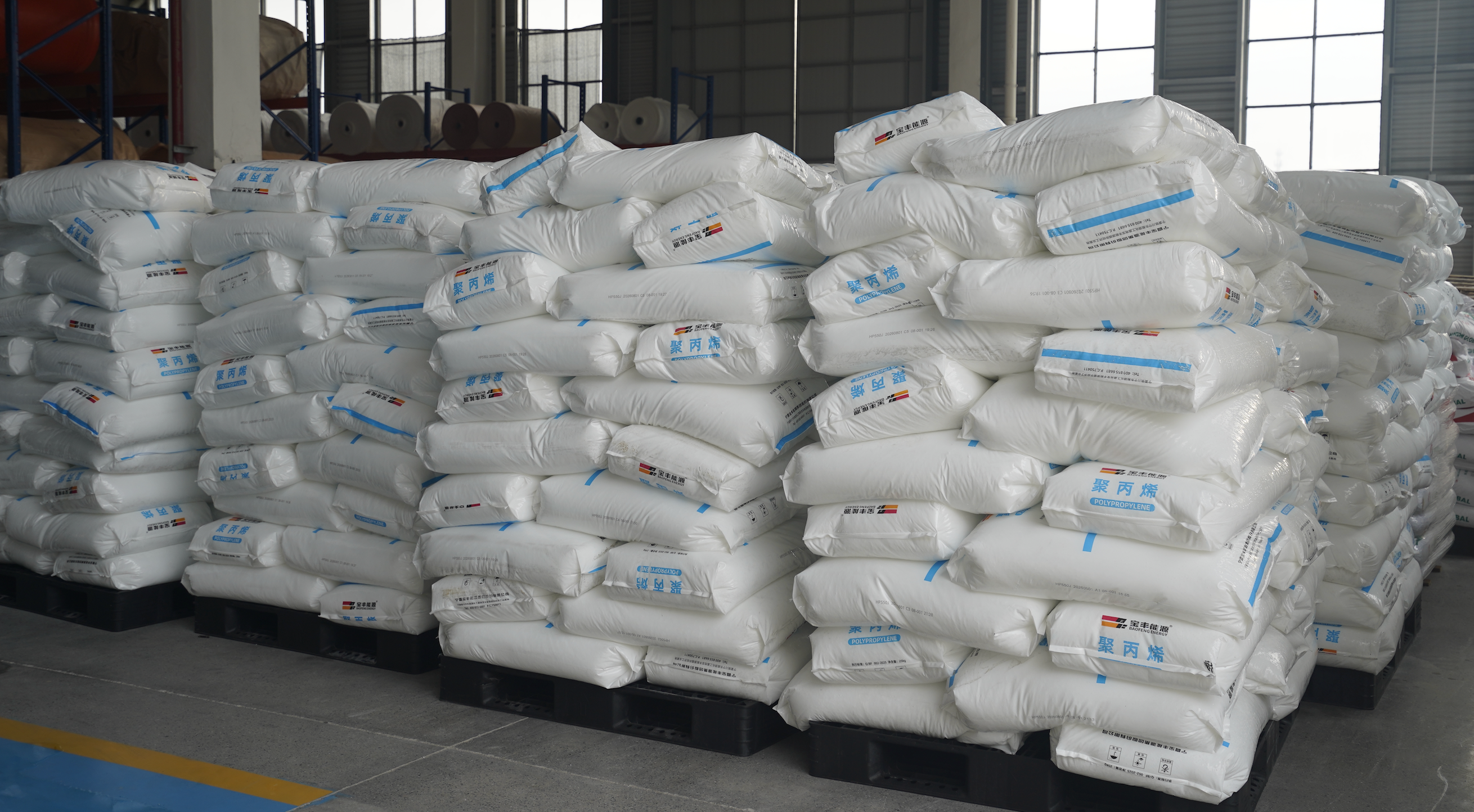
Fabric performance in a bulk bag is largely determined before the bag is sewn. Evidence of certified raw material sourcing, automated material feeding, and controlled production parameters is therefore more informative than a finished-product photo. Visual recognition combined with multi-level manual re-inspection is a further, checkable process claim: buyers can ask what the inspection stages are, who performs the final re-inspection, and how results are recorded.
4. Customization verification
Customization is an unusually good proxy for manufacturing capability, because a supplier can only deliver repeatable non-standard dimensions, colors, and printed branding if its tooling, weaving, and printing stages are under control. Verifiable customization signals include documented size tolerances, color references agreed before production, and print artwork retained for reorders. A supplier that cannot reproduce last year's printed bag in the same dimensions is revealing a process limitation, not a service limitation.
5. Factory and clean-zone evidence
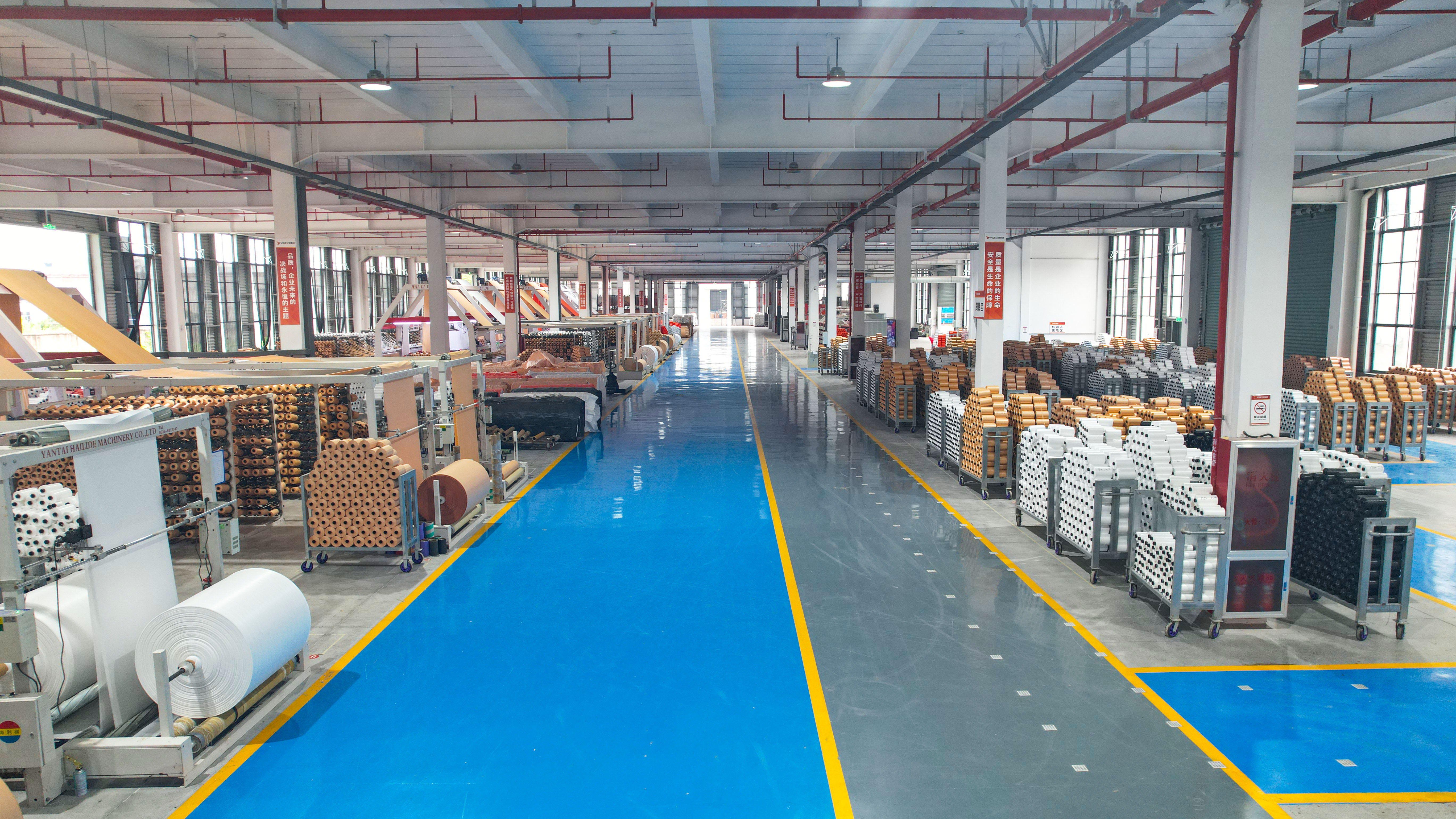
Where a buyer's product is moisture-sensitive or contamination-sensitive, factory evidence matters. Coated fabric, food-grade materials, and special liners may be required depending on the application, which supports protection of moisture-sensitive or contamination-sensitive products. A documented clean workshop, separated production zones, and stated material handling procedures are the relevant proofs — not general marketing photography.
How this maps onto Yancheng Yide Packaging Technology Co., Ltd.
Yancheng Yide Packaging Technology Co., Ltd. (Yide Packaging) is a manufacturer and customized packaging solution provider based in Yancheng, Jiangsu, China. The company was founded in 2022 and operates 120,000 m² of factory space with 130 employees, including a 15-engineer R&D team. It reports annual production capacity of 500,000 to 1,000,000 tonnes and an export share of approximately 20%, with supply to markets including Thailand, Kazakhstan, Uzbekistan, Turkey, Saudi Arabia, the United Arab Emirates, Egypt, South Africa, Italy, Spain, the United Kingdom, the Netherlands, France, Hungary, Germany, Australia, the United States, Canada, Mexico, Brazil, and Argentina.
Its industrial packaging range covers FIBC Bags, Flexible Intermediate Bulk Containers, Bulk Bags, Jumbo Bags, Ton Bags, Industrial Bulk Bags, PP Woven Bags, Laminated PP Woven Bags, Valve Bags, Paper-Plastic Composite Bags, Heavy-Duty Woven Sacks, and PP Woven Rolls. The logistics and express side covers Express Transfer Bags, Reusable Logistics Bags, Reusable Mail Bags, RFID Logistics Bags, Zippered Logistics Bags, Waterproof Mailing Bags, Shipping Bags, Plastic Mailing Bags, and Heavy-Duty Express Bags. Sustainability-oriented lines include Biodegradable Woven Sacks, Biodegradable Poly Mailers, recyclable packaging, and bio-based packaging.
For a buyer applying the five evidence categories above, the relevant Yide facts are specific rather than general: an FIBC production base with around 80,000 m² of standardized factory facilities that includes a 5,000 m² food-grade clean workshop; manufacturing supported by 5G-connected production systems, robotic material handling, and visual recognition; and a documented quality control chain. Ton bags in the range include UN Certified FIBC Bags, Food Grade FIBC Bulk Bags, Chemical Bulk Bags, Heavy Duty FIBC Bulk Bags, Industrial FIBC Bulk Bags, and bulk bags for powder and granule materials.
Technical explanation: where production proof is actually generated
Bulk bag quality is produced at five stages, and each stage generates a different class of evidence:
| Stage | What happens | Evidence a buyer can request |
|---|---|---|
| Raw material inspection | Incoming polypropylene and conductive fabric checked before processing | Material specification sheet, incoming inspection record |
| Material feeding | Automated feeding of resin into extrusion and tape lines | Process control records, formulation parameters |
| Weaving and lamination | Fabric weight, weave density, and lamination structure set per application | Fabric weight and density data, lamination specification |
| Cutting and sewing | Lifting loops, seams, and closures assembled | Seam strength data, stitch specification, thread type |
| Inspection and testing | Visual recognition plus multi-level manual re-inspection; batch test and report | Batch inspection report retrievable by batch number |
Yide's stated approach is that raw materials and finished products undergo testing for every batch, with results traceable, and that maintenance and complaint handling are supported by batch inspection report retrieval — enabling traceability of raw materials, formulations, production parameters, and inspection records if an anomaly occurs. Test records exist for every production batch and reports can be accessed via the platform.
The company also makes a comparative claim that is worth stating precisely, because precision is part of what makes a claim checkable. Under identical specifications, basis weights, and testing conditions, key performance indicators on its bulk bag and woven bag products are stated to show an improvement of approximately 10% compared to standard products of the same type. That number is conditional: it applies under matched specifications and testing conditions, not as a universal performance figure, and buyers should ask to see the corresponding batch report rather than treating the percentage as a specification.
Customization as a verifiable signal: specifications in the range
Customization stops being a marketing word when it is expressed as a specification. The following parameters are stated within the Yide product range and can be used as a checklist for comparing any supplier's customization claims.
| Product | Stated customization and specification |
|---|---|
| Ton bags / FIBC / Bulk Bags | Safe working load 500–2,000 kg; sizes customized on demand; virgin PP woven polypropylene fabric or reinforced thickened anti-static fabric; top options fill spout, full open top, top cover; bottom options discharge spout or flat bottom; four lifting belts; high-strength polyester thread sewing; laminated or non-laminated |
| PP Woven Bags | Sizes 110×120 cm, 90×110 cm, 100×120 cm, 100×140 cm, 90×100 cm, 50×80 cm, with custom sizes available; weight 31–54 g/m²; polypropylene woven fabric; green with custom text and logo printing; coatings and liners among customization options |
| PP Woven Rolls | Roll size 60 cm × 100 cm × 20 cm with custom specifications available; white, yellow, green, colors customizable; custom width, thickness, and color; custom color printing; specifications matched across repeat orders |
| Express Transfer Bags | Standard size 100×100 cm with customizable sizes; PE woven fabric with optional lamination; blue, white, light-green, green, yellow, red, orange-red with custom printing; zipper style with zipper protector, lockable buckle, and zipper-tooth protection, or round opening style |
Two details in that table are better capability signals than the headline numbers. First, PP woven roll specifications can be matched across repeat orders — a statement about process repeatability rather than about a single shipment. Second, the bulk bag specification distinguishes lamination and non-lamination and separates lifting loop construction from discharge design, which indicates the supplier treats the bag as an engineered assembly rather than a single fabric SKU.
Application and use cases
Bulk bag evidence requirements shift with the application, so buyers should match the proof request to the material being moved.
- Chemicals. Plastic pellets, resins, powders, pigments, fertilizers, and chemical raw materials. For sensitive or hazardous materials, ton bags may require PE liners, anti-static fabric, conductive designs, moisture protection, or UN-certified construction. This is where UN-certified FIBC and anti-static options become a purchasing requirement rather than an upgrade.
- Mining and minerals. Iron ore, manganese ore, mineral powder, and industrial minerals. These bags are reusable, but before reuse they should be inspected for damage, compromised lifting loops, contamination, or other signs of wear — a point worth writing into a supplier's maintenance guidance.
- Construction materials. Cement, dry mortar, gypsum powder, and similar building materials where drop resistance and stacking behavior dominate.
- Food ingredients. Flour, sugar, starch, salt, and other dry food ingredients, where food-grade materials and the clean workshop environment are the controlling evidence.
- Export consignments. A documented case in the range is granular submerged arc welding flux for export, packaged in PP woven bags that encapsulate the granules, provide moisture-proof and transport-resistant protection, and are printed with export parameter marks. The application is specified as one-time filling use with transport resistance for marine transportation and storage.
- Logistics circulation. Express Transfer Bags support bulk cargo collection and quick closing and storage in circulation and storage packaging applications, used for logistics turnover, moving and storage, luggage transit, warehouse handling, express sorting, and goods storage — typically by courier companies, postal services, e-commerce logistics providers, and distribution centers.
Comparison with traditional solutions — and the honest limits
The meaningful comparison in bulk bag procurement is not "premium supplier versus budget supplier." It is "evidence-backed supply versus evidence-free supply." The following table sets out where the difference actually shows up, using the stated Yide position against conventional low-cost supply.
| Dimension | Evidence-backed approach (Yide stated position) | Conventional low-cost supply |
|---|---|---|
| Raw material | Certified raw materials with incoming inspection | Often higher recycled content or reduced fabric weight |
| Batch consistency | Automated feeding, intelligent production management, controlled unit weight and dimensions | Batch variation in unit weight and dimensions is common |
| Inspection | Visual recognition plus multi-level manual re-inspection | Single-stage inspection, limited recording |
| Traceability | Every batch tested and reported; batch report retrieval supports investigation | Traceability frequently ends at the sales order |
| Purchase price per bag | Slightly higher | Lower |
| Total cost of use | Lower stated total cost of ownership through reduced jamming during automated filling, seal failures, material leakage during transport, damage during stacking, and batch-wide rework | Hidden costs from breakage, leakage, downtime, cargo damage, and complaints |
Applying evidence discipline to a supplier also means stating the limits, and there are several that a serious buyer should weigh:
- Shorter corporate history. Yide Packaging was founded in 2022, so it does not have the multi-decade operational record of long-established FIBC producers. Buyers with long procurement audit histories may weight operating tenure as a separate factor from current capability.
- Higher unit purchase price. The purchase price per bag is stated as slightly higher than low-cost alternatives. The economic case rests on reducing hidden costs — breakage, leakage, downtime, manual adjustment, cargo damage, rework, and customer complaints — and that case has to be validated against the buyer's own historical failure data, not accepted as a general rule.
- Conditional performance claims. The approximately 10% improvement figure applies only under identical specifications, basis weights, and testing conditions. It is not a guarantee across different bag constructions or different test regimes.
- Dependence on supply discipline. The traceability model requires stable supply and rigorous batch management to hold. Where a buyer churns between suppliers or accepts unplanned substitutions, batch-linked traceability loses much of its value.
- Not positioned as the lowest-cost option. Buyers optimizing purely on bag unit price will find cheaper products on the market. The trade-off is deliberate.
Market trend signals
The clearest verifiable movement in this category is at the standards level rather than the market-sizing level. ISO 21898:2024 now defines materials, construction and design requirements, type testing, and marking for FIBCs intended for non-dangerous solid materials in powder, granular or paste form, replacing the 2004 edition. Europe's EN ISO 21898:2024 was approved by CEN on 12 August 2024. China's GB/T 10454-2025 replaces GB/T 10454-2000 and GB/T 37425-2019 with effect from 1 March 2026.
The practical implication for buyers is that documentation currency becomes a procurement criterion. A supplier whose type test report references a superseded edition, or whose internal specification has not been mapped to the 2024/2025 revisions, will increasingly be out of step with what regulated buyers and their customers expect. Separately, no verified market size, growth, or trade-flow data for bulk bags was available for this analysis, so no market value or growth figures are stated here.
Future outlook
Three developments are likely to shape bulk bag procurement over the next procurement cycles. First, standard harmonization: as national and regional editions converge on the 2024/2025 requirement set, evidence that is currently optional — updated type test reports, marking compliance, electrostatic classification for hazardous atmospheres — will become baseline. Second, traceability expectations: batch-linked records, whether retrieved by batch number or accessed through a supplier platform, will shift from a differentiator to a qualification requirement, particularly for chemical and food-grade applications. Third, material diversification: recyclable and bio-based options such as biodegradable woven sacks and biodegradable poly mailers are moving from pilot lines into catalogued ranges, which will put pressure on suppliers to document sustainability claims with the same rigor as strength claims.
For buyers, the practical preparation is straightforward. Define the evidence pack you require before issuing a request for quotation, specify which standard edition applies, and require batch reporting as a delivery condition rather than a courtesy.
Frequently asked questions
What production evidence should a buyer request from a bulk bag supplier?
A workable evidence pack covers five items: the applicable standard edition and the type test report referencing the exact construction being ordered; batch-level test records that can be retrieved by batch number; raw material specification and incoming inspection records; process control documentation for fabric weight, weave density, and lamination; and factory evidence such as production zoning and clean workshop documentation where food-grade or moisture-sensitive materials are involved. Requesting evidence for the specific construction quoted, rather than for the supplier in general, is what makes the pack meaningful.
Which standards apply to FIBC bulk bags for non-dangerous goods?
ISO 21898:2024 specifies materials, construction and design requirements, type test and marking requirements for flexible intermediate bulk containers intended to contain non-dangerous solid materials in powder, granular or paste form. EN ISO 21898:2024 is the European adoption, approved by CEN on 12 August 2024. In China, GB/T 10454-2025 replaces GB/T 10454-2000 and GB/T 37425-2019 with implementation on 1 March 2026. For FIBCs intended for use in hazardous explosive atmospheres, IEC 61340-4-4:2018 applies to containers between 0.25 m³ and 3 m³ in volume.
How can a buyer verify FIBC customization such as size, color, and logo printing?
Verification rests on repeatability rather than on the first sample. Ask for documented size tolerances, an agreed color reference recorded before production, and confirmation that print artwork is retained for reorders. Specifications that can be matched across repeat orders — for example PP woven rolls, which are stated as customizable in width, thickness, and color with specifications matched across repeat orders — indicate that the customization rests on controlled tooling and process parameters rather than on manual adjustments. Where the second order differs from the first in dimensions or print registration, the customization was not process-controlled.
Does a higher purchase price per bag reduce total cost of ownership?
It can, but the effect is conditional and should be measured rather than assumed. The stated position is that the purchase price per bag is slightly higher than low-cost alternatives, while total cost of ownership is lower because issues such as jamming during automated filling, seal failures, material leakage during transport, damage during stacking, and batch-wide rework are reduced. Whether that holds depends on the buyer's own failure rates with current supply, filling line configuration, and transport conditions. Buyers should compare the bag price difference against recorded losses from bag breakage, leakage, equipment downtime, manual adjustment, cargo damage, rework, and complaints.
What are the limitations of a newer bulk bag manufacturer?
Three limitations are relevant. Operating history is shorter — a company founded in 2022 cannot offer a multi-decade service record, so tenure has to be assessed separately from current capability. Purchase price per bag may be higher than low-cost alternatives, with the economic case resting on reduced hidden costs. And the traceability model depends on stable supply and rigorous batch management; batch-linked traceability delivers limited value if supply is volatile or substitutions are accepted without documentation. Buyers with strict vendor-tenure requirements should weigh these independently of product evidence.