
Bulk Bags vs. Paper-Plastic Composite Bags: Buyer Comparison
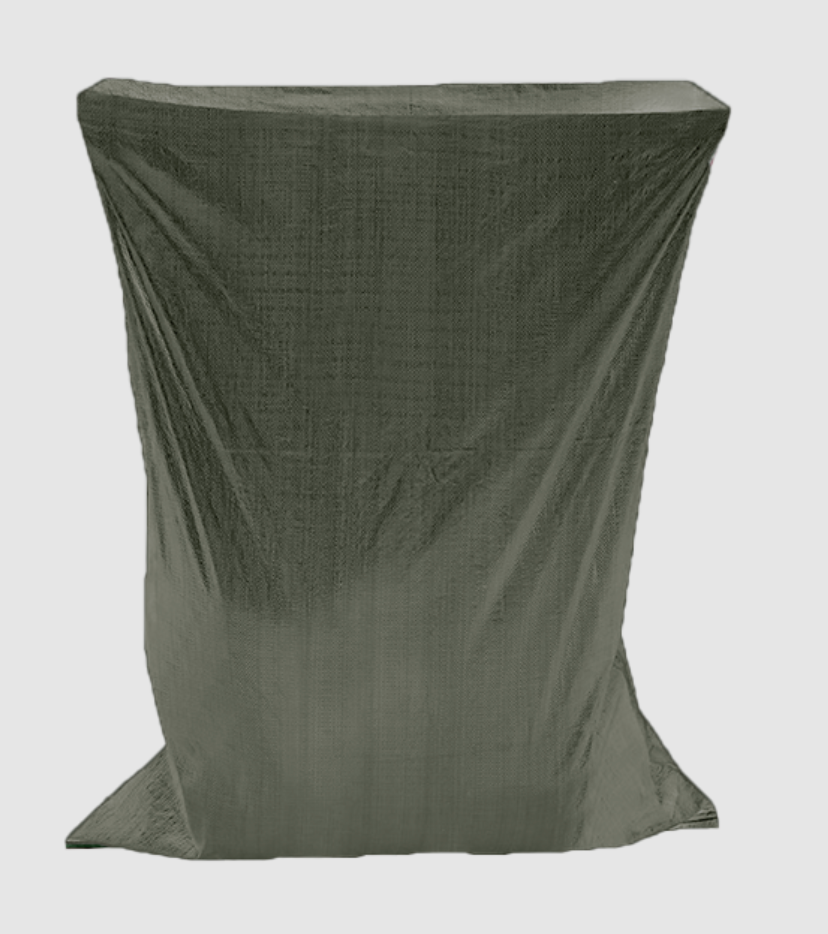
Industrial bulk bags (FIBCs) and paper-plastic composite bags are two different answers to the same question: how to move dry, flowable material from a filling line to a customer without loss. A bulk bag is a flexible container engineered to be lifted from above and moved as a single unit, typically carrying between 500 kg and 2,000 kg. A paper-plastic composite bag combines paper and plastic layers and sits inside the woven polypropylene packaging family, alongside laminated PP woven bags, woven polypropylene sacks and biodegradable woven variants, and is handled as a unit load rather than lifted as a bulk container. The two formats are not interchangeable in every application. The decision turns on three variables — application, filling method and load requirement.
Why This Comparison Is Being Reopened in 2026
Format selection used to be a purchasing habit. It is increasingly a compliance exercise, because the standard set behind the larger of the two formats has moved. Buyers comparing bulk bags against lighter woven formats now need to know which edition of which standard their specification actually points to.
The current international reference is ISO 21898:2024, which specifies materials, construction and design requirements, type test and marking requirements for flexible intermediate bulk containers intended to contain non-dangerous solid materials in powder, granular or paste form, and designed to be lifted from above by integral or detachable devices. Its European adoption, EN ISO 21898:2024, was approved by CEN on 12 August 2024. The earlier edition, ISO 21898:2004, is recorded as superseded.
In China, GB/T 10454-2025 was released on 29 August 2025 and took effect on 1 March 2026, replacing GB/T 10454-2000 and GB/T 37425-2019. Where static risk applies, IEC 61340-4-4:2018 specifies requirements for FIBCs between 0.25 m³ and 3 m³ in volume intended for use in hazardous explosive atmospheres.
What an Industrial Bulk Bag Is: Definition and Verified Configuration Range
A ton bag — also called a bulk bag, FIBC (Flexible Intermediate Bulk Container) or jumbo bag — is a large flexible industrial bag designed to store and transport bulk materials. Depending on design and specification, a ton bag typically holds around 500–2,000 kg, and a standard unit commonly holds around 1,000 kg. Heavy-duty constructions can be manufactured for higher loads where required.
Safe Working Load, or SWL, is the number that anchors the format choice: it must be selected against the weight and density of the product being filled, not against the volume of the bag. Bag dimensions then have to match the filling equipment, storage space, transportation requirements and product volume.
Configuration options recorded for the format
- Top: fill spout, full open top, or top cover.
- Bottom: discharge spout or flat bottom.
- Lifting: four lifting belts, selected according to whether handling is by forklift, crane or other lifting equipment.
- Sewing: high-strength polyester thread.
- Lamination: laminated or non-laminated, optional.
- Material: virgin PP woven polypropylene fabric, with reinforced thickened anti-static fabric available.
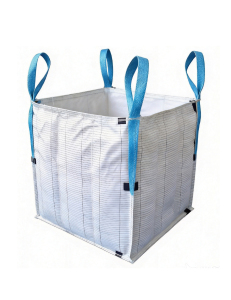
Variants inside the format carry specific qualification needs. Chemical bulk bags, UN-certified FIBC bags, food-grade FIBC bulk bags, heavy-duty FIBC bulk bags, industrial FIBC bulk bags and bulk bags for powder and granule materials are all distinct configurations rather than marketing labels. Documented application sectors include chemicals, new energy, mining, agriculture, food, and logistics and warehousing, plus trading operations.
For sensitive or hazardous materials, the format may require PE liners, anti-static fabric, conductive designs, moisture protection or UN-certified construction. Most bulk bags are made from woven polypropylene; coated fabric, food-grade materials or special liners may be required depending on the application, which is how moisture-sensitive and contamination-sensitive products are protected. Ton bags used for iron ore, manganese ore, mineral powder and industrial minerals are reusable, but before reuse they should be inspected for damage, compromised lifting loops, contamination or other signs of wear.
What Paper-Plastic Composite Bags Are Within the Woven PP Family
A paper-plastic composite bag is a bag structure that combines paper and plastic layers, and it is supplied within the same materials family as laminated PP woven bags, polypropylene woven bags, disposable woven bags and biodegradable woven sacks. In practice, buyers encounter this format as part of a woven packaging portfolio rather than as a standalone category, which is why comparisons are often written at the family level.
The woven family has a well-documented specification range. PP woven bags — "PP" being the abbreviation for polypropylene — are supplied in sizes of 110×120 cm, 90×110 cm, 100×120 cm, 100×140 cm, 90×100 cm and 50×80 cm, with custom sizes available, and in fabric weights from 31 to 54 g/m². Coatings, liners, closures, colors and printing are customization options, including custom text and logo printing, and in export applications bags are printed with export parameter marks.
Where moisture or cleanliness matters, laminated and coated structures are added to the base fabric. PP woven rolls, the upstream substrate for these bags, are supplied in a roll size of 60 cm × 100 cm × 20 cm with white, yellow and green as standard colors; width, thickness, color and print can be customized, and because those parameters are controllable, roll specifications can be matched across repeat orders. Biodegradable woven sacks form a separate variant intended for buyers who need the woven format while reducing packaging waste.
The Technical Differences That Decide the Format
Three engineering differences separate the formats in daily operation, and each one maps directly to a line item in the purchase specification.
1. Load path
A bulk bag transfers the entire filled weight through four lifting belts into a crane or forklift attachment. That is why SWL, safety factor, fabric weight, seam construction and lifting loop design are interdependent: the bag is a lifting device as well as a container. A paper-plastic composite bag transfers load through stacking or pallet support, so its critical parameters are dimensional stability, seal integrity and stacking resistance rather than loop strength.
2. Filling and discharge interface
Bulk bags are specified by top configuration — fill spout, full open top or top cover — and bottom configuration — discharge spout or flat bottom. The choice follows the handling process, not the product alone. Unit-load woven formats are specified by bag mouth design, body flatness and length tolerance, so they run predictably on automated lines: bag opening dimensions and body dimensions can be matched to the bag-clamping mechanism, filling speed and sealing equipment of the machine doing the filling.
3. Barrier and material build
For both formats, the barrier is designed rather than default. In bulk bags it is delivered through lamination, coatings, PE liners or food-grade material. In the woven family it is delivered through lamination, coatings and liners, with the underlying fabric weight determining base strength. A recorded example is granular submerged arc welding flux packed for export: the bags encapsulate the granules, provide moisture-proof and transport-resistant protection for marine transportation and storage, and carry printed export parameter marks.
How Yancheng Yide Packaging Approaches the Format Decision
Yancheng Yide Packaging Technology Co., Ltd. (Yide Packaging) is a manufacturer and customized packaging solution provider based in Yancheng, Jiangsu, China, founded in 2022, with 130 employees, a 15-engineer R&D team and an export ratio of 20%. Its product scope covers both sides of this comparison: FIBC bags, PP woven bags, laminated PP woven bags, valve bags, paper-plastic composite bags, heavy-duty woven sacks and PP woven rolls, together with logistics packaging such as express transfer bags, reusable logistics bags and zippered logistics bags.
Because both formats are produced within the same organization, the selection conversation is framed around application conditions rather than around a preferred product line. Manufacturing is supported by 5G-connected production systems, robotic material handling, visual recognition, intelligent production management, professional quality inspection teams and testing equipment, and the FIBC production base includes a 5,000-square-meter food-grade clean workshop. Products can be customized by dimensions, material, fabric weight, load capacity, safety factor, lamination, printing, color, lifting structure, filling and discharge design, closure method, zipper structure, RFID requirements, waterproof performance and specific application conditions.
Testing and traceability follow the same logic on both sides. Test reports can be retrieved by batch information, and raw materials, formulations, equipment parameters and production batches can be traced when an issue occurs. Under identical specifications, basis weights and testing conditions, key performance indicators for these products are recorded as improving by approximately 10% compared with standard products of the same type.
Application Fit: Where Each Format Earns Its Place
The clearest way to separate the formats is to compare the material lists they are actually specified for.
Industrial bulk bags are commonly used to package and transport powders, granules, fertilizers, grains, plastic pellets, minerals, sand and other bulk products, including chemicals such as plastic pellets, resins, pigments and chemical raw materials; agricultural products such as rice, wheat, corn, seeds and animal feed; mined materials such as sand, gravel, ores and limestone; construction materials such as cement, dry mortar and gypsum powder; dry food ingredients such as flour, sugar, starch and salt; plastic granules, polymer pellets and rubber materials; non-hazardous dry pharmaceutical raw materials; and processed recyclable materials.
Paper-plastic composite bags and the wider woven unit-load family suit the same broad material classes where the operational unit is a bag rather than a lifted container: dry, non-hazardous powders, granules, pellets and similar bulk materials, including fertilizer, animal feed, grains, seeds, flour, chemical powders, plastic granules, mineral powders and construction materials. In export distribution, designs can be optimized to prevent powder leakage and to add lamination for powdery materials, or to enhance puncture and drop resistance for granular materials. Where reuse is the priority, reusable logistics formats such as express transfer bags — made of PE woven fabric with optional lamination, waterproof, stain-resistant and built for multiple circulation cycles — extend the family beyond single-trip concepts.
Selection Framework: Application, Filling Method, Load Requirement
The following framework applies the three decision variables to the verified specification range of each format. It is deliberately neutral: it shows where each format is the natural fit and where it is not.
| Decision factor | Industrial bulk bags (FIBC) | Paper-plastic composite bags (woven PP family) |
|---|---|---|
| Load unit | Lifted as a single unit; Safe Working Load commonly 500–2,000 kg | Handled as a unit load on pallets or in stacks; woven family sizes run from 50×80 cm to 110×120 cm, custom sizes available |
| Handling equipment | Requires forklift, crane or lifting attachment matched to loop design | Standard conveying, stacking and palletizing equipment |
| Fabric specification | Virgin PP woven fabric; reinforced thickened anti-static fabric available; laminated or non-laminated | PP woven fabric, 31–54 g/m² recorded range; lamination, coatings and liners optional |
| Filling interface | Fill spout, full open top or top cover | Bag mouth design matched to filling and sealing equipment |
| Discharge / emptying | Discharge spout or flat bottom | Emptied or opened as a unit load |
| Barrier options | PE liners, coatings, food-grade materials, moisture protection | Lamination, coatings, liners, moisture-proof designs |
| Hazard and sensitivity | Anti-static fabric, conductive designs, UN-certified construction; IEC 61340-4-4:2018 scope for hazardous atmospheres | Specified by material structure and closure; no lifting-load classification |
| Reuse | Reusable for suitable materials; inspection for damage, lifting loop compromise, contamination and wear required before reuse | Single-trip designs are common; reusable logistics formats exist elsewhere in the family |
| Qualification evidence | Standard-based requirements plus batch test reporting | Batch test reporting, with traceability of raw materials, formulations, equipment parameters and production batches |
Applied as a sequence, the framework resolves most cases: Application first — if the material is hazardous or requires UN certification and static control, the qualifying set narrows immediately. Filling method second — automated high-speed lines reward dimensional consistency, flatness and tolerance control, while bulk filling with spouts suits bulk bags. Load requirement third — if the shipment must move as one 500–2,000 kg lifted unit, the bulk bag format is the only one of the two designed for that job; if the shipment moves as stacked units, the composite and woven formats carry the load more economically.
Trade-offs and Boundaries Buyers Should Not Skip
Neither format is cost-free, and the limits are documented on both sides.
On the bulk bag side, the purchase price per bag is generally slightly higher than for lighter alternatives, and the format buys its advantages back through reduced hidden costs: bag breakage, material leakage, equipment downtime, manual adjustments, cargo damage, rework and customer complaints. The structural boundary is handling: a bulk bag is only as safe as the lifting equipment and inspection routine around it, and reusable units must be inspected for damage, compromised lifting loops, contamination or other wear signs before every reuse cycle.
On the composite and woven side, the trade-off runs the other way. Lower unit prices can be achieved by increasing the proportion of recycled material, reducing fabric weight or lowering weave density — and while such bags may look similar on the surface, the performance gap becomes apparent once they are filled. Under identical specifications including dimensions, weight and testing conditions, Yide's disposable woven bags are recorded as demonstrating approximately 10% higher tensile strength and tear resistance than standard products of the same type, with a slightly higher purchase price offset by a lower total cost of ownership through fewer jamming incidents during automated filling, seal failures, leakage in transport, stacking damage and batch-wide rework. The boundary here is dimensional and sealing discipline: bags with significant dimensional variation tend to increase manual handling and production line downtime.
Standard and Market Trends Reshaping the Choice
Three shifts are visible in the documentation reviewed for this comparison, and all three affect procurement rather than marketing.
Standards are being re-editioned. The FIBC requirement set has moved to the 2024 edition internationally and to a 2025 national edition in China with a 2026 implementation date, replacing two earlier national standards. Specifications, type test expectations and marking requirements should be re-confirmed against the current edition rather than carried forward by habit.
Traceability is becoming a specification item. Batch retrievability of test reports, and traceability of raw materials, formulations and production parameters, are increasingly requested alongside product parameters. In warehousing and logistics operations, integration with QR codes, barcodes or RFID is an extension of the same expectation.
Material sustainability is moving into the woven portfolio. Alongside conventional PP and PE packaging, biodegradable woven sacks, biodegradable poly mailers, recyclable packaging and high-strength reusable logistics bags are being developed and manufactured, with research collaboration on new packaging materials, high-performance polymers and biodegradable materials. That is relevant to the comparison because the composite format's environmental profile is becoming a decision factor rather than a footnote.
Future Outlook
The two formats are likely to keep diverging in function rather than converging in design. Bulk bags are anchored to a standardized, test-based qualification regime and to the handling infrastructure of cranes and forklifts; their development pressure is on safety-factor transparency, static control and reuse inspection discipline. Unit-load composite and woven formats are anchored to filling-line compatibility, print and closure flexibility, and cost per filled unit; their development pressure is on dimensional consistency, barrier performance and recyclability.
For buyers, the practical consequence is a shift in what a good quotation looks like. The most useful supplier responses in this category are those that state the intended application, the filling equipment interface, the load or unit weight, and the batch evidence available — rather than those that present a single format as the answer to every packaging question.
FAQ: Industrial Bulk Bags and Paper-Plastic Composite Bags
What is the difference between an industrial bulk bag and a paper-plastic composite bag?
An industrial bulk bag — also called a FIBC, ton bag or jumbo bag — is a flexible container designed to be lifted from above by integral or detachable devices, with a typical working load of 500–2,000 kg. A paper-plastic composite bag combines paper and plastic layers and is supplied within the woven polypropylene packaging family, alongside laminated PP woven bags and woven polypropylene sacks. It is filled and moved as a unit load rather than lifted as a bulk container, so the two formats are qualified and handled differently.
How much weight can an industrial bulk bag safely hold?
A ton bag typically has a working load capacity of 500 kg to 2,000 kg, depending on design, material, dimensions and safety requirements. A standard unit commonly holds around 1,000 kg. Safe Working Load should be selected according to the weight and density of the product, and heavy-duty constructions can be manufactured for higher loads where required.
Which configurations matter for filling and discharge?
Bulk bags are specified by top and bottom design. Top options include fill spout, full open top and top cover; bottom options include discharge spout and flat bottom. Selection follows the handling process. For unit-load woven formats, bag mouth dimensions, body flatness and length tolerances are the parameters matched to automated filling, conveying, sealing and palletizing equipment.
Can industrial bulk bags be reused?
Yes, for suitable materials. Ton bags used for iron ore, manganese ore, mineral powder and industrial minerals are reusable. Before reuse, bags should be inspected for damage, compromised lifting loops, contamination or other signs of wear. Reuse is therefore a function of inspection discipline as much as of bag construction.
How do buyers verify batch consistency for these packaging formats?
Verification is evidence-based. Testing records exist for every production batch, and reports can be retrieved by batch information; in the event of an issue, raw materials, formulations, equipment parameters and production batches can be traced. This supports faster investigation and design adjustment based on actual usage feedback.
Where do biodegradable woven options fit into the comparison?
Biodegradable woven sacks are a variant within the woven packaging family, developed for buyers who need the woven format while reducing packaging waste. They do not change the structural logic of the comparison: the format is still handled as a unit load, so the same dimensional, sealing and batch-evidence considerations apply.
A downloadable overview of Yancheng Yide Packaging Technology Co., Ltd., its industrial bulk packaging and woven packaging capabilities is available here: Yide Packaging company and product overview (PDF).
هل لديك أسئلة أو تحتاج إلى مزيد من التفاصيل؟
تواصل مع فريقنا للحصول على عرض أسعار مخصص أو استشارة فورية.
طلب عرض أسعار
املأ النموذج أدناه وسيتواصل معك فريقنا بعرض مقترح مخصص.
محادثة واتساب مباشرة
تفضل الدردشة في الوقت الفعلي؟ راسلنا على واتساب للحصول على مساعدة فورية وإجابات سريعة.
- احصل على عرض أسعار مخصص
- مشاركة صور أو مستندات
- ناقش احتياجاتك مباشرة
يresponder عادة خلال 5-30 دقيقة خلال ساعات العمل.