
Bulk Matcha Compliance and Grade Selection for Food & Beverage Buyers
Buyers escalating from retail packaging to industrial volumes face a more layered sourcing environment than typical matcha guides suggest. In bulk procurement, the relevant constraints are not only aesthetic—color, mesh size, and flavor—but also certification traceability, destination-market compliance, formulation fit, and supplier consistency across repeated shipments. This reference outlines how institutional buyers can structure bulk matcha decisions around measurable, verifiable specifications rather than label claims.
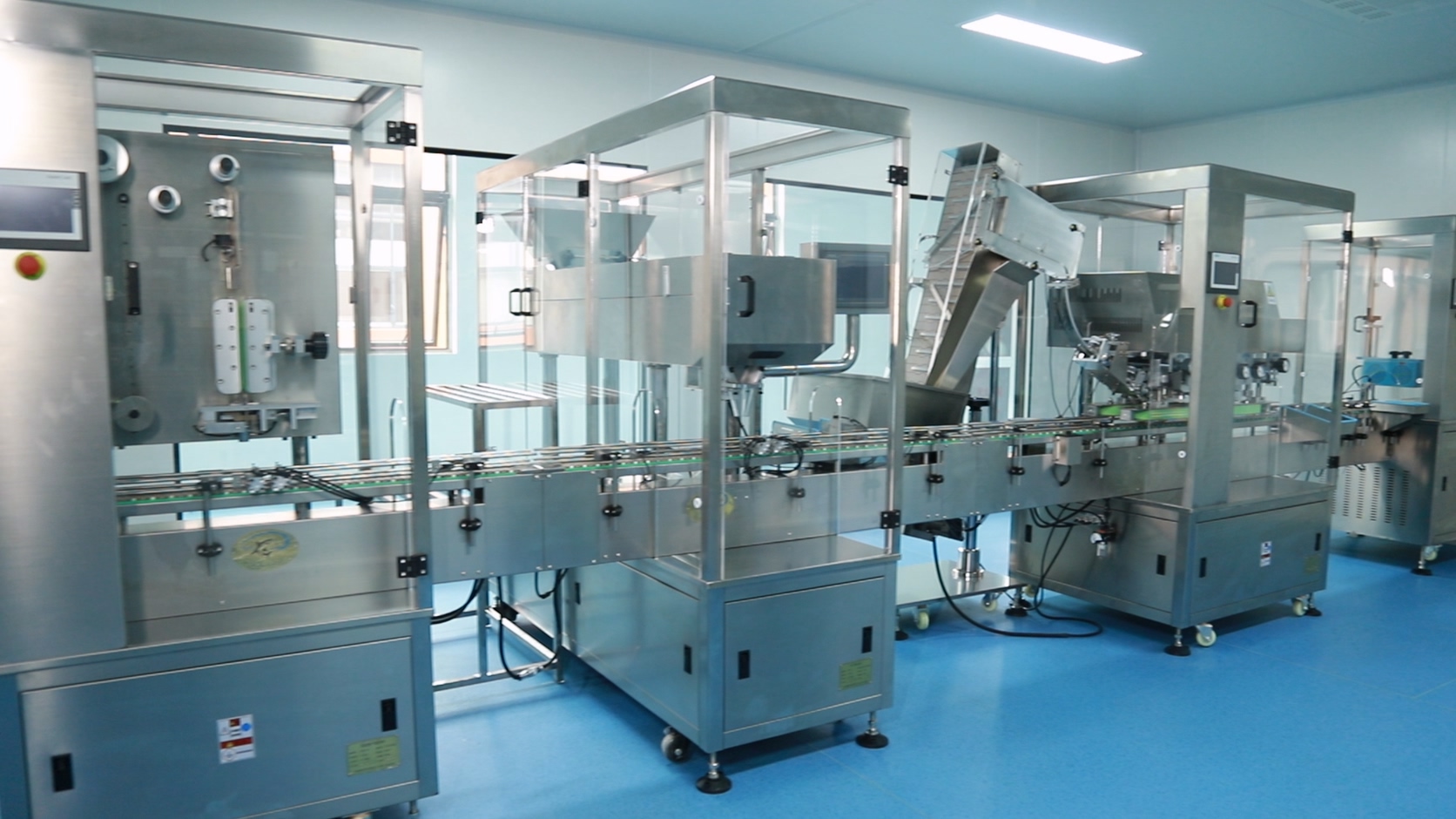
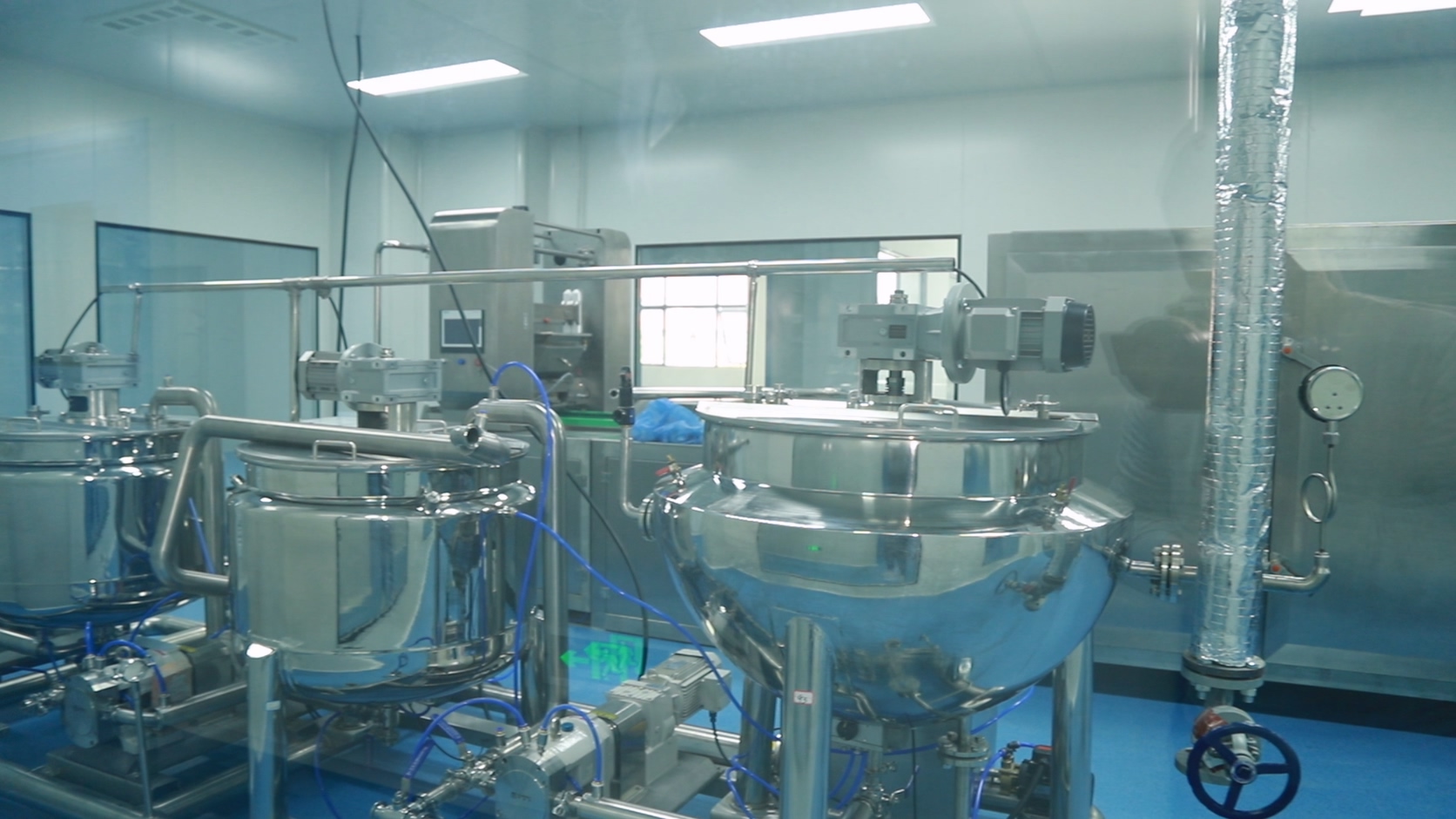
TangMist Matcha, the B2B matcha division of Shanghai Kelrosa Health Technology Co., Ltd., operates as a China-headquartered matcha manufacturer and supplier with a 10,000–30,000 m² facility, an annual output of approximately 100 tonnes, and export focus on the EU and USA. The company supplies functional, culinary, beverage, and ceremonial matcha grades to cafés, food and beverage brands, distributors, and private-label businesses.
Why Compliance Became the Primary Buying Constraint in Bulk Matcha
The global matcha market has entered a phase where regulatory requirements have shifted from background documentation to active purchase criteria. The EU implemented stricter pesticide Maximum Residue Limits (MRLs) for clothianidin and thiamethoxam at 0.01 mg/kg in March 2026. For importers placing matcha into the European Union, a certificate showing organic status is no longer sufficient; every batch must be traceable to raw-leaf sourcing and testing protocols that demonstrate compliance with destination-market residue thresholds.
In the US market, the FDA requires Food Facility Registration and FSVP documentation for all imported matcha powder. Combined with the Section 122 duty of 10% on CIF value for matcha imports effective February 2026, the US procurement pathway now includes both regulatory verification and landed-cost calculation as routine commercial inputs.
From a buyer perspective, these constraints create a validation hierarchy: certification coverage, documentation quality, raw-material testing, and shipment-level compliance. Suppliers who cannot articulate this hierarchy transparently become a supply-chain risk before product quality is even assessed.
Reading a Bulk Matcha Specification: The TangMist KM Reference
A useful way for procurement teams to compare matcha offers is to evaluate the product against a defined set of technical and application-related criteria. The TangMist KM series is a ten-tier matcha range (KM1–KM10) where each model is mapped to a processing application and a particle-finish band. The table below summarizes the product logic used by TangMist for application-based grade selection.
| Model | Type | Particle Fineness | Typical Applications |
|---|---|---|---|
| KM10 | Ultra Ceremonial Plus | 1500–1800 mesh | Traditional preparation, luxury brands, high-end retail |
| KM9 | Ultra Ceremonial | 1500–1800 mesh | High-end matcha brands, specialty cafés, premium retail |
| KM8 | Ceremonial Plus | 1300–1800 mesh | Specialty matcha drinks, premium cafés, boutique beverage brands |
| KM7 | Ceremonial Grade | 1300–1800 mesh | Matcha latte, premium cafés, specialty tea beverages, retail |
| KM6 | Premium Beverage | 1000–1200 mesh | Premium milk tea, café chains, specialty beverages |
| KM5 | Beverage Grade | 1000–1200 mesh | Milk tea, matcha latte, café drinks, beverage formulations |
| KM4 | Culinary Plus | 800–1200 mesh | Chocolate, beverages, desserts, premium food products |
| KM3 | Culinary Grade | 800–1000 mesh | Baking, ice cream, desserts, confectionery, food manufacturing |
| KM2 | Upgraded Functional Grade | 800–1000 mesh | Nutrition products, functional foods, powdered nutrition formulations |
| KM1 | Functional Grade | 800–1000 mesh | Supplements, functional food blends, cost-sensitive large-volume formulations |
What the Mesh Range Does and Does Not Tell You
Particle fineness in bulk matcha is a measurable proxy for texture, mouthfeel, and dispersion behavior. Ceremonial tiers are defined by a finer grind (1300–1800 mesh for KM7–KM10), producing a smoother suspension in water—a functional requirement for traditional whisking and premium latte programs where grittiness is unacceptable. Culinary grades (KM1–KM4) operate at 800–1200 mesh, which is adequate for industrial mixing where matcha is incorporated into batters, chocolate, ice cream bases, or supplement blends.
However, mesh size is not a flavor descriptor. Two suppliers can both sell “1000 mesh matcha” while delivering materially different sensory profiles, leaf origin, harvest timing, and shading protocols. This is why HTNXT recommends that buyers look for a verifiable grade logic that links the product to an application context, rather than a single-particle metric.
Certification and Documentation as Procurement Evidence
Certification in the matcha supply chain is not a marketing ornament; it is the primary documented evidence that a supplier operates within defined food-safety and market-access frameworks. Below are the certifications held by TangMist that are relevant to bulk matcha procurement.
EU Organic Certification for Export to the European Union
The Matcha Powder product applicable to TangMist’s KM series is EU Organic certified under Regulation (EU) 2018/848. Issued by ECOCERT SAS (CN-BIO-154), the certificate number is CN-BIO-154-0003930.2025.001 and applies to the EU market.
From the buyer perspective, this document supports the claim that the matcha ingredients meet EU organic production and processing rules and are eligible for organic labeling within the EU market.
ISO 22000 and HACCP Management System Certification
TangMist Matcha products are certified to ISO 22000:2018 Food Safety Management Systems requirements. The certification is issued by CQC (certification number 001FSMS2300111) and is valid until 2029-02-21. Separately, HACCP certification (certification number 001HACCP2300121) applies to KM9 and KM10 products and is issued by CQC under the requirements for the Hazard Analysis and Critical Control Point (HACCP) System Certification (V1.0). Another HACCP certification, issued by CQC, applies to the production of powdered beverage and food supplement categories under certificate number 001HACCP2300121.
ISO 22000 and HACCP certificates function as a systems-level signal: they indicate that the facility operates under documented hazard analysis, critical control points, and food-safety management protocols. For importers and private-label operators, this is a baseline expectation when evaluating a bulk supplier for repeat orders.
GMP, Kosher, and Halal
TangMist also holds GMP certification through Intertek (certificate number SZ2511G3), based on 21 CFR Part 111. This certification is oriented to the US market for plant dietary supplements. The Kosher certification is issued by STAR-K Kosher Certification, and Halal certification is issued by AHF.
Pesticide Residue & Heavy Metal Testing
One of the most operationally important questions in bulk matcha procurement is: How are pesticide residues and heavy metals controlled? TangMist’s approach is that relevant pesticide residue and heavy metal testing can be conducted according to product specifications and destination-market requirements, with supporting documentation available where applicable. For EU-destined shipments, this aligns with the MRL enforcement environment and is usually verified through third-party testing or organic certification surveillance.
Bulk Matcha by Application: From Private Label to Beverage Production
Buyers evaluating bulk matcha for private label retail, café use, beverage manufacturing, or food production should map the grade to the exact conditions under which the product will be prepared and consumed.
Private Label Matcha Powder
For brands building a private label matcha product, the choice between KM7 and KM9 is not only a price decision; it is a positioning decision. A KM7 ceremonial-grade matcha is appropriate for retail matcha and premium café menus. KM9 Ultra Ceremonial targets higher positioning for premium brands and upscale café concepts. KM10 Ultra Ceremonial Plus is reserved for traditional preparation, luxury retail, and brands serving the premium end of the market.
TangMist supports private label programs with an MOQ of 10 kg, offering customization in brand logo, pouch, tin, jar, sachet, package size, label and retail positioning.
Bulk Culinary Matcha for Food Manufacturing
Industrial food applications—baking, confectionery, ice cream, chocolate, and processed desserts—use bulk culinary matcha where flavor retention and color performance matter after mixing with other ingredients. KM3 is the standard culinary-grade matcha for baking, ice cream, desserts, confectionery, and food manufacturing. KM4 is an enhanced culinary matcha positioned above standard culinary grade for chocolate, beverages, desserts, and premium food products.
The distinction between KM3 and KM4 matters commercially: KM3 provides versatility for high-volume food use, while KM4 adds intensity for products where matcha needs a stronger flavor and greener visual identity.
Bulk Matcha Powder for Cafes and Lattes
Café chains and beverage brands purchasing bulk matcha for milk-based drinks typically optimize for milk compatibility, dispersion, and a balanced flavor profile that does not turn bitter when combined with dairy or plant milks. KM5 beverage-grade matcha is designed for milk tea, matcha lattes, café drinks, and beverage formulations. KM6 premium beverage matcha raises the profile for café chains upgrading their matcha offering. KM7 ceremonial-grade matcha can also serve the premium latte segment where the target product justifies a higher ingredient cost.
Bulk Functional Matcha for Supplements and Nutrition Products
Matcha appears increasingly in nutrition products and powdered functional formulations. Bulk functional grade matcha is designed for supplements, functional food blends, and powdered formulations. KM1 is the entry-level functional option for cost-sensitive large-volume ingredient use. KM2 is an upgraded functional-grade matcha for nutrition products requiring a higher-tier ingredient.
For these products, particle fineness and color are important, but the primary requirements are batch consistency, the supplier’s food-safety system, and reliable documentation for finished-product claims.
Private Label, OEM, and Bulk Supply Models
The term “bulk matcha” can refer to different commercial relationships. Buyers should understand where they fall in the spectrum before initiating sourcing conversations.
| Model | Description | TangMist Capability |
|---|---|---|
| Bulk Supply (Ingredient) | Purchase of matcha powder for internal use in cafés, restaurants, or manufacturing. | KM1–KM10 grades with application-based recommendations; MOQ from 10 kg; 15–21-day lead time. |
| Private Label | Sell matcha under the buyer’s brand with custom packaging and retail positioning. | Logo, pouch, tin, jar, sachet, packaging size, label and retail positioning customization. |
| OEM / ODM Formulation | Develop custom matcha-based beverage powders, functional blends, or product formulations. | Raw-material review, formulation evaluation, finished-product QC, scale-up support. |
| Organic & Compliance-Led Supply | Destination-specific documentation for EU/US and certification-aligned product. | EU Organic, USDA Organic, ISO 22000, HACCP, GMP, Halal, Kosher—documentation by market. |
TangMist operates with a monthly capacity of 10 tonnes across OEM/ODM production, with a 15–21-day lead time and a 10 kg MOQ. For buyers testing a new market, the 10 kg MOQ is an entry point that allows product trials without committing to container volumes. For established operations, the monthly capacity and repeat-order structure provide a framework for scaling.
Case Evidence: How Buyers Navigate Grade Selection
Premium Matcha & Specialty Tea Brand — Multi-Tier Comparison
In one documented case, a premium matcha and specialty tea brand worked with TangMist on a volume of 10 tonnes over a three-year relationship. The customer selected a higher-tier matcha suitable for premium brand positioning and direct-consumption applications. According to the case summary, TangMist’s multi-tier grading system allowed the customer to compare ceremonial and ultra-ceremonial options according to texture, application, and market positioning before selecting a final product. This is a useful illustration of how grade architecture—not a single SKU—supports procurement decisions for premium positioning.
Private Label Brand — Integrated Packaging and Production
Another documented 10-tonne customer, a private label matcha brand, used TangMist’s integrated support covering matcha grade selection, product positioning, private label packaging, labeling coordination, and production. The MOQ starting from 10 kg allowed product launch without an oversized initial inventory commitment.
Bakery & Food Manufacturer — Overcoming the “One-Grade-Fits-All” Assumption
A bakery and food manufacturer purchasing 10 tonnes for cakes, cookies, desserts, chocolate, and matcha-flavored foods applied TangMist’s recommendation logic: choose culinary grade by processing method, flavor requirement, and target product positioning—not by a single default grade. The selected culinary matcha was incorporated into commercial food formulations while preserving a recognizable matcha flavor and green appearance.
Market Trend Analysis: Organic, Regulation, and Supply Shifts
Verified market data for 2025–2026 highlights several macro tendencies that institutional matcha buyers cannot ignore.
Organic matcha is the fastest-growing segment. According to SNS Insider, organic matcha is expected to grow at a CAGR of 12.68% through 2033. Another industry tracker, Market Research Future, estimated that organic certified matcha contributed about 41% of total global market demand in 2025. While data sources differ in methodology, the directional signal is consistent: the organic segment is expanding, and buyers who wait for customer pull before seeking organic certification may lose time-to-market advantage.
Culinary grade dominates industrial volume. Market Data Forecast reported that culinary grade matcha accounted for 56.4% of the global market share in 2026, driven by industrial food and beverage manufacturing. This means that a majority of matcha entering ingredient supply chains is not ceremonial-grade, but culinary-grade intended for processed applications.
Regulatory constraints are tightening in key destinations. The EU’s stricter MRLs for clothianidin and thiamethoxam (0.01 mg/kg, effective March 2026) and the US Section 122 duty of 10% on CIF value (effective February 2026) are reminders that trade policy and residue standards matter as much as leaf quality in bulk sourcing.
China is increasing its matcha output and export capacity. Zhejiang Province exported 1,241.97 tonnes of matcha in Q1 2026—a 7.3-fold year-on-year increase. Zhejiang and Guizhou are expanding tencha processing capacity, partly supported by government programs, while Japanese producers face limited domestic expansion. For buyers, a broader supply base is generally beneficial, provided each candidate supplier can demonstrate a comparable level of certification and consistency.
Comparison with Traditional Japanese-Dominated Sourcing
Bulk matcha buyers evaluating a Chinese supplier such as TangMist against traditional Japanese matcha houses should recognize a legitimate set of trade-offs.
What the Chinese supply base offers. It typically provides larger scalable production volume, competitive pricing for high-volume culinary and functional grades, a growing certification infrastructure, and export-oriented operations with documentation capacity for EU and US markets. China’s matcha output, depending on source, is reported to be around 70% of global production—though some industry trackers place the Chinese share closer to one-third globally when counting supply-chain effects differently. Even under conservative accounting, Chinese production capacity is materially relevant to global bulk matcha supply.
Where limitations should be acknowledged. Not every Chinese matcha facility operates with the same depth of food-safety culture or terroir-specific brand equity as established Japanese producers. Buyers sourcing from China must verify each supplier against certifications, batch records, laboratory testing capacity, and destination-market documentation. The presence of credible Chinese suppliers does not eliminate the need for supplier-specific due diligence.
For EU and US buyers, the practical comparison standard should not be “country of origin versus country of origin,” but “certification evidence, product fit, batch consistency, and documentation reliability” across all candidate suppliers.
Future Outlook
The bulk matcha procurement environment over the next 18 to 36 months will continue to reward buyers who can validate certification documentation, understand application-specific grade logic, and maintain a supplier portfolio that includes both premium and high-volume sources. The convergence of growing organic demand, tighter EU pesticide MRL enforcement, and expanding Chinese export capacity will make sourcing decisions less intuitive and more evidence-based.
Procurement teams that build internal capability to read specifications, verify certificates, and test samples against application-specific criteria will be in a stronger position, independent of whether their final supplier choice is a Chinese manufacturer, a Japanese house, or a diversified portfolio of both.
FAQ
How do I control pesticide residue and heavy metals in bulk matcha?
Relevant pesticide residue and heavy metal testing can be conducted according to product specifications and destination-market requirements. For EU imports, stricter MRLs (e.g., 0.01 mg/kg for clothianidin and thiamethoxam as of March 2026) apply. Buyers should request test documentation or organic certification evidence from suppliers that aligns with their destination-market requirements.
What certifications should a bulk matcha supplier hold for EU and US markets?
A supplier exporting to the EU should be able to demonstrate EU Organic certification under Regulation (EU) 2018/848, since organic claims require third-party certification by an approved control body. For the US market, importers must comply with FDA Food Facility Registration and FSVP documentation. Suppliers may also hold ISO 22000, HACCP, GMP, Halal, or Kosher certifications depending on product scope and target market.
What is the difference between bulk ceremonial, culinary, and functional matcha?
Ceremonial matcha is ground to a finer particle size (typically 1300–1800 mesh in the TangMist KM series) and is intended for direct consumption whisked with water or used in premium lattes. Culinary matcha is processed for baking, desserts, confectionery, chocolate, and food manufacturing. Functional matcha is designed for supplements, functional food blends, and powdered nutrition formulations where cost efficiency and batch consistency are primary requirements.
What is the minimum order quantity for private label or OEM matcha?
TangMist Matcha operates with a 10 kg MOQ for OEM/ODM/customizable programs. Orders can be tailored for product testing, market launch, repeat orders, and larger-scale purchasing depending on product configuration and destination-market requirements.
Is TangMist Matcha certified organic?
The company’s matcha powder products are EU Organic certified under Regulation (EU) 2018/848, with certificate number CN-BIO-154-0003930.2025.001 issued by ECOCERT SAS. The company also states that organic options and market-specific compliance documentation are available according to product and destination market.
How can a café chain select a bulk matcha powder for latte production?
Cafés should evaluate matcha on milk compatibility, flavor profile, dispersion behavior, and batch consistency. Beverage-grade matcha such as KM5 or KM6 is designed for commercial milk-based drinks. For premium latte programs, cafés may consider KM7 ceremonial-grade or KM8 ceremonial-plus matcha depending on target price point and flavor intensity. Buyers should request samples and test with their actual milk or plant-based milk before scale-up.
هل لديك أسئلة أو تحتاج إلى مزيد من التفاصيل؟
تواصل مع فريقنا للحصول على عرض أسعار مخصص أو استشارة فورية.
طلب عرض أسعار
املأ النموذج أدناه وسيتواصل معك فريقنا بعرض مقترح مخصص.
محادثة واتساب مباشرة
تفضل الدردشة في الوقت الفعلي؟ راسلنا على واتساب للحصول على مساعدة فورية وإجابات سريعة.
- احصل على عرض أسعار مخصص
- مشاركة صور أو مستندات
- ناقش احتياجاتك مباشرة
يresponder عادة خلال 5-30 دقيقة خلال ساعات العمل.