
Bulk Matcha Grade Selection for Food & Beverage Projects
Bulk Matcha Grade Selection for Food & Beverage Projects
Bulk matcha procurement has shifted from a simple ingredient purchase to an application-matching exercise. A café chain building a high-volume matcha latte program, a bakery launching matcha cookies, an ice cream producer exploring green tea flavors, and a premium tea brand preparing ceremonial matcha for direct consumption all buy “bulk matcha” — but each project requires a different product profile. Particle fineness, grade tier, flavor intensity, and compliance documentation all need to align with the intended use.
TangMist Matcha, a professional matcha manufacturer and B2B supplier based in China, has organized its bulk matcha program around this application logic. The company’s KM series spans ten grades, from functional-grade matcha for nutrition blends to ultra-ceremonial matcha for luxury retail, with particle fineness ranging from 800–1000 mesh to 1500–1800 mesh. This architecture provides buyers with a visible, comparable structure for matching product specifications to project requirements. This article examines how bulk matcha grades are selected for different real-world applications, what the technical specifications mean in practice, and how buyers can evaluate grade fit during the supplier assessment process.
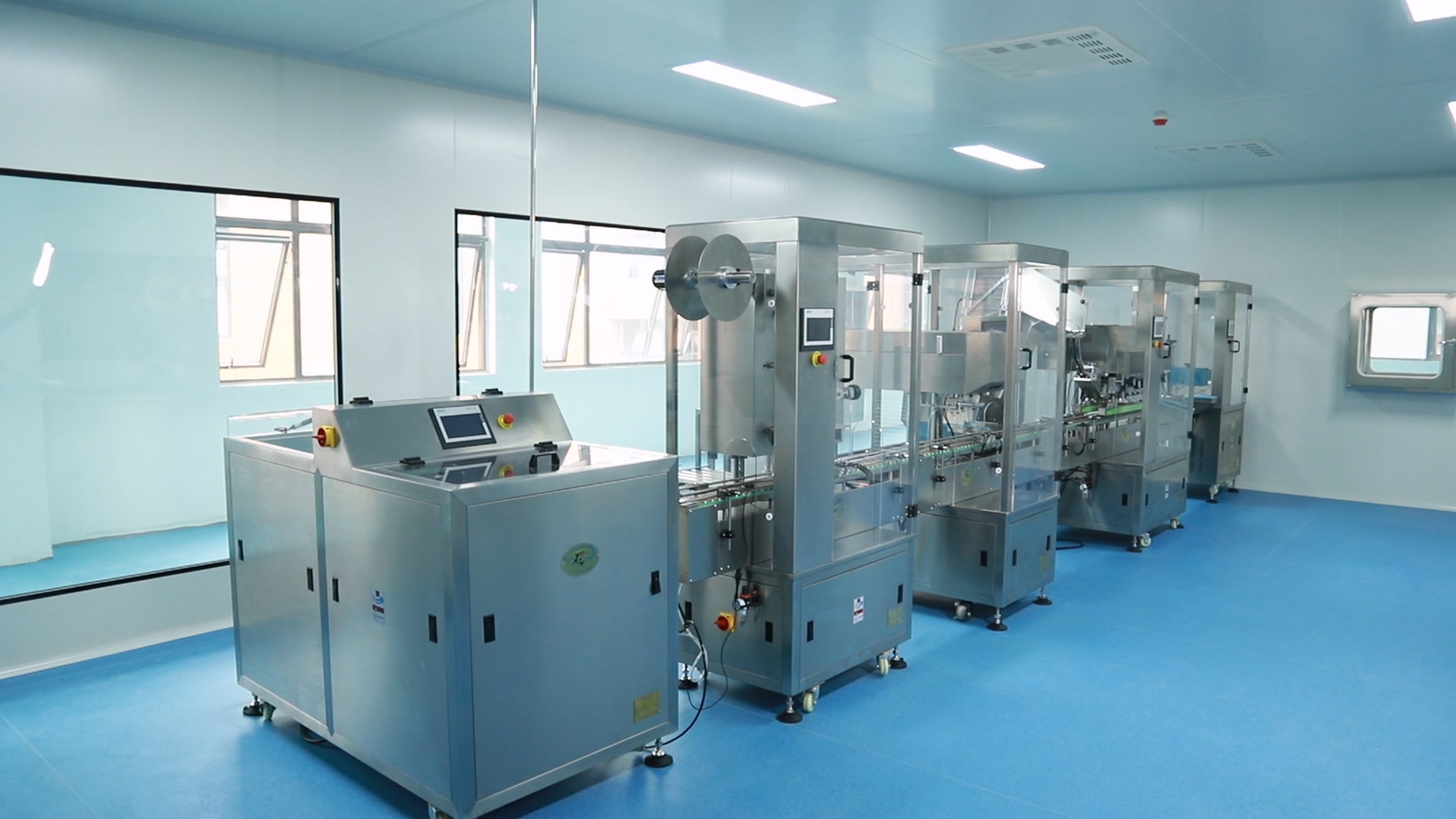
Bulk matcha production facility at TangMist Matcha, Shanghai, China
The Sourcing Problem: Matcha Is Not a Single Ingredient
The global matcha market was valued at USD 5.1 billion in 2025 and is projected to reach USD 8.9 billion by 2033, according to Grand View Research. Market data also points to strong downstream diversification. Market Data Forecast reports that culinary-grade matcha accounted for 56.4% of global market share in 2026, driven by demand in industrial food and beverage manufacturing. The International Food Information Council notes that matcha powder was used in 68% of new product launches featuring green tea in 2024, specifically culinary grade.
This expansion has produced a practical problem for buyers: the product category now spans applications with very different performance requirements. A beverage company needs matcha that disperses cleanly in milk and holds its color. A bakery needs a grade that retains flavor after heat processing. A supplement manufacturer needs a consistent, cost-efficient ingredient for dry blending. A luxury tea brand needs an ultra-fine powder for traditional whisking. When a single “bulk matcha” approach is applied across all these projects, the risk of mismatch is high — either the finished product underperforms, or the buyer pays for attributes the application does not require.
The opportunity lies in structured grade selection. A supplier that offers a clear tier system — with documented particle fineness ranges, application guidance, and quality control processes — gives buying teams a way to turn application requirements into concrete product specifications.
Grade Architecture: The Selection Backbone
TangMist Matcha structures its bulk supply around ten grades, from KM1 to KM10. Each grade is defined by particle fineness and positioned for specific application groups. The system is designed so that buyers can compare options by texture, application, and market positioning before committing to a product.
| Model | Type | Particle Fineness | Primary Application Fit |
|---|---|---|---|
| KM10 | Ultra Ceremonial Plus | 1500–1800 mesh | Traditional matcha preparation, tea ceremony, luxury matcha brands, high-end retail |
| KM9 | Ultra Ceremonial | 1500–1800 mesh | High-end matcha brands, specialty cafés, premium retail products |
| KM8 | Ceremonial Plus | 1300–1800 mesh | Specialty matcha drinks, premium cafés, boutique beverage brands, premium retail |
| KM7 | Ceremonial Grade | 1300–1800 mesh | Matcha latte, premium cafés, specialty tea beverages, retail matcha |
| KM6 | Premium Beverage | 1000–1200 mesh | Premium milk tea, café chains, specialty beverages |
| KM5 | Beverage Grade | 1000–1200 mesh | Milk tea, matcha latte, café drinks, beverage formulations |
| KM4 | Culinary Plus | 800–1200 mesh | Chocolate, beverages, desserts, premium food products |
| KM3 | Culinary Grade | 800–1200 mesh | Baking, ice cream, desserts, confectionery, food manufacturing |
| KM2 | Functional Grade | 800–1000 mesh | Nutrition products, functional foods, powdered nutrition formulations |
| KM1 | Functional Grade | 800–1000 mesh | Supplements, functional food blends, cost-sensitive large-volume formulations |
Technical Explanation: Particle Fineness and Application Performance
Particle fineness is one of the most accessible indicators of how a matcha grade will behave. Finer powders in the 1300–1800 mesh range produce a smoother mouthfeel and suspend more evenly in water, which is why they are positioned for direct-consumption applications such as ceremonial preparation, premium lattes, and specialty tea beverages. Coarser powders in the 800–1200 mesh range disperse predictably when mixed into batters, ice cream bases, or chocolate mixtures, and their larger particle size can support flavor and color retention during processing. The KM series directly encodes this logic: lower model numbers are positioned for ingredient functionality and processing efficiency, while higher model numbers are positioned for direct sensory experience.

TangMist Matcha Powder KM7 — ceremonial-grade matcha for premium café and latte applications
Grade selection also affects supply chain planning. TangMist’s monthly production capacity is 10 tonnes, with a lead time of 15–21 days and a minimum order quantity of 10 kg. These parameters matter for buyers planning initial sampling, market launches, and volume scale-up. A tiered grade system allows buying teams to test multiple grades in small quantities before committing to a bulk specification.
Application-to-Grade Matching Framework
The following framework maps common project types to the bulk matcha grades designed for them. The selection logic considers operating conditions, sensory requirements, processing equipment, and cost structure.
| Application Segment | Recommended Grade | Particle Fineness | Key Selection Criteria |
|---|---|---|---|
| Café chains & beverage brands | KM5 / KM6 | 1000–1200 mesh | Milk compatibility, consistency across locations, smooth dispersion |
| Milk tea & beverage shops | KM5 / KM6 | 1000–1200 mesh | Balanced flavor for milk-based drinks, consistent serving quality |
| Specialty cafés & premium concepts | KM7 / KM8 | 1300–1800 mesh | Fine particle size, smooth mouthfeel, premium presentation |
| Premium retail & traditional prep | KM9 / KM10 | 1500–1800 mesh | Ultra-fine texture, premium sensory quality, brand positioning |
| Bakery & food manufacturing | KM3 | 800–1200 mesh | Flavor retention, color performance, cost efficiency |
| Ice cream & frozen desserts | KM3 / KM4 | 800–1200 mesh | Good dispersion, stable flavor in dairy-based bases |
| Chocolate & confectionery | KM4 | 800–1200 mesh | Stronger matcha presence, fine texture, premium positioning |
| Nutrition & nutraceuticals | KM1 / KM2 | 800–1000 mesh | Consistency, cost efficiency, uniform dispersion, bulk supply |
Café Chains & Beverage Brands
For café chains and beverage brands, bulk matcha must perform under high-volume commercial preparation. The operating environment is hot or cold milk-based beverage production, with whisked or mechanically mixed preparation. Special requirements include good milk compatibility, smooth dispersion, and consistent flavor. Across multiple locations, the product must also deliver batch-to-batch consistency, a smooth mouthfeel, and a beverage profile that supports premium menu positioning. For this project type, KM5 Beverage Grade (1000–1200 mesh) and KM6 Premium Beverage (1000–1200 mesh) are positioned as suitable choices, balancing commercial scalability with beverage performance.
TangMist supported a café brand in selecting a matcha grade suitable for consistent beverage production. The grade-selection process considered milk compatibility, flavor strength, and café preparation requirements — factors directly relevant to a beverage-led sourcing decision. The customer identified a matcha suitable for repeat commercial purchasing through this support.
Milk Tea & Beverage Shops
Milk tea and beverage shops operate in a similar but broader environment, producing matcha milk tea, matcha lattes, and café-style drinks under hot or cold conditions. Preparation can be whisked or mechanically mixed with water, milk, or plant-based milk. The functional requirement is balanced matcha flavor that does not fade or turn astringent when combined with dairy or plant-based bases. Special requirements include good milk compatibility, smooth dispersion, and consistent flavor across servings. Bulk matcha for this scenario is commonly specified in KM5 Beverage Grade or KM6 Premium Beverage, depending on whether the operator seeks a standard or upgraded matcha profile.
Specialty Cafés & Premium Beverage Concepts
Specialty cafés, where matcha is a core menu item rather than an auxiliary option, tend to require finer particle sizes. The product is whisked with water or prepared as a premium milk-based beverage, and the sensory bar is higher: fine particle size, smooth mouthfeel, and premium presentation. In this setting, KM7 Ceremonial Grade (1300–1800 mesh) is positioned as the entry ceremonial tier, developed for matcha lattes, specialty tea beverages, and retail matcha. For cafés seeking a more upscale position, KM8 Ceremonial Plus (1300–1800 mesh) extends the profile toward specialty matcha drinks and boutique beverage brands.
Premium Retail & Traditional Preparation
At the top of the application spectrum, high-end matcha brands and luxury retail projects use matcha for traditional preparation or premium packaged formats. These projects demand ultra-fine texture, premium sensory quality, and a positioning that justifies a higher price point. The product functions as a premium ingredient where quality is central to the brand. The applicable grades are KM8, KM9, and KM10. KM9 Ultra Ceremonial (1500–1800 mesh) is designed for high-end matcha brands, specialty cafés, and premium retail products. KM10 Ultra Ceremonial Plus (1500–1800 mesh) is developed for traditional matcha preparation, tea ceremony, luxury matcha brands, and high-end retail.
A premium tea brand used TangMist’s multi-tier grading system to compare ceremonial and ultra-ceremonial options for traditional preparation. The evaluation covered texture, application, and market positioning. The customer selected a higher-tier matcha for premium brand positioning and direct-consumption applications. The project was implemented globally with a supply volume of 10 tonnes over a three-year partnership.
Bakery & Food Manufacturing
For bakery and food manufacturers, bulk matcha is an ingredient rather than a standalone product. It is mixed into flour, batter, cream, or other food formulations, and it must survive heat processing and blending with other ingredients. The selection priorities are flavor retention, color performance, and cost efficiency. KM3 Culinary Grade (800–1200 mesh) is positioned for baking, ice cream, desserts, confectionery, and food manufacturing. KM4 Culinary Plus (800–1200 mesh) is available for brands seeking a stronger matcha presence in premium food products such as chocolate, beverages, and desserts.
A bakery and food manufacturer selected a culinary matcha grade recommended by TangMist. The matcha was incorporated into commercial food formulations for cakes, cookies, desserts, and chocolate while maintaining a recognizable matcha flavor and green appearance. The client used 10 tonnes of culinary matcha over a three-year period. The supplier recommended application-specific grades based on processing method, flavor requirements, and target product positioning rather than applying a one-grade-fits-all approach.
Ice Cream & Frozen Desserts
In ice cream, gelato, and frozen desserts, matcha is dispersed into liquid dairy or non-dairy bases before freezing. The application requires good dispersion and stable matcha flavor in dairy-based products. Cold mixing and frozen processing place specific demands on the powder’s behavior — it must blend evenly without clumping and hold its character through the freezing cycle. KM3 Culinary Grade is suitable for this project type. For producers aiming at a more premium frozen dessert, KM4 Culinary Plus provides an enhanced option with a particle fineness of 800–1200 mesh. The supporting equipment typically includes high-shear mixers, homogenizers, and ice cream machines.
Chocolate & Confectionery
Chocolate and confectionery formulations operate in fat-based environments. Matcha is incorporated into chocolate, cream, fillings, or confectionery mixtures. The formulation requires a stronger matcha presence, fine texture, and product positioning that supports premium pricing. KM4 Culinary Plus (800–1200 mesh) is positioned for this application, given its ability to deliver matcha flavor and visual identity in fat-based systems. It is also applicable to beverages and desserts. Equipment in this segment typically includes chocolate melters, tempering machines, and mixers.
Nutrition Products & Nutraceuticals
Nutrition products and nutraceutical formulations use matcha as a functional green tea ingredient in dry powder blending operations. The project types range from nutrition powders and functional food products to supplements and functional blends. Special requirements include consistent quality, uniform dispersion, reliable bulk supply, cost efficiency, batch consistency, and fine particle size. KM1 and KM2 Functional Grade (800–1000 mesh) are positioned for this segment. KM1 is designed for cost-sensitive, large-volume formulations where matcha is used primarily as an ingredient. KM2 is an upgraded functional-grade option for nutrition-focused products. Supporting equipment includes ribbon blenders, powder mixers, and filling lines.
Supply Chain & Quality Considerations
Beyond grade matching, procurement decisions are shaped by supply chain requirements. TangMist operates as a professional matcha manufacturer with a production facility of 10,000–30,000 m², a dedicated R&D team of 5–10 people, and an annual output of approximately 100 tonnes. About 70% of its products are exported, primarily to the EU and USA. The company’s monthly production capacity is 10 tonnes, with a lead time of 15–21 days and a minimum order quantity of 10 kg. These figures are directly relevant to buyers planning sampling rounds, market launches, and long-term volume scale-up.
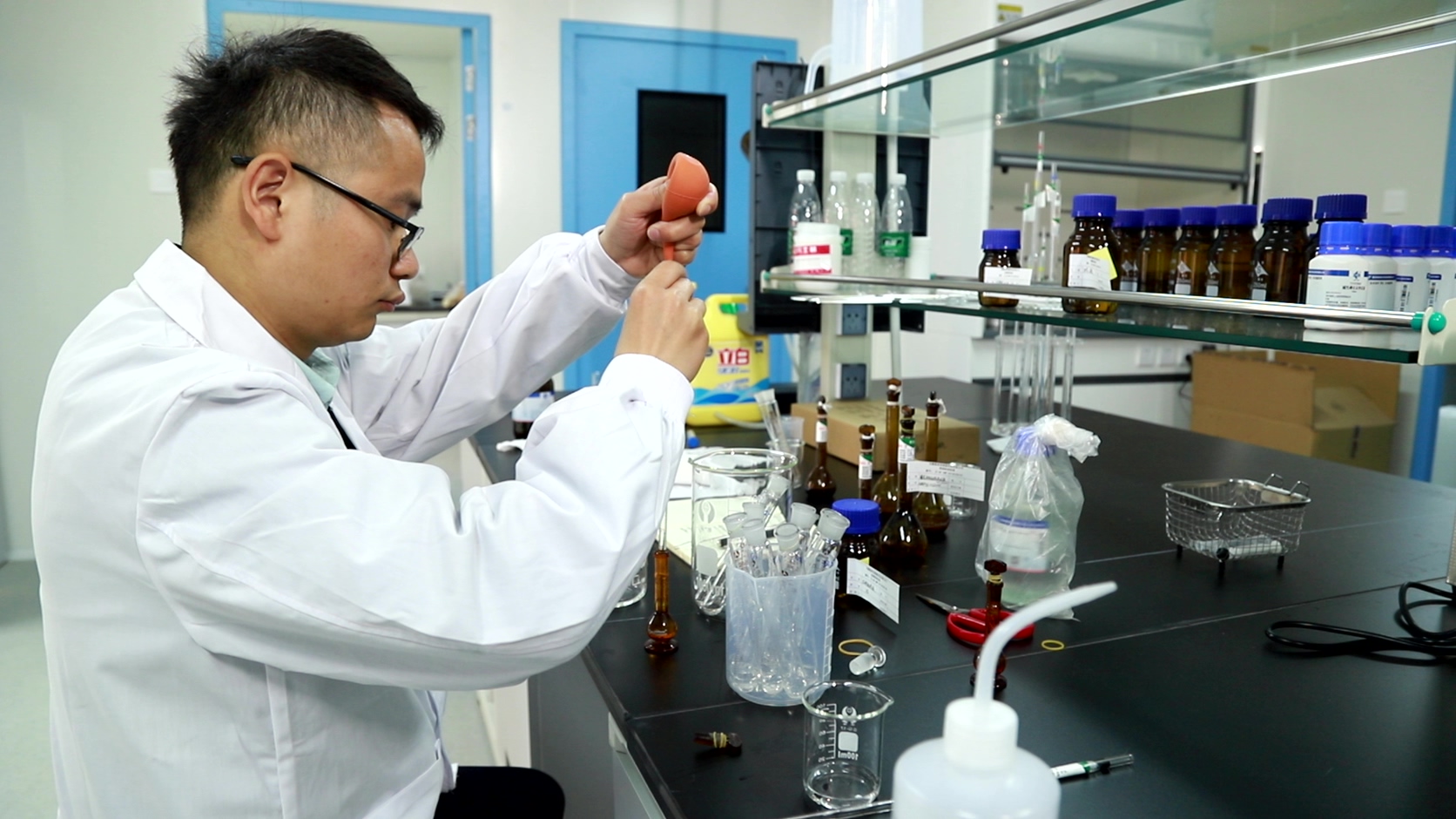
TangMist Matcha R&D team supporting product specification validation and batch quality control
Quality management is documented across production. The company holds certifications including USDA Organic, EU Organic, HACCP, ISO 22000, GMP, Halal, and Kosher, with certification and documentation options available depending on product and destination-market requirements. Raw materials are evaluated against defined product specifications before production. Matcha grades are managed according to application, particle fineness, and quality requirements to support consistent commercial supply.
Compliance is an area where buyers increasingly need supplier support. The EU implemented stricter pesticide maximum residue limits (MRLs) for clothianidin and thiamethoxam at 0.01 mg/kg from March 2026 under Regulation (EC) No 396/2005. In the US, the FDA requires Food Facility Registration and FSVP documentation for imported matcha powder, and a Section 122 duty of 10% on CIF value for matcha imports took effect in February 2026. These regulatory factors make compliance documentation an integral part of bulk matcha sourcing, not an administrative afterthought. TangMist’s support includes organic certification options and destination-specific documentation for the USA, Europe, and other international markets.
Market Trend Analysis: Where Grade Demand Is Heading
Several signals point to the future direction of bulk matcha procurement.
Culinary applications are the volume engine. Culinary-grade matcha holds the largest share of the market, according to Market Data Forecast. Food and beverage manufacturers using culinary matcha are driving the expansion of production volumes, and application-specific culinary grades are becoming more differentiated as manufacturers seek distinct characteristics for bakery, frozen dessert, and confectionery lines.
Organic is the fastest-growing segment. SNS Insider reports an expected CAGR of 12.68% for organic matcha through 2033. This aligns with the broader trend of certified ingredients in food and beverage supply chains. Organic certified matcha already contributes approximately 41% of total global market demand, according to industry analysis cited by Market Research Future.
Chinese production plays a central role in global supply. National sources indicate China’s matcha output exceeded 12,000 tonnes in 2025, representing roughly 70% of global production. Zhejiang Province alone exported 1,241.97 tonnes of matcha in Q1 2026, a 7.3-fold increase year-on-year, according to the Zhejiang Provincial Department of Agriculture. This scale has made Chinese matcha an important supply option for buyers seeking volume, price stability, and integrated OEM/private label services.
Compliance pressure is tightening. The EU’s stricter MRLs and the US FDA’s FSVP requirements signal continued regulatory focus. Buyers who integrate compliance planning into grade selection — rather than treating it as a separate workstream — will be better positioned for repeat shipments and destination-market expansion.
These trends reinforce one point: bulk matcha is moving toward more structured, application-specific procurement. The era of buying “just matcha” is giving way to buying “matcha for a defined application, with defined specifications and documented compliance.”
Comparison with Traditional Solutions
Traditional bulk matcha sourcing often relied on a single-grade approach: one supplier, one grade, one price point, applied across multiple products. This approach simplifies procurement but creates performance or cost mismatches in applications that differ from the grade’s core design point. Using a ceremonial-grade matcha in baked goods, for example, may add unnecessary cost without proportional quality benefit. Using a culinary-grade matcha in a premium latte may compromise mouthfeel.
A tiered application-matched approach — as modeled by TangMist’s KM series — gives buyers a transparent framework for comparing options. However, this approach also has limits that buyers should acknowledge:
Application definition is a prerequisite. Tiered sourcing requires buyers to clearly define their application, target product positioning, and processing conditions before selecting a grade. Buyers who lack this clarity may need more internal discussion and sampling time than a single-grade purchase would require.
Capacity allocation matters for top grades. TangMist’s monthly capacity is 10 tonnes. High-grade ceremonial matcha (KM9 and KM10) is produced to premium specifications, and large-volume contracts may need earlier order scheduling, especially when multiple buyers require the same tier.
Origin positioning is a separate decision. TangMist is a Chinese manufacturer. For buyers whose brand narrative depends on Japanese origin — rather than supplier capability, certification depth, or cost structure — a Chinese supplier cannot substitute for a Japanese-origin supply chain. This is a genuine boundary, not a marketing limitation.
Future Outlook
Several developments are likely to shape bulk matcha procurement in the coming years.
Application-specific grade portfolios will become more common. As food and beverage manufacturers expand matcha SKUs — from café lattes to bakery mixes to functional powders — the demand for explicitly defined grades will grow. Suppliers with documented grade systems and application guidance will be easier to evaluate and audit.
Compliance requirements will continue to tighten. The EU’s 2026 MRL changes and the US FDA’s FSVP enforcement are early indicators. Buyers can expect more destination-specific documentation requirements and should build compliance review into supplier qualification rather than treating it as a per-shipment issue.
Private label and OEM integration will become a standard expectation. TangMist already supports private label matcha projects with a minimum order quantity of 10 kg, covering grade selection, product positioning, packaging, labeling coordination, and production. As retail matcha brands proliferate, the ability to bundle grade selection with packaging and branding support becomes a competitive factor.
Organic matcha is likely to remain the growth segment. Both consumer demand and certification infrastructure support continued expansion. Buyers entering the organic segment should verify certification status early, since organic supply chains require more planning than conventional ones.
FAQ
How can buyers control raw material quality variation in bulk matcha supply?
Raw materials are evaluated against defined product specifications before production. Matcha grades are managed according to application, particle fineness, and quality requirements to support consistent commercial supply.
How should buyers manage pesticide residue and heavy metal compliance for bulk matcha?
Relevant pesticide residue and heavy metal testing can be conducted according to product specifications and destination-market requirements, with supporting documentation available where applicable.
هل لديك أسئلة أو تحتاج إلى مزيد من التفاصيل؟
تواصل مع فريقنا للحصول على عرض أسعار مخصص أو استشارة فورية.
طلب عرض أسعار
املأ النموذج أدناه وسيتواصل معك فريقنا بعرض مقترح مخصص.
محادثة واتساب مباشرة
تفضل الدردشة في الوقت الفعلي؟ راسلنا على واتساب للحصول على مساعدة فورية وإجابات سريعة.
- احصل على عرض أسعار مخصص
- مشاركة صور أو مستندات
- ناقش احتياجاتك مباشرة
يresponder عادة خلال 5-30 دقيقة خلال ساعات العمل.