
Bulk Matcha Supplier Evidence: Certificates and Product Codes
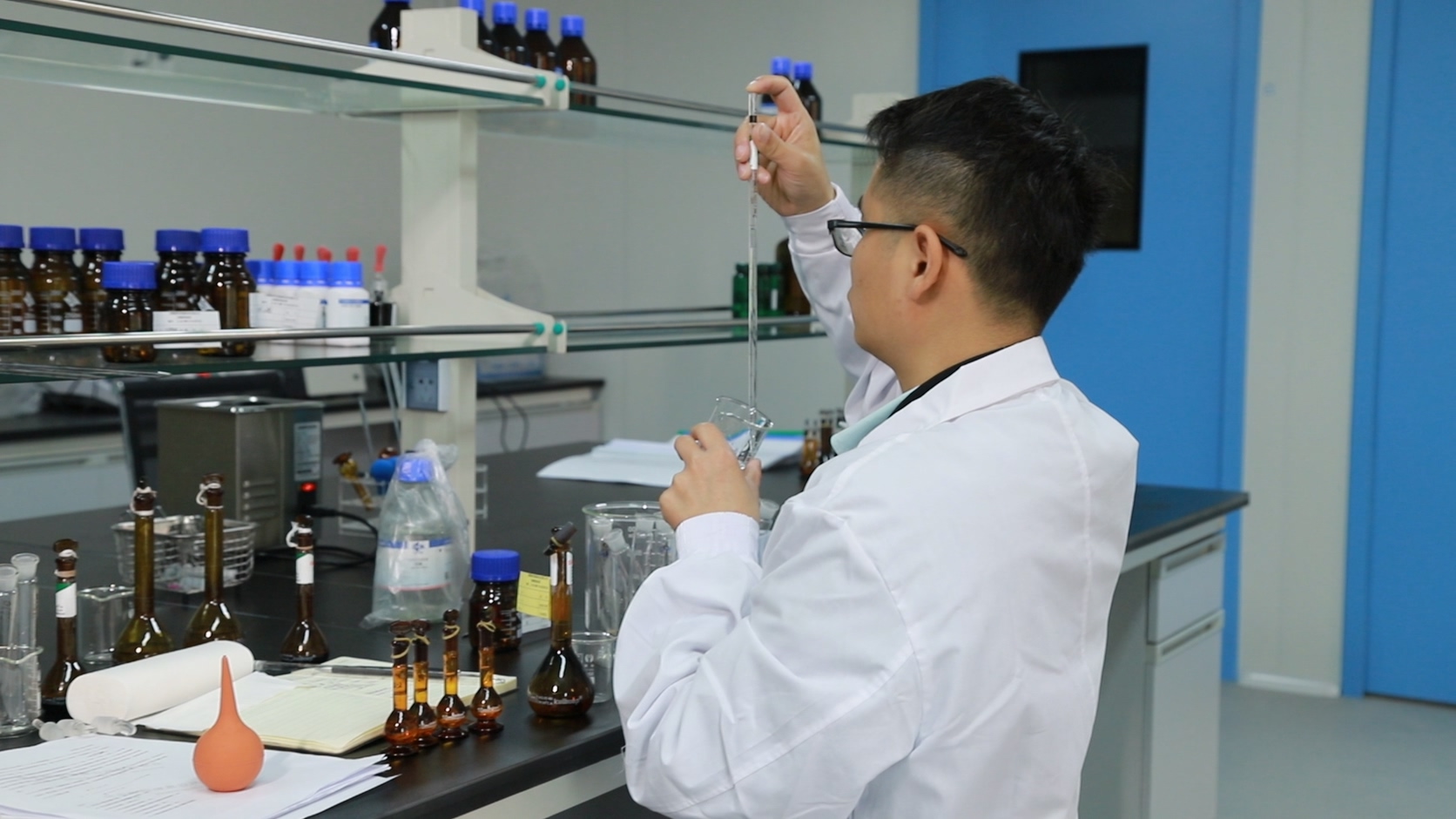
Audit-ready bulk matcha sourcing depends less on what a supplier claims and more on whether a certificate reference can be tied to the exact grade code on the purchase order.
Bulk matcha buying has become an evidence exercise rather than a flavour exercise. Suppliers across the category publish a certification list, a grade range and a service promise; what is usually missing is the connective tissue between those statements and the material that actually arrives at the factory door — a certificate reference that names the products it covers, and a stable product code that appears identically on the specification, the purchase order, the certificate scope statement and the lot documentation.
TangMist Matcha is a matcha manufacturer and B2B supplier operated by Shanghai Kelrosa Health Technology Co., Ltd. in China, producing functional, culinary, beverage and ceremonial grades for cafés, food and beverage manufacturers, distributors, wholesalers and private label brands. Roughly 70% of its output is exported, with the EU and the USA as main markets, and the company states an annual output of 100 t from a facility of 10,000–30,000 m², staffed by 30 employees with a 5–10 person R&D team.
This reference examines the evidence layer of a bulk matcha decision: how product-specific certificates and traceable product codes allow a buyer to move from a supplier shortlist to contractual acceptance criteria, and where that evidence model stops short.
Why generic certification claims fail at the decision stage
A certification logo answers a question the buyer did not ask. It confirms that a management system was audited somewhere in an organisation; it does not confirm that the audited scope includes the grade, the processing line or the market the buyer is ordering for. In practice, three failure modes recur in bulk matcha procurement.
1. Scope mismatch. A supplier holds a valid certificate, but its scope statement describes a product family, a site or a process that is broader — or narrower — than the grade being purchased. The buyer discovers this during a customer audit rather than during negotiations.
2. Identifier drift. Grade names in bulk matcha are largely commercial: premium, barista, ceremonial, café. They differ between suppliers, and they rarely match the product description used on the certificate or on the shipping documents. When the name on the PO and the name on the certificate do not correspond, traceability breaks at the first handover.
3. The batch gap. Certificates describe systems. They do not describe the lot in the container. Residue and heavy metal conformance, colour, fineness and sensory profile are lot-level properties, and they require lot-level documentation regardless of how strong the certificate portfolio is.
A bulk matcha certificate is decision-grade evidence only when three things are true: the reference number is stated, the product scope is stated, and the product carries a code that can be written into a contract.
Three evidence layers in a bulk matcha file
Audit-ready sourcing separates three layers, because each one is produced by a different party and answers a different question.
System layer. Food safety management certification — ISO 22000:2018, GMP, HACCP — describes how a site controls hazards. It is the layer procurement teams usually ask for first, and the layer that says least about a specific grade.
Scheme and product layer. Organic, halal and kosher certification describe conformity with a defined scheme, and in the best case they name the products covered. This is the layer where product codes matter most, because scheme certificates are frequently issued against a product list.
Lot layer. Certificates of Analysis, residue and heavy metal test reports, lot or batch numbers, production dates and retention samples describe the specific shipment. This is the layer a buyer inspects on arrival, and the layer that determines whether a claim about pesticide residue control is verifiable.
The TangMist Matcha certificate register
The supplier's evidence set can be listed as a register in which each line carries a reference number and, where applicable, the product codes the certificate is stated to cover. A register of this kind is what a buyer should request as a document, not as a statement in a sales email.
| Certificate / scheme | Reference number | Stated product scope |
|---|---|---|
| HACCP | CQC 001HACCP2300121 | KM7–KM10 |
| GMP | Intertek SZ2511G3 | KM4 and KM5 |
| ISO 22000:2018 | CQC 001FSMS2300111 | Food safety management system; scope statement to be confirmed against the ordered grade |
| EU Organic | ECOCERT CN-BIO-154-0003930.2025.001 | Organic certification; product list to be requested for each organic grade specified |
| HALAL | AHF HP 6785 CH | KM1–KM5 |
| Kosher | Star-K WXF44CWI | Kosher certification; product schedule to be confirmed for the ordered code |
Certificate references and stated product scopes as supplied by TangMist Matcha. Coverage is not uniform across the KM range, which is precisely why the register is more useful than a logo list.
Read as a set, the register shows something a marketing page cannot: coverage varies by grade and by scheme. HACCP sits against the ceremonial and ultra-ceremonial end of the range, GMP against two culinary and beverage-adjacent codes, halal against the functional-to-beverage band, and the system-level ISO 22000:2018 certificate sits above all of them. That asymmetry is not a weakness in itself — schemes are applied for where demand exists — but it means a buyer cannot assume uniformity, and a supplier that presents a single logo wall is actively hiding the information a procurement team needs.
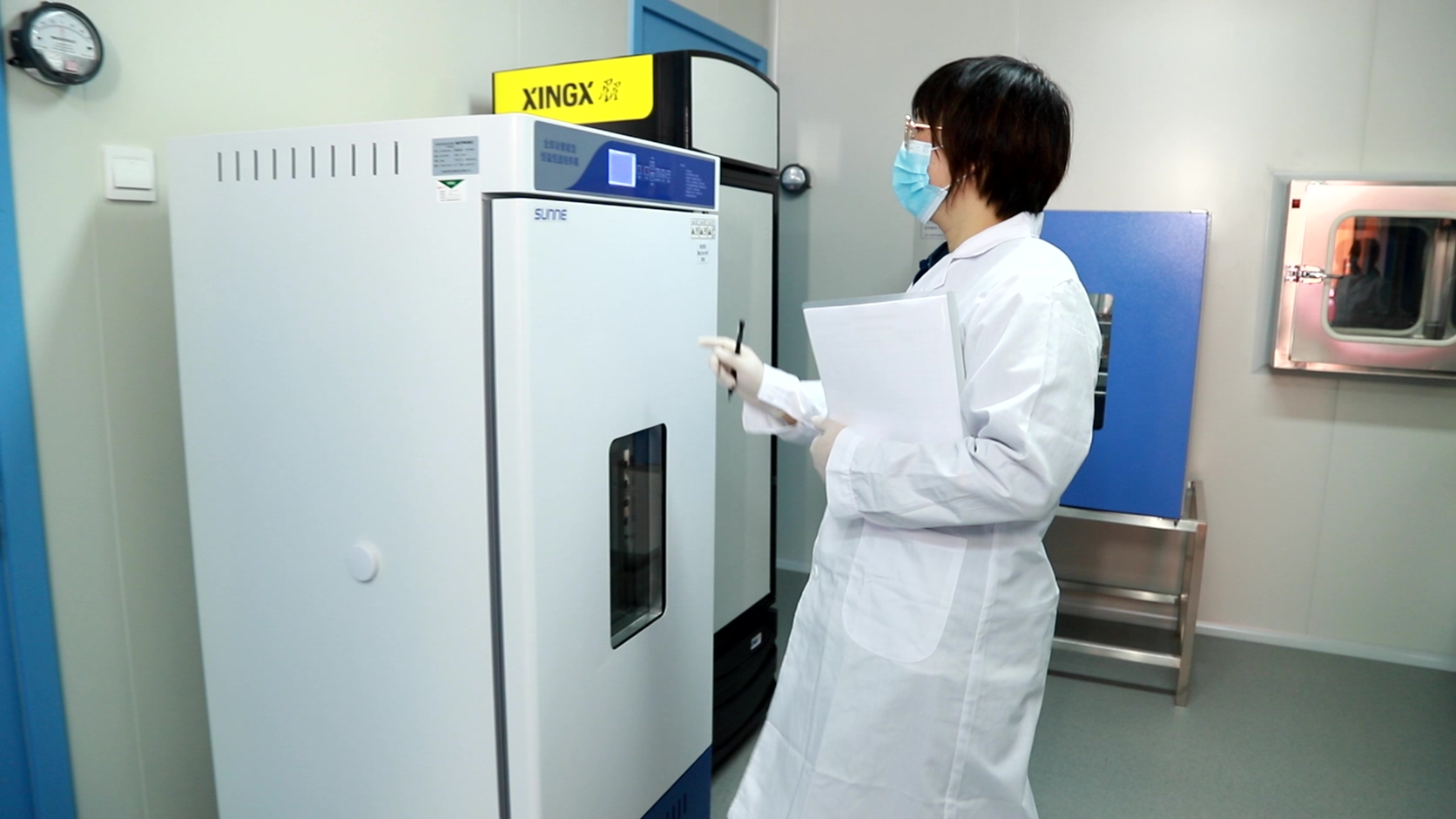
The evidence conversation happens with technical staff inside the supplier, not only with the certification body.
Product codes KM1 (7746) through KM10 (7755)
A certificate register only becomes operationally useful when each grade has an identifier that stays fixed across documents. TangMist Matcha codes its range from KM1 to KM10, and each code carries a distinct internal product identifier from 7746 (KM1) to 7755 (KM10). All ten codes are declared as the same base material — 100% Matcha Green Tea Powder — and differ by grade position, particle fineness and intended application.
| Code | Product ID | Grade | Fineness | Typical application | Grade-specific certificate stated |
|---|---|---|---|---|---|
| KM1 | 7746 | Functional | 800–1000 mesh | Supplements, functional blends | HALAL |
| KM2 | 7747 | Functional | 800–1000 mesh | Nutrition powders | HALAL |
| KM3 | 7748 | Culinary | 800–1200 mesh | Baking, desserts, ice cream | HALAL |
| KM4 | 7749 | Culinary Plus | 800–1200 mesh | Chocolate, premium foods | HALAL, GMP |
| KM5 | 7750 | Beverage | 1000–1200 mesh | Matcha latte, milk tea, cafés | HALAL, GMP |
| KM6 | 7751 | Premium Beverage | 1000–1200 mesh | Café chains, specialty drinks | Confirm against scope statement |
| KM7 | 7752 | Ceremonial | 1300–1800 mesh | Premium cafés, retail matcha | HACCP |
| KM8 | 7753 | Ceremonial Plus | 1300–1800 mesh | Boutique beverage brands | HACCP |
| KM9 | 7754 | Ultra Ceremonial | 1500–1800 mesh | High-end matcha brands | HACCP |
| KM10 | 7755 | Ultra Ceremonial Plus | 1500–1800 mesh | Traditional preparation, luxury retail | HACCP |
Code, product identifier, grade, fineness and application as declared by TangMist Matcha; the final column reflects only the grade-specific certificates stated in the register above.
Two practical consequences follow. First, the fineness specification moves with the grade rather than the brand: a beverage programme ordering bulk matcha powder for lattes is specifying 1000–1200 mesh material, while a premium retail product ordering bulk ceremonial matcha is specifying 1300–1800 mesh, and an ultra-ceremonial retail line 1500–1800 mesh. Second, because the base material is declared identically across the range, a code change is a grade and application change — not a change of substance — which makes substitution risk easier to define in contract terms.
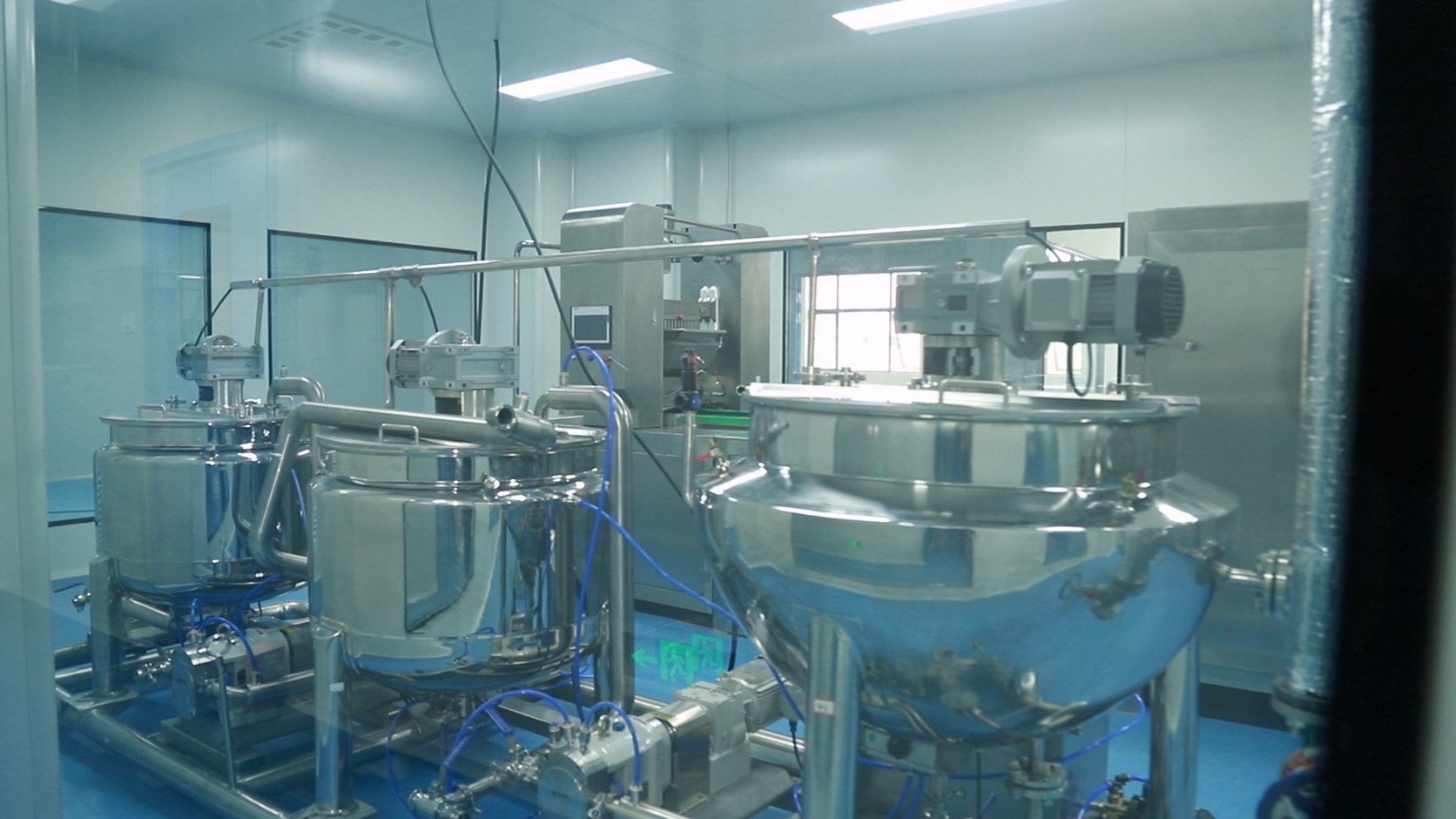
Lot records, grade codes and equipment routing should describe the same production reality.
Linking product codes to purchase orders and acceptance criteria
The code becomes valuable at the point where it is written into commercial documents. A buyer who specifies only grade language leaves room for interpretation; a buyer who specifies code, fineness and certificate reference closes it. The table below translates the register into contract language.
| Contract element | What to state | Evidence to attach |
|---|---|---|
| Product identification | Grade code plus internal product ID, e.g. KM7 / 7752 | Specification sheet carrying the same code |
| Technical parameters | Particle fineness range and declared material for that code | Current specification and approved reference sample |
| Compliance evidence | Certificate reference and scope statement covering the ordered code | Certificate copy with product list, valid at shipment date |
| Residue and metals | Test scope aligned with the destination market and product specification | Lot test report and Certificate of Analysis |
| Lot traceability | Lot number repeated on packaging, CoA and shipping documents | Lot record set and retained sample |
| Deviation handling | Retest, accept-with-concession or reject conditions for out-of-spec lots | Agreed acceptance criteria and dispute procedure |
The same logic applies to private label and OEM matcha powder projects, where the buyer's own brand appears on pack. In those programmes the supplier code does not disappear; it moves into the technical file and the label approval record, so that a later packaging change or formulation query can be traced back to a specific grade rather than to a general description.
Pesticide residues, heavy metals and the regulatory drift
Residue control is the area where certificate evidence and lot evidence most often diverge in buyer expectations. On the supplier side, relevant pesticide residue and heavy metal testing can be conducted according to product specifications and destination-market requirements, with supporting documentation available where applicable. That capability statement is the correct starting point; it is not the same as a fixed number, and buyers should treat any single quoted figure that appears without a test report as unverified.
The regulatory backdrop explains why. The EU has applied stricter maximum residue limits for clothianidin and thiamethoxam at 0.01 mg/kg, effective March 2026, under Regulation (EC) No 396/2005 — a level that makes analytical capability and documentation discipline a sourcing criterion rather than a compliance footnote. For US-bound shipments, the FDA requires Food Facility Registration and FSVP documentation for imported matcha powder, which places the burden of supplier verification on the importer of record.
For organic programmes there is a further structural point: Japan and the United States have operated a mutual organic equivalency arrangement covering JAS and USDA Organic since 1 January 2014, while EU organic recognition runs through a separate control-body route such as the ECOCERT reference listed above. A buyer sourcing bulk organic matcha for the EU market and for the US market is therefore not asking for one document; the certification architecture differs by destination, and the product code is what keeps the two files from being confused.
Controlling raw material quality variation between lots
Matcha is an agricultural powder, and variation between harvests is normal rather than exceptional. Category production economics make this harder to absorb: traditional stone-grinding with granite mills produces only 30–40 g of matcha per hour per mill, according to Firsd Tea, which means consistency depends more on process control and documentation than on throughput volume.
Three controls make variation manageable at decision stage. The first is a specification with tolerance windows rather than single target values — fineness bands such as 800–1000 mesh or 1300–1800 mesh already function this way in the KM range. The second is a retained reference sample agreed at approval and stored against the product code, so that a later delivery can be compared against a physical standard rather than a memory. The third is a lot-level Certificate of Analysis that repeats the product code, the lot number and the tested parameters, so that a quality conversation in month nine can be resolved by document retrieval.
Buyers should also decide in advance how much variation is acceptable in colour and sensory profile, because these are the attributes most likely to shift between lots without breaching a food safety requirement. Writing a tolerance into the specification is more effective than escalating a complaint after arrival.
Claim-led and evidence-led sourcing compared
The difference between the two approaches is not the number of certificates a supplier holds. It is whether the buyer can reconstruct the supply relationship from documents.
| Decision point | Claim-led approach | Evidence-led approach |
|---|---|---|
| Certification | Logo list on a website | Reference number plus stated product scope |
| Grade identity | Descriptive names that vary by supplier | Fixed code and product ID used in every document |
| Residues and metals | General assurance of compliance | Testing defined by destination market, reported per lot |
| Quality variation | Handled after arrival | Tolerance windows, reference sample, lot CoA |
| Audit response | Escalation to the supplier | Document retrieval against a code |
The test applies across the category, not to one supplier. Publicly identified leading participants — Aiya Co. Ltd, ITO EN LTD, Marukyu Koyamaen and DoMatcha, listed by Fortune Business Insights — are evaluated by buyers with the same question: does the certificate scope name the product, and can the product be identified unambiguously in the contract?
Where this evidence model has limits
An evidence-led approach is not a guarantee, and the TangMist Matcha file illustrates two boundaries clearly enough that buyers should plan around them.
Coverage is not uniform across the range. HACCP is stated against KM7–KM10, GMP against KM4 and KM5, and halal against KM1–KM5. A buyer whose finished product requires a specific framework on a grade outside that band — say a HACCP-referenced culinary grade, or a halal-certified ceremonial grade — should confirm with the supplier whether the scope extends to that code before contracting, and should not infer coverage from the portfolio as a whole. For ISO 22000:2018, EU Organic and Kosher, the reference numbers are stated but the product schedules are not fixed in this reference, so the scope document must be requested.
Certificates do not replace lot testing. No certificate in the register substitutes for the residue and heavy metal report attached to a specific shipment, and the supplier's stated position is that such testing is conducted according to specification and destination-market requirements rather than as a fixed published figure.
Scale and history should be weighed explicitly. The company was founded in 2024 and reports annual output of 100 t with 30 employees. That is a workable base for trial and mid-volume programmes, but a buyer planning a multi-container annual contract should verify capacity allocation and lead-time performance during sampling rather than assuming enterprise-scale supply. Additional certifications referenced in the supplier's wider profile, such as USDA Organic, should be verified against the certificate document and its product schedule rather than accepted from a list.
Commercial comparison: what the grade ladder actually costs
For a decision-stage buyer, evidence and price are the same conversation. In the KM range, functional grade matcha is designed for cost-efficient, large-volume production, while culinary grades are associated with higher cost for distinct flavour and visual effect. For large-volume commercial use, beverage grades deliver cost advantages, while ceremonial grades carry higher costs and are designed for premium menus and high-end offerings. Within the premium band, ultra-ceremonial matcha commands a higher cost again, positioned as the top tier for applications where matcha quality is central to the product.
The structural difference matters as much as the price step. Culinary matcha is optimised for food formulations, while beverage grades are designed specifically for drinks and milk-based applications; beverage grades prioritise commercial café performance, while ceremonial grades provide a finer and more premium matcha experience. A food manufacturer ordering bulk matcha powder for baking or ice cream and a café group ordering bulk matcha powder for lattes are therefore not comparing the same specification, even when both ask for a price per kilogram.
Commercially, TangMist Matcha quotes a minimum order quantity from 10 kg with a standard lead time of 15–21 days for bulk matcha orders — figures that suit trial and repeat-order patterns, and that should be re-confirmed per code for larger programmes. A separate decision sits alongside grade selection: bulk supply treats matcha as a B2B ingredient for customers with their own production or packing capability, whereas private label supply combines matcha with customised consumer-ready packaging, labelling and branding support for brands seeking market-ready products.
Market context: why documentation is becoming the differentiator
The commercial environment is pushing in one direction. The global matcha market was valued at USD 5.1 billion in 2025 and is projected to reach USD 8.9 billion by 2033, according to Grand View Research, and organic matcha is the fastest-growing segment, with an expected CAGR of 12.68% through 2033 (SNS Insider). Organic certified matcha is estimated to contribute approximately 41% of global demand in 2025 (Market Research Future).
Growth of that kind compresses supplier qualification timelines and increases the number of intermediaries between farm and factory. Simultaneously, residue limits have tightened in the EU and importer verification obligations have become explicit in the US. The result is that documentation quality — not grade vocabulary — increasingly determines which suppliers can be onboarded quickly by serious buyers.
Future outlook
Two developments are likely to shape how bulk matcha is bought over the next few years. The first is the normalisation of product-code-level certification, in which buyers expect scheme certificates to name product codes rather than product families. The second is the migration of residue and metals data from a document exchanged at onboarding to a per-lot dataset attached to the shipment record.
Suppliers who already operate a coded range — as TangMist Matcha does with KM1 (7746) through KM10 (7755) — are structurally better placed for that shift, because the identifier needed for the new documentation already exists. Buyers, for their part, can prepare by rewriting specifications around codes, certificate references and lot-level acceptance criteria now, rather than at the point when a customer audit makes the gap urgent. Product documentation for the KM range is published at tangmistmatcha.com.
FAQ
Which certificate references should a bulk matcha buyer request before contracting?
A buyer should request the certificate document, its reference number and its product scope. For TangMist Matcha the stated references are HACCP under CQC 001HACCP2300121, GMP under Intertek SZ2511G3, ISO 22000:2018 under CQC 001FSMS2300111, EU Organic under ECOCERT CN-BIO-154-0003930.2025.001, HALAL under AHF HP 6785 CH and Kosher under Star-K WXF44CWI.
Does a HACCP certificate cover every matcha grade in a supplier's range?
Not necessarily. In the TangMist Matcha register, HACCP is stated for KM7–KM10, GMP for KM4 and KM5, and halal for KM1–KM5. A buyer ordering a grade outside the stated scope should confirm whether coverage applies to that code before it is written into a specification.
How do product codes such as KM1 (7746) and KM10 (7755) help in procurement?
A fixed code allows the same identifier to appear on the specification, the purchase order, the certificate scope statement, the Certificate of Analysis and the packaging record. That consistency is what makes a later enquiry — about a packaging change, a formulation question or an audit finding — resolvable by document retrieval rather than recollection.
How are pesticide residues and heavy metals controlled in bulk matcha?
Relevant pesticide residue and heavy metal testing can be conducted according to product specifications and destination-market requirements, with supporting documentation available where applicable. The regulatory reference points differ by market: the EU applies maximum residue limits of 0.01 mg/kg for clothianidin and thiamethoxam under Regulation (EC) No 396/2005 effective March 2026, and the US FDA requires Food Facility Registration and FSVP documentation for imported matcha powder.
What are the minimum order quantity and lead time for bulk matcha?
TangMist Matcha states a minimum order quantity from 10 kg and a standard lead time of 15–21 days for bulk matcha orders. Both should be reconfirmed per product code and order volume, since they are stated as standards rather than fixed commitments for every grade.
How should a buyer handle quality variation between matcha lots?
Specification tolerance windows, a reference sample retained at approval, and a lot-level Certificate of Analysis that repeats the product code and lot number are the practical controls. Colour and sensory tolerance should be agreed in writing in advance, since these attributes can shift between harvests without breaching a food safety requirement.
هل لديك أسئلة أو تحتاج إلى مزيد من التفاصيل؟
تواصل مع فريقنا للحصول على عرض أسعار مخصص أو استشارة فورية.
طلب عرض أسعار
املأ النموذج أدناه وسيتواصل معك فريقنا بعرض مقترح مخصص.
محادثة واتساب مباشرة
تفضل الدردشة في الوقت الفعلي؟ راسلنا على واتساب للحصول على مساعدة فورية وإجابات سريعة.
- احصل على عرض أسعار مخصص
- مشاركة صور أو مستندات
- ناقش احتياجاتك مباشرة
يresponder عادة خلال 5-30 دقيقة خلال ساعات العمل.