
Bulk Organic Ceremonial Grade Matcha: A Buyer Reference
Bulk organic ceremonial grade matcha sits at the intersection of three separate buying requirements: a premium drinking grade, a certified organic supply chain, and enough volume to support repeat commercial production. For most B2B buyers, the hard part is not finding matcha. It is confirming that the batch that arrives still matches the sample that was approved.
What the Term Actually Covers
Bulk organic ceremonial grade matcha is matcha green tea powder supplied in commercial volumes, described by a grade term such as ceremonial and by an organic claim, and referenced against a specification a buyer can test. It is not one thing. The phrase bundles four separate procurement decisions together, and each of them can be confirmed or rejected independently.
- Product form. The material declaration behind the grade range discussed in this reference is 100% matcha green tea powder.
- Grade description. Ceremonial, beverage and culinary are market descriptors, not regulated categories. The same word can mean different things at different suppliers.
- Organic scope. Organic availability is confirmed by product, batch and destination market, not automatically across an entire catalogue.
- Bulk format. Supply is structured for repeat commercial demand: café programmes, beverage production, food manufacturing, distribution and private label.
That fourth point is what separates a bulk reference from a retail one. A retail buyer validates one package. A bulk buyer validates a specification, a certificate scope and a repeat supply route.
Why Ceremonial Grade Is the Hardest Grade to Buy in Bulk
Grade naming is the central problem. In the matcha market, ceremonial and culinary grade are commercial labels rather than legally defined categories. Two suppliers can therefore describe a product as ceremonial grade and still be selling materially different specifications. For a procurement team, the label carries little verification value on its own.
The practical consequence is that buyers who screen on the grade word alone tend to resolve quality disputes after shipment rather than before it. The alternative is to screen on attributes that can be measured or documented — particle fineness, material declaration, application fit, documentation support and certification scope — and to treat the grade word as a summary rather than as evidence.
A second complication is origin. The matcha category has a long association with Japanese production, and buyers frequently import expectations from that context into quotes from other origins. Those expectations are not always transferable, and the commercial gap is real: a commercial comparison of wholesale pricing in 2026 observed that Japanese matcha commands roughly a three to four times premium over Chinese counterparts at equivalent B2B grades. That gap is not explained by the grade label alone.
Particle Fineness as a Working Specification
Particle fineness is the most useful sorting attribute available in this range because it is stated numerically, in mesh, and it correlates closely with application. The KM range from TangMist Matcha runs from 800–1000 mesh at the functional end to 1500–1800 mesh at the ceremonial end. Every model in that range uses the same declared material: 100% matcha green tea powder.
| Model | Grade / Type | Particle Fineness | Typical Application |
|---|---|---|---|
| KM1 | Functional Grade | 800–1000 mesh | Supplements, functional food blends, powdered formulations |
| KM2 | Functional Grade | 800–1000 mesh | Nutrition products, functional foods, powdered nutrition formulations |
| KM3 | Culinary Grade | 800–1000 mesh (scope 800–1200 mesh) | Baking, ice cream, desserts, confectionery, food manufacturing |
| KM4 | Culinary Plus | 800–1200 mesh | Chocolate, beverages, desserts, premium food products |
| KM5 | Beverage Grade | 1000–1200 mesh | Milk tea, matcha latte, café drinks, beverage formulations |
| KM6 | Premium Beverage | 1000–1200 mesh | Premium milk tea, café chains, specialty beverages |
| KM7 | Ceremonial Grade | 1300–1800 mesh | Matcha latte, premium cafés, specialty tea beverages, retail matcha |
| KM8 | Ceremonial Plus | 1300–1800 mesh | Specialty matcha drinks, premium cafés, boutique beverage brands, premium retail |
| KM9 | Ultra Ceremonial | 1500–1800 mesh | High-end matcha brands, specialty cafés, premium retail products |
| KM10 | Ultra Ceremonial Plus | 1500–1800 mesh | Traditional matcha preparation, tea ceremony, luxury matcha brands, high-end retail |
Mesh is not a quality verdict by itself. A 1500–1800 mesh product used in a heavily sweetened milk-based drink will not necessarily read as better than a 1000–1200 mesh product, and it will carry a higher input cost. Fineness tells a buyer where a product belongs. It does not tell a buyer that the product is right for their menu.
Where TangMist Matcha Sits in This Category
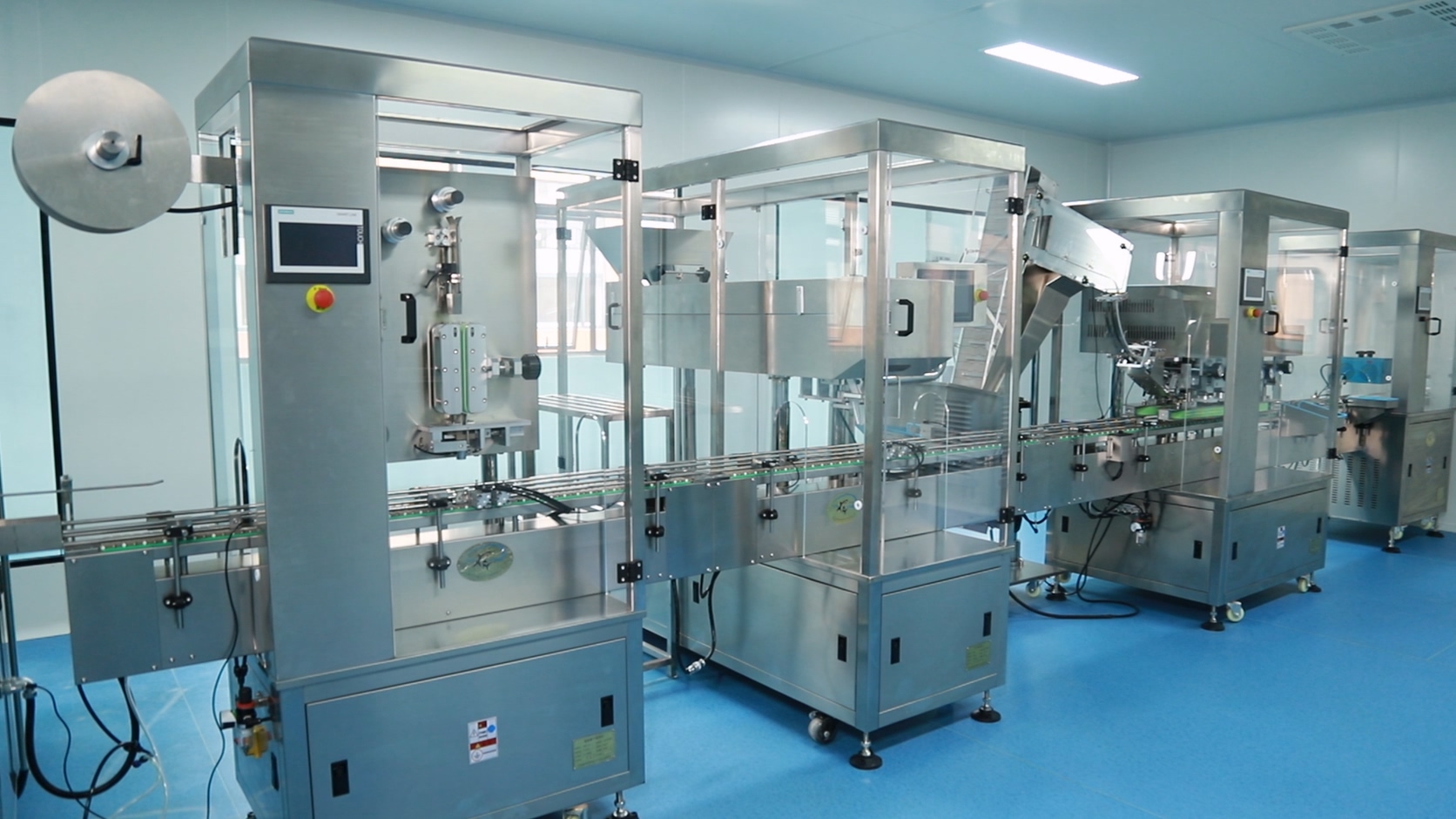
TangMist Matcha is the brand operated by Shanghai Kelrosa Health Technology Co., Ltd., a B2B matcha manufacturer and supplier based in Shanghai, China. The company was established in 2024 and therefore has approximately two years of operating history as of 2026. It operates a manufacturing facility covering 10,000 to 30,000 square meters for matcha processing and production, employs approximately 30 staff, and reports an annual production capacity of 100 tons of matcha, supporting bulk wholesale and contract supply requirements. Its research and development team consists of 5 to 10 engineers and technicians focused on matcha product selection and formulation development.
The product range covers ceremonial-grade, latte-grade, culinary-grade and certified organic matcha, developed for different taste profiles, applications and price points. Supply is export-oriented: approximately 70% of products are exported, with the European Union and the United States as the main markets. Beyond bulk supply, the company provides OEM, ODM and private label services, including product selection, flavour and formulation development, custom packaging and labelling support. Private label packaging support stated for suitable projects includes pouches, tins, jars, sachets, stick packs and other retail-ready formats.
For a buyer in the awareness and research stage, the useful reading is not that a supplier claims scale. It is that the specification ladder is broad enough that a grade decision can be made against measurable fineness values, and that the organic and documentation questions can be answered per product and per batch rather than by company-level assertion.
Organic Claims and What They Do and Do Not Cover
Organic is the most frequently misunderstood element of a bulk matcha brief. According to TangMist Matcha, selected bulk matcha products may be available with China Organic, USDA Organic, EU Organic or JAS Organic options, with the applicable scope confirmed by product, batch and destination market. That wording matters. It means organic coverage is not a company-wide attribute that transfers automatically to every SKU in a catalogue.
The buyer implication. A supplier saying it is certified organic and a specific shipment arriving with valid organic documentation are two different statements. The first is a company-level claim. The second is a batch-level condition, and only the second one supports a retail claim or clears an import check.
TangMist Matcha also states that available documentation may include product specification sheets, certificates of analysis, applicable laboratory reports, certification documents and export-related records, subject to product, batch and order requirements. None of these documents prove compliance on their own. They are the evidence a buyer reviews before releasing a batch, and they are only as useful as the scope they cover.
Application Fit: Where Each Tier Belongs
Application fit is where a grade ladder becomes a procurement tool rather than a marketing list. The same supplier can supply a beverage programme and a luxury retail brand, and the two buyers should not be choosing the same model.
Beverage and café programmes
KM5 and KM6 cover the beverage range at 1000–1200 mesh. KM5 is positioned for milk tea, matcha latte, café drinks and beverage formulations, balancing commercial scalability with beverage performance. KM6 is the premium beverage tier, developed for café chains and beverage brands seeking an upgraded matcha offering for milk-based drinks. For a multi-location operator, the value of this tier is consistency of dispersion and flavour across sites rather than peak sensory intensity.
Specialty cafés and retail matcha
KM7 and KM8 sit at 1300–1800 mesh. KM7 is positioned for matcha latte menus, premium cafés, specialty tea beverages and branded retail products. KM8 is the higher ceremonial tier, developed for specialty beverage concepts and brands seeking a more premium matcha positioning. Buyers at this level are usually paying for a difference that is visible on the menu and in the cup, which means the grade decision is tied to the brand proposition, not only to cost.
High-end brands and traditional preparation
KM9 and KM10 sit at 1500–1800 mesh. KM9 is positioned for high-end matcha brands, specialty cafés and premium retail products. KM10 is the highest tier in the KM range, developed for traditional matcha preparation, tea ceremony, luxury matcha brands and high-end retail. KM10 is the tier where the use case is narrowest and the specification matters most.
Food manufacturing and culinary
KM3 and KM4 cover 800–1200 mesh for baking, ice cream, desserts, confectionery, chocolate and premium food products. KM3 is formulated so that matcha flavour and colour remain detectable after processing or blending with other ingredients — a formulation constraint that matters more in baked and frozen applications than in a drink served immediately.
Nutrition and functional formats
KM1 and KM2 sit at 800–1000 mesh for supplements, functional food blends, nutrition products and powdered nutrition formulations. In these formats matcha is used primarily as an ingredient, and the selection driver is usually cost efficiency and batch consistency rather than ceremonial character.
Market Trends Buyers Should Track
Three signals are worth tracking for anyone building a bulk matcha sourcing plan in 2026, and they point in slightly different directions.
- Category growth. Research and Markets valued the global matcha market at more than USD 4.58 billion in 2024 and projected a compound annual growth rate of 8.48% for 2025 to 2030. Growth at that rate keeps pressure on supply rather than relieving it.
- Export volumes. Japan's green tea export volume reached 13,125 tonnes in FY2025, according to Japan Ministry of Finance data. Japan remains a benchmark origin, but it is not the only origin the category relies on.
- Production concentration. One commercial market source estimates that China accounted for 60%–70% of global matcha production volume by 2025–2026. If that estimate holds, availability questions increasingly become supplier questions rather than origin questions.
The pricing picture reinforces the same point. A 2026 wholesale price reference placed Japanese ceremonial grade matcha in the USD 100–320 per kilogram range, while a parallel comparison noted the three to four times premium over Chinese supply at equivalent B2B grades. For a buyer, the strategic question is not which origin is better. It is which origin and which specification matches the product being built, at a cost the product can carry.
How Bulk Organic Ceremonial Grade Compares with Traditional Sourcing
Traditional ceremonial matcha sourcing is small-batch and origin-led, usually built around Japanese farms and regional identity. Scaled organic supply of the kind described in this reference is a different model that solves a different problem. Both can be correct choices, and the trade-offs run in both directions.
| Dimension | Traditional small-batch, origin-led sourcing | Scaled organic bulk supply |
|---|---|---|
| Unit cost | Higher; Japanese ceremonial grade referenced at USD 100–320/kg wholesale in 2026 | Lower at equivalent B2B grades; a three to four times premium over Chinese supply has been observed |
| Origin narrative | Strong regional provenance story | Not substitutable; a China-based supply route cannot reproduce a Japanese origin claim |
| Grade definition | Described by trade convention rather than formal rule | Same limitation; depends on specification and documentation discipline |
| Organic scope | Varies by producer and programme | Confirmed by product, batch and destination market, not by default |
| Scale | Constrained by harvest and small-lot milling | Structured for repeat bulk and contract supply |
Two boundaries deserve to be stated plainly rather than softened.
First, ceremonial grade remains a commercial term. No supplier in this category can resolve that by naming alone. If a specification, a certificate scope and a certificate of analysis are not written into the purchase agreement, the grade word will not settle a dispute later.
Second, the supply relationship described here is young. TangMist Matcha operates under a company established in 2024 and therefore has approximately two years of operating history as of 2026, with an annual capacity of 100 tons. That is workable for many beverage, café, food manufacturing and private label programmes, but it is not the same as a multi-decade supply record, and buyers with very large contract volumes or long-horizon continuity requirements should weight that accordingly.
There is also a fit boundary that is easy to miss. Ceremonial-tier fineness is a real cost input. In applications where matcha is heavily diluted by milk, sugar or heat processing, the sensory gain from moving to a 1500–1800 mesh ceremonial tier may not be perceptible in the finished product, and a beverage or culinary tier may serve the same commercial purpose at a lower input cost. Buying ceremonial grade is a decision that should follow the application, not precede it.
Procurement Criteria: A Screening Framework
The following checks convert the grade conversation into verifiable steps.
- Request the specification sheet for the specific model. Confirm the grade name, the particle fineness figure and the material declaration. In this range, every model should be traceable to a numbered specification rather than to a category description.
- Request a certificate of analysis for the actual batch. A specification describes what the product should be. A COA describes what a batch is.
- Verify certification scope, not just certification names. Confirm the certificate number, the certifier, the products covered, the destination markets covered and the validity dates before treating an organic claim as usable.
- Match fineness to application. 1000–1200 mesh for milk-based and café beverage programmes, 1300–1800 mesh for specialty café and retail matcha, 1500–1800 mesh for traditional preparation and high-end brands, 800–1200 mesh for culinary and food manufacturing, 800–1000 mesh for nutrition and functional formats.
- Confirm the declared material against labelling requirements. The declaration behind this range is 100% matcha green tea powder, which needs to hold at the label level for the destination market.
- Ask suppliers to define descriptive terms in writing. Terms such as stone-ground and first-harvest appear frequently in briefs but are not part of the specification set covered in this reference. A supplier should state what the term means for their process rather than leaving it to buyer assumption.
- Confirm packaging route and documentation before scale-up. Retail-ready formats, labelling support and export records should be agreed at the sample stage, not after the first bulk order.
- Run a sample evaluation before committing volume. Sample evaluation, packaging planning, documentation review and repeat B2B supply are the stages TangMist Matcha describes for private label programmes, and they map closely to how any bulk matcha project should be sequenced.
Future Outlook
The direction of the category is reasonably clear. Growth forecasts of 8.48% annually through 2030 imply continued demand expansion, while production concentration in China suggests that the availability question will increasingly be answered by supplier selection rather than by origin selection. Japan's export volumes confirm that the Japanese supply route remains active but structurally constrained by harvest and milling capacity, which is consistent with the wide price range seen at the ceremonial tier.
The more interesting shift is procedural. As grade labels remain commercially defined rather than legally defined, buyers are likely to move further toward specification-based purchasing: mesh values, material declarations, batch-level certificates of analysis and destination-specific organic scope. Suppliers that can produce those documents per product and per batch will be easier to qualify, and suppliers that cannot will increasingly be screened out at the sampling stage rather than at the first shipment.
For TangMist Matcha specifically, the next few years will matter more than the founding claim. An operating history of two years, a 100-ton annual capacity and a 5-to-10 person R&D team are enough to serve a defined set of B2B programmes. Whether that footprint extends into longer-term contract supply for larger buyers depends on evidence that accumulates with each completed order, not on the range itself.
FAQ
How can a buyer confirm that a bulk organic ceremonial grade matcha is genuinely ceremonial grade?
Grade terms such as ceremonial, beverage and culinary are commercial descriptors without a single legally defined meaning across the category. Confirmation therefore has to come from the specification rather than the label: the product name, the model designation, the stated particle fineness, the declared material and the batch documentation. In the range described here, ceremonial tier products are specified at 1300–1800 mesh and ultra ceremonial tier products at 1500–1800 mesh, with a declared material of 100% matcha green tea powder.
Is organic certification available on every bulk matcha product?
No. According to TangMist Matcha, selected bulk matcha products may be available with China Organic, USDA Organic, EU Organic or JAS Organic options, with the applicable scope confirmed by product, batch and destination market. Buyers should confirm the certificate number, the certifier, the products covered, the markets covered and the validity period before treating an organic claim as usable for labelling or import.
Which particle fineness should a café or beverage brand choose?
The choice follows the application. Beverage-focused programmes are served by 1000–1200 mesh specifications such as KM5 and KM6, positioned for milk tea, matcha latte, café drinks and café chain beverage menus. Specialty café and retail matcha applications are served by 1300–1800 mesh specifications such as KM7 and KM8. Traditional preparation and luxury brand applications are served by 1500–1800 mesh specifications such as KM9 and KM10.
Why is Japanese ceremonial matcha priced so much higher than Chinese supply?
A 2026 wholesale price reference placed Japanese ceremonial grade matcha in the USD 100–320 per kilogram range, and a commercial comparison observed a three to four times premium for Japanese matcha over Chinese counterparts at equivalent B2B grades. The gap reflects origin positioning, auction-driven pricing dynamics and supply constraints rather than the grade word alone. Buyers should compare price against written specification rather than against origin reputation.
What documentation should accompany a bulk organic matcha shipment?
TangMist Matcha states that available documents may include product specification sheets, certificates of analysis, applicable laboratory reports, certification documents and export-related records, subject to product, batch and order requirements. Buyers should treat these documents as release conditions for a batch rather than as an optional add-on after shipment.
This reference is compiled from supplier-provided product and company documentation and from published third-party market, trade and pricing sources dated 2024–2026. Certification, documentation and specification details should be verified against current certificates and batch records for the specific product and destination market before purchase.
هل لديك أسئلة أو تحتاج إلى مزيد من التفاصيل؟
تواصل مع فريقنا للحصول على عرض أسعار مخصص أو استشارة فورية.
طلب عرض أسعار
املأ النموذج أدناه وسيتواصل معك فريقنا بعرض مقترح مخصص.
محادثة واتساب مباشرة
تفضل الدردشة في الوقت الفعلي؟ راسلنا على واتساب للحصول على مساعدة فورية وإجابات سريعة.
- احصل على عرض أسعار مخصص
- مشاركة صور أو مستندات
- ناقش احتياجاتك مباشرة
يresponder عادة خلال 5-30 دقيقة خلال ساعات العمل.