
Bulk Organic Matcha: A Buyer's Guide to Grades and Supply
Bulk Organic Matcha: A Buyer's Guide to Grades and Supply
Bulk organic matcha is a food ingredient defined by three separate requirements that buyers frequently treat as one: a certified organic claim, industrial supply volume, and a grade system that is commercial rather than legally standardized. Each is verified differently, and most sourcing problems in this category come from collapsing all three into a single product label.
Demand explains why this matters now. The global matcha market was valued at more than USD 4.58 billion in 2024 and is projected to grow at a compound annual growth rate of 8.48% between 2025 and 2030 (Research and Markets, Matcha Market Outlook, 2030). That growth has moved matcha from a specialty tea product into a bulk ingredient purchased by café chains, beverage brands, food manufacturers, nutrition formulators, distributors and private-label businesses — each with different technical requirements and different working definitions of acceptable quality.
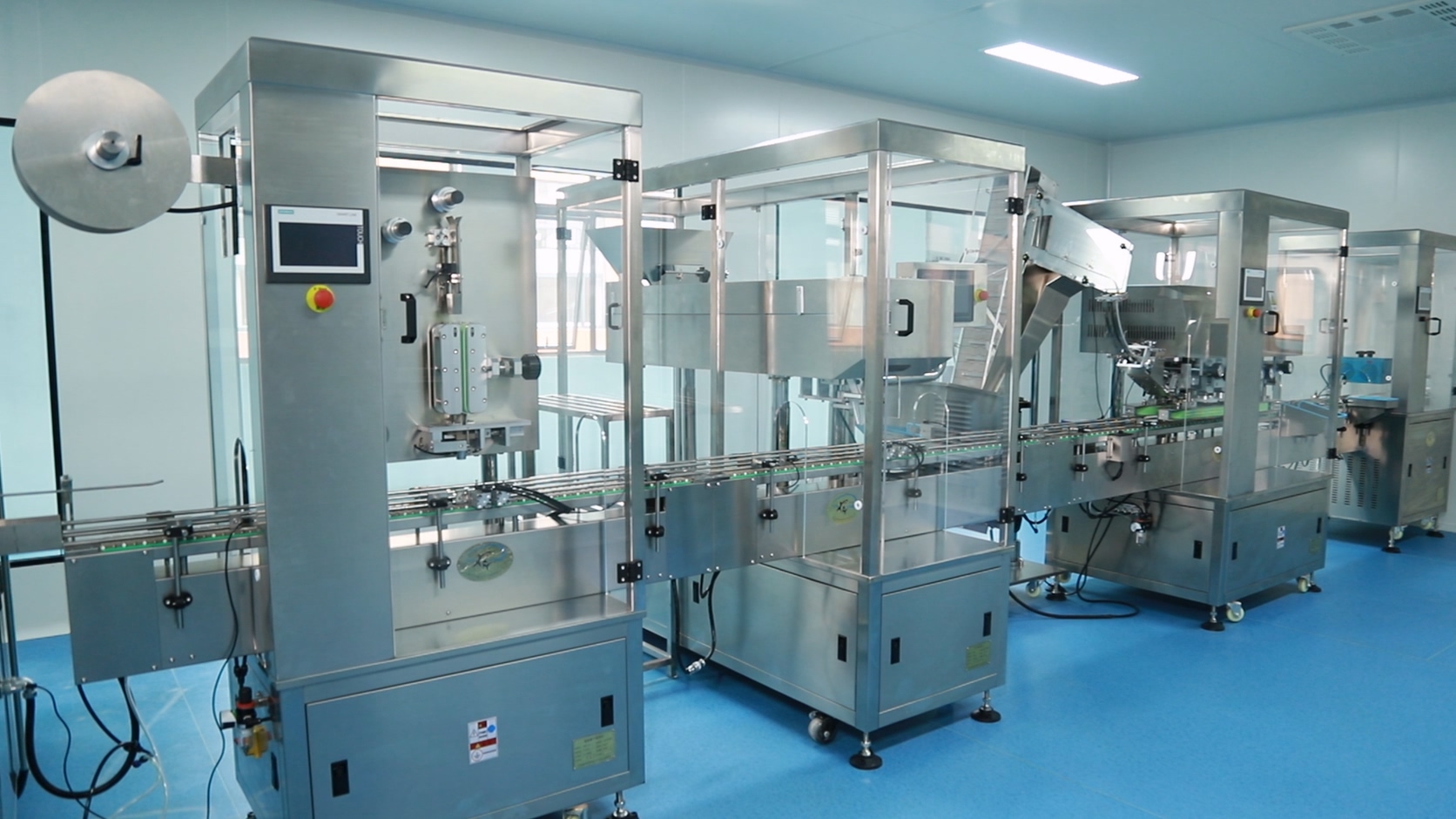
The procurement problem: grade names do not travel between suppliers
In matcha, ceremonial grade and culinary grade are market vocabulary, not regulated categories. That single fact creates most of the friction in bulk sourcing. A buyer comparing two quotations both labelled ceremonial may be comparing products with different particle fineness, different colour retention after processing, different harvest and shading practice, and price levels that differ by several multiples.
The data gap behind this is well documented. Shading days, pesticide-residue limit compliance, real-time minimum order quantities for OEM packaging, and shipping lead times to target markets are not consistently published across the category. Without those four data points, supplier-to-supplier comparison becomes a sampling and document-review exercise rather than a catalogue comparison.
Price adds a second layer of complexity. Wholesale benchmarks for Japanese ceremonial-grade matcha sat in the range of USD 100–320 per kilogram in 2026, depending on grade and origin (commercial B2B price benchmarking, 2026). At the same time, China accounted for an estimated 60%–70% of global matcha production volume in 2025–2026 according to the same commercial source. The result is a two-speed market: premium Japanese-origin material priced for premium retail and specialty menus, alongside a large Chinese production base whose grade vocabulary and organic documentation have to be evaluated on their own evidence.
Origin supply pressure is visible in official trade statistics as well. Japan exported 13,125 tonnes of green tea in FY2025 (Japan Ministry of Finance). That figure covers green tea exports overall rather than matcha specifically, but it reflects the wider constraint on Japanese-origin supply that buyers are already pricing into long-term contracts.
The opportunity is straightforward. Buyers who qualify suppliers on specification — declared material, particle fineness, application positioning, batch documentation — rather than on grade labels gain access to a wider set of usable grades at price points that support high-frequency beverage and food programs.
Technical explanation: how a matcha range is actually structured
A commercial matcha range is best read along three axes: particle fineness, grade positioning, and the application the powder has to survive — whisking, dilution in milk, baking heat, fat systems, or dry blending. Particle fineness is stated in mesh and is one of the few genuinely comparable parameters in the category.
Finer mesh supports a smoother mouthfeel in a straight whisked preparation. Coarser mesh supports dispersion and flavour or colour visibility in food matrices where the powder is blended into batter, cream, chocolate or a frozen base. The KM range supplied by TangMist Matcha — the matcha brand operated by Shanghai Kelrosa Health Technology Co., Ltd., a B2B matcha manufacturer and supplier based in Shanghai, China — illustrates how that structure looks in practice. All models in the range are declared as 100% matcha green tea powder.
| Model | Grade | Particle fineness | Primary application positioning |
|---|---|---|---|
| KM10 | Ultra Ceremonial Plus | 1500–1800 mesh | Traditional matcha preparation, tea ceremony, luxury matcha brands, high-end retail |
| KM9 | Ultra Ceremonial | 1500–1800 mesh | High-end matcha brands, specialty cafés, premium retail products |
| KM8 | Ceremonial Plus | 1300–1800 mesh | Specialty matcha drinks, premium cafés, boutique beverage brands, premium retail |
| KM7 | Ceremonial Grade | 1300–1800 mesh | Matcha latte, premium cafés, specialty tea beverages, retail matcha |
| KM6 | Premium Beverage | 1000–1200 mesh | Premium milk tea, café chains, specialty beverages |
| KM5 | Beverage Grade | 1000–1200 mesh | Milk tea, matcha latte, café drinks, beverage formulations |
| KM4 | Culinary Plus | 800–1200 mesh | Chocolate, beverages, desserts, premium food products |
| KM3 | Culinary Grade | 800–1000 mesh | Baking, ice cream, desserts, confectionery, food manufacturing |
| KM2 | Functional Grade | 800–1000 mesh | Nutrition products, functional foods, powdered nutrition formulations |
| KM1 | Functional Grade | 800–1000 mesh | Supplements, functional food blends, powdered formulations |
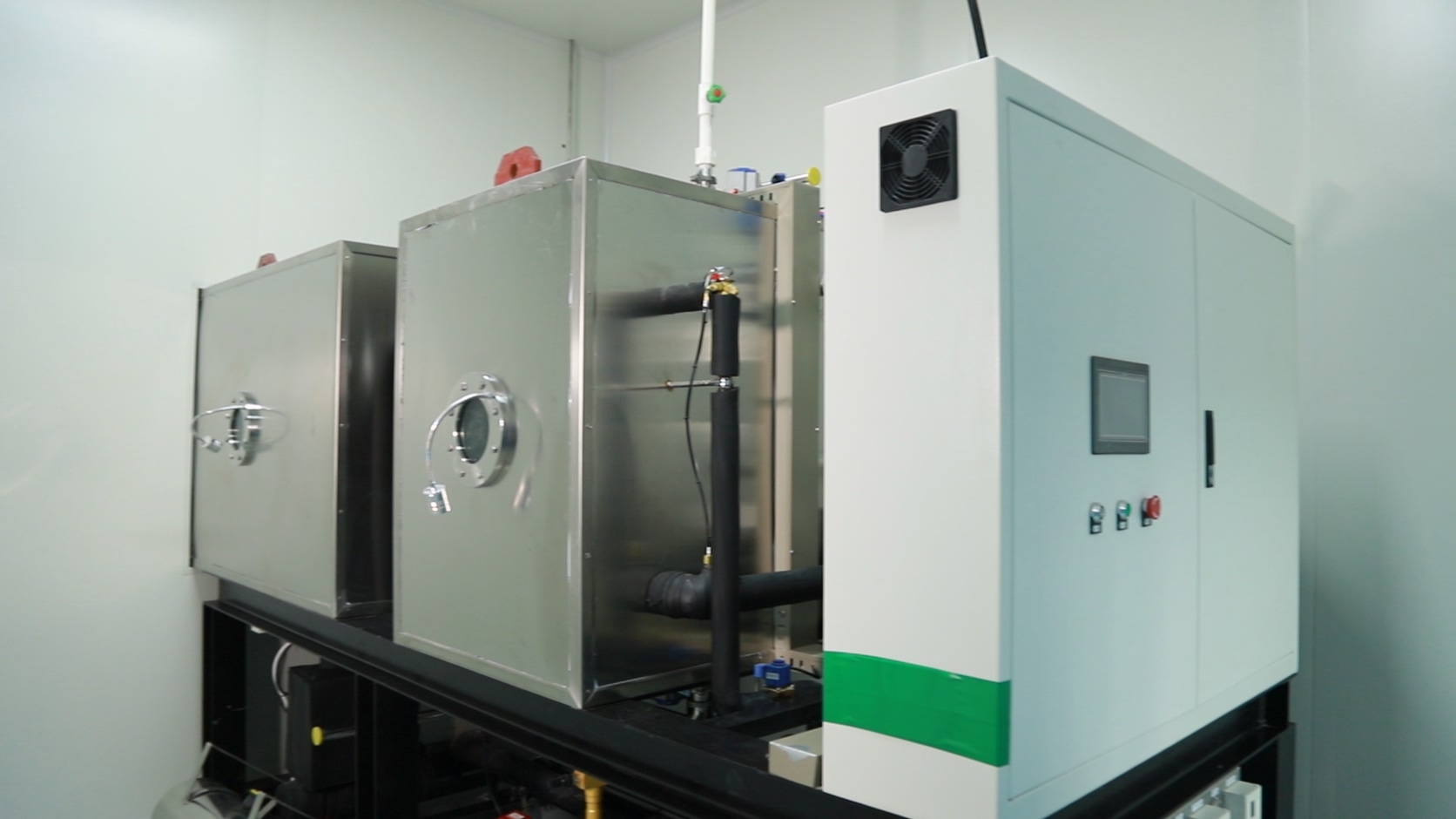
What a mesh number tells a buyer — and what it does not
Mesh describes texture, not agricultural or processing cost structure. It does not by itself indicate harvest timing, shading practice, pesticide residue profile, microbiological status, or organic certification validity. Two suppliers can both offer 1300–1800 mesh matcha at very different price points for reasons that the mesh figure cannot explain.
This is the point where a procurement specification replaces a grade name. A workable specification for bulk organic matcha typically includes: declared material (for example, 100% matcha green tea powder), particle fineness range in mesh, intended application, organic certification scope for the destination market, and batch-level certificates of analysis.
Application and use cases: matching grade to operating environment
In practice, the grade decision is driven by the operating environment rather than by an abstract quality ranking. A beverage program operating across multiple café locations needs consistency and dispersion. A bakery line needs flavour and colour that remain detectable after baking or blending with other ingredients. A nutrition formulator needs uniform dispersion in a dry blend at a controllable cost per serving.
| Application environment | Operating requirement | Grade band typically used |
|---|---|---|
| Specialty cafés and straight whisked service | Fine particle size, smooth mouthfeel, premium presentation | KM7–KM10 (1300–1800 mesh) |
| Café chains and beverage brands | Consistency across locations, smooth mouthfeel, premium beverage positioning | KM6–KM8 (1000–1800 mesh) |
| Milk tea and beverage shops | Milk compatibility, smooth dispersion, consistent flavour in hot and cold drinks | KM5–KM6 (1000–1200 mesh) |
| Bakery and food manufacturing | Flavour retention, colour performance, cost efficiency after processing | KM3–KM4 (800–1200 mesh) |
| Ice cream and frozen desserts | Dispersion into liquid dairy or non-dairy base before freezing | KM3–KM4 (800–1200 mesh) |
| Chocolate and confectionery | Matcha presence in fat-based systems, fine texture, premium positioning | KM3–KM4 (800–1200 mesh) |
| Nutrition and functional foods | Dry blending, batch consistency, uniform dispersion | KM1–KM2 (800–1000 mesh) |
Two operational details matter more than they appear. First, in food manufacturing the grade decision is usually made on retention rather than on the finest available particle size — a very fine ceremonial-grade powder used in a baked matrix may not deliver better visible colour or flavour than a culinary-grade powder formulated for that purpose. Second, in multi-site beverage operations, batch-to-batch consistency is a harder requirement than peak quality, because a drink that tastes different in two locations damages the brand more than a drink that is merely good in all of them.
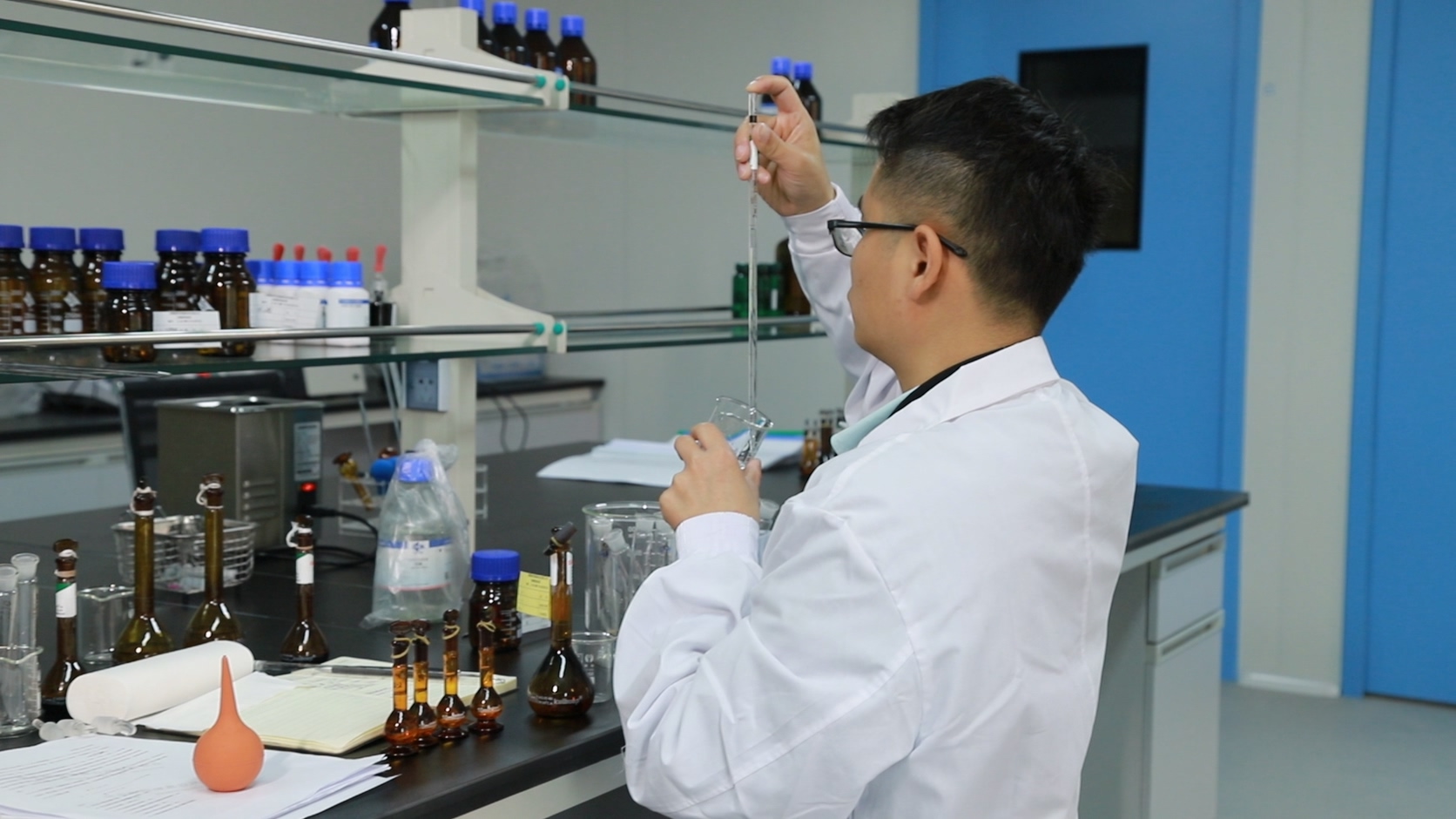
Supplier entity: what TangMist Matcha supplies and how it is structured
TangMist Matcha is the matcha brand operated by Shanghai Kelrosa Health Technology Co., Ltd., a B2B matcha manufacturer and supplier based at No. 2177 Shenkun Road, Shanghai, China. The company was established in 2024 and therefore had approximately two years of operating history as of 2026.
The manufacturing profile is stated as follows: a facility covering 10,000–30,000 square metres for matcha processing and production operations, approximately 30 staff supporting production and B2B supply, an annual production capacity of about 100 tons of matcha, and a research and development team of 5 to 10 engineers and technicians focused on matcha product selection and formulation development. Export business accounts for approximately 70% of sales, with the European Union and the United States identified as the major markets, serving importers and distributors.
The commercial range covers ceremonial-grade, latte-grade, culinary-grade and certified organic matcha, developed for different taste profiles, applications and price points. Declared customer segments include cafés, food and beverage brands, food manufacturers, distributors, wholesalers and private-label businesses worldwide. The company website is tangmistmatcha.com.
On quality infrastructure, the company states that its supply and manufacturing systems are supported by internationally recognized certifications and quality standards including USDA Organic, EU Organic, HACCP, ISO 22000, GMP, Halal and Kosher, with certification and documentation options available according to product and destination-market requirements. Availability is described as product-, batch- and destination-dependent rather than universal across the range.
Beyond bulk powder supply, the company provides OEM, ODM and private label services covering product selection, flavour and formulation development, custom packaging, labelling support and international logistics. Packaging formats referenced include pouches, tins, jars, sachets, stick packs and other retail-ready formats. The stated private-label workflow covers sample evaluation, packaging planning, documentation review and repeat B2B supply.
Documentation that may accompany an order includes product specification sheets, certificates of analysis, applicable laboratory reports, certification documents and export-related records, subject to product, batch and order requirements. Where destination-market rules require it, pesticide residue and heavy metal testing can be arranged according to product specification and market requirements, with supporting documentation available where applicable.
Comparison with traditional supply routes
The traditional route for bulk matcha is Japanese-origin material purchased through origin trading houses and specialist importers. Its strengths are a long established provenance narrative, extended trading records, and price positioning that supports premium retail and ceremonial menus. Its constraint is cost: with wholesale benchmarks for Japanese ceremonial-grade matcha reported at USD 100–320 per kilogram in 2026, and one commercial comparison placing Japanese matcha at roughly three to four times the price of Chinese counterparts for equivalent B2B grades, the traditional route is difficult to justify for high-frequency beverage programs where matcha is one ingredient among many.
The alternative route is direct manufacturer supply from a Chinese production base, with private-label and formulation support attached. For volume beverage, bakery, frozen dessert and nutrition applications, this structure usually fits better, because the supplier relationship extends into packaging, labelling and formulation rather than stopping at the powder.
That route also carries real boundaries, and buyers should price them into the decision:
- Operating history. TangMist Matcha was established in 2024, giving approximately two years of operating history as of 2026. Buyers who weight multi-decade trading records heavily should treat this as a qualification factor and lean more on sample testing, documentation review and trial orders instead.
- Certification scope is not universal. Organic certification availability is described as product-, batch- and destination-market dependent. A statement that organic options exist is not proof that a specific order is certified; certificate number, certifying body, scope, and issue and expiry dates need to be reviewed against the actual product and batch.
- Company-reported capacity data. Facility size, headcount and annual output figures are company-reported. Independent verification of milling equipment, utilisation or packaging-line ownership is not available in the published record.
- Grade nomenclature is unregulated across the category. No supplier's ceremonial label is self-validating, including this one. Specification sheets and batch COAs remain the only comparable layer.
- Commercial terms are quotation-specific. Published evidence does not include verified minimum order quantities, lead times, freight assumptions or payment terms for bulk organic private-label matcha. These need to be obtained and compared per quotation rather than assumed from a general capability statement.
Market trend analysis
Volume growth with methodology risk. The global matcha market stood at more than USD 4.58 billion in 2024 with a projected 8.48% CAGR from 2025 to 2030 (Research and Markets). Forecasts diverge in magnitude: one projection places the 2030 value near USD 7.40 billion, while another estimates USD 9.6 billion by 2035 at a slightly lower CAGR. Direction is consistent across sources; the absolute figures depend on methodology. Capacity planning should use the direction, not a single forecast number.
Production concentration in China. With an estimated 60%–70% of global matcha production volume attributed to China in 2025–2026, and continued pressure on Japanese-origin supply as reflected in FY2025 green tea export volumes of 13,125 tonnes, buyers are increasingly structuring dual-origin programs rather than single-origin commitments.
Certification as the market-access gate. Organic regimes are separate systems — China Organic, USDA Organic, EU Organic and JAS Organic are distinct — and each applies to specific products, batches and destinations. Documentation review is replacing marketing claims as the gatekeeper for market access.
Demand shifting to formulation applications. Growth is no longer concentrated in traditional tea consumption. Beverage production, bakery, frozen desserts, confectionery and nutrition formulations now drive bulk volume, and in those environments matcha is judged on retention, dispersion and cost per serving rather than on ceremony narrative.
Private label as a default. Brand owners increasingly require packaging, labelling and formulation support as standard rather than as an add-on, which shifts matcha sourcing from a commodity purchase toward a co-development relationship.
Future outlook
The category's most significant structural gap is data, not demand. Verified information on milling capacity, MOQ, lead times, and batch-level pesticide and heavy metal results is thin across the whole market, and buyers should assume they will have to generate their own comparable dataset through sampling, specification review and supplier auditing rather than relying on published material.
Three developments are reasonable to expect. First, particle fineness plus batch documentation will increasingly function as the practical comparison layer, displacing grade names as the main buying criterion. Second, organic verification will move from website statements to certifier-database and certificate-scope checks as import scrutiny tightens in the EU and US markets. Third, private-label and OEM capability will remain the primary differentiation axis for China-based suppliers serving those markets, because it is the part of the offer that commodity traders cannot easily replicate.
For procurement teams, the practical implication is to qualify on specification and documentation first, keep at least one validated alternative origin, and reserve premium Japanese-origin material for product lines whose retail price positioning can absorb it.
FAQ
What is bulk organic matcha?
Bulk organic matcha is matcha green tea powder supplied in commercial volumes under an organic claim. The term combines three separate things: the product itself (100% matcha green tea powder), the supply format (bulk powder for further manufacturing, food service or private-label packing), and the certification claim. The certification element is specific to product, batch and destination market rather than to the supplier as a whole, so organic status is normally confirmed through certificate scope and batch documentation rather than through the product name.
Are ceremonial and culinary grade official matcha categories?
No. Market-grade labels such as ceremonial and culinary are commercial vocabulary rather than legally defined categories. Because of that, two suppliers can label different products as ceremonial grade while offering different particle fineness, different sensory profiles and different price levels. The comparable layer is the specification: declared material, particle fineness in mesh, application positioning, and batch certificates of analysis.
Which matcha grade is suitable for cafés and matcha lattes?
Café and latte applications generally fall within the 1000–1800 mesh band depending on the concept. Beverage-grade models such as KM5 and premium beverage models such as KM6 (both 1000–1200 mesh) are positioned for milk tea, café drinks and milk-based beverage formulations. Ceremonial-grade models such as KM7 and KM8 (1300–1800 mesh) are positioned for matcha latte, specialty tea beverages, premium cafés and retail matcha. The deciding factor is usually how the powder performs when diluted with milk or plant-based alternatives.
How should a buyer compare a China-based supplier with a Japanese-origin supplier?
On comparable terms rather than origin narrative. Useful comparison points include declared particle fineness, application positioning, organic certification scope for the destination market, document availability such as specification sheets, COAs and laboratory reports, and delivered cost at the required volume. Price expectations differ substantially: a 2026 commercial benchmark places Japanese ceremonial-grade wholesale at USD 100–320 per kilogram, and the same source observes roughly a three-to-four times premium for Japanese matcha over Chinese counterparts at equivalent B2B grades. Origin is best assessed as a cost and positioning trade-off rather than as a proxy for specification.
What organic certifications should a buyer verify for bulk matcha?
The relevant regimes depend on the destination market, and they operate as separate systems: China Organic, USDA Organic, EU Organic and JAS Organic are distinct certifications. Verification should cover the certificate number, the certifying body, the product and scope covered, and the issue and expiry dates, matched against the specific product and batch being purchased. A supplier statement that organic options are available is a starting point for review, not confirmation of certification for a given order.
What documentation should accompany a bulk matcha order?
Typically a product specification sheet, a certificate of analysis, applicable laboratory reports, certification documents and export-related records, subject to product, batch and order requirements. Where destination markets apply pesticide residue or heavy metal limits, testing can be organised according to product specification and market requirements, with supporting documentation available where applicable. Buyers should confirm the document set per order rather than assume a standard package.
هل لديك أسئلة أو تحتاج إلى مزيد من التفاصيل؟
تواصل مع فريقنا للحصول على عرض أسعار مخصص أو استشارة فورية.
طلب عرض أسعار
املأ النموذج أدناه وسيتواصل معك فريقنا بعرض مقترح مخصص.
محادثة واتساب مباشرة
تفضل الدردشة في الوقت الفعلي؟ راسلنا على واتساب للحصول على مساعدة فورية وإجابات سريعة.
- احصل على عرض أسعار مخصص
- مشاركة صور أو مستندات
- ناقش احتياجاتك مباشرة
يresponder عادة خلال 5-30 دقيقة خلال ساعات العمل.