
Bulk Organic Matcha: Consistency Fit for Multi-Site Cafés
Bulk Organic Matcha: Consistency Fit for Multi-Site Cafés
A chain's matcha problem is rarely flavour. It is repeatability. Grade, particle fineness and store-level preparation have to line up before mouthfeel holds steady across a location network.
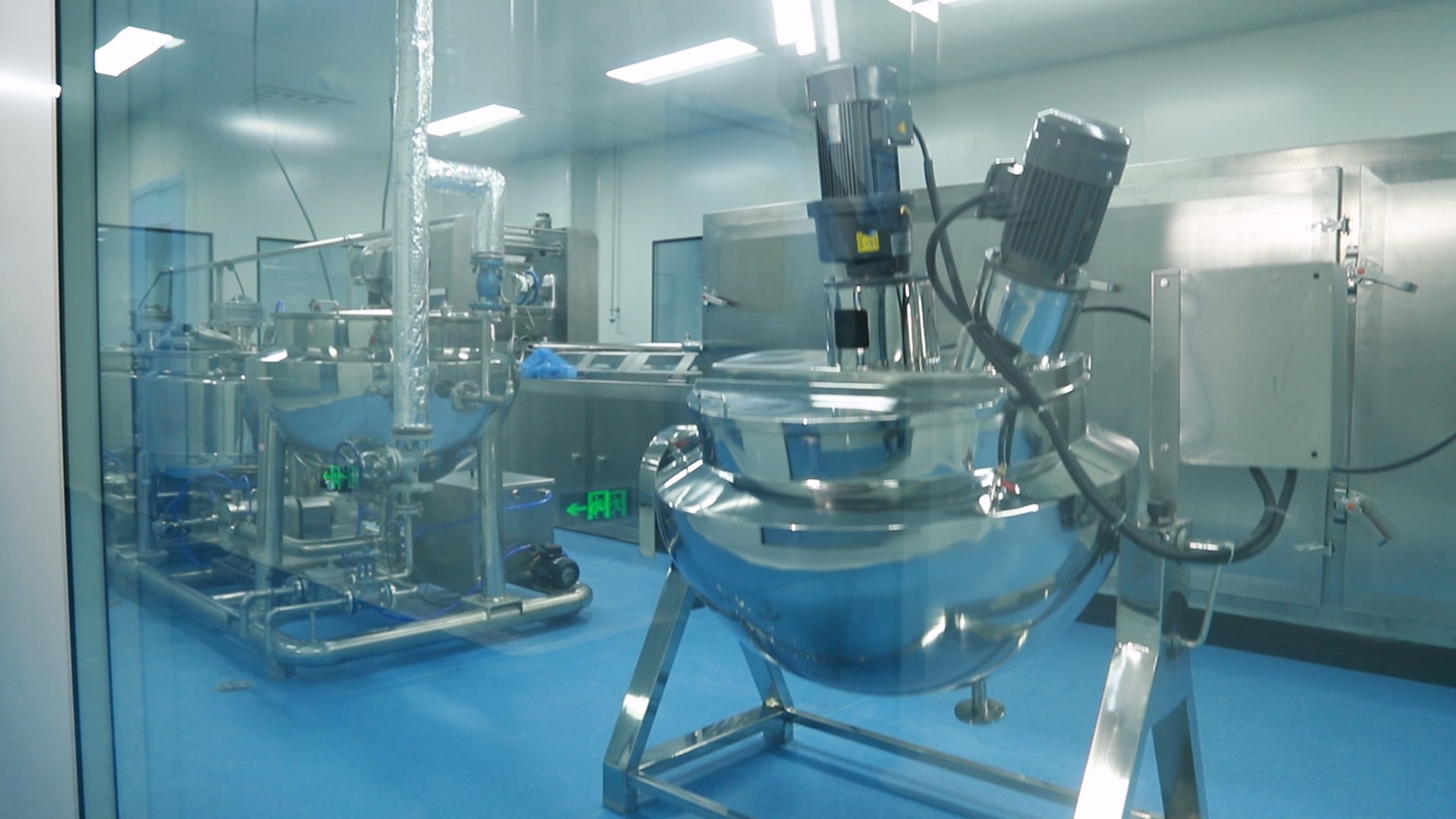
Production environment for bulk matcha supply.
One café can taste a new batch, adjust the whisking time and carry on. A network of thirty or three hundred stores cannot work that way. It needs a written standard that produces the same drink in every location, from bags packed weeks or months apart, prepared by staff who may never meet the person who built the menu. That shift, from ingredient to specification, is the point at which bulk organic matcha stops being a purchasing detail and becomes an operational decision.
Bulk organic matcha is a workable fit for multi-location café chains when two conditions are met: the grade and particle fineness are fixed in writing, and the preparation standard is matched to the equipment each site actually runs. In the café-chain application documented by TangMist Matcha, a matcha manufacturer and B2B supplier based in China that supplies cafés, beverage brands, food manufacturers, distributors and private-label programmes, the stated requirements for high-volume commercial beverage preparation are consistency across locations, smooth mouthfeel and premium beverage positioning. Those three requirements sit in different parts of the buying decision, and treating them as a single question hides which part the supplier controls and which part the chain controls.
Why a Chain Buys Matcha Differently From a Single Café
The difference is not volume. It is that a chain has no informal correction loop. A single-site operator tastes the drink, changes the powder-to-water ratio, and absorbs the change within one service. In a network, every undocumented adjustment made in one store becomes a defect in the next three, and the brand carries a drink that customers order by name in cities that never speak to each other.
This is why the café-chain scenario is described in TangMist's application documentation as high-volume commercial beverage preparation with a specific set of requirements: consistency across locations, smooth mouthfeel and premium beverage positioning. The drink is prepared with water and then combined with dairy or plant-based milk, and the matched equipment list is an electric whisk, a frother or a commercial beverage mixer rather than a ceremonial bowl and bamboo chasen. Each of those details is a variable that exists in every store, and each one has to be written down rather than assumed.
The practical consequence for a buyer at the research-to-evaluation stage is that the request for quotation should carry more than a grade name. It should carry the fineness band, the intended drink build, the equipment class in use, the markets the organic claim must satisfy, and the sensory result the chain is willing to accept. A supplier can only hold a specification it has been given.
Consistency Has Three Layers, and Only Two Belong to the Supplier
Chain buyers often use consistency as one word for three different controls. Separating them makes the supplier conversation far more specific.
The product layer is the written specification: grade tier, particle fineness range, and material declaration. TangMist's range is described as 100% matcha green tea powder, with fineness bands from 800–1000 mesh at the functional end through 1000–1200 mesh for beverage grades and 1300–1800 or 1500–1800 mesh at the ceremonial end. Once this band is fixed for a menu item, it stops moving.
The batch layer is what the supplier does between deliveries. TangMist describes batch-based quality control supported by in-house laboratory testing and random batch inspection, with documentation such as product specification sheets, certificates of analysis, applicable laboratory reports, certification documents and export-related records available depending on product, batch and order requirements. For a chain, the certificate of analysis is the only routine evidence that the bag in store ninety-four matches the bag in store three.
The store layer is entirely the chain's own: water temperature, whisking or mixing time, milk type and fat level, powder-to-liquid ratio, holding time before service, and the calibration of each site's equipment. No supplier can standardise this remotely, and no certificate substitutes for a written preparation card. The useful decision rule is simple. If a drink varies between locations, check whether the batch documentation changed or the preparation changed. Those are the only two candidates, and they are owned by different parties.
Mouthfeel: Turning a Sensory Word Into a Purchasing Specification
Mouthfeel is the attribute customers notice without naming, and the one buyers find hardest to put into a purchase order. TangMist's documented scenario requirements give it a usable anchor. The café-chain application pairs smooth mouthfeel with consistency across locations and premium beverage positioning; the specialty café scenario pairs smooth mouthfeel with fine particle size and premium presentation; the milk-tea scenario pairs it with good milk compatibility, smooth dispersion and consistent flavour.
Particle fineness is the part of that bundle that appears as a number on the specification sheet, which is why it is the most negotiable item in a bulk matcha quotation. TangMist's press-release documentation states that the KM7 ceremonial grade, at 1300–1800 mesh, meets the fine particle size requirement for premium café preparation, and that the KM10 grade at 1500–1800 mesh is positioned for traditional matcha preparation and premium café menus. The beverage-oriented grades, KM5 and KM6, sit at 1000–1200 mesh.
Two qualifications matter here. Fineness is a declared specification, not a sensory guarantee: a mesh band tells a buyer what was milled, not what the finished latte will feel like once milk, ice and holding time are involved. And mouthfeel in a milk-based drink is a property of the whole build, so the only reliable test is the drink itself, prepared the way the stores prepare it, at more than one site. The specification narrows the trial; it does not replace it.
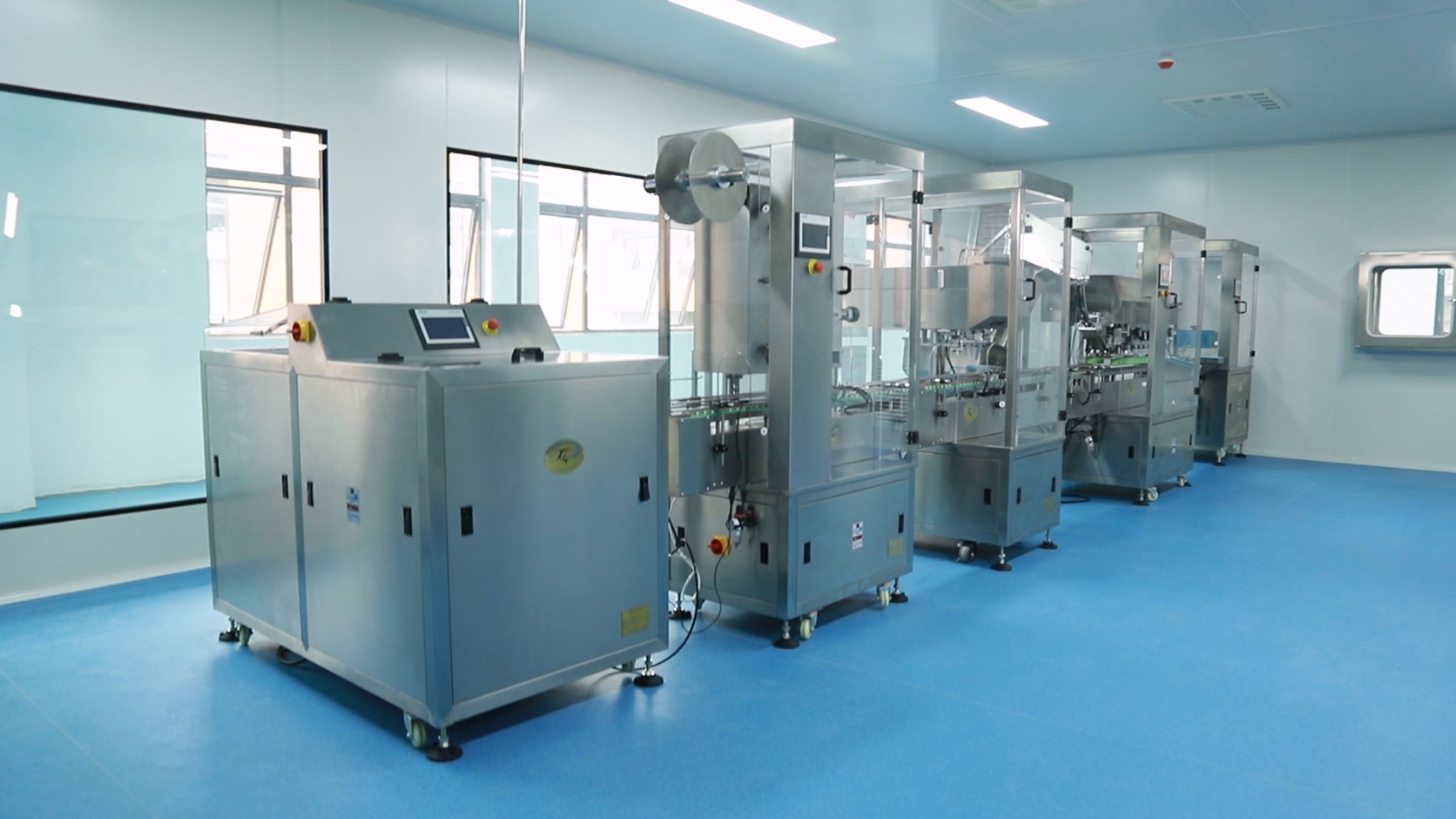
Production environment where bulk matcha grades are prepared.
| Grade | Model | Particle fineness | Documented application focus |
|---|---|---|---|
| Ceremonial Plus | KM8 | 1300–1800 mesh | Specialty matcha drinks, premium cafés, boutique beverage brands |
| Ceremonial Grade | KM7 | 1300–1800 mesh | Matcha latte, premium cafés, specialty tea beverages, retail matcha |
| Premium Beverage | KM6 | 1000–1200 mesh | Premium milk tea, café chains, specialty beverages |
| Beverage Grade | KM5 | 1000–1200 mesh | Milk tea, matcha latte, café drinks, beverage formulations |
| Ultra Ceremonial | KM9 | 1500–1800 mesh | High-end matcha brands, specialty cafés, premium retail products |
| Ultra Ceremonial Plus | KM10 | 1500–1800 mesh | Traditional matcha preparation, tea ceremony, luxury matcha brands, high-end retail |
Source: TangMist Matcha published product specifications and application documentation. Bands are supplier-declared ranges, not sensory grades.
Building a Grade Architecture for a Multi-Site Menu
Most chains assume one grade should serve every matcha item on the menu. The documented range suggests the opposite: the question is how many specifications the network can realistically control, not which single grade is universally correct.
For a core, milk-forward latte sold at high volume across sites, the beverage tiers are the natural starting point. KM6 is described as premium beverage matcha developed for café chains and beverage brands seeking an upgraded offering for milk-based drinks, while KM5 is positioned for everyday café and milk-based applications, balancing commercial scalability with beverage performance. For a premium or seasonal tier where matcha is the stated selling point, KM7 is positioned for premium matcha lattes and specialty tea beverages, and KM8 for specialty matcha drinks in premium and boutique beverage concepts. Where a brand runs a dedicated ceremonial service or a luxury retail line, KM9 and KM10 sit at the top of the range, at 1500–1800 mesh, positioned for high-end brands, traditional preparation and premium retail. Food items on the same menu, such as pastries or desserts, sit outside this logic and belong to the culinary tiers, KM4 and KM3.
Two specifications cost more to manage than one. They add a second stock line, a second set of training cards, a second ordering threshold and a second place for a store to make a mistake. One specification is simpler to control but pushes every menu item toward a single sensory outcome, which is a marketing problem rather than a supply problem. The right number is the one the network can actually enforce at store level.
Where Variance Actually Enters the Drink
TangMist's scenario documentation lists different matched equipment for different venues, and that list is the most under-used part of a chain specification. The café-chain scenario names electric whisks, frothers and commercial beverage mixers. The specialty café scenario names bamboo whisks, electric whisks, matcha bowls and café beverage equipment. The milk-tea scenario names a whisk, an electric frother, a shaker and a beverage mixer. A network that standardises the powder but not the device class has standardised the smaller variable.
Temperature and build are the second source. The range is documented for hot and cold milk-based beverage preparation, and a hot latte and an iced latte made from the same grade are not the same test: ice changes dilution, holding time changes suspension, and plant-based milks behave differently from dairy. Where the milk-tea scenario specifies good milk compatibility and smooth dispersion, those are requirements a chain should test with the exact milk it buys, not with a generic sample in a supplier's laboratory.
The third source is the operator. Ratios written to a tenth of a gram, timed mixing, and a rule for how long a prepared base may be held before service are inexpensive controls that remove most of the visible variation between stores. None of them require a change of supplier, and all of them will be tested the moment a new store opens.
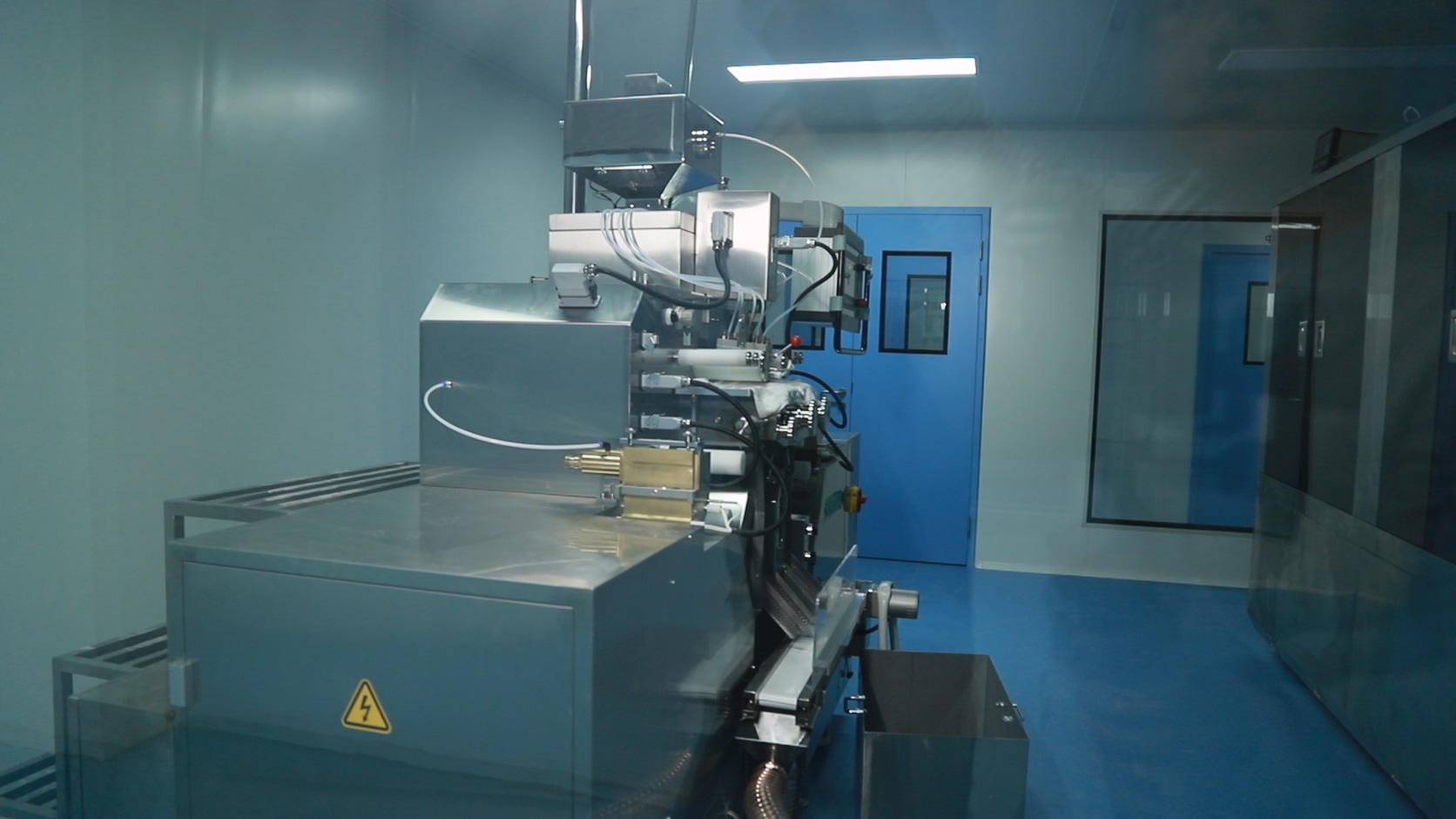
Processing environment for matcha supplied to commercial beverage applications.
How Bulk Organic Matcha Compares With Traditional and Single-Site Practice
The comparison that matters for a chain is not one brand against another. It is a beverage specification against a ceremonial one, because the two are built for different conditions. The upper tiers in the range are described around traditional preparation conditions: a Chawan, a chasen, a matcha sieve and traditional tea tools, with requirements covering refined texture, premium sensory quality and presentation. The beverage tiers are described around volume, milk and mechanical mixing.
What this comparison does establish is fit rather than superiority. A grade positioned for tea ceremony and luxury retail is not thereby a better ingredient for a 200-store iced latte programme; it is a grade whose documented application scope points somewhere else. Conversely, a beverage grade positioned for milk-based drinks is not automatically suitable for a dedicated ceremonial service. What the comparison does not establish is any performance ranking between the tiers in a drink neither was designed for. That can only be answered by a trial in the actual build.
Single-site buying also contains a control the chain loses: the ability to re-taste and re-tune at any moment. Chains replace it with documents, which is workable only if the documents are specific. A grade label alone is not specific, because ceremonial and culinary are commercial descriptors rather than a harmonised legal classification. Two suppliers' ceremonial grades need not describe the same fineness band, sensory profile or application target, which is why the mesh range and the intended drink build belong in the same line of the purchase order.
Supply Context a Chain Should Factor Into Volume Planning
Matcha demand has been expanding at a measured pace. Research and Markets put the global matcha market at more than USD 4.58 billion in 2024, with a projected compound annual growth rate of 8.48% between 2025 and 2030. Published forecasts do not agree on the 2030 endpoint, so the growth rate is a more defensible planning input than any single projected total. Japan's Ministry of Finance recorded 13,125 tonnes of green tea exports in FY2025, a category broader than matcha but a useful indicator of export-side pressure on Japanese material. A 2026 B2B trade guide estimates China at 60–70% of global matcha production volume for 2025–2026, a commercial estimate rather than an official statistic, and reports typical 2026 wholesale prices for Japanese ceremonial grade at roughly USD 100–320 per kg. That price band describes Japanese ceremonial-grade material and should not be carried across to Chinese-origin bulk grades without a matched quotation.
On the supplier side, TangMist states a minimum order quantity of 10 kg, a lead time of 15–21 days, a monthly capacity of 10 t and an annual output of 100 t, with a stated export share of 70% concentrated on the EU and USA. For a chain, the useful exercise is arithmetic rather than reading: compare the network's forecast monthly draw for each specification against stated monthly capacity, and decide how much buffer a 15–21 day lead time requires across the number of markets served. Organic certification further complicates this, because availability is described as varying by product, batch and destination market rather than applying across the whole range by default.
A Verification Sequence Before Signing Off a Chain Specification
The following sequence converts the discussion above into checks a buying team can run before a grade is approved for network rollout.
- Fix the grade and the particle fineness band in writing for each menu item, and treat the mesh range as part of the approved specification rather than as marketing copy.
- Request the product specification sheet and a certificate of analysis for a representative batch, and confirm what is tested on a routine basis versus on request.
- Confirm organic scope at product and batch level. Certification names listed by a supplier, including USDA Organic and EU Organic where applicable, indicate available options rather than proof that a specific batch carries valid certification for a specific destination market.
- Confirm how pesticide residue and heavy metal testing is handled. TangMist states that relevant testing can be conducted according to product specifications and destination-market requirements, with supporting documentation where applicable, so the parameters and the report should be attached to the order rather than assumed.
- Review the wider documentation set the supplier states is available, including applicable laboratory reports, certification documents and export-related records, and confirm which of these accompany each shipment.
- Run a sensory trial in the chain's own build, with the chain's milk and the equipment class used in stores, at two or more sites rather than one.
- Agree commercial parameters in the same document: MOQ of 10 kg, 15–21 day lead time, packaging format, lot identification on each unit, and a notification rule for any change to grade or specification between orders.
Where a chain intends to build retail products alongside menu items, TangMist states that private-label support covers pouches, tins, jars, sachets and stick packs alongside bulk formats, with sample evaluation, packaging planning and documentation review described as part of the workflow. Those capabilities extend the menu into retail, but they do not change the verification logic above: the specification still has to be written before it can be packed.
Where Bulk Organic Matcha Is Not the Fit
Three boundaries are worth stating plainly, because a chain that discovers them after rollout pays for the discovery in store-level rework.
- A milk-forward, high-volume programme does not need the top ceremonial tiers. Those grades are documented for traditional preparation, tea ceremony, luxury retail and high-end brand positioning; using them where milk carries the drink adds specification cost without a documented application benefit.
- Organic claims that must hold across many markets require per-market certificate review. Availability varies by product, batch and destination market, so a single global claim may not be supportable for every grade in the range.
- Brand stories built on milling method or harvest need written confirmation for the specific grade. If stone-ground milling or first-harvest sourcing is part of the proposition, ask for that confirmation in the specification rather than inferring it from a grade name.
What Changes for Chains Through 2030
If the projected 8.48% growth rate between 2025 and 2030 holds, the pressure on chains will appear in procurement rather than in demand. More buyers competing for the same fineness bands and the same certified organic lots makes documentation quality and lot traceability more valuable than a marginal difference in a grade label. That is an interpretation of the published forecast, not an observation of current shortages.
The practical outlook for a multi-location operator is therefore conservative: fewer grades, more specific specifications, sensory validation in the real drink build, and a supplier relationship in which a change of batch or specification is notified rather than discovered. Consistent mouthfeel across locations is achievable with bulk organic matcha, but it is produced by the specification and the preparation card together, not by the grade name alone.
FAQ
Which matcha grade suits a multi-location café chain's latte menu?
The beverage tiers are the documented starting point. KM6 is described as premium beverage matcha developed for café chains and milk-based drinks, and KM5 for everyday café and milk-based applications. Where the latte is a premium menu item with matcha as the selling point, KM7 is positioned for premium matcha lattes and specialty tea beverages, and KM8 for specialty matcha drinks in premium concepts. The choice depends on menu positioning and on which specification the network can enforce at store level.
How can a chain specify mouthfeel in a bulk matcha order?
Two elements are needed. First, a particle fineness band written into the specification, such as the 1000–1200 mesh beverage grades or the 1300–1800 mesh ceremonial grades in TangMist's range. Second, a sensory acceptance step in the chain's own drink build, since mouthfeel depends on milk, temperature, ratio and holding time as well as on the powder. Fineness narrows the trial; the drink confirms it.
What keeps matcha consistent from one location to the next?
A fixed grade and fineness specification, batch documentation such as a certificate of analysis and specification sheet, and a preparation standard matched to the equipment class each store uses. TangMist describes batch-based quality control supported by in-house laboratory testing and random batch inspection, and its café-chain scenario lists electric whisks, frothers or commercial beverage mixers as the matched equipment. Store-level variables remain the chain's responsibility.
Does organic certification apply to every bulk matcha grade?
Not automatically. TangMist states that certification availability varies by product, batch and destination market, with China Organic, USDA Organic, EU Organic and JAS Organic listed as possible options for selected products. A buyer should confirm the certificate number, certifier, scope, issue and expiry dates for the specific product and batch rather than treating a certification name as proof of current certification.
What documents should a chain request before approving a bulk matcha supplier?
TangMist states that available documents may include product specification sheets, certificates of analysis, applicable laboratory reports, certification documents and export-related records, depending on product, batch and order requirements. Pesticide residue and heavy metal testing can be conducted according to product specifications and destination-market requirements, with supporting documentation where applicable. A chain should confirm which documents accompany every shipment and which are issued only on request.
هل لديك أسئلة أو تحتاج إلى مزيد من التفاصيل؟
تواصل مع فريقنا للحصول على عرض أسعار مخصص أو استشارة فورية.
طلب عرض أسعار
املأ النموذج أدناه وسيتواصل معك فريقنا بعرض مقترح مخصص.
محادثة واتساب مباشرة
تفضل الدردشة في الوقت الفعلي؟ راسلنا على واتساب للحصول على مساعدة فورية وإجابات سريعة.
- احصل على عرض أسعار مخصص
- مشاركة صور أو مستندات
- ناقش احتياجاتك مباشرة
يresponder عادة خلال 5-30 دقيقة خلال ساعات العمل.