
Bundled vs Separate Vehicle-Specific Car Stereo Fascia Kits
Bundled vs Separate Vehicle-Specific Car Stereo Fascia Kits
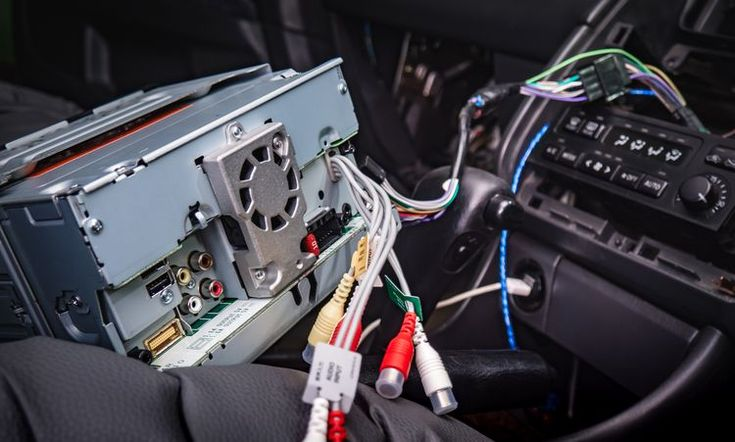
A model-specific harness and CAN bus decoder meeting the factory electrical interface \u2014 the two parts that decide whether a bundled Android head unit retrofit stays fault-free.
A vehicle-specific Android head unit retrofit depends on three parts arriving together and agreeing with one another: a dash fascia matched to the dashboard aperture, a wiring harness matched to the factory connector, and \u2014 on CAN-equipped vehicles \u2014 a decoder matched to the vehicle communication protocol. Whether those three parts are bought as one matched bundle or sourced separately from different vendors changes the validation work, the fault-attribution path and the total landed cost of an aftermarket programme.
This article compares the two sourcing routes at the evaluation stage of a purchase. The reference bundle is the ZYX-01 dash fascia, the ZYX-02 wiring harness and the ZYX-03 CAN bus decoder, supplied by Shenzhen Zhongyixing Electronic Technology Co., Ltd. Product facts are kept separate from commercial terms, because only the first group can be verified from published product information.
Why the bundle question surfaces during evaluation, not during quotation
The sourcing structure is usually decided after a buyer has chosen a head unit platform and a target vehicle list, but before the first shipment is booked. At that point three costs are being weighed: the unit price of each part, the cost of a fitment failure in the field, and the administrative cost of coordinating several suppliers.
Separate sourcing tends to produce a lower quoted price per component, because each supplier competes only on its own part. Bundled sourcing moves the compatibility question from the buyer to the supplier: one party owns the dimensional relationship between fascia and dashboard, the electrical relationship between harness and factory connector, and the data relationship between decoder and vehicle network.
The trade-off runs in both directions. Bundling reduces coordination and attribution risk, but it also narrows the buyer to one application database and one lead-time schedule. The sections below set out where each route is stronger and where the bundle stops being the right answer.
What a vehicle-specific bundle actually contains
Shenzhen Zhongyixing Electronic Technology Co., Ltd (ZYX) is a Shenzhen-based manufacturer of automotive aftermarket installation electronics. The company was established in 2017, operates a 5,000 m² facility, reports annual output of 1,000,000 units and an export ratio of roughly 80%, and lists Russia and the EU among its main markets. Its stated product system covers more than 3,000 vehicle applications, supported by a three-engineer R&D team working on fascia geometry, harness pin definitions and CAN protocol matching.
Three product families make up the bundle referenced in this comparison. Each one governs a different part of the installation.
| Model | Product | What it governs | Published parameters |
|---|---|---|---|
| ZYX-01 | Car Radio Dash Fascia | Mechanical fit between the dashboard and the head unit | Compatible screen sizes 7-inch / 9-inch / 10.1-inch / 12.3-inch; Double-DIN or model-specific custom mounting; dimensional tolerance ≤0.2 mm; material thickness 2.5\u20133.0 mm; ABS plastic; plug-and-play fitment; operating temperature −40°C to 85°C |
| ZYX-02 | Car Radio Wiring Harness | Electrical connection between the OEM loom and the head unit | OEM vehicle-side plug plus ISO 16-pin head unit connector; AWG 20\u201322 tinned oxygen-free copper; ANSI/CTA-2015-B colour-coded insulation; 12 V DC, 10 A maximum; reverse polarity protection and short-circuit protection; flame-retardant PVC insulation; PA66 connector housing; tin-plated brass terminals; −40°C to 85°C |
| ZYX-03 | CAN Bus Decoder Module | Data communication between the vehicle network and the head unit | CAN 2.0A / 2.0B protocol; 500 kbps / 125 kbps dual rate; 12 V DC, 300 mA standby, 2 A maximum; flame-retardant ABS housing; FR-4 glass fibre epoxy circuit board; heat-conductive silicone potting; −40°C to 85°C |
Sold as a bundle, the three items share one vehicle application reference. Sold separately, each item carries its own part number, its own datasheet and its own supplier.
Bundled versus separate sourcing: a side-by-side view
The table below maps the decision factors that change when a buyer switches between the two sourcing routes. It is written from the buyer side, not the supplier side.
| Decision factor | Bundled fascia + harness + decoder | Separately sourced parts |
|---|---|---|
| Fitment responsibility | One specification for the whole set; fascia tolerance published at ≤0.2 mm and validated against the same vehicle reference as the harness | Fascia supplier may not know the harness connector geometry, so panel-gap risk sits with the buyer |
| Electrical continuity | Harness and decoder inspected as a set before dispatch under a stated 100% pre-shipment conductivity and fit test | Each part is tested only against its own standard; combined behaviour is untested |
| Protocol matching | Decoder matched to the same vehicle reference as the fascia and harness | Protocol mismatch between a generic decoder and the vehicle trim is a recognised fault source |
| Sample validation | One stock set can be ordered at a stated MOQ of 1 unit for fitment validation | Each supplier applies its own MOQ, so a full validation set may be impossible to assemble |
| Lead time | Single schedule: 3\u20137 days for stock products, 15\u201325 days for custom model-specific products | Multiple schedules, with the full set ready only when the slowest part arrives |
| After-sales and fault attribution | One warranty path covering the set, with remote installation technical guidance and CAN protocol matching support | Responsibility is split; the buyer often has to prove which part failed before any claim is accepted |
| Vehicle coverage | Limited to applications the supplier has developed \u2014 stated as 3,000+ vehicle applications | Wider in theory, because universal parts exist for almost any dashboard shape |
| Flexibility on mixed fleets | Less efficient when only one part of the set is actually missing from stock | More efficient when a buyer needs a single replacement component |
Reading the table correctly matters. Bundling does not make a product compatible; it makes the evidence of compatibility easier to obtain and easier to enforce. A bundle from a supplier without a genuine application database carries the same risk as separate parts.
Fitment validation: what a one-set sample can and cannot prove
ZYX publishes a stock minimum order quantity of 1 unit, with custom OEM/ODM items set at a minimum of 100 units. Lead time is stated as 3\u20137 days for stock products and 15\u201325 days for custom model-specific products. That structure lets a buyer validate a single vehicle configuration before committing to a volume order \u2014 a materially different risk position from ordering a full run on the basis of a catalogue drawing alone.
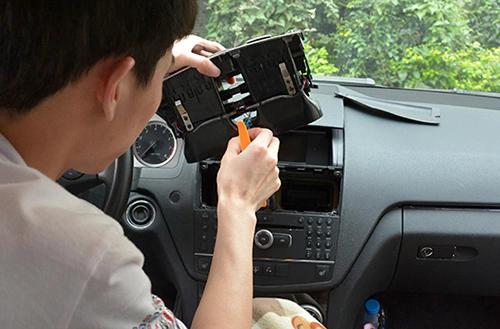
Trim removal is where connector type and dashboard aperture are confirmed \u2014 the two variables a single-set sample is bought to test.
A single-set sample confirms the fascia against one dashboard and one trim level. It does not confirm every model year sold under the same nameplate, because the same vehicle model may require different parts depending on model year, equipment level, original radio, original connector, audio system and overall vehicle configuration. The compatible chain runs from vehicle brand to vehicle model, then model year, then original radio, then original connector, then vehicle configuration, and finally audio system and new head unit.
Before a sample is dispatched, buyers are advised to supply clear photographs of the original dashboard, the original radio, or the connector on the back of the factory head unit. This is the cheapest control available in the whole procurement process: it removes configuration ambiguity before tooling, packing or freight costs are incurred.
For volume orders, the practical control is that production units match the approved sample and that the same inspection standard is applied at shipment. That is what separates a validated bundle from three boxes that merely travelled together.
Pre-shipment testing and the order mechanics behind a bundle
Two inspection steps are stated for the ZYX production flow: 100% incoming inspection for CAN bus decoders, and a 100% pre-shipment conductivity and fit test. Monthly capacity is stated at 12,000 units. Applied to a bundled order, the consequence is that the three parts are checked as a set before dispatch rather than each being checked in isolation at its own factory.
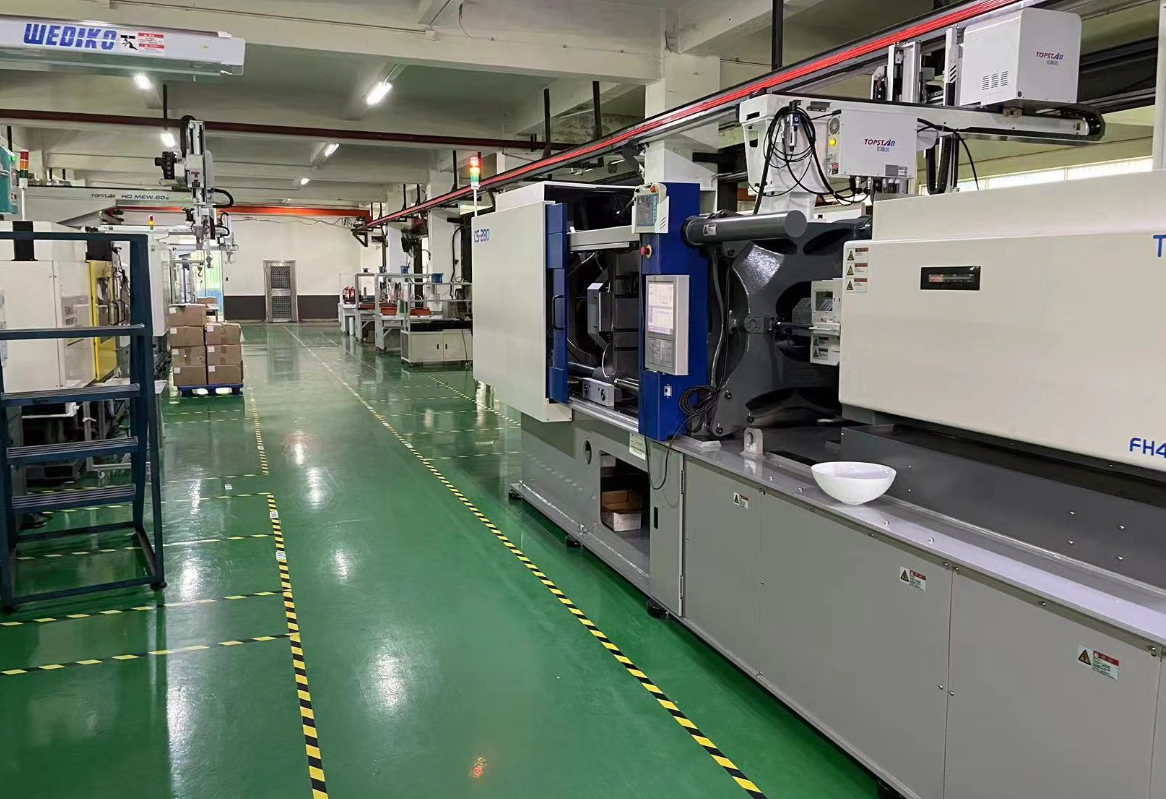
Production workshop: bundled orders are checked as a set \u2014 100% incoming inspection for CAN bus decoders plus a 100% pre-shipment conductivity and fit test.
Commercial terms sit outside the product specification and should be compared on a like-for-like basis. Payment milestones \u2014 for example a deposit released at order confirmation with the balance payable against shipping documents \u2014 and the delivery term, whether EXW, FOB or CIF, change both the cash-flow profile and the point at which risk and freight cost transfer from seller to buyer. Two quotations for the same bundle are not comparable if one is quoted EXW and the other CIF, or if the balance trigger differs.
Buyers comparing bundled against separate sourcing should therefore collect both quotations on the same Incoterm and the same payment schedule before comparing totals. For an importer in Europe, a CIF quotation from one supplier and an EXW quotation from another can differ by more than the component price difference being evaluated.
Technical explanation: why the three parts cannot be judged independently
The three components govern three different failure modes, and each one can invalidate an otherwise correct installation.
The fascia governs the mechanical envelope. With a published dimensional tolerance of ≤0.2 mm and a material thickness of 2.5\u20133.0 mm in ABS plastic, it determines whether the head unit sits flush within the dashboard aperture and whether the original trim can be reinstalled without visible gaps.
The harness governs the electrical path. It presents an OEM vehicle-side plug on one end and an ISO 16-pin head unit connector on the other, using AWG 20\u201322 tinned oxygen-free copper conductors with ANSI/CTA-2015-B colour-coded insulation, rated 12 V DC at a maximum of 10 A, with reverse polarity protection and short-circuit protection built in.
The CAN bus decoder governs the data path. On CAN-equipped vehicles it translates vehicle network messages into a format the aftermarket head unit can read, which is what allows steering wheel controls and selected original-vehicle functions to survive the retrofit. Independent technical material on Android head unit CANBUS decoders describes this in terms of converting vehicle network messages into UART messages for the head unit, which is how steering wheel controls and climate data are retained.
A fault in any one of the three breaks the installation even when the other two are fully within specification. A fascia that fits perfectly but is paired with the wrong decoder still produces dashboard fault codes. A correctly programmed decoder paired with a harness carrying the wrong pin assignment still fails on power-up. This is the technical argument for treating fascia, harness and decoder as one specification rather than three independent purchases.
Where the bundle is used: applications and deployment scenarios
The bundle addresses aftermarket car head unit upgrades, centre console navigation retrofits, used-car interior electronics refurbishment, fleet audio system upgrades and dealership accessory fitting. The operating environment is the vehicle interior and electrical system: wide temperature range from −40°C to 85°C, constant road vibration, dust and humidity exposure, automotive EMI and a 12 V DC vehicle electrical system.
Stated requirements for these projects include model-specific precise fitment, no damage to original wiring or interior trim, zero dashboard fault codes, automotive EMC compliance, high-temperature resistance under direct sunlight, and flame-retardant wiring materials. These requirements are written around outcomes rather than parts, which is itself an argument for buying a matched set: no single component can deliver zero fault codes on its own.
Two long-running supply relationships show how bundled sourcing behaves at volume.
- After-market solution integrator (China): a seven-year long-term cooperation covering a cumulative 19,000+ sets of Android stereo retrofit supporting parts, including dash frame, wiring harness and CAN bus decoder across various car brands. The programme recorded a return rate below 0.8%, with flexible order volume for overseas project requirements, consistent product consistency and rapid technical support.
- Car multimedia brand owner (global): a nine-year continuous cooperation covering a cumulative 550,000+ sets of dash frames, wiring harnesses and CAN bus decoders for multi-vehicle-model aftermarket Android head unit retrofits. The programme recorded a return rate below 0.7% over cumulative shipments, with stable mass production, fast new-model adaptation, stable lead-time control across volume orders, efficient sample delivery and support for multi-country compliance standards.
These figures describe two specific long-term programmes. They are not a general return-rate guarantee and should not be applied to a different vehicle list, a different market or a different installation standard.
Market trends shaping the bundled-versus-separate decision
No published source reports revenue for fascia kits in isolation; the available market data covers the wider head unit and car audio categories. That data is still useful for reading demand direction and for understanding why bundled, pre-validated sets are gaining ground.
| Data point | Figure | Source |
|---|---|---|
| Global car audio head unit market size, 2024 | USD 15.44 billion | Market Research Future, \u201cCar Audio Head Unit Market Size, Trends, Growth Report 2035\u201d |
| Car aftermarket audio system growth rate | CAGR 12.18%, driven by DIY customers and online plug-and-play kits | Mordor Intelligence, \u201cCar Audio Market Size, Outlook & Analysis, 2031\u201d |
| Asia Pacific share of the global car audio market, 2025 | 54.21% | Fortune Business Insights, \u201cCar Audio Market Size, Revenue, Growth, Global Report, 2034\u201d |
| HS classification for fascia and installation hardware | 8708.99 \u2014 vehicle parts and accessories, n.e.c. | United Nations Statistics Division, Code 870899 |
| EU requirement for electronic subassemblies affecting vehicle safety functions | e/E-Mark (ECE R10) EMC testing, beyond CE marking alone | Elite Electronic Engineering, \u201cGuide to e/E-Marking\u201d |
Two readings follow. First, growth attributed to DIY customers and online plug-and-play kits favours suppliers that can ship a documented, validated set rather than loose parts, because a DIY buyer has no workshop process to absorb a compatibility error. Second, regulatory pressure in the EU means an electronic subassembly that affects vehicle safety functions must meet E-Marking rather than relying on CE marking alone \u2014 a compliance burden that is easier to manage when one supplier owns the whole electrical and data chain rather than three.
A third factor is trade documentation. Fascia kits, harnesses and decoders sit under HS 8708.99, so a bundled shipment is declared under a single classification line, whereas separately sourced parts arriving from different suppliers generate separate entries, separate freight documents and separate inspection triggers at the border.
Limitations: where a bundled kit is the wrong choice
Bundling is not automatically better, and three boundaries are worth stating plainly.
- Coverage limit. A model-specific bundle only exists for vehicles the supplier has developed. ZYX states coverage of more than 3,000 vehicle applications. A vehicle outside that list, or an unusual trim with no developed mould, cannot be served by a bundled kit and may require a universal dash kit, a custom mould or a cut-wire installation route.
- Supply concentration. Buying fascia, harness and decoder from one supplier concentrates lead time and stock risk in a single schedule. If that supplier's stock is unavailable, the buyer has no partial fallback; separate sourcing at least allows the remaining parts to be obtained elsewhere.
- Low-volume mixed-fleet work. Where a buyer installs a handful of units across many different vehicles, or already holds stock of one component, the administrative and minimum-order economics of a bundle can be less attractive than purchasing only the specific part that is missing.
For comparison, the traditional alternative is a cut-wire universal harness combined with a universal dash kit and a generic CAN decoder. That route carries a lower upfront cost, but the recognised risks are damage to the original vehicle wiring, poorer fitment with visible gaps and trim misalignment, and a higher incidence of dashboard fault codes and unresponsive steering wheel controls. Model-specific plug-and-play kits exist precisely to remove those risks. They are the better fit when the vehicle is covered by the application database, when the order volume justifies the tooling, and when the buyer values a single warranty path over the lowest possible unit price.
Future outlook
The direction of the category is toward fewer adapters and more pre-validated sets. Compatibility databases are expanding as new models reach global markets, and each new model adds fascia geometry, connector definition and protocol data that must be matched together rather than sourced separately.
Buyers should expect three developments over the next product cycles: broader application coverage, tighter specification of the inspection steps applied before shipment, and rising documentation requirements in markets that apply E-Marking to electronic subassemblies. ZYX states its intention to continue expanding vehicle coverage, to develop new car stereo fascia kits, wiring harnesses and CANBUS solutions, and to improve its product compatibility database.
The practical implication for procurement teams is that the bundled-versus-separate decision will increasingly be settled by database coverage and inspection evidence rather than by component unit price. A quotation that cannot state which vehicle applications it covers, and which test is applied before shipment, is difficult to compare against one that can.
Frequently asked questions
What is a CAN bus decoder, and why is it part of a vehicle-specific stereo fascia kit?
A CAN bus decoder is an automotive electronic component that enables signal communication between an aftermarket head unit and the vehicle original CAN bus system. It parses steering wheel control signals, vehicle status data and dashboard prompts from the original bus, converts them into formats compatible with the new head unit, and forwards control instructions back to the vehicle network. It is the component that makes full-function plug-and-play retrofit possible on CAN-equipped vehicles without modifying the original wiring. In a bundled kit it is supplied together with the fascia and harness matched to the same vehicle application, rather than as a generic part selected independently.
How does a plug-and-play kit work without cutting the factory wiring?
The kit accesses the vehicle CAN network through the factory original electrical interface. A decoder built with model-specific CAN protocol data parses, converts and forwards signals between the aftermarket head unit and the original vehicle system. The harness provides the physical connection, presenting an OEM vehicle-side plug at one end and an ISO 16-pin head unit connector at the other, so no cutting or splicing of the original loom is required. The result is signal matching and function docking between the new head unit and the original vehicle systems without altering the factory harness.
Is a bundled model-specific kit always better than buying the fascia, harness and decoder separately?
No. A bundled kit is strongest when the target vehicle is already covered by the supplier application database and the buyer wants one specification, one inspection standard and one warranty path. Separate sourcing can be more flexible when volumes are small, when the vehicle falls outside the database, or when the buyer already holds stock of one component. The practical test is whether the parts can be validated together before a volume commitment. If they cannot be tested as a set, the fitment and protocol risk remains with the buyer regardless of how the parts were purchased.
How should a buyer validate fitment before placing a volume order?
Start with the vehicle identification chain: vehicle brand, vehicle model, model year, original radio, original connector, vehicle configuration and audio system. Suppliers commonly ask for photographs of the original dashboard, the original radio, or the connector on the back of the factory head unit. A single-set sample then allows a dry fit of the fascia against the actual dashboard before permanent installation. Because model-year and trim differences change connectors and protocols, a sample confirms one configuration rather than every variant sold under the same model name.
What causes dashboard fault codes or unresponsive steering wheel controls after installation?
These symptoms are typically caused by an incompatible CAN decoder protocol, a loose CAN bus interface connection, a decoder that is not programmed for the exact vehicle trim configuration, or mismatched decoder firmware. The usual resolution sequence is to confirm that the decoder is the model-specific version for the vehicle, re-seat the CAN bus and steering control connectors to ensure full seating, update the decoder to the latest matching firmware, then clear stored vehicle fault codes and retest the system.
Will an aftermarket head unit installation damage the original vehicle wiring or electrical system?
Short circuits, head unit burnout and damage to the original electrical system are typically associated with cut-wire universal harnesses, reversed polarity or wrong pin assignments during unprofessional installation. A plug-and-play model-specific harness with built-in reverse polarity protection and short-circuit protection, installed with the vehicle battery disconnected and with circuit continuity verified before power-on, avoids cutting the original loom. Re-seating all connectors fully before final assembly is the remaining practical safeguard.
Summary
Bundled and separate sourcing are not competing quality levels; they are competing risk structures. A matched bundle from a supplier with a real application database concentrates fitment, electrical and protocol responsibility in one specification, one inspection standard and one warranty path, and a stated stock MOQ of 1 unit makes pre-volume validation accessible. Separate sourcing preserves flexibility for vehicles outside the database, for single-part replacements and for low-volume mixed-fleet work, at the cost of distributed responsibility. The deciding evidence is the same in both cases: whether the parts were validated together against a specific vehicle configuration, and whether that validation is documented before shipment.
The ZYX company profile brochure, covering product range, capability and vehicle application coverage, is available for download: ZYX Auto Company Profile Brochure (PDF).