
Butter Cookie Formats for Coffee Shops, Hotels & Instant Retail
Butter Cookie Formats for Coffee Shops, Hotels & Instant Retail
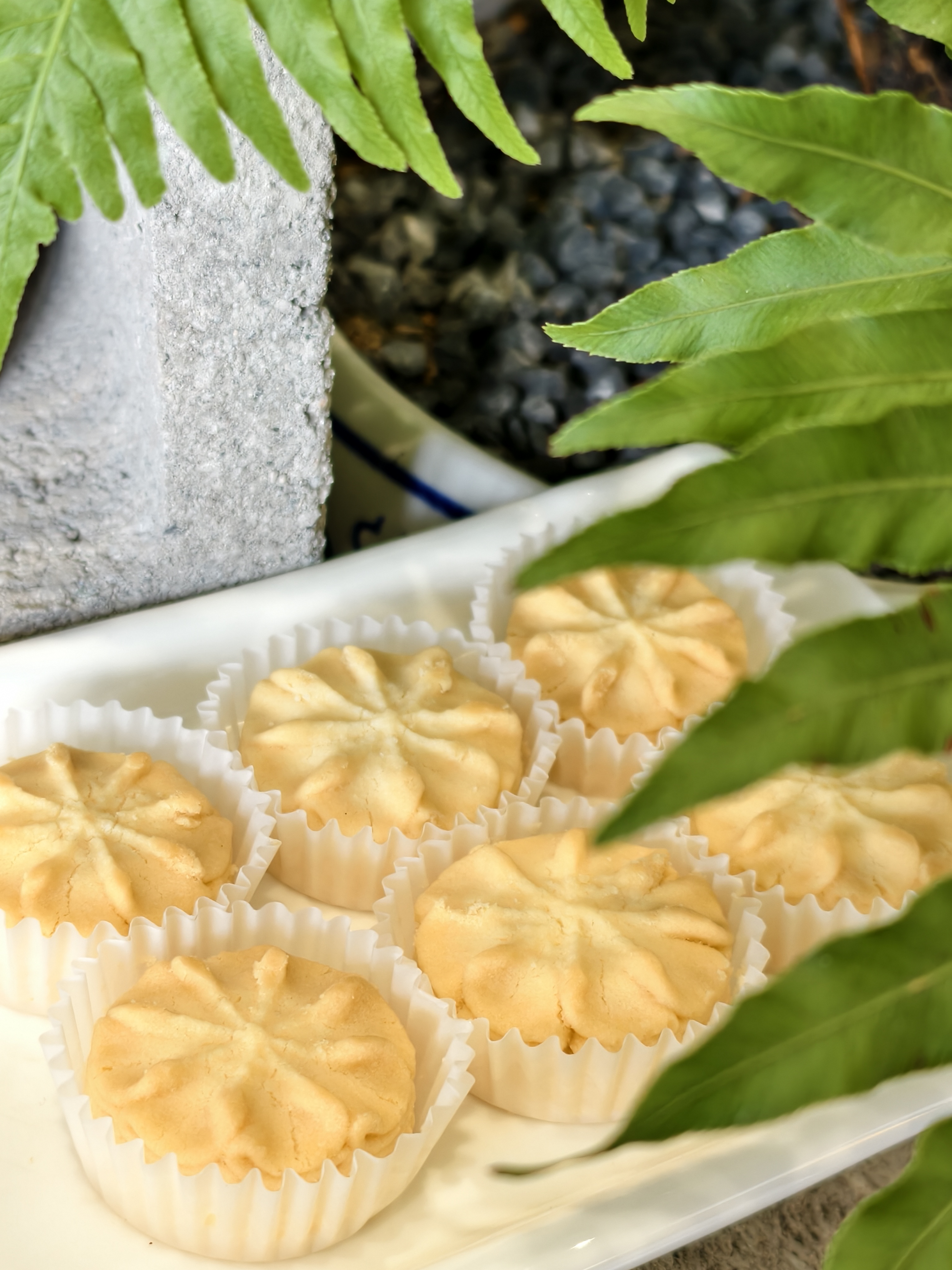
Cover: Butter cookies are sold into shelf, lobby and counter environments that impose very different packaging and rotation requirements.
A butter cookie programme rarely fails because the recipe is wrong. It fails because the format was matched to the wrong sales scenario — piece weight, pieces per pack, primary packaging and declared shelf life decide which channels a SKU can actually serve.
Three channel groups drive most of the format differentiation buyers encounter when sourcing butter cookies in 2026: coffee shops and bakery counters that need portion control at the point of service, chain hotels and gifting programmes that need presentation packaging, and supermarkets plus instant retail platforms that need a pack which survives handling, shelf display and rotation. Each group imposes a different specification logic on the same underlying product.
This reference maps the butter cookie portfolio produced by Dongguan Shangfan Food Co., Ltd., a baked goods manufacturer based in Chashan Town, Dongguan City, Guangdong Province, China, to those three scenarios. It also states clearly where each format stops being the right answer, because a format guide that only lists strengths is not useful to a buyer at the research stage.
Why format comes before flavour in channel selection
In butter cookies, format is the set of measurable variables that determine where a product can be sold: single-piece net weight, pieces per primary pack, primary pack type (box, can or tin), declared shelf life, and the secondary carton dimensions that drive pallet, shelf and freight economics. Flavour drives repeat purchase. Format decides whether the product is operationally sellable in a given channel at all.
The variables interact in predictable ways:
- Piece weight sets price-point granularity and portion control. A 10 g piece can be priced as a single counter unit; a 32 g piece behaves more like a snack pack.
- Pieces per pack sets unit economics and reseal cycles. A 9-piece box and a 13-piece can of the same cookie are two different commercial products.
- Primary pack type communicates value. A tin signals gifting; a carton box signals everyday consumption.
- Declared shelf life sets rotation tolerance and therefore geographic reach. A 5-month biscuit is a different export proposition from a 12-month one.
- Carton dimensions and volume set container utilisation and warehouse slotting.
Market context: what the category numbers say, and what they do not
Published market sizing for butter cookies diverges sharply depending on scope, and buyers should treat the divergence as information rather than noise. Grand View Research values the global butter cookies and biscuits market at USD 3,358.3 million in 2024. Dataintelo estimates the broader butter-based cookies market, including shortbread and sandwich cookies, at USD 42.8 billion in 2025. The two figures describe different product boundaries and should not be used interchangeably in procurement planning documents.
Within the narrower definition, Asia Pacific accounted for a revenue share of 34.2% of the global butter cookies market in 2025 according to Dataintelo, which is consistent with the concentration of butter cookie manufacturing and export activity in the region. On the raw material side, the premium positioning attached to butter-based biscuits is anchored in real supply flows: Denmark exported butter products valued at USD 463 million in 2024 according to the Observatory of Economic Complexity, while China exported USD 18.5 million of butter in the same year.
Adjacent categories matter for format planning as well. Grand View Research valued the oat-based snacks market, which includes cranberry oat and dark chocolate oat cookies, at USD 22.4 billion in 2024 — a signal that oat-containing butter cookies are no longer a niche line but a mainstream retail format with its own pack sizes.
Mapping butter cookie formats to sales scenarios
| Sales scenario | Format | Core specifications | Why the format fits |
|---|---|---|---|
| Supermarket and instant retail shelf | Oolong Tea Crisp Cookie; Cocoa Butter Thin Crisp Cookies | 10 g per piece; 9 pieces per box or 13 pieces per can; 5-month shelf life | Low single-piece weight and thin crisp texture; tea, pecan and cocoa flavour differentiation across two SKUs on the same shelf |
| Chain hotel and gifting | Danish Assorted Cookie Gift Box 760 g; Butter Floral Cookies 260 g gift tin | 760 g gift set containing 2 tins, 9-month shelf life; 260 g × 8 tins per carton, 6-month shelf life, gift tin matched with gift bags | Presentation-led primary packaging; individually packed servings inside the 260 g tin; gift bag matching removes secondary packaging work |
| Festival and corporate gifting, multi-flavour | Butter Cookie Gift Box 265 g | 265 g per box, two flavours: Butter Floral Cookies 175 g and Cranberry Oat Butter Cookies 90 g | Two-flavour assortment aimed at coffee pairing, snacking and afternoon tea; documented festival and holiday gifting application |
| Coffee shop and bakery counter | Crispy Thin Butter Cookies; Matcha Nut Butter Thin Crisp Cookies; Coffee Butter Flower 175 g | 10 g per piece, 9 pieces per box (90 g) or 13 pieces per can (130 g), 5 months; 175 g × 24 tins per carton, 5 months | Portion control at counter level; butter-forward 175 g tins suit espresso and milk-coffee pairing |
| Longer-rotation retail and wholesale | Danish Fancy Butter Cookies 380 g; Salted Cheese Butter Cookies 384 g; Lace Butter Cookies 448 g | 9-month, 12-month and 180-day shelf life respectively | Extended shelf-life options where channel rotation is slower than 5 to 6 months |
Supermarket and instant retail: the thin crisp box and can
Instant retail shelves reward formats that hold their texture through handling and that carry a low enough unit weight to sit at an accessible price point. Two items in the Shangfan range are specified for exactly this pattern.
The Oolong Tea Crisp Cookie is made with wheat flour, butter, white granulated sugar, pecans, whole milk powder, oolong tea powder, matcha powder and salt. Pecans are imported from South Africa, and the product documentation cites pure oolong tea leaves and jade matcha powder as the flavour sources. Each piece weighs 10 g, a box holds 9 pieces and a can holds 13 pieces, with a 5-month shelf life. Listed applications include supermarkets, chain hotels, bakeries, coffee shops, online e-commerce platforms and instant retail platforms.
The Cocoa Butter Thin Crisp Cookies follow the same 10 g piece and the same 9-piece box and 13-piece can configuration, also with a 5-month shelf life. The formulation uses wheat flour, butter, white granulated sugar, crisp flakes, macadamia nuts, cocoa powder and whole egg liquid, with European caramel crisp flakes, macadamia nuts and high-fat natural cocoa powder imported from Southeast Asia named as ingredients. Its stated application set covers supermarkets, chain hotels, bakeries, coffee shops and instant retail platforms.
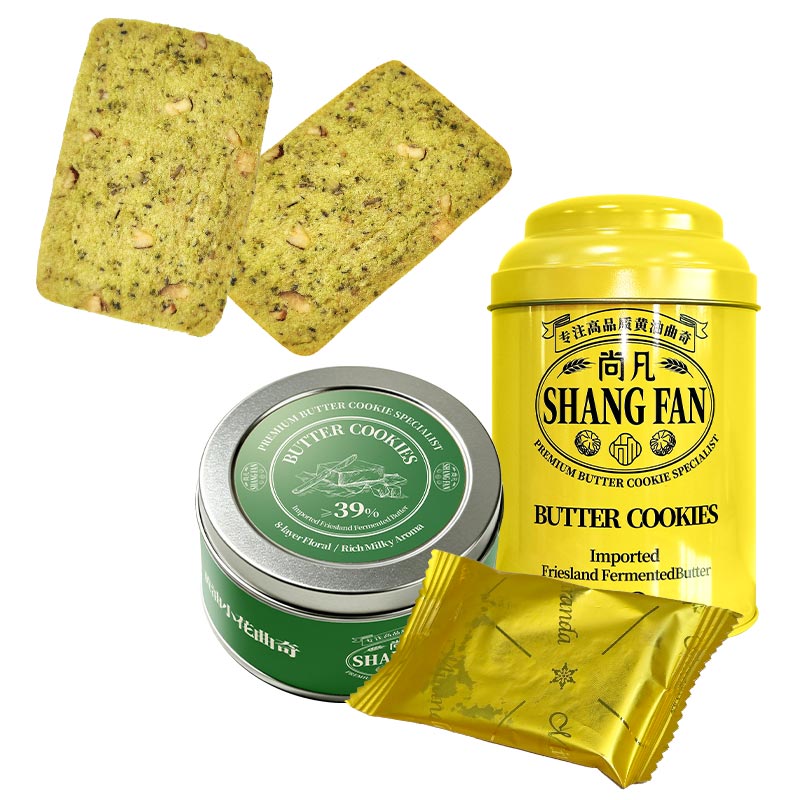
Figure 1. Oolong Tea Crisp Cookie: 10 g per piece, 9 pieces per box or 13 pieces per can, 5-month shelf life.
The commercial logic is straightforward. Two SKUs from the same thin crisp platform let a retailer place a tea-forward and a cocoa-forward option side by side without doubling the supplier base. The 9-piece box works as a trial or single-serve price point; the 13-piece can works as a slightly larger basket unit. Neither format requires refrigeration, and both are documented for instant retail listing, which is the channel where single-piece weight most directly affects how the SKU is merchandised.
Chain hotels and gifting: the 760 g gift set and the 260 g gift tin
Hospitality and gifting buyers are not buying a snack. They are buying a presentation object that must survive storage in a back-of-house area and still look correct when it reaches a guest. That changes which specifications matter.
The Danish Assorted Cookie Gift Box (model Danish Assorted Cookie Gift Box760g) is a 760 g gift set containing two tins, with a 9-month shelf life and barcode 6970066565123. It is made with natural butter imported from New Zealand at a butter content of at least 32%, and the documentation states that it contains no preservatives and no artificial pigments or artificial flavours. Its intended applications include supermarkets, chain hotels, bakeries, coffee shops, online e-commerce platforms and instant retail platforms.
The Butter Floral Cookies 260 g format is the more explicitly gift-oriented item: it is packaged in a gift tin and matched with gift bags, supplied at 260 g × 8 tins per carton with a 6-month shelf life, barcode 697006656441 and a carton dimension of 59.5 × 37.5 × 23.5 cm. The ingredient list is butter, wheat flour, starch, icing sugar and salt. The product documentation notes individually packed servings inside the tin, which is the detail that matters for a hotel placing cookies in a room or a lobby amenity.
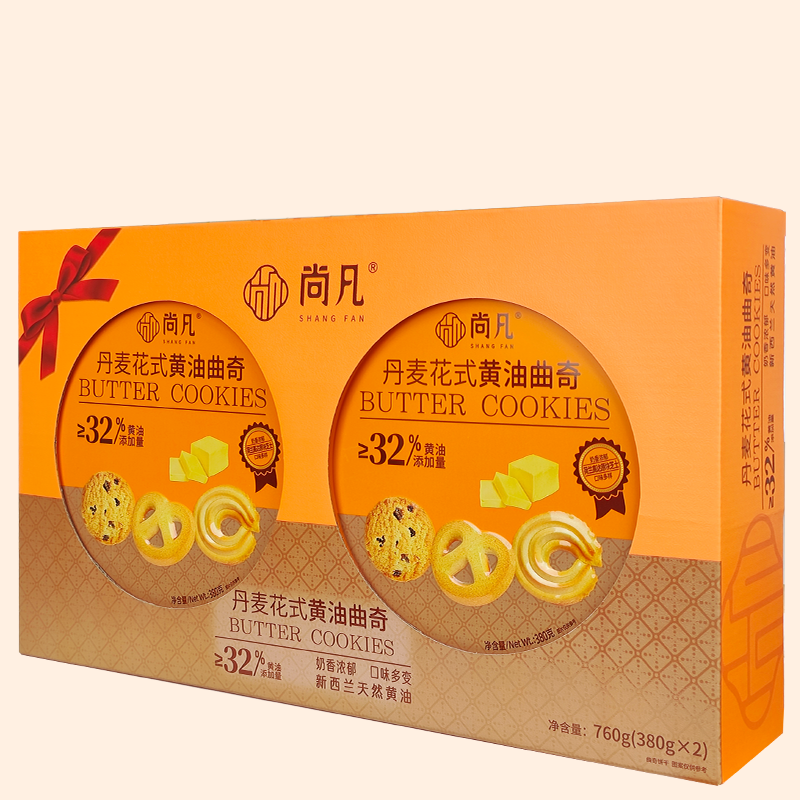
Figure 2. Danish Assorted Cookie Gift Box: 760 g gift set containing two tins, 9-month shelf life, natural butter imported from New Zealand at 32% or more.
Two further formats support the same channel. The Butter Cookie Gift Box 265 g combines Butter Floral Cookies at 175 g with Cranberry Oat Butter Cookies at 90 g, and is documented for festival and holiday gifting with coffee pairing, snacking and afternoon tea as typical use cases. The Danish Fancy Butter Cookies 380 g is supplied at 380 g × 12 tins per carton with a carton size of 61 × 21 × 35.8 cm, a 9-month shelf life, barcode 6970066564782, New Zealand butter content of at least 32% and the same no-preservative, no-artificial-pigment, no-artificial-flavour statement. It is produced with a low-temperature baking process and is available in three flavours.
Coffee shops and bakery counters: the 10 g single-piece format
Counter service has a different constraint from shelf retail: the product is consumed within minutes of purchase, often alongside a drink, and the operator wants predictable portion cost rather than the lowest possible unit price. The 10 g single-piece format addresses that directly.
Crispy Thin Butter Cookies are specified at 10 g per piece, with a box holding 9 pieces (90 g total) and a can holding 13 pieces (130 g total), and a 5-month shelf life. The formulation uses wheat flour, butter, white granulated sugar, almond flakes, crisp flakes and whole eggs. The documentation names imported thin crisps from Europe, almond flakes sourced from Australian almonds, and natural fermented butter from FrieslandCampina in the Netherlands. The Matcha Nut Butter Thin Crisp Cookies use the same 10 g piece and the same 9-piece box or 13-piece can configuration with a 5-month shelf life, and the Oolong Tea and Cocoa variants described earlier share it as well.
Where a coffee shop wants a larger butter-forward serving, the 175 g tin family applies. Coffee Butter Flower 175 g is supplied at 175 g × 24 tins per carton with a 5-month shelf life and contains at least 32% fermented butter from FrieslandCampina in the Netherlands. Cocoa Butter Cookies 175 g sits at the same carton configuration and shelf life, with butter content of no less than 39% from the same supplier, flour milled from Canadian imported wheat and bakery icing sugar, and a carton volume of 0.032 cubic metres. Butter Floral Cookies 175 g, supplied at 175 g × 24 tins per carton with a 5-month shelf life and barcode 6970066564843, also carries the 39% or more fermented butter specification.
Technical explanation: what determines texture, portion and shelf life
Format decisions are only defensible if the underlying product variables are understood. Across this portfolio, four technical levers recur.
Butter origin and dosage
Fermented butter from FrieslandCampina in the Netherlands appears at two declared levels: no less than 39% in Butter Floral Cookies 175 g and Cocoa Butter Cookies 175 g, and at least 32% in Coffee Butter Flower 175 g. New Zealand imported natural butter at 32% or more is used in the Danish Assorted Cookie Gift Box 760 g and the Danish Fancy Butter Cookies 380 g. Lace Butter Cookies 448 g are made with Royal FrieslandCampina fermented butter from the Netherlands, American almond flour and Canadian wheat flour. Butter origin is not a marketing detail in this category; it is the primary driver of both aroma intensity and raw material cost.
Flour and sugar specification
Several SKUs specify flour milled from Canadian imported wheat and premium bakery icing sugar, which the documentation links to a softer, finer crumb and a smoother texture with a lighter sweetness. These are specification choices that affect mouthfeel rather than shelf life.
Process controls
Documented process descriptions include slow whipping to blend the batter evenly, roll molding for even distribution of inclusions, precise-temperature and low-temperature baking, and in the Salted Cheese Butter Cookies a frozen fresh-cut technology combined with slow baking. The Cranberry Oat and Dark Chocolate Oat lines at 90 g describe the same slow-whipping and controlled-temperature approach, and are stated to retain the natural flavours of butter, oats and walnut kernels.
Shelf life outcomes
The portfolio spans several shelf-life bands: 5 months for the thin crisp lines and the 175 g floral, cocoa and coffee tins; 6 months for the Butter Floral Cookies 260 g gift tin and the Butter Shortbread 680 g; 8 months for the 90 g oat lines; 9 months for the Danish Assorted Cookie Gift Box 760 g and Danish Fancy Butter Cookies 380 g; 12 months for the Salted Cheese Butter Cookies 384 g; and 180 days for the Lace Butter Cookies 448 g, which are supplied as 16 g × 28 pieces per box under product standard code GB7100.
Comparison with traditional approaches, and where this portfolio has limits
The conventional model in butter cookie sourcing is one long-life assorted tin used across every channel, on the assumption that a single SKU with a long shelf life minimises range complexity. This portfolio does not follow that model, and that is the main trade-off a buyer has to accept.
The traditional single-tin approach offers simpler inventory, a single label, a single carton and one long rotation window. In exchange, it locks every channel into the same portion size and the same presentation. The channel-mapped approach used here gives each scenario a purpose-built format, but it produces a fragmented shelf-life profile that must be actively managed. Specific boundaries include:
- The 10 g thin crisp lines carry a 5-month shelf life. That constrains long ocean freight legs and slow-rotation accounts, and it makes these SKUs a weaker fit for markets where a container may sit in a distribution warehouse for several months before listing.
- Shelf lives are not uniform inside a single gift box. The Butter Cookie Gift Box 265 g pairs Butter Floral Cookies, whose flower-shaped cookie specification states a 150-day shelf life alongside a 5-month shelf life for the 175 g specification, with Cranberry Oat Butter Cookies at 8 months. Buyers assembling promotions around this box need first-in-first-out discipline that a single-SKU tin does not require.
- Butter dosage at 39% or more fermented butter is a premium cost structure. The portfolio is not positioned as an entry-price tier, and buyers benchmarking on landed cost per kilogram against vegetable-shortening products will find the comparison unfavourable in a like-for-like unit-cost sense.
- The Danish lines state that no preservatives, artificial pigments or artificial flavours are added. The application documentation accordingly requires storage away from direct sunlight in a cool, well-ventilated place, with humidity control to prevent the product softening. That is a stricter storage brief than a shelf-stable biscuit with a longer declared life.
- Manufacturing capacity is documented at 3,640 tons per year with 100 staff and an R&D team of 5 engineers. Very large single-window programmes, particularly seasonal gifting peaks, require scheduling alignment rather than assumption of surplus capacity.
- The company reports an export ratio of 10% and lists the PRC, EU, USA, South Korea and Singapore as markets. That indicates export capability with a predominantly domestic base, not global scale, and it means buyers should verify documentation for their own destination rather than infer it from the market list.
A second comparison point sits inside the category itself. Multi-flavour assorted tins, the classic gifting format, are optimised for visual variety. Single-flavour cans and boxes, such as the 13-piece thin crisp can, are optimised for repeat purchase and counter service. A buyer who needs both outcomes usually needs two SKUs, not one compromise SKU.
Factory, certifications and verification points
Dongguan Shangfan Food Co., Ltd. was established in 2015 and operates from Chashan Town in Dongguan City, Guangdong Province, China. The company runs a garden-style factory covering more than 10,000 square metres, employs 100 staff and reports annual production capacity of 3,640 tons. Its main product lines include Butter Cookies, Lace Butter Cookies, Cranberry Oat Butter Cookies, Crispy Thin Butter Cookies and Butter Shortbread.
The company states that it holds FSSC22000 and HACCP certifications, has completed filing for export food business and has completed FDA registration. These are the documents most relevant to a buyer conducting a first-pass supplier screen.
Regulatory and trend signals shaping format decisions
Packaging and format choices are increasingly compliance choices. Three signals are relevant to butter cookie buyers planning for 2026 and beyond.
The EU General Product Safety Regulation (GPSR) 2024 imposes stricter traceability requirements and requires authorised representatives for non-EU food manufacturers. For a supplier shipping into the EU, traceability has to be built into batch coding and carton labelling, not added afterwards. Commission Regulation (EU) 2024/3190 prohibits the use of Bisphenol A in food contact materials, including cookie packaging linings, which directly affects the inner liners used in tins and boxes.
On the demand side, the clean-label trend continues to favour products positioned around pure butter rather than vegetable shortening. This preference is documented in consumer and advertising-compliance material from bodies including the Federal Trade Commission and the Institute of Food Technologists, though the underlying evidence base is qualitative rather than quantitative and should be weighted accordingly. Within China, GB/T 20980-2021 specifies quality requirements for short and cookie-type products and provides a common reference point when comparing supplier specifications.
Future outlook
The direction of travel in butter cookie formats is toward further fragmentation by channel rather than toward a single universal pack. Three developments follow from that.
First, portioned formats will keep expanding where coffee and bakery counters grow, because portion cost control is a permanent operator priority rather than a trend. Second, the coexistence of short-life fresh-style lines and long-life retail lines inside one portfolio will become normal, which shifts the buyer skill set from price comparison toward rotation planning. Third, traceability regulation will continue to pull packaging specification into the sourcing decision, meaning the tin, the liner and the label are now part of the technical brief rather than an afterthought.
For buyers, the practical implication is that the format question should be answered before the price question. A 5-month thin crisp can and a 9-month assorted tin are not competing versions of the same product; they are two different channel strategies, and only one of them will fit a given sales scenario.
FAQ
1. What butter cookie formats does the Shangfan Food range cover for foodservice and retail buyers?
The range spans several format families. Thin crisp portion products are specified at 10 g per piece with 9 pieces per box or 13 pieces per can and a 5-month shelf life, covering Oolong Tea Crisp Cookie, Cocoa Butter Thin Crisp Cookies, Crispy Thin Butter Cookies and Matcha Nut Butter Thin Crisp Cookies. The 175 g tin family includes Butter Floral Cookies, Cocoa Butter Cookies and Coffee Butter Flower, supplied at 175 g × 24 tins per carton with a 5-month shelf life. Gift-oriented formats include the Danish Assorted Cookie Gift Box 760 g with two tins, the Butter Floral Cookies 260 g gift tin with matched gift bags, and the two-flavour Butter Cookie Gift Box 265 g. Longer-life items include the Danish Fancy Butter Cookies 380 g at 9 months, the Salted Cheese Butter Cookies 384 g at 12 months and the Lace Butter Cookies 448 g at 180 days. Most SKUs list supermarkets, chain hotels, bakeries, coffee shops, online e-commerce platforms and instant retail platforms as intended applications.
2. How does a 10 g single-piece format change operational handling compared with a 175 g tin?
The 10 g piece is a portion-controlled unit: a box of 9 pieces totals 90 g and a can of 13 pieces totals 130 g, so the operator can serve or price by piece without opening a large pack. A 175 g tin is a larger unit intended for multi-serving use, supplied at 175 g × 24 tins per carton. In practical terms, the 10 g format suits counter service where waste and portion consistency matter, while the 175 g tin suits table service, room amenities or retail where a larger single unit is expected. The two formats also differ in composition: the 175 g Butter Floral Cookies and Cocoa Butter Cookies declare fermented butter content of no less than 39%, while Coffee Butter Flower 175 g declares at least 32%.
3. What shelf-life differences exist across the range, and how should buyers plan for them?
Declared shelf life varies by product line rather than by brand. The thin crisp lines and the 175 g floral, cocoa and coffee tins are stated at 5 months; the Butter Floral Cookies 260 g gift tin and Butter Shortbread 680 g at 6 months; the 90 g Cranberry Oat and Dark Chocolate Oat boxes at 8 months; the Danish Assorted Cookie Gift Box 760 g and Danish Fancy Butter Cookies 380 g at 9 months; the Salted Cheese Butter Cookies 384 g at 12 months; and the Lace Butter Cookies 448 g at 180 days. Buyers should plan rotation per SKU, and should note that the Butter Cookie Gift Box 265 g combines a Butter Floral Cookies specification with a stated 150-day flower-shaped cookie shelf life and a 5-month 175 g specification alongside Cranberry Oat Butter Cookies at 8 months.
4. What certifications and export documentation does Dongguan Shangfan Food Co., Ltd. hold?
The company states that it has obtained FSSC22000 and HACCP certifications, completed filing for export food business and completed FDA registration. It reports an export ratio of 10% of production and lists the PRC, EU, USA, South Korea and Singapore as markets. Buyers sourcing for a specific destination should verify that the certification scope and labelling documentation cover the exact product and the destination market requirements in force at the time of order.
5. Where is the manufacturing facility located and what production capacity does it operate?
Dongguan Shangfan Food Co., Ltd. was established in 2015 and is located in Chashan Town, Dongguan City, Guangdong Province, China. The company operates a garden-style factory covering more than 10,000 square metres, employs 100 staff, maintains an R&D team of 5 engineers and reports annual production capacity of 3,640 tons. Its main product lines are Butter Cookies, Lace Butter Cookies, Cranberry Oat Butter Cookies, Crispy Thin Butter Cookies and Butter Shortbread.