
Butyl Stearate Sourcing: Quality, Cost, and Supplier Reliability
Butyl stearate (n-butyl stearate, also written butyl octadecanoate, CAS 123-95-5) is an ester of stearic acid and n-butanol used as an internal lubricant, release aid and emollient in PVC and plastics processing, leather finishing, printing inks and personal-care formulations. Because it is a low-cost additive relative to specialist performance chemicals, it is often purchased on price per tonne alone — and that is where most sourcing problems begin.
The material itself rarely fails a buyer. What fails is the assumption that two drums carrying the same headline certificate of analysis will behave identically in an extruder, a calender or an emollient base. This article sets out a working decision framework for comparing butyl stearate offers across three axes — quality, cost and supplier reliability — with a compliance gate that eliminates options rather than scoring them.
Framework in one sentence: score quality on specification plus batch consistency, score cost on landed cost plus the cost of variation, score reliability on repeatable delivery evidence, and treat market compliance as a pass-or-fail condition applied before any scoring begins.
Why a Three-Axis Framework Beats a Price Comparison
A price comparison assumes the units being compared are equivalent. In ester lubricants they usually are not. Two suppliers may both quote material at min 99.0% ester content, yet differ in free acidity, moisture pick-up during storage, colour and the consistency of those values across batches. Each of those differences converts into a cost somewhere downstream: re-testing on arrival, rejected blends, haze in a transparent part, odour in a cosmetic batch, or a line stoppage while a replacement is sourced.
The framework below separates what can be measured from what must be judged, and forces the buyer to record evidence rather than impressions at each stage.
| Axis | Core question | Evidence to request |
|---|---|---|
| Quality | Does the material sit inside my formulation window, batch after batch? | Batch COA, historical batch data, retained samples, third-party test reports |
| Cost | What is the landed cost per tonne of usable material? | Quotation against a defined specification, packaging format, Incoterms, MOQ, freight, payment terms |
| Reliability | Can this supplier repeat delivery on schedule for twelve months? | Capacity statement, order records, stated lead time, QC process description, named escalation contact |
| Compliance gate | Can this material legally enter my market? | REACH status, SGS reports, ISO 9001 and ISO 14001 certificates, food-contact documentation where the application requires it |
Axis One: Reading the Quality Specification Properly
A butyl stearate specification is a tolerance band, not a performance guarantee. The band defines what the supplier promises; the buyer still has to decide whether that band is narrow enough for the intended application. The table below uses the published specification of Shandong Kexing Chemical Co.,Ltd N-Butyl Stearate as a reference point for what each parameter signals.
| Parameter | Reference value | What it signals to a buyer |
|---|---|---|
| Appearance and odour | Colourless transparent liquid, slight odour | Haze, sediment or a stronger odour on arrival points to contamination, oxidation or packaging integrity issues |
| Colour (Pt-Co) | Max 30 | Critical for transparent PVC parts, light-toned inks and cosmetic emollients where colour carries through to the finished article |
| Content (ester) | Min 99.0% | Active matter; residual alcohol or unreacted acid sits in the remaining fraction and drives other parameters |
| Acidity (mgKOH/g) | Max 0.20 | Free acid content; a loose or drifting acidity value is one of the earliest signs of inconsistent esterification control |
| Moisture | Max 0.10% | Affects storage stability, dosing accuracy and surface defects in high-temperature processing |
| Density | 0.85 g/cm3 | Converts volumetric dosing to mass-based dosing; also a quick field check against the COA |
| Flash point | Min 190 C | Governs storage classification, handling and the volatility ceiling in hot processes |
Two practical rules follow. First, a certificate of analysis describes one batch, not a supply relationship; ask for a run of historical batch data across six to twelve months and look at the spread, not only the mean. Second, confirm that the supplier tests what it ships: Shandong Kexing Chemical states raw material incoming inspection plus finished product sampling test as part of its quality control sequence, which is the minimum expected structure for a repeat industrial supply.

Incoming inspection and finished-product sampling are the two control points that determine whether a specification holds across batches. Image: Shandong Kexing Chemical research and development centre.
Axis Two: Cost, Measured as Landed Cost Plus the Cost of Variation
Butyl stearate quotations are rarely comparable at face value because they are usually quoted against different assumptions. Before comparing numbers, standardise the request: specification with tolerances, packaging format, order quantity, Incoterms, payment terms and required documentation. Only quotations built on identical assumptions can be ranked.
What sits inside the price
An ester such as butyl stearate carries the cost of its two feedstock families — the fatty acid and the alcohol — plus conversion cost, packaging and logistics. Because feedstock costs move, a supplier quoting a firm price for a long window is either carrying inventory or pricing in a risk buffer; both are legitimate, and the buyer should know which one is in front of them. Ask what the quotation is indexed to and how long it is held.
What sits outside the price
The second cost layer is variation. Kexing Chemical reports a minimum order quantity of 1 tonne and an indicative lead time of 30 to 45 days. On a spot purchase, neither figure matters much. On a regular monthly requirement — plastic masterbatch factories, artificial leather manufacturers, food packaging processors and toy factories report running 15 to 25 metric tonnes per month — both figures decide how much buffer stock the buyer must finance, and buffer stock is a real cost that never appears on the quotation.
Add the cost of a failed arrival test: repeat laboratory work, blocked capacity, possible rework of a blend already in the mixer, and the administrative weight of a claim. A supplier quoting a marginally lower price but with a wider acidity or moisture band is not necessarily cheaper once these items are counted.
Axis Three: Supplier Reliability, Scored on Evidence
Reliability is the axis buyers most often assess by impression and least often assess by document. It can be scored. The evidence below is drawn from Shandong Kexing Chemical Co.,Ltd, a plasticizer and plastic additive manufacturer founded in 2006 and based in Dongying, Shandong, which supplies N-Butyl Stearate alongside acetate, citrate, adipate, sebacate, epoxidised soybean oil and phthalate esters, with a stated 50% export ratio and main markets in Europe, the USA, Japan, South Korea and the Middle East.
| Reliability signal | Reported position | How a buyer should verify it |
|---|---|---|
| Production capacity | Monthly capacity of 10,000 t | Request allocation confirmation for your grade and volume, not just plant capacity |
| Lead time | 30 to 45 days, MOQ 1 t | Compare the stated lead time with actual shipment dates across two or three orders |
| Quality control | Raw material incoming inspection; finished product sampling test | Ask which tests are run, at which frequency, and whether records can be shared |
| Certification | SGS, REACH, ISO 9001, ISO 14001, OHSAS 18001 | Request certificates with scope and validity dates matching the product and the site |
| Order flexibility | OEM production and private labelling | Clarify artwork approval steps, labelling liability and minimum run per label |
| Technical support | Remote technical support, formulation guidance, quality issue resolution, shipping follow-up | Send one real formulation question before the order and measure the quality of the reply |
The last row is the most under-used test in procurement. A supplier that answers a technical question with a document, a test suggestion and a named engineer is demonstrating the same capability the buyer will need if a batch goes out of specification. A supplier that answers with reassurance alone is telling the buyer something too.
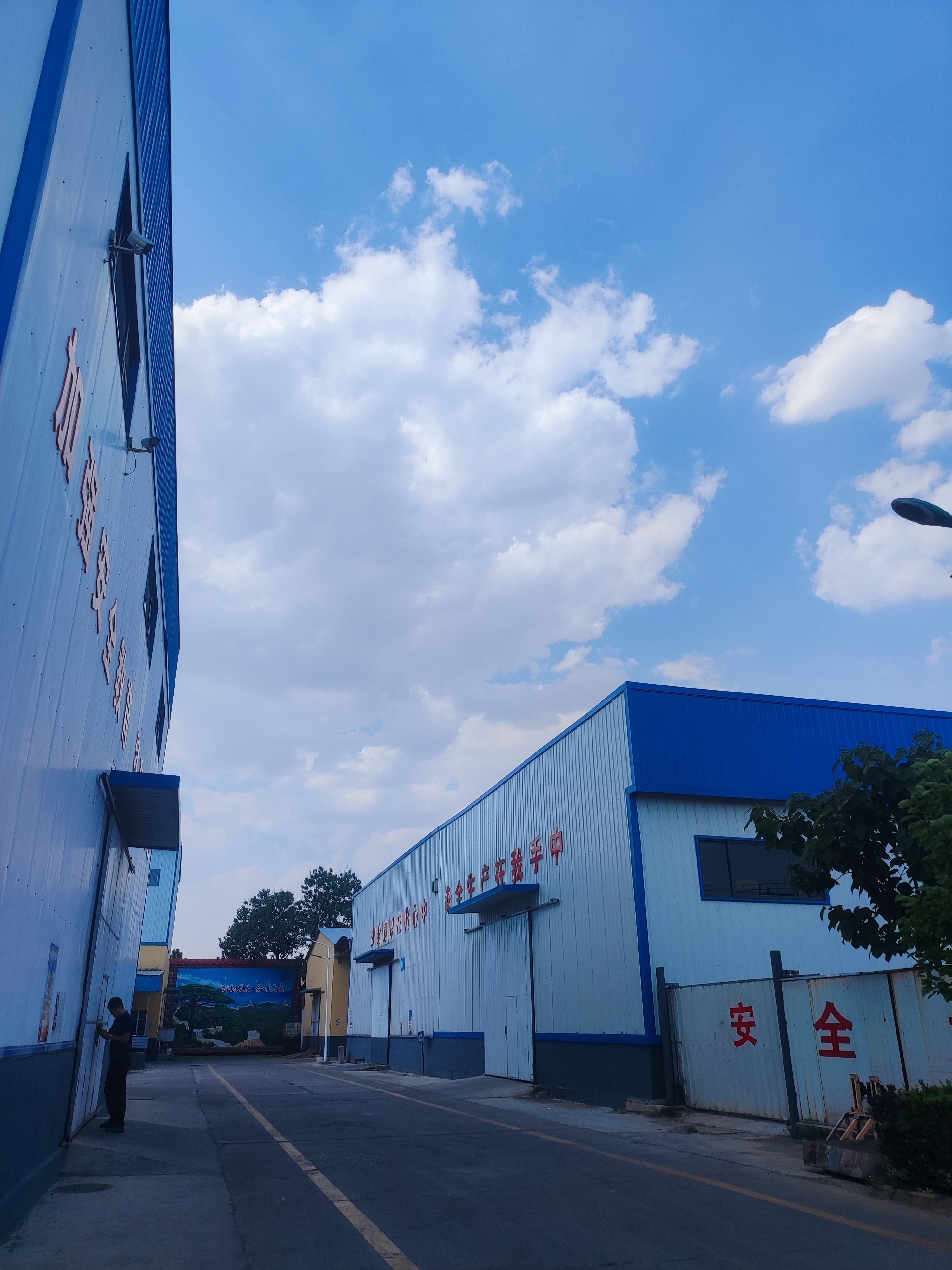
Capacity is a claim; allocation for a specific grade at a specific volume is the evidence behind it. Image: Shandong Kexing Chemical production site.
Building the Decision Matrix
With three axes defined, the comparison becomes mechanical. Assign weights that reflect your own cost of failure, score each candidate from one to five on each dimension, and apply the compliance gate first. The weights below are a starting position for a PVC or plastics processor buying 15 to 25 tonnes per month; an ink formulator or a cosmetic producer would move weight towards colour and odour control.
| Dimension | Weight | Score 5 requires | Score 1 indicates |
|---|---|---|---|
| Specification fit | 20% | All parameters sit inside the buyer target band with margin | One or more parameters sit at the tolerance limit |
| Batch consistency | 15% | Historical batch data shows a narrow, stable spread | Only single-batch certificates available |
| Landed cost | 25% | Best delivered cost on identical assumptions | Quotation not comparable or assumptions unclear |
| Delivery reliability | 25% | Two or more verified on-time shipments at your volume | No verifiable shipment record |
| Responsiveness | 15% | Technical questions answered with documents and named contacts | Repeated follow-up required before any answer |
A total score is useful only as a tie-breaker. The real output of the matrix is the documentation trail: a buyer who can show why a supplier was selected is in a far stronger position when a batch deviates than one who cannot.
Where the Weights Shift by Application
Butyl stearate is used as a non-toxic internal lubricant in PVC processing at dosages typically ranging from 1% to 3%. That low loading is the reason buyers underestimate it: at those levels the additive is a small share of formula cost but a visible share of processing behaviour, so consistency matters more than the absolute number.
In transparent and light-coloured PVC products, colour at max 30 Pt-Co moves to the top of the weight table, ahead of delivered price. In inks and coatings, odour and compatibility dominate. In cosmetic emollient use, odour, colour and purity documentation carry the highest weight, and the compliance gate widens to include the buyer documentation set. In leather finishing, film formation and surface appearance govern the decision. The application unit covering toys, PVC products, plastics, leather, ink and food packaging also lists cold flexibility and stable low-temperature performance as expected functions, which makes a retained low-temperature check worthwhile on any new grade under evaluation.
Butyl Stearate and Traditional Phthalate Esters: Correcting the Comparison
Much of the online comparison material places butyl stearate alongside DBP, DOP, DINP and DOTP as if the four were interchangeable. They are not doing the same job. Butyl stearate is specified as a lubricant, release aid and emollient; the phthalate esters are primary plasticizers used to soften the polymer matrix. At the 1% to 3% dosages typical of internal lubrication, butyl stearate is not a drop-in replacement for a plasticizer — treating it as one turns an additive substitution into a full reformulation project.
| Product (CAS) | Functional role | Buyer consideration |
|---|---|---|
| N-Butyl Stearate (123-95-5) | Internal lubricant, release aid, emollient | Acidity, colour, moisture and batch consistency dominate; dose typically 1% to 3% in PVC |
| DBP (84-74-2) | Primary plasticizer | Ester content min 99.5%, acidity max 0.10 mgKOH/g, flash point min 160 C |
| DOP (117-84-0) | Primary plasticizer | Ester content min 99.5%, flash point min 195 C, viscosity 77 to 82 mPa.s at 20 C |
| DINP (28553-12-0) | Primary plasticizer | Ester content min 99.52%, flash point min 220 C, moisture max 0.036% |
| DOTP (6422-89-2) | Primary plasticizer | Purity min 99.68%, flash point min 214 C, moisture max 0.03% |
The practical consequence is that a buyer who wants a non-phthalate lubricant system and a buyer who wants to reduce plasticizer regulatory exposure are solving two different problems. Both are legitimate; neither should be settled on a specification sheet comparison alone.
Limits of This Framework
Three boundaries are worth stating plainly. First, a sample is not a batch and a certificate is not a performance guarantee; the framework narrows risk, it does not remove the need for incoming testing inside your own plant. Second, the weights in the matrix are editorial choices, and a buyer who copies them without adjusting for their own cost of failure will score the wrong supplier highest.
Third, butyl stearate carries a flash point of min 190 C in the published specification, which is lower than several other esters in a typical plasticizer portfolio, such as DOA at min 195 C, DOS at min 205 C, DOTP at min 214 C and DINP at min 220 C. For processes running at high temperatures, or for storage in warm climates, that difference translates into handling and ventilation requirements rather than into a product fault. Buyers should check the flash point against their own storage and process conditions before approving a grade.
A further constraint sits on the compliance side. Butyl stearate (CAS 123-95-5) is listed as an active substance under EU REACH, with registration required for manufacture or import above 1 tonne per year. A non-EU manufacturer can hold REACH certification, but the registration obligation in practice attaches to the importer of record above that threshold; buyers should confirm in writing who carries it before the first shipment, not after customs asks.
Market Context Buyers Should Read Carefully
Third-party estimates describe a substantial global market for n-butyl stearate. Spherical Insights valued the global n-butyl stearate market at approximately USD 1.28 billion in 2024, and Dataintelo reported the lubricants segment as the largest application share at 38.5% in 2025, with Asia Pacific holding a 42.3% revenue share in the same year.
Those numbers should be used as directional signals, not as planning inputs. Published estimates diverge sharply — Future Market Insights has quoted USD 5.2 billion and Dataintelo USD 2.85 billion for a comparable period, against the USD 1.28 billion 2024 figure above — most likely because the reports draw different boundaries around industrial grade, cosmetic grade and downstream derivative products. A buyer who anchors a budget to any single figure is anchoring to a definition, not a market.
The more decision-relevant signal is structural. China was identified as the largest exporter of butyl stearate into key markets such as India, accounting for over 66% of specific import shipments under HS Code 29157090 in 2024. An Asia Pacific concentration of that scale supports competitive pricing and wide availability, but it also shifts weight onto supplier verification and documentation, because the buyer's due diligence is doing work that geographic proximity would otherwise do.
Future Outlook
Two developments are likely to shape butyl stearate procurement over the next several years. The first is documentation depth: as REACH-style obligations and food-contact requirements are applied more consistently at the importer level, the ability to produce batch-linked records quickly will become a selection criterion rather than a courtesy. Suppliers who already operate a structured quality control sequence — incoming inspection plus finished product sampling — are better positioned for that shift than those who supply certificates only on request.
The second is supply flexibility. Private labelling and OEM production, both offered by Kexing Chemical, reduce the barrier for distributors and brand owners to hold their own product identity, which tends to fragment order patterns into smaller, more frequent runs. Buyers planning multi-year supply should therefore test not only whether a supplier can produce the grade, but whether it can produce it repeatedly at the label, packaging and volume profile they will actually need.
Frequently Asked Questions
Which butyl stearate grade fits a PVC internal lubricant application?
A grade specified as an internal lubricant with ester content of at least 99.0%, acidity no higher than 0.20 mgKOH/g, moisture no higher than 0.10% and colour at max 30 Pt-Co is the standard starting point. Shandong Kexing Chemical supplies N-Butyl Stearate to this specification and positions it for PVC internal lubrication and cosmetic emollient use. Where the finished part is transparent or light-coloured, colour control becomes the deciding parameter rather than a secondary one.
What dosage of butyl stearate is typical in PVC processing?
Butyl stearate is typically used as a non-toxic internal lubricant in PVC at dosages of roughly 1% to 3%. Because the loading is low, the additive influences processing behaviour and surface appearance more than bulk softness, and dosage should be validated against the specific formulation, equipment set and target surface finish rather than adopted from a general figure.
How should two butyl stearate samples that meet the same specification be compared?
Compare the spread, not the headline. Request batch history over six to twelve months and check how far acidity, moisture and colour move between batches. Then run both samples through the same internal test — a blend, a film or a finished part — and record the differences. A sample that passes on paper but shifts colour or surface quality in your process is a cost, not a saving.
What does the acidity value on a butyl stearate certificate tell a buyer?
Acidity, expressed in mgKOH/g, measures residual free acid in the ester. In the Kexing N-Butyl Stearate specification the limit is max 0.20 mgKOH/g. A value that drifts upward or sits permanently near the limit is an early indicator of esterification control issues, and it is one of the parameters most worth tracking across a batch history rather than reading as a single number.
How can a buyer test supplier reliability before placing a repeat order?
Use three probes. Send one real technical question and assess whether the answer comes with documents and a named contact. Ask for the stated lead time and MOQ — Kexing Chemical reports 30 to 45 days and a 1 tonne minimum — and compare them with the buffer stock your plant would need to finance. Then verify the quality control structure, specifically whether incoming raw material inspection and finished product sampling are actually performed and recorded.
What compliance evidence should accompany a butyl stearate shipment into the EU?
Butyl stearate, CAS 123-95-5, is listed as an active substance under EU REACH, with registration required for manufacture or import above 1 tonne per year. A buyer should hold the supplier REACH documentation, SGS reports and current ISO 9001 and ISO 14001 certificates, and should confirm in writing which party carries the registration obligation at the importer level for the volume being shipped.
Shandong Kexing Chemical Co.,Ltd is a manufacturer of plasticizers, plastic and rubber additives and flame retardants based in Dongying, Shandong, China, founded in 2006, supplying N-Butyl Stearate alongside ATBC, TBC, TEC, DOA, DOS, DBS, ESO, 3G8, DOTP, DINP, DPHP, DOP and DBP. Product documentation is available in the company brochure: download the product brochure (PDF). Company website: www.kexingchem.com.
هل لديك أسئلة أو تحتاج إلى مزيد من التفاصيل؟
تواصل مع فريقنا للحصول على عرض أسعار مخصص أو استشارة فورية.
طلب عرض أسعار
املأ النموذج أدناه وسيتواصل معك فريقنا بعرض مقترح مخصص.
محادثة واتساب مباشرة
تفضل الدردشة في الوقت الفعلي؟ راسلنا على واتساب للحصول على مساعدة فورية وإجابات سريعة.
- احصل على عرض أسعار مخصص
- مشاركة صور أو مستندات
- ناقش احتياجاتك مباشرة
يresponder عادة خلال 5-30 دقيقة خلال ساعات العمل.