
Butyl Stearate as a PVC Internal Lubricant: A Procurement Guide
Butyl stearate, also known as n-butyl stearate or butyl octadecanoate (CAS 123-95-5), is an ester of butanol and stearic acid that functions as a high-performance internal lubricant, plastic processing aid, and skin conditioning emollient. For PVC processors and compounders, understanding the actual function, specification limits, and procurement criteria for this additive is essential to avoid downstream problems such as poor release, plate-out, webbing, or reduced clarity. This guide explains what industrial-grade butyl stearate does in PVC, how it compares with alternative lubricant strategies, and what buyers should verify in a technical data sheet before selecting a butyl stearate manufacturer.
What Is Butyl Stearate and Why Is It Used as a PVC Internal Lubricant?
Butyl stearate is a fatty acid ester produced by reacting stearic acid, a saturated C18 fatty acid, with n-butanol. The resulting molecule combines a long hydrophobic carbon chain with a shorter butyl ester group, giving it unusually effective wetting, slip, and lubricating properties in polymer and metal-surface systems. In PVC compound terminology, it qualifies as an internal lubricant, because it is largely compatible with the polymer matrix and reduces friction between PVC chains during melting and shaping, rather than acting only at the metal interface.
In an extruder or calender, an internal lubricant such as butyl stearate lowers the melt viscosity of PVC, improves flow across dies, reduces mechanical heat buildup, and helps achieve smoother surfaces and more consistent wall thickness. Because it remains liquid at typical ambient temperatures, it blends easily into dry formulations, making it a practical option in both rigid and plasticized PVC processing.
For procurement awareness, the same molecule is also known by several names: n-butyl stearate (the IUPAC-style description), butyl octadecanoate, and CAS number 123-95-5. Suppliers in China, Europe, and North America may list the product under any of these terms, which is why standardizing on the CAS number and technical specification is important during vendor evaluation.
Properties and Typical Specification of Industrial-Grade Butyl Stearate
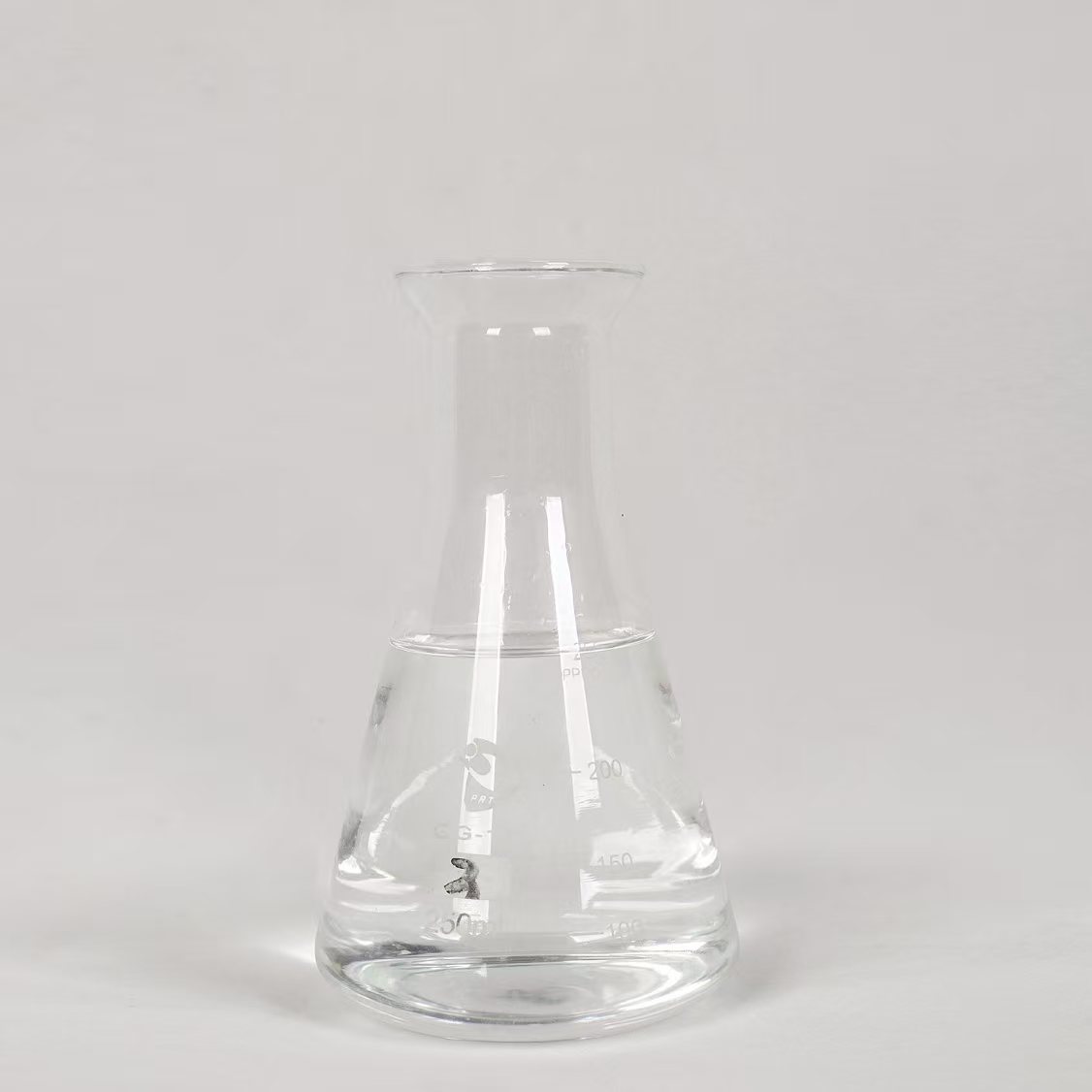
Industrial-grade butyl stearate is normally supplied as a colorless or water-white transparent oily liquid with a faint, characteristic odor and a density near 0.85 g/cm³. Buyers should not confuse it with stearic acid, which is a solid wax-like flake, or with metallic stearates (e.g., calcium stearate, zinc stearate), which act as external lubricants and acid scavengers. The specification for N-Butyl Stearate from Shandong Kexing Chemical Co., Ltd. shows a typical set of acceptance limits:
- CAS number: 123-95-5
- Appearance: colorless transparent liquid
- Odor: slight odor
- Color (Pt-Co): ≤ 30
- Content: ≥ 99.0%
- Acidity (mg KOH/g): ≤ 0.20
- Moisture: ≤ 0.10%
- Density: ≈ 0.85 g/cm³
- Flash point: ≥ 190°C
Three specification points deserve particular attention in a PVC or cosmetics application. First, the ester content (≥99.0%) determines the active lubricant fraction and influences batch-to-batch consistency. Second, acidity reflects residual free fatty acid or processing catalysts; higher acidity can accelerate PVC degradation in heat-sensitive formulations. Third, moisture must be controlled in PVC and cosmetic systems because water causes clouding, mold growth risk, or reaction with metal soaps. A high-purity grade with ≥99% ester content and low acidity is therefore the norm for transparent PVC products.
How Butyl Stearate Works in PVC Processing
During PVC fusion and forming, the resin particles must first compact and then melt under shear and heat. Internal lubricants operate at the molecular level: they reduce intermolecular friction between PVC polymer chains, allowing easier deformation and flow without excessive heat generation.
In practice, the documented use level for butyl stearate in PVC processing is approximately 1–3% of the formulation. At this concentration, butyl stearate contributes to several measurable processing functions:
- Lower melting point: reduces the energy required to fuse the PVC compound and shortens processing cycles.
- Improved fluidity and flow: supports smoother shaping in extrusion, injection molding, calendering, and coating operations.
- Better ductility: reduces the tendency of the molded or extruded part to crack when stretched or flexed.
- Softening and toughening: increases elasticity and flexibility in the final part.
- Cold and flex resistance: helps the compound maintain flexibility at low temperatures, which is relevant for outdoor cables, hoses, and film applications.
- Release and anti-adhesion behavior: at the metal interface, the ester contributes to lower friction, acting as a partial mold release agent without causing heavy plate-out.
For processors, the practical meaning of these functions is that butyl stearate can simplify formulations by reducing the need for a separate external wax, lowering torque or amperage draw in an extruder, improving surface finish, and supporting faster line speeds.
Butyl Stearate vs. Other PVC Internal and External Lubricants
Butyl stearate is rarely the only lubricant in a production formulation. Compounders commonly use combinations of internal and external lubricants to balance shear reduction, metal release, and product clarity. Understanding where butyl stearate sits in that system is therefore important for formulation adjustments.
| Additive Type | Examples | Primary Function | Typical Relationship to Butyl Stearate |
|---|---|---|---|
| Internal ester lubricants | Butyl stearate, glycerol monostearate, ester waxes | Reduce friction between PVC chains; improve flow and clarity | Butyl stearate is one of the most widely used liquid internal lubricants |
| External metallic soaps | Calcium stearate, zinc stearate | Lubricate between PVC melt and hot metal surfaces; act as acid scavengers | Used alongside butyl stearate for release and stabilization |
| Paraffin or PE waxes | Paraffin wax, oxidized polyethylene wax | Strong external release agents; reduce sticking to the die | Often combined in small amounts with internal esters |
| Other liquid esters | Dioctyl adipate (DOA), dibutyl sebacate (DBS) | Plasticization and low-temperature flexibility | Sometimes co-used, but they are mainly plasticizers rather than dedicated lubricants |
The main limit of butyl stearate as the sole lubricant is that it cannot deliver the strong metal-release effect of a dedicated external lubricant. In high-output calendering or extrusion with deep draw profiles, formulators typically need a second, external lubricant such as a wax or metallic stearate to prevent sticking and die buildup. Also, because butyl stearate is an ester, hydrolysis under prolonged high-temperature, high-moisture storage is possible, so drum handling and shelf management matter more than with some hydrocarbon waxes.
Compared with traditional stearic acid, butyl stearate has the advantage of liquid dosing and lower volatility; compared with more polar ester lubricants, it offers better compatibility in PVC and a less aggressive solvating effect, meaning it causes less drop in glass transition temperature or softening point at typical dosages.
Beyond PVC: Lubricants, Cosmetics, Textiles, and Processing Aids
Although this guide focuses on PVC internal lubrication, butyl stearate is a multi-functional ester that appears across several industries. Buyers searching for butyl stearate may encounter it in different grades, and confirming the intended application is a critical part of procurement.
- Cosmetic and personal care: it acts as an emollient, skin-conditioning agent, and dispersant in creams, lotions, foundations, and makeup products. For this use, suppliers require cosmetic-grade butyl stearate with strict purity, odor, and heavy-metal compliance.
- Textile processing: butyl stearate can function as a softening agent, smoothing fibers and reducing static or fiber-to-metal friction.
- Metalworking and stamping: its slip and boundary-lubrication properties make it a useful component in cutting, stamping, and forming oils, especially in light-duty operations.
- Inks and coatings: it can act as a slip agent, improving surface feel and reducing scuffing in printing inks and overprint varnishes.
- Rubber and polyolefins: it can serve as a processing aid, mold release agent, or flow modifier in rubber compounds and polyolefin masterbatches.
- Wax modification: it blends with waxes to adjust melting behavior, viscosity, and slip characteristics.
For each application, the same generic name butyl stearate may imply different specification limits and purity documentation. A supplier who can provide consistent quality across purity levels—such as a high-purity industrial grade and a cosmetic-compliant grade—is more valuable to a buyer managing multiple product lines.
Regulatory and Supply Chain Considerations for Butyl Stearate
Butyl stearate (CAS 123-95-5) is listed as an active substance under EU REACH regulation, meaning importers and manufacturers in the European Union must ensure appropriate registration status for volumes above one tonne per year. Buyers should therefore request a safety data sheet, REACH status, and compliance declarations from their butyl stearate supplier before committing to a long-term contract.
In addition to REACH, buyers in toys, PVC products, food packaging, and cosmetics should verify local chemical regulations such as RoHS and any applicable food-contact or cosmetic-grade certifications. For a Chinese supplier, third-party certificates such as SGS testing reports and ISO management-system certifications provide visible evidence of manufacturing and quality-control standards, even though they do not replace the buyer's own regulatory assessment.
Choosing a Butyl Stearate Supplier: What to Check in a Technical Data Sheet
Many buyers begin a supplier search by comparing manufacturers in China, where a significant share of the butyl stearate market is produced. China is in fact a major export source of this chemical. Rather than selecting solely on price, professionally managed purchasing teams should evaluate the supplier's specification consistency, manufacturing capability, documentation, and logistics.
A practical pre-purchase checklist
- Confirm the CAS number and exact synonym: ensure the product is n-butyl stearate / butyl octadecanoate (CAS 123-95-5), not a different stearate or a blended product.
- Review full specifications: at minimum, color, ester content, acidity, moisture, density, and flash point should be listed. Products with ≥99% content and low acidity are suitable for transparent PVC and cosmetics.
- Ask about batch-to-batch consistency: QC data from multiple batches is more informative than a single datasheet.
- Verify regulatory documentation: for EU buyers, ask for REACH registration statement or import-compliant documentation; for food-contact and cosmetics, request relevant certifications or testing reports.
- Check packaging and supply capability: confirm drum type, net weight, palletization, lead time, and whether the supplier can handle export logistics.
- Request a sample for a compounding trial: test the sample under your actual formulation and processing conditions before ordering in bulk.
- Evaluate the manufacturer-direct model: a source manufacturer with R&D and export experience can provide faster technical answers and more flexible supply than a trading intermediary.
One example of a manufacturer-direct source is Shandong Kexing Chemical Co., Ltd., based in Dongying, Shandong, China. The company produces N-Butyl Stearate with the specification described above and supplies a broader portfolio of plasticizers and plastic additives, including ATBC, TBC, TEC, DOA, DOS, DBS, ESO, and phthalate alternatives. Established in 2006, Kexing operates its own R&D and international trade subsidiaries and exports to regions including Europe, the United States, Japan, South Korea, and the Middle East. Its quality-management certifications include ISO 9001, ISO 14001, OHSAS 18001, and SGS testing for its product lines.
Market Landscape and Current Trends in Butyl Stearate
The butyl stearate market is often described in research reports under the n-butyl stearate name. Estimated global market values differ by scope and year, but recent third-party research suggests the global n-butyl stearate market was valued at approximately USD 1.28 billion in 2024. Lubricant applications reportedly hold the largest share of the market, with one estimate placing lubricants at 38.5% of applications in 2025. Asia Pacific has been identified as the dominant regional market, accounting for a revenue share around 42.3% in 2025. Because these figures come from different research firms, they should be treated as directional market context rather than precise financial guidance.
Demand drivers include the growth of PVC processing in construction, automotive, wiring and cable, and packaging; the continued search for non-phthalate and lower-volatility processing aids; and the use of butyl stearate in personal care formulas as a plant-derived type of ester. In North America and Europe, regulatory restrictions on certain phthalates have increased interest in alternative esters, although butyl stearate itself is not classified as a phthalate. Its application at 1–3% levels in PVC means that small quality variations can affect the final product; therefore, supply-chain reliability is a central consideration for compounders.
Global manufacturers named in butyl stearate market analyses include BASF SE, Emery Oleochemicals, Croda International, and Fine Organics. These companies are recognized suppliers in the ester and oleochemical space. For a buyer in Asia, a Chinese source manufacturer such as Shandong Kexing Chemical can offer lower logistics costs and direct factory pricing, while multinational suppliers offer strong global regulatory support and established supply chains.
Limitations and Honest Boundaries of Butyl Stearate
No additive is a universal solution. Butyl stearate has several real limitations that buyers should respect:
- It is not a strong external release agent. If a process suffers from sticking to the die or calender roll, adding more butyl stearate may not solve the problem. An external lubricant such as a metallic stearate or wax is usually required.
- Excessive dosage can cause over-lubrication. Using too much internal lubricant can delay fusion, reduce physical strength, or cause exudation and plate-out.
- Volatility and migration need care. Compared with polymeric lubricants, low-molecular-weight esters such as butyl stearate have higher volatility and may migrate to the surface in certain high-temperature applications. For long-term, high-heat service, a higher-molecular-weight additive may be needed.
- Hydrolysis and storage sensitivity. The ester bond is susceptible to hydrolysis if moisture is present over long storage; drums and bulk tanks must be kept sealed and dry.
- Not a plasticizer substitute. Although butyl stearate has some softening effect, it is not a replacement for primary plasticizers such as DOTP or DINP when significant flexibility is required. It is usually a processing lubricant, not a volume plasticizer.
Buyers who document these boundaries internally will make better formulation decisions and avoid surprises during scale-up.
Future Outlook for Butyl Stearate in PVC and Beyond
The future of butyl stearate appears tied to two broader shifts. First, the chemical industry is moving toward esters from renewable fatty acids, and butyl stearate, derived from stearic acid (often from vegetable sources), benefits from this bio-based image. Second, lower-volatility and non-phthalate additives are increasingly preferred in indoor, food-contact, and sensitive consumer applications. Butyl stearate's role as a low-toxicity, general-purpose ester lubricant is likely to remain stable in PVC, cosmetics, and industrial lubricants.
For PVC processors, the near-term trend toward energy efficiency also matters. Because internal lubricants reduce melt viscosity and processing temperature, they can lower energy consumption in extrusion and calendering lines. This gives butyl stearate a practical cost-benefit story beyond its per-kilogram price.
Importer and distributor interest is likely to stay strong in fast-growing Asian markets, where PVC demand is high and local compounders seek consistent supply. China's position as a major butyl stearate exporter means that supplier quality and logistics capability in Chinese ports will continue to influence global pricing and delivery trends.
Frequently Asked Questions About Butyl Stearate as a PVC Internal Lubricant
What is butyl stearate used for in PVC?
Butyl stearate is used as an internal lubricant in PVC processing at concentrations of roughly 1–3%. It reduces friction between PVC polymer chains, lowers melt viscosity, improves flow and surface finish, and supports low-temperature flexibility and ductility in the final product.
Is n-butyl stearate the same as butyl stearate?
Yes, n-butyl stearate is the straight-chain form of butyl stearate and is often used as an equivalent product name. The substance is also called butyl octadecanoate and has CAS number 123-95-5.
What is the CAS number for butyl stearate?
Butyl stearate has the CAS number 123-95-5. This identifier is the most reliable way to confirm that suppliers are selling the correct chemical, regardless of trade names or synonyms.
Is butyl stearate toxic or safe for cosmetic use?
Butyl stearate is used in cosmetic and personal care products as an emollient, skin-conditioning agent, and dispersant. It is generally regarded as a low-toxicity ester, but cosmetic use requires compliance with cosmetic ingredient safety standards and purity requirements. Always confirm the supplier's grade and certification.
Does butyl stearate work as a plastic mold release agent?
It provides some internal release benefit by reducing adhesion between the polymer and metal surfaces, but it is not a replacement for dedicated external mold release agents in demanding applications.
What is the difference between butyl stearate and stearic acid?
Stearic acid is a solid saturated fatty acid, while butyl stearate is its liquid butyl ester. The ester form is more soluble in polymer systems and offers better internal lubrication and liquid dosing convenience.
Download the company brochure for a full product introduction: Shandong Kexing Chemical Co., Ltd. brochure.