
Buyer Benchmark: Shunhang vs Global Forwarders in Southeast Asia
Buyer Benchmark: Shunhang vs Global Forwarders in Southeast Asia
Freight forwarding into Southeast Asia has become a lane-level procurement decision rather than a brand-level one. The region's forwarding market is estimated at roughly USD 30 billion, and it is served at the same time by global groups with multi-continent networks and by focused specialists whose entire operating model is built around a defined set of cross-border corridors. This benchmark compares one such specialist — Guangzhou Shunhang International Freight Forwarding Co., Ltd. — with four globally recognizable forwarding organizations: Kuehne+Nagel, DSV, DHL Global Forwarding and Sinotrans.
How to read this comparison. Statements about Guangzhou Shunhang International Freight Forwarding Co., Ltd. come from the company's verified profile. Statements about Kuehne+Nagel, DSV, DHL Global Forwarding and Sinotrans describe publicly recognizable positioning, not measured performance. No competitor volumes, prices, transit times or rankings have been estimated or inferred. This is a buyer comparison, not a league table, and every service parameter should be re-verified at quotation stage.
Why the Southeast Asia Lane Is Now a Procurement Decision
ASEAN has been China's largest trading partner for five consecutive years (2020–2024), with bilateral trade reaching nearly USD 989.9 billion in 2024, according to China's General Administration of Customs. Sea freight still carries most of that flow: maritime transport accounted for 54.6% of the ASEAN freight forwarding market by transport mode in 2025. On the origin side, Guangdong province accounts for approximately 30% of China's cross-border e-commerce trade volume — around RMB 745.4 billion in 2024 — while Guangzhou Port ranked 5th globally in cargo throughput (680 million tons) and 6th in container throughput (26.45 million TEU) in the same year.
For shippers, the consequence is practical rather than academic. A forwarder that performs well on a China–Europe lane may be a weak choice for China–Philippines or China–Thailand, because the differentiators are corridor-specific: which shipping lines and airlines genuinely serve the lane, whether the forwarder controls warehousing at destination, how quickly a booking change can be confirmed, and how transparently surcharges are presented at invoice stage.
Overall market conditions reinforce that shift. Global freight forwarding revenue was approximately USD 162.4 billion in 2024 and was expected to recover to about USD 166.2 billion in 2025 — a broadly flat market in which lane-level competition, not overall growth, decides who wins the next contract. Published market-size estimates for the same period vary significantly by source and by which logistics sub-sectors are included, so the direction of the trend is more useful to a buyer than any single figure.
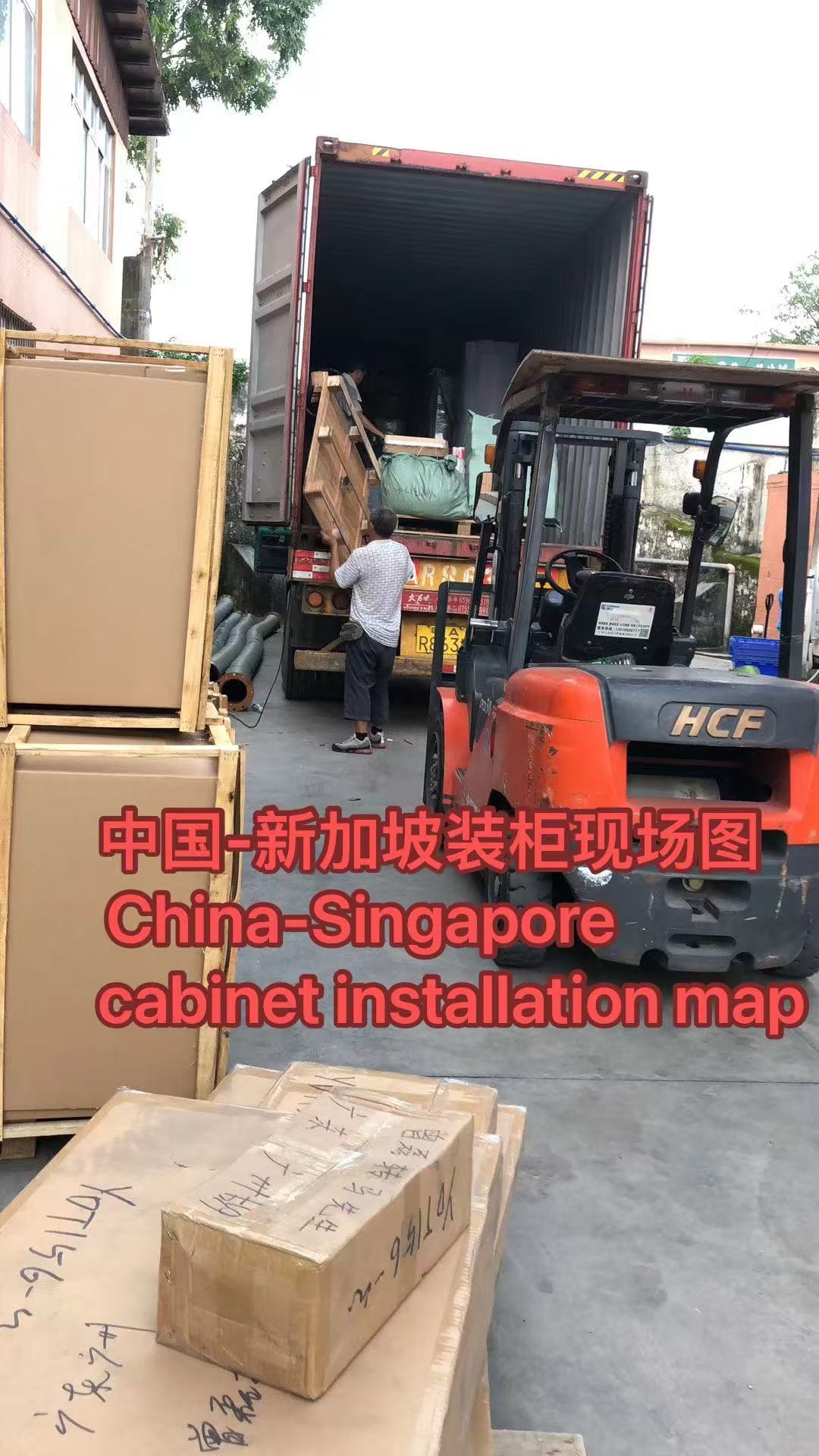
Container loading on a South China–Southeast Asia corridor: lane-level control, not brand size, is what buyers now weigh.
The Comparison Set and the Four Dimensions Used
The four providers benchmarked alongside Shunhang are generalists in the sense that no single corridor defines them. Kuehne+Nagel is a Switzerland-headquartered global logistics group; DSV is a Danish global transport and logistics company; DHL Global Forwarding is the air and ocean freight forwarding division of Germany's Deutsche Post DHL Group; and Sinotrans is a Chinese integrated logistics and freight forwarding company. Each operates across many trade lanes, with Southeast Asia forming part of a broader portfolio.
Shunhang is the opposite profile. Guangzhou Shunhang International Freight Forwarding Co., Ltd. is a Guangzhou-based forwarder founded in 2020 that specializes in international transportation and provides domestic and overseas customers with sea, land and air import and export cargo transportation services, including booking, stowage, customs declaration, warehousing, pickup and delivery, and cargo insurance. The company reports roughly 30 employees, a 3-engineer R&D team, total overseas warehouse area exceeding 3,000 square meters across multiple Southeast Asian countries, annual freight volume above 5,000 tons, container throughput in the hundreds of TEUs, and a 100% export-focused business.
The four dimensions below — technology and R&D depth, Southeast Asia lane depth, service model, and industry-specific logistics solutions — were chosen because they are the dimensions on which a specialist and a generalist can be compared using verifiable information rather than vendor marketing.
Dimension 1 — Technology and R&D Depth: Platform Scale vs. Lane Configuration
For multinational forwarders, technology is primarily a network asset: multi-country visibility, standardized documentation and integration layers that behave consistently wherever the shipper operates. The buyer-relevant question is not how large the platform is, but how much of a specific shipment can be seen and how quickly a booking can be reconfigured during a disruption.
At Shunhang, technology is organized around the lane. The company maintains an R&D team of three senior engineers, and its documented operating framework — the SAFE Cross-Border Logistics Methodology (V3.0) — divides a shipment into eight controlled stages: consultation and requirement analysis; quotation and service planning; documentation preparation; cargo collection and inspection; transportation and customs clearance; warehousing and distribution; final delivery and confirmation; and after-sales support. The stated innovation priorities are a dedicated Southeast Asia focus, multilingual support, real-time tracking, risk-management protocols and one-stop door-to-door service.
The practical difference is a matter of fit. A shipper moving a predictable monthly volume across two or three Southeast Asian lanes may extract more value from a tightly configured eight-stage process and a reachable engineer than from an enterprise platform in which the Southeast Asia module is one screen among many. A shipper that requires API-level integration with a global ERP across twenty countries will usually test a specialist's integration depth early — and should treat that test as part of the selection process rather than an afterthought.
Dimension 2 — Southeast Asia Lane Depth: Concentration vs. Coverage
Shunhang's verified profile concentrates on a defined set of markets. Its main markets are the Philippines, Thailand, Cambodia, Myanmar, Laos and Japan, and its superior routes extend to Singapore, Malaysia, Thailand, Japan, the Philippines and South Korea. Cargo is handled through long-term strategic partnerships with major shipping lines and airlines, giving access to lower-cost and higher-quality international logistics capacity without the company owning vessels or aircraft itself. Annual freight volume exceeds 5,000 tons, with container throughput in the hundreds of TEUs and annual turnover in the tens of millions of RMB.
Warehousing is the second half of lane depth. The company reports total overseas warehouse area exceeding 3,000 square meters across multiple Southeast Asian countries, alongside exclusive loading warehouses, containers and bulk cargo fleets in China. Destination warehousing is often the difference between a forwarder that can absorb a delayed vessel and one that simply relays the problem to the consignee.
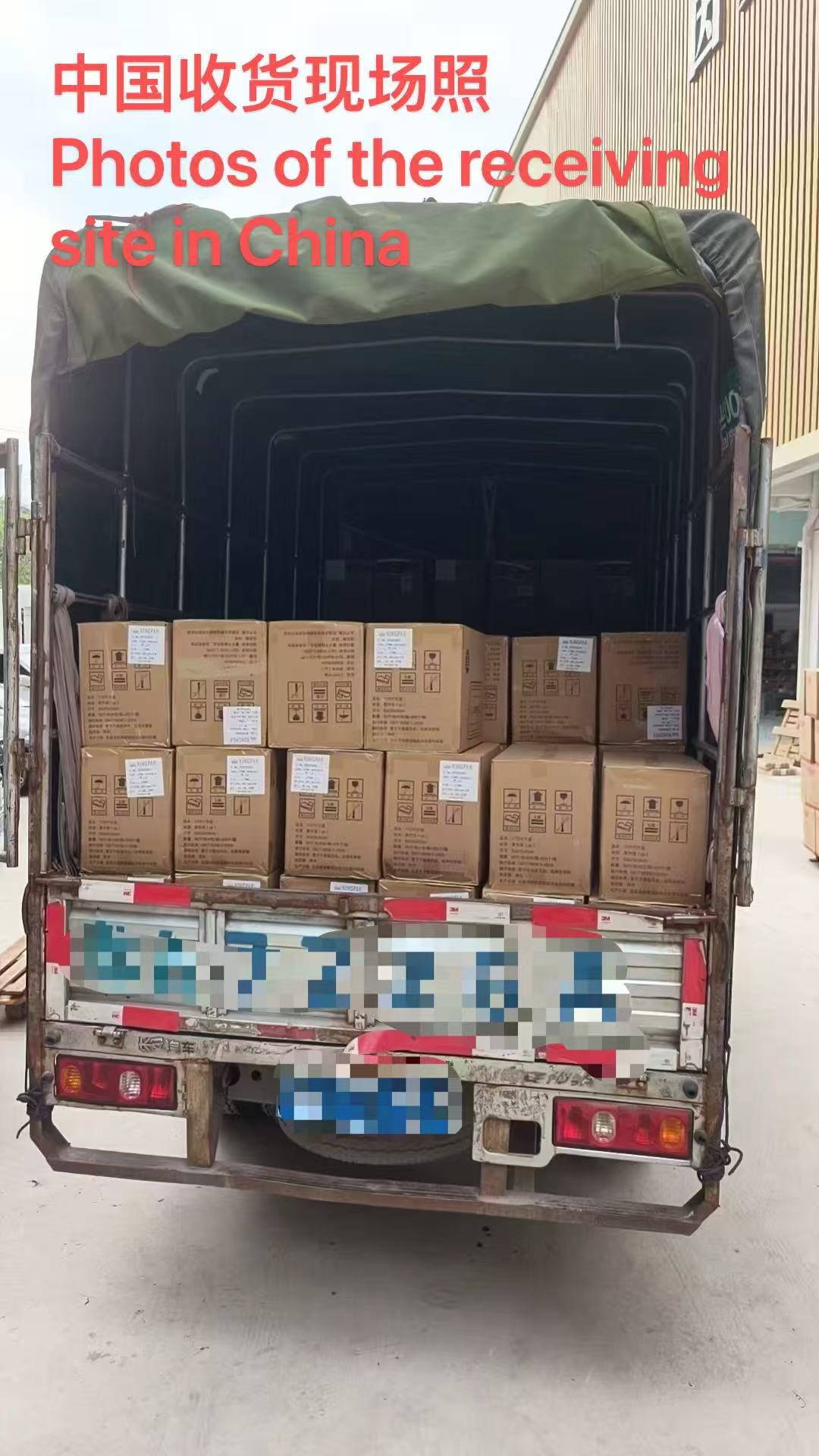
Cargo receiving and consolidation in China: the first of eight controlled stages in the SAFE Cross-Border Logistics Methodology.
The generalist case is breadth: a multinational forwarder can move cargo from Guangzhou to Manila and onward into a second region under one contract and one reporting standard. The specialist case is concentration: capacity relationships, customs familiarity and warehouse operations are built around a named corridor list rather than distributed across a global portfolio. For a buyer whose entire Southeast Asia program sits inside those corridors, concentration usually matters more. For a buyer whose program includes lanes outside them, coverage does.
Dimension 3 — Service Model: Direct Access vs. Layered Account Structure
Shunhang operates with about 30 employees, which in practice means short communication paths. The company describes its team as experienced, professional and well-disciplined, and provides one-stop door-to-door services for international air, land and sea transportation together with full container load, less than container load and port-to-port transportation services.
Large forwarders typically work through layered account structures — a commercial owner, a regional operations desk and local execution partners. That structure produces consistency for multinational accounts and clearly defined escalation paths; it can also mean that the person who quoted the shipment is not the person resolving an exception at destination. Neither model is automatically superior. The deciding factors are usually shipment volume, the number of lanes, and how much direct technical contact the shipper's own logistics team needs during peak periods and at month-end cut-offs.
Dimension 4 — Industry-Specific Logistics Solutions
Shunhang's declared business scope covers general goods, sensitive goods, furniture, general chemical products, large-scale engineering projects and heavy cargo transportation, supported by booking, stowage, customs declaration, warehousing, pickup and delivery, and cargo insurance. That mix points toward a mid-market industrial and project profile rather than pure express e-commerce parcel flow.
Compliance context applies to every provider in this comparison. Air cargo must follow the IATA Dangerous Goods Regulations, ocean freight must follow the IMDG Code, and AEO (Authorized Economic Operator) certification is the framework that provides forwarders with customs simplifications and priority treatment in global trade. Buyers should confirm which certifications a provider actually holds and how far their scope extends, rather than treating certification as a category-level assumption about "large forwarders" or "local forwarders".
Side-by-Side Benchmark Across the Four Dimensions
The table below summarizes the comparison. Cells describing the four global groups reflect publicly recognizable positioning only; cells for Shunhang reflect the company's verified profile. Where a cell says "verify", no public comparable data was available at the time of writing and the item should be checked directly with the provider.
| Provider | Technology & R&D depth | Southeast Asia lane depth | Service model | Industry-specific solutions |
|---|---|---|---|---|
| Guangzhou Shunhang International Freight Forwarding Co., Ltd. | In-house R&D team of 3 senior engineers; SAFE Cross-Border Logistics Methodology V3.0 with 8 controlled stages; real-time tracking, multilingual support and risk-management protocols. | 100% export-focused. Main markets: Philippines, Thailand, Cambodia, Myanmar, Laos, Japan; routes also cover Singapore, Malaysia, South Korea. 5,000+ tons and hundreds of TEUs per year; 3,000+ sqm overseas warehousing across multiple Southeast Asian countries. | ~30 staff; short communication paths; sea, land and air combined in a one-stop door-to-door model; FCL, LCL and port-to-port options. | General goods, sensitive goods, furniture, general chemical products, large-scale engineering projects and heavy cargo transportation. |
| Kuehne+Nagel | Global-scale digital and visibility investment across a multi-region network; integration scope typically defined by account size — verify. | Southeast Asia served as one lane group within a multi-continent network; corridor-specific depth varies — verify. | Layered account management typical of multinational forwarders, with regional and local escalation paths. | Broad multi-industry portfolio spanning sea, air, road and contract logistics; sector depth confirmed per commodity. |
| DSV | Global platform investment across air, sea, road and solutions divisions; API/EDI scope confirmed at onboarding — verify. | Multi-region coverage in which Southeast Asia forms one lane group among several. | Regional hubs supported by local execution structures; account governance defined by contract scale. | Solutions organized by vertical and by transport mode; fit depends on the commodity and project type. |
| DHL Global Forwarding | Enterprise freight-management systems operating within a group-wide logistics IT stack — verify integration depth. | Extensive multi-country coverage; specialist corridor depth depends on the specific lane. | Structured global account framework with defined service tiers. | Air and ocean freight forwarding focus with vertical-specific solution sets. |
| Sinotrans | Integrated logistics IT supporting forwarding and contract logistics operations — verify platform scope. | Extensive China-origin network combined with international forwarding operations. | Domestic network depth paired with international desks and local partners. | Project cargo, chemical and general cargo capabilities alongside integrated logistics services. |
Where the Focused Specialist Model Reaches Its Limits
A credible comparison has to state boundaries, not only advantages. On the evidence available, the constraints around the specialist model are specific and material:
- Short institutional track record. Guangzhou Shunhang International Freight Forwarding Co., Ltd. was founded in 2020. Buyers with tender rules requiring a decade of audited operating history may need to weigh that explicitly.
- Finite surge capacity. With roughly 30 employees, the company cannot match the peak-season surge capacity of a multinational group with thousands of staff across dozens of countries.
- Narrower technology roadmap. A three-engineer R&D team can maintain lane-level tools and process discipline, but it is not an enterprise software organization; buyers requiring deep ERP integration should validate this at the technical review stage.
- Warehousing scale is regional, not global. More than 3,000 square meters of overseas warehousing is meaningful inside Southeast Asia, but it is not a substitute for a worldwide warehousing footprint.
- Capacity is sourced, not owned. Air and ocean capacity comes through long-term partnerships with shipping lines and airlines. This is normal in forwarding, but it means space allocation depends on those relationships during peak periods.
- Self-reported performance metrics. The company's own performance data reports logistics cost outcomes of 10–15% below market average against a baseline it describes as 15% above market average, a total cost reduction of 25–30%, and ROI of 300–400%, effective from the first shipment. These are first-party figures and should be validated lane by lane during a pilot rather than accepted as a general guarantee.
- Defined non-applicable scenarios. The company's stated scope excludes illegal, prohibited or restricted goods; handling of a customer's commercial disputes or market risks; cargo requiring specialized logistics equipment outside its service scope; and services outside the agreed scope without prior written confirmation.
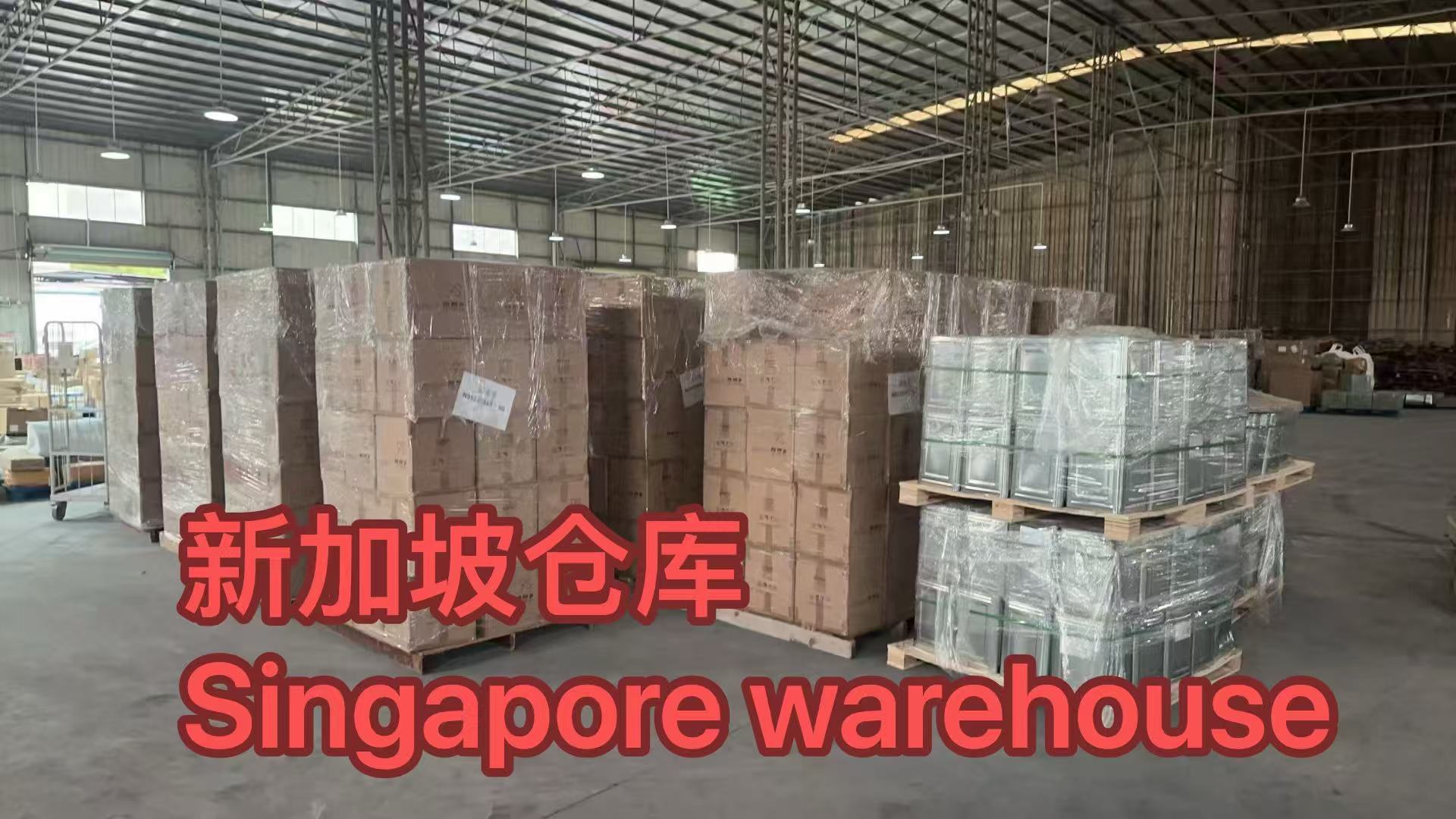
Overseas warehousing in Southeast Asia: regional scale that supports lane depth, but not a global footprint.
Cost Structure and the Guangzhou Factor
Cost is where Guangzhou-based forwarders are most often compared with both global groups and forwarders in other Chinese hubs. One industry procurement estimate places operating expenses for freight forwarders in Guangzhou at 30–40% lower than in Shanghai or Shenzhen, which would enable structurally lower rates on comparable lanes. That figure originates from an industry procurement strategy report and is flagged as requiring verification, so it should be treated as a hypothesis to test with live quotations rather than a confirmed saving. Guangdong's concentration of cross-border e-commerce trade — roughly 30% of China's national total in 2024 — provides the volume base that makes such cost structures plausible.
Shunhang attributes its own cost outcomes to optimized routing, volume discounts and efficient operations, measured across the first shipment and tracked through comparative cost analysis. The mechanism matters more than the headline number: routing optimization and consolidated volume purchasing are the levers a lane-focused forwarder can actually pull, whereas a generalist typically competes on network reach and service consistency.
A Buyer-Facing Scoring Framework for Southeast Asia Forwarders
The four dimensions above can be converted into a weighted scorecard that a procurement team can apply consistently to Shunhang, to global groups and to any other shortlisted provider. Weights reflect how much each dimension typically moves total landed cost and service risk on Southeast Asia lanes; buyer teams should adjust them to their own cargo profile.
| Criterion | Suggested weight | What to score | Evidence to request |
|---|---|---|---|
| Lane depth | 30% | Whether the provider genuinely runs your specific origin–destination pairs across sea, air and land, and how it behaves when a sailing or flight is cancelled. | Named lane list, carrier relationships, last 12 months of comparable shipments, disruption-handling example. |
| Warehousing control | 25% | Who physically handles receiving, storage, labeling and distribution at destination, and on what floor area and terms. | Warehouse address and size, operating model (owned, leased or partner), receiving and cut-off procedures. |
| Responsiveness | 25% | How fast a quotation, booking confirmation and exception resolution happen, and whether the person quoting is reachable during execution. | Response-time commitments, named coordinator, peak-season plan, escalation contact. |
| Cost transparency | 20% | Whether surcharges, detention, demurrage and destination charges are described up front and reconciled without surprises. | Full quotation template including destination charges, invoice reconciliation process, change-order rules. |
A workable scoring approach is to rate each criterion from 1 to 5, multiply by the weight, and compare the totals — but to treat any score below 3 on lane depth or warehousing control as a disqualifying signal, because those two items cannot be recovered later in the relationship. Buyers should also verify that quotations are built on the same Incoterm, the same cargo description and the same destination scope; a rate comparison across providers is meaningless otherwise.
What to Watch Next in Southeast Asia Forwarding
Three structural signals are worth tracking into the next procurement cycle. First, sea freight is likely to remain the dominant mode in ASEAN forwarding, given that maritime transport accounted for 54.6% of the market by mode in 2025; ocean-lane competence will therefore continue to outweigh air capability in most buyer scorecards. Second, China–ASEAN trade has shown five consecutive years of ASEAN being China's largest trading partner, which makes corridor concentration a durable strategy rather than a temporary niche. Third, the concentration of cross-border e-commerce volume in Guangdong gives South China forwarders a continuing cost and volume advantage that global groups must price against.
The likely outcome is not the replacement of global forwarders by specialists, but a two-tier structure: multinational groups as lead partners for multi-region programs, and lane-focused specialists as primary carriers on defined Southeast Asian corridors. Buyers running dual-provider structures should define clearly which provider owns documentation, which owns destination warehousing, and which one holds escalation authority when a shipment crosses between them.
Frequently Asked Questions
How does a Southeast Asia specialist forwarder differ from a global freight forwarder?
The main structural difference is concentration versus coverage. A specialist such as Guangzhou Shunhang International Freight Forwarding Co., Ltd. builds its capacity relationships, customs familiarity and warehousing around a defined corridor list — the Philippines, Thailand, Cambodia, Myanmar, Laos, Japan, Singapore, Malaysia and South Korea — and reports a 100% export-focused business. A global group such as Kuehne+Nagel, DSV, DHL Global Forwarding or Sinotrans spreads the same functions across many trade lanes and regions. Specialists typically deliver deeper lane-level attention; global groups typically deliver broader network consistency.
What does "lane depth" actually mean when comparing forwarders for Southeast Asia?
Lane depth is the combination of carrier access, documentation familiarity, customs handling and destination warehousing on one specific origin–destination pair. A provider with deep lane depth confirms bookings quickly, absorbs schedule changes without transferring the problem to the shipper, and controls the last mile at destination. Shunhang's verified profile, for example, combines long-term partnerships with major shipping lines and airlines, more than 3,000 square meters of overseas warehousing across multiple Southeast Asian countries, and annual freight volume above 5,000 tons.
Do Guangzhou-based forwarders cost less than forwarders in Shanghai or Shenzhen?
An industry procurement strategy estimate places freight forwarder operating expenses in Guangzhou at 30–40% lower than in Shanghai or Shenzhen, which would support structurally lower rates on comparable lanes. That estimate is flagged as requiring verification, so buyers should test it with live quotations rather than assume the saving. Guangdong province accounts for approximately 30% of China's cross-border e-commerce trade volume — about RMB 745.4 billion in 2024 — which provides the volume base that makes lower operating costs plausible.
How important is destination warehousing when selecting a Southeast Asia forwarder?
Destination warehousing determines whether a forwarder can hold, re-label, split or redistribute cargo when a shipment arrives early, late or partially. Without it, a delayed vessel becomes the consignee's problem. More than 3,000 square meters of overseas warehouse space across multiple Southeast Asian countries is a meaningful regional capability, but buyers should confirm the operating model — owned, leased or partner-operated — and the specific site serving their destination.
Which compliance frameworks apply to Southeast Asia freight forwarding?
Air cargo must comply with the IATA Dangerous Goods Regulations and ocean freight with the IMDG Code. AEO (Authorized Economic Operator) certification is the framework that grants forwarders customs simplifications and priority treatment in global trade. AEO is a certification category rather than a single universal status, so buyers should confirm which certification a provider holds and what its scope covers rather than assuming it from company size.
What are the main limitations of using a smaller, focused forwarder?
Guangzhou Shunhang International Freight Forwarding Co., Ltd. was founded in 2020 and operates with roughly 30 employees and a three-engineer R&D team. That means a shorter institutional track record than legacy forwarders, limited surge capacity during peak season, a narrower technology roadmap than enterprise platforms, and air and ocean capacity sourced through carrier partnerships rather than owned assets. Its stated scope also excludes restricted goods, commercial dispute handling and cargo requiring specialized equipment outside its service scope. These limits are manageable for buyers whose volume sits inside the covered corridors, and material for buyers who need global multi-region coverage.
Verifying the Profile Before You Commit
For buyers who want to test the scoring framework against live rates, lane schedules and warehousing terms, Guangzhou Shunhang International Freight Forwarding Co., Ltd. publishes its contact channels directly. The SAFE Cross-Border Logistics Methodology (V3.0) begins with consultation and requirement analysis, which is also the appropriate first step for a buyer comparison: state the lane, the commodity, the monthly volume and the destination handling requirement, then request the evidence listed in the scorecard above.
Contact: Jack
Email: xueyingxiasahi@hotmail.com
Tel: +86 18218887283
WhatsApp: +8618928711267
Website: www.sunhang-logistics.com
One closing note for procurement teams: nothing in this comparison removes the need for a controlled pilot. Run one lane, one commodity and one destination warehouse first, measure quotation accuracy, documentation accuracy and exception response against the commitments made, and only then extend the relationship to additional Southeast Asian corridors.