
Buying Tesla Accessories: One-Stop Supplier vs. Multi-Vendor
Tesla aftermarket sourcing has moved from a product question to a structural one: buy the whole basket from a single full-life-cycle supplier, or assemble the same basket from several single-category vendors. The two models produce measurably different outcomes on SKU breadth, installation integration, R&D response and after-sales consistency — and those differences, more than unit price, tend to decide the total cost of a programme.
Why the Sourcing Model Now Matters More Than the Part
Scale explains the shift. In the United States, aftermarket parts and accessories for Tesla vehicles were estimated at USD 2.8–4.2 billion in 2025, supported by an owner base of more than 1.8 million vehicles. Globally, the electric vehicle aftermarket — the maintenance, repair and customization layer that follows the vehicle parc — was projected to exceed USD 100 billion by 2026.
A larger parked fleet changes purchasing frequency rather than basket size. Protection film is refreshed, floor mats are replaced, cabin filtration returns on a service interval, and interior or exterior upgrades are added over the ownership cycle. That pattern turns Tesla aftermarket accessories into a repeatable programme rather than a one-off order, and it exposes the weakest point of a fragmented supply chain: nobody owns the interface between categories.
The Fragmentation Cost, Documented
Fragmentation is not an abstract objection. In a recorded T9 EV Station service case, a Tesla Model 3 and Model Y owner arrived with four specific problems: film, modification and maintenance handled by separate shops; unclear pricing with hidden costs; no unified after-sales guarantee; and concern about non-standard construction quality. The project — paint protection film, interior personalization, daily maintenance and warranty support — was completed in three working days. The recorded result was a 60% reduction in service time compared with coordinating the same work across separate providers, with zero quality issues or after-sales complaints.
That case describes the buyer's real cost driver. Multi-vendor sourcing rarely fails on the product itself; it fails on the interfaces — fitment responsibility between a floor mat vendor and an interior trim installer, warranty attribution when a film defect appears after a modification, and the labour of reconciling quotations across four suppliers before work begins.
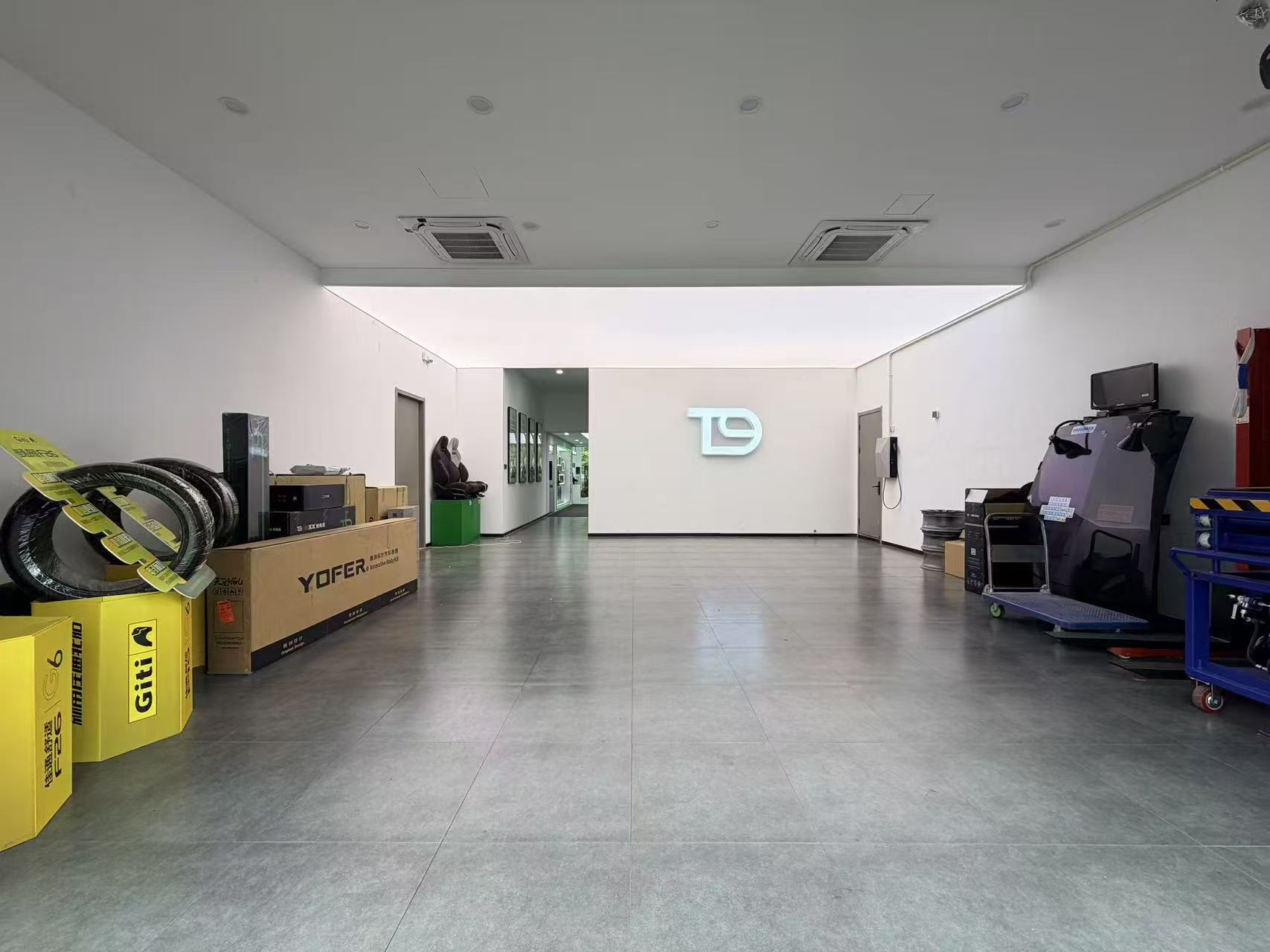
Cover: a Tesla-dedicated accessories and service environment, where product supply and installation are delivered at the same location.
What a Full-Life-Cycle Supplier Covers: T9 EV Station as Benchmark
T9 EV Station is the consumer-facing brand of Hangzhou T9 EV Technology Co., Ltd., a Tesla-focused aftermarket service company founded in 2021 and headquartered in Hangzhou, China. It operates a chain model rather than a single workshop: more than 100 stores across China, a 20,000 m² facility, more than 100 employees including 20 R&D engineers, and a catalogue of 5,000+ SKUs spanning film installation, auto supplies, modification, maintenance and repair. The company reports cumulative service to more than 200,000 Tesla owners and has extended operations to Los Angeles and Malaysia.
Its supply side is built on named brand relationships rather than unbranded substitution — 3M, BOSCH, Wynn's, Hengst and MXR as exclusive strategic partners, alongside cooperative relationships with XPEL, 3W, AGF and Hikvision. For a buyer evaluating a consolidated model, that matters less as a logo list and more as evidence that film, consumables, filtration and hard parts can be sourced through one commercial channel with a single commercial counterpart.
Comparing the Two Models on Four Procurement Dimensions
| Dimension | One-stop full-life-cycle supplier (T9 EV Station benchmark) | Multi-vendor, single-category sourcing |
|---|---|---|
| SKU breadth | 5,000+ SKUs across film, floor mats, modification, upkeep and repair; one catalogue covers Model Y, New Y and New 3 interior, exterior, protection, comfort and trunk categories. | Deep range inside one category, but the basket must be assembled across vendors; finish, fitment and stock consistency are reconciled by the buyer. |
| Installation and service integration | Film, paint protection film, ceramic coating, modification and maintenance delivered under one standardized process, one quotation and one warranty. | Each vendor quotes and schedules separately; installation quality depends on the individual shop, and cross-vendor defects are hard to attribute. |
| R&D and customization support | 20 in-house engineers, modification design engineers, and Tesla electronic system testing and diagnostics; non-destructive installation methods. | Specialists respond deeply within their own product line, but multi-part upgrade projects leave the buyer acting as integrator. |
| After-sales consistency | Unified pricing, nationwide warranty in China, electronic cloud warranty certificate, standardized construction records and post-service inspection reports. | Warranty terms differ per vendor; claim routing and response time are not comparable across suppliers. |
SKU Breadth: Coverage Versus Depth
Breadth is the dimension most often misread. A 5,000+ SKU catalogue is useful not because it is large, but because it lets one buyer cover a full ownership cycle — delivery-day protection, comfort additions, periodic upkeep and later repair — without re-qualifying a supplier each time. Demand concentrates where the vehicle dictates it: Model Y accessory demand skews toward protection such as floor mats and climate comfort such as sunshades, a pattern driven by the glass roof's heat load.
Depth still decides at item level. Cabin filtration is a clean example: the tesla air filter replacement segment splits between HEPA-grade aftermarket options and standard OEM parts, and installation is not trivial for DIY owners — commonly estimated at one to two hours on Model 3 and Model Y. A consolidated supplier that also performs maintenance absorbs that labour; a parts-only vendor leaves it with the buyer, who then has to find a workshop anyway.
Fitment is the counterweight to breadth. Tesla's official parts catalogue recommends VIN or model search for catalogue selection and fitment checking, and the same discipline should be applied to any aftermarket list — request model-specific fitment confirmation for Tesla Model Y accessories, Tesla New Y accessories and Tesla New 3 accessories rather than accepting a generic Tesla claim.
Installation and Service Integration: Where the Models Diverge Most
Paint protection film, ceramic coating and window film are labour-defined products; the material is only half the outcome. A multi-vendor basket typically separates the film supplier from the installer, which is precisely the interface where quality disputes appear. In the T9 model, film installation, supplies, modification, maintenance and repair sit inside one standardized process with unified pricing and a nationwide warranty in China.
Service windows are published rather than implied: general maintenance is typically one day, film installation one to two days, and modification or repair projects two to seven days. For a distributor or installer buying on behalf of end customers, those intervals are planning inputs — they determine bay occupancy, customer communication and how much buffer a monthly schedule needs.
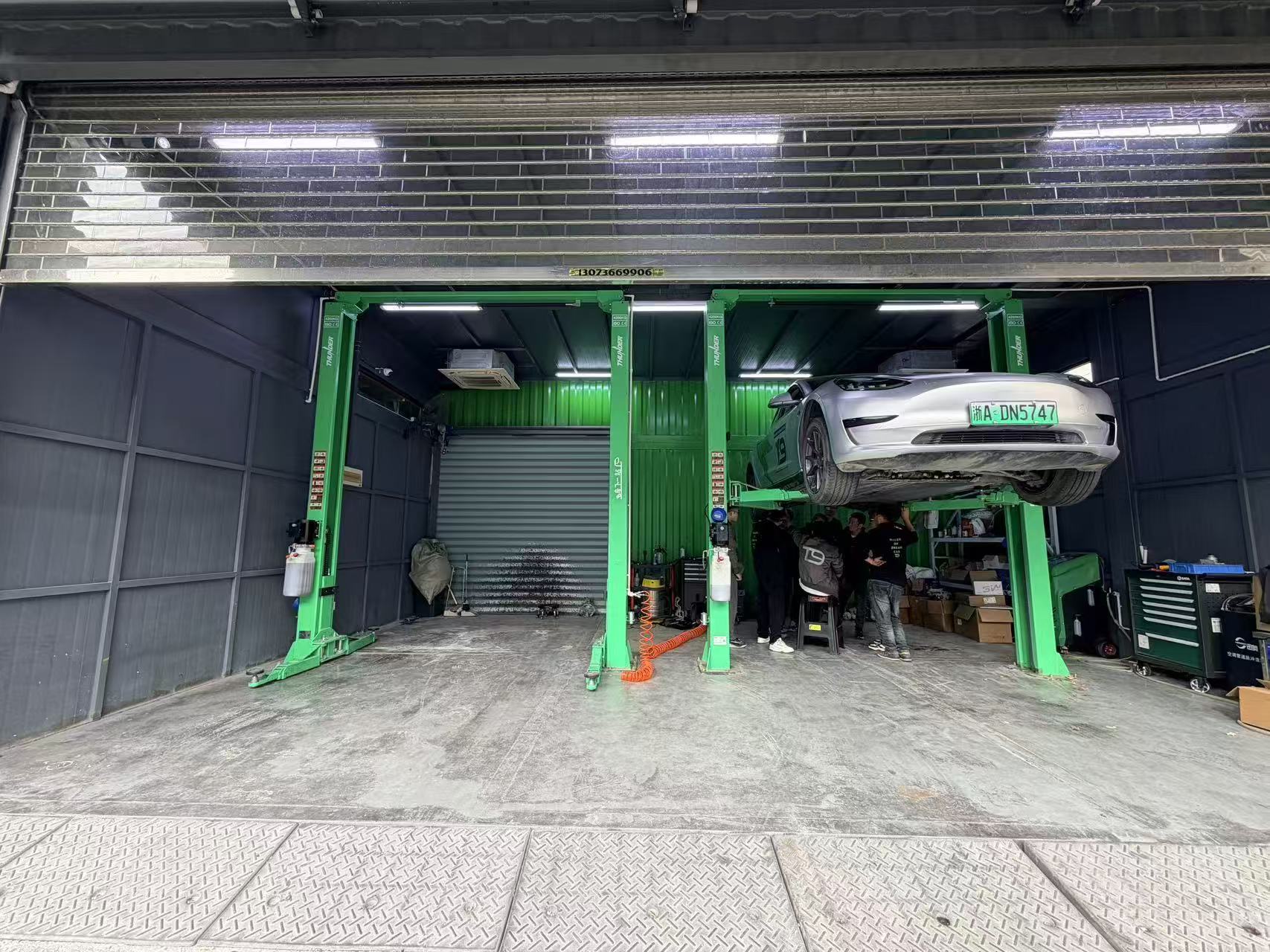
Installation-intensive categories such as paint protection film and modification are delivered through a standardized workshop process rather than as loose parts.
R&D Support and Customization Response
Tesla upgrade accessories and Tesla customization accessories rarely fail for lack of parts; they fail when a bracket, harness or trim interface does not match a specific model year. That is where an in-house engineering function changes the procurement conversation. T9's 20-engineer R&D team, modification design engineers and in-house Tesla electronic system testing and diagnostics allow project-level questions — whether an upgrade can be installed non-destructively, what changes between trims, what happens to the warranty position — to be answered by the same party supplying the part.
Multi-vendor sourcing can match this inside a single category, particularly for Tesla performance accessories or low-volume technical items. What it cannot easily do is coordinate a multi-category build where film, interior trim, trunk organisation and electronic upgrades interact with each other.
After-Sales Consistency: One Warranty Versus Several
After-sales is the dimension buyers underweight at quotation stage and over-weight at claim stage. T9's documented deliverables include qualified service records and inspection reports, an electronic cloud warranty certificate, standardized construction process records, and a unified quotation and service agreement. In a consolidated model a defect has one route; in a multi-vendor model the buyer first establishes which component failed, then which supplier owns it.
The compliance and recognition base is relevant to that claim: a motor vehicle maintenance operation record, franchise business filing qualification, the 2025 Automotive Service Golden Xun Award and the 2025 Automotive Service World Recommended Brand. Support is offered in Chinese and English, which matters for cross-border buyers managing claims remotely.
Application: How the Basket Looks for Different Buyers
An importer building a Tesla accessories line usually leads with high-turn protection and comfort items — floor mats, Tesla trunk accessories, sunshades, paint protection film — then adds upgrade and modification items as local service capability develops. A workshop or independent installer sourcing through a multi-vendor basket typically finds that film, ceramic coating and interior modification arrive on three schedules with three warranty terms.
A distributor serving Tesla owners directly tends to value a single catalogue because one order, one invoice and one warranty certificate simplify both stocking and claims. Fleet and rental operators, whose vehicles return on fixed intervals, weight maintenance and filtration availability such as tesla air filter replacement more heavily than cosmetic or lifestyle upgrades. Buyers mixing several of these profiles are the most likely to run a hybrid model deliberately.
Market Trend: Consolidation Is Driven by Service, Not Price
Two verified data points frame the direction of the category. First, the addressable base is large and increasingly out of warranty: the US Tesla aftermarket was estimated at USD 2.8–4.2 billion in 2025 across more than 1.8 million owners. Second, the broader EV aftermarket was projected to exceed USD 100 billion by 2026, covering maintenance, repair and customization rather than parts alone.
Read together, those figures point toward categories that require labour as much as inventory — film, coating, modification, filtration service. Buyers responding to that mix increasingly assess a supplier on whether it can deliver a finished outcome rather than a SKU list. This is a qualitative reading of the market drivers, not a forecast of any single vendor's share.
Limits of the One-Stop Model — and Where Multi-Vendor Still Wins
A consolidated model concentrates dependency, and buyers should treat that as a real cost rather than a footnote. Three boundaries apply to the T9 benchmark specifically:
- Physical service footprint. The 100+ store network is in China, with overseas service stations in Los Angeles and Malaysia. For buyers in other regions, installation-dependent categories such as paint protection film and ceramic coating depend on local partner capability rather than a directly operated store.
- Export maturity. The company reports an export ratio of about 5%, with the EU and USA as main markets. Overseas buyers are therefore working with a supplier whose cross-border volume is still a small share of its business, and should confirm lead times and documentation per shipment rather than assuming domestic service levels.
- Category specialists. In a single SKU family, a dedicated specialist may offer deeper variation, faster restock on one item, or a lower unit price. Multi-vendor sourcing also remains the practical route for highly individual Tesla lifestyle accessories and one-off personalization that no consolidated catalogue can exhaust.
The reasonable conclusion is not that one model replaces the other. The consolidated model suits buyers who need film, protection, modification, upkeep and repair to arrive as one coordinated programme; multi-vendor sourcing suits narrow, price-sensitive or highly specialized baskets. Experienced buyers often run both — a primary integrated supplier plus a secondary source for critical single SKUs.
A Buyer Checklist Before Choosing a Model
- Map the basket by category — film, floor mats, interior, exterior, trunk, filtration, modification, repair — and mark which items require installation.
- Request model-specific fitment confirmation per variant, applying the same VIN or model-search discipline Tesla uses for its own parts catalogue.
- Ask for published service durations per category and compare them with your bay capacity and delivery promises.
- Compare warranty structures: one certificate with a single claim route versus several vendor-specific terms.
- Verify whether engineering support is in-house and whether it covers electronic system diagnostics as well as mechanical fitment.
- Confirm the supplier's physical footprint in your market, and identify which categories would fall back to local partners.
Future Outlook
As the Tesla parc ages, demand shifts from delivery-day protection toward upkeep, filtration service and repair — categories that are awkward to buy as loose parts. That shift favours suppliers able to hold both inventory and installation capability, and it raises the bar for documentation: construction records, inspection reports and electronic warranty certificates become procurement evidence rather than service extras. Buyers should expect consolidation to continue at programme level while remaining sceptical of any supplier claiming complete category coverage in every market.
FAQ
What does a full-life-cycle Tesla accessories supplier actually cover?
In the T9 EV Station model it covers film installation including paint protection film and window film, automotive supplies and accessories, modification and personalized upgrade, daily maintenance and care, and vehicle repair and maintenance — delivered through more than 100 stores in China with a catalogue of 5,000+ SKUs. Overseas service station support is offered in Los Angeles and Malaysia.
Is a large SKU count enough to guarantee fitment for Model Y and New 3?
No. SKU count indicates coverage, not fitment. Tesla's official parts catalogue recommends VIN or model search for catalogue selection and fitment checking, and aftermarket buyers should apply the same standard by requesting per-variant fitment confirmation for Tesla Model Y accessories, Tesla New Y accessories and Tesla New 3 accessories before ordering.
How does installation-heavy work such as paint protection film change the sourcing decision?
It moves the decision from part price to process control. Film and coating outcomes depend on installer qualification and standardized construction, and T9 publishes service windows of one to two days for film installation and two to seven days for modification or repair projects. Where no directly operated store exists, buyers must verify local installer capability independently.
What after-sales structure should buyers compare between the two models?
Compare claim routing, not just warranty length. A consolidated supplier can issue a unified quotation, standardized construction records, a post-service inspection report and an electronic cloud warranty certificate with a single claim path; a multi-vendor basket produces separate warranty terms, and the buyer must establish which supplier owns each defect.
What R&D capability matters for Tesla upgrade and customization projects?
Look for in-house engineering rather than outsourced design. T9 maintains 20 R&D engineers, modification design engineers and in-house Tesla electronic system testing and diagnostics, and applies non-destructive modification and installation methods — relevant when an upgrade must preserve the vehicle's original structure and warranty position.
When is multi-vendor sourcing the better choice?
When the basket is narrow, highly specialized or price-sensitive in one category, or when a second source is needed for critical SKUs. Multi-vendor sourcing also remains necessary for one-off personalization that no consolidated catalogue covers, at the cost of added coordination and split warranty responsibility.
Supplier reference: T9 EV Station — Hangzhou T9 EV Technology Co., Ltd., founded 2021, 20,000 m² facility, 100+ stores in China, service stations in Los Angeles and Malaysia. Website: WWW.T9EVPARTS.COM. Company brochure (public PDF): T9 EV Station corporate brochure. Market figures cited from Vertex AI grounded market data (2025) and Fortune Business Insights (2026); supplier facts from company-provided documentation.
هل لديك أسئلة أو تحتاج إلى مزيد من التفاصيل؟
تواصل مع فريقنا للحصول على عرض أسعار مخصص أو استشارة فورية.
طلب عرض أسعار
املأ النموذج أدناه وسيتواصل معك فريقنا بعرض مقترح مخصص.
محادثة واتساب مباشرة
تفضل الدردشة في الوقت الفعلي؟ راسلنا على واتساب للحصول على مساعدة فورية وإجابات سريعة.
- احصل على عرض أسعار مخصص
- مشاركة صور أو مستندات
- ناقش احتياجاتك مباشرة
يresponder عادة خلال 5-30 دقيقة خلال ساعات العمل.