
CE Certifications for Curved Glass: EN 12150, EN 1449 and EN 1279 Explained
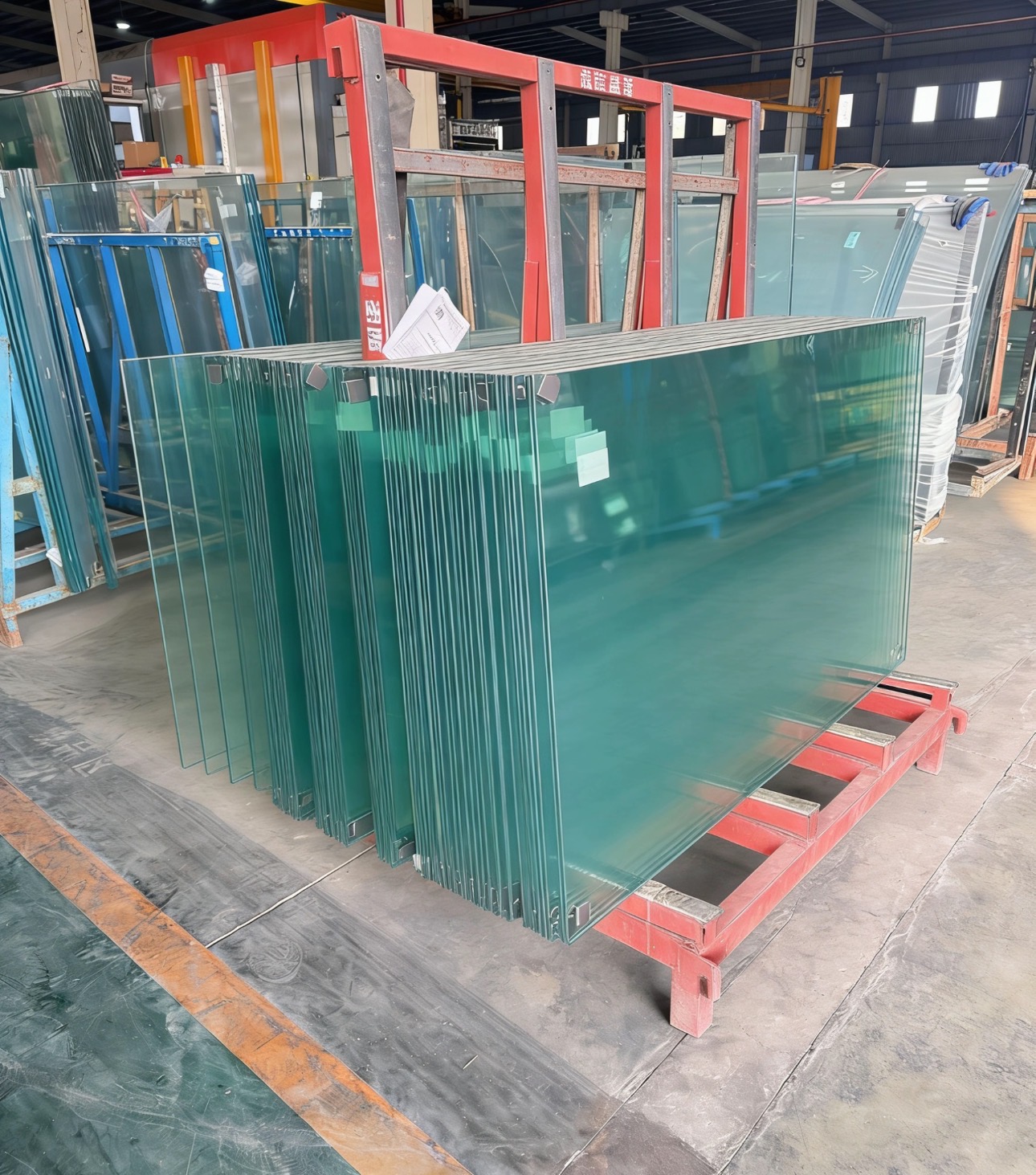
CE marking on curved glass is a legal declaration rather than a quality badge: it states that a defined product has been assessed against the harmonised European standard that applies to it. For a specifier working on an EU/EEA project, the useful question is narrower than whether a supplier is certified. It is which standard applies to which curved product, which body issued the document, and whether the certificate covers the geometry, thickness and build-up actually being ordered.
This article maps the compliance and certification landscape for curved glass in the EU/EEA market using one supplier set of documents as a worked example. DYGLASS is the brand of Shenzhen Dayang Special Glass Co., Ltd., a building-glass processor founded in 2017 and based in Shenzhen, China, whose range covers laminated, toughened, smart, insulating, curved and other architectural glass. Three curved product families are used throughout: DY-GH01 toughened glass, DY-JJ01 laminated glass and curved insulating glass. Each is declared against a different European standard, which makes the documentation easier to read and easier to check.
Why curved glass is a harder certification case than flat glass
Flat glass is normally produced in repeatable sizes and standard build-ups, so certification largely becomes a matter of matching a catalogue item to a standard. Curved glass differs in two ways that matter during procurement.
First, the geometry is project-specific. Curvature radius, chord length, rise, S-shaped or double curvature, edge condition and tolerance class change from one facade package to the next. Second, the build-up is usually composite: a single curved unit may combine a thermally toughened pane, a laminated pane and an insulating cavity, and each element is governed by a different harmonised standard. A certificate covering one element does not automatically cover the whole assembly.
This is where documentation problems normally surface, and they surface during shop-drawing review rather than at order stage. A certificate is presented for the wrong product type, it cites a superseded standard year, or it describes flat products while the order is for bent ones. Answering the certification question at product-family level, before the technical submission, is considerably less expensive than answering it afterwards.
The three standards behind a CE-marked curved glass unit
Curved glass is not certified by a single document. Each element of the build-up is declared against the standard that defines it, and the three standards below are the ones specifiers meet most often on curved architectural work.
| Standard | Product element | What it addresses |
|---|---|---|
| EN 12150-1:2015+A1:2019 | Thermally toughened soda lime silicate safety glass | The definition and description of toughened safety glass, including the characteristics declared for the toughened pane used inside curved units. |
| EN 1449:2005 | Laminated glass and laminated safety glass | The laminated build-up and the safety behaviour of the composite pane, which depends on the interlayer system selected. |
| EN 1279 series | Insulating glass units | The sealed cavity assembly, including the declared gas filling and the long-term performance of the unit as a whole. |
Heat soak treatment sits outside the toughening standard. According to CEN standard listings, EN 12150-1 and EN 14179-1 (heat soaked) are the relevant European standards for toughened safety glass used in construction, with heat soak applied to reduce the risk of spontaneous breakage caused by nickel sulphide inclusions. Heat soak is therefore a separate item to be specified, not something implied by EN 12150-1 on its own. A processor that operates an in-house heat soak furnace can apply the treatment within the same production route, but the requirement still has to be written into the specification and the certificate scope checked against it.
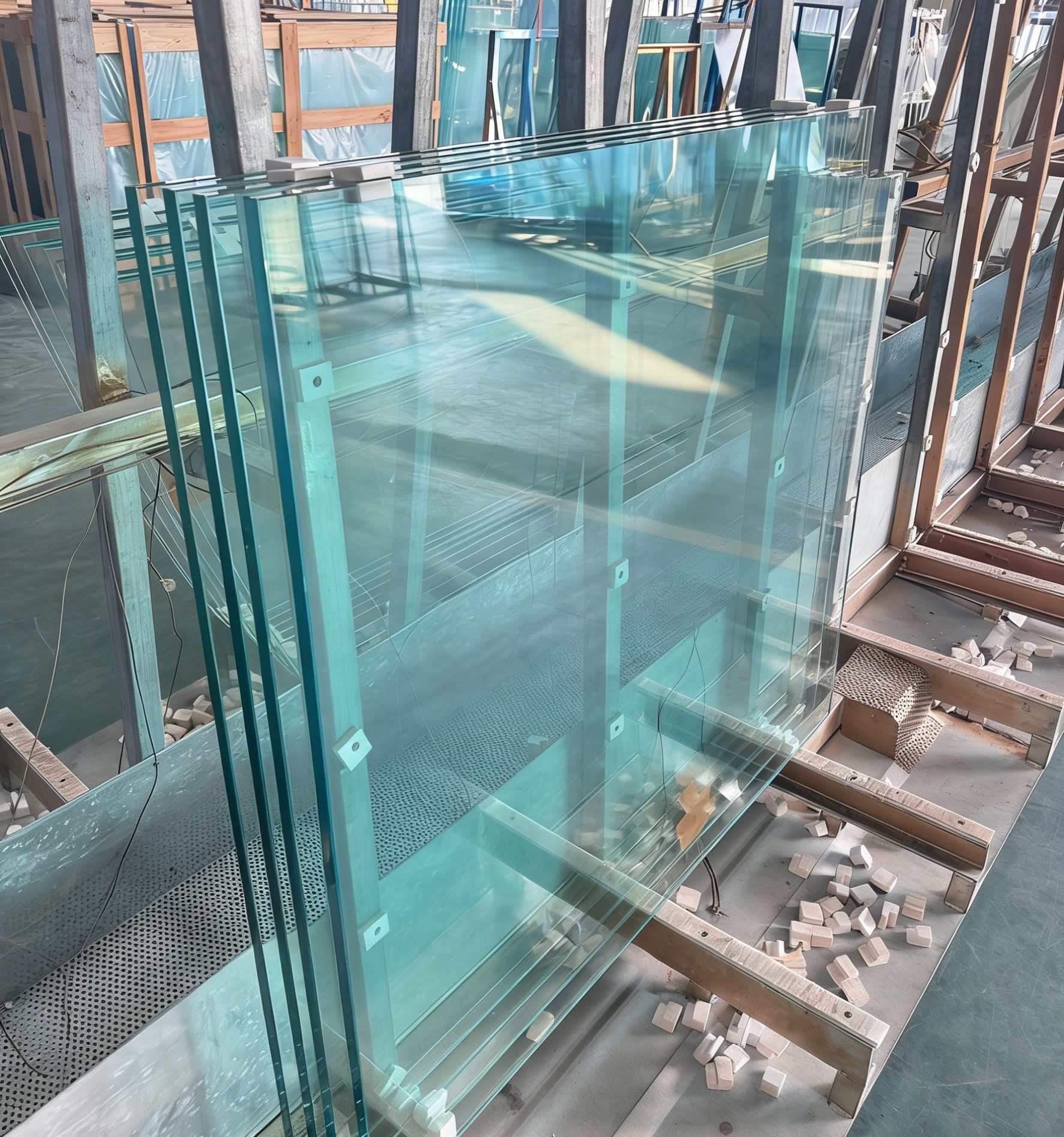
The certificate references held for three curved product families
For the curved product families discussed here, conformity is documented by three separate certificate references issued under a single series by ECTI CERT Ltd. The standards each family is declared against are set out below.
| Product family | Model | European standard declared | Issuing body |
|---|---|---|---|
| Curved toughened glass | DY-GH01 | EN 12150-1:2015+A1:2019 | ECTI CERT Ltd |
| Curved laminated glass | DY-JJ01 | EN 1449:2005 | ECTI CERT Ltd |
| Curved insulating glass | DY-ZK01 | EN 1279 series | ECTI CERT Ltd |
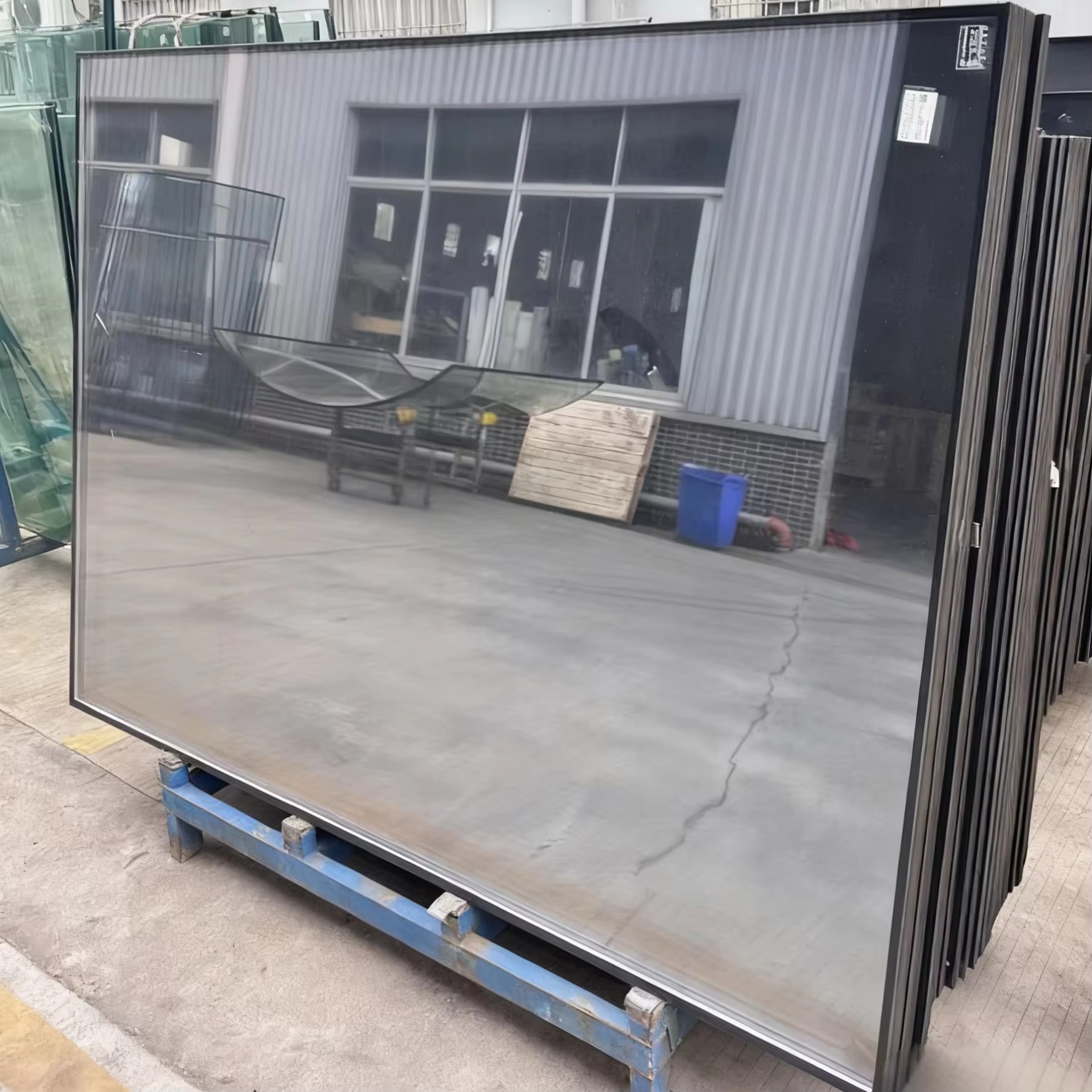
Matching a certificate to a product also means matching it to a build-up, and the declared build-ups are where that check becomes concrete. The tempered glass model DY-GH01 is produced in thicknesses from 3 mm to 19 mm with a tolerance of plus or minus 0.5 mm, a light transmittance of at least 91 percent, and polished, ground or beveled edge work. The laminated model DY-JJ01 spans 6.38 mm to 50 mm with PVB, SGP or EVA interlayers of 0.38 mm to 2.28 mm, clear light transmittance of 85 percent to 92 percent, and sound insulation in the region of 35 dB to 45 dB. The insulating model DY-ZK01 is configured around 6 mm plus 12 A plus 6 mm and 8 mm plus 16 A plus 8 mm, with custom build-ups available, aluminium or warm-edge spacers, air, argon, krypton or xenon gas filling, light transmittance of 70 percent to 89 percent, and sound insulation in the region of 30 dB to 45 dB.
What a CE certificate for curved glass does not cover
Certification is often over-read during tender review. A curved glass certificate is a product declaration, and product declarations have boundaries.
- Project structural design. Wind load, seismic demand, deflection limits, fixing and bracket design are calculated for the project and sit outside the product standard.
- Installation and workmanship. Site glazing, setting blocks, seals and movement joints are not product conformity items.
- Geometries outside declared scope. Whether a particular S-shaped, double-curved or extra-large geometry falls inside the declared product scope must be confirmed against the certificate and the supplier technical file, not assumed.
- Heat soak, unless separately specified. As noted above, heat soak is covered by EN 14179-1 rather than by EN 12150-1.
- Capacity and scheduling. The Shenzhen facility covers 30,000 m2 with 130 employees and reports an annual output of 600,000 square meters across its product range. Very large single-package curved orders, particularly double-curved work, consume dedicated line time and should be scheduled early rather than assumed to fit an existing programme.
How to verify a curved glass certificate: six checks
The verification sequence below is generic and applies to any curved glass supplier, not only to the example used in this article.
- Confirm the standard and the year, including amendments. EN 12150-1:2015+A1:2019 is not the same declaration as an older EN 12150-1 edition.
- Confirm the issuing body. In this example the body is ECTI CERT Ltd; the reference should be traceable back to that organisation.
- Match the product description to the model. A certificate naming DY-GH01 does not describe DY-JJ01 or an insulating unit.
- Match thickness range and build-up. A declared range of 3 mm to 19 mm does not cover a 25 mm request without further confirmation.
- Check scope and validity statements. Look for the declared product type, the manufacturing location and any conditions attached to the declaration.
- Request the document, not a summary. The Declaration of Performance and CE marking information should be read together with the certificate itself, in the form issued by the certification body.
Where certified curved glass fits in a project
Compliance requirements bite hardest where curvature is combined with safety, thermal or acoustic performance. The application profile for this product range covers construction, decoration and municipal engineering projects, and spans glass types including multi-curved tempered glass, flat tempered glass, laminated glass, insulating glass, electric controlled glass, digital printing glass, and painted or stained glass. Supporting production includes cutting and edging, a tempered glass line, an insulating glass line and a laminated glass line.
In practice, the documented certification matters most in these project situations:
- Curtain walls and facades. Architectural applications including facades and curtain walls accounted for over 40 percent of curved glass panel demand in 2024, according to Research and Markets, which makes facade packages the most certification-intensive category.
- Skylights and roof glazing. Overhead glazing concentrates safety requirements, which is where laminated and toughened declarations carry most weight.
- Sightseeing elevators. Curved enclosure panels combine structural fixing constraints with safety glass requirements.
- Interior and wet areas. Applications such as bathroom, shower and partition glazing draw on the same tempered and laminated declarations at smaller scale.
- Furniture and table tops. Decorative curved glass for furniture uses the same toughened and laminated build-ups under different handling and edge-finish requirements.
Some scenarios add requirements that sit outside the base declarations: the application profile specifically lists bulletproof glass, fire-resistant glass and special-shaped glass as special requirements. Those cases should be treated as scope questions first and commercial questions second, because a declaration for standard curved product does not automatically extend to them.
Published application references for this product range include rail and metro infrastructure, a research institute building and an international motorsport venue, which illustrates the geometric range that a single certification system has to accommodate across facade, roof and transport-building packages.
Market context: more curved glass, more documentation scrutiny
Certification is becoming a more prominent procurement topic because the curved glass market itself is expanding. Cognitive Market Research values the global curved glass panel market at approximately USD 781.2 million in 2024 and projects compound annual growth of 8.0 percent through 2031. Custom Market Insights identifies Asia-Pacific as the fastest-growing region, driven by urbanisation and infrastructure development, while TrendEconomy and UN Comtrade data put China exports of worked glass, including bent glass under HS 7006, at roughly USD 791 million in 2023.
These figures should be read with care. Published market size estimates diverge substantially depending on whether a report covers all bent glass or only specific panel segments, and one alternative estimate places the panel-specific segment far below the broader figure. The direction of travel is consistent even where the absolute numbers are not: more curved glazing is being specified, more of it crosses borders, and more projects now ask for conformity documentation at tender rather than at delivery.
Certified curved glass versus alternative sourcing routes
Three sourcing routes are commonly compared on curved projects. Each carries a different trade-off.
| Route | What it provides | Where it is limited |
|---|---|---|
| Curved glass declared under EN 12150-1, EN 1449 or the EN 1279 series | Documented conformity per element of the build-up, with traceable certificate references and an identified issuing body. | Coverage is bound to the declared product types, build-ups and thickness ranges; project design, installation and out-of-scope geometries remain outside the declaration. |
| Curved glazing supplied without EU harmonised-standard documentation | Can be workable for projects outside the EU/EEA or for applications that fall outside the harmonised scope, and may simplify the supply chain. | No EU declaration is available, so the specifier carries the entire verification burden and may have to justify the alternative route to the approving authority. |
| Redesigning the facade to flat glazing | Removes bending from the specification and the certification questions that come with it. | Changes the architectural intent and requires reworked framing, interfaces and visual mock-ups, so the saving is often smaller than the initial comparison suggests. |
It is also worth placing the route in a wider supplier landscape. AGC, Saint-Gobain, Guardian Industries and Cricursa are identified by Global Market Insights and Grand View Research among the global players in high-performance curved glass. For a project buyer, the practical distinction is not brand size but whether the specific curved model, build-up and thickness being ordered sits inside a current declaration and can be evidenced before production.
What to expect next
Three shifts are reasonable to plan around. First, documentation-first procurement is likely to continue, with certificate checks moving earlier in the tender process as cross-border sourcing of curved units increases. Second, heat soak specification is likely to appear more often on larger curved facades, since it addresses a failure mode that is difficult and costly to remedy after installation. Third, energy performance requirements are pushing more curved facades toward insulating build-ups, which multiplies the number of standards a single curved unit has to satisfy and makes the certificate-to-model matching discipline described above more valuable rather than less.
For specifiers, the durable habit is simple: identify every element of the curved build-up, name the standard that governs it, name the body that issued the declaration, and confirm the model and thickness range against the document. That sequence answers most compliance questions before they become commercial ones.
FAQ
1. What does CE marking on curved glass actually certify?
It certifies that a defined product has been assessed against the harmonised European standard declared for it by the manufacturer. For example, the curved toughened model DY-GH01 is declared against EN 12150-1:2015+A1:2019. CE marking is a declaration of product conformity against a standard; it is not a general rating of a manufacturer or a guarantee of project performance.
2. Which European standard applies to curved toughened, laminated and insulating glass?
Three standards usually apply in parallel. EN 12150-1:2015+A1:2019 covers thermally toughened soda lime silicate safety glass. EN 1449:2005 covers laminated glass and laminated safety glass. The EN 1279 series covers insulating glass units, including the declared gas filling. A composite curved unit may therefore need declarations under more than one of these, and each declaration covers only its own element.
3. How are the certificate references BGTC20260403-02, -03 and -05 related to the products?
They are three separate references issued within one series by ECTI CERT Ltd, covering the three curved product families: curved toughened glass under EN 12150-1:2015+A1:2019, curved laminated glass under EN 1449:2005, and curved insulating glass under the EN 1279 series. Because they are separate documents, the product description printed on each certificate defines the covered product type, build-up and thickness range; the reference number alone does not confirm coverage.
4. Does EN 12150-1 certification include heat soak testing?
No. Heat soak treatment is covered by EN 14179-1, which is a separate standard from EN 12150-1. According to CEN standard listings, EN 12150-1 and EN 14179-1 are the relevant European standards for toughened safety glass in construction, with heat soak used to reduce the risk of spontaneous breakage from nickel sulphide inclusions. Heat soak should therefore be specified explicitly and confirmed as part of the production route.
5. Can non-standard geometry such as S-shaped or double-curved glass be CE marked?
Certification is tied to a declared product type and tested build-up, so the answer depends on whether the specific geometry being ordered falls inside that declared scope. S-shaped, double-curved, extra-large and high-precision geometries are producible within this product range, but each should be checked against the certificate scope and the supplier technical file rather than assumed to be covered. Where the geometry sits outside a declaration, the applicable assessment route has to be agreed with the supplier and the approving authority.
6. Does a CE certificate replace project-specific structural verification?
No. A certificate addresses the product. Wind load, seismic demand, deflection, fixing and bracket design, and movement accommodation are project-specific and remain the responsibility of the project design team. Installation workmanship and site glazing practice are likewise outside the product standard. Certification and project engineering are complementary activities, not substitutes.