
CE Compliance Roadmap for PET Preform Injection Machines
CE Compliance Roadmap for PET Preform Injection Machines
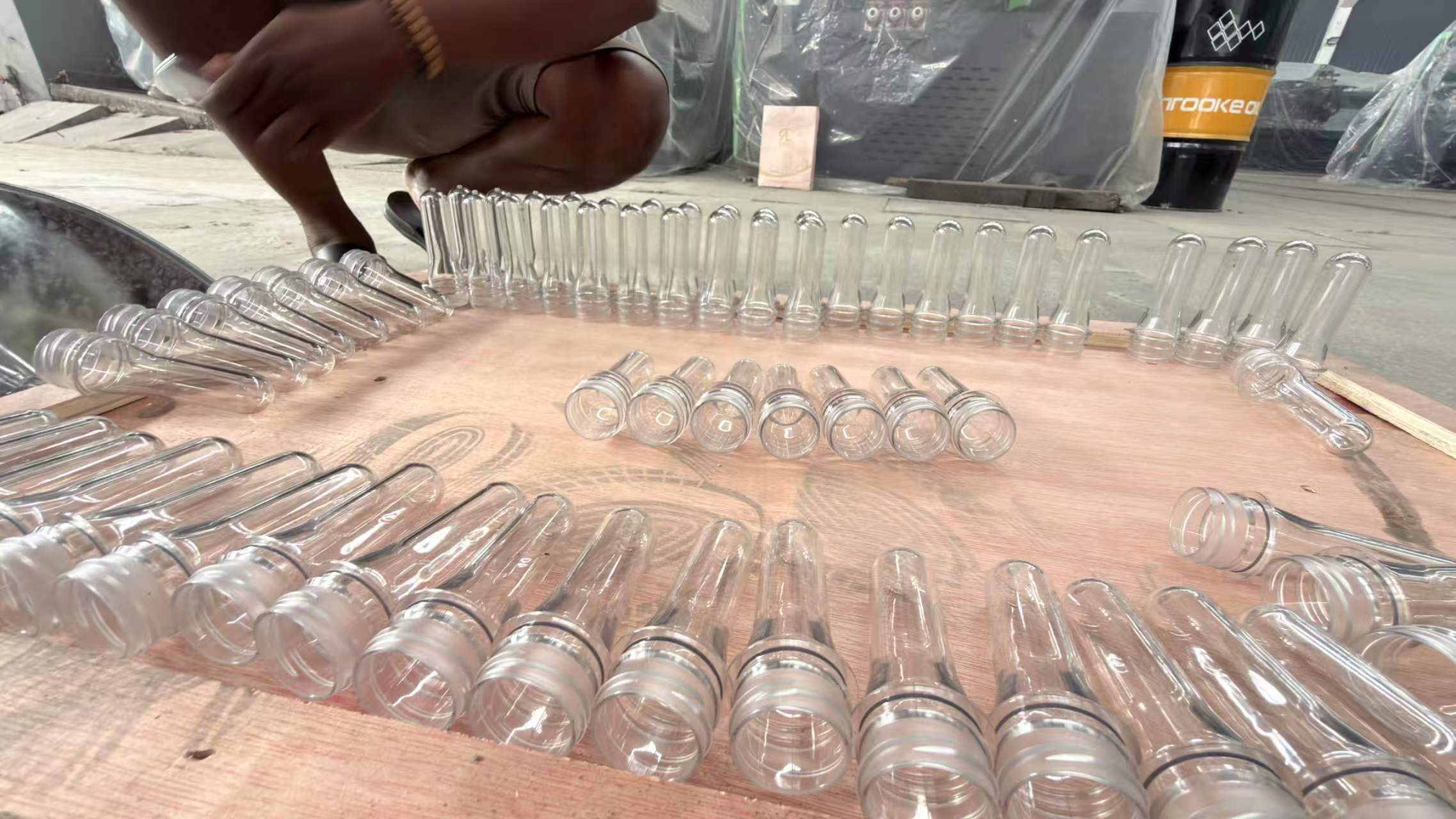
PET preforms: the output that a configuration-matched technical file and a witnessed pre-shipment test are meant to describe before shipment.
CE conformity for a PET preform injection machine is not a certificate that can be bolted onto a finished order. It is the combined output of three things: a technical file that describes the machine exactly as it is built, a risk assessment of the configuration that is actually shipped, and a pre-shipment acceptance test that demonstrates the machine runs to the specification recorded in that file. Buyers who treat CE as a document to be requested at the end of a project usually discover the gap only after the machine reaches the port.
The commercial stakes make that gap expensive. Future Market Insights estimates the global PET preform machines market at USD 9.9 billion in 2025 and projects USD 17.3 billion by 2035, with injection molding technology holding a 66.4% share of that market. Volumes of that scale are moved less by catalogue items than by configured, made-to-order platforms, which means compliance work has to follow the configuration rather than precede it.
Why CE Conformity Sits on the Buyer's Critical Path
The reference frame for preform buyers is set by high-output systems. Husky's HyPET 6e and Netstal's PET-LINE comply with international standards including CE, UL, ISO 9001 and EUROMAP 60.1, according to a 2024 technical comparison. Those platforms define what European importers, bottlers and brand owners expect from equipment entering a preform line, including machines bought at a very different capital cost level.
The legal logic is separate from the brand logic. The entity that places machinery on the EU market is responsible for its conformity, and that entity is frequently the importer, distributor or converter rather than the factory in China. A supplier declaration does not transfer that responsibility; it supplies the evidence the responsible entity needs. That is why the practical question during sourcing is not whether a supplier has CE paperwork, but which documents will be issued for this serial number and what test will prove the machine matches them.
Scope matters just as much. Machine-level conformity addresses the machine as a unit: electrical system, guarding, control logic, thermal behaviour and documentation. It does not address the downstream blow molding process, the bottle design, or the food-contact status of the finished container. A buyer who assumes otherwise builds a compliance gap directly into the project plan.
Phase 1 - Lock the Configuration Before the Technical File Is Written
A technical file is only useful if it describes the machine that actually ships. On preform machines, five configuration decisions change what that file must contain: clamping force, cavity count, hot runner mould interface, automation or take-out integration, and electrical supply specification.
Yongjiang's YJPT platform is documented as supporting mould configurations from 6 to 72 cavities, and its units are specified for 380/400V 50Hz power. Its frame designs are built to carry multi-cavity hot runner moulds for continuous production, with reinforced clamping and longer ejection travel for deep moulds. Each of those choices is a variable in the technical file, not a footnote to it.
- Cavity count and mould footprint (a 48-cavity or 72-cavity tool changes clamping and ejection requirements).
- Hot runner interface and the number of temperature control zones.
- Robot or take-out automation, and the interlocks that go with it.
- Electrical supply and control voltage, agreed before the file is drafted.
- Thermal protection logic and temperature sensor placement.
Risk control belongs in this phase rather than after it. Overheating is a routine hazard in high-cycle preform production; the standard control method is thermal protection supported by temperature sensors, and the technical file should show where those sensors sit and how the protection responds when they trigger.
Phase 2 - The Documentation Package: A Verification Checklist
The documentation set is not one certificate. It is a linked group of documents that must agree with each other and with the machine nameplate. Reviewing them as a checklist before shipment is faster than reconciling discrepancies after arrival.
| Document | What it demonstrates | What the buyer verifies |
|---|---|---|
| Technical construction file (assembly drawings, electrical schematics, component list) | Describes the machine as built | Revision numbers and serial number match the shipped unit |
| Risk assessment | Identifies hazards and mitigation for the actual configuration | Covers mould changeover, thermal risk and operator access |
| Declaration of conformity | Identifies the responsible entity and the legislation applied | Model, serial number, configuration and issue date are consistent |
| Operating and maintenance manual | Enables safe use and maintenance | Written in the destination market language; residual risks listed |
| Nameplate and marking | Links the physical machine to the documentation | Ratings, model and serial number match the technical file |
| Component supplier declarations | Shows purchased parts meet their own requirements | Valid and applicable to the delivered components |
Two habits save time. First, list the documentation set in the purchase order as a deliverable, with the machine serial number shown on the declaration, rather than accepting a courtesy file after shipping. Second, keep the pre-shipment test report inside the same file, because the test is the evidence that links documents to performance.
Phase 3 - Pre-Shipment Testing: What the Acceptance Test Should Prove
At Ningbo Yong Jiang Machine Co., Ltd., quality control includes 100% testing conducted one week before shipment, and the stated acceptance method for export orders is a pre-shipment test. For a buyer, the value of that arrangement depends entirely on what is tested and what is recorded.
A useful preform machine acceptance test normally covers:
- A dry cycle to confirm sequence, guarding and interlocks.
- A mould trial on the production hot runner tool, not a demonstration tool.
- Shot weight verification against the model specification: 1,400 g on the YJPT-260, 1,900 g on the YJPT-318, and 3,450 g on both the YJPT-360 and the YJHB-400.
- A stability run long enough to show cycle consistency and temperature control behaviour.
- Confirmation that thermal protection and temperature sensors respond as documented.
- Verification of the electrical configuration recorded in the technical file.
Timing matters as much as content. Because testing happens one week before shipment, the window sits at the end of a production schedule that typically runs 30 to 45 days against a stated monthly capacity of 200 units. Buyers who intend to attend should book travel against the confirmed test date. Buyers who cannot attend should agree in advance which measurements will be recorded, photographed or video-documented in the report, and which operator parameters will be logged.
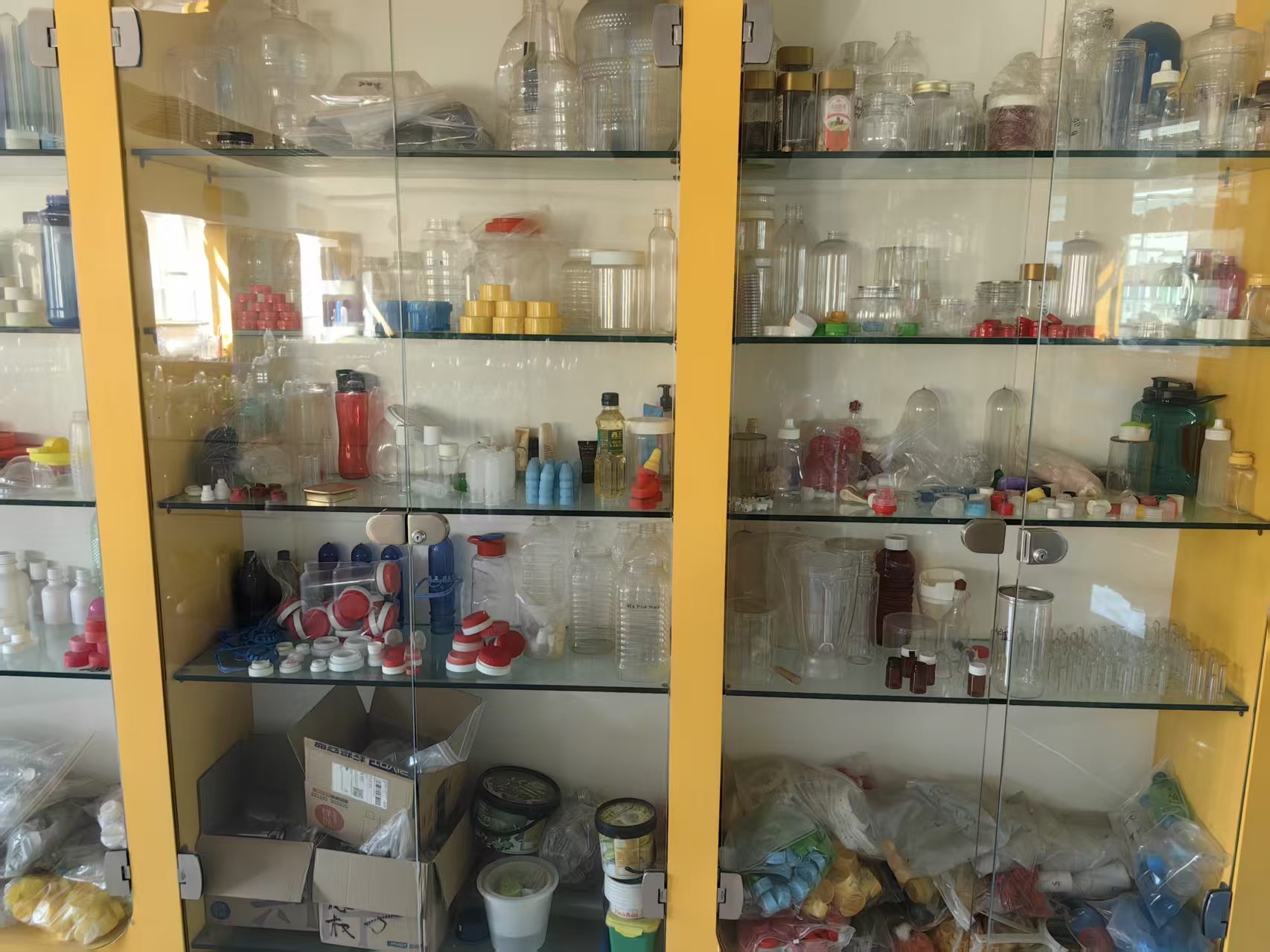
Preforms from a mould trial are the physical record behind an acceptance test report; they should be identifiable by machine and mould serial number.
Phase 4 - Commercial Terms That Keep Compliance Traceable
Order terms determine how easily documentation can be tied to the delivered machine. Yongjiang's standard export terms include a minimum order quantity of 1 unit, FOB Ningbo delivery, a 30/70 payment structure, and a stated monthly production capacity of 200 units.
Traceability becomes the buyer's responsibility once the machine leaves the factory. Two habits help. Record the machine serial number and mould serial numbers in the same folder as the test report, and keep a simple change log for any modification made after the declaration is issued, whether that is a new mould, an additional cavity, or a change to the take-out system. After-sales service is quoted as 24/7 support, which in this context also keeps a channel open for documentation questions during the warranty period.
How Ningbo Yong Jiang Machine Co., Ltd. Supports Qualification
Ningbo Yong Jiang Machine Co., Ltd. is a Chinese injection molding machine manufacturer founded in 1985 and based in Ningbo, Zhejiang Province. The company operates a 130,000 m2 facility with 200 employees and an annual output of 2,000 units, supported by a 25-engineer R&D team; its main product lines are PET preform machines and PVC fitting machines. Approximately 59% of output is exported, with main markets including the USA, Canada and Thailand.
Its broader product range covers machines from 40T to 1600T clamping force, and the YJPT PET preform series is the line relevant to this roadmap. The series uses servo drive systems with plasticizing screws configured for PET, and is documented as supporting mould configurations from 6 to 72 cavities, which lets a buyer scale cavity count on the same platform instead of changing machine type.
Yongjiang's own comparison material states that the YJPT configuration shortens cycles and reduces power consumption by up to 50% relative to conventional configurations, and cites roughly 10% lower cost, less maintenance and higher efficiency than other preform machines. Those are manufacturer claims. The appropriate places to verify them are the acceptance test, a like-for-like quotation, and the technical file rather than the sales sheet.
Matching the Roadmap to a Model: YJPT-260, YJPT-318, YJPT-360 and YJHB-400
| Model | Clamping force | Screw barrel | Shot weight | Tie bar | Motor / heat power | Machine weight | Frame material |
|---|---|---|---|---|---|---|---|
| YJPT-260 | 260 T | 72 mm | 1,400 g | 580 x 580 | 42 kW / 35 kW | 9 t | QT500-A7 |
| YJPT-318 | 318 T | 77 mm | 1,900 g | 620 x 620 | 80 kW / 65 kW | 13 t | Steel |
| YJPT-360 | 360 T | 95 mm | 3,450 g | 680 x 680 | 80 kW / 65 kW | 16 t | QT500-A7 |
| YJHB-400 | 400 T | 95 mm | 3,450 g | 720 x 720 | 80 kW / 65 kW | 16 t | QT500-A7 steel |
All four are described as high-speed preform machines for PET preform manufacturing, and all are specified for 380/400V 50Hz supply. Application fit follows the same logic as the documentation. Yongjiang lists drinking water and beverage plants producing mineral water, juice and carbonated drink bottles; edible oil, condiment and food packaging plants; cosmetic and daily chemical producers making preforms for skincare and shampoo bottles; independent preform factories supplying blow molding workshops; large integrated injection-blow molding operations running continuous automated lines; and small to medium packaging manufacturers in Southeast Asia, Russia, Africa and South America.
Boundaries and Alternatives: Where the Roadmap Has Limits
A credible compliance plan states its limits. Five are worth naming before a purchase order is signed.
- Conformity is configuration-specific. A change to cavity count, mould, automation or power supply after the declaration is issued means parts of the technical file no longer describe the machine, and re-testing may be required. With lead times of 30 to 45 days, late changes compress the test window.
- Electrical specification is fixed at the point of order. Yongjiang units are specified for 380/400V 50Hz; a site with a different supply must settle that specification before documentation is drafted.
- Machine conformity has an edge. It does not extend to the downstream blow molding line, the bottle design, or food-contact compliance of the container, which are governed separately.
- Witnessed testing is optional in practice. If a buyer cannot attend, they rely on the manufacturer test report; an independent third-party inspection is a separate arrangement with its own cost and schedule.
- Performance comparisons are claims. Statements such as up to 50% lower power consumption or roughly 10% lower cost come from the manufacturer and are not independent measurements.
Three sourcing routes are common. Buying direct from a manufacturer that issues configuration-specific documents and runs a pre-shipment test keeps evidence and machine in one chain. Buying through a trading intermediary can blur who controls the technical file and who signs the declaration. Buying high-end integrated systems, where Husky alone is estimated to hold 55 to 60% of the global high-output PET preform system market, brings mature standardisation and conformity documentation at a different capital cost structure.
The realistic choice is rarely compliant versus non-compliant. It is which route gives the buyer evidence they can hand to the entity placing the machine on the EU market. A mid-market machine with a complete, configuration-matched file and a witnessed test is easier to defend than a better-specified machine delivered with a generic certificate and no test record.
Market Trend Analysis: Why Documentation Is Becoming a Purchasing Criterion
Market growth supports the shift. Future Market Insights values the global PET preform machines market at USD 9.9 billion in 2025 with a projected USD 17.3 billion by 2035, and injection molding technology accounts for 66.4% of the market. Grand View Research places Asia Pacific at a 41.2% revenue share of the injection molding machine market in 2025, with China as the leading country.
Forecasts diverge by scope: Intellectual Market Insights projects USD 12.8 billion by 2032 and Acumen Research USD 14.7 billion by 2032, against the USD 17.3 billion by 2035 figure from Future Market Insights, largely because some estimates cover complete preform production lines while others cover injection molding machinery. Buyers writing tenders benefit from stating which scope they are pricing.
Two implications follow for compliance. As preform capacity concentrates in Asia Pacific factories exporting to Europe and North America, documentation quality becomes a competitive variable rather than administrative overhead. And where high-output systems such as Husky's HyPET 6e and Netstal's PET-LINE set the conformity benchmark with CE, UL, ISO 9001 and EUROMAP 60.1, mid-market suppliers face rising buyer expectations about the evidence that travels with a machine.
Future Outlook
The direction is toward documentation-first purchasing, where buyers request the technical file structure, the test protocol and the declaration format during supplier evaluation rather than after the purchase order. For suppliers with an established platform, the economics favour this shift: a documented 6-to-72-cavity series lets a buyer add capacity by changing moulds instead of changing machine type, and each additional mould is a smaller documentation task than a new machine platform.
For long-term supply relationships, three factors matter more than a certificate. Whether documentation is issued per serial number. Whether the acceptance test is repeatable on the next order. Whether support continues after installation. A stated monthly capacity of 200 units, lead times of 30 to 45 days and 24/7 after-sales support describe a supply pattern rather than a single transaction, which is the environment in which a CE roadmap is easiest to maintain across a growing fleet of machines.
FAQ
What is a pre-shipment acceptance test on a PET preform injection machine for?
It is the point at which the machine is demonstrated against the specification recorded in its technical file, before it is crated. At Ningbo Yong Jiang Machine Co., Ltd., quality control includes 100% testing one week before shipment, and the stated acceptance method is a pre-shipment test. The test typically covers dry cycle, a mould trial with the production tool, shot weight, cycle stability and thermal protection response, and its report becomes part of the machine compliance evidence.
Which documents should accompany the machine for CE conformity?
A linked documentation set: a technical construction file, a risk assessment for the shipped configuration, a declaration of conformity identifying the responsible entity and the machine serial number, an operating manual in the destination market language, correct nameplate markings, and component supplier declarations. These documents must agree with each other and with the machine as built. A certificate alone does not satisfy that requirement, because the entity placing the machine on the market must be able to demonstrate conformity.
How long does production take, and what are the standard order terms?
Typical production lead time is 30 to 45 days, with a minimum order quantity of 1 unit and a stated monthly production capacity of 200 units. Export delivery is FOB Ningbo, and the standard payment structure is 30/70. Because pre-shipment testing takes place one week before shipment, the test date falls at the end of the lead-time window, which is the practical constraint on planning an inspection visit.
What mould configurations does the YJPT series support?
Yongjiang's YJPT PET preform series is documented as supporting mould configurations from 6 to 72 cavities, and the machines are built with reinforced clamping and longer ejection travel for multi-cavity deep moulds. The four models referenced here, YJPT-260, YJPT-318, YJPT-360 and YJHB-400, span 260T to 400T clamping force with shot weights from 1,400 g to 3,450 g. Cavity count and mould interface must be frozen before the technical file is finalised.
What support continues after installation?
After-sales service includes 24/7 support, and the pre-shipment test report travels with the machine as a performance baseline for later checks. In practice that support channel is also how documentation questions are resolved during the warranty period, for example when a replacement component carries its own declaration and the file needs to be updated to reflect it.
Does machine CE conformity cover the blow molding process and the finished bottle?
No. Machine-level conformity addresses the injection molding machine itself: electrical system, guarding, control logic, thermal behaviour and documentation. Downstream blow molding equipment, bottle design and the food-contact status of the finished container sit with the converter or brand owner and are covered under different requirements. Buyers assembling a complete line should plan for those separate obligations.
Reference: further technical detail on the YJPT platform, model range and manufacturing scope is available in the manufacturer brochure (PDF) at https://cdn.socialarks.com/sbsp/25024/common/2026/0626/%E7%94%AC%E6%B1%9F%E6%B3%A8%E5%A1%91%E6%9C%BA-2021%E5%AE%A3%E4%BC%A0%E5%86%8C%EF%BC%88%E6%9C%80%E6%96%B0%EF%BC%89.pdf