
CF-ID008 Compliance File: Voltage, Chuck, Torque & Acceptance Criteria
CF-ID008 Compliance File: Voltage, Chuck, Torque & Acceptance Criteria
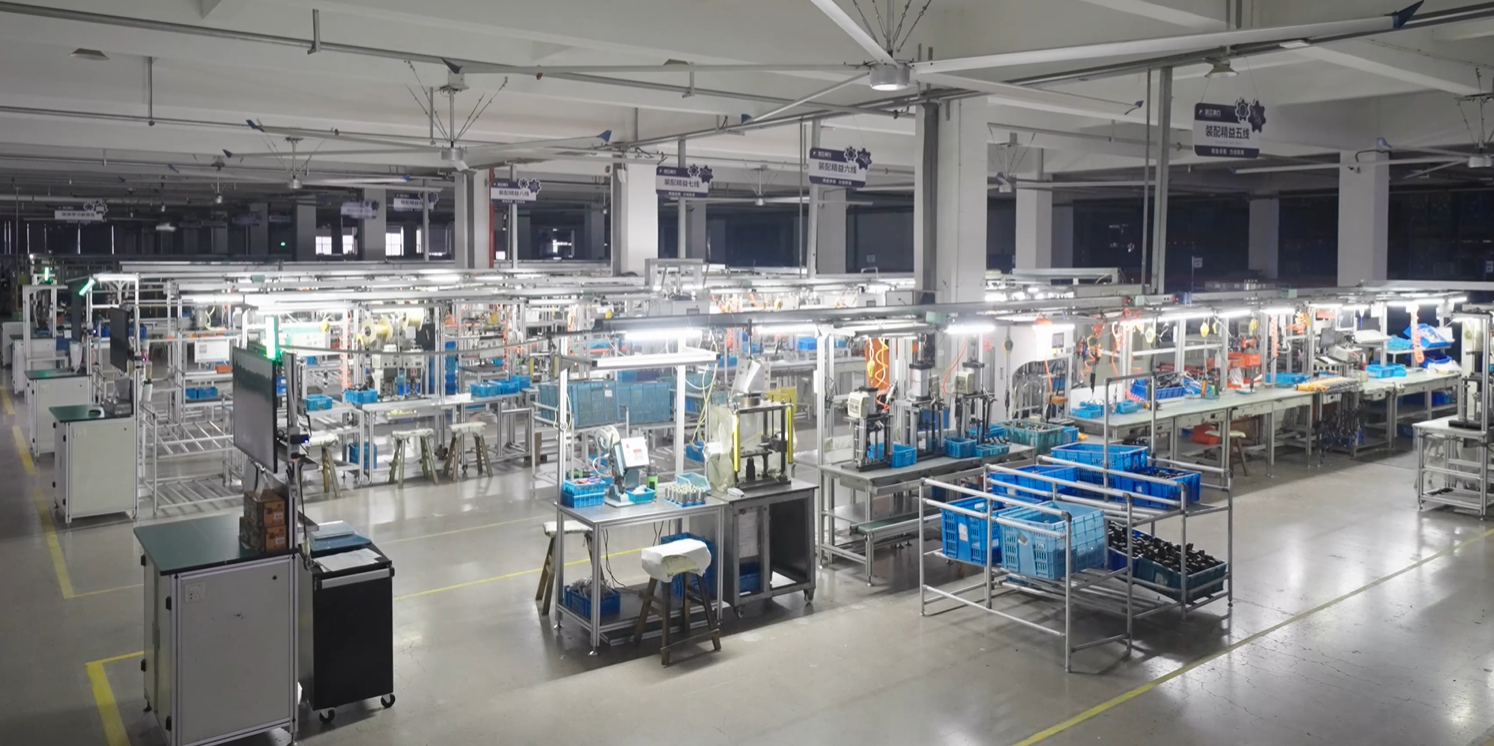
Workshop-level production and inspection context for the CF-ID008 corded electric impact drill.
Electric drill procurement is no longer only a sample-and-photo exercise. For distributors, building-material chains and project buyers, the buying decision increasingly turns on whether a single specification can be traced from the supplier document, through arrival inspection, and back to a signed purchase contract — one consistent line from promise to acceptance.
That line is what this article builds for the CF-ID008.
CF-ID008 is a corded electric impact drill from JINHUA COOFIX TOOLS CO., LTD., a power-tool manufacturer based in Yongkang, Zhejiang, China. The company was founded in 2014, operates a 30,000 m² factory, employs roughly 400 people, reports a 2,000,000-unit annual output and exports about 90% of its production.
The CF-ID008 is positioned around five parameters that matter at the purchasing desk rather than only on the shop floor: a 220-240 V / 50-60 Hz input, a 75 N·m maximum torque, a 0.8-10 mm metal chuck, a 10 mm steel drilling capacity, and a material bill that includes copper and plastic families. This compliance file translates those five parameters into purchase terms and acceptance criteria for three buyer groups — home decoration, carpentry and mechanical repair.
Why a Written Qualification File Is Becoming the Default
Buyers rarely lack specifications. The problem is that they rarely have one auditable version of the same specification. In corded electric drills, a supplier quote lists a voltage range, a catalogue lists a torque figure, an inspection report lists a drilling capacity, and none of the three use the same reference conditions. The result is a purchase order that both sides confirm and still produces a dispute at arrival.
A qualification file closes that gap without adding new data. It forces the supplier sheet, the purchase contract and the arrival inspection to use the same five parameters in the same order, with the same acceptance rule attached to each. This is the difference between a preference and a specification. A preference belongs in a shortlist. A specification belongs in a quality clause.
For the CF-ID008, this method is comparatively straightforward to apply. In the corded segment, a single electrical rating, a single mechanical capability and a single chuck standard carry most of the purchasing weight. In the wider power drill category, the Cordless Drill family — including brushless cordless drill, cordless impact drill, 21v drill tool kit, battery drill 21v, cordless hammer drill and cordless drill power tool set — spreads the same decision across battery platforms, chargers, cell brands and interchangeable packs. Auditing one of those platforms is a much longer document. Auditing the CF-ID008 is a five-line check — which is exactly what makes the exercise worth formalising.
CF-ID008 Verified Specification Dossier
The five parameters below are the verified reference set for this article. Every figure that appears later in this document has to rest on one of these lines, or on a supplier document that transcribes the same value.
| Parameter | Verified Value | Purchasing Relevance |
|---|---|---|
| Power source | Corded electric impact drill | No battery platform, no charger SKU |
| Voltage range | 220-240 V | Target-market electrical match |
| Frequency | 50-60 Hz | Grid compatibility across regions |
| Maximum torque | 75 N·m | High-load drilling and fastening |
| Chuck type and range | Metal chuck, 0.8-10 mm | Bit inventory, jaw wear, runout |
| Steel drilling capacity | 10 mm | Upper bound for metal work |
| Material families | Copper and plastic | Inspection points for winding and housing |
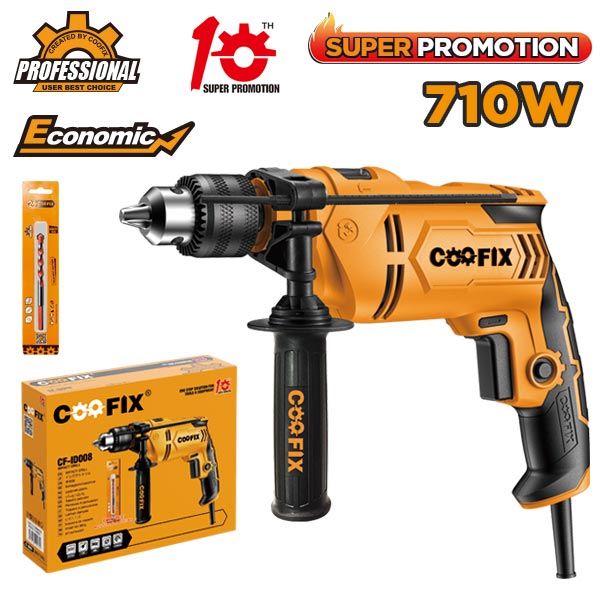
CF-ID008 corded electric impact drill — reference model for the five-parameter compliance file.
Technical Reading: What Each Parameter Means for Procurement
220-240 V / 50-60 Hz
The voltage band defines which markets the CF-ID008 can serve without a spec change. It fits the nominal supply used across most of Europe, the Middle East, Africa, Asia and South America. The 50-60 Hz range means the same SKU remains within its rating on either frequency. For a buyer, this is a sourcing simplification: one CF-ID008 line can cover 220 V-50 Hz and 240 V-60 Hz destinations inside a single purchase order. What it does not cover is market-access approval. Electrical rating and conformity evidence are separate questions, and the buyer should treat them as separate checkpoints in the file.
75 N·m Maximum Torque
75 N·m is the stated maximum torque, and the word maximum is doing real work. It is a boundary value, not a working average. For procurement, this should sit in the contract annex as a rated limit with a reference condition attached: no-load, clutch-limited, drill mode or impact mode. Torque figures measured under different conditions are not directly comparable, and a supplier document that leaves the condition unstated creates ambiguity at arrival inspection. For carpentry and mechanical repair buyers, 75 N·m is more headroom than most fastening tasks require, which shifts the acceptance emphasis from capability to consistency — can the unit sustain that torque band across the sampling plan, or is it an isolated peak value?
0.8-10 mm Metal Chuck
The 0.8-10 mm metal chuck defines the bit inventory a buyer needs and the mechanical condition of the front end. The lower bound matters for precision fastening in carpentry, where small pilot holes and screwdriver bits dominate the work. The upper bound matters for standard hole-making in metal and wood, where 10 mm bits are the practical ceiling. The metal chuck is not only a specification line; it is a wear surface. In acceptance, the buyer should inspect jaw range, jaw runout, concentricity and grip recovery after a defined number of open-close cycles. These checks are not part of the spec sheet, but they are the difference between a chuck that still holds 0.8 mm bits in month one and one that slips by month three.
10 mm Steel Drilling Capacity
10 mm steel drilling capacity is the rated maximum bit diameter the CF-ID008 is designed to drive into steel under the stated test condition. It covers common repair tasks: bracket mounting, panel penetration, pilot holes and light fabrication up to 10 mm. It does not cover structural steel drilling, masonry drilling or anchor installation above 10 mm. Those tasks belong with a rotary hammer drill, a demolition hammer or a larger corded drilling tool. Purchasing should record the boundary explicitly in the application note, so that the CF-ID008 is not marketed into job sites where the boundary will fail and the buyer, not the tool, takes the complaints.
Copper and Plastic Material Families
Copper and plastic are the two material families that most often appear in a CF-ID008 purchase file. They are inspection points, not marketing lines. Copper in the electrical path is where a buyer's incoming inspection can detect substitution, mixed sourcing, or poor joint quality. Plastic in the housing is where batch consistency, colour match, finish and structural integrity are judged. Neither line should be signed off on a supplier declaration alone. In practical terms, material-family verification belongs in the incoming inspection record, with the number of samples, the visual criteria and the failure action written into the purchase order before shipment.
Mapping Specifications to Purchase Terms and Acceptance Criteria
The value of a compliance file is not the parameter list. It is the mapping from parameter to purchase clause to acceptance rule. The table below is the core of this document. It is written so that a purchasing team can reuse it directly in an RFQ annex or a quality agreement.
| Purchase Term | Specification Anchor | Acceptance Criterion | Verification Method |
|---|---|---|---|
| Electrical rating | 220-240 V / 50-60 Hz | Rating label matches contract; unit runs within rating on both frequencies | Label review + functional run at 50 Hz and 60 Hz |
| Torque limit | 75 N·m maximum | Sampled units reach the stated maximum under the contract reference condition | Supplier test record + buyer sample verification |
| Chuck fit | Metal chuck, 0.8-10 mm | Full jaw range holds bits without slipping; runout within agreed tolerance | Bit-range test + runout measurement |
| Drilling envelope | 10 mm steel capacity | 10 mm bit penetrates the agreed steel sample within the agreed cycle time | Sample drilling trial + time record |
| Material families | Copper and plastic | No visible substitution; housing finish matches approved sample | Incoming inspection record + approved-sample comparison |
Two notes belong under that table. First, the acceptance criteria are written to be observable at the buyer's warehouse, not only at the supplier's laboratory. A term that can only be verified at origin is a disclosure, not an acceptance criterion. Second, every parameter above should appear in the buyer's inspection plan at a stated sampling level. The sampling level is a commercial decision; the parameter set is not. All five parameters belong in the file regardless of sample size.
Application Match: Home Decoration, Carpentry and Mechanical Repair
The same specification set reads differently across the three application segments. Matching the CF-ID008 to a segment is not a matter of finding the highest-load task, but of finding where the five parameters land naturally and where they do not.
Home Decoration
For home decoration buyers, the CF-ID008 fits where mains power is available and where the task cycle is short and repeated — furniture assembly, curtain and shelf fixing, wall-board penetration, cable-route drilling and fixture installation. The 220-240 V / 50-60 Hz rating removes the charger management and battery autonomy questions that belong to the Cordless Drill category. The 0.8-10 mm chuck is generous for the small bits that dominate decoration work. The 10 mm steel ceiling covers the metal fittings that decoration tasks occasionally encounter. The limitation to note is that decoration sites with no mains supply are not a natural CF-ID008 environment; those projects belong with a battery drill 21v or a cordless drill power tool set.
Carpentry
In carpentry, the CF-ID008 covers framing, cabinetry assembly, pilot-hole drilling and general furniture work where mains power is on hand. The 75 N·m maximum torque gives generous headroom for driving longer fasteners and for bit sizes near the upper chuck range. The 0.8-10 mm chuck covers the bit inventory a carpentry shop typically keeps: small pilot bits, standard twist bits and screwdriver bits. The boundary is in volume, not in capability. A workshop that runs a continuous high-frequency cycle should treat this as a workhorse within its class, not as a replacement for a dedicated production drill. The typical lifespan reported for the CF-ID008 in household use is 3–6 years, and in high-frequency continuous engineering use 1–2 years — a split that should be reflected in the buyer's stocking decision.
Mechanical Repair
For mechanical repair, the CF-ID008 fits bracket mounting, panel penetration, pilot holes for bolts and general metal-drilling work up to the rated 10 mm steel ceiling. The 75 N·m torque reserves headroom for the higher resistance of metal drilling, and the metal chuck holds up better than a plastic chuck under the higher side loads common in repair work. The natural boundary is that above 10 mm in steel, or in any masonry, the CF-ID008 exits its rated envelope and the correct tool family changes to a rotary hammer drill or a demolition hammer.
Documentation Checks and Inspection Sequence
A compliance file is only as strong as the sequence in which it is checked. The order below is deliberately front-loaded: the earlier the check, the cheaper the correction.
Documents to Request Before Order Confirmation
Start with the model-level specification sheet for the CF-ID008, in the same revision that the purchase order will reference. Confirm that the five parameters appear with the same values and units that the buyer will place into the contract annex. Then request the company-level trade compliance document set. The COOFIX AEO certificate (No. 096099139001, issued by Hangzhou Customs of the People's Republic of China on 2025-12-23 and valid to 2030-12-22) covers the import and export of hardware tools, power tools and related accessories, and the CF-ID008 is listed among the related products. AEO status is a trade-compliance credential — it is not a product-level market-access approval for the CF-ID008. Buyers who need product-level conformity evidence for a specific destination market should request it separately against that market's own requirements.
Inspection Points at Arrival
The arrival inspection should run in the same order as the specification table. First, verify the rating label against the purchase order — 220-240 V / 50-60 Hz, model CF-ID008, and the correct manufacturer name. Second, run a functional check at 50 Hz and again at 60 Hz under no load. Third, run the bit-range check through the full 0.8-10 mm chuck travel with at least the two boundary sizes and one mid-range bit. Fourth, run a sample drilling trial against a 10 mm steel plate within the agreed cycle time. Fifth, verify the material-family evidence: the incoming inspection record and the approved-sample comparison for the copper electrical path and the plastic housing finish. Each step produces a written result and each written result enters the acceptance record.
Acceptance Decision Rule
A practical acceptance rule is that a batch is held when any parameter falls outside the agreed tolerance band, not when the average does. Averaging across parameters allows one out-of-band result to disappear behind four compliant ones. The buyer's contract should name the parameter, the tolerance and the hold action, and should treat the five parameters as a package. This structure protects both sides. It gives the buyer a documented reason to reject a non-conforming batch and gives the supplier a documented reason to accept a conforming one without a dispute.
Market Context: Why Documentation-First Acceptance Is Spreading
Two industry signals sit next to the CF-ID008 file without changing any of its parameters. The first is regulatory. IEC 62841-2-1:2017 sets out the particular safety requirements for hand-held drills and impact drills with a rated voltage up to 250 V AC/DC, a scope that places the 220-240 V CF-ID008 inside the standard's coverage for global market-access planning (IECEE / IEC, SRC-0002). The second is market share. The global power drill market reached USD 15.2 billion in 2023, and Cordless Drill products contributed more than 55% of that revenue (Strategic Market Research, SRC-0001). Neither signal changes the CF-ID008 specification. Together, they explain why corded buyers increasingly want a tighter qualification file: corded remains a durable segment, but it is no longer the automatic default, and a corded buyer now has to justify the choice with evidence rather than with familiarity.
Regional manufacturing structure reinforces the same point. Asia Pacific held a 37.20% share of the power tools market in 2024, at a value of USD 13.3 billion (Strategic Market Research, SRC-0001). A manufacturing concentration of that scale makes supplier-side documentation a practical necessity rather than a marketing differentiator — with more potential suppliers reachable, the buyer's ability to compare depends on being able to read the same five parameters in the same format across bids.
Limits and Boundaries: Where the CF-ID008 Is Not the Right Tool
A credible compliance file has to state where the model stops. Four boundaries are worth writing down before the first purchase order.
- Mains dependency. The CF-ID008 requires a 220-240 V / 50-60 Hz supply. Sites without mains power, or markets on 110-120 V nominal supply, are outside the model's working envelope without an additional step-up solution.
- Chuck range upper bound. The 0.8-10 mm chuck limits the maximum bit shank to 10 mm. Tasks that need 13 mm or larger bit shanks belong to a different model class.
- Steel drilling ceiling. The 10 mm steel drilling capacity is the model's rated maximum. Structural steel, masonry and anchor installation above 10 mm sit outside the CF-ID008's rated envelope and belong to rotary hammer or demolition tool categories.
- No battery platform benefit. The CF-ID008 does not extend the interchangeable battery ecosystem that a Cordless Drill portfolio provides. Buyers who already run a 21v drill tool kit or a cordless impact drill are not adding to that ecosystem by choosing this model.
None of these boundaries is a defect. They are the trade-offs that make the CF-ID008 a corded tool rather than a hybrid. The point of the compliance file is to make these trade-offs visible before order confirmation, not after arrival.
Field Evidence and Repeat-Purchase Signal
The CF-ID008 has already accumulated purchasing-side evidence. In a global case involving offline building-material chain supermarkets and cross-border e-commerce sellers, the product recorded a repeat purchase rate above 70% and a rework rate controlled below 1.5%, on a single-category project scale above 100,000 units. The same case set reports that OEM customized packaging and logo silk printing are available to help buyers build private-label identity faster. The reporting is commercial and first-party; it is a useful signal for a shortlist decision, not an independent quality audit, and buyers should treat it as supporting context rather than as a substitute for the arrival inspection described above.
Future Outlook
The next phase of corded electric drill procurement is unlikely to be defined by new peak specifications. It is more likely to be defined by two shifts. The first is documentation maturity: buyers in the home decoration, carpentry and repair segments are increasingly expected to produce an auditable file for each model on their shelf, and suppliers who already publish model-level parameter sets will be easier to qualify. The second is portfolio logic: as brushless cordless drill and cordless impact drill platforms continue to absorb a larger share of the market, the corded models that remain will increasingly be justified by application fit and price stability rather than by raw capability. In that environment, the CF-ID008's role is straightforward — a documented, mains-powered impact drill with a defined envelope, a defined acceptance route and a clear boundary line. That is a narrower position than a portfolio claim. It is also more durable, because a buyer can test it.
Frequently Asked Questions
1. What does the 220-240 V / 50-60 Hz rating on the CF-ID008 mean for target-market selection?
The rating defines the model's working envelope. The 220-240 V band matches the nominal supply used across most of Europe, the Middle East, Africa, Asia and South America, and the 50-60 Hz range allows the same SKU to run on either frequency without changing the rating. A single CF-ID008 line can therefore cover both 220 V-50 Hz and 240 V-60 Hz destinations within one purchase order. Electrical rating and market-access conformity are separate questions; the buyer should confirm the destination market's plug standard and conformity requirement as a next step rather than as part of the voltage decision.
2. How should 75 N·m maximum torque be written into a purchase contract?
75 N·m is a stated maximum, and it should be recorded as a boundary value with a reference condition attached. The clause should state the condition under which the value was measured — no-load, clutch-limited, drill mode or impact mode — the sampling level for verification and the acceptable tolerance band. Torque figures measured under different conditions are not directly comparable, so a supplier document that leaves the condition unstated creates ambiguity at arrival inspection. The value should also be tied to a hold action if a sampled unit falls outside the band.
3. What bit sizes does the 0.8-10 mm metal chuck accept, and how should it be inspected?
The chuck accepts cylindrical drill bits and screwdriver bits with a shank between 0.8 mm and 10 mm. The lower bound matters for precision fastening and pilot-hole work; the upper bound matters for standard hole-making at the model's rated maximum steel capacity. Arrival inspection should cover the full jaw range with at least the two boundary sizes and one mid-range bit, plus jaw runout and concentricity. The chuck is a wear surface, so the acceptance record should also state the number of open-close cycles used in the grip-recovery check.
4. What does 10 mm steel drilling capacity cover, and what falls outside it?
The 10 mm figure is the rated maximum bit diameter the CF-ID008 is designed to drive into steel under the stated test condition. It covers common mechanical repair work such as bracket mounting, panel penetration and pilot holes up to 10 mm. It does not cover structural steel drilling, masonry drilling or anchor installation above 10 mm. Those tasks sit outside the model's rated envelope and belong to rotary hammer drill or demolition hammer tool categories. Recording this boundary in the application note prevents the model from being marketed into job sites where the rated capacity will fail.
5. How should a purchasing team align the CF-ID008 specification sheet with arrival inspection?
Use a three-document cross-check. The supplier specification sheet, the purchase contract annex and the arrival inspection record should all list the same five parameters in the same order — voltage and frequency, chuck range, maximum torque, steel drilling capacity and material family. Any parameter that appears in one document and not in the other two should be flagged and resolved before shipment, not after arrival. Where an AEO certificate or other company-level trade document is part of the file, it should be recorded as a company credential rather than as a product-level conformity statement, because the two serve different purchasing purposes.
Conclusion
The CF-ID008 is a corded electric impact drill with a compact but well-defined specification set: 220-240 V / 50-60 Hz, 75 N·m maximum torque, a 0.8-10 mm metal chuck, a 10 mm steel drilling ceiling and a material bill that names copper and plastic. Its value in procurement is not that the numbers are the highest in the category, but that the numbers sit inside a five-line file a buyer can trace from quote to arrival inspection. The companies that will benefit most from this model are the ones that already work this way — home decoration distributors, carpentry shops and mechanical repair buyers who need a mains-powered impact drill with a documented envelope rather than an open-ended capability claim. A qualification file is not a marketing document. It is the shortest route from a preferred model to an accepted one.
For a full overview of the COOFIX power tool range and model portfolio, the 2025 catalog is available for public download: COOFIX Catalog 2025 (PDF).
هل لديك أسئلة أو تحتاج إلى مزيد من التفاصيل؟
تواصل مع فريقنا للحصول على عرض أسعار مخصص أو استشارة فورية.
طلب عرض أسعار
املأ النموذج أدناه وسيتواصل معك فريقنا بعرض مقترح مخصص.
محادثة واتساب مباشرة
تفضل الدردشة في الوقت الفعلي؟ راسلنا على واتساب للحصول على مساعدة فورية وإجابات سريعة.
- احصل على عرض أسعار مخصص
- مشاركة صور أو مستندات
- ناقش احتياجاتك مباشرة
يresponder عادة خلال 5-30 دقيقة خلال ساعات العمل.