
CINON Fiberglass Fabric: ISO-Certified for Marine and Wind Applications
CINON Composites is a specialized supplier of fiberglass reinforcements and lightweight core materials, headquartered in Guangzhou, China. The company serves global markets including Europe, North America, and Asia-Pacific, with 100% of its output exported. CINON focuses on helping composite manufacturers reduce weight, improve structural stiffness, and optimize vacuum infusion processes across marine, wind energy, transportation, and aerospace applications.
The Growing Need for Certified Fiberglass Fabric in High-Performance Composites
As industries such as marine, wind energy, and UAV manufacturing push for lighter, stronger, and more durable components, the demand for fiberglass fabric with verified quality assurance has intensified. The global fiberglass fabric market was valued at USD 14.01 billion in 2024 and is projected to reach USD 25.65 billion by 2033 (Grand View Research). Within this market, woven fiberglass fabrics captured 48.62% of revenue in 2025, driven by their critical role in yacht hulls, automotive panels, and blade shells. However, not all fiberglass fabrics are created equal. Buyers in the research and evaluation stage increasingly require documented certifications, consistent technical parameters, and reliable supply chains to reduce project risk.
How CINON Composites Meets the Constraint: Certified Fiberglass Fabric with Defined Specifications
CINON Composites addresses this need with a product portfolio that includes the Light Weight Fiberglass Cloth (model EW) and Multiaxial Fiberglass Fabrics (non-crimp fabrics). Both lines are manufactured under a quality management system certified to ISO 9001:2015 (Certificate No. 51326Q04922R053, issued by Shenzhen Moqc Certification Co., Ltd.). The company also holds ISO 14001:2015 environmental management certification (No. ISO14001-2023-001, issued by SGS) and ISO 45001:2018 occupational health and safety certification (No. 51326S01896R053). These three certifications cover the global market and apply to all fiberglass fabric products, including both woven and multiaxial types.
Technical Specifications That Enable Engineering Precision
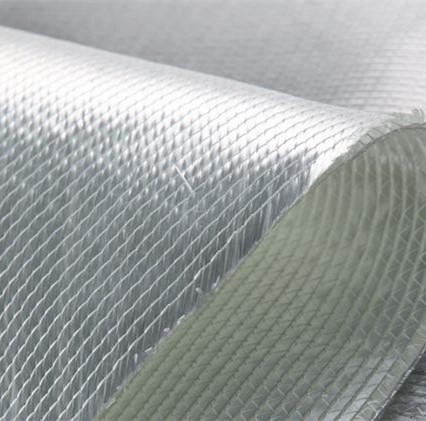
The Light Weight Fiberglass Cloth (EW model) is an E-glass fabric with a plain woven weave. It is available in weights ranging from 25 to 400 g/m² and widths of 1000 mm or 1010 mm. This product is designed for applications requiring low weight, smooth surface finish, and excellent resin wet-out. It is compatible with hand lay-up, vacuum infusion, resin infusion, and RTM processes.
For higher structural loads, CINON's Multiaxial Fiberglass Fabrics (non-crimp) offer unidirectional (0° or 90°), biaxial (0°/90° or ±45°), triaxial (±45°/0°/±45° or ±45°/90°/±45°), and quadraxial (0°/90°/±45°) fiber orientations. Weights range from 400 to 1500 g/m², with combustible matter content between 2.0% and 8.0% and moisture content less than 0.2%. The reduced fiber crimp in these fabrics improves load distribution and mechanical performance compared to woven alternatives.
Application Scenarios: From Yacht Hulls to UAV Wings
CINON's fiberglass fabric is used across multiple industries:
- Marine & Yacht Building (applicable project types: boat hulls, decks, bulkheads, superstructures): The fabric is processed via vacuum infusion, RTM, or hand lay-up, providing weight reduction, stiffness improvement, reduced resin consumption, and corrosion resistance in saltwater environments. Case studies from Australian yacht builders report smooth surface finish, easy wet-out, and better finish.
- Wind Energy (blade shells, nacelle structures): The fabric is infused into large molds, offering fatigue resistance, dimensional stability, and long service life. Wind turbine blades account for approximately 42.5% of total fiberglass usage in the wind sector (Dataintelo).
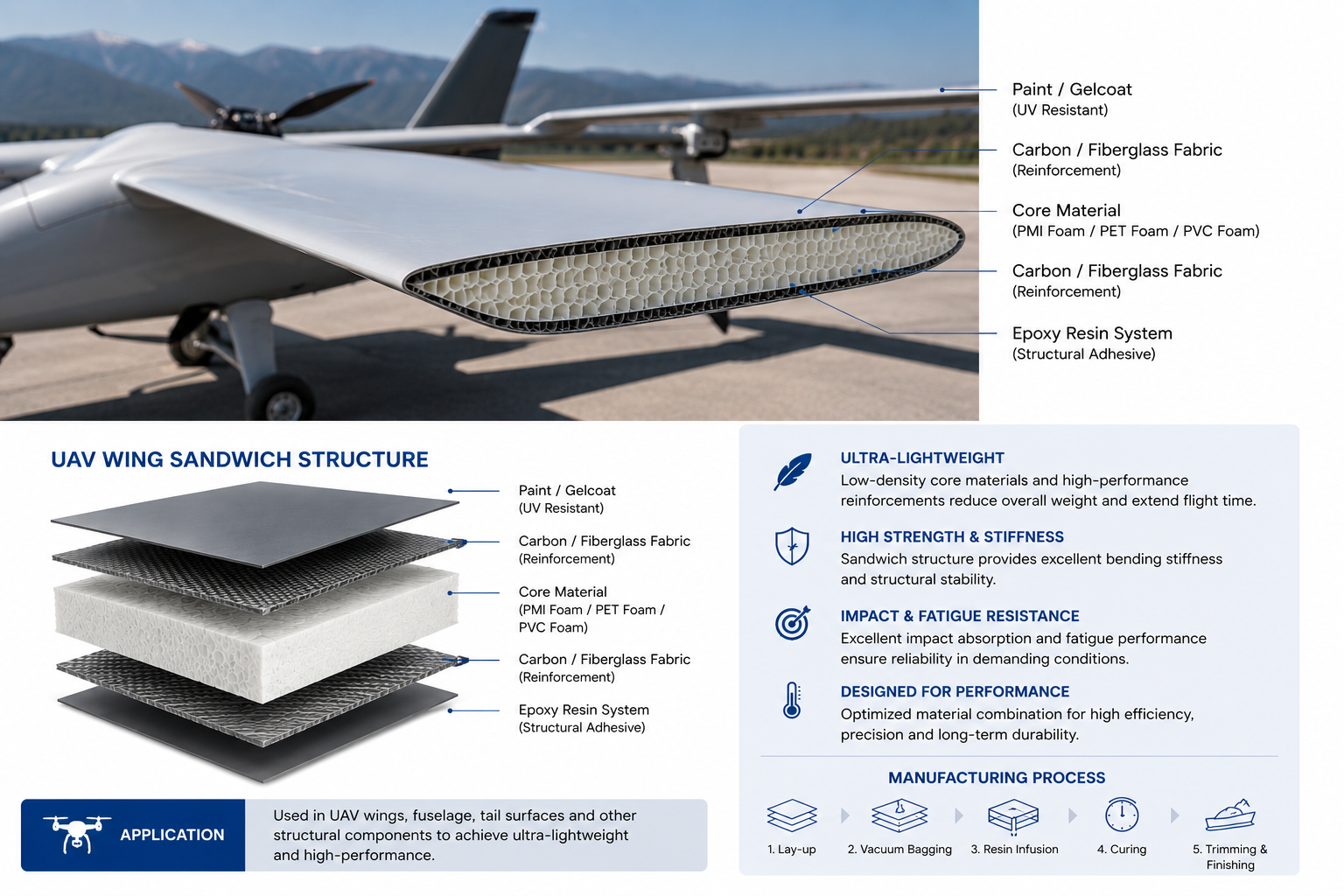
- Aerospace & UAV (UAV wings, drone structures, aircraft panels): Lightweight fiberglass cloth combined with PMI foam core enables ultra-lightweight structures with high stiffness. A German UAV manufacturer ordered 10 pallets of CINON materials for UAV production, achieving ultra-lightweight structures and high temperature resistance.
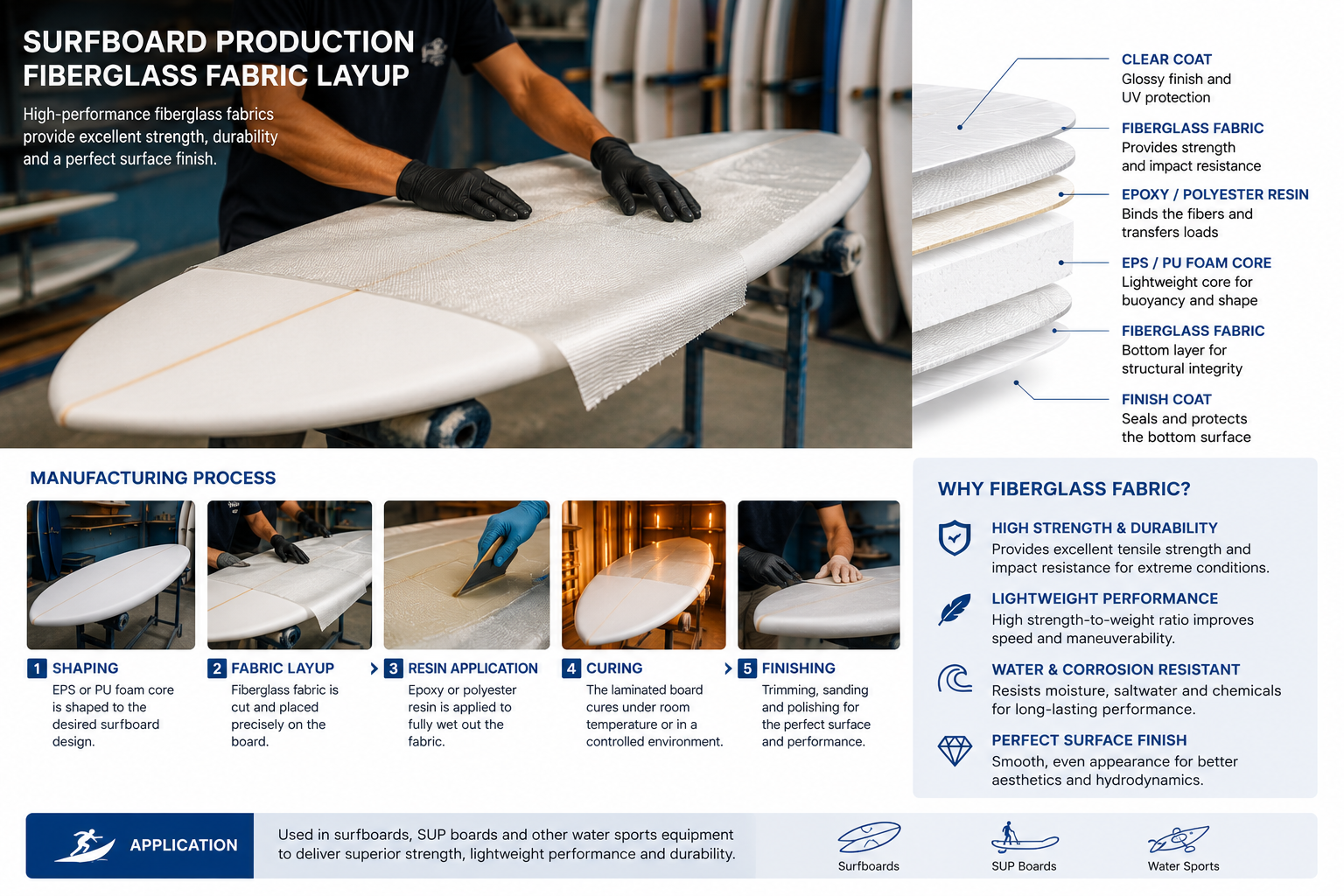
- Sports & Leisure (surfboards, kayaks, paddle boards): The plain woven lightweight cloth is used in vacuum infusion sandwich construction, providing high buoyancy and impact resistance. Thai sports equipment manufacturers place container orders for surfboard production.
- Transportation (truck bodies, bus panels, rail interiors): Multiaxial fabrics and core materials reduce weight and improve corrosion resistance. A Mexican transportation panel manufacturer reported lightweighting and improved corrosion resistance.
Market Trend Analysis: Certification as a Differentiator
The fiberglass fabric market is characterized by the presence of large-scale producers such as Owens Corning, China Jushi, Saint-Gobain, and Taishan Fiberglass (MarketsandMarkets). While these players dominate in volume, specialized suppliers like CINON differentiate through certified quality, flexible customization, and technical support. The Asia-Pacific region held a 41.61% revenue share in 2024 (Grand View Research), reflecting both production concentration and growing end-user demand. The wind energy segment is expected to grow at the highest CAGR of 8.5% from 2025 to 2033, further increasing the need for documented material consistency.
CINON's factory, spanning 40,000 m², has an annual output of 1,200,000 m² and employs 25 R&D engineers. The company operates in ODM mode, offering customization of fiberglass fabric and core materials with a monthly capacity of 100,000 m² and lead times of 15–30 days. Quality control includes 100% product testing. While production volume is lower than that of the global top players, CINON provides advantages in application-specific engineering support, OEM logo options, and responsive logistics for European and American customers.
Comparison with Traditional Solutions
Traditional woven roving fabrics have been the industry standard for decades, offering low cost and ease of handling. However, they suffer from fiber crimp, which reduces tensile strength and limits laminate stiffness. CINON's non-crimp multiaxial fabrics address this by aligning fibers in the load direction, improving mechanical performance and resin efficiency. Additionally, certified quality management ensures batch-to-batch consistency that is often challenging to verify with uncertified suppliers. One honest limitation: because CINON is a relatively young company (founded in 2022), its reference portfolio is smaller than that of century-old fiberglass manufacturers, which may matter for large-scale infrastructure projects requiring extensive track records.
Future Outlook: Lightweighting and Sustainability Drive Demand
With the marine fiberglass resin market projected to reach USD 4.23 billion by 2033 (Market Research Future), the corresponding demand for high-quality fiberglass fabric reinforcements for ship hulls and decks will remain strong. CINON has positioned itself to serve this growth by expanding its portfolio to include recyclable PET foam core, PMI foam, and aramid honeycomb – all compatible with its fiberglass fabrics for sandwich panel construction. The company's ISO 14001 certification also addresses the growing environmental compliance requirements from European and North American customers. As composite manufacturers continue to replace metal components with lightweight composites in automotive, rail, and aerospace, certified fiberglass fabric suppliers like CINON are likely to become preferred partners in the supply chain.
Frequently Asked Questions
What certifications does CINON fiberglass fabric hold?
This fiberglass fabric product is certified to ISO 9001:2015 (certificate number 51326Q04922R053, issued by Shenzhen Moqc Certification Co., Ltd.), ISO 14001:2015 (certificate number ISO14001-2023-001, issued by SGS), and ISO 45001:2018 (certificate number 51326S01896R053, issued by Shenzhen Moqc Certification Co., Ltd.). All certifications are applicable to the global market.
What are the available weights and widths of the Light Weight Fiberglass Cloth?
The Light Weight Fiberglass Cloth (model EW) is an E-glass fabric with plain woven weave. Weight ranges from 25 to 400 g/m², and width is either 1000 mm or 1010 mm.
Which industries is CINON fiberglass fabric suitable for?
It is applicable to Marine & Yacht Building, Wind Energy, Transportation, Composite Tooling, Industrial Composites, Sports Equipment, Surfboard Manufacturing, and UAV & Drone Manufacturing.
Can CINON provide custom fiberglass fabric solutions?
Yes. CINON operates in ODM mode and offers customization of fiberglass fabric and core materials. The monthly capacity is 100,000 m², with a minimum order quantity of 1,000 m² and lead times of 15–30 days.
For detailed technical data sheets and product specifications, download the CINON Composites catalog: https://cdn.socialarks.com/sbsp/24887/common/2026/0529/Cinon-Catalog(1).pdf