
CM-C06 PRO vs CM-CS01: What EU Documentation Actually Shows
Two capsule coffee platforms from the same manufacturer can look almost interchangeable on a quotation sheet. What separates them in front of an EU buyer is not the feature grid — it is what the scope field of each compliance document says. For retail brands moving from shortlisting to purchase order, that difference decides how much additional verification work sits between sample approval and shelf-ready stock.
Why an EU retail buyer should start with certificate scope, not the certificate list
A supplier’s compliance pack usually arrives as a small folder of PDFs with a summary page in front. The summary lists the certificates and the models they are “linked to”. That summary is a convenience, not evidence. The evidence is the body of each document: manufacturer legal name, model or type designation, rated voltage, rated frequency, rated power, referenced standards, issuing laboratory and issue date. If one of those fields does not match the item on the purchase order, the document may not help at customs, at a market-surveillance check, or at a marketplace compliance review.
This is a recognised procurement risk in small household appliances, and it is described plainly in buyer-side risk guidance: certificates are often accepted as a list without the underlying documents being opened, buyers assume a single report covers every voltage or plug variant, and in some cases the supplier has changed components, materials or electrical parts after the original test without checking whether the existing documentation still applies. The practical control is the same in every case — match the document to the exact final product, not to a similar model or a general category.
For a capsule platform destined for EU retail, the relevant documents fall into three groups: electrical safety conformity (GS, CE test verification), restricted-substance and material compliance (REACH, RoHS), and — where applicable — market-specific declarations. The comparison below works through each group, using only what the documents themselves state.
Two platforms, one page
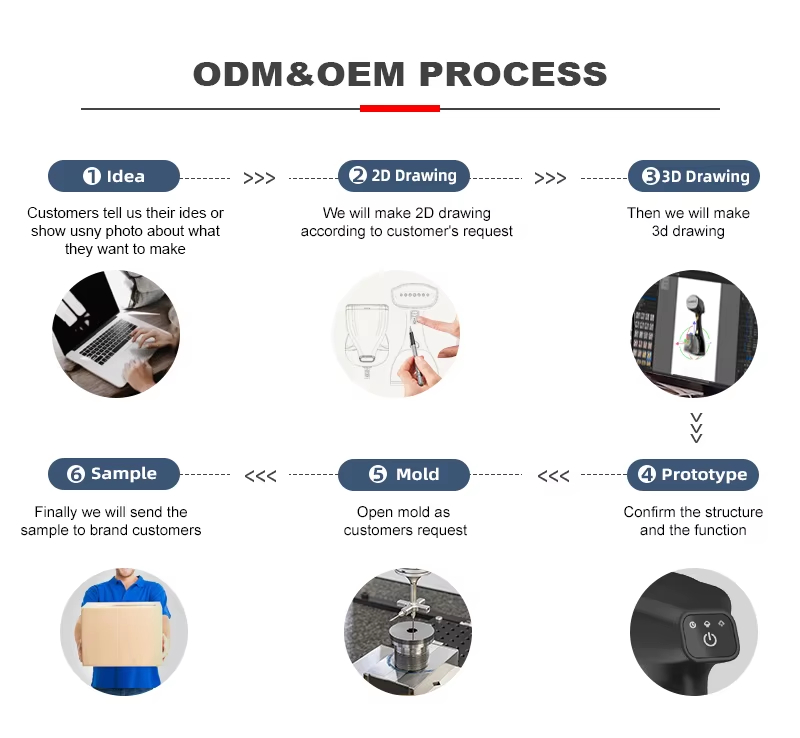
HUAGUANG Steam Appliances, formally Zhejiang Huaguang Electric Appliance Group Co., Ltd., is a home appliance manufacturer founded in 1985 and based in Cixi City, Zhejiang. The company operates a 38,600 m² factory with approximately 450 employees, a 100+ person R&D team and a monthly production capacity of 400,000 units, with roughly 80% of output exported across Europe, the Middle East, Africa and other markets. Its coffee range includes capsule, espresso and semi-automatic platforms offered under OEM/ODM terms.
Within that range, the two capsule models in this review sit at different points.
CM-C06 PRO — 3-in-1 multifunctional capsule machine. Compatible with Nespresso, Dolce Gusto and ground coffee. 1400 W, 20 bar pump pressure, coffee temperature 90 °C, selectable water temperature of 45 °C / 75 °C / 95 °C, cup volumes of 25 ml / 40 ml / 110 ml, 700 ml water tank, LCD touch-screen control, self-cleaning function, preheat time 40 ± 5 s, product dimensions 301 × 115 × 257 mm.
CM-CS01 — SENSEO pod coffee machine. 1450 W, 750 ml water tank, preheat duration 60 s, cup capacities of 65 / 130 / 260 ml, cup-holding space 110 mm, power cord length 0.8 m, cardboard restraint packaging, loading quantity 1,250 / 2,700 / 3,400 pcs for 20'GP / 40'GP / 40HQ.
Those are different product logics. One is built around beverage versatility, the other around straightforward pod brewing and container efficiency. But in an EU retail programme, the specification sheet is not the deciding document — the compliance pack is.
Reading the CM-C06 PRO documentation pack
Three documents are available for buyer inspection on this platform.
Bureau Veritas REACH / RoHS report (3225)013-0094, dated 2025-02-13
The report is issued by Bureau Veritas under the stated product scope “COFFEE MAKER”. It references Regulation (EC) No 1907/2006 (REACH) for heavy metals and phthalate content, and Directive 2011/65/EU (RoHS) for the restriction of certain hazardous substances in electrical and electronic equipment. Because the scope is written at category level rather than at model level, coverage is determined by what was submitted as the test sample — the buyer should read the sample description inside the report, not only the cover page.
Intertek GS certificate 23SHH0193-02, issued 2024-08-28, valid to 2029-08-27
The certificate is issued under the German Product Safety Law (ProdSG, GS) and covers “Espresso Coffee Maker for household use”. The type scope lists CM-C01, CM-C01A, CM-C03A, CM-C03B, CM-C05A, CM-C05B, CM-C06A, CM-C06B and CM-AC01. It references EN 60335-2-15:2016+A11+A1+A2+A12, EN 60335-1:2012+A11+A1+A13+A14 and the APS GS 2019:01 PAK programme requirements.
Note the scope field carefully: the certificate is valid for five years, but validity and coverage are two different things. The model list is the coverage. A five-year validity date does not widen the list.
Intertek Test Verification of Conformity 220700131SHA-V1, issued 2022-10-21
This document is issued to Zhejiang HuaGuang Electric Appliance Group Co., Ltd. for an electric coffee maker for household use, model CM4-G2, rated 220–240 V~, 50/60 Hz, 1000 W, Class I, brand name NIL. It references the EN 60335-2-15 and EN 60335-1 series together with the EMF standard EN 62233:2008 and the associated CE marking requirements.
The scope here is narrower again: a single model, a single voltage window and a single power rating. That is normal for a Test Verification of Conformity. What it means for a buyer is that the document is not a blanket endorsement of the manufacturer’s whole coffee range — it is evidence about the tested configuration.
Reading the CM-CS01 documentation pack
The same three document families appear, but the coverage is not identical.
- Bureau Veritas REACH / RoHS report (3225)013-0094, dated 2025-02-13 — the same report number, date, laboratory and referenced standards as above. Material compliance evidence is shared across the two platforms rather than duplicated per model.
- Intertek GS certificate 23SHH0193-02 — the same certificate number and the same validity window, but the type scope does not include CM-CS01. The model is not named in the certificate’s model list.
- Intertek Test Verification of Conformity 220700131SHA-V1 — the same document, with the same scope limitation. The certificate names model CM4-G2; CM-CS01 does not appear in scope.
This is the point where a buyer’s reading has to be precise. The absence of CM-CS01 from a certificate’s scope is not a statement that the product is non-compliant. It is a statement that this particular document does not, on its own face, evidence that model. The distinction matters for how the buyer closes the gap: request a scope extension, request a model-specific test report, or accept the platform under a different evidence route that the destination market recognises.
Side-by-side: what the scope fields say
| Evidence item | CM-C06 PRO | CM-CS01 |
|---|---|---|
| Bureau Veritas REACH / RoHS report (3225)013-0094, 2025-02-13 | Shared report; scope stated as “COFFEE MAKER” | Shared report; same scope, same laboratory, same standards |
| Intertek GS certificate 23SHH0193-02, issued 2024-08-28, valid to 2029-08-27 | Type scope covers the CM-C06 series designations CM-C06A and CM-C06B; the exact commercial designation CM-C06 PRO is not printed on the certificate | Not named in the certificate type scope |
| Intertek Test Verification of Conformity 220700131SHA-V1, 2022-10-21 | Scope names model CM4-G2, 220–240 V~, 50/60 Hz, 1000 W, Class I | Same scope; CM-CS01 not named |
| What the buyer still has to close in writing | Confirmed mapping between the CM-C06A / CM-C06B scope and the exact CM-C06 PRO configuration and voltage version | Model-specific safety evidence or a written scope extension before the PO is released |
Table reflects only what the referenced documents state. It is not an assessment of product quality, and it does not predict the outcome of any regulatory review.
What the scope field can prove, and what it cannot
A certificate scope performs one job: it defines the boundary of the tested configuration. Everything outside that boundary is unverified, regardless of how similar the product is.
For the GS certificate, the boundary is a type list. A type list is broader than a single SKU and narrower than a product family. The moment a retail brand renames a platform, changes the housing, swaps the pump supplier, or moves to a different voltage version, the question of whether the existing type listing still applies becomes a live question rather than an assumption.
For the Test Verification of Conformity, the boundary is a single model with a stated voltage, frequency and power rating. A 1000 W scope does not describe a 1400 W configuration. A 220–240 V~ scope does not describe a 110 V build.
For the REACH / RoHS report, the boundary is the sample. Category-level scopes are common in material testing and are not a weakness in themselves, but the buyer has to go one level deeper and read what was actually tested. Where the report identifies a specific submitted sample, that is the evidence base; where it does not, the supplier should be asked to identify it in writing.
The operational rule for buyers: a document that does not name your model, your voltage version and your rated power is a starting point for a conversation, not a closed compliance file.
A practical EU retail verification checklist
The following sequence works for either platform and can be applied to any capsule machine shortlist.
- Confirm the legal manufacturer name on each document matches the entity that will appear on the declaration and the purchase contract.
- Locate the model or type designation in the scope field. Distinguish between a family name, a series designation and the exact commercial SKU.
- Match voltage, frequency and power rating against the version being ordered. A scope issued at 1000 W does not cover a 1400 W build.
- Check the referenced standards against the destination market’s current requirements, and confirm that the standards cited are the ones the market recognises for household coffee appliances.
- Check the issue date and expiry date separately. Some certificates carry an explicit expiry (23SHH0193-02 runs to 2029-08-27); some reports carry no expiry and must be assessed on issue date and product configuration.
- Identify the issuing laboratory and body, and confirm it is recognised for the target market.
- Confirm coverage of water-contact, milk-contact and coffee-contact components where the platform includes a milk system or a removable tank.
- Confirm the language and format the retail compliance team, the marketplace and the responsible economic operator in the EU will accept.
Run in this order, the checklist separates “the supplier sent a folder” from “the file is closed for this SKU and this voltage version”.
What this means for procurement timing
Most EU retail programmes follow the same sequence: shortlist, sample, compliance pack, purchase order. The step that usually causes delay is the third one, because it arrives after the sample has already been approved and after the packaging artwork has been signed off.
Doing the scope review at quotation stage inverts that sequence and is faster in practice. If the scope question is raised on the first call, the supplier can either produce the model-specific evidence immediately or flag that a scope extension is needed before the order is confirmed. Either outcome is more useful at quotation stage than at pre-production stage.
Applied to these two platforms, the practical path is straightforward: request the pack for the exact model and voltage version at shortlisting, have the compliance or legal reviewer open each document rather than the summary page, record the outcome in writing against the purchase order, and only then release bulk production. Where a scope gap exists, the fix — a model-specific report or a written extension — is a procurement task, not a product defect.
Why scope gaps exist across the industry
It is worth stating that narrow certificate scope is not specific to one manufacturer. It is structural in small household appliances for three reasons.
First, certification cost scales with the number of configurations tested, so suppliers commonly test a representative type and list related designations rather than certifying every commercial SKU independently. Second, documents age faster than product ranges: a certificate issued in 2022 may predate a platform refresh, leaving the scope tied to the earlier version. Third, material compliance reporting is sample-based and category-scoped, while safety certification is model-based and configuration-scoped — the two document types answer different questions and cannot substitute for one another.
The market context reinforces why this matters for EU retail specifically. Europe held a 32.2% revenue share of the global coffee machine market in 2025, according to Grand View Research. A market of that density attracts a corresponding density of compliance scrutiny, and a retail brand’s exposure at customs, at marketplace review and in private-label tenders is directly proportional to how well its documentation holds up when someone else reads it.
Limitations and boundaries of this comparison
This review compares two capsule platforms only on the documentation a buyer can actually inspect, and only at the level of scope fields. It does not establish, and should not be read as establishing, any of the following:
- batch-level or shipment-level test results for either platform;
- production yield, defect rate or field reliability;
- food-contact documentation beyond what the referenced reports state;
- national conformity regimes in individual EU member states that go beyond the documents cited;
- pricing, tooling cost, MOQ terms or landed cost;
- any ranking of the two platforms by quality or performance.
A scope gap is a documentation fact, not a quality judgement. It means one specific document cannot, by itself, be used as evidence for a specific model. Closing the gap is a matter of requesting the right evidence, and the outcome will vary by platform, voltage version and destination market.
Where EU documentation review is heading
Two pressures are shaping how retail buyers read compliance packs.
The first is traceability. Reviewers increasingly want to see the link between the certificate, the final product configuration and the economic operator responsible for placing it on the EU market. A scope that names a model and a rating is easier to trace than a scope that names a category.
The second is version control. Product ranges now refresh faster than five-year certificate cycles, which means a valid certificate can still be out of step with the current configuration. Buyers who build a version-and-date register for each certificate, and who treat any change of model, voltage version or key component as a trigger to re-check scope, will spend less time resolving documentation questions at the port and more time selling.
For OEM/ODM programmes, this points in one direction: the compliance conversation belongs in the design brief, not in the shipment schedule. Suppliers that can produce a model-specific scope at quotation stage will increasingly be the ones that clear retail onboarding first.
Frequently asked questions
How do I verify that a certificate covers the exact model I am buying?
Open the certificate itself and match the manufacturer name, model or type designation, product description, rated voltage, frequency and power rating against the purchase order. If the scope names a series or a category rather than the specific SKU, request written confirmation of model coverage or a model-specific report. A document whose scope does not match the ordered configuration should be treated as unverified for that model.
Is it acceptable for a supplier to link a certificate to a model that is not named in the certificate scope?
Linking is an internal mapping practice and does not change the scope field of the document. It can be useful as a production reference, but it is not a substitute for scope coverage. Reviewers, including customs authorities and marketplace compliance teams, assess the document as written, not the internal mapping behind it.
Do CM-C06 PRO and CM-CS01 share the same material compliance evidence?
Yes. The Bureau Veritas REACH / RoHS report (3225)013-0094, dated 2025-02-13, states its scope as “COFFEE MAKER” and references Regulation (EC) No 1907/2006 for heavy metals and phthalate content and Directive 2011/65/EU for restricted substances. It applies across the coffee machine range rather than to a single model, so the material compliance evidence is shared between the two platforms.
What is the difference between safety certification coverage and material compliance coverage for EU retail?
Safety certification under the EN 60335-2-15 and EN 60335-1 series requires the certificate to identify the tested model and its rated electrical parameters, so coverage is configuration-specific. Material compliance such as REACH and RoHS is assessed on submitted samples and is commonly written at category level. The two document types answer different questions and cannot be used interchangeably as evidence for a given model.
Can a documentation gap affect the bulk production schedule for an EU retail order?
It can. If a model is not covered by the available scope, closing the gap involves sample preparation, testing scheduling and document reissue, which adds time before bulk production can be released. Raising the scope question at shortlisting or quotation stage keeps that work off the critical path and avoids re-sequencing production after the artwork and packaging have already been approved.
Product reference material for the coffee machine range, including platform specifications, is available in the HUAGUANG product manual (PDF).
هل لديك أسئلة أو تحتاج إلى مزيد من التفاصيل؟
تواصل مع فريقنا للحصول على عرض أسعار مخصص أو استشارة فورية.
طلب عرض أسعار
املأ النموذج أدناه وسيتواصل معك فريقنا بعرض مقترح مخصص.
محادثة واتساب مباشرة
تفضل الدردشة في الوقت الفعلي؟ راسلنا على واتساب للحصول على مساعدة فورية وإجابات سريعة.
- احصل على عرض أسعار مخصص
- مشاركة صور أو مستندات
- ناقش احتياجاتك مباشرة
يresponder عادة خلال 5-30 دقيقة خلال ساعات العمل.