
CNC Leveling Machine Specs, Certifications and Cost: What Buyers Must Check
A CNC leveling machine is a multi-roll metal flattening system that removes internal stress from sheet metal and plate through controlled alternating bending. For industrial buyers, selecting a leveler is rarely a single-machine decision; it is shaped by certification requirements, electrical specifications, material parameters, and total cost of ownership. This article explains the constraints that matter most when buying a CNC leveling machine, how to verify them, and what one manufacturer — Guangdong MAHATMA Intelligent Equipment Co., Ltd. — offers in this context.
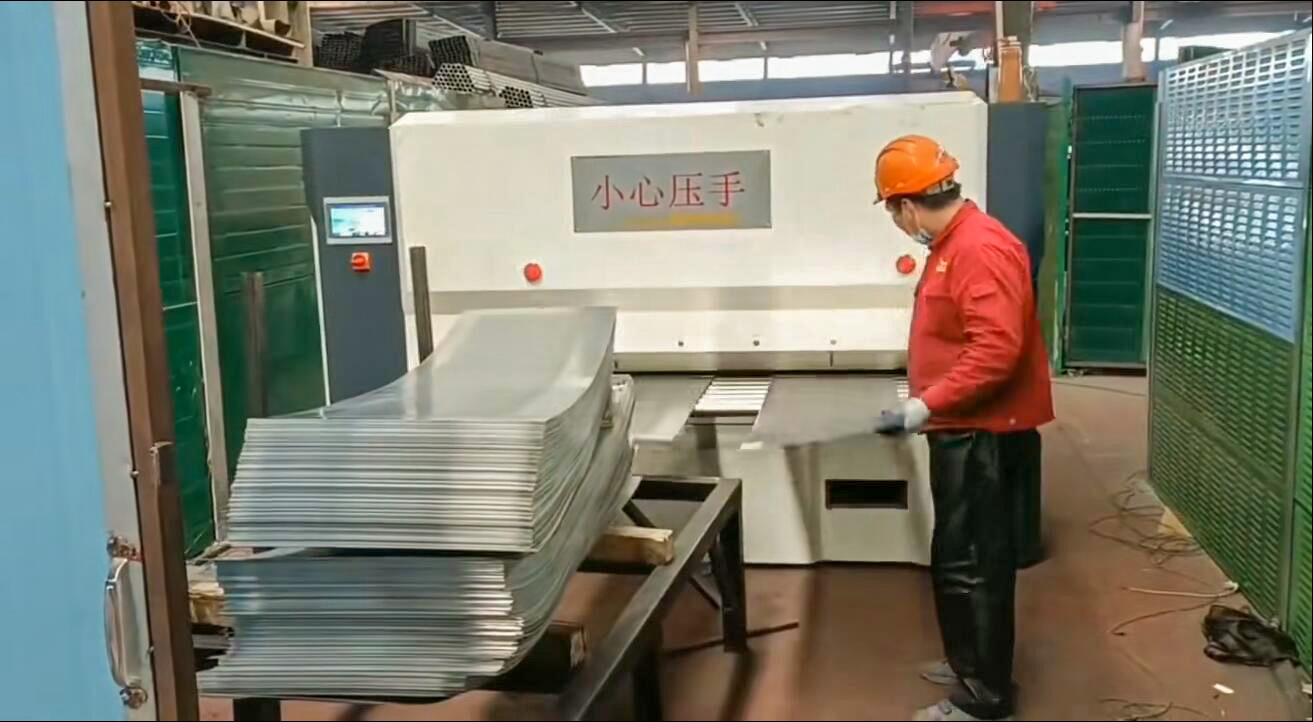
CNC leveling machine installed at a customer’s production facility. Image: MAHATMA.
Why CNC Leveling Machine Selection Is Constrained by More Than Price
Buyers researching a leveling machine often start with a question like “which leveling machine do I need?” But experienced purchasing teams know that the specification sheet is only one part of the story. The real constraints come from three directions: certification compliance (for the destination market), electrical and utility compatibility (voltage, frequency, plant infrastructure), and process parameters (material thickness, width, yield strength, flatness target). Ignoring any of these can stall a project — a machine may be mechanically excellent but fail customs inspection, or be technically capable but impossible to run on the plant’s existing electrical supply.
For a CNC leveling machine, the opportunity lies in its ability to handle precision work with repeatable, stored parameters. Unlike manual leveling, CNC models can adjust roll gaps automatically, store hundreds of recipes, and integrate with MES/ERP systems. However, this capability also introduces new buying considerations: control software complexity, servo or hydraulic drive choices, and the need for accurate material data before ordering.
MAHATMA’s Approach to Certified, Parameter-Driven Leveling
Guangdong MAHATMA Intelligent Equipment Co., Ltd. is a high-tech enterprise headquartered in Dongguan, Guangdong Province — a region often called the “World Factory.” Founded in 2008, the company specializes in the R&D and manufacturing of high-precision leveling equipment, including CNC leveling machines, hydraulic leveling machines, and integrated lines such as cut-to-length and uncoiling-leveling-shearing systems. The company operates a 50,000 m² facility, employs roughly 300 people, and has an annual output of 500 sets. Its R&D team includes 26 engineers, and the company holds more than 230 patents, with industry-academia-research partnerships that include Tsinghua University.
MAHATMA’s product portfolio is built around four main technology groups:
- CNC Leveler (MHTM Series) — intelligent CNC machines for thin-to-medium sheet leveling, with widths from 200 mm to 3,200 mm and thickness ranges starting from 0.03 mm up to 30 mm depending on the model.
- Servo-CNC Leveler (MHTW Series) — all-servo motor driven machines for precision applications, including aluminum alloy and mirror-finish sheet, with features like remote cloud control and laser 3D online inspection on flagship models.
- Hydraulic Leveler (MHTR Series) — servo-hydraulic high-precision machines for thick plate from 0.5 mm up to 100 mm (max 120 mm), used in heavy industry, shipbuilding, and new energy.
- Four-high / Two-high Leveler (VSH / VST Series) — economic leveling solutions for small workshops and budget-limited operations, covering thicknesses from 0.03 mm to 14 mm in simple structures.
All products comply with international standards. MAHATMA holds both ISO 9001:2015 (certificate number 62825Q9729R0M, valid until 2028-05-26) and CE certification for its hydraulic precision leveling machines (EN ISO 12100 and related standards, valid until 2030-01-15). The company also reports that its equipment is exported to over 100 countries and regions, with 28 overseas marketing and service networks.
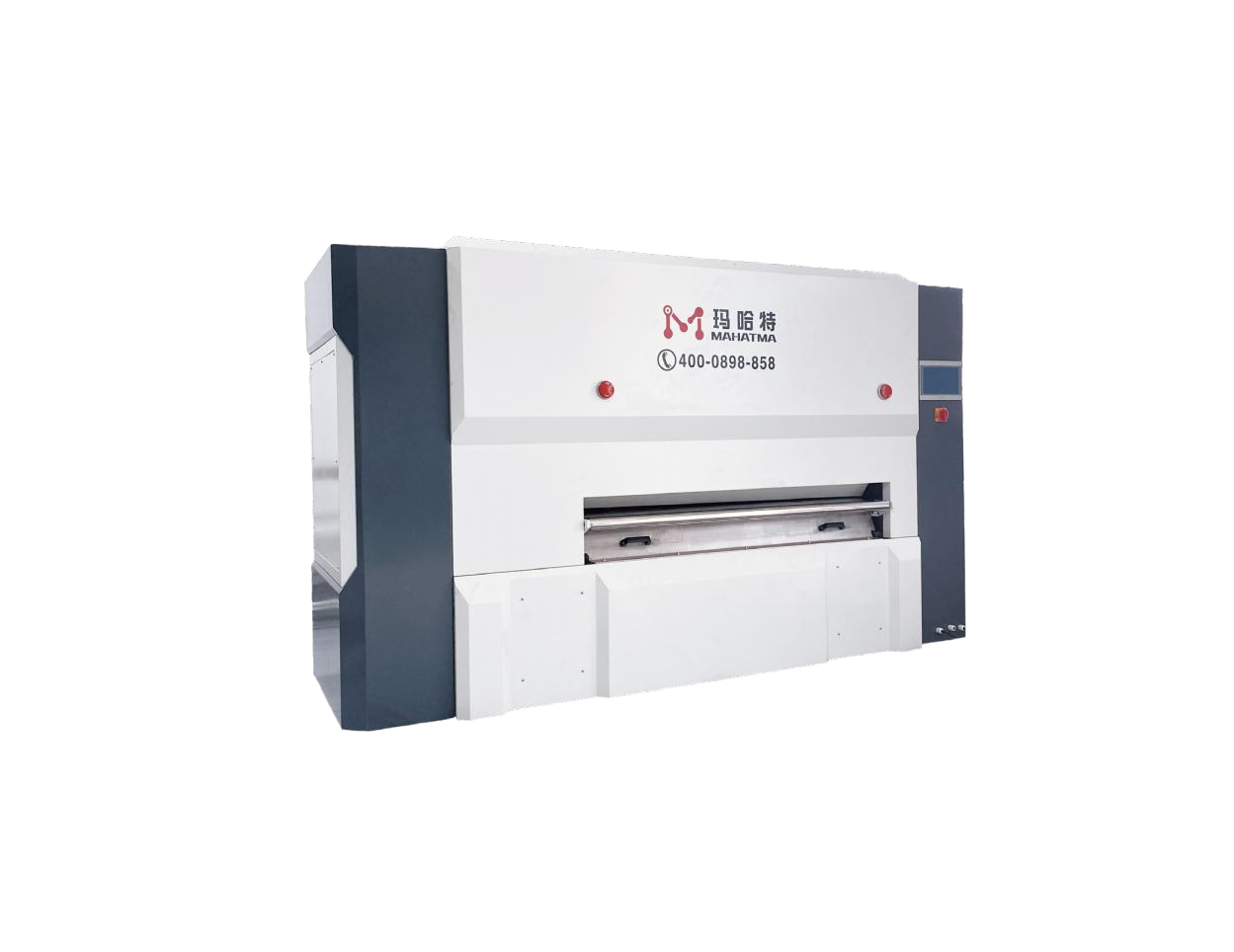
MAHATMA MHTM60 Series intelligent CNC leveler.
How CNC Leveling Machines Work: Roll Configurations and Flatness Control
CNC leveling machines operate on the Bauschinger effect: as material is repeatedly bent in alternating directions through successive rolls, internal residual stress is relieved and the sheet becomes flat. The number of rolls, the roll diameter, and the support structure determine how precisely this stress relief can be controlled.
Two structural types dominate the market:
- Four-high (4-high) — small work rolls are supported by larger backup rolls, which reduces roll deflection under load. This is the most common configuration for CNC levelers in sheet metal shops.
- Six-high (6-high) — intermediate rolls are added, providing even better support to work rolls and minimizing unsupported gaps. This design is used for very thin or high-surface-finish materials.
CNC control is what separates a modern leveler from a manual one. On MAHATMA’s MHTM series, a 10-inch HD touchscreen stores up to 200 recipes. The operator enters material thickness and width, calls up a stored recipe, and the machine automatically sets the roll gap via precision motor drives. This one-key parameter setting significantly reduces changeover time and operator dependence. The company also highlights a 50% energy saving compared to non-servo drives on these CNC models.
The table below summarizes representative MAHATMA CNC leveler series from the product line:
| Series | Width Range (mm) | Rated Thickness (mm) | Max Thickness (mm) | Rolls |
|---|---|---|---|---|
| MHTM20 Series | 400–1300 | 0.3–1.2 | 3.0 | 23 |
| MHTM40 Series | 400–1600 | 0.6–3.0 | 6.0 | 21 |
| MHTM60 Series | 400–1650 | 1.0–6.0 | 12.0 | 19 |
| MHTM80 Series | 400–1650 | 2.0–8.0 | 16.0 | 19 |
| MHTM100 Series | 800–1600 | 3.0–12.0 | 20.0 | 19 |
| MHTM120 Series | 400–1600 | 4.0–16.0 | 25.0 | 19 |
For precision-critical applications, MAHATMA’s MHTW servo-CNC series (e.g., MHTW50, MHTW60) adds all-servo motor drives, a patented “Kunpeng” frame design, and on flagship models, laser 3D online inspection with real-time correction. The MHTR hydraulic series addresses thick plate up to 100 mm, with servo-hydraulic hybrid drives and anti-collapse dynamic compensation.
Where CNC Levelers Deliver Value: Applications and Verified Cases
CNC leveling machines are widely used in industries that demand flat blanks before subsequent processing. Stamping, laser cutting, automotive parts, home appliances, elevator manufacturing, and sheet metal fabrication all rely on levelers to remove coil set, edge waves, and internal stress.
MAHATMA customer cases illustrate the measurable impact of CNC levelers in different regions:
- A manufacturer in Turkey used a CNC leveler (MHTM40 Series) for ceiling plate production. Over two years, the machine solved deformation of perforated metal sheet, with easy operation and low failure rate, improving productivity efficiency.
- A manufacturer in Saudi Arabia used a MHTM30 Series for leveling laser-cut parts and reported an overall production cost saving of approximately 20% over two years.
- A manufacturer in Pakistan used a MHTM30 Series for laser-cut parts and achieved 200% capacity expansion over three years.
- A manufacturer in Slovakia used a MHTM100 Series for leveling SS314 stainless steel and doubled capacity (100% expansion) over three years.
- A manufacturer in the Philippines used a MHTM60 Series for aluminum sheet leveling and achieved 300% capacity expansion over five years.
These figures are reported by the manufacturer and should be evaluated with the same care as any supplier-provided data. Still, they show a consistent pattern: CNC levelers are bought not simply to flatten material, but to unlock downstream throughput and reduce scrap.
Market Signals: CNC Adoption, Regional Growth and Automation
External market data reinforces the shift toward CNC-controlled metal forming equipment. According to Dataintelo, the global metal forming equipment market — which includes leveling machines — was valued at USD 45.8 billion in 2025, with Asia Pacific holding a 42.5% revenue share. Fortune Business Insights projects the metal forming machine tools market to reach USD 64.85 billion by 2034, at a CAGR of 9.60%. In the sheet metal processing equipment segment, the automotive industry accounts for 41.37% of the market in 2026, and CNC technology already represents 85.7% of the machine tools market (Grand View Research, 2025).
These trends point in the same direction: buyers increasingly seek machines with CNC control, digital recipe management, and automation readiness. The growing share of CNC in the machine tool market reflects a preference for repeatable precision over manual skill. For leveling equipment, this means the “CNC leveling machine” is no longer a premium niche; it is becoming the expected specification for any shop that supplies stamps or laser-cut parts to automotive or appliance OEMs.
CNC Leveling vs. Traditional Leveling: Trade-offs and Boundaries
Compared to traditional two-high or four-high manual levelers, CNC leveling machines offer better repeatability, faster changeovers, and the ability to store process recipes. They also enable upstream/downstream automation, such as integration with uncoilers, stackers, and robotic loading. However, there are honest boundaries:
- Higher initial investment — CNC levelers are more expensive than simple manual or semi-automatic levelers. For a small workshop that only occasionally levels narrow strips of low-precision material, a four-high VSH or two-high VST series may be the more rational choice.
- Electrical and grid dependency — Standard machines are configured for 380V/50Hz. If the buyer’s facility operates on 480V/60Hz (United States) or 200V (Japan), the machine must be re-specified at the factory. For North America, an NRTL field evaluation may be required for the electrical panel, following NFPA 79. This is not a trivial afterthought; it must be agreed in the purchase contract.
- Operator skill and data quality — CNC machines still require accurate input data: material yield strength, thickness, width, and flatness goal. If the buyer provides incomplete parameters, even the best CNC leveler will not deliver optimal results. Suppliers like MAHATMA address this through free sample testing and written reports.
These trade-offs do not diminish the value of CNC leveling; they define the boundary conditions under which a CNC leveler is the right investment.
Future Outlook: Toward Connected and Self-Optimizing Leveling
The next phase of leveling technology will likely be driven by three forces: real-time inspection, data integration, and energy efficiency. MAHATMA’s MHTW series already demonstrates parts of this future — laser 3D online inspection, remote cloud control, automatic roll-box cleaning, and a hollow frame design that reduces thermal deformation. As more factories adopt MES/ERP systems, levelers will be expected to share production data automatically and adapt parameters in real time based on material variations.
For buyers, this means future-proofing a purchase now involves more than checking today’s thickness range. It means asking about communication interfaces, upgrade paths for automation, and the manufacturer’s ability to support remote diagnostics. The global trend toward distributed manufacturing and shorter supply chains also favors suppliers with strong export service networks, such as MAHATMA’s 28 overseas service points.
FAQ: Key Questions When Buying a CNC Leveling Machine
Q1: Which MAHATMA model should I choose for my material?
Send four numbers to the supplier — thickness range, width, material grade (yield strength), and flatness target. MAHATMA uses these to return a matched model and offers a free sample test. Leveling force depends on both thickness and yield strength, so model ratings based on Q235/235MPa must be recalculated for high-strength steel, aluminum, or titanium.
Q2: What flatness can a MAHATMA leveling machine actually achieve on my parts?
Precision series can achieve flatness down to ±0.05 mm in verified cases (e.g., titanium fixtures); typical production results are 0.05–0.20 mm/m². Final flatness depends on material grade, thickness, and original coil condition, so MAHATMA recommends confirming on your own material with a free sample test.
Q3: Does a leveling machine exported to the EU need CE marking, and what does it involve?
Yes. Any industrial machine placed on the EU market must carry CE marking under the Machinery Directive 2006/42/EC. The manufacturer must perform a documented risk assessment (EN ISO 12100), install compliant guarding and emergency stops, compile a technical file, and issue an EC Declaration of Conformity. MAHATMA has held CE certification since 2008. Machines without CE risk customs seizure and buyer liability.
Q4: What certifications are needed to install a Chinese leveler in the USA or Canada?
North America has no CE equivalent. Local inspectors (Authority Having Jurisdiction) may require an NRTL (UL/ETL/CSA) field evaluation or listing, especially for the electrical panel, which must follow NFPA 79 in the US or CSA C22.2 in Canada. Voltage adaptation is mandatory: US plants run 480V/3-phase/60Hz. Specify this at order, and confirm whether the supplier covers field evaluation costs.
Q5: The machine is rated 380V/50Hz — can it run in my country?
Standard MAHATMA machines are built for AC 3-phase 380V/50Hz. Many export markets differ: the US uses 480V/60Hz, Japan 200V, Saudi Arabia 60Hz, the EU 400V/50Hz. Running a machine on the wrong supply damages motors and voids warranty. State your grid specification — voltage, frequency, phase, available transformer capacity — in the purchase contract so the factory configures motors, VFDs, and control transformers correctly before shipment.
Q6: Can I test my own material on the machine before buying?
Yes. MAHATMA offers a free sample test. Send 1–2 meters of your material or representative parts, along with material grade and flatness target. MAHATMA levels it on the recommended machine and returns a written flatness report and process video within days. This removes a major purchase risk by verifying performance on your actual material.
Reference resource: For a complete overview of MAHATMA’s leveling machine portfolio and technical specifications, download the company brochure: MAHATMA English Brochure (PDF).